NEWS 23

🔒
❌
Stats
Es gibt neue verfügbare Artikel. Klicken Sie, um die Seite zu aktualisieren.

☐ ☆ ✇ Breitbart

Communist China Murders History on 37th Anniversary of Tiananmen Massacre

veröffentlicht.
Vorschau ansehen

The Chinese Communist government continued its effort to erase the Tiananmen Square massacre from history on the 37th anniversary of that grim slaughter, ordering families of the dead to stay away from graves of their loved ones and cracking down on any attempt to remember the fallen.

The post Communist China Murders History on 37th Anniversary of Tiananmen Massacre appeared first on Breitbart.

(Auszug von RSS-Feed)

☐ ☆ ✇ Fox News

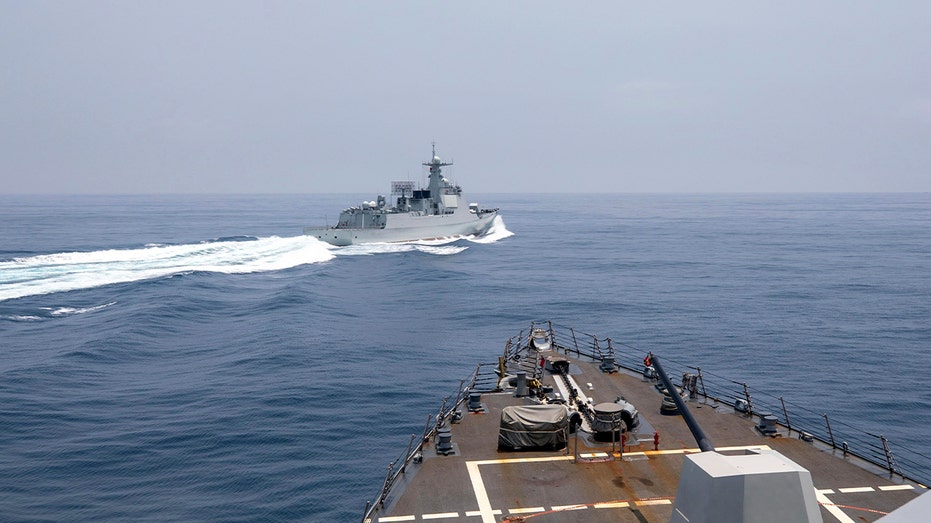
China deployed over 100 vessels near Taiwan in the wake of Trump-Xi summit, Taiwan security official claims

veröffentlicht.
Vorschau ansehen

China has deployed over 100 vessels in the waters surrounding Taiwan in the week after President Donald Trump's Beijing summit with Chinese President Xi Jinping, the secretary general of Taiwan's National Security Council said Saturday.

"Our ISR/intel shows that the PRC has deployed over 100 vessels around the 1st Island Chain over the past few days, so soon after the Beijing summit," Secretary General Joseph Wu wrote on X.

"In this part of the world, China is the one & only PROBLEM wrecking the Status Quo & threatening regional peace & stability."

Wu posted a graphic appearing to show a high volume of Chinese vessel deployments in the South China Sea, the East China Sea and near Taiwan and The Philippines.

CHINA LAUNCHES LARGEST MILITARY DRILLS OFF TAIWAN IN 8 MONTHS WITH LIVE-FIRE EXERCISES CAUGHT ON CAMERA

Wu alerted the world to the ship deployments a little more than a week after Trump left Beijing and just days after acting U.S. Navy Secretary Hung Cao told U.S. lawmakers the U.S. was temporarily pausing weapons shipments to Taiwan.

"Right now we're doing a pause in order to make sure we have the munitions we need for Epic Fury," Cao testified during a hearing of the Senate Appropriations Defense Subcommittee Tuesday.

U.S. lawmakers approved a $14 billion weapons package for Taiwan in January, though Trump has yet to sign off on it.

AS CHINA TENSIONS LOOM, US TEMPORARILY PAUSES TAIWAN WEAPONS SALES DUE TO IRAN WAR, ACTING NAVY SECRETARY SAYS

Taiwanese officials say they were not alerted to any potential pauses, according to The Associated Press.

Cao's pause announcement followed the Trump-Xi summit during which Chinese officials made clear that the Taiwan question is China's biggest issue in diplomatic relations with the United States.

"President Xi stressed to President Trump that the Taiwan question is the most important issue in China-U.S. relations," Chinese Foreign Ministry spokesperson Mao Ning said in a statement after the Trump-Xi meeting.

"If it is handled properly, the bilateral relationship will enjoy overall stability. Otherwise, the two countries will have clashes and even conflicts, putting the entire relationship in great jeopardy."

Fox News Digital contacted the White House, a representative for the Taiwanese government and the Chinese Foreign Ministry for additional comment.

(Auszug von RSS-Feed)

☐ ☆ ✇ Fox News

What Xi wants from Trump as Beijing seeks leverage in high-stakes summit

veröffentlicht.
Vorschau ansehen

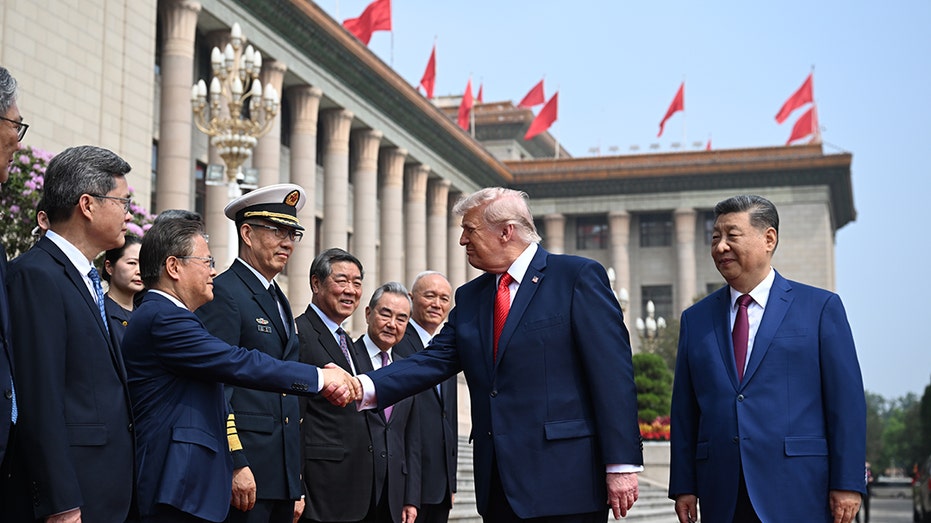
President Donald Trump arrived in Beijing for a high-stakes summit with Chinese President Xi Jinping at a moment when both Washington and Beijing are trying to stabilize one of the world’s most consequential rivalries without giving ground on deeper strategic disputes.

The two-day visit marks Trump’s first trip to China since 2017 and comes amid mounting tensions over trade, artificial intelligence, Taiwan and the fallout from the war with Iran. While the White House is framing the summit as an opportunity for new economic agreements and "rebalancing" the U.S.–China relationship, analysts say Beijing’s priorities are far broader and more long-term.

"Trump arrives seeking headline deals and visible momentum ahead of the midterms," wrote Zongyuan Zoe Liu, senior fellow for China studies at the Council on Foreign Relations. "Xi is playing a longer game, focused on strategic patience rather than substantive compromise."

TRUMP HEADS TO BEIJING FOR HIGH-STAKES XI TALKS AS TAIWAN TENSIONS, TRADE DISPUTES TEST US STRENGTH

Topics expected to be discussed during the summit include trade, aerospace, agriculture and energy agreements, and the creation of a U.S.–China Board of Trade and Board of Investment, according to the White House. 

White House spokeswoman Anna Kelly said Trump’s goal is to "deliver more good deals on behalf of our country" while safeguarding U.S. national security.

Trump participated in a welcome ceremony and bilateral meeting with Xi Thursday morning local time in Beijing, followed by a tour of the Temple of Heaven alongside the Chinese leader and a state banquet later. 

Chinese Embassy spokesperson Liu Pengyu said Beijing views the summit as an opportunity to stabilize ties between the world’s two largest economies. 

"Heads-of-state diplomacy plays an irreplaceable role in providing strategic guidance for China–U.S. relations," Liu said in a statement to Fox News Digital. "We welcome President Trump’s state visit to China. China stands ready to work with the U.S. to expand cooperation and manage differences in the spirit of equality, respect and mutual benefit, and provide more stability and certainty for a transforming and volatile world."

For Xi, analysts say, the top priority likely is avoiding further escalation with Washington while buying time for China’s slowing economy, as it continues to struggle with weak domestic demand, deflationary pressure and industrial overcapacity. 

A recent report by the U.S.–China Economic and Security Review Commission warned that Beijing is doubling down on state-led industrial policy despite mounting structural weaknesses in the Chinese economy.

The commission said China is increasingly operating a "two-speed" economy, where much of the broader economy stagnates while sectors prioritized by the Chinese Communist Party receive massive state support and continue expanding beyond market demand.

The report also warned of a new "China Shock 2.0," arguing Beijing’s excess industrial capacity and record trade surplus are disrupting global markets while increasing foreign dependence on Chinese-controlled supply chains in sectors ranging from batteries and pharmaceuticals to semiconductors and artificial intelligence.

"Chinese policy seeks simultaneously to reduce China’s reliance on foreign technology while increasing the world’s dependence on China," the commission noted in its findings.

TRUMP TO CONFRONT XI AT HIGH-STAKES SUMMIT OVER CHINA BACKING FOR IRAN, RUSSIA

At the same time, Xi is entering the talks with leverage stemming from the ongoing Iran crisis and global energy disruptions.

Trump has faced growing domestic pressure over rising energy prices tied to instability in the Middle East and shipping threats near the Strait of Hormuz. Beijing, meanwhile, remains one of Iran’s largest oil customers and maintains political ties with Tehran.

Susan Thornton, former acting assistant secretary of state for East Asian and Pacific affairs during Trump’s first term, said during a recent Stanford University Asia-Pacific Research Center interview that expectations for major breakthroughs should remain low despite the summit’s symbolism.

"The primary value lies in the act of meeting itself," Thornton said.

She suggested Beijing may see a strategic advantage in America’s renewed focus on the Middle East. While China has made nominal peace proposals, it has not stepped up as a mediator.

"It seems like they are kind of hanging back and waiting to see what will happen," Thornton said, arguing that from Beijing’s perspective, a U.S. entanglement in the Middle East may serve as a useful distraction, diverting Washington’s attention and pressure away from China.

One area where the two sides could announce tangible progress is agriculture. 

The White House is pushing Beijing for expanded purchases of U.S. farm products ahead of the summit, according to a Reuters report published Tuesday, particularly soybeans and grains. 

But traders and analysts told Reuters that China’s appetite for major new soybean commitments may be limited due to weak domestic demand and cheaper alternatives from Brazil. Instead, markets are watching for potential agreements involving corn, sorghum, wheat, beef and poultry, sectors viewed as less politically contentious in the broader U.S.–China relationship. 

More than a dozen U.S. business executives, including leaders from agricultural giant Cargill, are accompanying Trump during the visit.

PRESIDENT TRUMP MUST PUT AMERICAN HOSTAGES FIRST IN HIGH-STAKES BEIJING SUMMIT

Despite the focus on trade and geopolitical tensions, survivors of China’s religious persecution are urging the administration not to sideline Beijing’s crackdown on religious groups and dissidents.

Ahead of the summit, Trump publicly pledged to raise the case of imprisoned Chinese pastor Ezra Jin following advocacy efforts by his daughter, Grace Jin Drexel, who has accused Beijing of persecuting Christians.

Former U.S. officials told Fox News Digital they are skeptical human rights concerns will play a central role during a summit primarily focused on lowering tensions and stabilizing economic ties between the two powers.

Taiwan and technology restrictions are also expected to loom over the talks. Beijing continues to oppose U.S. arms sales and support for Taiwan, while Washington has tightened export controls targeting China’s advanced semiconductor and AI sectors.

Still, despite the escalating rivalry, neither Washington nor Beijing appears eager for a direct confrontation.

For Trump, the summit offers an opportunity to showcase economic wins and diplomatic engagement ahead of the 2026 midterms. 

For Xi, analysts say, the goal is far more measured: preserve stability, avoid confrontation and continue positioning China for a prolonged strategic competition with the United States.

(Auszug von RSS-Feed)

☐ ☆ ✇ Fox News

Taiwan watches Trump-Xi meeting for signs China will test US resolve

veröffentlicht.
Vorschau ansehen

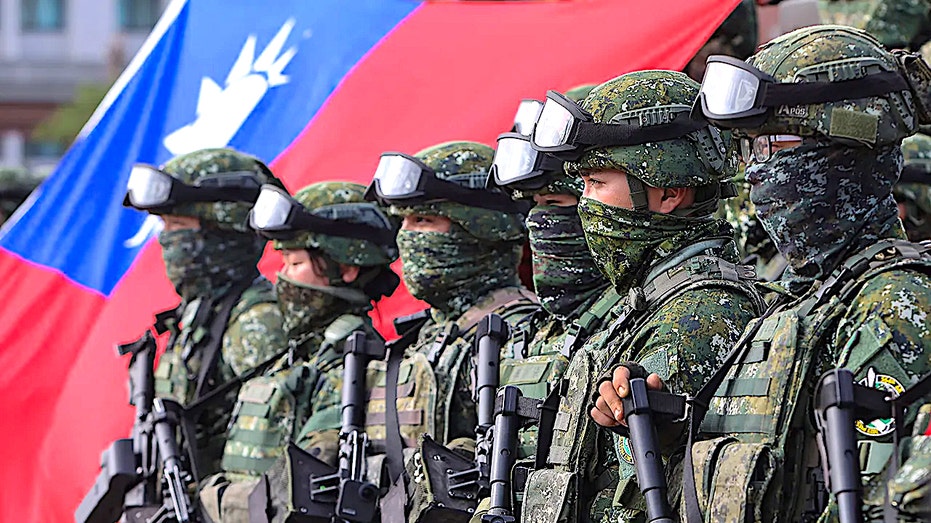
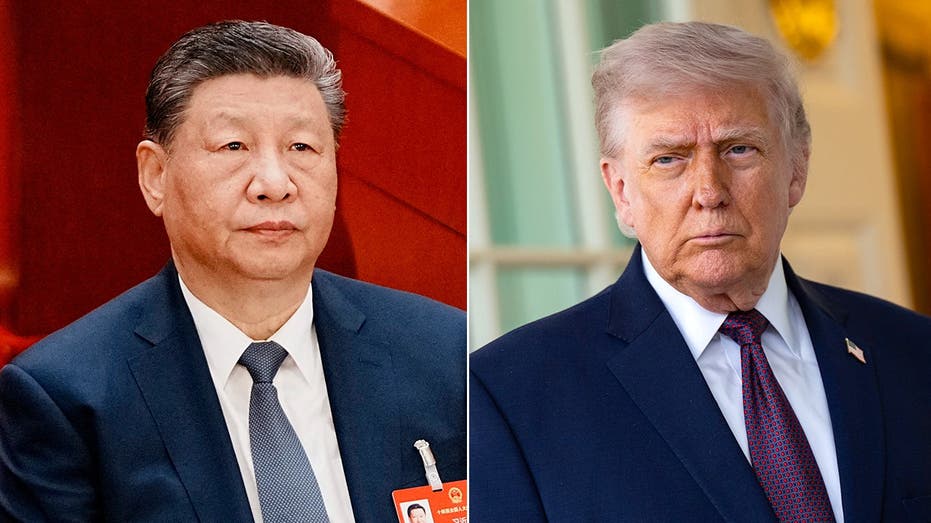
KAOHSIUNG, Taiwan: President Donald Trump’s meetings with communist China’s supreme leader Xi Jinping in Beijing will be keenly watched here in Taiwan, from the presidential office to military command centers and semiconductor company boardrooms. The key question many are asking is whether Trump negotiates with China from a position of strength, or leaves Taiwan exposed?

The de facto independent nation of 23 million people has spent decades living under threat from the Chinese Communist Party, which claims Taiwan as its territory despite never having ruled it for even a day.

Observers here warn that Xi may try to offer Trump a deal: cooperation on tariffs, fentanyl, U.S. business access, or global flashpoints like Iran and Ukraine in exchange for Trump accepting a larger Chinese role in Taiwan’s future.

CHINA ORDERS FIRMS TO IGNORE US IRAN SANCTIONS, DARING US TO ENFORCE CRACKDOWN

Taiwan’s Deputy Minister of Foreign Affairs Francois Wu recently told Bloomberg News, "What we are the most afraid is to put Taiwan on the menu of the talk between Xi Jinping and President Trump."

Huang Kwei-bo, a professor in National Chengchi University’s Department of Diplomacy, told Fox News Digital that Taiwan shouldn't assume nothing will change. "Taiwan shouldn't rule out the possibility that the United States and mainland China could reach an understanding behind the scenes, agreeing to reduce arms sales to Taiwan, or become less active in helping us meaningfully participate in international space," he said.

In comments on Monday, President Trump acknowledged China’s dislike of U.S. arms sales to Taiwan, and said the topic would be "one of the many things I'll be talking about." 

CHINA LAUNCHES LARGEST MILITARY DRILLS OFF TAIWAN IN 8 MONTHS WITH LIVE-FIRE EXERCISES CAUGHT ON CAMERA

Over the past week, more than 50 communist Chinese aircraft crossed the Taiwan Strait median line or entered Taiwan’s air defense identification zone. 

Those numbers are not a dramatic new escalation. In Taiwan, they are increasingly seen as part of a new normal: a sustained pressure campaign that falls short of war but keeps Taiwan’s military on alert. China also intentionally damages the undersea cables that connect Taiwan to the internet, hacks into Taiwan’s computer systems daily, and floods social media with content that praises the communist party.

Taiwan’s semiconductor industry is a major concern for Washington. The island is home to Taiwan Semiconductor Manufacturing Co., or TSMC, the dominant producer of the world’s most advanced semiconductors. Those chips are used in smartphones, cars, artificial intelligence systems and U.S. defense technology. Any conflict or blockade that cuts Taiwan off from global markets would ripple through American factories, consumers, technology companies and military planning.

However, as the leaders of the two nations most closely intertwined with Taiwan's future meet, there is no outward sense of panic here.

"Most people here are not obsessed with China every day," Audrey Chiang, who runs a tourist souvenir shop in Kaohsiung, told Fox News Digital. Chiang has a son who is just a few years away from serving one year as a military conscript, a 2024 response to China’s invasion threats. "We go to work. We worry about the next big test at our kids’ school. We complain about traffic. But everyone knows things can change very quickly."

Taiwan’s legislature on May 8 passed a near US$25 billion supplemental defense spending bill, meant in part to signal to Washington that Taipei isn’t simply depending on America to protect itself. But the package was smaller than the almost US$40 billion requested by Taiwan President Lai Ching-te’s administration. 

Taipei-based American political analyst, Ross Darrell Feingold, told Fox News Digital that many in Taiwan assume that the U.S., and possibly Japan, will come to the island’s defense in the event of a war. "Going back to the Cold War when the U.S. had a treaty obligation to defend Taiwan, and even after the treaty was abrogated, the consistent assumption is that the U.S. president will send in the military to save Taiwan. More recently, there is a growing assumption Japan will do so as well. But Taiwan still must do what is necessary to prove to its partners that Taiwan’s own people will be on the front line," he said.

CHINA PROMISES 'COUNTERMEASURES' TO US ARMS SALE TO TAIWAN

Taiwan’s main political parties have major differences in their approaches to China, but broadly support U.S. arms purchases and agree that Beijing is a threat to democratic Taiwan.

Chinese officials insist Taiwan’s status is an "internal affair." Taiwan’s elected government rejects that, and so do most Taiwanese, who see Taiwan’s future as something only they should decide.

National Pingtung University Associate Professor Paul Lee is among those who think Xi Jinping is going to push the U.S. president hard on Taiwan. Speaking by phone, he told Fox News Digital that "Xi Jinping almost certainly wants one clear change from the U.S., he’ll want Trump to say the United States ‘opposes Taiwan independence’ rather than the language it uses now that is closer to ‘does not support Taiwan independence.’ To be frank, I don’t think President Trump sees Taiwan as that important – except as the producer of the world’s most advanced semiconductors, and as a source of some revenue from weapons sales." Lee notes that the difference between "doesn’t support" and "opposes" may not seem like much for Trump, but for Xi, it would be viewed as a major victory."

For Taiwan’s ruling party, and anyone in Taiwan who supports moves by Lai and his predecessor to establish at home and abroad that Taiwan is not part of China, such a change in language would come as a blow as it implies that the U.S. does not agree with the people of Taiwan having the right to self-determination on their future, Lee explained, and he said Xi Jinping wouldn’t be satisfied with Trump simply saying a few sentences. 

"Trump has roughly three years left on his second term, and Xi will want to ensure the ‘oppose independence’ language translates into a new framework with new rules such as not letting Taiwan President Lai transit through the U.S., as one example. Xi knows U.S. presidents come and go, so the goal is to create a tacit agreement that Taiwan is in the Chinese sphere of influence, he said.

Lee said China has been patiently waiting for an opportune moment, and the war in Iran, tariffs and other issues facing President Trump is presenting exactly that.

Lee said Taiwan’s government and academic community will closely scrutinize the official translations of what the two sides "agree" on. "Put simply," Lee said, "if Xi Jinping agrees to help make things easier for Trump, Xi will not be satisfied with cryptically worded official press releases. He will want to see the beginning of a new U.S.-China framework for dealing with Taiwan."

(Auszug von RSS-Feed)

☐ ☆ ✇ Fox News

China’s undersea cable threat raises $10T fears as Trump-Xi talks loom

veröffentlicht.
Vorschau ansehen

The U.S. economy is under threat from adversaries like China targeting undersea cables with the ability to "inflict devastating economic chaos almost at will," a former U.S. intelligence official warned Sunday.

These cables carry 99% of global data and support up to $10 trillion in daily financial transactions, according to reports.

Andrew Badger, chief strategy officer at Coalition Systems, a defense tech startup, spoke as President Donald Trump is set to meet with Chinese President Xi Jinping in Beijing for talks expected to focus on trade, artificial intelligence and Taiwan.

Taiwan, a flashpoint in U.S.-China tensions, has reported about 30 subsea cable incidents in recent years, including one in which Chinese vessels allegedly severed cables and cut communications for months.

INTERNATIONAL UNDERWATER CABLE ATTACKS BY RUSSIA, CHINA ARE NO ‘MERE COINCIDENCE’ WARNS EU’S TOP DIPLOMAT

"America depends on the fragile nervous system of subsea cables for modern life," Badger, a former Pentagon official and author, told Fox News Digital before warning that U.S. adversaries "seek to turn the bottom of the ocean into a battlefield."

"The asymmetric threat — China and Russia are devoting far more resources to attacking undersea infrastructure than the U.S. or its allies are to defending it," Badger said.

"They've identified one of our greatest vulnerabilities, and we haven't caught up. A coordinated strike on American undersea infrastructure could fundamentally disrupt our way of life — the internet, banking, energy markets and military communications all run through these cables. The dollar cost is almost incalculable, and the real damage would be the chaos and political instability that would follow," he said.

Badger’s remarks came after Senate Republican Whip John Barrasso, R-Wyo., alongside Sen. Jeanne Shaheen, D-N.H., introduced the bipartisan Strategic Subsea Cables Act of 2026 in April.

The legislation is aimed at strengthening the security and resilience of critical undersea infrastructure.

TAIWAN COAST GUARD DETAINS CHINESE-CREWED VESSEL SUSPECTED OF CUTTING UNDERSEA CABLE

"Undersea cables are important for a variety of reasons. They carry 99% of the world’s internet traffic. They also support $10 trillion in financial transactions each and every day," Barrasso said in a statement.

In April, China’s Ministry of Natural Resources confirmed a successful deep-sea mission testing an advanced "electro-hydrostatic actuator," a device capable of slicing through armored submarine cables at depths of 3,500 meters, according to reports.

Similar suspicious disruptions have been reported in Europe and elsewhere, raising concerns about coordinated "gray-zone" operations designed to probe Western responses while remaining below the threshold of open conflict.

"This is hybrid warfare in its purest form, designed to weaken the adversary below the threshold of declared war," Badger said, noting that incidents such as anchors dragging across the seabed can provide plausible deniability.

HORMUZ CHAOS SPARKS WARNING: CHINA COULD STRANGLE TAIWAN WITHOUT FIRING A SHOT

"Cables give Beijing and Moscow the ability to inflict devastating economic chaos almost at will," Badger warned. "This gives both nations tremendous strategic leverage over the U.S."

China could also potentially target American undersea cables as a deterrent to U.S. engagement in Taiwan, according to Badger.

"Beijing could simultaneously target cables landing in the U.S., not to win militarily, but with the goal of breaking the American public's will to intervene in Taiwan," he said.

China claims Taiwan as its own territory, while the U.S. — Taiwan’s largest unofficial ally — supplies weapons under a law requiring it to help the island defend itself.

The Taiwan Strait is also a critical artery for the artificial intelligence revolution’s most essential resources.

Anniki Mikelsaar of the Oxford Internet Institute said growth in AI’s use means "rising capacity requirements on submarine cables. Not all recent cable damage incidents can be attributed to foreign adversaries: the ICPC estimates 150 to 200 cable breaks occur per year around the globe, most of them accidents," she said.

(Auszug von RSS-Feed)

☐ ☆ ✇ Fox News

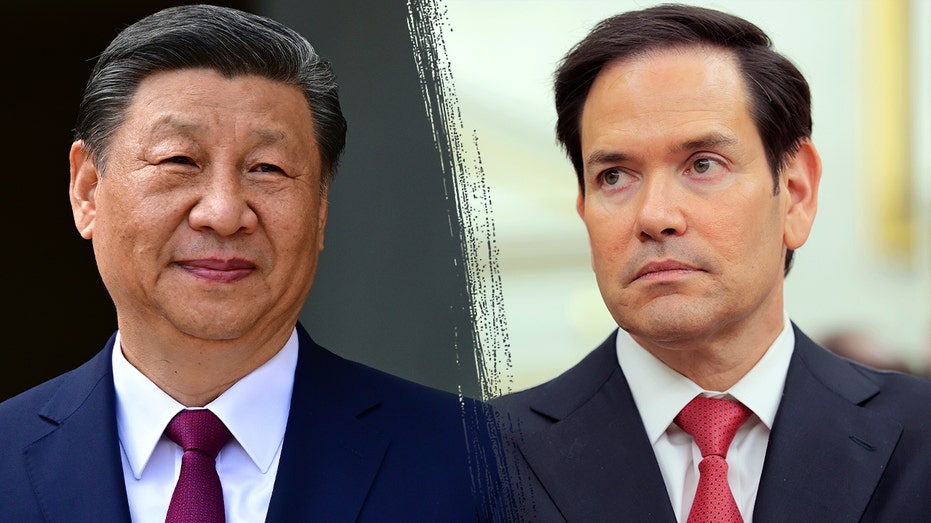
Rubio warns China after Panama ship detentions, calls hemisphere sovereignty 'non-negotiable'

veröffentlicht.
Vorschau ansehen

Secretary of State Marco Rubio warned China that "the sovereignty of our hemisphere is non-negotiable" after the U.S. and regional allies accused Beijing of detaining Panama-flagged ships in a dispute tied to canal port control.

In a joint statement with Bolivia, Costa Rica, Guyana, Paraguay and Trinidad and Tobago, the U.S. said China’s actions targeting Panama-flagged vessels were a "blatant attempt to politicize maritime trade" and infringe on regional sovereignty, framing the dispute as a broader strategic test over control of one of the world’s most critical commercial arteries.

While the Panama dispute centers on shipping detentions rather than a physical blockade, critics increasingly view it alongside battles over other strategic choke points, such as the Strait of Hormuz, as part of a widening contest over whether Beijing or Washington will shape the rules governing global trade and energy corridors.

IRAN’S $800M OIL SMUGGLING SCHEME USES TANKERS POSING AS IRAQI SHIPS TO DODGE BLOCKADE

The confrontation follows Panama’s Supreme Court decision earlier in 2026 to invalidate the legal framework behind Hong Kong-based CK Hutchison’s long-held control of the Balboa and Cristobal terminals flanking the Panama Canal, a choke point that handles roughly 5% of global maritime trade. 

U.S. regulators have monitored nearly 70 Panama-flagged vessels detained by Chinese authorities since March 8, according to Reuters — a surge American officials say appears designed to retaliate against Panama and pressure global shipping.

"China has used Iran to destabilize the Middle East. In effect, Iran has been China’s proxy," China expert Gordon Chang told Fox News Digital, arguing Beijing’s actions in Panama fit a broader global pattern in which China uses economic leverage, trade pressure and regional partners to expand influence while condemning similar tactics from Washington.

Chang said Beijing is now facing growing resistance as the U.S. increasingly moves not only against China directly, but also against governments and geopolitical flash points he argues have strengthened Beijing’s hand.

"Trump apparently decided that he would counter this sly tactic by taking China’s proxies — Venezuela, Cuba and Iran — off the board," Chang said.

HOUSE REPUBLICANS INTRODUCE BILL TO REPURCHASE PANAMA CANAL AFTER TRUMP RAISES CONCERNS OF CHINESE CONTROL

He also framed pressure on Iran and threats to the Strait of Hormuz as part of a larger strategic effort aimed at both Tehran and Beijing.

"Closing the Strait of Hormuz is a two-fer, starving Iran’s regime and shaking China’s already fragile economy," Chang said. "Trump is using energy to reorder the world."

Chang also accused Beijing of hypocrisy over trade.

"China’s Communists invented hypocrisy. Nobody does hypocrisy better than the Chinese Communists," he said, arguing that China long benefited from a global trading system it increasingly weaponized for geopolitical purposes.

"The elemental truth is that China started this cycle of action and retaliation," Chang said. "If China had not threatened America, America would not have leaned on Panama. If America had not leaned on Panama, China would not have detained Panamanian vessels."

China has rejected accusations that it is politicizing trade, with its foreign ministry arguing U.S. criticism reflects Washington’s own strategic ambitions around the canal.

China's Foreign Ministry called the statement on Wednesday "entirely baseless and misleading", said it would take steps to safeguard China's interests in Panama, and accused the United States of politicizing ports, according to Reuters.

The Chinese Embassy in Washington, D.C., spokesperson Liu Pengyu told Fox News Digital that, "Chinese competent authorities conducted routine inspections of vessels in accordance with laws and regulations. The allegations are completely unfounded and merely a distortion of facts. It is the United States that has framed normal affairs concerning relevant terminals as issues about politics and security, making pretenses and slandering others with rumors. China’s position on the Panamanian ports issue is clear and will firmly defend its legitimate rights and interests. We urge relevant countries not to be blinded and utilized by those with ill intentions."

Reuters contributed to this article.

(Auszug von RSS-Feed)
❌