NEWS 23

🔒
❌
Stats
Es gibt neue verfügbare Artikel. Klicken Sie, um die Seite zu aktualisieren.

☐ ☆ ✇ Breitbart

Wyoming GOP Gubernatorial Candidate Voted Against MAGA's Illegal Immigration Crackdown

veröffentlicht.
Vorschau ansehen

Despite consistently being the state with the highest approval rating of President Donald Trump, one of Wyoming's leading Republican candidates for governor, Eric Barlow, has repeatedly voted against bills in line with the MAGA movement's crackdown on illegal immigration.

The post Wyoming GOP Gubernatorial Candidate Voted Against MAGA’s Illegal Immigration Crackdown appeared first on Breitbart.

(Auszug von RSS-Feed)

☐ ☆ ✇ Fox News

US ally answers Trump's call on Strait of Hormuz: 'Part of a diplomatic effort'

veröffentlicht.
Vorschau ansehen

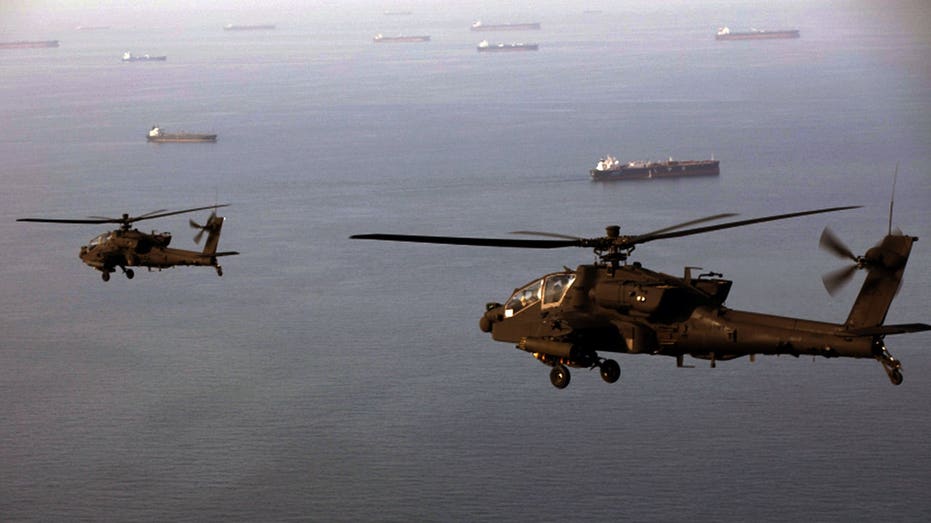
UNITED NATIONS: Romania’s foreign minister told Fox News Digital that Bucharest answered the Trump administration’s call for allied support in the Middle East by allowing the use of Romanian military bases for "defensive activities" related to tensions with Iran and efforts to reopen the Strait of Hormuz.

"We have allowed for access to defensive activities, such as air refueling, for example, because we do believe allies need to rely on each other," Romania’s interim Foreign Affairs Minister Oana-Silvia Ţoiu said in an exclusive interview at the United Nations.

"We’re not part of the war, nor do we intend to become part of war, but we are part of an effort to ensure common defense, and we are a part of a diplomatic effort to ensure the reopening of the Strait of Hormuz," she said.

Ţoiu’s comments come as President Donald Trump has repeatedly pressed European allies to increase defense spending and take a larger role in global security efforts, including maritime security in the Middle East.

NATO LEADERS PREDICT ERA OF 2% DEFENSE SPENDING 'PROBABLY HISTORY' AS TRUMP REPORTEDLY FLOATS HIGHER TARGET

Ţoiu acknowledged growing tensions between Washington and some European allies over support related to the conflict with Iran, but said both sides recognize the need for closer coordination.

"I’m pretty sure that both on the U.S. side and the European side, we do understand that we need to enhance our dialog in order to prevent moments when we create tension in the transatlantic partnership," she told Fox News Digital. "And I do believe a better dialog ahead of time on all sides leads to better results, specifically on the request of help in terms of the conflict in the Middle East."

The Romanian foreign minister said Bucharest approved the use of its military bases and infrastructure for defensive operations linked to regional security efforts.

"Romania has approved through Parliament the proposal of the President, the ministry of foreign affairs and the ministry for defense and the prime minister, the use of our military bases and infrastructure for defensive activities, for activities such as air-fuelling, for example, because we are aware of the fact that it is needed that we trust each other," she said.

"I think we share clear objectives here in Europe, between the U.S. and countries around the world, such as lowering energy prices, such as allowing for fertilizers not to be blocked anymore there."

MIKE WALTZ PUSHES UN RESOLUTION TO STOP IRAN MINING KEY GLOBAL SHIPPING ROUTE

Romania, a NATO member bordering Ukraine, has emerged as one of the alliance’s key eastern flank states amid growing concerns over both Russia’s war in Ukraine and instability in the Middle East.

"We do agree with President Trump on the need to increase budgets," Ţoiu said.

She noted that Romania raised defense spending to 2% of GDP during Trump’s previous term and plans to allocate an average of 3.4% next year through a combination of military procurement and strategic infrastructure investments.

Her remarks came just hours after Romania requested an emergency meeting of the United Nations Security Council on Tuesday following a Russian drone strike that hit a residential building in the Romanian city of Galați on May 29.

The emergency briefing marked the first time in Romania’s roughly 70-year history at the United Nations that it requested a Security Council session over a direct threat to its national security, according to Romanian officials.

MULTIPLE ALLIES DECLINE US CALLS FOR STRAIT OF HORMUZ SUPPORT AMID RISING MIDDLE EAST TENSIONS

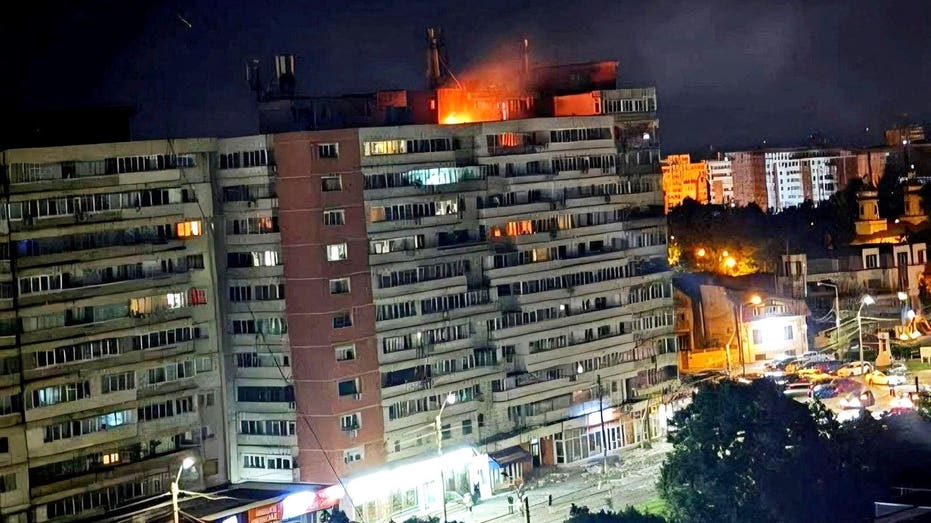
Speaking at the Security Council, Ţoiu said a drone carrying explosives violated Romanian airspace for approximately four minutes before crashing into the 10th floor of a residential building, injuring a mother and child.

"We do have the military analysis that shows clearly that it is a Russian-made drone in type of design, type of pieces of equipment, and also the chemical analysis that they have done," she told Fox News Digital.

Ţoiu said the drone was believed to be part of a larger Russian attack targeting Ukrainian civilian infrastructure near the Danube River.

"We wanted to call on the international community to make sure we collectively state that this is a blatant violation of international law," she said.

"And irrespective of whether that was the intention or not, the responsibility is very clear. And these reckless escalations need to stop."

BALTIC LEADERS RIP UN SECURITY COUNCIL AS POWERLESS WHILE RUSSIA HOLDS VETO SEAT

Russia’s U.N. Ambassador Vasily Nebenzya rejected the accusations during the session, calling them "unfounded and biased."

Nebenzya argued that if a Geran-2 drone had directly hit the building, the damage would have been far more severe, claiming Romanian media footage showed only fire damage rather than complete destruction.

He also called for a "thorough, objective, and depoliticized investigation" involving Russia and suggested the incident could have been a Ukrainian provocation intended to drag NATO deeper into the war.

Ţoiu pushed back against Moscow’s position and questioned how a permanent member of the Security Council can simultaneously act as an aggressor state.

"We do now have a question that's not just a question on Romania's side, but the question of the international community of how can a member of the Security Council contribute to its mission there, which is peace and security, while also being an aggressor state," she said.

"And of course, its veto [ is not currently] used towards peace and security."

The United States joined more than 50 countries backing Romania in a joint statement condemning the strike.

U.S. Ambassador to the United Nations Mike Waltz later wrote on X that he met with Ţoiu following "the reckless Russian drone strike on a Romanian apartment building.

"The violence must end before more innocent people suffer," Waltz wrote.

Ţoiu told Fox News Digital she also held meetings with the U.S. delegation at the United Nations following the emergency session.

"The United States has joined our common statement alongside more than 50 countries in making a clear public message on the attack," she said.

"We are working with the United States not just through our partnership in NATO, but also strategic partners."

(Auszug von RSS-Feed)

☐ ☆ ✇ Fox News

Drone strikes apartment building in NATO member Romania as Russia attacks neighboring Ukraine

veröffentlicht.
Vorschau ansehen

A drone struck an apartment building Friday in Romania, a NATO member, causing an explosion and fire that injured multiple people, local authorities said.

According to Romania’s Ministry of Defense, the incident occurred as Russia carried out an overnight drone attack in neighboring Ukraine near the Romanian border.

"A drone entered Romanian airspace, was tracked by radar systems as far as the Southern area of Galați municipality, and crashed onto the roof of a residential apartment building," the ministry said.

Romania — a member of both NATO and the European Union — has reported more than two dozen incidents involving Russian drones entering its airspace since Moscow launched its invasion of Ukraine.

NATO SCRAMBLES WARPLANES AS RUSSIA HITS NEAR ROMANIAN BORDER IN UKRAINE

Friday’s incident marked the first time a drone struck a populated area in Romania, resulting in injuries.

Romania’s state news agency reported that a woman and her child were hospitalized with minor injuries, while two other people were treated at the scene for panic attacks.

Following the incident, Romania requested additional anti-drone capabilities from NATO and described the drone’s flight path as a serious violation of international law, according to The Associated Press.

RUSSIAN DRONES TEST NATO'S ARTICLE 5 DEFENSE GUARANTEE AHEAD OF FRIDAY SANCTIONS DEADLINE

Romania’s emergency response agency said the drone struck the apartment building and exploded, sparking a fire on the 10th floor.

The agency said the drone’s entire explosive payload detonated upon impact.

Seventy people were evacuated from the building, authorities said. The fire has since been brought under control.

NEW ROMANIAN LAW MAY HAVE AVERTED NATO CLASH WITH RUSSIA AFTER BORDER STRIKES

The defense ministry said two F-16 fighter jets and a military helicopter were deployed to monitor the Russian attack. The pilots were authorized to shoot down any drones that posed a threat.

The incident came after Ukrainian President Volodymyr Zelenskyy said earlier this week that he was pressing the United States to provide additional Patriot air defense missiles to help counter Russian attacks.

He warned that deliveries to Ukraine were falling dangerously short as the conflict with Iran strains U.S. military resources and stockpiles.

"I believe [the U.S.] must act quicker. We are being very persistent," Zelenskyy told reporters during a visit to Sweden.

Reuters and The Associated Press contributed to this report.

(Auszug von RSS-Feed)

☐ ☆ ✇ Fox News

US ally pledges support for Trump's push to break Iran's grip on Hormuz: 'We are ready to contribute'

veröffentlicht.
Vorschau ansehen

UNITED NATIONS — The Czech Republic is prepared to help protect freedom of navigation in the Strait of Hormuz and is aligning closely with the Trump administration on security, NATO and Israel, Czech Foreign Minister Petr Macinka told Fox News Digital during an exclusive interview at the United Nations in New York.

Prague already had begun discussions about contributing specialized capabilities to help secure the strategically vital waterway amid growing tensions with Iran, Macinka said while speaking at Security Council-related meetings at the U.N. 

"We are ready to contribute to freedom of passage and the Hormuz trade," Macinka said. 

"We were among the first countries that were ready to contribute … We have no navy, as we are in the middle of Europe," he explained, "But we have some unique passive surveillance capabilities."

TRUMP SEEKS WARSHIPS FROM OTHER COUNTRIES TO HELP SECURE STRAIT OF HORMUZ

Macinka warned that Iran posed a global threat through what he described as four main "war tools": nuclear proliferation, drones and ballistic missiles, international terrorism and threats to the Strait of Hormuz. 

"Their nuclear military program must be stopped," he said. "It’s a global risk and global threat."

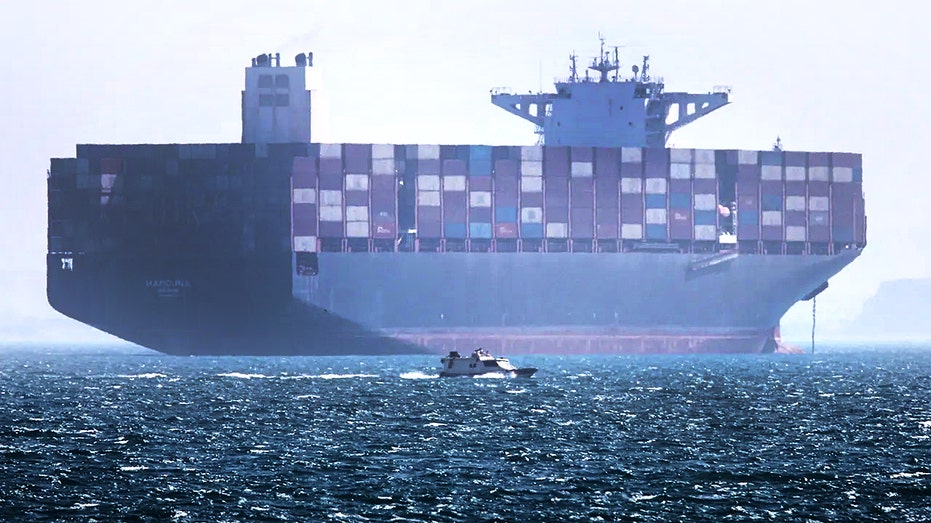
The comments come as the Trump administration has increased pressure on European allies to take a larger role in protecting international shipping routes amid Iranian threats tied to the Strait of Hormuz, one of the world’s most critical oil transit choke points. Roughly one-fifth of global oil consumption passes through the narrow waterway connecting the Persian Gulf to the Arabian Sea.

Speaking after a meeting with foreign ministers in Sweden Friday, Secretary of State Marco Rubio questioned the value of hosting U.S. military bases in allied countries that later restrict American military operations during wartime.

"One of the arguments I always made was that these bases in the region provided us with logistical options that we wouldn’t otherwise have," Rubio told reporters. "And when some of those bases are denied to you during a conflict that we’re involved in, then you question whether that value is still there."

President Donald Trump also has sharply criticized NATO allies over a reluctance to participate in military operations tied to the Iran conflict and securing the Strait of Hormuz. 

Trump said he was "strongly considering" pulling the United States out of NATO after allies failed to join the U.S. campaign against Iran, according to an April 1 interview with Britain’s Daily Telegraph, calling the alliance a "paper tiger."

The Czech Republic, a NATO member since 1999, reached NATO’s benchmark of spending 2% of GDP on defense and has supported calls for Europe to increase military readiness amid Russia’s war in Ukraine.

Macinka strongly defended the administration’s calls for Europe to increase defense spending and reduce dependence on Washington for long-term security guarantees. 

"We should do our homework and build our defense to become stronger," he said, arguing that Europe had delayed necessary military investments for too long.

He also tied Europe’s defense spending challenges to the European Union’s Green Deal policies, the bloc’s sweeping climate agenda aimed at reducing carbon emissions, calling them ideological and financially destructive. 

"If we get rid of this green, crazy alarmism, then we have enough money to build our defense," he said.

The Czech foreign minister also voiced unusually direct support for Trump and his administration, praising what he described as a global "common sense" shift following Trump’s election victory.

"We are friends of Israel, and we are friends of America," Macinka said. "Especially me as a politician, I'm a friend of the ideology of the current American administration."

Macinka also referenced a clash earlier in 2026 with former Secretary of State Hillary Clinton at the Munich Security Conference, where he criticized Europe’s liberal political establishment and defended the populist wave reshaping parts of Europe and the United States.

EUROPE MUST LEAD ON UKRAINIAN SECURITY GUARANTEES, GREEK FOREIGN MINISTER SAYS: 'WE ARE THE NEIGHBORS'

Macinka linked Prague’s strong support for Ukraine to the Soviet-led invasion of Czechoslovakia in 1968, when hundreds of thousands of Warsaw Pact troops occupied the country for more than two decades.

He said that historical experience continues to shape Czech public opinion and support for Kyiv.

"The Czech society feels a big solidarity with Ukraine," Macinka said, describing the war as a "symmetric war" between a powerful Russian military and a Ukrainian army backed by the West.

Macinka highlighted Prague’s leading role in a Czech-backed ammunition initiative supplying Ukraine with artillery rounds collected through international donor efforts. 

Recalling a visit to Kyiv earlier in 2026, he said he received intelligence briefings on battlefield ammunition consumption from Ukrainian military officials.

TRUMP, ZELENSKYY TO MEET FOR KEY DEAL AS NATO ALLIES, RUSSIA WAIT, WATCH

The Czech initiative delivered more than half a million rounds of ammunition in 2026 alone, according to Macinka, helping stabilize the battlefield ahead of possible peace negotiations.

Macinka argued that maintaining a stable front is essential for meaningful negotiations, warning that shifting battle lines will only harden demands on both sides.

With Washington increasingly focused on the Middle East, Macinka also said Europe must begin taking a larger diplomatic role in future negotiations over Ukraine.

"America is quite busy with the Middle East," he said. "Europe should wake up and ask for a place at the table."

(Auszug von RSS-Feed)

☐ ☆ ✇ Fox News

Ukraine’s battlefield is transforming the future of NATO

veröffentlicht.
Vorschau ansehen

This is part three of a series examining the challenges confronting the NATO alliance.

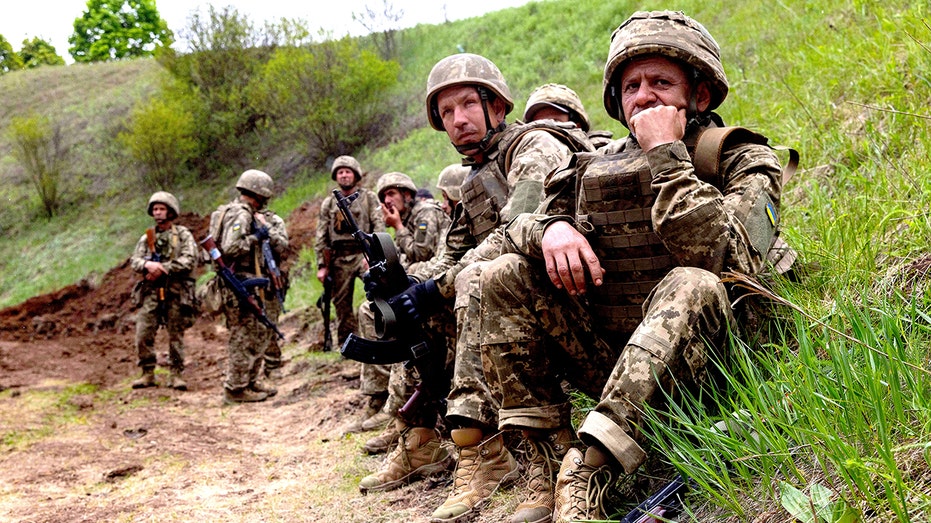
LVIV, Ukraine — Four years into Russia’s invasion of Ukraine, officials across NATO’s eastern flank increasingly believe the alliance’s future is already being rewritten on Ukraine’s battlefield.

From drone warfare and cyber defense to civilian resilience and large-scale military mobilization, Eastern European officials say Ukraine has become one of the world’s most battle-tested militaries, forcing NATO to rethink how future wars will be fought.

This week, NATO Secretary-General Mark Rutte confirmed Ukrainian President Volodymyr Zelenskyy had been invited to attend the alliance’s annual summit in Ankara in July, underscoring how central Ukraine has become to NATO’s future despite not being a member of the alliance.

'A NEW KIND OF WAR': INSIDE UKRAINE'S HIDDEN FACTORIES MASS-PRODUCING COMBAT DRONES

"I think today the Ukrainian army is the number one army in Europe," Mayor of Lviv Andriy Sadovyi told Fox News Digital during an interview in the western Ukrainian city.

"I think NATO needs the Ukrainian army," he added.

The debate over NATO’s future intensified this week as alliance foreign ministers gathered in Sweden ahead of a major NATO summit in July, with Secretary of State Marco Rubio calling the upcoming meeting "one of the more important leaders’ summits in the history of NATO."

Rubio warned NATO allies this week that the alliance lacks sufficient munitions production for future conflicts, a concern echoed by retired Lt. Gen. Richard Newton, who said the Pentagon is studying Ukraine’s rapid wartime industrial adaptation.

"A number of nations are taking a page out of Ukraine’s transformation of its defense industrial base, in terms of quality as well as the tremendous increase in quantity of arms to the frontlines as well," Newton said, adding, "The Pentagon is taking note and working to encourage the transformation of our own industrial base so we can drastically improve and more rapidly provide capabilities to our forces in the field, not in a matter of years but in months and perhaps even in weeks."

Rubio also referenced President Donald Trump’s announcement that the U.S. would maintain troop deployments in Poland after concerns earlier this week about possible reductions on NATO’s eastern flank.

AS TRUMP FORCES NATO TO PAY UP, ALLIANCE RACES TO CLOSE MILITARY GAP WITH US

Speaking before the NATO meeting, Polish Foreign Minister Radosław Sikorski welcomed Trump’s announcement. "I want to thank President Trump for his announcement that the presence of American troops in Poland will be maintained more or less at previous levels," Sikorski said.

"I think this makes Putin very uncomfortable."

Some note that the debate over NATO’s future comes with deep irony for Moscow.

One of Russian President Vladimir Putin’s central grievances before the invasion was NATO’s eastward expansion and Ukraine’s growing ambitions to move closer to the alliance. Moscow repeatedly demanded NATO roll back its military footprint to pre-1997 levels and opposed any future Ukrainian membership.

Instead, the invasion accelerated NATO’s expansion.

Finland formally joined NATO in 2023, ending decades of military nonalignment, while Sweden joined in 2024 after Russia’s invasion dramatically reshaped security calculations across northern Europe. Finland alone added more than 800 miles of direct NATO border with Russia.

Now officials in Poland and Ukraine say the war is not only expanding NATO geographically, but fundamentally transforming the alliance itself.

"For decades, NATO focused largely on expeditionary wars and counterterrorism," said Polish Deputy Defense Minister Paweł Zalewski during an interview in Warsaw. "Modern warfare is mostly done by drones."

"There is not a military in the world which is better than Ukraine" in understanding today’s battlefield realities, he added.

US SCRAMBLES AS DRONES SHAPE THE LANDSCAPE OF WAR: 'THE FUTURE IS HERE'

Retired Gen. Philip Breedlove, who served as NATO supreme allied commander Europe, said the war has fundamentally transformed how militaries around the world understand modern warfare.

"The war in Ukraine has changed far more than just NATO’s understanding of modern warfare — it has changed the whole world’s understanding," Breedlove told Fox News Digital.

Breedlove added that Ukraine’s military has evolved into "one of Europe’s most capable and formidable" forces after years of fighting Russia, despite having surrendered its Soviet-era nuclear arsenal under the 1994 Budapest Memorandum.

UKRAINE MAKES FASTEST GAINS IN YEARS AS RUSSIA TALKS STALL, EXPLOITING CRACKS IN KREMLIN COMMAND

"Today, most agree that Ukraine is not only fighting, but winning back land against one of the world’s most formidable forces," he said.

That transformation is visible throughout Ukraine.

Before Russia’s invasion, Ukraine had one of Eastern Europe’s largest IT sectors. Sadovyi said the war forced much of that technological ecosystem to pivot toward defense production.

"Before the invasion, we had in Kyiv a huge IT cluster, 40,000 workers," Lviv’s mayor said. "During the war, we rebuilt the IT cluster to defend cluster."

NATO ALLY POLAND WARNS RUSSIA, BELARUS PUSHING ILLEGAL MIGRANTS TOWARD ALLIANCE — AND THE US

Ukraine now operates a rapidly expanding wartime innovation ecosystem focused on drones, anti-drone systems, battlefield communications and decentralized weapons production. NATO officials and European militaries are increasingly studying those lessons closely.

Breedlove says the conflict exposed the limits of traditional air power and accelerated the rise of drone warfare.

"It’s critical to remember that the war in Ukraine is being fundamentally fought without the support of modern air warfare because of the failures of the Russian Air Force," he said.

"It’s why drone warfare has grown so exponentially, because neither side was able to marshal true modern air capabilities."

The changes are also reshaping NATO strategy.

The Polish defense official Zalewski told Fox News Digital the Pentagon is now promoting what Polish officials describe as "NATO 3.0," a model in which Europe assumes greater responsibility for conventional defense as the United States shifts more attention toward China and the Indo-Pacific.

"The main assumption of this concept is that conventionally it would be Europe defending itself," he said.

EUROPE STEPS UP TO FUND ITS OWN DEFENSE, PROVIDE SECURITY FOR UKRAINE AFTER TRUMP THREATS

That shift comes as Poland dramatically increases military spending and positions itself as one of NATO’s leading military powers on the alliance’s eastern flank. Warsaw spent nearly 5% of GDP on defense this year, the highest level in NATO.

Polish officials argue the war proved Eastern Europe was right to take Russia’s threat seriously long before many Western European countries did.

"The eastern flank is much more powerful than even five years ago," Polish Deputy Foreign Minister Marcin Bosacki told Fox News Digital during reporting in Warsaw.

"We were right about the nature of Putin’s regime and Russia’s aggressive strategy."

Ukraine is not currently a NATO member, and the alliance has avoided offering Kyiv a concrete timeline for accession during the war out of concern it could trigger direct confrontation between NATO and Russia.

But across Eastern Europe, officials increasingly argue the alliance’s future may depend on Ukraine regardless of formal membership.

(Auszug von RSS-Feed)

☐ ☆ ✇ Fox News

'A new kind of war': Inside Ukraine's hidden factories mass-producing combat drones

veröffentlicht.
Vorschau ansehen

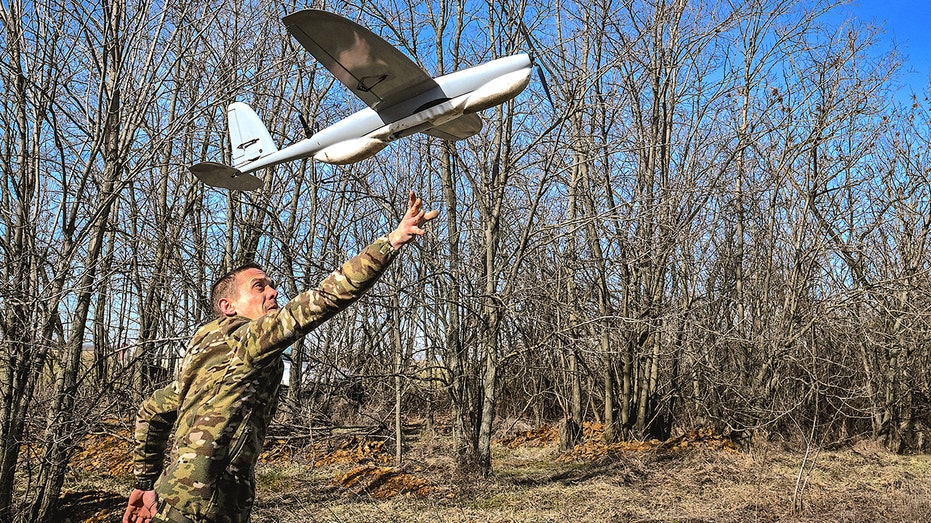
LVIV, Ukraine: Exclusive — The same Iranian-designed Shahed drones that rain down in Lviv, Ukraine, nearly every night are now being hunted by weapons built just miles away inside hidden factories where former students and office workers assemble kamikaze drones and interceptor systems around the clock.

What began as an improvised wartime effort has evolved into one of the world's fastest-growing military drone industries. One Ukrainian official says Kyiv now leads NATO in battlefield innovation and can offer hard-won lessons for the U.S. and Israel as they confront the same Iranian drone technology across the Gulf.

"Drone technology completely changed the situation in the frontline," Lviv Mayor Andriy Sadovyi told Fox News Digital in an exclusive interview. "Maybe in six months, maybe in one year, we will have technology to land 1,000 drones in one moment.

POLAND SEEKS ANSWERS AFTER PENTAGON SCRAPS PLANNED US ARMORED BRIGADE ROTATION

"If we will have more deep collaboration between Ukraine, the United States, Israel and Europe, we will prepare special equipment for our victory," he said.

Dmytro, CEO of a Ukrainian drone manufacturer producing roughly 1,000 drones a week, told Fox News Digital, "We are three or four steps ahead of other countries. … This is a new kind of war. It is a war of IT technology."

Cheap drones now allow small battlefield units to identify and destroy tanks, armored vehicles and even sophisticated air defense systems that once required expensive missiles or fighter aircraft.

That transformation is visible throughout western Ukraine, where defense technology hubs, secret workshops and testing sites now operate, while in the cities air raid sirens regularly interrupt daily life.

Inside a workshop Fox News Digital visited, workers moved rapidly between tables stacked with propellers, fiber optic cable and other classified drone components. The workers say they no longer see themselves as civilians temporarily helping the war effort. Many now view drone production as essential to Ukraine’s survival.

Vitaliy, one of the technicians assembling kamikaze drones destined for the front line, said he now builds hundreds of drone components a day. 

"Targets will be vehicles, tanks, troopers, positions," he told Fox News Digital.

NATO ALLY POLAND WARNS RUSSIA, BELARUS PUSHING ILLEGAL MIGRANTS TOWARD ALLIANCE — AND THE US

Referring to President Donald Trump's statement that he will end the war, Vitaliy said, "I feel honored because I’m helping my country to get peace much faster," Vitaliy added. "Peace through strength — this is our motivation. But it is mostly on us, for sure."

Ukraine’s domestic drone production has expanded at a staggering pace. Ukrainian Deputy Defense Minister Serhiy Boyev said earlier this year the country aims to produce more than seven million drones in 2026, up from roughly four million in 2025.

From AI-assisted battlefield systems to drones resistant to Russian electronic warfare, Ukraine’s wartime innovations are exposing vulnerabilities in traditional Western military doctrine.

At another defense technology hub in Lviv, rows of interceptor drones, unmanned ground vehicles and remotely operated weapons systems fill a showroom demonstrating Ukraine’s rapidly evolving battlefield ecosystem.

"We have around 250 tech companies in the system," said Volodymyr Cherniuk, co-founder of Iron, a Ukrainian defense technology cluster.

Some drones are designed for reconnaissance, others for evacuation, logistics or direct strike missions. One heavy-lift drone used for nighttime attacks has earned the nickname "Baba Yaga" from Russian troops, which Cherniuk translated as "boogeyman."

Another interceptor drone is designed specifically to hunt Iranian-made Shahed drones that Russia uses in nightly attacks on Ukrainian cities.

UKRAINE’S 'SPIDER’S WEB' DRONE STRIKE BURNS OVER 40 RUSSIAN WARPLANES, MOSCOW CALLS IT 'TERRORIST ATTACK'

"They can go 300 kilometers per hour," Cherniuk said. "One hundred grams is enough to shut down a Shahed."

"We have a lot of Americans, Canadians, Europeans who come here and want our data, feedback from the front line," Dmytro said. 

As Fox News Digital reported from Lviv, air raid sirens repeatedly echoed across the city, a reminder that western Ukraine remains within reach of Russia’s expanding drone campaign.

Russia has dramatically escalated its aerial assaults in the recent week after the end of the short ceasefire, launching massive drone barrages targeting cities and logistical hubs across Ukraine, including areas near NATO territory close to the Polish border.

Ukraine has also increasingly demonstrated its ability to strike deep inside Russian territory with long-range drone attacks targeting areas around Moscow and Russian energy infrastructure.

But the evolving drone war has also increasingly spilled beyond Ukraine and Russia’s borders into NATO territory.

In recent weeks, drones linked to Ukrainian long-range strike operations entered the airspace of Baltic alliance members including Latvia, Lithuania and Estonia, triggering political fallout and renewed concerns about regional air defenses. Latvian Defense Minister Andris Sprūds resigned after drones crashed near fuel storage facilities close to the Russian border.

Ukrainian and Baltic officials blamed Russian electronic warfare and GPS spoofing for redirecting the drones off course, arguing Moscow is increasingly using electronic warfare not only defensively, but also to create instability and political pressure inside NATO countries.

The incidents underscore how the same Iranian-designed Shahed drones Russia uses nightly against Ukrainian cities — and similar long-range drone technologies increasingly used by both sides — are reshaping modern warfare far beyond the battlefield itself.

(Auszug von RSS-Feed)

☐ ☆ ✇ Fox News

'Written in our DNA': Polish pilots who remember Soviet rule prepare for America's most lethal fighter jet

veröffentlicht.
Vorschau ansehen

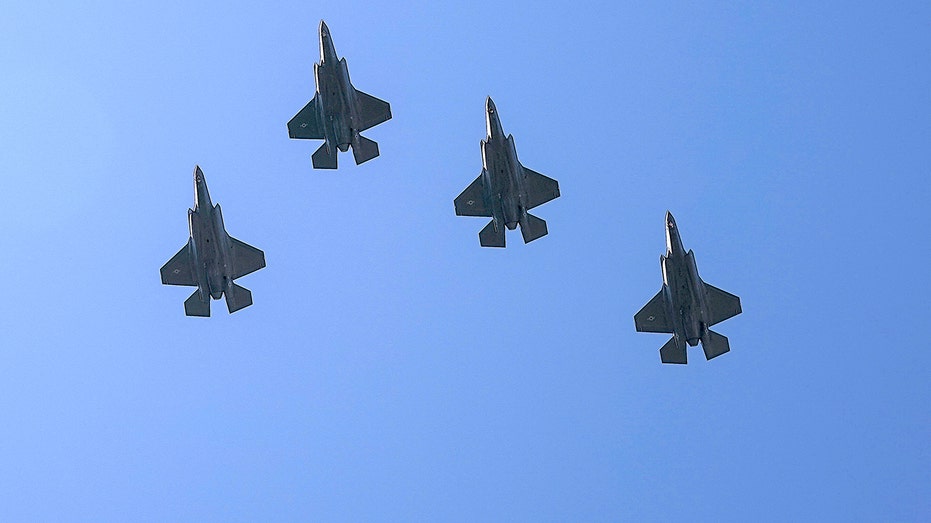
LASK, Poland — Poland is expected to receive its first F-35 fighter jets "very, very soon", Polish Deputy Defense Minister Paweł Zalewski told Fox News Digital, as American and Polish forces prepare together at a key NATO air base near the alliance’s eastern flank.

Fox News Digital received exclusive access to Poland's 32nd Tactical Air Base in Lask, where commanders pointed to the hangars being prepared for the arrival of the U.S.- made fifth-generation aircraft, part of Poland's $4.6 billion purchase of 32 F-35s from Lockheed Martin.

The jets have not arrived yet, but the partnership behind them already has.

POLAND SEEKS ANSWERS AFTER PENTAGON SCRAPS PLANNED US ARMORED BRIGADE ROTATION

Polish and American personnel train, operate and in some cases are stationed together on the base, reflecting the unusually close military relationship between Warsaw and Washington at a time when NATO burden-sharing remains under political scrutiny.

Lt. Col. Pete Nanoslawski, commander of the 52nd Operations Group Detachment 1 of the U.S. Air Force, originally from New York and stationed in Poland for the past five years, told Fox News Digital that Poland’s military modernization has significantly deepened cooperation between the two militaries.

"We are experiencing incredible support from Polish-provided logistics support and Polish-provided infrastructure," Nanoslawski said while standing alongside Polish commanders on the base.

He said Poland’s investment in American military systems and joint operations reflects how seriously Warsaw views threats from Russia. "Their foreign military sales portfolio is an appetite that’s insatiable, and rightfully so."

The close relationship between the two militaries was visible throughout the visit. As Polish commanders spoke about cooperation with the United States, they frequently turned toward their American counterparts with familiarity that went beyond formal alliance language.

NATO ALLY POLAND WARNS RUSSIA, BELARUS PUSHING ILLEGAL MIGRANTS TOWARD ALLIANCE — AND THE US

"We speak the same language, only with different accents," Col. Krzysztof Duda, pilot and commander of the 32nd Tactical Air Base in Lask, told Fox News Digital.

Duda, who studied in the United States and attended the U.S. Air War College, described himself as "a child of the American education system."

"The marriage we have with the U.S. on the military level, even if you want to divorce, we would not," Duda said with a smile,"But we don’t want the divorce."

Nanoslawski added that the American presence in Poland provides "enhanced forward presence and the ability to maneuver and adjust rapidly."

The partnership is now entering a new phase with the integration of the U.S.-made F-35 into Poland’s air force fleet.

Poland signed a $4.6 billion agreement in 2020 to purchase 32 F-35A fighter jets manufactured by Lockheed Martin.

Duda, who is overseeing the implementation process at Lask, said the transition involves years of training, infrastructure upgrades and coordination with the United States.

Training to become an F-35 pilot is not just a long process, it's an expensive one too — Duda estimates that it costs around $55 million per pilot.

The base itself has undergone extensive modernization to prepare for the aircraft, including new operational infrastructure, maintenance systems and classified facilities required under American certification standards.

In an interview with Fox News Digital in Warsaw, Polish Deputy Defense Minister Paweł Zalewski confirmed the first F-35 arrival is expected soon. "I can confirm that it will be very, very soon," Zalewski said.

POLAND SHOOTS DOWN DRONES IN ITS AIRSPACE DURING RUSSIAN ATTACK ON NEIGHBORING UKRAINE

"F-35s provides very, very important capabilities, so it offers domination in the air. That is crucial in the battlefield nowadays," he added. "It will be a capability developed together with Americans."

At a time when NATO burden-sharing remains a recurring debate in Washington, Poland has emerged as one of the alliance’s strongest military partners, dramatically increasing defense spending, purchasing American weapons systems and hosting U.S. forces.

For many Polish officers, the threat from Moscow is deeply personal.

Lt. Col. "Shooter," a Polish F-16 pilot at the base, told Fox News Digital that countries on NATO’s eastern flank still carry memories of Soviet domination.

POLISH GOVERNMENT PLANS MANDATORY MILITARY TRAINING FOR ADULT MEN

"There are still people that lived in communism," he said. "We remember, and we don’t want anything like that to happen again."

Looking at Russia’s actions in Chechnya, Georgia, Crimea and Ukraine, he said Poland believes deterrence is essential.

"We have this intuition probably written in our DNA," Shooter said. "When they are doing something, they’re not going to stop unless the cost of the further operation is going to be more than what they’re going to gain."

According to the U.S. Air Force, Polish pilots began F-35 training in the United States in 2024, including at Ebbing Air National Guard Base in Arkansas. The 33rd Fighter Wing announced in February that a Polish pilot had completed the first flight on Poland’s new F-35A aircraft as part of the training program.

Lockheed Martin told Fox News Digital that "integration of the F-35 into the Polish Air Force fleet advances regional deterrence, enhances interoperability and strengthens European security."

"As seen in recent combat and air policing operations, the F-35 is actively helping defend NATO and allied airspace by deterring and defeating threats, and it will protect Poland’s national security for decades to come," a company spokesperson said.

The company added that preparations are continuing for Poland’s first in-country F-35 arrival celebration at Lask in June.

(Auszug von RSS-Feed)

☐ ☆ ✇ Fox News

NATO ally Poland warns Russia, Belarus pushing illegal migrants toward alliance — and the US

veröffentlicht.
Vorschau ansehen

This is part two of a series examining the challenges confronting the NATO alliance.

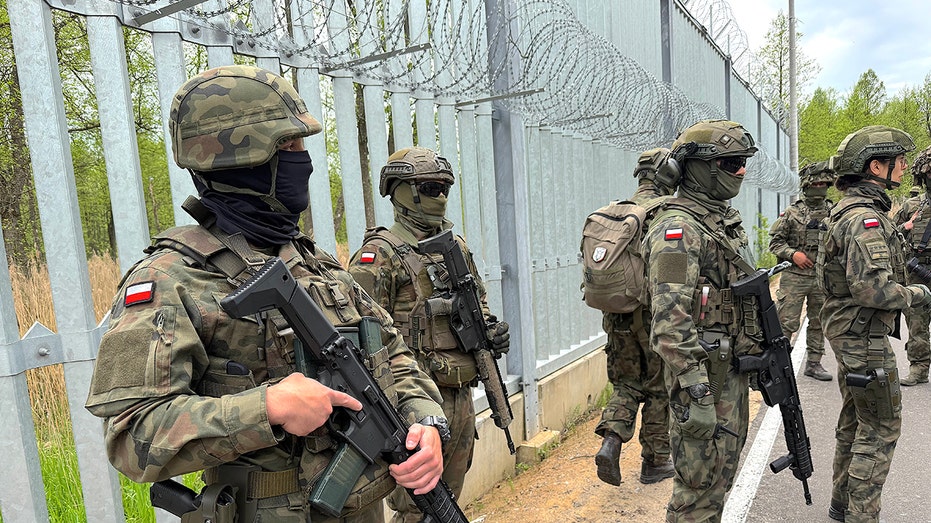
POLAND-BELARUS BORDER: Riding in a military convoy escorted by armored vehicles from Poland’s 18th "Iron Division" along the country’s  nearly 324-mile border with Belarus, soldiers pointed toward dense forests where they say Europe’s newest form of warfare is unfolding.

Polish officials warn illegal migrants weaponized by Russia and Belarus to destabilize NATO's eastern flank are also making their way to the United States — part of what Warsaw calls an ongoing war against the Western alliance that has direct implications for American security.

The border was once guarded mainly by Poland’s Border Guard and police. But after years of mounting pressure from illegal crossings, Polish officials say the army was deployed because the situation became too large and too dangerous to handle as a conventional immigration challenge.

TROOPS AT THE BORDER: HOW THE MILITARY’S ROLE IN IMMIGRATION ENFORCEMENT HAS EXPLODED UNDER TRUMP

Now, the frontier is guarded in layers: soldiers, border guards and rapid-response forces. A temporary barrier built in 2021 has become an electronic fence backed by surveillance systems and military patrols. Polish officials say migrants trying to cross have come from countries including Syria, Somalia, Afghanistan and India.

They describe the crisis as "artificial migration," saying the illegals are flown into Belarus from the Middle East, Africa and Asia and then transported toward the Polish border by Belarusian authorities in an effort to pressure and destabilize NATO countries.

Military officials at the border said the peak was in 2021, when there were 39,697 illegal crossing attempts. By 2025, it was 29,869, slightly fewer than in 2024. So far in 2026, they have seen a major drop, they say.

For Warsaw, the numbers tell only part of the story.

Polish officials say the border pressure is not spontaneous illegal migration, but a Russian-backed Belarusian operation designed to destabilize NATO from within.

"We are at war," Ambassador Krzysztof Olendzki of Poland’s Foreign Ministry told Fox News Digital after the border visit.

"Not only Poland, but also all the countries of the eastern flank of NATO, we are in war," Olendzki said. "We cannot see it as a classical war with soldiers, with tanks and so on, but the war is exercised by our adversaries, by Belarus and Russia, who are using practically migrants as an asymmetric weapon against NATO countries."

WHITE HOUSE ROADMAP SAYS EUROPE MAY BE 'UNRECOGNIZABLE' IN 20 YEARS AS MIGRATION RAISES DOUBTS ABOUT US ALLIES

The crisis dates back to 2021, when Poland, Lithuania and Latvia accused Belarusian President Alexander Lukashenko’s regime of encouraging migrants from the Middle East, Africa and elsewhere to travel to Belarus and cross illegally into the European Union. Belarus has denied orchestrating the flows, but Poland and the EU have described the campaign as hybrid warfare.

Olendzki said the goal is not only to push people across the border, but to create chaos inside Western societies.

The border visit underscored how far Poland has gone to harden what it views as one of NATO’s most vulnerable frontiers.

Capt. Angelika Korkosz of Poland’s 18th Division described the day-to-day strain on soldiers stationed there.

"Many times soldiers were faced with aggression from illegal groups of immigrants, and they have to act appropriately and calmly in accordance with the law and procedures while protecting themselves," Korkosz told Fox News Digital.

POLISH GOVERNMENT PLANS MANDATORY MILITARY TRAINING FOR ADULT MEN

Polish officials said migrants have used Molotov cocktails in at least two incidents, sparking fires near the border. Soldiers also spoke of a Polish serviceman who died after being stabbed by an illegal migrant at the frontier.

Korkosz said the challenge is not only violence, but exhaustion.

"A few months ago, we had minus-20-degree winters, so 12-hour duty during these conditions is really demanding," she said. "Many soldiers are here for a long time, and it is getting more and more difficult, this long separation from their relatives."

Still, she said the troops are prepared.

"The training includes decision-making under pressure in an ambiguous operational environment," Korkosz said. "That’s why when we are here at the border, we are really well-prepared for performing our duties."

Poland says the border defenses are working. Amb. Olendzki said the lower number of crossings this year reflects the physical barrier, the increased effectiveness of the Border Guard and the military presence. But he warned the threat has not disappeared, only shifted.

NATO WARNS RUSSIA AFTER POLAND SHOOTS DOWN 'HUGE NUMBER' OF DRONES THAT VIOLATED ITS AIRSPACE

"Seeing the fact that the Polish-Belarusian border is quite well guarded, our adversaries are just pushing migrants through the borders of our neighboring countries," he said. "So it hasn’t ended, but it’s changed the direction. The threat still exists, and we must be vigilant."

That matters to NATO because Poland’s border with Belarus is not only Warsaw's border. It is also the eastern edge of the European Union and NATO territory.

Belarus is Russia’s closest ally and allowed its territory to be used for Russia’s 2022 invasion of Ukraine. Ukrainian President Volodymyr Zelenskyy warned Russia may be trying to pull Belarus deeper into the war and could use Belarusian territory to threaten Ukraine or even a NATO country.

That fear is central to Poland’s security posture.

During a meeting with reporters in Warsaw, Polish deputy Foreign Minister Marcin Bosacki told Fox News Digital Russia’s war against Ukraine is, for Poland, "a matter of national safety and existence."

But Bosacki said the threat to NATO countries is already wider than the battlefield in Ukraine.

"We had on NATO countries’ territories assassinations, numerous drone attacks on airports, on critical infrastructure," Bosacki said. "We had very serious cyberattacks."

Bosacki said Poland faced a Russian-instigated cyberattack last December on critical energy infrastructure that Warsaw believes was intended "to black out part of Poland."

The warning fits a broader pattern of concerns across NATO’s eastern flank. The Associated Press reported earlier this year that balloons from Belarus had crossed into Polish airspace for a third consecutive night, with Polish forces describing the incidents as attempts to test air defense responses.

For Poland, illegal migration, cyberattacks, drones, sabotage and disinformation are not separate problems. They are different pieces of one Russian and Belarusian pressure campaign against NATO.

Olendzki said Poland’s role is to stop the pressure before it moves deeper into Europe or beyond.

"Standing on guard on the eastern flank of NATO, we are providing security not only to Poland, to Lithuania, Latvia, Estonia, Finland, but to entire NATO, also to the United States," he said.

That U.S. connection is a central part of Poland’s message to Washington: The eastern flank is not a distant European problem, but a front line in a broader confrontation with Russia and its allies.

Poland now spends nearly 5% of its GDP on defense, the highest rate in NATO, if based on GPD. Bosacki said Warsaw has long taken defense spending seriously.

"We never went below 2% defense spending," Bosacki said. "Now we are spending almost 5%. This is real military spending."

He said the eastern flank has become more influential inside NATO because countries closest to Russia were proven right.

US ALLIES ACCUSE RUSSIA OF 'ESCALATING HYBRID ACTIVITIES' AGAINST NATO, EU NATIONS AFTER DATA CABLES SEVERED

"The eastern flank is much more powerful than even five years ago," Bosacki said. "We were right about the nature of Putin’s regime and Russia’s aggressive strategy."

That view has shaped Poland’s approach to the United States. Warsaw wants American troops to remain in Europe, but Polish officials also acknowledge that Europe must assume more of the defense burden as U.S. attention increasingly shifts toward China and the Indo-Pacific.

Bosacki said Poland understands that "Europe ceased to be angle number one for U.S. foreign policy," but wants any change in America’s role to be "gradual and well-designed."

He added that Poland wants the shift in trans-Atlantic security to be "not a divorce, but a new kind of relationship."

For now, that relationship is being tested along a cold, wooded border where Poland says NATO’s future wars may already be taking shape.

The Polish soldiers patrolling the frontier do not describe their mission in grand geopolitical terms. Korkosz said she joined the military because she wanted to do "something which matters."

But to Polish officials, the mission at the Belarus border is much bigger than immigration enforcement.

It is a warning to the rest of NATO that the alliance’s next war may not begin with tanks crossing a border, but with migrants pushed through forests, cyberattacks on power grids, drones near airports and disinformation campaigns designed to fracture societies from within.

(Auszug von RSS-Feed)

☐ ☆ ✇ Fox News

UK defense shortfalls highlighted as Britain avoids Iran offensive role amid Trump criticism

veröffentlicht.
Vorschau ansehen

LONDON: The United Kingdom announced Tuesday it will be deploying military assets "as part of a future defensive mission to secure freedom of navigation in the Strait of Hormuz."

While the move can be seen as a positive step in repairing relations with the U.S., Prime Minister Keir Starmer’s reluctance to join the U.S. in "Operation Epic Fury" against Iran has still ruffled feathers in Washington — most notably those of President Donald Trump.

Trump has dismissed Starmer as "no Churchill." In a recent interview with Sky News, the president further complained about the lack of British alignment: "When we asked them for help, they were not there. When we needed them, they were not there... And they still aren't there."

TRUMP SLAMS STARMER AS ‘NOT WINSTON CHURCHILL’ FOR REFUSAL TO BACK IRAN STRIKES

Trump also took aim at the British Navy’s readiness in March, ridiculing the fleet during a White House meeting. 

"We had the U.K. say that, 'We'll send'— this is three weeks ago — 'we'll send our aircraft carriers,' which aren't the best aircraft carriers, by the way," Trump said, according to Sky News. "They're toys compared to what we have."

Two recent reports by a leading military expert and a parliamentary committee may, in part, explain why the U.K. didn’t join the war in an offensive measure.

In a report titled, "Iran War Delivers a Tough Lesson in Hard Power to the U.K.," Matthew Savill, director of military sciences at the Royal United Services Institute (RUSI), wrote, "The outbreak of a new war in the Middle East has led to questions about the U.K.'s relevance in international affairs. Alongside debates about legality and politics, there are some hard truths about military power and the reality of the readiness of the U.K.'s armed forces."

While the report was written with the war still raging on, Savill stated, "Pressure is growing for the deployment of more U.K. forces to the region and direct involvement in strikes, but the government will need to answer difficult questions about prioritization and the effect that it might be trying to achieve. The consequence is that as much as intent and policy drive U.K. involvement, the practical realities will constrain what the U.K. can do."

Savill added, "On the defensive side, the U.K. has not been idle... [U.K. assets] which also appear to have included some counter-drone units – have been involved in downing Iranian drones while defending Jordan and Iraq."

UK DEPLOYING WARSHIP, HELICOPTERS TO CYPRUS AFTER DRONE STRIKE

Savill wrote that "The challenge for the U.K. is that in the past few years, the commitments and visible presence of U.K. Armed Forces in the region have been shrinking, as a result of the pressure on the military, and a conscious decision to prioritize elsewhere, most recently in the ‘NATO First’ approach of the Strategic Defense Review of 2025."

While the Starmer government has committed to increasing defense spending to 2.5% of GDP by 2027, experts warn that this investment may be too late to restore the U.K.’s ability to project power globally in the near term.

John Hemmings, director of the National Security Center at Henry Jackson, told Fox News, "The U.K.’s military capabilities have been systematically underfunded over the past 15 years, with the Spending Review and cuts starting in 2009 and 2010 under Prime Minister David Cameron. The Strategic Defense and Security Review (SDSR) at the time stated that the world was headed in a much more dangerous state, but the fiscal devastation of the 2008 Financial Crisis pushed the Government into a series of cuts that were intended to be short-term. Instead, the Cameron Government sent the U.K.’s armed services into a spiral of terminal decline that has lasted until this day," he said.

TRUMP PRAISED FOR GETTING NATO ALLIES TO BOLSTER DEFENSE SPENDING: 'REALLY STAGGERING'

Hemmings added, "Consider the Royal Navy, the U.K.’s premier service and source of great power reach; only 25 out of 63 commissioned vessels are actual fighting ships. This force size is impossible to service Britain’s overseas responsibilities and has seen cuts of 50% in only 30 years. In 1996, there were 22 frigates, 17 submarines, 15 destroyers, and 3 aircraft carriers. Today’s First Sea Lord must attempt to carry out the same duties with seven frigates, 10 submarines, six destroyers, two aircraft carriers. In addition, the U.K. underfunded new capabilities like domestic air and missile defenses and advanced command and control systems."

A second report released last month, by the House of Lords International Relations and Defense Committee titled: ‘Adjusting to new realities: rebalancing the U.K.-U.S. partnership,' presents several key recommendations where it warned of the over-dependence on the U.S. "Although the U.K. has benefited from closely collaborating with the U.S. on defense, this has fostered a dependency culture leading to a decline in U.K. capabilities and loss of U.K. credibility in Washington. The Government should provide a clear and costed pathway to achieving the commitment to increase defense spending to 5% of GDP."

While the Ministry of Defense did not respond to several requests for comment over the state of forces, Fox News Digital recently reported that the U.K. government said it is reversing an attrition rate in the military, stating that total armed forces strength stood at 182,050 personnel as of Jan. 1, 2026, including 136,960 regular troops, an increase from the previous year.

The government has also pledged what it calls the largest sustained rise in defense spending since the Cold War, with military spending set to reach 2.6% of GDP by 2027, backed by an additional £5 billion (approximately $6.6 billion) this financial year and £270 billion (nearly $360 billion) in defense investment over the course of the current parliament. Britain has also said it aims to raise defense spending to 3% of GDP by the end of the next parliament.

Analysts say while some in the Trump administration see the U.K.’s absence as a betrayal of the special relationship, others may say it is a tough lesson in the limitations of a mid-sized power that has tried to maintain a global footprint on a shrinking budget.

(Auszug von RSS-Feed)

☐ ☆ ✇ Fox News

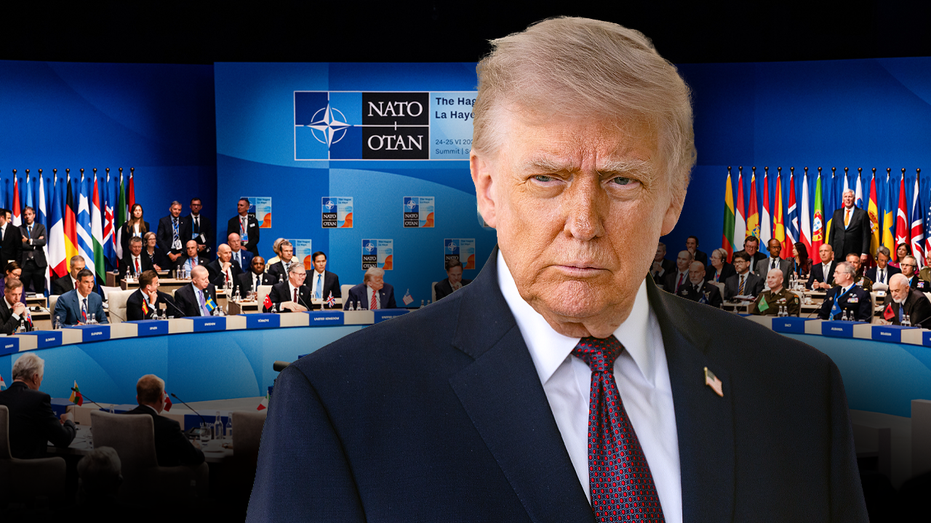
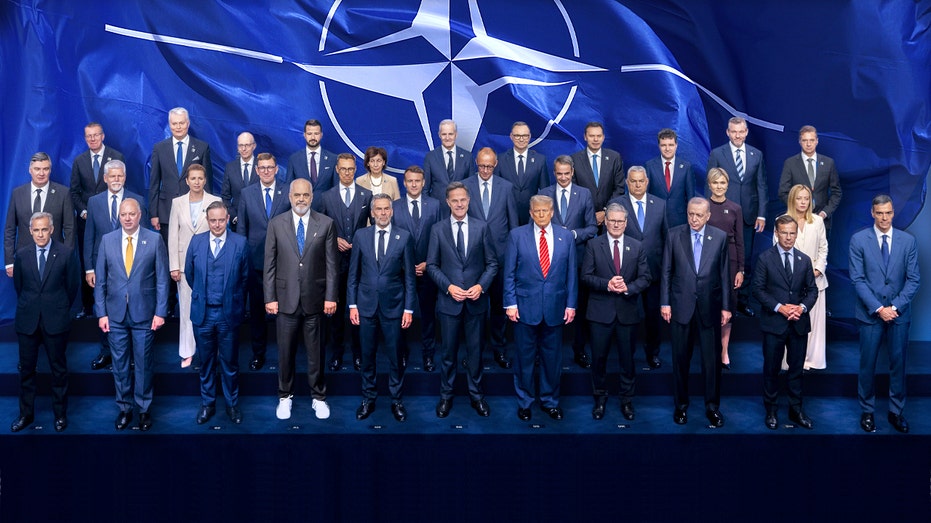
As Trump forces NATO to pay up, alliance races to close military gap with US

veröffentlicht.
Vorschau ansehen

This is part one of a series examining the challenges confronting the NATO alliance.

NATO has become a "bloated architecture" too dependent on American military power, former senior national security advisor Keith Kellogg told Fox News Digital.

As President Donald Trump pressures NATO allies to spend more on defense — ordering the withdrawal of 5,000 U.S. troops from Germany and signaling possible cuts in Spain and Italy — a deeper concern is emerging inside the alliance: despite years of rising European defense budgets, NATO still depends heavily on American military power, from missile defense and intelligence to logistics and nuclear deterrence. 

The growing gap between political commitments and real military capability is now fueling calls for structural changes inside the alliance as NATO confronts mounting threats from Russia and instability in the Middle East.

TRUMP ‘RIGHT TO BE OUTRAGED’ BY EUROPE’S BETRAYAL ON IRAN, SAYS FORMER THATCHER ADVISOR

NATO’s imbalance is not theoretical — and it is not new, retired Lt. Gen. Keith Kellogg told Fox News Digital, "I told the president… maybe you ought to talk about a tiered relationship with NATO," Kellogg described conversations with Trump in his first term about the alliance’s future. "…we need to develop a new, for lack of a better term, a new NATO a new defensive alignment with  Europe."

Kellogg added the alliance has expanded politically but not militarily — creating what he sees as a growing gap between commitments and real capability.

"You started with 12, and you went to 32, and in the process, I think you diluted the impact," he argued, calling today’s NATO "a very bloated architecture."

"They haven't put the money into defense. Their defense industry and defense forces have atrophied. When you look at the Brits right now, they could barely deploy forces: they have two aircraft carriers, both under maintenance. Their brigades are like one out of six that work. And you just look at the capability, it's just not there. So I think we need to realize that and say, well, we need something different," Kellogg, who is the co-chair of the Center for American Security at the America First Foreign Policy Institute, told Fox News Digital.

But not everyone agrees the alliance is losing relevance.

"It has never been more relevant," said John R. Deni, a research professor at the U.S. Army War College, who says NATO remains central to U.S. national security.

"The reason for that is twofold," he said. "One, it’s our comparative advantage versus the Chinese and the Russians… they don’t have anything like this."

"And the second reason… NATO underwrites the security and stability of our most important trade and investment relationship," he added, referring to economic ties between North America and Europe.

NATO ALLIES CLASH AFTER RUSSIAN JETS BREACH AIRSPACE, TESTING ALLIANCE RESOLVE

By around 2010, the United States accounted for roughly 65% to 70% of NATO defense spending, according to analysis provided by Barak Seener from the Henry Jackson Society, a London-based think tank.

"They’ve always been dependent on the U.S.," Kellogg said of the European allies.

"The allies overall rely upon one another for deterrence and defense by design," Deni said, explaining that alliances exist to "pool their resources" and "aggregate their individual strengths."

Deni pointed to ground forces as a clear example of what the U.S. gains from the alliance, noting that "there are far more allied mechanized infantry forces on the ground than there are Americans."

NATO CHIEF SIGNALS ALLIES MAY ACT ON HORMUZ, WARNS OF ‘UNHEALTHY CODEPENDENCE’ ON US

Still, he acknowledged that reliance has at times gone too far.

"In the past… it was fair to say that the European allies were overly reliant upon the Americans for conventional defense," he said, pointing to the 2000s.

That, he said, was partly driven by U.S. priorities — as Washington pushed European allies to focus on wars in Afghanistan and Iraq rather than territorial defense.

Seener describes NATO as "formally collective, but functionally asymmetric," with the U.S. providing a disproportionate share of "high-end capabilities."

That asymmetry is most visible in nuclear deterrence.

Seener said the U.S. provides the overwhelming majority of NATO’s nuclear arsenal — including intercontinental ballistic missiles, submarine-launched systems and strategic bombers — meaning deterrence ultimately relies on the assumption of U.S. retaliation.

A NATO official told Fox News Digital that, "The U.S. nuclear deterrent cannot be replaced, but it is clear that Europe needs to step up. There’s no question. There needs to be a better balance when it comes to our defense and security. Both because we see the vital role the U.S. plays around the world and the resources that it demands, and also because it is only fair."

"The good news," the official added, "is that the Allies are doing exactly that. They are stepping up, working together — and with the U.S. — to ensure we collectively have what we need to deter and defend one billion people living across the Euro-Atlantic area."

NATO LAUNCHES ARCTIC SECURITY PUSH AS TRUMP EYES GREENLAND TAKEOVER

Beyond nuclear weapons, the dependence runs through the alliance’s operational backbone.

Seener pointed to U.S.-provided intelligence, surveillance and reconnaissance — as well as logistics and command systems — as essential to NATO operations.

"Without U.S. intelligence and surveillance, NATO loses situational awareness and early warning capabilities," Seener said, adding, "So that means that Russia, for example, can attack Europe. And theoretically, if there's no NATO and the U.S. is not involved, Europe would not be aware, or it would take it too long to be able to defend itself."

Kellogg also says that much of Europe’s military capability falls short of top-tier systems.

"For the most part, their equipment, if you had to grade it A, B, C, D, E, F, they’re kind of like B players or C players," he said. "It’s not the first line of work."

He pointed to air and missile defense as a key gap, noting that while European countries rely on U.S.-made systems such as Patriot and THAAD, "they don’t have a system that’s comparable."

Kellogg attributed that to years of underinvestment, saying European defense industries "have atrophied," adding that the United States is also now "relearning that as well."

TRUMP AFFIRMS US 'WILL ALWAYS BE THERE FOR NATO,' WHILE EXPRESSING DOUBTS ABOUT ALLIANCE

Deni said the picture today is more mixed.

"Alliance defense spending has been up… and has spiked far more after 2022," he said, pointing to Russia’s invasion of Crimea in 2014 as a turning point.

But he cautioned that capability gains take time, noting that many improvements are still years away from full deployment.

Deni pointed to recent European purchases of U.S. systems as evidence of growing capability, noting that countries including Poland, Romania, Norway and Denmark are acquiring the F-35 fighter jet from the U.S.

"You can’t build an F-35 overnight," he said, adding that many of these improvements will take years to fully materialize.

A NATO official told Fox News Digital the alliance "needs to move further and faster" to meet growing threats, pointing to new capability targets agreed by defense ministers in June 2025.

The official said priorities include air and missile defense, long-range weapons, logistics and large land forces, noting that while details remain classified, plans call for a fivefold increase in air and missile defense, "thousands more" armored vehicles and tanks, and "millions more" artillery shells. NATO also aims to double key enabling capabilities such as logistics, transportation and medical support.

The official added that allies are increasing investments in warships, aircraft, drones, long-range missiles, as well as space and cyber capabilities, while boosting readiness and modernizing command and control.

"These targets are now included in national plans," the official said, adding that allies must demonstrate how they will meet them through sustained defense spending and capability development.

The NATO official also noted that European allies lead multinational forces across Central and Eastern Europe, while the U.S. and Canada serve as framework nations in Poland and Latvia, alongside ongoing air policing missions and NATO’s KFOR operation in Kosovo.

Kellogg’s warning is direct: NATO’s deterrence depends on U.S. presence.

"The one you always have to worry about… is Russia," Kellogg, who was Trump’s special envoy for Ukraine and Russia in 2025, said.

If U.S. forces are tied down elsewhere, NATO could face serious strain — particularly in areas like intelligence and logistics.

For Kellogg, the danger is delay. "We won’t know until it happens," he said. "And then you won’t be able to respond to it."

Deni, however, said the alliance remains a strategic asset — not a liability.

The question, he suggests, is not whether NATO still works. It is whether allies can adapt fast enough to keep it working.

(Auszug von RSS-Feed)

☐ ☆ ✇ Fox News

Trump ‘right to be outraged’ by Europe’s betrayal on Iran, says former Thatcher advisor

veröffentlicht.
Vorschau ansehen

As President Donald Trump continues to express anger at NATO European allies for their lack of help in the war with Iran, he’s making clear their behavior comes at a cost.

In the weeks during the war and since the ceasefire, the president has hit back not just with words but with definitive actions against several of those countries.

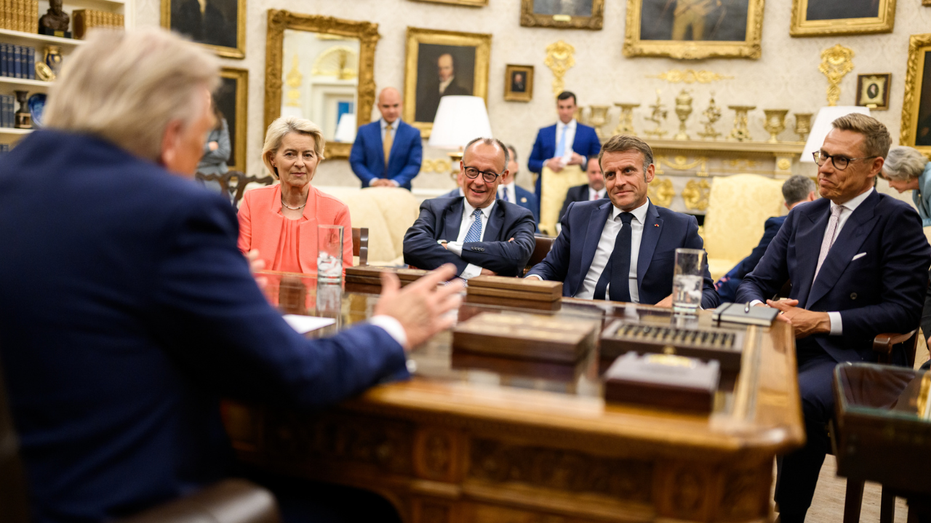
On Saturday, Trump said that he would withdraw more than the initial 5,000 U.S. troops from Germany as stated by the Pentagon, after Berlin’s leader denigrated the American effort to stop Iran’s regime from building a nuclear weapon.

TRUMP WEIGHS PULLING US TROOPS FROM GERMANY AMID CLASH WITH CHANCELLOR OVER IRAN WAR

A day earlier he said about Germany that "We're gonna cut way down. We're cutting a lot further than 5,000." The Trump administration previously announced a contraction of 5,000 troops in Germany after the country’s Chancellor Friedrich Merz said Iran’s regime "humiliated" Trump.

In an apparent state of panic, Merz walked back his attack on Trump and his Iran strategy on Sunday. The chancellor wrote on X: "The United States is and will remain Germany‘s most important partner in the North Atlantic Alliance. We share a common goal: Iran must not be allowed to acquire nuclear weapons."

Trump ratcheted up his troop reduction number against Germany amid his comments about downsizing U.S. boots on the ground in Spain and Italy because they failed to aid America in the war against Iran. The president’s anger at Western European countries has been simmering for weeks and could lead to profound changes in the North Atlantic Treaty Organization (NATO).

TRUMP CRITICIZES SPAIN AMID IRAN, NATO RIFT AS PM SANCHEZ FACES QUESTIONS OVER POLITICAL MOTIVES

Nile Gardiner, the director of the Margaret Thatcher Center for Freedom at The Heritage Foundation, told Fox News Digital, "The lack of support for the United States has been nothing less than treacherous. I think the president has the right to be outraged by the lack of support from key European allies."

He said, "There is a very deep-seated cultural appeasement in Europe toward the Iranian regime that goes back many decades, and a flat-out refusal to accept the reality of the immense dangers of a nuclear-armed Iran. European leaders are sleepwalking toward destruction with this perilous path they have taken.

TRUMP IS RIGHT ABOUT NATO’S WEAKNESS — THE REAL QUESTION IS HOW DOES AMERICA FIX IT

"The lack of support for the United States is how far Europe has gone toward losing its moral compass. Iran is a genocidal regime that threatens to wipe Israel off the map." He noted that the Islamic Republic has killed huge numbers of its population.

Gardiner, a former advisor to Lady Margaret Thatcher said, "If you listen to European leaders, it's as if the U.S. is the villain here."

Merz, speaking last week in Marsberg, criticized the U.S. approach to Iran, saying Washington was being "humiliated by the Iranian leadership" and expressing hope the conflict would end "as quickly as possible."

Gardiner said of Merz’s remarks, "Comments like these actually help the propaganda of the Iranian dictatorship. It is astonishing that a German chancellor would make these kinds of remarks at a time of war… and the German chancellor is giving comfort to the Iranian regime. It is disgusting."

Numerous Fox News Digital press queries sent to Merz’s spokesman Stefan Kornelius were not returned.

Before his announcement on the troop withdrawal from Germany, and in response to a question about reducing U.S. troops in Spain and Italy, Trump responded, "I mean, they haven't been exactly on board. Yeah, probably. Yeah, I probably will… Italy has not been of any help to us. And Spain has been horrible. Absolutely horrible."

Spain’s socialist prime minister, Pedro Sánchez, has taken a belligerent stand toward the U.S. and Israeli military campaign against the Iranian regime, forbidding the U.S. from using its military bases in Spain to refuel aircraft or prepare for military action. He has decried the campaign as illegal while staying quiet on the regime’s murder of thousands of protesters and its increased drive to produce ballistic missiles and acquire nuclear weapons-grade enriched uranium.

Gardiner said, "The Spanish have been the worst by a long way. At least the Germans and Italy have allowed the use of its own bases. The Spanish have refused to cooperate in any way with the war."

Trump told the Italian daily Corriere della Sera last month about the country's Prime Minister Giorgia Meloni,  "I'm shocked at her. I thought she had courage, but I was wrong."

The Europe expert, Gardiner, sees a wide gulf between how mainly Western European countries and the United States view the preservation of Western civilization, freedom, democracy and liberty.

"Europe has lost both its ability and its will to fight. The United States is clearly willing to fight to defend Western civilization and the free world. Much of Europe has given up on this, especially Western Europe. It is an appeasement mindset cojoined with weakness and pacifism and also a growing acceptance by European leaders of mass migration and Islamification."

He added, "Europe has fundamentally changed over the last 20 years beyond recognition, and yet Europe’s ruling elites accept it seemingly as a fact, with some notable exceptions."

Trump took the United Kingdom and France in March to task for their postion on the war against Iran.

"The Country of France wouldn’t let planes headed to Israel, loaded up with military supplies, fly over French territory," Trump wrote on Truth Social.

"France has been VERY UNHELPFUL with respect to the ‘Butcher of Iran,’ who has been successfully eliminated! The U.S.A. will REMEMBER!!!," he wrote.

Trump also wrote, "All of those countries that can’t get jet fuel because of the Strait of Hormuz, like the United Kingdom, which refused to get involved in the decapitation of Iran, I have a suggestion for you."

"Number 1, buy from the U.S., we have plenty, and Number 2, build up some delayed courage, go to the Strait, and just TAKE IT."

"You’ll have to start learning how to fight for yourself, the U.S.A. won’t be there to help you anymore, just like you weren’t there for us. Iran has been, essentially, decimated. The hard part is done. Go get your own oil!"

Gardiner said the crisis over the Iran war shows that Europe has surrendered. The big Western Europeans have embraced "defeatism," and "they do not care. It is as simple as that. And future generations will have to pay the price for the course Europe is taking now," he said.

Fox News' Brittany Miller and Solly Boussidan contributed to this report.

(Auszug von RSS-Feed)

☐ ☆ ✇ Fox News

Examining NATO: Inside the ‘commitment gap’ as US carries alliance deterrence

veröffentlicht.
Vorschau ansehen

This is part one of a series examining the challenges confronting the NATO alliance.

As President Donald Trump ramps up pressure on NATO allies to increase defense spending — and orders the withdrawal of 5,000 U.S. troops from Germany over the next six to 12 months — a deeper issue is coming into focus: even as allied budgets rise, NATO still depends heavily on American military power to function.

NATO’s imbalance is not theoretical — and it is not new, retired Lt. Gen. Keith Kellogg told Fox News Digital, "I told the president… maybe you ought to talk about a tiered relationship with NATO," Kellogg described conversations with Trump in his first term about the alliance’s future. "…we need to develop a new, for lack of a better term, a new NATO a new defensive alignment with Europe."

Kellogg, who served as a senior national security official during Trump's first term, said the alliance has expanded politically but not militarily — creating what he sees as a growing gap between commitments and real capability.

NATO CHIEF SIGNALS ALLIES MAY ACT ON HORMUZ, WARNS OF ‘UNHEALTHY CODEPENDENCE’ ON US

"You started with 12, and you went to 32, and in the process, I think you diluted the impact," he argued, calling today’s NATO "a very bloated architecture."

"They haven't put the money into defense. Their defense industry and defense forces have atrophied. When you look at the Brits right now, they could barely deploy forces: they have two aircraft carriers, both under maintenance. Their brigades are like one out of six that work. And you just look at the capability, it's just not there. So I think we need to realize that and say, well, we need something different," Kellogg, who is the co-chair of the Center for American Security at the America First Foreign Policy Institute, told Fox News Digital.

But not everyone agrees the alliance is losing relevance.

"It has never been more relevant," said John R. Deni, a research professor at the U.S. Army War College, who says NATO remains central to U.S. national security.

"The reason for that is twofold," he said. "One, it’s our comparative advantage versus the Chinese and the Russians… they don’t have anything like this."

"And the second reason… NATO underwrites the security and stability of our most important trade and investment relationship," he added, referring to economic ties between North America and Europe.

NATO ALLIES CLASH AFTER RUSSIAN JETS BREACH AIRSPACE, TESTING ALLIANCE RESOLVE

By around 2010, the United States accounted for roughly 65% to 70% of NATO defense spending, according to analysis provided by Barak Seener from the Henry Jackson Society, a London-based think tank.

"They’ve always been dependent on the U.S.," Kellogg said of the European allies.

"The allies overall rely upon one another for deterrence and defense by design," Deni said, explaining that alliances exist to "pool their resources" and "aggregate their individual strengths."

Deni pointed to ground forces as a clear example of what the U.S. gains from the alliance, noting that "there are far more allied mechanized infantry forces on the ground than there are Americans."

Still, he acknowledged that reliance has at times gone too far.

"In the past… it was fair to say that the European allies were overly reliant upon the Americans for conventional defense," he said, pointing to the 2000s.

That, he said, was partly driven by U.S. priorities — as Washington pushed European allies to focus on wars in Afghanistan and Iraq rather than territorial defense.

Seener describes NATO as "formally collective, but functionally asymmetric," with the U.S. providing a disproportionate share of "high-end capabilities."

That asymmetry is most visible in nuclear deterrence.

Seener said the U.S. provides the overwhelming majority of NATO’s nuclear arsenal — including intercontinental ballistic missiles, submarine-launched systems and strategic bombers — meaning deterrence ultimately relies on the assumption of U.S. retaliation.

A NATO official told Fox News Digital that, "The U.S. nuclear deterrent cannot be replaced, but it is clear that Europe needs to step up. There’s no question. There needs to be a better balance when it comes to our defense and security. Both because we see the vital role the U.S. plays around the world and the resources that it demands, and also because it is only fair."

"The good news," the official added, "is that the Allies are doing exactly that. They are stepping up, working together — and with the U.S. — to ensure we collectively have what we need to deter and defend one billion people living across the Euro-Atlantic area."

NATO LAUNCHES ARCTIC SECURITY PUSH AS TRUMP EYES GREENLAND TAKEOVER

Beyond nuclear weapons, the dependence runs through the alliance’s operational backbone.

Seener pointed to U.S.-provided intelligence, surveillance and reconnaissance — as well as logistics and command systems — as essential to NATO operations.

"Without U.S. intelligence and surveillance, NATO loses situational awareness and early warning capabilities," Seener said, adding, "So that means that Russia, for example, can attack Europe. And theoretically, if there's no NATO and the U.S. is not involved, Europe would not be aware, or it would take it too long to be able to defend itself."

Kellogg also says that much of Europe’s military capability falls short of top-tier systems.

"For the most part, their equipment, if you had to grade it A, B, C, D, E, F, they’re kind of like B players or C players," he said. "It’s not the first line of work."

He pointed to air and missile defense as a key gap, noting that while European countries rely on U.S.-made systems such as Patriot and THAAD, "they don’t have a system that’s comparable."

Kellogg attributed that to years of underinvestment, saying European defense industries "have atrophied," adding that the United States is also now "relearning that as well."

TRUMP AFFIRMS US 'WILL ALWAYS BE THERE FOR NATO,' WHILE EXPRESSING DOUBTS ABOUT ALLIANCE

Deni said the picture today is more mixed.

"Alliance defense spending has been up… and has spiked far more after 2022," he said, pointing to Russia’s invasion of Crimea in 2014 as a turning point.

But he cautioned that capability gains take time, noting that many improvements are still years away from full deployment.

Deni pointed to recent European purchases of U.S. systems as evidence of growing capability, noting that countries including Poland, Romania, Norway and Denmark are acquiring the F-35 fighter jet from the U.S.

"You can’t build an F-35 overnight," he said, adding that many of these improvements will take years to fully materialize.

A NATO official told Fox News Digital the alliance "needs to move further and faster" to meet growing threats, pointing to new capability targets agreed by defense ministers in June 2025.

The official said priorities include air and missile defense, long-range weapons, logistics and large land forces, noting that while details remain classified, plans call for a fivefold increase in air and missile defense, "thousands more" armored vehicles and tanks, and "millions more" artillery shells. NATO also aims to double key enabling capabilities such as logistics, transportation and medical support.

The official added that allies are increasing investments in warships, aircraft, drones, long-range missiles, as well as space and cyber capabilities, while boosting readiness and modernizing command and control.

"These targets are now included in national plans," the official said, adding that allies must demonstrate how they will meet them through sustained defense spending and capability development.

The NATO official also noted that European allies lead multinational forces across Central and Eastern Europe, while the U.S. and Canada serve as framework nations in Poland and Latvia, alongside ongoing air policing missions and NATO’s KFOR operation in Kosovo.

Kellogg’s warning is direct: NATO’s deterrence depends on U.S. presence.

"The one you always have to worry about… is Russia," Kellogg, who was Trump’s special envoy for Ukraine and Russia in 2025, said.

If U.S. forces are tied down elsewhere, NATO could face serious strain — particularly in areas like intelligence and logistics.

For Kellogg, the danger is delay. "We won’t know until it happens," he said. "And then you won’t be able to respond to it."

Deni, however, said the alliance remains a strategic asset — not a liability.

The question, he suggests, is not whether NATO still works. It is whether allies can adapt fast enough to keep it working.

(Auszug von RSS-Feed)

☐ ☆ ✇ Fox News

Trump criticizes Spain amid Iran, NATO rift as PM Sanchez faces questions over political motives

veröffentlicht.
Vorschau ansehen

Prime Minister Pedro Sanchez of Spain has tried to position himself as the European counterweight to President Donald Trump, but his motives are being questioned by critics.

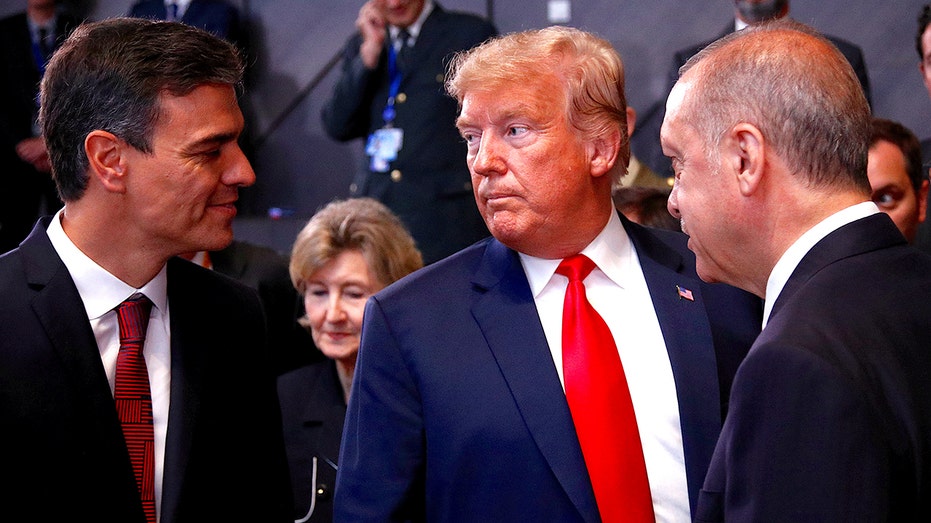
Sanchez, who is hosting a conference of leftist leaders from around the world in Barcelona this weekend, has rejected increasing Madrid’s NATO spending while positioning Spain against the Trump administration on several key policy issues.

More recently, the Spanish politician has taken a belligerent stand against the U.S. and Israeli military campaign against the Iranian regime, forbidding the U.S. from using its military bases in Spain to refuel aircraft or prepare for military action, decrying the campaign as illegal while staying quiet on the regime’s murder of thousands of protesters and its increased drive to produce ballistic missiles and acquire nuclear weapons-grade enriched uranium.

NATO CHIEF SIGNALS ALLIES MAY ACT ON HORMUZ, WARNS OF ‘UNHEALTHY CODEPENDENCE’ ON US

A few days after the war began with Iran, Sanchez said, "We are not going to be complicit in something that is bad for the world and is also contrary to our values and interests, just out of fear of reprisals from someone," Sánchez said, using the slogan "No to the war," the Associated Press reported.

On Saturday, Trump took aim at Sanchez’s policies in a Truth Social post, asking: "Has anybody looked at how badly the country of Spain is doing. Their financial numbers, despite contributing almost nothing to NATO and their military defense, are absolutely horrendous. Sad to watch!!!"

In March, Trump said he had asked Treasury Secretary Scott Bessent "to cut off all dealings with Spain."

WALZ RIPS TRUMP AND VANCE IN EUROPE, SAYS 'FEEBLE-MINDED, TRIGGER-HAPPY PRESIDENT' HAS NO EXIT PLAN FOR IRAN

Critics charge that Sanchez, already well known for his fervently anti-Israel views, has increased his public pronouncements to take pressure off him due to a series of corruption scandals involving family members, something he and his supporters have denied.

Javier Negre, a conservative Spanish journalist and owner of La Derecha Diario and UHN Plus told Fox News Digital. "The stance of President Pedro Sánchez against President Donald Trump is neither improvised nor based on convictions. It is purely electoral marketing. He has realized that by confronting the most powerful president in the world and getting Trump to speak about him, he achieves two things: first, he positions himself in the media as the leading figure of the global left and globalism against the new right."

Negre said Sánchez’s position also "diverts attention from the corruption scandals that have led to investigations involving his wife and his brother and to the imprisonment of people close to him

A Madrid judge formally charged Sanchez’s wife, Begona Gomez, with corruption Monday, creating a political storm for the PM, who’s already embattled in another corruption case involving his brother.

TRUMP SAYS HE MIGHT HAVE 'FORCED ISRAEL'S HAND' IN IRAN STRIKE DECISION AS CRITICS QUESTION WAR POWERS

Gómez’s 39-page indictment follows a two-year investigation charging her with embezzlement, influence peddling in her position at Madrid’s Complutense University, corruption in business dealings and misappropriation of funds to advance her personal interests. She has denied all charges while her husband says the allegations are an attempt by right-wing parties to undermine his coalition.

The charges came as the couple was on a state visit to China last week, during which Sanchez said, "I find it very difficult to find other interlocutors, beyond China, who can resolve this situation in Iran and the Strait of Hormuz," the Associated Press reported.

The complaint against Gomez was brought forward by anti-corruption group Manos Limpias.

The prime minister's family scandals also encompass his brother, David Sanchez, who was implicated in a separate influence-peddling scandal for accepting a bespoke job with a regional government in 2017, right after the Spanish leader became the secretary-general of Spain’s Socialist Workers Party (PSOE).

From 2018 to 2024, Sanchez's government reportedly authorized exports of over €6 million ($7.2 million) in dual technology equipment to Iran. While not a significant sum, the move, critics say, would contravene U.N.-approved sanctions and embargoes against Iran. Leading opposition Spanish politician Santiago Abascal denounced Sanchez in Spain’s Congress, accusing him of selling detonators and explosives to Iran.

Following the accusations, Shurat Hadin Israel Law Center filed a complaint with the International Criminal Court in the Hague against the Spanish PM on Friday, claiming Spain assisted the Ayatollah’s regime by transferring tech related to explosives at the tune of around $1.5 million in 2024 and 2025 despite international sanctions against the regime for the support of terrorism.

NATO HEAVYWEIGHTS BALK AT HORMUZ MISSION AS TRUMP WARNS ALLIANCE AT RISK

In March, Iran’s regime reportedly plastered a thank-you note with a picture of Spain’s Sanchez to a missile fired against Israel, according to footage from Iran-controlled Press TV obtained by the Middle East Media and Research Institute (MEMRI.)

The Spanish leader has also faced criticism for his anti-Israel views and its war in Gaza after the Palestinian terrorist group Hamas carried out the worst attack in the history of the Jewish state, killing 1,195 people and kidnapping 251 nationals and foreigners in 2023.

Sanchez has repeatedly called Israel a genocidal state, downgraded Spain’s diplomatic relations with Jerusalem, imposed a total arms embargo and sanctions on the Jewish state, recognized a Palestinian state, despite wide opposition, and along with Belgium, has received praise from Hamas due to his "clear and bold stance regarding the Gaza war" since the onset of the conflict.

While still popular among the left, the Spanish politician has seen a steady decline in his popularity over the past few months, with 61% of Spaniards holding an unfavorable view of their prime minister, according to a YouGov poll from March — his lowest approval ratings since assuming office in 2018.

Fox News Digital reached out to La Moncloa (the Spanish Prime Minister’s office) and to Spain’s foreign minister with a request for an interview or official comment regarding Sanchez’s diplomatic positions relating to the wars in the Middle East, the alleged sales of technology to Iran, the use by American forces of bases built under NATO in Spanish territory, and relations with the White House.

Spanish authorities told Fox News Digital, "the prime minister was not giving new interviews due to conflicts in his schedule" and that information regarding the prime minister’s positions "could be found in his many public declarations over the past few days."

(Auszug von RSS-Feed)
❌