NEWS 23

🔒
❌
Stats
Es gibt neue verfügbare Artikel. Klicken Sie, um die Seite zu aktualisieren.

☐ ☆ ✇ Fox News

NATO's eastern flank races to rearm as Trump pressure exposes Western Europe's defense gap

veröffentlicht.
Vorschau ansehen


This is part six of a series examining the challenges confronting the NATO alliance.

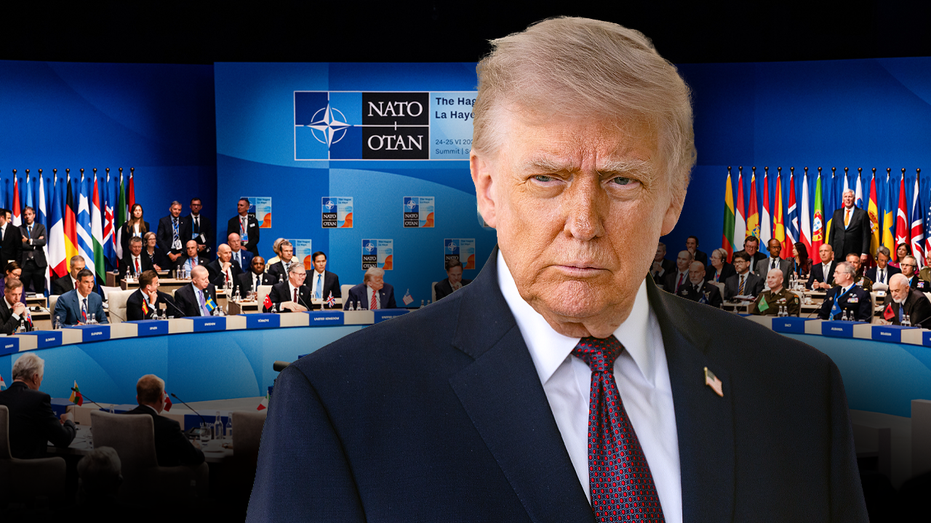
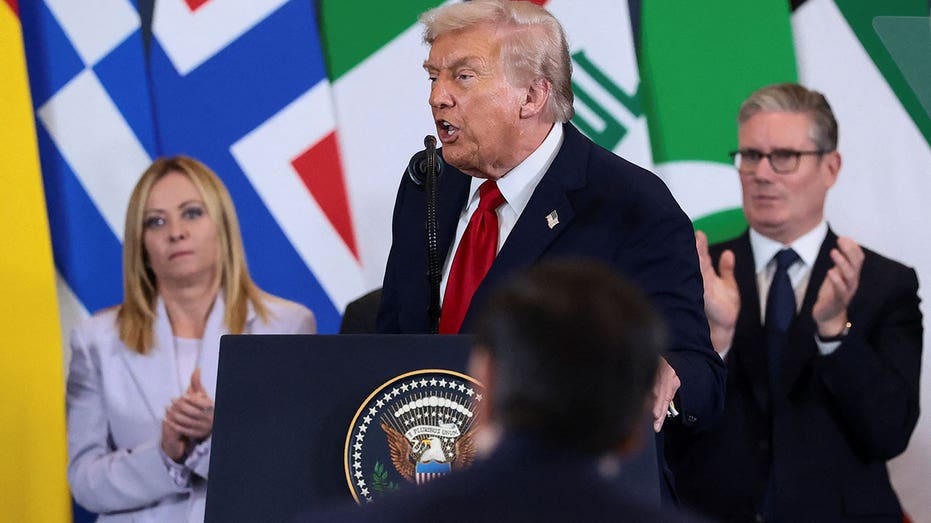
As President Donald Trump presses NATO allies to shoulder more of Europe's defense burden, countries closest to Russia are moving fastest — while some of Western Europe's biggest economies face growing pressure to catch up. 

Retired Rear Adm. Mark Montgomery, senior director at the Foundation for Defense of Democracies and former deputy director for strategy, policy and plans at U.S. European Command, said the shift is already visible across the alliance.

"Europe is clearly stepping up, but they're stepping up by geographic variation," Montgomery told Fox News Digital.

"If you ask me who's doing the most, the Eastern Europeans are clearly."

RUSSIAN DRONES TEST NATO'S ARTICLE 5 DEFENSE GUARANTEE AHEAD OF FRIDAY SANCTIONS DEADLINE

Montgomery pointed to the Baltic states, Poland, Romania and Bulgaria as countries moving aggressively to strengthen deterrence against Russia.

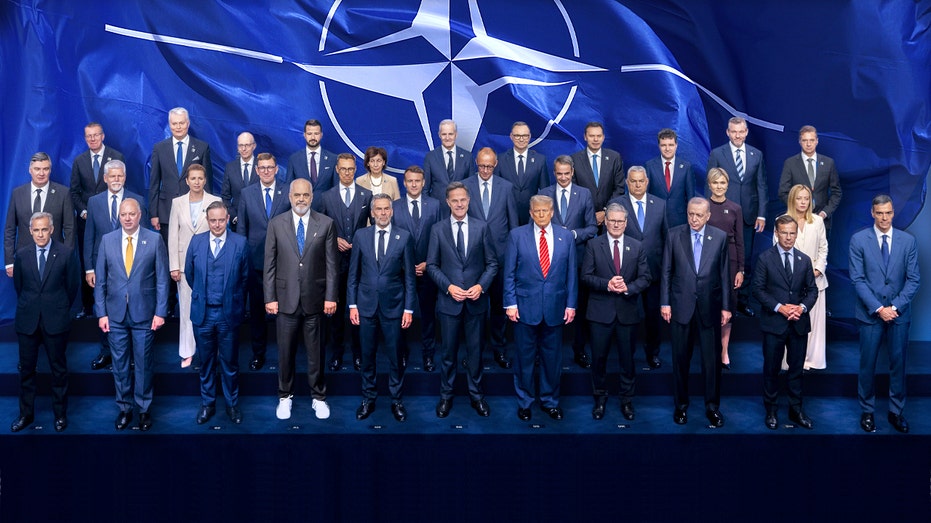
His assessment comes as NATO allies work toward a new defense spending benchmark agreed at the 2025 summit in The Hague, which calls on members to invest 5% of GDP in defense and security-related spending by 2035, including 3.5% for core defense requirements and 1.5% for defense-related infrastructure and security investments.

John Deni, a research professor at the U.S. Army War College, said the trend shouldn't be surprising. 

"Given the threat of Russia, allies in the East are acquiring capabilities more quickly, and they're spending even more than allies in the West," Deni told Fox News Digital. "This shouldn't surprise us because they're the ones closest to the threat."

Deni noted that many eastern allies are rapidly purchasing equipment already available on the market rather than waiting years for domestic defense programs to mature.

UK, GERMAN DEFENSE OFFICIALS DEFEND MILITARY BUILDUP UNDER RUSSIAN THREATS

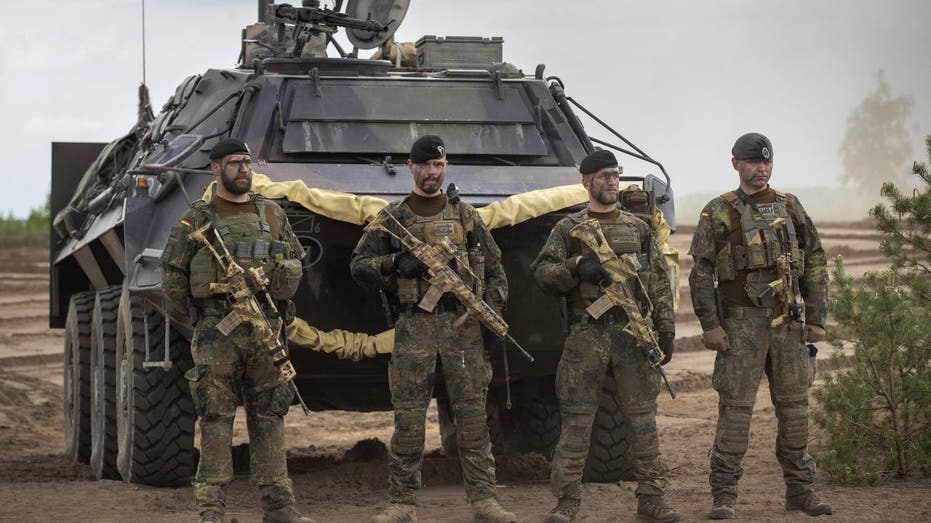
The transformation is visible across NATO's eastern and northern flanks. Poland has become one of the alliance's largest military spenders, Romania is increasing defense investments, and Finland and Sweden have added advanced military capabilities to NATO following their accession.

Secretary of State Marco Rubio praised Finland and Sweden Thursday at the Senate Foreign Relations Committee hearing, using them as examples of allies strengthening the alliance.

"Sweden and Finland have actually contributed because they brought their own defense industry, their own advanced technology," Rubio said. "They have been great partners." 

Romanian Foreign Minister Oana-Silvia Ţoiu echoed that message in an interview with Fox News Digital following an emergency U.N. Security Council session convened after a Russian drone strike injured civilians in the Romanian city of Galați.

"We do agree with President Trump on the need to increase budgets," Ţoiu said.

Ţoiu said Romania raised defense spending to 2% of GDP during Trump's previous term and plans to allocate "an average of 3.4 percent" next year through military procurement and strategic infrastructure investments.

POLAND SEEKS ANSWERS AFTER PENTAGON SCRAPS PLANNED US ARMORED BRIGADE ROTATION

"We have launched initiatives that are directed at the eastern flank because it is increasingly more clear that that needs to be protected," she said.

She argued that Romania's role extends beyond national defense.

"We need better deterrence, better defense capabilities there in order to ensure our responsibility in protecting not just the Romanian border, which is the longest border to the war, but also it is in the same time a European border and the border of the Allied territory," Ţoiu said.

For frontline states, the urgency is driven by geography as much as politics. Romania shares a border with Ukraine and repeatedly has dealt with Russian drones entering its airspace. Poland has become one of NATO's top military spenders, while the Baltic states are racing toward defense expenditures approaching 5% of GDP.

Montgomery said the eastern flank's urgency contrasts sharply with the pace in much of Western Europe.

Among the continent's five largest economies, and despite a slight decrease in military spending in 2025, the U.K. remains the largest investor relative to GDP, with 2.4%, trailed by Germany (2.3%), Spain (2.1%), France (2%) and Italy (1.9%), according to the Stockholm International Peace Research Institute (SIPRI).

WHY NATO’S DEFENSE SPENDING IMBALANCE LASTED FOR DECADES

"The Germans are the one country, I think, with a large economy that is starting to make the right kind of investments."

Germany, he argued, could become the backbone of Europe's future defense industrial base.

"Germany developing a large, impressive defense industrial base is good for NATO, it's good for Western security, and it's even good for our primes," Montgomery said.

German Chancellor Friedrich Merz has embraced higher defense spending and backed NATO's new spending goals, positioning Berlin as a potential hub for Europe's future defense industrial base as allies seek to reduce long-term dependence on the United States.

But despite rising defense budgets, experts warn Europe remains heavily dependent on American military capabilities.

Barak Seener, a senior fellow at the Henry Jackson Society, said Europe still relies on the United States for many of the systems required to fight a modern war.

NATO CHIEF WARNS EUROPE CAN’T DEFEND ITSELF WITHOUT US AS TENSIONS RISE OVER GREENLAND

"Europe is heavily dependent on NATO for its strategic airlift and sea lift, its air-to-air refueling, its cyber capabilities, its space assets, its intelligence, surveillance and reconnaissance," Seener said.

Without those capabilities, he warned, European forces would struggle to maintain situational awareness during a major conflict.

Montgomery said Europe faces three major challenges: expanding military capacity, rebuilding its defense industrial base and developing high-end support capabilities that have long been provided by the United States.

PENTAGON CUTS BRIGADE COMBAT TEAMS IN EUROPE AS TRUMP PRESSURES NATO ON SPENDING

"When you are freeloading for 30 years, you create enormous deficits in terms of people, equipment, technology and know-how," he said.

"The primary forces to defend Europe should be European," he said. "The United States should provide additional forces that allow maneuver and offensive operations."

Montgomery also criticized reported Pentagon deliberations over delaying long-range strike deployments to Germany and reconsidering future Tomahawk missile sales, arguing the systems are critical for deterring Russia.

"The goal here is not to fight Russia in the Baltics or in Poland. The idea here is we want to deter Russia from even trying to attack."

Looking ahead, Montgomery remains optimistic about NATO's future.

Montgomery predicted Europe will continue increasing defense spending and expanding its defense industrial base, while the alliance benefits from steadier transatlantic relations.

"I think you'll have a U.S. president that probably doesn't provoke the Europeans as much. You'll have Europe that's investing more," he said.

He also predicted NATO Secretary-General Mark Rutte would be remembered for helping hold the alliance together through a period of significant change.

"I think five years from now, NATO will be stronger," he said. "And I hope we have Ukraine in there."
(Auszug von RSS-Feed)

☐ ☆ ✇ Fox News

UK defense shortfalls highlighted as Britain avoids Iran offensive role amid Trump criticism

veröffentlicht.
Vorschau ansehen

LONDON: The United Kingdom announced Tuesday it will be deploying military assets "as part of a future defensive mission to secure freedom of navigation in the Strait of Hormuz."

While the move can be seen as a positive step in repairing relations with the U.S., Prime Minister Keir Starmer’s reluctance to join the U.S. in "Operation Epic Fury" against Iran has still ruffled feathers in Washington — most notably those of President Donald Trump.

Trump has dismissed Starmer as "no Churchill." In a recent interview with Sky News, the president further complained about the lack of British alignment: "When we asked them for help, they were not there. When we needed them, they were not there... And they still aren't there."

TRUMP SLAMS STARMER AS ‘NOT WINSTON CHURCHILL’ FOR REFUSAL TO BACK IRAN STRIKES

Trump also took aim at the British Navy’s readiness in March, ridiculing the fleet during a White House meeting. 

"We had the U.K. say that, 'We'll send'— this is three weeks ago — 'we'll send our aircraft carriers,' which aren't the best aircraft carriers, by the way," Trump said, according to Sky News. "They're toys compared to what we have."

Two recent reports by a leading military expert and a parliamentary committee may, in part, explain why the U.K. didn’t join the war in an offensive measure.

In a report titled, "Iran War Delivers a Tough Lesson in Hard Power to the U.K.," Matthew Savill, director of military sciences at the Royal United Services Institute (RUSI), wrote, "The outbreak of a new war in the Middle East has led to questions about the U.K.'s relevance in international affairs. Alongside debates about legality and politics, there are some hard truths about military power and the reality of the readiness of the U.K.'s armed forces."

While the report was written with the war still raging on, Savill stated, "Pressure is growing for the deployment of more U.K. forces to the region and direct involvement in strikes, but the government will need to answer difficult questions about prioritization and the effect that it might be trying to achieve. The consequence is that as much as intent and policy drive U.K. involvement, the practical realities will constrain what the U.K. can do."

Savill added, "On the defensive side, the U.K. has not been idle... [U.K. assets] which also appear to have included some counter-drone units – have been involved in downing Iranian drones while defending Jordan and Iraq."

UK DEPLOYING WARSHIP, HELICOPTERS TO CYPRUS AFTER DRONE STRIKE

Savill wrote that "The challenge for the U.K. is that in the past few years, the commitments and visible presence of U.K. Armed Forces in the region have been shrinking, as a result of the pressure on the military, and a conscious decision to prioritize elsewhere, most recently in the ‘NATO First’ approach of the Strategic Defense Review of 2025."

While the Starmer government has committed to increasing defense spending to 2.5% of GDP by 2027, experts warn that this investment may be too late to restore the U.K.’s ability to project power globally in the near term.

John Hemmings, director of the National Security Center at Henry Jackson, told Fox News, "The U.K.’s military capabilities have been systematically underfunded over the past 15 years, with the Spending Review and cuts starting in 2009 and 2010 under Prime Minister David Cameron. The Strategic Defense and Security Review (SDSR) at the time stated that the world was headed in a much more dangerous state, but the fiscal devastation of the 2008 Financial Crisis pushed the Government into a series of cuts that were intended to be short-term. Instead, the Cameron Government sent the U.K.’s armed services into a spiral of terminal decline that has lasted until this day," he said.

TRUMP PRAISED FOR GETTING NATO ALLIES TO BOLSTER DEFENSE SPENDING: 'REALLY STAGGERING'

Hemmings added, "Consider the Royal Navy, the U.K.’s premier service and source of great power reach; only 25 out of 63 commissioned vessels are actual fighting ships. This force size is impossible to service Britain’s overseas responsibilities and has seen cuts of 50% in only 30 years. In 1996, there were 22 frigates, 17 submarines, 15 destroyers, and 3 aircraft carriers. Today’s First Sea Lord must attempt to carry out the same duties with seven frigates, 10 submarines, six destroyers, two aircraft carriers. In addition, the U.K. underfunded new capabilities like domestic air and missile defenses and advanced command and control systems."

A second report released last month, by the House of Lords International Relations and Defense Committee titled: ‘Adjusting to new realities: rebalancing the U.K.-U.S. partnership,' presents several key recommendations where it warned of the over-dependence on the U.S. "Although the U.K. has benefited from closely collaborating with the U.S. on defense, this has fostered a dependency culture leading to a decline in U.K. capabilities and loss of U.K. credibility in Washington. The Government should provide a clear and costed pathway to achieving the commitment to increase defense spending to 5% of GDP."

While the Ministry of Defense did not respond to several requests for comment over the state of forces, Fox News Digital recently reported that the U.K. government said it is reversing an attrition rate in the military, stating that total armed forces strength stood at 182,050 personnel as of Jan. 1, 2026, including 136,960 regular troops, an increase from the previous year.

The government has also pledged what it calls the largest sustained rise in defense spending since the Cold War, with military spending set to reach 2.6% of GDP by 2027, backed by an additional £5 billion (approximately $6.6 billion) this financial year and £270 billion (nearly $360 billion) in defense investment over the course of the current parliament. Britain has also said it aims to raise defense spending to 3% of GDP by the end of the next parliament.

Analysts say while some in the Trump administration see the U.K.’s absence as a betrayal of the special relationship, others may say it is a tough lesson in the limitations of a mid-sized power that has tried to maintain a global footprint on a shrinking budget.

(Auszug von RSS-Feed)

☐ ☆ ✇ Fox News

As Trump forces NATO to pay up, alliance races to close military gap with US

veröffentlicht.
Vorschau ansehen

This is part one of a series examining the challenges confronting the NATO alliance.

NATO has become a "bloated architecture" too dependent on American military power, former senior national security advisor Keith Kellogg told Fox News Digital.

As President Donald Trump pressures NATO allies to spend more on defense — ordering the withdrawal of 5,000 U.S. troops from Germany and signaling possible cuts in Spain and Italy — a deeper concern is emerging inside the alliance: despite years of rising European defense budgets, NATO still depends heavily on American military power, from missile defense and intelligence to logistics and nuclear deterrence. 

The growing gap between political commitments and real military capability is now fueling calls for structural changes inside the alliance as NATO confronts mounting threats from Russia and instability in the Middle East.

TRUMP ‘RIGHT TO BE OUTRAGED’ BY EUROPE’S BETRAYAL ON IRAN, SAYS FORMER THATCHER ADVISOR

NATO’s imbalance is not theoretical — and it is not new, retired Lt. Gen. Keith Kellogg told Fox News Digital, "I told the president… maybe you ought to talk about a tiered relationship with NATO," Kellogg described conversations with Trump in his first term about the alliance’s future. "…we need to develop a new, for lack of a better term, a new NATO a new defensive alignment with  Europe."

Kellogg added the alliance has expanded politically but not militarily — creating what he sees as a growing gap between commitments and real capability.

"You started with 12, and you went to 32, and in the process, I think you diluted the impact," he argued, calling today’s NATO "a very bloated architecture."

"They haven't put the money into defense. Their defense industry and defense forces have atrophied. When you look at the Brits right now, they could barely deploy forces: they have two aircraft carriers, both under maintenance. Their brigades are like one out of six that work. And you just look at the capability, it's just not there. So I think we need to realize that and say, well, we need something different," Kellogg, who is the co-chair of the Center for American Security at the America First Foreign Policy Institute, told Fox News Digital.

But not everyone agrees the alliance is losing relevance.

"It has never been more relevant," said John R. Deni, a research professor at the U.S. Army War College, who says NATO remains central to U.S. national security.

"The reason for that is twofold," he said. "One, it’s our comparative advantage versus the Chinese and the Russians… they don’t have anything like this."

"And the second reason… NATO underwrites the security and stability of our most important trade and investment relationship," he added, referring to economic ties between North America and Europe.

NATO ALLIES CLASH AFTER RUSSIAN JETS BREACH AIRSPACE, TESTING ALLIANCE RESOLVE

By around 2010, the United States accounted for roughly 65% to 70% of NATO defense spending, according to analysis provided by Barak Seener from the Henry Jackson Society, a London-based think tank.

"They’ve always been dependent on the U.S.," Kellogg said of the European allies.

"The allies overall rely upon one another for deterrence and defense by design," Deni said, explaining that alliances exist to "pool their resources" and "aggregate their individual strengths."

Deni pointed to ground forces as a clear example of what the U.S. gains from the alliance, noting that "there are far more allied mechanized infantry forces on the ground than there are Americans."

NATO CHIEF SIGNALS ALLIES MAY ACT ON HORMUZ, WARNS OF ‘UNHEALTHY CODEPENDENCE’ ON US

Still, he acknowledged that reliance has at times gone too far.

"In the past… it was fair to say that the European allies were overly reliant upon the Americans for conventional defense," he said, pointing to the 2000s.

That, he said, was partly driven by U.S. priorities — as Washington pushed European allies to focus on wars in Afghanistan and Iraq rather than territorial defense.

Seener describes NATO as "formally collective, but functionally asymmetric," with the U.S. providing a disproportionate share of "high-end capabilities."

That asymmetry is most visible in nuclear deterrence.

Seener said the U.S. provides the overwhelming majority of NATO’s nuclear arsenal — including intercontinental ballistic missiles, submarine-launched systems and strategic bombers — meaning deterrence ultimately relies on the assumption of U.S. retaliation.

A NATO official told Fox News Digital that, "The U.S. nuclear deterrent cannot be replaced, but it is clear that Europe needs to step up. There’s no question. There needs to be a better balance when it comes to our defense and security. Both because we see the vital role the U.S. plays around the world and the resources that it demands, and also because it is only fair."

"The good news," the official added, "is that the Allies are doing exactly that. They are stepping up, working together — and with the U.S. — to ensure we collectively have what we need to deter and defend one billion people living across the Euro-Atlantic area."

NATO LAUNCHES ARCTIC SECURITY PUSH AS TRUMP EYES GREENLAND TAKEOVER

Beyond nuclear weapons, the dependence runs through the alliance’s operational backbone.

Seener pointed to U.S.-provided intelligence, surveillance and reconnaissance — as well as logistics and command systems — as essential to NATO operations.

"Without U.S. intelligence and surveillance, NATO loses situational awareness and early warning capabilities," Seener said, adding, "So that means that Russia, for example, can attack Europe. And theoretically, if there's no NATO and the U.S. is not involved, Europe would not be aware, or it would take it too long to be able to defend itself."

Kellogg also says that much of Europe’s military capability falls short of top-tier systems.

"For the most part, their equipment, if you had to grade it A, B, C, D, E, F, they’re kind of like B players or C players," he said. "It’s not the first line of work."

He pointed to air and missile defense as a key gap, noting that while European countries rely on U.S.-made systems such as Patriot and THAAD, "they don’t have a system that’s comparable."

Kellogg attributed that to years of underinvestment, saying European defense industries "have atrophied," adding that the United States is also now "relearning that as well."

TRUMP AFFIRMS US 'WILL ALWAYS BE THERE FOR NATO,' WHILE EXPRESSING DOUBTS ABOUT ALLIANCE

Deni said the picture today is more mixed.

"Alliance defense spending has been up… and has spiked far more after 2022," he said, pointing to Russia’s invasion of Crimea in 2014 as a turning point.

But he cautioned that capability gains take time, noting that many improvements are still years away from full deployment.

Deni pointed to recent European purchases of U.S. systems as evidence of growing capability, noting that countries including Poland, Romania, Norway and Denmark are acquiring the F-35 fighter jet from the U.S.

"You can’t build an F-35 overnight," he said, adding that many of these improvements will take years to fully materialize.

A NATO official told Fox News Digital the alliance "needs to move further and faster" to meet growing threats, pointing to new capability targets agreed by defense ministers in June 2025.

The official said priorities include air and missile defense, long-range weapons, logistics and large land forces, noting that while details remain classified, plans call for a fivefold increase in air and missile defense, "thousands more" armored vehicles and tanks, and "millions more" artillery shells. NATO also aims to double key enabling capabilities such as logistics, transportation and medical support.

The official added that allies are increasing investments in warships, aircraft, drones, long-range missiles, as well as space and cyber capabilities, while boosting readiness and modernizing command and control.

"These targets are now included in national plans," the official said, adding that allies must demonstrate how they will meet them through sustained defense spending and capability development.

The NATO official also noted that European allies lead multinational forces across Central and Eastern Europe, while the U.S. and Canada serve as framework nations in Poland and Latvia, alongside ongoing air policing missions and NATO’s KFOR operation in Kosovo.

Kellogg’s warning is direct: NATO’s deterrence depends on U.S. presence.

"The one you always have to worry about… is Russia," Kellogg, who was Trump’s special envoy for Ukraine and Russia in 2025, said.

If U.S. forces are tied down elsewhere, NATO could face serious strain — particularly in areas like intelligence and logistics.

For Kellogg, the danger is delay. "We won’t know until it happens," he said. "And then you won’t be able to respond to it."

Deni, however, said the alliance remains a strategic asset — not a liability.

The question, he suggests, is not whether NATO still works. It is whether allies can adapt fast enough to keep it working.

(Auszug von RSS-Feed)

☐ ☆ ✇ Fox News

Examining NATO: Inside the ‘commitment gap’ as US carries alliance deterrence

veröffentlicht.
Vorschau ansehen

This is part one of a series examining the challenges confronting the NATO alliance.

As President Donald Trump ramps up pressure on NATO allies to increase defense spending — and orders the withdrawal of 5,000 U.S. troops from Germany over the next six to 12 months — a deeper issue is coming into focus: even as allied budgets rise, NATO still depends heavily on American military power to function.

NATO’s imbalance is not theoretical — and it is not new, retired Lt. Gen. Keith Kellogg told Fox News Digital, "I told the president… maybe you ought to talk about a tiered relationship with NATO," Kellogg described conversations with Trump in his first term about the alliance’s future. "…we need to develop a new, for lack of a better term, a new NATO a new defensive alignment with Europe."

Kellogg, who served as a senior national security official during Trump's first term, said the alliance has expanded politically but not militarily — creating what he sees as a growing gap between commitments and real capability.

NATO CHIEF SIGNALS ALLIES MAY ACT ON HORMUZ, WARNS OF ‘UNHEALTHY CODEPENDENCE’ ON US

"You started with 12, and you went to 32, and in the process, I think you diluted the impact," he argued, calling today’s NATO "a very bloated architecture."

"They haven't put the money into defense. Their defense industry and defense forces have atrophied. When you look at the Brits right now, they could barely deploy forces: they have two aircraft carriers, both under maintenance. Their brigades are like one out of six that work. And you just look at the capability, it's just not there. So I think we need to realize that and say, well, we need something different," Kellogg, who is the co-chair of the Center for American Security at the America First Foreign Policy Institute, told Fox News Digital.

But not everyone agrees the alliance is losing relevance.

"It has never been more relevant," said John R. Deni, a research professor at the U.S. Army War College, who says NATO remains central to U.S. national security.

"The reason for that is twofold," he said. "One, it’s our comparative advantage versus the Chinese and the Russians… they don’t have anything like this."

"And the second reason… NATO underwrites the security and stability of our most important trade and investment relationship," he added, referring to economic ties between North America and Europe.

NATO ALLIES CLASH AFTER RUSSIAN JETS BREACH AIRSPACE, TESTING ALLIANCE RESOLVE

By around 2010, the United States accounted for roughly 65% to 70% of NATO defense spending, according to analysis provided by Barak Seener from the Henry Jackson Society, a London-based think tank.

"They’ve always been dependent on the U.S.," Kellogg said of the European allies.

"The allies overall rely upon one another for deterrence and defense by design," Deni said, explaining that alliances exist to "pool their resources" and "aggregate their individual strengths."

Deni pointed to ground forces as a clear example of what the U.S. gains from the alliance, noting that "there are far more allied mechanized infantry forces on the ground than there are Americans."

Still, he acknowledged that reliance has at times gone too far.

"In the past… it was fair to say that the European allies were overly reliant upon the Americans for conventional defense," he said, pointing to the 2000s.

That, he said, was partly driven by U.S. priorities — as Washington pushed European allies to focus on wars in Afghanistan and Iraq rather than territorial defense.

Seener describes NATO as "formally collective, but functionally asymmetric," with the U.S. providing a disproportionate share of "high-end capabilities."

That asymmetry is most visible in nuclear deterrence.

Seener said the U.S. provides the overwhelming majority of NATO’s nuclear arsenal — including intercontinental ballistic missiles, submarine-launched systems and strategic bombers — meaning deterrence ultimately relies on the assumption of U.S. retaliation.

A NATO official told Fox News Digital that, "The U.S. nuclear deterrent cannot be replaced, but it is clear that Europe needs to step up. There’s no question. There needs to be a better balance when it comes to our defense and security. Both because we see the vital role the U.S. plays around the world and the resources that it demands, and also because it is only fair."

"The good news," the official added, "is that the Allies are doing exactly that. They are stepping up, working together — and with the U.S. — to ensure we collectively have what we need to deter and defend one billion people living across the Euro-Atlantic area."

NATO LAUNCHES ARCTIC SECURITY PUSH AS TRUMP EYES GREENLAND TAKEOVER

Beyond nuclear weapons, the dependence runs through the alliance’s operational backbone.

Seener pointed to U.S.-provided intelligence, surveillance and reconnaissance — as well as logistics and command systems — as essential to NATO operations.

"Without U.S. intelligence and surveillance, NATO loses situational awareness and early warning capabilities," Seener said, adding, "So that means that Russia, for example, can attack Europe. And theoretically, if there's no NATO and the U.S. is not involved, Europe would not be aware, or it would take it too long to be able to defend itself."

Kellogg also says that much of Europe’s military capability falls short of top-tier systems.

"For the most part, their equipment, if you had to grade it A, B, C, D, E, F, they’re kind of like B players or C players," he said. "It’s not the first line of work."

He pointed to air and missile defense as a key gap, noting that while European countries rely on U.S.-made systems such as Patriot and THAAD, "they don’t have a system that’s comparable."

Kellogg attributed that to years of underinvestment, saying European defense industries "have atrophied," adding that the United States is also now "relearning that as well."

TRUMP AFFIRMS US 'WILL ALWAYS BE THERE FOR NATO,' WHILE EXPRESSING DOUBTS ABOUT ALLIANCE

Deni said the picture today is more mixed.

"Alliance defense spending has been up… and has spiked far more after 2022," he said, pointing to Russia’s invasion of Crimea in 2014 as a turning point.

But he cautioned that capability gains take time, noting that many improvements are still years away from full deployment.

Deni pointed to recent European purchases of U.S. systems as evidence of growing capability, noting that countries including Poland, Romania, Norway and Denmark are acquiring the F-35 fighter jet from the U.S.

"You can’t build an F-35 overnight," he said, adding that many of these improvements will take years to fully materialize.

A NATO official told Fox News Digital the alliance "needs to move further and faster" to meet growing threats, pointing to new capability targets agreed by defense ministers in June 2025.

The official said priorities include air and missile defense, long-range weapons, logistics and large land forces, noting that while details remain classified, plans call for a fivefold increase in air and missile defense, "thousands more" armored vehicles and tanks, and "millions more" artillery shells. NATO also aims to double key enabling capabilities such as logistics, transportation and medical support.

The official added that allies are increasing investments in warships, aircraft, drones, long-range missiles, as well as space and cyber capabilities, while boosting readiness and modernizing command and control.

"These targets are now included in national plans," the official said, adding that allies must demonstrate how they will meet them through sustained defense spending and capability development.

The NATO official also noted that European allies lead multinational forces across Central and Eastern Europe, while the U.S. and Canada serve as framework nations in Poland and Latvia, alongside ongoing air policing missions and NATO’s KFOR operation in Kosovo.

Kellogg’s warning is direct: NATO’s deterrence depends on U.S. presence.

"The one you always have to worry about… is Russia," Kellogg, who was Trump’s special envoy for Ukraine and Russia in 2025, said.

If U.S. forces are tied down elsewhere, NATO could face serious strain — particularly in areas like intelligence and logistics.

For Kellogg, the danger is delay. "We won’t know until it happens," he said. "And then you won’t be able to respond to it."

Deni, however, said the alliance remains a strategic asset — not a liability.

The question, he suggests, is not whether NATO still works. It is whether allies can adapt fast enough to keep it working.

(Auszug von RSS-Feed)
❌