NEWS 23

🔒
❌
Stats
Es gibt neue verfügbare Artikel. Klicken Sie, um die Seite zu aktualisieren.

☐ ☆ ✇ Fox News

US, Shield of the Americas condemn 'ongoing efforts' to overthrow Bolivia's elected president amid unrest

veröffentlicht.
Vorschau ansehen

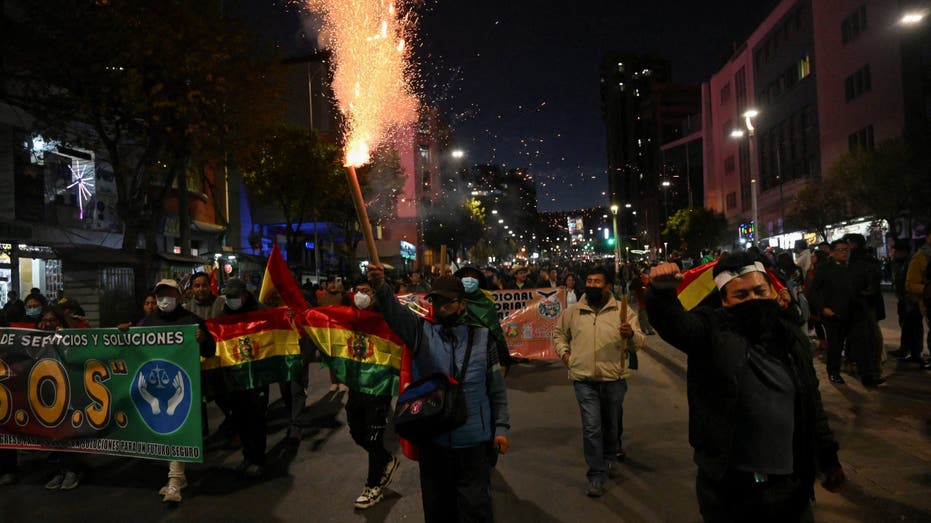
The United States, along with the other countries that make up the Shield of the Americas, condemned the "ongoing efforts" in Bolivia to "overthrow the legitimately and overwhelmingly elected" government of President Rodrigo Paz on Friday.

"The member countries of Shield of the Americas denounce ongoing efforts to overthrow the legitimately and overwhelmingly elected government of President Rodrigo Paz in Bolivia," the statement read. "We stand with Paz’s democratic government as it fights back against attempts to drag Bolivia backwards through cynical efforts to prevent the delivery of food, medicine and other vital supplies to the Bolivian people through fake road blockades."

The statement added that "Mob rule cannot replace the decision that a majority of Bolivians made at the ballot box to turn the page on two decades of corrupt governments."

It also said that anyone who is funding protests with "dirty money" from drug trafficking and transnational crime "should be held accountable. Those who have legitimate grievances should take advantage of the government’s willingness to dialogue, and denounce those who would abuse their causes to regain power."

PETE HEGSETH WARNS NARCO-TERRORISTS AS U.S. BACKS BOLIVIA'S GOVERNMENT AMID COUP WARNINGS

The State Department made the joint statement along with Argentina, Bolivia, Chile, Costa Rica, Dominican Republic, Ecuador, El Salvador, Guyana, Honduras, Panama, Paraguay, and Trinidad and Tobago.

The statement comes as Bolivia's capital, La Paz, has been rocked by weeks of social unrest as mass protests have blocked streets in major cities amid economic inflation and rising fuel prices.

Bolivian Defense Minister Marcelo Salinas resigned Tuesday.

Upon taking office, Paz supported a land reform bill to boost agribusiness that Indigenous farmers said put them at risk of eviction. He further scrapped fuel subsidies, sending prices surging by nearly 90%. Motorists complained that the gasoline was contaminated and ruined their cars.

PETE HEGSETH MAKES HOMELAND SECURITY TOP MISSION IN FIRST INTERVIEW AS SECRETARY OF WAR

The Trump administration has said drug traffickers are responsible for inciting the mass unrest.

Meanwhile, former President Evo Morales of the Movement for Socialism (MAS) party, the country's first Indigenous president who ruled for an unprecedented 14 years, is calling for early elections. "Paz only has two paths left: a suicidal decision like militarization or ... an election in the next 90 days," he wrote on X.

For almost two years now, Morales has been hiding out in Bolivia's central coca-growing Chapare region, evading an arrest warrant on human trafficking charges relating to allegedly having sex with a 15-year-old girl. He rejects the allegations as politically motivated.

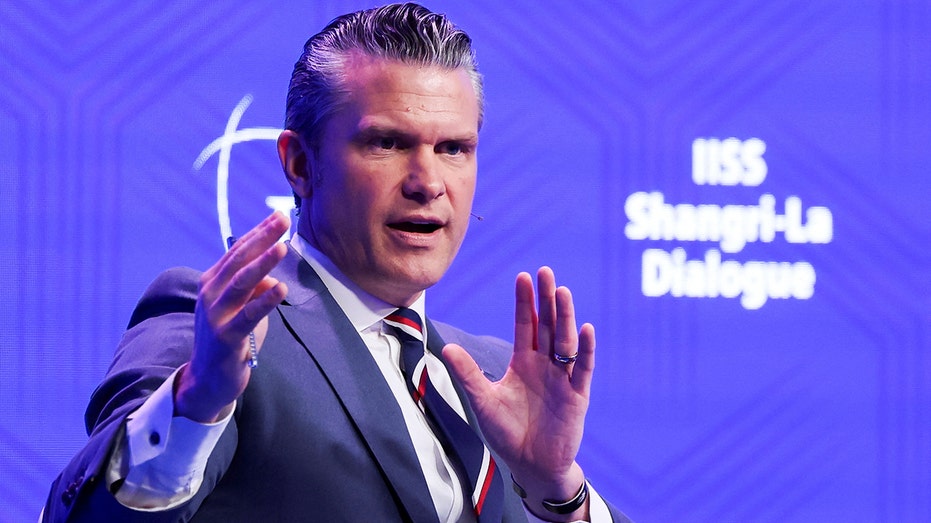
On Thursday, War Secretary Pete Hegseth said in a post on X, that the War Department and the Americas Counter Cartel Coalition (A3C), a recently established multinational military and political alliance, reject all attempts to overthrow the government of Rodrigo Paz Pereira six months into his term.

"The United States is watching. Bolivia must not allow itself to fall prey to the old status quo of narco-terrorist dominance in the region," Hegseth wrote. "We will continue to support our A3C partners like Bolivia to ensure that narco-terrorists are deterred from profiting on death and destruction in our hemisphere."

Fox News' Louis Casiano contributed to this report.

(Auszug von RSS-Feed)

☐ ☆ ✇ Fox News

Pete Hegseth warns narco-terrorists as US backs Bolivia's government amid coup warnings

veröffentlicht.
Vorschau ansehen

War Secretary Pete Hegseth on Thursday said the United States remains committed to helping defend Bolivia's fragile government amid ongoing warnings of a coup d’état.

In a post on X, Hegseth said the War Department and the Americas Counter Cartel Coalition (A3C), a recently established multinational military and political alliance, reject all attempts to overthrow the government of Rodrigo Paz Pereira a mere six months into his term.

"The United States is watching. Bolivia must not allow itself to fall prey to the old status quo of narco-terrorist dominance in the region," Hegseth wrote. "We will continue to support our A3C partners like Bolivia to ensure that narco-terrorists are deterred from profiting on death and destruction in our hemisphere."

PETE HEGSETH MAKES HOMELAND SECURITY TOP MISSION IN FIRST INTERVIEW AS SECRETARY OF WAR

Bolivia's capital, La Paz, has been rocked by weeks of social unrest as mass protests have blocked streets in major cities amid economic inflation and rising fuel prices.

Bolivian Defense Minister Marcelo Salinas resigned Tuesday.

Upon taking office, Paz supported a land reform bill to boost agribusiness that Indigenous farmers said put them at risk of eviction. He further scrapped fuel subsidies, sending prices surging by nearly 90%. Motorists complained that the gasoline was contaminated and ruined their cars.

The Trump administration has said drug traffickers are responsible for inciting the mass unrest.

RUBIO IDENTIFIES 'SINGLE MOST SERIOUS THREAT' TO THE US FROM WESTERN HEMISPHERE

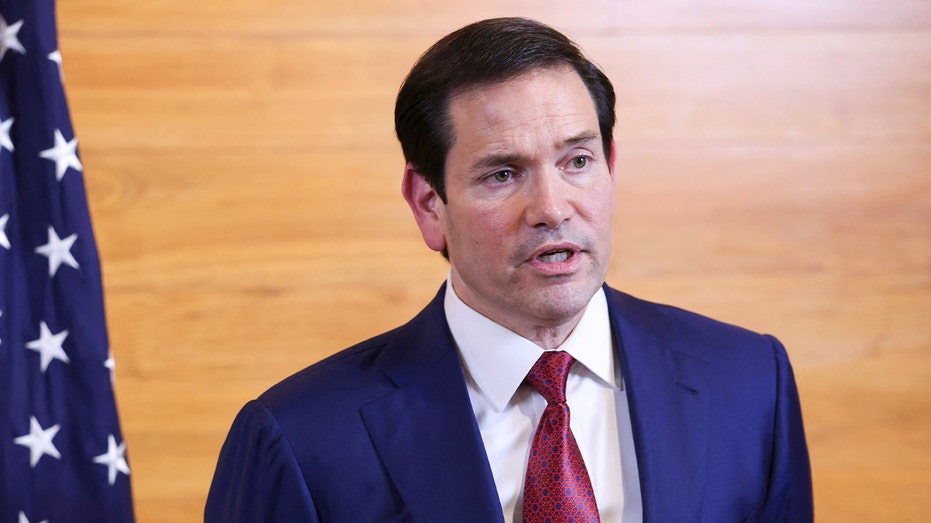
"Let there be no mistake: the United States stands squarely in support of Bolivia's legitimate constitutional government," Secretary of State Marco Rubio wrote Wednesday on X. "We will not allow criminals and drug traffickers to overthrow democratically elected leaders in our hemisphere."

"Let us not make any mistake about that; it is a coup financed by this perverse alliance between politics and organized crime across the region," Deputy Secretary of State Christopher Landau said Tuesday, stating that the protests were part of an ongoing "coup d’état."

Meanwhile, former President Evo Morales, the country's first Indigenous president who ruled for an unprecedented 14 years, is calling for early elections. "Paz only has two paths left: a suicidal decision like militarization or ... an election in the next 90 days," he wrote on X.

For almost two years now, Morales has been hiding out in Bolivia's central coca-growing Chapare region, evading an arrest warrant on human trafficking charges relating to allegedly having sex with a 15-year-old girl. He rejects the allegations as politically motivated.

(Auszug von RSS-Feed)

☐ ☆ ✇ Fox News

Trump expands Cuba sanctions beyond US companies in major crackdown on foreign enablers

veröffentlicht.
Vorschau ansehen

The Trump administration is rolling out what experts describe as the most significant expansion of U.S. sanctions on Cuba in decades.

The administration is attempting what supporters say is the first broad application of Cuba-related secondary sanctions against foreign firms, aiming not only at Havana itself but also at foreign companies and banks that continue doing business with the island’s military-linked economic empire. 

The new framework, established under an executive order signed by President Donald Trump May 1, applies pressure beyond U.S. companies for the first time, threatening foreign firms with sanctions exposure if they continue operating in key sectors of the Cuban economy linked to Grupo de Administración Empresarial S.A., or GAESA.

TRUMP ADMINISTRATION PRESSED TO CLOSE CUBA EMBARGO LOOPHOLE AS OIL SET TO RUN OUT WITHIN DAYS

Supporters say the move closes a loophole that allowed foreign investors to sustain Cuba’s communist regime while the longstanding U.S. embargo largely restricted Americans.

Critics argue the measures risk worsening an already severe humanitarian crisis on the island without meaningfully weakening the government.

"At the top of the month, what the Trump administration did was for the first time extend the application of U.S. sanctions from just prohibiting trade between U.S. firms and U.S. persons and the Cuban island to third-party countries and enablers," Max Meizlish, a former Treasury Department official now serving as a research fellow at the Foundation for Defense of Democracies, told Fox News Digital in an interview.

"For the first time ever in a truly unprecedented fashion, that’s the same logic that the administration is now applying to Cuba," he said.

The sanctions focus heavily on GAESA, a sprawling military-linked conglomerate that analysts estimate controls between 40% and 70% of Cuba’s economy, including tourism, mining, retail, ports and financial services. 

A recent Foundation for Defense of Democracies report authored by Meizlish and Connor Pfeiffer argued that foreign companies doing business in Cuba are effectively helping sustain the regime’s military and political leadership.

TRUMP DECLARES NATIONAL EMERGENCY OVER CUBA, THREATENS TARIFFS ON NATIONS THAT SUPPLY OIL TO COMMUNIST REGIME

The State Department sanctioned GAESA and several affiliated entities in May under the new authorities, opening the door for potential penalties against foreign companies and financial institutions that continue dealings with them after a June 5 wind-down deadline.

Meizlish argued previous sanctions regimes failed because they isolated American companies while allowing foreign actors to continue financing the Cuban state.

"There’s a lot of Spanish firms, for instance, that have invested millions of dollars in luxury hotel properties, villa properties in Cuba that partner with GAESA, all funding this military enterprise at the expense of the Cuban people," he said.

He also pointed to Canadian involvement in Cuba’s nickel and cobalt sectors, saying foreign investment has generated "huge amounts of money for the regime."

"A lot of people think about the U.S. embargo over the years is actually being responsible for a lot of the problems on the Cuban island, but they don't give consideration to the fact that GAESA, this newly sanctioned entity, has been sitting on an estimated $20 billion in assets and cash over the year while depriving the people of Cuba," Meizlish told Fox News Digital.

But critics of the policy warn the economic fallout could land hardest on ordinary Cubans.

William LeoGrande, a longtime Cuba expert at American University, said the May 1 measures represent a major escalation because they specifically target foreign businesses rather than just Americans.

LeoGrande said the new sanctions represent a major escalation because they extend beyond Americans and aim to deter foreign companies from doing business with GAESA by threatening sanctions exposure.

LeoGrande acknowledged the measures could deprive the Cuban government of revenue but argued the broader population is likely to suffer most.

CUBA'S ENTIRE ELECTRICAL GRID COLLAPSES, LEAVING WHOLE ISLAND WITHOUT POWER

"This would potentially deprive the Cuban government of funds, but the impact will fall mainly on ordinary citizens because it means the government has fewer resources to import food, medicine and fuel," he said.

The debate comes as Cuba faces its deepest economic and humanitarian crisis in years. 

The World Food Programme says food insecurity is worsening amid fuel shortages, inflation and declining access to imported goods, while U.N. officials have warned that electricity shortages and blackouts are disrupting hospitals, vaccination programs and food distribution networks across the island.

LeoGrande also warned tougher sanctions could contribute to another migration crisis.

NICARAGUA BLOCKS PATHWAY USED BY CUBAN MIGRANTS TO REACH THE US

"Another unintended effect is that by making living conditions in Cuba even more desperate, tougher sanctions could trigger a mass migration like we saw in 1980 or 1994," LeoGrande said.

On background, a U.S. official rejected arguments that American sanctions are responsible for Cuba’s humanitarian crisis.

"The suffering of the Cuban people is not caused by the U.S. embargo but by the Cuban dictatorship’s failed Communist policies and human rights violations," the official told Fox News Digital. "The embargo does not prohibit Cuba’s access to world markets or trade with third countries."

The official added that U.S. law explicitly permits exports of food, medicine and medical equipment to Cuba and accused the regime of hiding "billions in overseas bank accounts instead of investing in electricity, infrastructure and the daily needs of its people."

The debate mirrors longstanding arguments surrounding U.S. sanctions on countries like Iran and Venezuela, where supporters view economic pressure as a tool to weaken authoritarian governments while critics argue regimes often survive and civilians absorb the economic damage.

Meizlish argued sanctions should not be judged simply by whether they immediately topple governments.

"The problem isn’t that the embargo went too far," he said. "It’s that it didn’t go far enough."

Fox News Digital reached out to the Cuban Embassy in Washington for comment but did not receive a response by the time of publication.

(Auszug von RSS-Feed)

☐ ☆ ✇ Fox News

Mojtaba Khamenei touts new anti-US alliance as Gulf backchannels seep into Tehran: analyst

veröffentlicht.
Vorschau ansehen

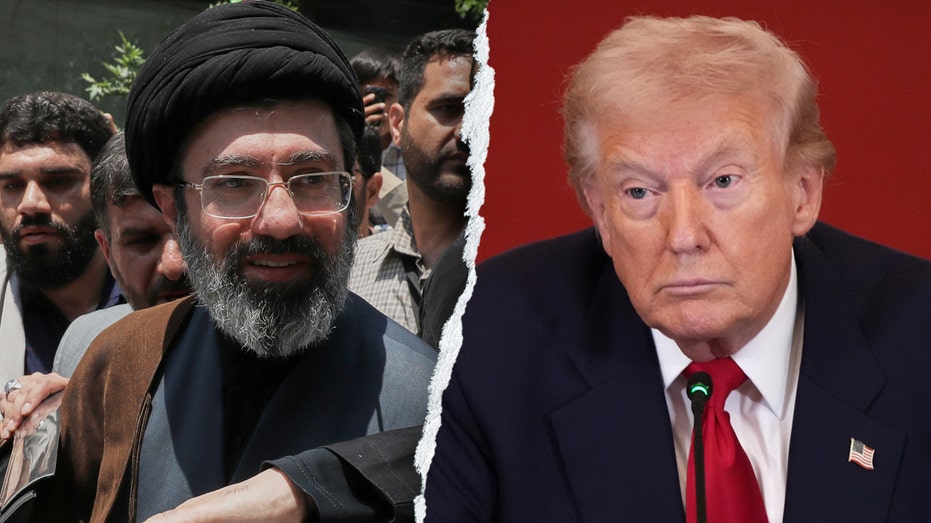
Iran's supreme leader has launched a sweeping counteroffensive against President Donald Trump, attempting to rally Middle Eastern nations into an anti-American alliance, an analyst warned Sunday.

The aggressive maneuvering came hours after Trump pitched an expansion of the Abraham Accords, as an analyst said Tehran is seeking to position itself as the region’s "new sheriff" while forcing Gulf states with backchannels to Iran to choose between Washington’s security umbrella and a "New Islamic Civilization."

On Sunday, negotiations between Iran and the United States appeared to be ongoing, with Trump not yet signing off on a potential peace agreement.

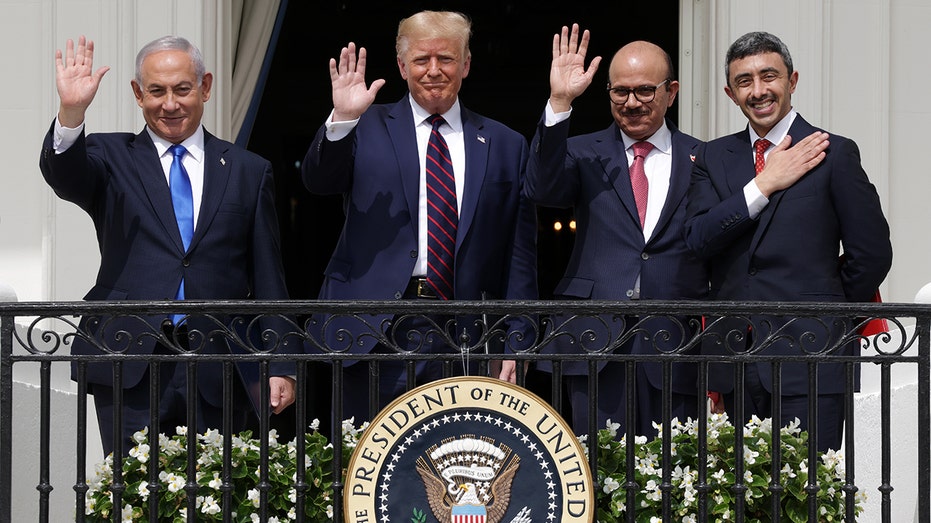
Trump recently held a phone call with leaders from Saudi Arabia, the United Arab Emirates, Qatar, Turkey, Pakistan, Egypt, Jordan and Bahrain to discuss expanding the 2020 Abraham Accords, followed by a May 25 post on Truth Social.

IRAN'S KHAMENEI LAUNCHES BLISTERING ATTACK ON TRUMP AFTER MIDDLE EAST VISIT

Mojtaba Khamenei issued a direct counter-response on X on May 26, issuing a call for a "New Islamic Civilization" aimed at those same regional capitals.

"I, with sincerity and purity of intention, invite all Islamic countries and governments to friendship and cooperation in goodness, so that by working together we may take steps toward the advancement of the Islamic Ummah and the resolution of the Islamic world's problems," Khamenei posted.

Highlighting "the nations of the region" and "common interests that will shape the new order and the future architecture of the region and the world," he spoke of "the Islamic Ummah and the #New_Islamic_Civilization."

"The United States will no longer have a safe haven for its mischief and for establishing military bases in West Asia," he also warned.

"Mojtaba Khamenei's statement is that the Muslim world should consolidate under Iran's leadership — the 'Ummah,' the 'new Islamic civilization' — against the American-led order," Dr. Omar Mohammed told Fox News Digital.

"That is the theme, and it runs straight into the Accords narrative. This is a bid to build an alliance against the Abraham Accords," said Mohammed, director of the Antisemitism Research Initiative Program on Extremism at George Washington University.

TOP ISRAELI MILITARY OFFICIAL REVEALS OPERATION AGAINST IRAN INVOLVED 'STRATEGIC AND OPERATIONAL DECEPTION'

"In his statement, he also frames American bases on Muslim soil as an occupation to be expelled while wrapping it in religious language that casts the regime as God's instrument."

The counterterrorism expert noted that while the "Ummah" doctrine itself is not new — having been used by Mojtaba's father for years — the timing and targeted nature of the pitch represent a major escalation.

"This came into the Ummah with Iran, not into normalization with Israel under Washington," Mohammed explained. "Same audience, opposite frame, 24 hours apart, and a bid to assemble that alliance."

"The statement was published in full and carried by Iranian state media. It also tracks with his first statement as leader on March 12, when he demanded that U.S. bases in the region close."

"This was not a stray post," the expert warned. "While the doctrine is old, aiming it at these regions the day after Trump's pitch is what is new."

The posturing comes as Khamenei establishes his footing on the world stage, though his hidden nature complicates traditional diplomacy.

IRAN’S ‘STUNNING STRATEGIC MISCALCULATION’ COULD ACCELERATE GULF TIES TO ISRAEL, EX-CENTCOM DIRECTOR PREDICTS

"Tehran is selling itself to the region as the new sheriff of the neighborhood," Mohammed warned. 

"The Saudis, Qataris and Omanis have channels into the Iranian state, but you can't open a back channel to a man no one can locate. This has all been running through Pezeshkian and Araghchi."

Despite Iran's sudden rhetoric of "friendship," regional reality is defined by months of Iranian aggression against its neighbors.

Tehran's forces have actively fired upon Bahrain, Qatar, the UAE and Kuwait.

Mohammed added that Tehran wants to peel Gulf states away from Washington, while its threats remain aimed at both the United States and the countries that host American forces.

"Iran spent this war firing on them — it hit Bahrain, Qatar, the UAE and Kuwait, the same capitals it's now inviting to brotherhood, and the UAE alone reported intercepting close to 2,000 drones and hundreds of ballistic missiles since Feb. 28," Mohammed said. 

"These are the states that host our forces: the Fifth Fleet in Bahrain, Al Dhafra in the UAE and Al Udeid in Qatar. You don't take three months of Iranian fire and then sign onto its alliance."

Ultimately, Gulf capitals remain deeply skeptical of Tehran, Mohammed said, but they are equally watchful of American resolve.

"What actually worries the Gulf isn't Mojtaba's invitation — it's the deal Washington might sign," Mohammed noted, "one that hands Iran its money back with its missiles intact and reads as rewarding the regime that just attacked them."

(Auszug von RSS-Feed)

☐ ☆ ✇ Fox News

Moscow, Taliban forge military alliance in power grab after US Afghanistan exit: reports

veröffentlicht.
Vorschau ansehen

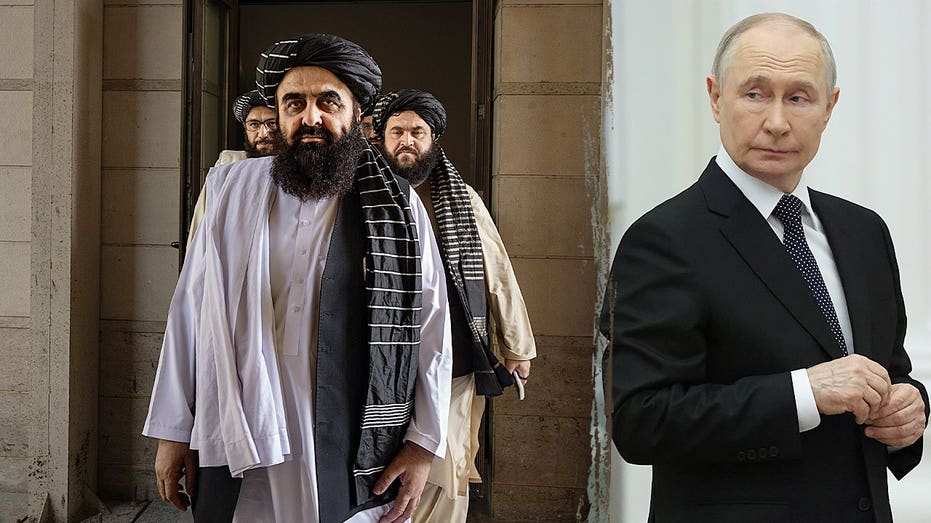
Russia and the Taliban government in Afghanistan have signed a military cooperation pact, cementing an alliance that further solidifies Moscow’s influence in Central Asia, according to reports.

The deal, finalized Wednesday at an international security forum in Russia, followed a meeting between Russian Security Council Secretary Sergei Shoigu and Afghan Defense Minister Mohammad Yaqoob.

The Taliban Defense Ministry announced on X that Yaqoob had traveled to Russia to attend the conference.

Yaqoob is the Taliban’s former military chief and the son of Taliban founder Mullah Mohammad Omar.

AL QAEDA REMAINS MOST DANGEROUS TERRORIST GROUP 24 YEARS AFTER 9/11, EXPERT WARNS

Omar had formed a close alliance with Osama bin Laden and provided a safe haven from which al Qaeda planned the 9/11 terrorist attacks.

As of Thursday, neither Russia nor the Afghan side had shared the further details of the new military agreement.

"Afghanistan and Russia have long and historical relations. In this direction, we want to move further. We have expanded bilateral relations," Yaqoob said at the meeting.

The pact follows statements from a senior Russian security official who noted that Moscow has established a "full-fledged partnership" with Afghanistan's ruling Taliban and is encouraging other countries in the region to expand cooperation with Kabul, Reuters reported.

The Taliban had regained power in August 2021, after overthrowing the U.S.-backed Afghan government run by President Ashraf Ghani.

In 2021, Russian President Vladimir Putin acknowledged the possibility of dropping Russia’s classification of the Taliban as a terrorist organization.

FORMER AFGHAN TRANSLATOR WARNS OF STARVATION, HUMANITARIAN CRISIS: 'BACK TO WHERE WE STARTED IN 2001'

In 2024, he called the Taliban "allies in the fight against terrorism" and Russia became the first country to formally recognize the Islamic Emirate of Afghanistan.

"After several years of vacillation, Russia has become the first country in the world to officially recognize the Taliban government in Afghanistan," Nikita Smagin, an expert on Iranian foreign and domestic policies, Islamism and Russia's policy in the Middle East, said in a report from the Carnegie Endowment for International Peace.

"It’s more of a symbolic gesture than something driven by trade or economic considerations," Smagin added, describing how when Taliban militants entered the Afghan capital in August 2021, "Russia was already deemed eligible for special treatment."

"Its diplomatic mission was immediately provided with security, and Russian Ambassador Dmitry Zhirnov became the first foreign diplomat to meet with the new rulers of Afghanistan," he explained.

On Wednesday, Shoigu also called for Western countries to unfreeze sanctioned Afghan assets.

AFGHANISTAN'S ONLY WOMEN-LED RADIO STATION TO RESUME OPERATIONS AFTER TALIBAN LIFTS SUSPENSION

"We are convinced that Western countries should unfreeze blocked Afghan assets, fully recognize their responsibility for their 20-year presence in Afghanistan, and bear the burden of the country's post-conflict reconstruction," Shoigu said, according to reports.

"Moscow needs to take steps that will restore its image as an influential power that holds the initiative, and recognition of the Taliban regime serves precisely that purpose," Smagin added.

"The status of the first country to establish official diplomatic relations with the Taliban government should ensure Russia has a leading role in discussions of regional security issues."

The recognition of the Taliban, he said, was an attempt by Russia to "prove itself as a leading global force that is not afraid to break established norms and set precedents for other countries."

Moscow continues to emphasize the need to work directly with Kabul as it faces severe, ongoing security threats from various rival Islamist militant groups operating throughout Central Asia and the Middle East, Reuters said.

Shoigu also said Moscow was building a "pragmatic dialogue" with the Taliban that included security, trade, culture and humanitarian support, the outlet reported May 14.

(Auszug von RSS-Feed)

☐ ☆ ✇ Fox News

‘Designated target’ Mojtaba Khamenei to sign Trump deal in ‘unprecedented’ courier setup

veröffentlicht.
Vorschau ansehen

Iran’s supreme leader, Mojtaba Khamenei, would have to approve any final deal with the U.S. through secret courier networks while remaining in hiding as a "designated target," counterterrorism experts said Tuesday.

The unprecedented arrangement, they claimed, means Washington is negotiating a high-stakes accord with an entirely invisible counterparty, with a potential memorandum signed by a regime leader and a marked target who can never publicly show his face.

"Khamenei is a designated target, and every confirmed sighting is a coordinate," Dr. Omar Mohammed told Fox News Digital.

"The courier system used for messaging is not transitional. It is the operating system of his rule.

IRAN'S SUPREME LEADER RUNS 'STATE WITHIN A STATE' THROUGH SECRET 4,000-PERSON NETWORK, REPORT SAYS

"Any deal the United States signs will have to be designed for a permanently invisible counterparty whose enforcement depends on his continued survival. That is not arms control as it has been conventionally understood. It is a memorandum signed under American military pressure, with a regime whose leader cannot show his face."

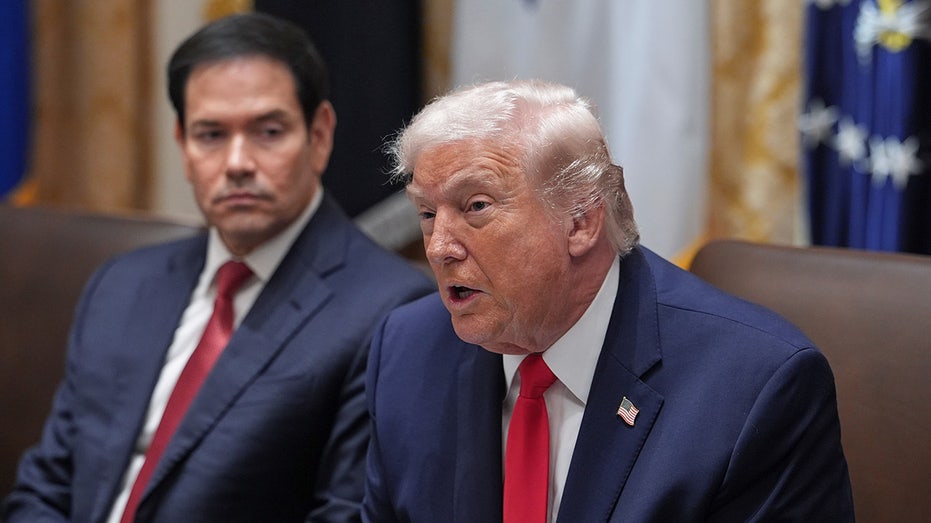
Mohammed’s remarks came after Secretary of State Marco Rubio explained to reporters in India why the deal was suffering delays.

"It’s just the response," Rubio said. "I mean, when you get down on some of these things, you’ve got to hear back, and it takes the Iranians — takes them a little while longer to get back," he explained.

"That is Secretary Rubio confirming the courier latency on the record," said Dr. Omar Mohammed, director of the Antisemitism Research Initiative Program on Extremism at George Washington University. "Rubio is describing a structural feature of negotiating with a supreme leader no one can locate.

IRAN'S KHAMENEI STAYS AWAY FROM TALKS AS JD VANCE SAYS DYNAMIC MAKES DIPLOMACY 'MUCH MORE COMPLICATED'

"Mojtaba is in hiding, messages are moving by courier, and responses are arriving days late.

"Rubio just confirmed the symptom, and the administration is being honest about the problem. The question is whether the framework can be designed to survive it," Mohammed claimed.

Khamenei has spent nearly three months in hiding as tensions with the U.S. escalate.

He went underground as soon as a strike on Feb. 28 killed his father, amid reports that he was gravely injured.

He was struck in Operation Epic Fury — "wounded and likely disfigured," according to Defense Secretary Pete Hegseth. His wife and son were killed in the same strike.

"Officials at the highest levels of the Iranian government do not know where he is," Mohammed said, meaning every piece of information he receives is "dated, and his responses come with significant latency."

The remarks come as Iran and the United States continue talks aimed at reaching a deal to end the war that began Feb. 28.

IRAN'S SUPREME LEADER MOJTABA KHAMENEI 'MISFUNCTIONING,' NOT CONTROLLING REGIME: SOURCES

"If there’s going to be a deal, we’re going to have to work through that. But this is, you know, it’s either going to be a good deal or there isn’t going to be one," Rubio said Tuesday.

A senior administration official said the U.S. is prepared to ease sanctions if Iran makes major concessions on uranium enrichment. Frozen Iranian assets have also emerged as a key hurdle.

Iran said Monday that no agreement with the United States was imminent, despite progress toward a framework in talks.

Iran’s Foreign Ministry spokesman Esmaeil Baghaei said the focus of talks remained ending the war on all fronts, including Lebanon, and that a possible memorandum of understanding did not include specific details on managing the Strait of Hormuz.

"The real question for Washington is not how fast the framework can be signed," Mohammed added.

"It is also what enforcement looks like when the counterparty’s signature comes through a courier."

(Auszug von RSS-Feed)

☐ ☆ ✇ Fox News

World's humanitarian system buckling, 'no longer fit for purpose,' US-based researchers say

veröffentlicht.
Vorschau ansehen

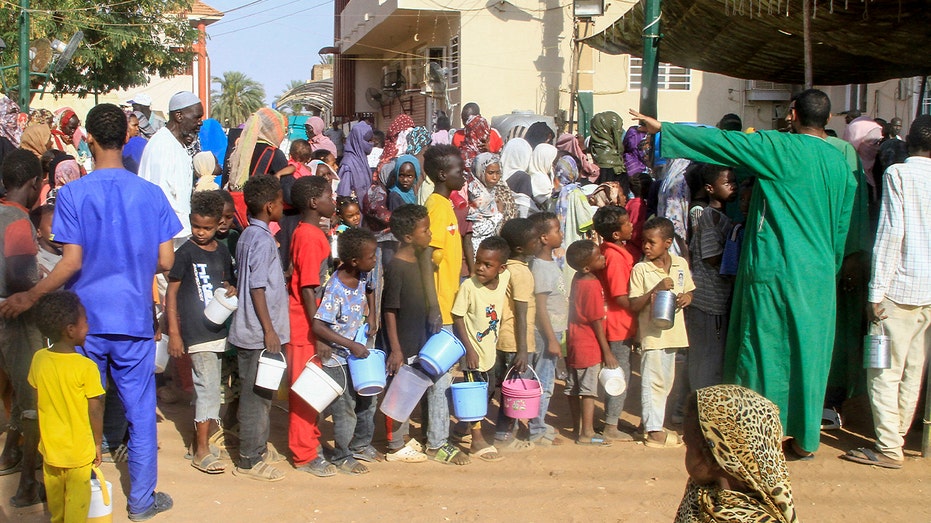
LONDON, England — From Sudan to Gaza, civilians are desperate, hospitals are under attack, and the humanitarian aid system cannot keep up, according to a new report in the Lancet medical journal. 

"The humanitarian system is no longer fit for purpose, given the types of emergencies that we have and their magnitude," report co-author Dr. Paul Spiegel told Fox News. 

AS WORLD FIXATES ON OTHER WARS, SUDAN SEES 12 MILLION FORCIBLY DISPLACED IN DEVASTATING CONFLICT

A professor at Johns Hopkins University and co-chair of its Center for Humanitarian Health, Spiegel has decades of experience working in refugee camps and war zones around the world. "I've been doing this for well over 30 years," he said. "We're in a very dark time."

Highlighting one of the world’s largest disasters, Sudan's brutal civil war — where tens of millions of people are in need as hospitals close and famine spreads — the panel of experts behind the report says the world knows how to save lives, but that the system is failing to deliver. The experts' report, titled 'Health in a World of Crises and Impunity,' argues that some agencies are too bureaucratic, and others too slow. The whole system, they say, needs revamping.

The report argues the United Nations is in need of reform, while in the U.S. it highlights the Trump Administration's shuttering of the United States Agency for International Development (USAID) over suspected fraud and abuse. 

During that restructuring, many of USAID's most vital programs were folded into the State Department, but the report calls USAID's closure a "shock" and "sudden," and part of a chain of decisions in the U.S. and elsewhere which it condemns as "a political and moral failure."

ANALYSTS SAY GAZA 'CIVILIAN' DEATHS INCLUDE HAMAS, OTHER TERROR MEMBERS WORKING AS MEDICS, MEDIA WORKERS

"USAID needed to be restructured," Spiegel told Fox News. "The U.N. needs to be restructured in a very significant way. But it's how you do that.

"It is the strategy to make sure that you do it in such a way that vulnerable populations across the globe are not going to be hurt, and that it wasn't done like that."

The authors are pushing for major global reforms, including overhauling funding, sending aid directly to local communities, greater accountability if governments or armed groups block aid, and upholding healthcare as a basic human right.

"It's really a complete rebalancing," Spiegel said, "to make sure that the system actually works for the people it's intended to help."

(Auszug von RSS-Feed)

☐ ☆ ✇ Fox News

'Bibi's hair on fire': Trump-Netanyahu public 'rift' masked unified front against Iran, analyst says

veröffentlicht.
Vorschau ansehen

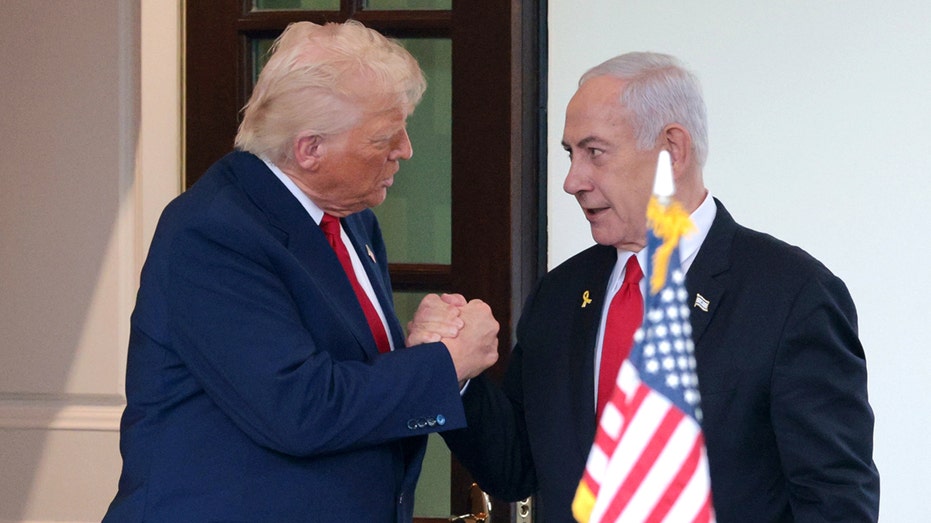
Intensifying leaks and tense phone calls between President Donald Trump and Israeli Prime Minister Benjamin Netanyahu suggesting a relationship breakdown over Iran were part of a calculated strategic effort to keep Tehran guessing, a leading defense analyst told Fox News Digital on Sunday.

The public display, which projected American diplomatic patience while shutting out Jerusalem, covertly laid the groundwork for a unified front, he said.

The strategy culminated in a weekend synchronization phase, with Trump and Netanyahu showcasing total alignment by Sunday, suggested Kobi Michael, a senior researcher at the Institute for National Security Studies (INSS) and the Misgav Institute.

TRUMP, NETANYAHU TO MEET AT WHITE HOUSE IN HIGH-STAKES TALKS ON IRAN, GAZA PLAN

Axios had reported Thursday that a difficult call between the leaders focused on a revised U.S. proposal sent to Iran via Pakistan, which Netanyahu reportedly rejected in favor of renewed military action to degrade Tehran’s infrastructure.

One U.S. source told the outlet that "Netanyahu’s hair was on fire" after the exchange.

Separately, weekend reports suggested Israeli leaders were being marginalized from U.S.-Iran negotiations after Netanyahu’s prewar push for a joint campaign to topple the Iranian regime failed to materialize.

Netanyahu broke his silence Sunday, posting on X to declare absolute solidarity with the White House and project a unified stance.

IRAN’S NEW SUPREME LEADER IS ‘HIS FATHER ON STEROIDS,’ EXPERTS WARN OF HARDLINE RULE

"The partnership between us and our two countries has been proven on the battlefield and has never been stronger," Netanyahu shared on X. "My policy, like President Trump’s, remains unchanged: Iran will not have nuclear weapons."

Michael viewed the public friction and targeted leaks as a calculated tactical feint designed to keep Tehran blindsided.

"Neither President Trump nor Prime Minister Netanyahu has any interest in any crisis, but by leaking the story of a crisis between Trump and Netanyahu, the Iranians might find themselves surprised by the timing of the next military attack," Michael said.

"The leak created a sense of disagreement between the two leaders and positions Trump as the leader who gives another chance to the diplomatic path despite the pressures of Prime Minister Netanyahu," he said. 

"Trump understands who the Iranians are."

The final synchronization followed a weekend phone call in which Trump reassured Netanyahu that any final agreement with Iran would fully dismantle Tehran’s nuclear program.

UN'S NUCLEAR WATCHDOG WARNS ITS UNABLE TO CONFIRM IRAN'S PROGRAM IS 'ENTIRELY PEACEFUL'

Netanyahu also said Trump also "reaffirmed Israel’s right to defend itself against threats on every front, including Lebanon."

Washington has been keeping Jerusalem updated on the negotiations "over a memorandum of understanding to reopen the Strait of Hormuz and enter negotiations toward a final agreement on the points that remain in dispute," an official statement read.

Following the Sunday call, Netanyahu also thanked Trump for his "exceptional commitment to Israel’s security."

"Netanyahu’s last post about his last conversation with Trump can be understood as the ultimate closure to this deception and any accusations," Michael added.

"This is trying to prepare the Israeli public for the idea that everything was fully coordinated with the U.S., and the diplomatic developments will serve the Israeli interest."

Michael added, however, that skepticism remained in Jerusalem over whether the gaps between the U.S. and Iran will be bridged, or whether "Trump will accept the Iranian position."

(Auszug von RSS-Feed)

☐ ☆ ✇ Fox News

US arrests sister of powerful Cuban official over alleged ties to communist regime

veröffentlicht.
Vorschau ansehen

The United States has arrested the sister of the executive president of GAESA, a sprawling conglomerate of military-run businesses in Cuba, due to her alleged ties to the communist regime.

GAESA has been cited for reportedly diverting millions in aid meant for the Cuban people "at the behest of the regime," Secretary of State Marco Rubio said in a post on X Thursday.

Adys Lastres Morera was taken into ICE custody after the State Department revoked her lawful permanent resident (LPR) status, according to Rubio.

Morera, who was managing real estate assets while living in Florida, reportedly aided Havana’s communist government, officials said.

ALLEGED MEMBER OF CUBA'S MINISTRY OF THE INTERIOR ARRESTED BY ICE AGENTS IN MIAMI

Her status termination was carried out at Rubio’s discretion. Morera entered the United States as a lawful permanent resident in 2023, Reuters reported. 

"Today, Adys Lastres Morera, a Cuban national with ties to the communist regime in Havana, was arrested following the Department of State’s termination of her lawful permanent resident (LPR) status, at my direction," Rubio said.

RUBIO SAYS CUBA NEEDS ‘NEW PEOPLE IN CHARGE’ AS BLACKOUTS, UNREST GRIP ISLAND

Morera is the older sister of Ania Guillermina Lastres Morera, who was sanctioned earlier this month for her role as executive president of GAESA.  

GAESA has been described by officials as an exploitative communist entity that siphons resources from the Cuban population.

"While the Cuban people suffer from the collapse of Cuba’s non-functioning communist economy, GAESA functions to allow a small circle of regime elites to plunder all the remaining resources of the island, squirreling away as much as $20 billion in illicit funds away in hidden overseas bank accounts," Rubio said. 

He added that Ania Guillermina Lastres Morera, as a senior executive, is responsible for managing international assets allegedly used to fund the "lavish lifestyles" of the Castro-era elite, as well as supporting efforts tied to broader ideological influence abroad.

Rubio also pointed to worsening conditions inside Cuba, including widespread blackouts and severe shortages of food, fuel, and medicine, arguing that GAESA is diverting resources away from basic needs under the communist system.

"GAESA’s ill-gotten riches are not spent on repairing the collapsing power grid, stocking empty pharmacies, feeding hungry families, or providing for the most basic and essential needs of the Cuban people. Instead, they are used to enrich Havana’s elites and underwrite their ongoing campaign of espionage, subversion, and revolutionary militancy against the free peoples of this hemisphere," he said. 

(Auszug von RSS-Feed)

☐ ☆ ✇ Fox News

Two suspected American communist insurgents killed in clash in the Philippines

veröffentlicht.
Vorschau ansehen

Two Americans have died in the Philippines during a military engagement that the government said involved communist-linked groups.

Lyle Prijoles, 40, and transgender woman Kai Dana-Rene Sorem, 26, were among the 19 people killed last month during a firefight between the Philippine Army and suspected members of a communist insurgency.

The U.S.-born Filipino Americans are now at the center of a disputed encounter, with critics alleging the two were active combatants for the New People’s Army (NPA), the armed wing of the Communist Party of the Philippines (CPP), which has been designated a foreign terrorist organization by the U.S. State Department. Human rights groups and the NPA, however, reportedly maintain that the pair were civilian activists who posed no military threat.

According to the City Journal, the two Americans were first exposed to left-wing ideology through college-linked institutions that critics say helped pave the way to involvement with groups the Philippine government has long argued serve as fronts for the CPP.

FAMILIAR PROTEST GROUPS MOBILIZE IMMEDIATELY AFTER ICE SHOOTING OF MINNESOTA PROTESTER

"This brings to two (2) the number of U.S. citizens—Lyle Prijoles and Kai Dana-Rene Sorem—who died in the same incident, a development that highlights the increasing involvement of individuals from outside the Philippines in local armed hostilities," the Philippines' National Task Force to End Local Communist Armed Conflict (NTF-ELCAC) said.

"The presence of two American fatalities in a single encounter should prompt careful reflection on how involvement in certain activities or networks may lead to unintended exposure to dangerous environments."

On April 19, Philippine troops engaged in an armed encounter in Toboso, Negros Occidental, according to the NTF-ELCAC. The agency characterized the 19 dead as enemy combatants during an operation aimed at dismantling the decades-long communist insurgency in the Philippines.

On the other hand, family members and human rights advocates reportedly described Prijoles and Sorem as dedicated civilian community activists. The NPA acknowledged that 10 of those killed were members of its armed revolutionary force, but claimed the remaining victims — including several activists such as Prijoles and Sorem — posed no military threat, the San Francisco Standard reported.

INSIDE THE FAR LEFT 'BREEDING GROUND' UNIVERSITIES ALLEGED WHCD CALLED HOME FOR YEARS

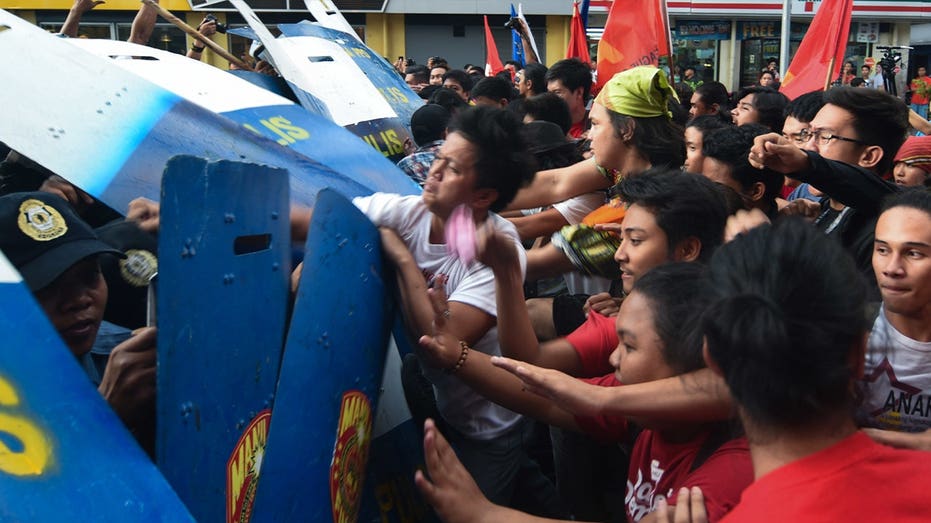
In 2012, Prijoles, a Filipino American born and raised in San Diego, California, was involved with Anakbayan, which translates to "Children of the Nation," a prominent left-wing youth and student organization founded in the Philippines in 1998. Anakbayan-USA operates across several major U.S. college campuses and has drawn scrutiny from critics over its opposition to U.S. involvement in the Philippines. 

His activism reportedly began after attending San Francisco State University around 2004, when he joined the League of Filipino Students (LFS), a left-wing political alliance rooted in Marxist, Leninist and Maoist ideology, the City Journal said.

After 2006, Prijoles reportedly made several trips to the Philippines organized by Bayan USA, another left-wing activist network. The Philippine government has alleged that both organizations function as fronts for the Communist Party of the Philippines (CPP).

Prijoles also may have harbored animosity toward the Armed Forces of the Philippines after his friend — the father of his godchild and chairperson of the U.S. chapter of the International Coalition for Human Rights in the Philippines — survived a 2019 assassination attempt that left him paralyzed, according to City Journal.

Meanwhile, Kai Dana Sorem was a Filipino American from Seattle whose political development was initially shaped by a search for personal and cultural identity, according to advocacy group Malaya Movement.

Her early political involvement reportedly included serving as a legislative page for the Washington State Democratic Party. Sorem later deepened her activism within left-wing Filipino diaspora organizations while attending the Central Washington University in 2020. She later launched the South Seattle chapter of Anakbayan, Malaya Movement said.  

In 2025, Sorem reportedly traveled to the Philippines on a U.S.-based exposure trip, and by 2026, she had relocated to the country full-time to work as an organizer.

(Auszug von RSS-Feed)

☐ ☆ ✇ Fox News

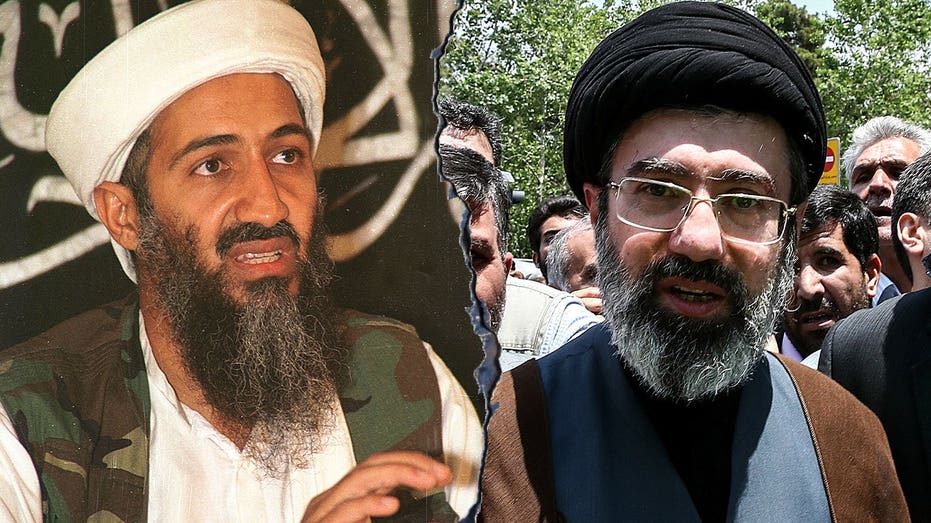
Mojtaba Khamenei using ‘bin Laden template’ to survive, learned from Abbottabad: analyst

veröffentlicht.
Vorschau ansehen

Iran’s Supreme Leader Mojtaba Khamenei has spent nearly three months in hiding as tensions with the U.S. escalate — a disappearance that counterterrorism analysts say mirrors the final years of al Qaeda mastermind Osama bin Laden.

The comparison comes amid a critical standoff between Washington and Tehran that prompted President Donald Trump to pause a planned strike on May 19. On Wednesday, Trump told reporters he was in "no hurry."

Khamenei, meanwhile, appeared to share three posts on his official X account on May 18 but remains out of public view.

"For the first time in the history of the Islamic Republic, the United States has done to Tehran what it spent two decades doing to al-Qaeda and ISIS," counterterrorism expert Dr. Omar Mohammed told Fox News Digital.

THE MISSING MULLAH: IRAN'S 'SUPREME LEADER' A NO-SHOW FOR NEGOTIATIONS, THEN HID AS US POUNDED NUKE SITES

"The U.S. has driven its leader into the same kind of operational invisibility that bin Laden lived in for 10 years in Abbottabad," he added.

"Both Mojtaba Khamenei and bin Laden inherited their status on the back of an American operation, and both responded the same way: by ceasing to exist publicly," Mohammed said before adding that bin Laden "stopped releasing dated videos around 2007 and confined himself to audio messages carried by hand."

Bin Laden founded al-Qaeda in the late 1980s and masterminded the Sept. 11, 2001, terrorist attacks against the United States.

After the U.S. invasion of Afghanistan, bin Laden evaded capture for a decade by hiding inside a fortified compound in Abbottabad, Pakistan.

To avoid Western electronic surveillance, he severed his digital footprint and relied exclusively on a network of physical couriers, said Mohammed, an expert with the Antisemitism Research Initiative at George Washington University’s Program on Extremism.

U.S. intelligence eventually tracked one of those couriers to the compound, culminating in the 2011 Navy SEAL raid that killed the al Qaeda leader.

OPERATION EPIC FURY: HOW AMERICA'S AIR POWER IS CRUSHING IRAN’S TERROR REGIME

"Bin Laden survived with no cables out of the Abbottabad compound. Communications were carried by hand by two trusted couriers, the Kuwaiti brothers," Mohammed said.

"Bin Laden stayed hidden for the rest of his life because the moment he surfaced was the moment he died. Mojtaba’s incentives point the same way. Mojtaba Khamenei won’t emerge," he said.

"The Abbottabad lesson, which Tehran will have studied closely, is that the safest hiding place is not a cave in Tora Bora but a walled compound in a garrison town," Mohammed added, recalling how U.S. forces targeted bin Laden in the cave complex before he escaped.

Bin Laden also lived roughly a mile from Pakistan’s top military academy, hiding in plain sight behind high concrete walls and barbed wire, Mohammed noted.

"The logical Iranian equivalents are hardened sites under or alongside IRGC facilities," Mohammed added, referring to the Islamic Revolutionary Guard Corps and possible locations where Khamenei could be.

As previously reported by Fox News Digital, one of Khamenei’s few recent communications was an X post declaring a "holy war," framing the geopolitical clash as a mandatory religious obligation.

INSIDE IRAN’S RULING IDEOLOGY: HOW A ‘HOLY MISSION’ AND MESSIANIC DOCTRINE FUEL REGIME EXTREMISM

"This is a religious leader calling for sacred war against America and the Jews from an undisclosed location because his enemies have publicly vowed to kill him on sight," Mohammed said, describing the narrative as "the bin Laden template, almost line for line."

Mohammed also suggested Khamenei’s retreat into the shadows marks a watershed moment for Washington and the future of the Iranian regime.

His predecessor and father, Supreme Leader, Ayatollah Ali Khamenei, was killed Feb. 28 in a targeted U.S.-Israeli airstrike in Tehran during Operation Epic Fury.

"This regime that for 47 years projected its power through a single visible Supreme Leader at the Friday prayer pulpit can no longer produce that figure on demand," he said, calling it a "strategic milestone."

"Predecessors killed by U.S. strikes and successors who cannot show their faces. Real power exercised by a security apparatus rather than by the nominal figurehead."

"Now one side is announcing operations on three continents through its president; the other is governed on paper by a man whose own population is uncertain where he is or what state he is in," Mohammed said.

"The contrast is also about the optics of leadership during this war," he added.

(Auszug von RSS-Feed)

☐ ☆ ✇ Fox News

Netanyahu 'blunder' threatens US-backed Israel-UAE alliance at critical moment with Iran: analyst

veröffentlicht.
Vorschau ansehen

The U.S.-brokered alliance designed to counter Iran in the Middle East is showing signs of strain amid tensions between Israel and the United Arab Emirates, an analyst says, as the possibility of a broader conflict with Tehran intensified Sunday.

The friction first surfaced May 13 after Israeli Prime Minister Benjamin Netanyahu’s office said he held a "historic breakthrough" meeting with UAE President Sheikh Mohammed bin Zayed Al Nahyan during a "secret visit" to Al Ain near the Oman border.

The UAE’s Ministry of Foreign Affairs issued a swift denial following the announcement.

The ministry said, "Its relations with Israel are public and were established within the framework of the well-known and publicly declared Abraham Accords. These relations are not based on secrecy or clandestine arrangements."

IRAN IS 'TRYING TO GIVE THE GLOBAL ECONOMY A HEART ATTACK' BY CLOSING STRAIT OF HORMUZ, UAE MINISTER SAYS

It added, "Therefore, any claims regarding undisclosed visits or arrangements are baseless unless issued by the relevant official authorities in the UAE."

"The stakes are high," Middle East Institute analyst Natan Sachs told Fox News Digital.

"I imagine the Israelis are working overtime to mend relations with the UAE, but it is too early to tell," he said.

President Donald Trump spoke with Netanyahu on Sunday as tensions over Iran escalated and with the Israeli leader saying he was "prepared for every scenario."

The leaders discussed the possibility of renewing the war with Iran as well as Trump’s recent trip to China, according to the Times of Israel.

Sachs, a senior fellow at the institute, said Netanyahu’s UAE meeting claim "seems like a diplomatic blunder because it embarrasses the UAE."

OFFICIALS IN BIDEN ADMIN WORKED TO UNDERMINE NETANYAHU AFTER CEASEFIRE TALKS COLLAPSED, FORMER AIDE SAYS

"This was an odd move to make since the UAE has been a close partner of Israel, even during this war," Sachs said.

"Either Netanyahu didn't think, or he was thinking about something else — domestic politics. It would not be the first time he did that."

"To the degree that the Emirati anger is genuine, it would have meant working to preserve trust with their Gulf Arab ally," Sachs added.

"I would also not rule out Emirati anger at the leak itself, which could be seen as a break of trust — something very important to the Emirati leadership."

The Abraham Accords, brokered by the United States in 2020, fundamentally altered the regional balance by normalizing relations between Israel and the UAE, Bahrain, Morocco and Sudan.

Security cooperation has since expanded significantly due to shared concerns over Iran’s military ambitions.

THE FUTURE OF WAR? US-ISRAEL BLITZ ON IRAN UNVEILS NEXT-GEN ALLIED COMBAT

That alliance was tested when Iran launched strikes against UAE military and energy infrastructure during Operation Epic Fury.

Israel is said to have deployed Iron Dome air-defense systems and personnel to the UAE, according to U.S. Ambassador to Israel Mike Huckabee. The UAE confirmed Sunday that it had intercepted three drones coming from the west.

"The UAE received much of the fire from Iran. It is the most vulnerable to Iranian short-range missiles, which are more plentiful and cheaper than the medium-range missiles fired at Israel," Sachs said.

"While short-range missiles can be intercepted, Iran has many more of them. The UAE took the most hits, yet it stood out by sticking most clearly to its strategy of open partnership with Israel."

"But the public disclosure that Netanyahu himself visited may have just been seen as a step too far," Sachs added.

(Auszug von RSS-Feed)

☐ ☆ ✇ Fox News

Lebanon accuses Iran of inserting IRGC terrorists into country 'under guise of diplomatic activity'

veröffentlicht.
Vorschau ansehen

The Lebanese government filed a sharply worded complaint with the United Nations arguing that the Islamic Republic of Iran has abused diplomatic immunity by refusing to recall its ambassador after Beirut demanded his expulsion and to stop alleged terrorist activities on its soil, according to a recently surfaced letter from late April.

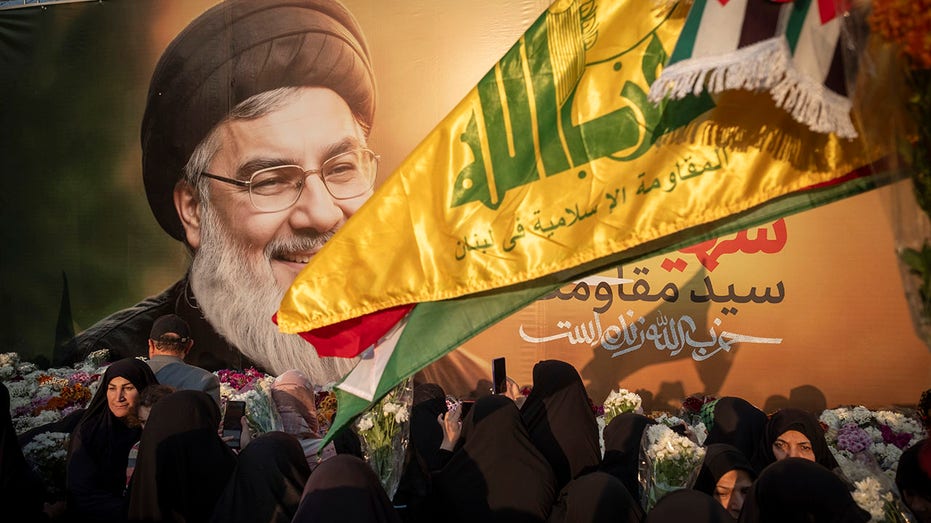
The disclosure of the letter, which is reportedly a precedent-setting move by Lebanon, comes amid a second day of talks in Washington between Israel and Lebanon to normalize relations (the countries are in a state of war) and dismantle the Iranian-regime-backed Hezbollah terrorist movement in Lebanon.

A U.S. State Department spokesperson told Fox News Digital on Friday that "The United States facilitated talks between Israel and Lebanon have resumed today and are ongoing. The atmosphere of talks has been very positive, even exceeding expectations."

FAMILY OF AMERICAN HOSTAGE TORTURED IN LEBANON WINS LANDMARK CASE AGAINST IRAN

State Department spokesman Tommy Pigott wrote on X on Friday that "On May 14 and 15, the United States hosted two days of highly-productive talks between Israel and Lebanon. The April 16 cessation of hostilities will be extended by 45 days to enable further progress. The State Department will reconvene the political track of negotiations on June 2 and June 3."

He added that, "In addition, a security track will be launched at the Pentagon on May 29 with military delegations from both countries. We hope these discussions will advance lasting peace between the two countries, full recognition of each other’s sovereignty and territorial integrity, and establishing genuine security along their shared border."

As the sides report back to their capitals, the potentially game-changing letter in which Lebanese ambassador to the U.N. Ahmad Arafa, slammed Iran for inserting alleged terrorists from Iran’s Islamic Revolutionary Guard Corps (IRGC) into Lebanon "under the guise of diplomatic activity," has given hope to critics of Iran and Hezbollah.

Arafa said, according to the letter, that Iran committed "unlawful acts in blatant defiance of the decisions of the Government of Lebanon." He continued, "This Iranian conduct constitutes direct and blatant interference in the internal affairs of Lebanon and drags the country into a war it did not choose to become involved in."

The U.S. and the European Union have classified the IRGC as a terrorist entity.

The letter took the Iranian Ambassador to Beirut, Mohammad Reza Sheibani, to task for "blatant interference" in Lebanon.

According to Lebanon’s U.N. letter, Beirut argued that Iran is violating the 1961 Vienna Convention on Diplomatic Relations and interfering in Lebanon’s state of affairs.

IDF SOLDIERS ACCUSE UN PEACEKEEPERS OF ENABLING HEZBOLLAH TERRORISTS AMID INCREASING CEASE-FIRE VIOLATIONS

When asked about the details of the letter, a spokesperson for Lebanon’s ambassador to the U.S. declined to comment. The spokesperson also declined to weigh in on the current talks with Israel in Washington.

Walid Phares, a leading U.S. expert on Lebanon and the Mideast, told Fox News Digital that "Many have considered the Lebanese memo to the U.N. as the start of the Lebanese government change of attitude towards Iran and a sign of escalation by Beirut. While the tone of the letter and its narrative make people feel that there is a government resistance to Iran and Hezbollah reality is still lesser."

He added that "The subject of the last quarrel is a legal change of status regarding the presence of Iranians on Lebanese soil. The Lebanese government has decided not to grant Iranians, government, and private citizens an automatic visa waiver, which upset Iran and Hezbollah. Besides, Tehran is furious at the fact that the Lebanese government has not been helpful in dealing with the elimination of a number of IRGC members killed in Lebanon by Israel. Tehran blames the foreign ministry of Lebanon, particularly foreign minister Youssef Raggi, for the ‘lessening of solidarity with Iran."'

According to Phares, "Raggi represents a Lebanese Christian bloc in the parliament, who is not sympathetic to the regime. However, the actual talks in D.C. are designed by the Lebanese government to show the Trump administration that the ‘state wants to talk’ but not to reach an agreement that would trigger Hezbollah's wrath. The leaders of the Lebanese state are not yet where the U.S. and Israel expect them to be."

A regional official well-versed in the U.N. dispute told Fox News Digital that Lebanon "argued that Iran had not given the Lebanese foreign ministry the list of all Iranians and the details about their place of stay. And that’s why Israel targeted that hotel in Lebanon in which six were killed, which is true."

The official said that "Iran had not told the foreign ministry of Lebanon about those six people."

(Auszug von RSS-Feed)

☐ ☆ ✇ Fox News

Trump administration rejects UN migration declaration, says 'mass migration was never safe'

veröffentlicht.
Vorschau ansehen

The U.S. ​State Department ‌announced on Monday that it refused to back an ​International Migration Review Forum "progress" declaration, ​accusing the U.N. of efforts to "advocate and facilitate replacement immigration in the United States and across the broader West."

The U.S. did not participate in the second International Migration Review Forum, held May 5–8 at U.N. Headquarters in New York, and will not support the declaration, the department said in a statement on Monday.

The forum is the U.N.’s main global platform for member states to review implementation of the Global Compact for Safe, Orderly and Regular Migration, according to the U.N. Network on Migration. The 2026 forum was scheduled to produce an intergovernmentally agreed "Progress Declaration."

President Donald Trump ended U.S. participation in the U.N. process to develop the Global Compact for Migration during his first term in 2017, and now the State Department says the federal government will again affirm its opposition.

TRUMP PULLS US OUT OF UN-LINKED MIGRATION FORUM IN BOLD IMMIGRATION MOVE

The Global Compact was adopted in 2018 after the U.S. withdrew from the process. The U.N. and International Organization for Migration describe the compact as a cooperative framework intended to improve migration governance across countries.

"As Secretary Rubio said, opening our doors to mass migration was a grave mistake that threatens the cohesion of our societies and the future of our peoples," the department's statement reads. "In recent years, Americans witnessed first-hand how mass immigration laid waste to our communities: crime and chaos at the border, states of emergency in major cities, and billions of taxpayer dollars funneled towards hotels, plane tickets, cell phones and cash cards for migrants."

"Much of this was driven by UN agencies and their partners, which did not just facilitate the invasion of our country, but proceeded to redistribute our own people’s wealth and resources to millions of foreigners from the worst corners of the world," it continued.

The department argued there was nothing safe, orderly or regular about any of this, adding that the costs "were borne primarily by working Americans forced to compete for scarce jobs, housing, and social services."

"The UN has little to say about them," the department wrote.

TRUMP UNVEILS ‘REVERSE MIGRATION’ PLAN TO HALT ‘THIRD WORLD’ IMMIGRATION, REVOKE BIDEN-ERA ENTRIES

"President Trump is focused on the interests of Americans, not foreigners or globalist bureaucrats," the statement reads. "The United States will not support a process that imposes, overtly or by stealth, guidelines, standards, or commitments that constrain the American people’s sovereign, democratic right to make decisions in the best interests of our country."

The department concluded its statement by saying its goal is not to "manage" migration, but to "foster remigration."

In a thread on X also announcing the move to object to the declaration, the department said UN agencies "systematically facilitated mass migration into America and Europe, even as citizens of these nations called for restrictions on migration." It added that U.N. materials related to the Global Compact call for expanding regular migration pathways and reference "regularization" of migrants.

The International Organization for Migration says the forum is held every four years for countries to review progress and shape next steps on migration policy. IOM, which coordinates the U.N. Network on Migration, says the network includes 39 U.N. agencies working to support countries on migration issues.

The department alleged that "UN agencies – working with the NGOs they fund – established a migration corridor through Central America and to the U.S. border," the post reads. "As the American people suffered under an unprecedented wave of mass migration, the UN was on the ground pipelining migrants to our southern border."

"After facilitating mass migration to the United States, UN agencies condemned the deportation of illegal immigrants," the post continued. "While the United Kingdom faced unprecedented illegal boat crossings, UN agencies condemned plans for deportations. UN officials lobbied aviation regulators to prevent the deportation of migrants – an appalling violation of the UK’s national sovereignty."

The U.N. Network on Migration describes the compact as "non-legally binding." A U.N.-hosted text of the compact also says it respects states’ sovereign right to determine their national migration policies and to distinguish between regular and irregular migration status.

The declaration itself says the Global Compact is a cooperative framework and acknowledges that no state can address migration alone, while also upholding the sovereignty of states.

The department pushed back on the compact’s framing of migration as "safe, orderly and regular."

"For the citizens of Western nations, mass migration was never safe. It introduced new security threats, imposed financial strains, and undermined the cohesion of our societies," it wrote.

"The United States will not legitimize global compacts that enable mass migration into America or Western nations," the post added.

U.N. materials frame the compact as a cooperative framework for issues that often cross borders, including labor migration, border management, migrant protections and development. U.N. agencies, including the Office of the High Commissioner for Human Rights, describe the IMRF as a state-led review process with participation from relevant stakeholders.

Fox News Digital has reached out to the U.N. for comment.

(Auszug von RSS-Feed)

☐ ☆ ✇ Fox News

Macron takes the stage uninvited at Africa summit to scold crowd for 'total lack of respect'

veröffentlicht.
Vorschau ansehen

French President Emmanuel Macron sparked a firestorm of criticism after he interrupted a youth-focused session at the Africa Forward Summit in Nairobi on Monday, publicly scolding attendees for talking over speakers and calling the disruption "a total lack of respect."

Video from the event showed Macron rising from his seat and walking onto the stage during the "Africa Forward: Creation in Motion" session, which featured artists and young entrepreneurs speaking about culture and innovation.

"Excuse me, everybody. Hey, hey, hey," Macron told the audience. "I’m sorry, guys. But it’s impossible to speak about culture, to have people like that super inspired, coming here, making a speech with such a noise."

"So this is a total lack of respect," he continued. "I suggest if you want to have bilateral or speak about somebody else, I mean something else, you have bilateral rooms, or you go outside. If you want to stay here, we listen to the people, and we’re playing the same game."

MACRON TO APPOINT FOURTH PRIME MINISTER IN A YEAR AS DEBT BATTLE TOPPLES CENTRIST LEADER

Macron was immediately criticized for his uninvited remarks on social media. A former member of Parliament from Zimbabwe, Fadzayi Mahere, called the French leader out on X. "Respectfully @EmmanuelMacron I don’t believe that it’s courteous or appropriate for you to come onto our Continent and talk down at people like this. They are not your kids. Don’t be condescending. Imagine if a guest of the state did the same in your country? Would it fly? I don’t think so."

Another post from a Kenyan-Canadian lawyer with 3.1 million followers announced, "Africans don’t need @EmmanuelMacron’s permission to speak in Africa," said Dr. Miguna Miguna, who in January announced he was running for the Kenyan presidency in 2027, according to local reports

A report published Monday by Modern Ghana, the interruption carried a symbolic irony, as Macron had traveled to Kenya to promote what Paris describes as a more equal and respectful partnership with African nations, moving away from what critics have long viewed as a paternalistic post-colonial model.

The incident took place during the Africa Forward Summit in Nairobi, where more than 30 African leaders, business executives and young entrepreneurs gathered for discussions focused on economic development, innovation and cooperation between Africa and Europe.

Kenya’s Standard Media reported that the exchange "cast an unusual shadow" over the summit, noting that some civil society groups characterized the two-day summit as a "reengineering of imperialism."

The moment underscored the balancing act facing Macron as France attempts to redefine its relationship with Africa following years of political tensions and military withdrawals from several West African countries.

Earlier Monday, Macron told students at the University of Nairobi that "Africa is succeeding" and argued the continent needs investment to strengthen its sovereignty rather than dependence on development aid, according to Modern Ghana’s report by Mustapha Bature Sallama. The report also noted Macron acknowledged France’s own financial constraints during the remarks.

Macron has increasingly emphasized partnerships with African youth, entrepreneurs and cultural leaders as Paris recalibrates its Africa strategy amid growing competition from Russia, China and Turkey for influence across the continent.

Reuters contributed to this report.

(Auszug von RSS-Feed)

☐ ☆ ✇ Fox News

Iran regime power players may eye Russia in Assad-style escape as US talks falter: expert

veröffentlicht.
Vorschau ansehen

The apparent collapse of high-stakes U.S.-Iran negotiations has intensified fears that senior figures inside Tehran’s leadership could flee to Russia, seeking refuge to "continue their insurgency and undermine any new regime," an analyst warns.

The breakdown in talks comes as Israeli Prime Minister Benjamin Netanyahu also told CBS’ "60 Minutes" that toppling Iran’s regime could now even be a realistic outcome.

Netanyahu noted that any collapse would dismantle the "scaffolding" of Tehran's global terror proxy network, also potentially ending Hezbollah's influence in the region.

"The whole scaffolding of the terrorist proxy network that Iran built collapses if the regime in Iran collapses," Netanyahu said.

HERE’S WHAT A POST-AYATOLLAH IRAN COULD LOOK LIKE IF WAR WITH ISRAEL LEADS TO REGIME’S FALL

"I think you can’t predict when that will happen. Is it possible? Yes. Is it guaranteed? No," he warned.

With diplomatic options perhaps exhausted and the regime's stability in question, an expert suggests the exit strategy any leadership may be eyeing might be similar to that of Syrian President Bashar al-Assad, who fled Syria in 2024.

"If the situation deteriorates further, some senior figures could potentially follow a path like Bashar al-Assad’s inner circle and seek refuge in Russia," Middle East expert Saeid Golkar told Fox News Digital.

IRANIAN REGIME ELITES ALLEGEDLY MOVE MILLIONS OF DOLLARS OUT OF COUNTRY AMID SANCTIONS

Golkar, a senior adviser at United Against Nuclear Iran, noted that flight destinations would likely depend on rank.

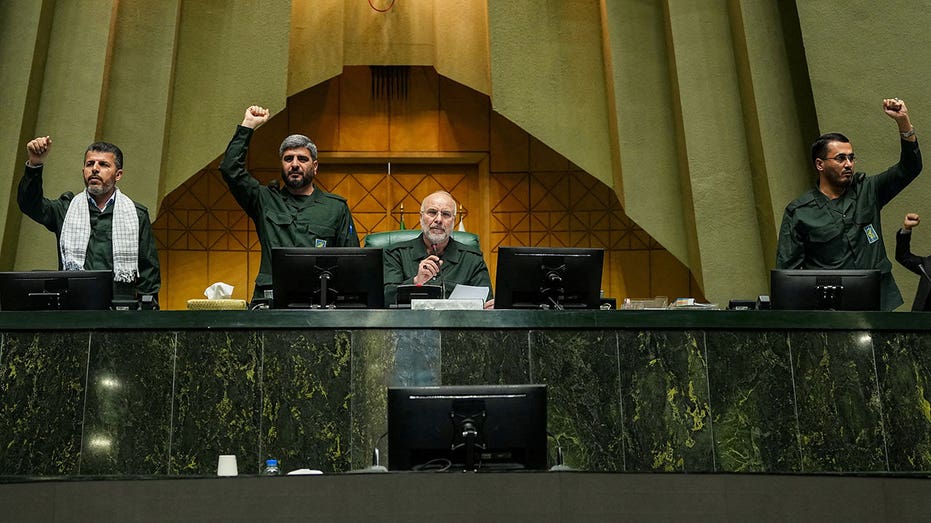
While top commanders like Parliament Speaker Mohammad-Bagher Ghalibaf might head to Moscow, lower-ranking figures would more likely seek shelter in Iraq or Afghanistan, where the IRGC maintains operational connections, he clarified.

"For the most senior figures, Russia would probably be the most likely destination, again as we saw with Bashar al-Assad," Golkar said, noting many officials have already moved wealth into "financial networks outside Iran."

The current crisis started following the death of Ayatollah Ali Khamenei earlier in 2026 during the onset of Operation Epic Fury.

While his son, Mojtaba Khamenei, was named successor, reports continue to indicate he was severely injured in the strikes and has been absent from recent negotiations.

INSIDE IRAN’S RULING IDEOLOGY: HOW A ‘HOLY MISSION’ AND MESSIANIC DOCTRINE FUEL REGIME EXTREMISM

Golkar explained that the "invisible state," or Bayt-e Rahbari, was designed to survive decapitation, while the ideological cost of fleeing for leaders would be high.

"Inside the regime’s ideological culture, leaving the country during the collapse would look like desertion," Golkar noted.

However, as military fractures deepen and succession remains uncertain, the "Assad model" of seeking Russian protection appears increasingly attractive to those at the top.

Mojtaba, however, is "either dead or in bad condition that he cannot send any video or voice message," Golkar added.

"If he had died from his injuries, there was no clear natural successor. He was the continuation of the regime."

"Still, the system was designed for continuity during a crisis," Golkar said, adding that the goal is to "make sure the regime could survive even if formal institutions were damaged, leaders were killed, or civilian government stopped functioning."

"I would describe it as a regime designed not just to govern, but always to try and survive decapitation," Golkar added.

(Auszug von RSS-Feed)

☐ ☆ ✇ Fox News

Woman who spent 7 years in Chinese prison describes torture, surveillance and loss of her husband

veröffentlicht.
Vorschau ansehen

EXCLUSIVE: Wang Chunyan held a photograph toward the camera, her hands trembling slightly as she pointed to each of the 21 smiling faces: a husband and wife, a university lecturer, a young engineer, friends she met in prison.

Some died in detention, she said. Others after years of abuse. Others disappeared into China’s vast security system and never returned the same. "More than 25 of my friends have died in this persecution. I only have photos of 21 of them," Chunyan said, her voice breaking.

For more than two decades, the 70-year-old Falun Gong practitioner said, the Chinese Communist Party (CCP) systematically dismantled her life, stripping away the business she had built, the home she once shared with her family and, eventually, seven years of her life in prison.

But the hardest thing for her, is that she believes it took her husband too. "My beloved husband died due to the persecution," Chunyan claimed during an exclusive interview with Fox News Digital.

REPORT DETAILS RISING PRESSURE ON UNDERGROUND CATHOLICS AS CHINA DENIES CRACKDOWN

Her account comes as President Donald Trump prepares to travel to China next week for meetings with Chinese leader Xi Jinping, with trade, security and regional tensions expected to dominate the agenda. Yet behind the geopolitical rivalry lies another conflict: Beijing’s decades-long campaign against religious and spiritual groups the Communist Party views as threats to its authority.

Former U.S. Ambassador-at-Large for International Religious Freedom Sam Brownback believes Wang’s story reflects a much broader struggle unfolding inside China. "Either the world changes China or China will change the world," Brownback told Fox News Digital.

Brownback recently chronicled Chunyan’s story and the experiences of other survivors in his book China’s War on Faith, arguing that personal testimony can often reveal the reality of persecution more powerfully than statistics alone. "Stories are more powerful than data," he said.

The book examines what Brownback describes as an increasingly sophisticated system of surveillance and repression targeting Christians, Uyghur Muslims, Tibetan Buddhists and Falun Gong practitioners. He argues the Chinese Communist Party views independent faith communities as a direct threat to its authority.

"They fear religious freedom more than anything else. More than our aircraft carriers, more than our nuclear weapons, more than anything else because they think it is the biggest threat to the regime."

CRUZ LEADS SENATE PUSH TO HOLD CHINA ACCOUNTABLE FOR BEIJING CHURCH CRACKDOWN

Chunyan story started in the late 1990s, when she suffered from severe insomnia, sometimes sleeping only two or three hours a night. Then her older sister introduced her to Falun Gong, also known as Falun Dafa, a spiritual practice ,she says, is centered on meditation exercises and teachings rooted in "truthfulness, compassion and tolerance."

The movement spread rapidly across China during the 1990s, attracting tens of millions of followers before Beijing banned it in 1999, portraying it as a threat to Communist Party control.

Chunyan says Falun Gong helped improve her "physical condition." She said, "My business was booming. My family was happy. My life was perfect."

Chunyan became convinced the practice had saved her life. She owned a successful company selling chemical production equipment and had become wealthy by Chinese standards, but after the crackdown began she felt compelled to publicly defend Falun Gong against what she believed were government lies.

She bought a printing press and began distributing leaflets. Soon afterward, she said, surveillance followed everywhere.

"The buildings where I worked were under constant surveillance," Chunyan recalled. "I left to escape and was afraid to come home."

GRAHAM FAMILY RESPONDS TO GLOBAL CRACKDOWN ON CHRISTIANS WITH $1.3M DEFENSE FUND AND URGENT CALL TO ACTION

For years, she lived in hiding, using prepaid calling cards and public telephones to secretly arrange meetings with her husband, Yu Yefu, in restaurants, coffee shops and hotels across the city. The two tried, briefly, to maintain some sense of normalcy.

Yu himself never practiced Falun Gong, but police repeatedly pressured him to reveal where his wife was hiding. He never did. Then, in 2002, Wang stopped hearing from him.

When she finally returned home, she found him unconscious. Doctors could not save him. "He protected me," she said in tears.

He was 49 years old when he died. Their daughter was still in college.

The devastation spread through the family afterward, Chunyan said. Her mother-in-law stopped eating and later became paralyzed. Her father-in-law died from grief. Her sisters were also imprisoned and tortured.

Then came Chunyan’s own imprisonment.

WATCHDOG HIGHLIGHTS NATIONS WHERE CHRISTIANS FACE PERSECUTION AROUND THE GLOBE

She described years of forced labor, sleep deprivation and physical abuse. At one point, she said, the torture became so severe that she fainted three times in a single day.

One memory still haunts her most. Shortly before her release from prison, Wang said authorities conducted unexplained blood tests and medical examinations. At the time, fellow inmates told her the government was simply checking on Falun Gong prisoners before release. Only later, after learning about allegations of forced organ harvesting involving detained Falun Gong practitioners, did she begin to fear why the testing may have happened. "I was horrified," Chunyan said.

Today, Chunyan lives in the United States, having left China in 2013 and eventually making her way through Thailand before arriving in America in 2015.

Yet decades later, the losses remain immediate to her.

"There are millions of families in China like ours," Chunyan wants the world to know, "Persecuted by the CCP."

In a statement to Fox News Digital, Chinese Embassy spokesperson Liu Pengyu rejected the allegations and defended Beijing’s actions against Falun Gong. "The aforementioned remarks are nothing but malicious fabrications and sensational lies," Liu said. "Falun Gong is a cult organization that is anti-humanity, anti-science and anti-society. It is hostile toward religion, endangers the public, and serves as a malignant tumor within society." Liu argued that "the Chinese government outlawed the Falun Gong cult in accordance with the law, thereby safeguarding the fundamental human rights and freedoms of the vast majority of the Chinese people." 

(Auszug von RSS-Feed)

☐ ☆ ✇ Fox News

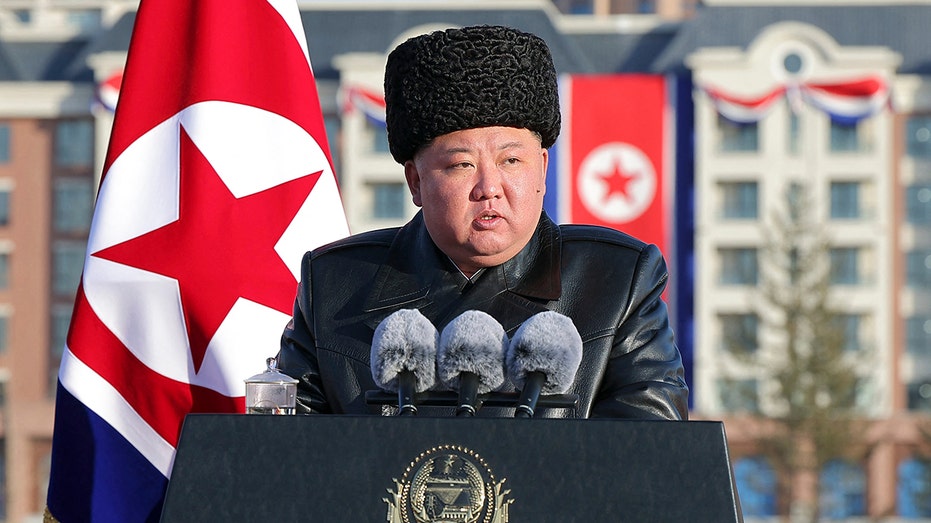
North Korea updates constitution to require automatic nuclear strike if Kim Jong Un is assassinated: report

veröffentlicht.
Vorschau ansehen

North Korea has updated its constitution to require a retaliatory nuclear strike if leader Kim Jong Un is assassinated, according to a report.

The Telegraph reported the change comes amid heightened global tensions following the killing of Iran’s Supreme Leader Ali Khamenei and other officials during a recent conflict.

Khamenei was killed in an Israeli strike in Tehran as part of a coordinated U.S.-Israeli military operation earlier this year, Fox News Digital previously reported.

The constitutional revision was approved during a session of North Korea’s Supreme People’s Assembly, which opened March 22 in Pyongyang, the outlet said.

ISRAEL TARGETS IRAN’S SUPREME LEADER IN SWEEPING STRIKES AS US JOINS ‘OPERATION EPIC FURY’

South Korea’s National Intelligence Service (NIS) briefed senior government officials this week on the update, according to the report.

The revised policy outlines procedures for retaliatory action if North Korea’s leadership is incapacitated or killed.

"If the command-and-control system over the state’s nuclear forces is placed in danger by hostile forces’ attacks … a nuclear strike shall be launched automatically and immediately," the updated provision states.

KIM JONG UN CALLS SOUTH KOREA ‘MOST HOSTILE ENEMY,’ SAYS NORTH COULD ‘COMPLETELY DESTROY’ IT

Reuters previously reported that North Korea revised its constitution to define its territory as bordering South Korea and remove references to reunification, reflecting Kim’s push to formally treat the two Koreas as separate states.

That marked the first time North Korea included a territorial clause in its constitution.

Last month, Kim pledged to further strengthen the country’s nuclear capabilities while maintaining a hard-line stance toward South Korea, which he has called the "most hostile" state.

Kim has also accused the United States of "state terrorism and aggression," and signaled North Korea could take a more active role in opposition to Washington amid rising global tensions.

Fox News Digital's Alex Nitzberg and The Associated Press contributed to this report.

(Auszug von RSS-Feed)

☐ ☆ ✇ Fox News

Man accused of threatening former Prince Andrew near Sandringham home pleads not guilty in court

veröffentlicht.
Vorschau ansehen

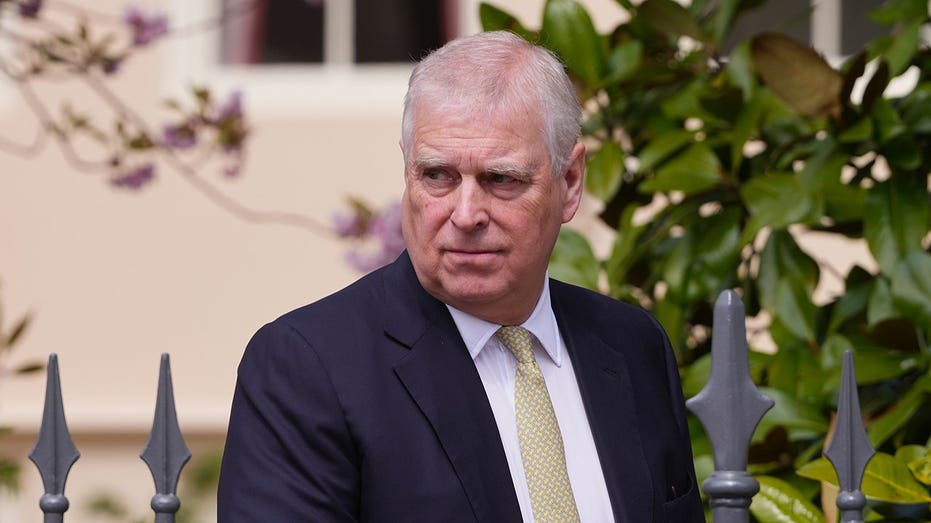
A 39-year-old man pleaded not guilty on Friday to threatening former Prince Andrew near his new home on the royal family’s Sandringham estate.

Alex Jenkinson, 39, is accused of using threatening, abusive or insulting words or behavior toward the former prince, whose royal titles were removed last year by King Charles III due to his connections to Jeffrey Epstein.

Jenkinson, who faces two counts, is accused of threatening Andrew on Wednesday and another man on Tuesday.

The former Duke of York is also expected to give evidence in the trial, which is set for July 29 at the Westminster Magistrates' Court.

EX-PRINCE ANDREW LEAVES ROYAL MANSION ‘IN DEAD OF NIGHT’ AFTER COMPROMISING EPSTEIN PHOTOS SURFACE: EXPERT

Andrew was allegedly yelled at by a masked man while walking his dogs near his home, the Daily Telegraph reported.

"Officers attended, and the man was arrested on suspicion of a public order offence and possession of an offensive weapon," the police statement said.

The incident comes three months after Andrew Mountbatten-Windsor, as he is now known, was arrested, himself, on suspicion of misconduct in public office connected to his Epstein ties and his time as the U.K. trade envoy.

Andrew moved to Sandringham earlier this year after he was asked to vacate his home at the Royal Lodge in Windsor.

PRINCE ANDREW ACCUSER VIRGINIA GIUFFRE’S DEATH CEMENTS ROYAL’S RUIN, DEEPENS EPSTEIN’S ‘EVIL’ LEGACY: EXPERTS

Virginia Giuffre, Andrew’s main accuser, claimed that she was forced to have sex with the royal three times starting when she was 17 years old.

PRINCE WILLIAM SEES DISGRACED ANDREW AS 'A TROUBLED SOUL' BUT EPSTEIN FALLOUT LEAVES 'NO COMING BACK': AUTHOR

Andrew has denied all of the accusations against him, but settled with Giuffre in 2022 over her civil sexual assault lawsuit. She later died of suicide in 2025.

Jenkinson appeared in court remotely from King's Lynn Police Investigation Centre in Norfolk on Friday with his arm in a sling.

He did plead guilty to failing to provide specimen of blood while in custody.

Jenkinson was released on bail on the condition that he doesn’t enter the county of Norfolk, attempt any contact with Andrew, and he must stay 500 meters away from Sandringham, Buckingham Palace, Balmoral Castle, Windsor Castle and Highgrove.

Reuters and The Associated Press contributed to this report.

(Auszug von RSS-Feed)

☐ ☆ ✇ Fox News

Experts warn Trump administration any Iran deal must close plutonium pathway to nuclear bombs

veröffentlicht.
Vorschau ansehen

Nuclear weapons experts are raising the alarm bells over the pressing need for the Trump administration to codify in any new deal a ban on Iran’s attempts to use plutonium from its facilities to build an atomic bomb.

The administration and non-proliferation experts have largely focused on the Islamic Republic’s atomic weapons facilities that use uranium as the material for building nuclear bombs. Tehran could take advantage of this blind spot and covertly build a plutonium-based nuclear weapon.

Jason Brodsky, policy director at United Against Nuclear Iran (UANI), told Fox News Digital: "I do believe any proposed deal with Iran needs to address the plutonium pathway to nuclear weapons. Israel struck the Arak heavy water reactor twice over the last year — in June 2025 and in March 2026. Intelligence suggested Iran had repeatedly attempted to reconstruct the facility even after the bombing, so any deal with Iran should cover the plutonium pathway."

TRUMP BLOCKADE SQUEEZING IRAN SO HARD REGIME MAY BE DUMPING OIL INTO GULF, EXPERTS SAY

Iran’s regime could use plutonium from spent fuel at its nuclear reactor at Bushehr to build an atomic weapons device, according to Henry Sokolski, the executive director of the Nonproliferation Policy Education Center and former deputy for nonproliferation policy in the Department of Defense (1989–1993).

Writing last month on the website of Real Clear Defense, he noted "Washington should make sure that Iran doesn’t remove Bushehr’s spent fuel and strip out the plutonium. This can and should be done without bombing the plant."

Sokolski wrote the "Pentagon should watch to make sure Iran does not remove any of the spent fuel at Bushehr. It could do this with space surveillance assets or, as it did in 2012, with drones. Second, any ‘peace’ deal President Trump cuts with Tehran should include a requirement that there be near-real-time monitoring of the Bushehr reactor and spent fuel pond, much as the IAEA had in place with Iran’s fuel enrichment activities."

In another article in the Bulletin of the Atomic Scientists in April, Sokolski argued that Iran has enough plutonium for more than 200 nuclear bombs. He said, "The last time IAEA inspectors visited Bushehr was August 27, 2025. Even when agency inspectors had routine access to the plant, they only visited every 90 days —  more than enough time to divert the spent fuel and possibly fashion it into nuclear weapons."

He added that "President Obama did not insist on such surveillance even though the IAEA asked Iran to permit it. Tehran said no."

Recent IAEA reports have not addressed the plutonium path to a bomb with any specificity.

TRUMP CLAIMS IRAN 'STARVING FOR CASH,' 'COLLAPSING FINANCIALLY' AFTER EXTENDING CEASEFIRE

A State Department spokesperson told Fox News Digital that, "Iran’s nuclear program poses a threat to the United States and the entire world."

The spokesperson continued, "Iran today stands in breach of its Nuclear Non-Proliferation Treaty obligations by failing to provide full cooperation with the IAEA. Iran’s leadership must engage in serious diplomatic negotiations with the United States to resolve the nuclear issue once and for all."

David Albright, a physicist and president of the Institute for Science and International Security, told Fox News Digital that he is "Highly skeptical that Iran would use plutonium from Bushehr’s spent fuel to make nuclear weapons."

The former weapons inspector, Albright, argued that, "One, Iran would need a design it has not developed. There is nothing in the Nuclear Archive on a plutonium-based nuclear weapon. Two, a diversion from Bushehr would be detected and undoubtedly lead Russia to suspend enriched uranium supplies, leading to a shutdown of a multibillion-dollar investment that supplies the area with electricity. Third, almost all the plutonium in the spent fuel is reactor-grade, and it is feasible that none is weapon-grade."

Albright added that "Reactor-grade plutonium can be used to make a nuclear weapon, but it is tricky to do so if a significant explosive yield is wanted." He added that Trump’s former National Security Adviser John Bolton "has been raising this issue for decades, and it is a remote possibility. It was rejected first in the Bush administration."

Concerns persist about Iran’s devious behavior and its aim to build a nuclear weapon at all costs. As a result, there are calls to outlaw Iran’s plutonium reprocessing and impose rigorous surveillance on Iran’s plutonium infrastructure in a future deal with the U.S.

Andrea Stricker, the deputy director of The Foundation for Defense of Democracies (FDD) Nonproliferation and Biodefense Program, told Fox News Digital. "The United States must insist on a permanent and verified ban on plutonium reprocessing in Iran under any deal."

Stricker noted that Moscow had realized the danger too. "To Russia’s rare credit, it insisted Iran let inspectors back in to safeguard the Bushehr reactor after the June 2025 strikes. Those inspections resumed last August. Plutonium produced at the reactor is not of desirable quality for nuclear weapons, and Iran has not focused on the plutonium route to nuclear weapons since the early 2000s, so it could be difficult for Tehran to work with. They would also need to illicitly acquire and outfit a plutonium reprocessing plant as well as sophisticated equipment to handle and chemically convert the fuel. All of this creates significant obstacles to its use as fuel for nuclear weapons."

She continued that "The IAEA (International Atomic Energy Agency) could mitigate any proliferation risk at Bushehr by increasing the frequency of inspections to monthly. Russia could also remove the spent fuel that has accumulated at the site."

(Auszug von RSS-Feed)

☐ ☆ ✇ Fox News

As Trump forces NATO to pay up, alliance races to close military gap with US

veröffentlicht.
Vorschau ansehen

This is part one of a series examining the challenges confronting the NATO alliance.

NATO has become a "bloated architecture" too dependent on American military power, former senior national security advisor Keith Kellogg told Fox News Digital.

As President Donald Trump pressures NATO allies to spend more on defense — ordering the withdrawal of 5,000 U.S. troops from Germany and signaling possible cuts in Spain and Italy — a deeper concern is emerging inside the alliance: despite years of rising European defense budgets, NATO still depends heavily on American military power, from missile defense and intelligence to logistics and nuclear deterrence. 

The growing gap between political commitments and real military capability is now fueling calls for structural changes inside the alliance as NATO confronts mounting threats from Russia and instability in the Middle East.

TRUMP ‘RIGHT TO BE OUTRAGED’ BY EUROPE’S BETRAYAL ON IRAN, SAYS FORMER THATCHER ADVISOR

NATO’s imbalance is not theoretical — and it is not new, retired Lt. Gen. Keith Kellogg told Fox News Digital, "I told the president… maybe you ought to talk about a tiered relationship with NATO," Kellogg described conversations with Trump in his first term about the alliance’s future. "…we need to develop a new, for lack of a better term, a new NATO a new defensive alignment with  Europe."

Kellogg added the alliance has expanded politically but not militarily — creating what he sees as a growing gap between commitments and real capability.

"You started with 12, and you went to 32, and in the process, I think you diluted the impact," he argued, calling today’s NATO "a very bloated architecture."

"They haven't put the money into defense. Their defense industry and defense forces have atrophied. When you look at the Brits right now, they could barely deploy forces: they have two aircraft carriers, both under maintenance. Their brigades are like one out of six that work. And you just look at the capability, it's just not there. So I think we need to realize that and say, well, we need something different," Kellogg, who is the co-chair of the Center for American Security at the America First Foreign Policy Institute, told Fox News Digital.

But not everyone agrees the alliance is losing relevance.

"It has never been more relevant," said John R. Deni, a research professor at the U.S. Army War College, who says NATO remains central to U.S. national security.

"The reason for that is twofold," he said. "One, it’s our comparative advantage versus the Chinese and the Russians… they don’t have anything like this."

"And the second reason… NATO underwrites the security and stability of our most important trade and investment relationship," he added, referring to economic ties between North America and Europe.

NATO ALLIES CLASH AFTER RUSSIAN JETS BREACH AIRSPACE, TESTING ALLIANCE RESOLVE

By around 2010, the United States accounted for roughly 65% to 70% of NATO defense spending, according to analysis provided by Barak Seener from the Henry Jackson Society, a London-based think tank.

"They’ve always been dependent on the U.S.," Kellogg said of the European allies.

"The allies overall rely upon one another for deterrence and defense by design," Deni said, explaining that alliances exist to "pool their resources" and "aggregate their individual strengths."

Deni pointed to ground forces as a clear example of what the U.S. gains from the alliance, noting that "there are far more allied mechanized infantry forces on the ground than there are Americans."

NATO CHIEF SIGNALS ALLIES MAY ACT ON HORMUZ, WARNS OF ‘UNHEALTHY CODEPENDENCE’ ON US

Still, he acknowledged that reliance has at times gone too far.

"In the past… it was fair to say that the European allies were overly reliant upon the Americans for conventional defense," he said, pointing to the 2000s.

That, he said, was partly driven by U.S. priorities — as Washington pushed European allies to focus on wars in Afghanistan and Iraq rather than territorial defense.

Seener describes NATO as "formally collective, but functionally asymmetric," with the U.S. providing a disproportionate share of "high-end capabilities."

That asymmetry is most visible in nuclear deterrence.

Seener said the U.S. provides the overwhelming majority of NATO’s nuclear arsenal — including intercontinental ballistic missiles, submarine-launched systems and strategic bombers — meaning deterrence ultimately relies on the assumption of U.S. retaliation.

A NATO official told Fox News Digital that, "The U.S. nuclear deterrent cannot be replaced, but it is clear that Europe needs to step up. There’s no question. There needs to be a better balance when it comes to our defense and security. Both because we see the vital role the U.S. plays around the world and the resources that it demands, and also because it is only fair."

"The good news," the official added, "is that the Allies are doing exactly that. They are stepping up, working together — and with the U.S. — to ensure we collectively have what we need to deter and defend one billion people living across the Euro-Atlantic area."

NATO LAUNCHES ARCTIC SECURITY PUSH AS TRUMP EYES GREENLAND TAKEOVER

Beyond nuclear weapons, the dependence runs through the alliance’s operational backbone.

Seener pointed to U.S.-provided intelligence, surveillance and reconnaissance — as well as logistics and command systems — as essential to NATO operations.

"Without U.S. intelligence and surveillance, NATO loses situational awareness and early warning capabilities," Seener said, adding, "So that means that Russia, for example, can attack Europe. And theoretically, if there's no NATO and the U.S. is not involved, Europe would not be aware, or it would take it too long to be able to defend itself."

Kellogg also says that much of Europe’s military capability falls short of top-tier systems.

"For the most part, their equipment, if you had to grade it A, B, C, D, E, F, they’re kind of like B players or C players," he said. "It’s not the first line of work."

He pointed to air and missile defense as a key gap, noting that while European countries rely on U.S.-made systems such as Patriot and THAAD, "they don’t have a system that’s comparable."

Kellogg attributed that to years of underinvestment, saying European defense industries "have atrophied," adding that the United States is also now "relearning that as well."

TRUMP AFFIRMS US 'WILL ALWAYS BE THERE FOR NATO,' WHILE EXPRESSING DOUBTS ABOUT ALLIANCE

Deni said the picture today is more mixed.

"Alliance defense spending has been up… and has spiked far more after 2022," he said, pointing to Russia’s invasion of Crimea in 2014 as a turning point.

But he cautioned that capability gains take time, noting that many improvements are still years away from full deployment.

Deni pointed to recent European purchases of U.S. systems as evidence of growing capability, noting that countries including Poland, Romania, Norway and Denmark are acquiring the F-35 fighter jet from the U.S.

"You can’t build an F-35 overnight," he said, adding that many of these improvements will take years to fully materialize.

A NATO official told Fox News Digital the alliance "needs to move further and faster" to meet growing threats, pointing to new capability targets agreed by defense ministers in June 2025.

The official said priorities include air and missile defense, long-range weapons, logistics and large land forces, noting that while details remain classified, plans call for a fivefold increase in air and missile defense, "thousands more" armored vehicles and tanks, and "millions more" artillery shells. NATO also aims to double key enabling capabilities such as logistics, transportation and medical support.

The official added that allies are increasing investments in warships, aircraft, drones, long-range missiles, as well as space and cyber capabilities, while boosting readiness and modernizing command and control.

"These targets are now included in national plans," the official said, adding that allies must demonstrate how they will meet them through sustained defense spending and capability development.

The NATO official also noted that European allies lead multinational forces across Central and Eastern Europe, while the U.S. and Canada serve as framework nations in Poland and Latvia, alongside ongoing air policing missions and NATO’s KFOR operation in Kosovo.

Kellogg’s warning is direct: NATO’s deterrence depends on U.S. presence.

"The one you always have to worry about… is Russia," Kellogg, who was Trump’s special envoy for Ukraine and Russia in 2025, said.

If U.S. forces are tied down elsewhere, NATO could face serious strain — particularly in areas like intelligence and logistics.

For Kellogg, the danger is delay. "We won’t know until it happens," he said. "And then you won’t be able to respond to it."

Deni, however, said the alliance remains a strategic asset — not a liability.

The question, he suggests, is not whether NATO still works. It is whether allies can adapt fast enough to keep it working.

(Auszug von RSS-Feed)

☐ ☆ ✇ Fox News

What Israel wants from an Iran peace deal: No enrichment, missile limits and strict enforcement

veröffentlicht.
Vorschau ansehen

As President Donald Trump signals progress toward a possible agreement with Iran, Israeli officials and analysts increasingly are outlining what Jerusalem believes any deal must include to prevent Tehran from rebuilding its military and regional power.

Israeli Prime Minister Benjamin Netanyahu said Wednesday that Israel and the United States remain in "full coordination" as negotiations continue.

"We share common objectives, and the most important objective is the removal of the enriched material from Iran, all the enriched material, and the dismantling of Iran’s enrichment capabilities," Netanyahu said at the opening of a security cabinet meeting.

US AND IRAN CLASH OVER URANIUM ENRICHMENT AS NUCLEAR TALKS RESUME IN ROME

"We’ve had very good talks over the last 24 hours, and it’s very possible that we’ll make a deal," Trump told reporters in the Oval Office Wednesday. 

At the same time, Trump warned that if negotiations fail, "we’ll have to go a big step further."

For Israel, the question is not simply whether the war ends, but whether Iran emerges from negotiations weakened or repositioned to rebuild. Israeli officials fear a weak agreement could allow Tehran to preserve strategic capabilities, regain economic breathing room and eventually restore the regional network of armed groups that threatened Israel before the war. Jerusalem is also seeking guarantees that any future deal preserves military leverage and freedom of action if Iran violates its commitments.

Against that backdrop, Israeli analysts say Jerusalem’s red lines focus on four core areas: dismantling Iran’s enrichment infrastructure, restricting its ballistic missile program, preventing Tehran from rebuilding Hezbollah and Hamas, and ensuring the regime does not gain political legitimacy or strategic relief from the negotiations.

On the nuclear issue, former Israeli National Security Advisor Yaakov Amidror said Israel’s position remains uncompromising.

"Weaponized uranium must leave Iran," Amidror said. "The Iranians must not be allowed to enrich uranium."

Israeli journalist and commentator Nadav Eyal agreed, adding that Israel is seeking a much stricter framework than previous agreements. 

"Israel wants Iran to stop enrichment for as long as possible and for the enriched material to leave Iran," Eyal said, adding that Jerusalem is looking for "an arms control agreement that would be extensive and robust."

Avner Golov, vice president of the Mind Israel think tank, told Fox News Digital that Israel also wants Iran’s underground nuclear infrastructure dismantled entirely. 

"In the nuclear arena, what matters is the removal of the enriched material, the destruction of the underground facilities, including those still being built, and a prohibition on new sites," Golov said.

Golov also warned against "sunset clauses" that would allow restrictions to expire after several years. 

"There must be an agreement without sunsets," he said, calling for "unprecedented monitoring and supervision, anywhere, under any conditions and not dependent on Iranian approval."

Jonathan Ruhe, Jewish Institute for National Security of America (JINSA) fellow for American strategy, told Fox News Digital, "Ultimately the United States and Israel should have strongly similar redlines for an acceptable deal," he said, including "shutting down Iran’s nuclear weapons program completely, permanently and verifiably."

Ruhe said that goes beyond Iran handing over highly enriched uranium and includes shutting down remaining enrichment-related facilities at Pickaxe and Isfahan.

UN'S ATOMIC AGENCY'S IRAN POLICY GETS MIXED REVIEWS FROM EXPERTS AFTER US-ISRAEL 'OBLITERATE' NUCLEAR SITES

Alongside the nuclear issue, Israeli analysts say Iran’s ballistic missile program has become equally central to Israel’s security concerns.

"One of the key questions is whether there will be any sort of limitation on the ballistic missile program of the Iranians," Eyal said. "Israel sees this as no less of an existential threat than the nuclear issue."

Amidror warned that without missile restrictions, the threat could eventually extend beyond Israel and Europe

"If there are no restrictions on the missile program, then missiles that today can reach half of Europe will, within five to 10 years, be able to reach the United States," he warned.

Golov argued that a nuclear-only agreement would leave Iran free to rebuild a missile shield protecting a future nuclear breakout. 

"A deal that focuses only on the nuclear program would allow the Iranians to produce thousands of missiles and create a protective shield around their nuclear program."

Ruhe similarly said limiting Iran’s missile arsenal must include preventing Iran from rebuilding production capabilities damaged during the war.

IRAN DRAWS MISSILE RED LINE AS ANALYSTS WARN TEHRAN IS STALLING US TALKS

Another major Israeli concern is that sanctions relief or renewed trade could funnel money back to Iran’s regional proxies.

"Israel is demanding that the Islamic Republic isolate itself from involvement with Lebanon and Gaza and stop supporting armed groups that operate against Israel," Eyal said.

"For Israel, it is a material issue that the money injected into Iran will not be used to rebuild the proxies in the region," he added.

Amidror said Iran’s ability to support Hezbollah and Hamas has already been weakened by the collapse of regional supply routes. 

"The Iranians cannot effectively support the proxies because there is no longer a land bridge from Iran to Syria," he said, but warned that if negotiations leave the impression that Washington backed down, Iran’s regional proxies could emerge stronger even after the war.

Ruhe similarly argued that Israel wants to avoid any agreement that restores legitimacy to the Iranian regime without fundamentally weakening it.

"Avoiding anything that legitimates Iran’s regime and abandons the Iranian people" is critical, Ruhe said, including "giving guarantees against future attacks or compensating Tehran for wartime damages."

Ruhe warned that for Israel, a "bad deal" is ultimately any agreement that restrains Israel’s future freedom of action against Iran and its proxies.

"This is one big reason Iran wants to ensnare the Trump administration in open-ended negotiations that sideline military options and create daylight between Washington and Jerusalem," Ruhe said.

(Auszug von RSS-Feed)

☐ ☆ ✇ Fox News

US-backed pipeline proposal targets global reliance on Strait of Hormuz amid Iran threats

veröffentlicht.
Vorschau ansehen

A new U.S.-backed proposal to build a network of overland energy pipelines bypassing the Strait of Hormuz is gaining attention as tensions in the region expose a critical vulnerability in the global energy system.

A policy memo reviewed by Fox News Digital outlines the concept, known as "ARAM Express," a proposed consortium between the United States and Gulf partners to develop a multidirectional overland network for oil, gas and petrochemicals, originating with Richard Goldberg of the Foundation for Defense of Democracies.

The plan envisions pipelines extending westward to the Red Sea and Mediterranean, as well as southern routes toward the Arabian Sea, creating multiple export pathways that would reduce reliance on the strait, through which roughly one-third of the world’s seaborne oil currently flows.

TRUMP OPENS HORMUZ UNDER FIRE WITH ‘PROJECT FREEDOM’ AS IRAN WARNS OF ATTACKS

The proposal would rely on broad international participation, with European and Asian buyers investing in infrastructure and securing long-term supply agreements.

"European buyers are desperate for long-term supply resilience, and Asian customers are equally exposed," Goldberg said. "Even China cannot tolerate the risk of a sustained disruption."

The push comes as Iran’s threats to commercial shipping and ongoing U.S. efforts to secure the waterway under President Donald Trump’s "Project Freedom" highlight the risks posed by a single chokepoint to global energy flows.

Roughly one-third of the world’s seaborne oil passes through the narrow waterway, making it a critical artery for global markets. With Iran threatening shipping and U.S. forces now guiding vessels through the strait under President Donald Trump’s "Project Freedom," the White House is framing the crisis in global terms. 

"The President will not allow Iran to hold the global economy hostage and undermine the free flow of energy," said White House spokeswoman Taylor Rogers, describing the launch of "Project Freedom" as a humanitarian effort to restore navigation through the strait.

That framing aligns with a growing view among U.S. officials and analysts that the risk is not only immediate but also structural.

U.S. Ambassador to the United Nations Mike Waltz signaled that Washington’s partners are already looking beyond the strait itself.

"I know our Gulf partners and allies are seriously thinking through that," Waltz told Fox News Digital when asked about long-term alternatives during a conference call with reporters Monday.

"I know they’re looking at additional alternatives to frankly diversify their pathways and diversify their economies," he added.

MIKE WALTZ PUSHES UN RESOLUTION TO STOP IRAN MINING KEY GLOBAL SHIPPING ROUTE

The idea that Hormuz represents a structural weakness is not new. But until now, it has largely been tolerated, with global markets relying on stability in the Gulf to keep energy flowing.

That assumption is now under strain.

Even with U.S. naval power deployed to secure the waterway, the current crisis has highlighted how quickly disruption, or even the threat of it, can ripple through global supply chains.

"This isn’t just a long-term idea anymore," said Rich Goldberg of the Foundation for Defense of Democracies think tank. "There is a real threat to the Strait of Hormuz that isn’t going away so long as the regime in Tehran remains."

AS IRAN WEAKENS, QUESTIONS GROW OVER MOHAMMED BIN SALMAN’S REGIONAL AMBITIONS

Saudi Arabia stands out as the country among Gulf states that has invested most heavily in reducing reliance on Hormuz.

Its East-West pipeline allows crude oil to travel from eastern fields on the Gulf to the Red Sea port of Yanbu, bypassing the strait entirely. From there, shipments can move toward Europe, Africa and Asia without entering the chokepoint.

"Saudi Arabia has treated the Strait of Hormuz risk with planning, not panic," said Salman Al-Ansari, a Saudi geopolitical analyst.

"The East-West pipeline is strategic insurance," he told Fox News Digital, "A Hormuz closure would be disruptive, but not paralyzing. Saudi Arabia has spent years reducing that vulnerability, and today it is uniquely positioned to absorb shocks and keep global flows moving."

Al-Ansari argued that the kingdom’s strategy goes beyond energy exports, positioning the country as a broader logistics hub.

"Ports, pipelines, land bridges, storage and Red Sea access are all part of one Saudi contingency architecture," he said.

HORMUZ CHOKE POINT PERSISTS AS IRAN HALTS OIL TRAFFIC DESPITE TRUMP CEASEFIRE

Saudi Arabia is not the only player adapting. 

The United Arab Emirates also has developed alternative export capacity through its pipeline to Fujairah, outside the Strait of Hormuz.

At the same time, some analysts argue that recent regional dynamics point to a deeper shift, one that goes beyond infrastructure and into the political structure of the Gulf itself.

Yonatan Adiri, an Israeli entrepreneur and former adviser to former Israeli President Shimon Peres, said the traditional model of a unified Gulf energy system centered on Hormuz is beginning to break down.

"The whole arrangement … it’s starting to expire," Adiri said, referring to the long-standing reliance on the strait as a central artery for Gulf exports. 

He pointed to emerging economic and geopolitical realignments, including new corridors and shifting alliances, that are fragmenting the region’s traditional energy architecture.

"The UAE stepping away from OPEC is not just about production policy," Adiri said, referring to the country’s decision to leave the Organization of the Petroleum Exporting Countries effective May 1, 2026. "It reflects a broader shift toward an independent strategy — building its own routes, partnerships and leverage rather than relying on a collective system."

These changes are driven in part by broader global competition, according to Adiri, particularly efforts by the United States and its partners to counter China’s Belt and Road Initiative.

"The entire system is being rethought," he said, describing a shift toward diversified routes that reduce reliance on single choke points.

WHY GULF STATES AREN’T JOINING THE WAR AGAINST IRAN — DESPITE ATTACKS ON THEIR SOIL

Despite these developments, not all Gulf states are equally prepared.

"If you’re Kuwait, you’re in a world of hurt," Goldberg said, pointing to countries that lack meaningful alternatives to maritime exports.

Qatar, one of the world’s largest exporters of liquefied natural gas, remains heavily dependent on the strait, with limited options to reroute supply if shipping is disrupted.

This uneven exposure could reshape regional dynamics, giving countries with alternative routes greater resilience and leverage in future crises.

While the technical case for alternative routes is growing stronger, political constraints remain.

One of the most sensitive issues is whether future corridors could involve Israel, even indirectly.

"As for routes involving Israel, even indirectly, the politics are extremely difficult under current circumstances," Al-Ansari said. "I genuinely do not see it happening now."

At the same time, he suggested that such cooperation could become more realistic in the future under different political conditions.

For now, the U.S. and its allies remain focused on stabilizing the immediate situation in the Strait of Hormuz, ensuring that ships can pass safely and global markets continue to function.

But as tensions persist, the current crisis is forcing a broader reassessment.

The question is no longer just how to secure the strait, but whether the global energy system can afford to depend on it to the extent it has for decades.

If the current trajectory continues, Hormuz may remain critical, but no longer dominant, experts argue, as countries invest in new routes, new partnerships and a more diversified energy map.

Fox News Digital reached out to Saudi Arabia and the UAE for comment but did not receive a response in time for publication.

(Auszug von RSS-Feed)

☐ ☆ ✇ Fox News

Examining NATO: Inside the ‘commitment gap’ as US carries alliance deterrence

veröffentlicht.
Vorschau ansehen

This is part one of a series examining the challenges confronting the NATO alliance.

As President Donald Trump ramps up pressure on NATO allies to increase defense spending — and orders the withdrawal of 5,000 U.S. troops from Germany over the next six to 12 months — a deeper issue is coming into focus: even as allied budgets rise, NATO still depends heavily on American military power to function.

NATO’s imbalance is not theoretical — and it is not new, retired Lt. Gen. Keith Kellogg told Fox News Digital, "I told the president… maybe you ought to talk about a tiered relationship with NATO," Kellogg described conversations with Trump in his first term about the alliance’s future. "…we need to develop a new, for lack of a better term, a new NATO a new defensive alignment with Europe."

Kellogg, who served as a senior national security official during Trump's first term, said the alliance has expanded politically but not militarily — creating what he sees as a growing gap between commitments and real capability.

NATO CHIEF SIGNALS ALLIES MAY ACT ON HORMUZ, WARNS OF ‘UNHEALTHY CODEPENDENCE’ ON US

"You started with 12, and you went to 32, and in the process, I think you diluted the impact," he argued, calling today’s NATO "a very bloated architecture."

"They haven't put the money into defense. Their defense industry and defense forces have atrophied. When you look at the Brits right now, they could barely deploy forces: they have two aircraft carriers, both under maintenance. Their brigades are like one out of six that work. And you just look at the capability, it's just not there. So I think we need to realize that and say, well, we need something different," Kellogg, who is the co-chair of the Center for American Security at the America First Foreign Policy Institute, told Fox News Digital.

But not everyone agrees the alliance is losing relevance.

"It has never been more relevant," said John R. Deni, a research professor at the U.S. Army War College, who says NATO remains central to U.S. national security.

"The reason for that is twofold," he said. "One, it’s our comparative advantage versus the Chinese and the Russians… they don’t have anything like this."

"And the second reason… NATO underwrites the security and stability of our most important trade and investment relationship," he added, referring to economic ties between North America and Europe.

NATO ALLIES CLASH AFTER RUSSIAN JETS BREACH AIRSPACE, TESTING ALLIANCE RESOLVE

By around 2010, the United States accounted for roughly 65% to 70% of NATO defense spending, according to analysis provided by Barak Seener from the Henry Jackson Society, a London-based think tank.

"They’ve always been dependent on the U.S.," Kellogg said of the European allies.

"The allies overall rely upon one another for deterrence and defense by design," Deni said, explaining that alliances exist to "pool their resources" and "aggregate their individual strengths."

Deni pointed to ground forces as a clear example of what the U.S. gains from the alliance, noting that "there are far more allied mechanized infantry forces on the ground than there are Americans."

Still, he acknowledged that reliance has at times gone too far.

"In the past… it was fair to say that the European allies were overly reliant upon the Americans for conventional defense," he said, pointing to the 2000s.

That, he said, was partly driven by U.S. priorities — as Washington pushed European allies to focus on wars in Afghanistan and Iraq rather than territorial defense.

Seener describes NATO as "formally collective, but functionally asymmetric," with the U.S. providing a disproportionate share of "high-end capabilities."

That asymmetry is most visible in nuclear deterrence.

Seener said the U.S. provides the overwhelming majority of NATO’s nuclear arsenal — including intercontinental ballistic missiles, submarine-launched systems and strategic bombers — meaning deterrence ultimately relies on the assumption of U.S. retaliation.

A NATO official told Fox News Digital that, "The U.S. nuclear deterrent cannot be replaced, but it is clear that Europe needs to step up. There’s no question. There needs to be a better balance when it comes to our defense and security. Both because we see the vital role the U.S. plays around the world and the resources that it demands, and also because it is only fair."

"The good news," the official added, "is that the Allies are doing exactly that. They are stepping up, working together — and with the U.S. — to ensure we collectively have what we need to deter and defend one billion people living across the Euro-Atlantic area."

NATO LAUNCHES ARCTIC SECURITY PUSH AS TRUMP EYES GREENLAND TAKEOVER

Beyond nuclear weapons, the dependence runs through the alliance’s operational backbone.

Seener pointed to U.S.-provided intelligence, surveillance and reconnaissance — as well as logistics and command systems — as essential to NATO operations.

"Without U.S. intelligence and surveillance, NATO loses situational awareness and early warning capabilities," Seener said, adding, "So that means that Russia, for example, can attack Europe. And theoretically, if there's no NATO and the U.S. is not involved, Europe would not be aware, or it would take it too long to be able to defend itself."

Kellogg also says that much of Europe’s military capability falls short of top-tier systems.

"For the most part, their equipment, if you had to grade it A, B, C, D, E, F, they’re kind of like B players or C players," he said. "It’s not the first line of work."

He pointed to air and missile defense as a key gap, noting that while European countries rely on U.S.-made systems such as Patriot and THAAD, "they don’t have a system that’s comparable."

Kellogg attributed that to years of underinvestment, saying European defense industries "have atrophied," adding that the United States is also now "relearning that as well."

TRUMP AFFIRMS US 'WILL ALWAYS BE THERE FOR NATO,' WHILE EXPRESSING DOUBTS ABOUT ALLIANCE

Deni said the picture today is more mixed.

"Alliance defense spending has been up… and has spiked far more after 2022," he said, pointing to Russia’s invasion of Crimea in 2014 as a turning point.

But he cautioned that capability gains take time, noting that many improvements are still years away from full deployment.

Deni pointed to recent European purchases of U.S. systems as evidence of growing capability, noting that countries including Poland, Romania, Norway and Denmark are acquiring the F-35 fighter jet from the U.S.

"You can’t build an F-35 overnight," he said, adding that many of these improvements will take years to fully materialize.

A NATO official told Fox News Digital the alliance "needs to move further and faster" to meet growing threats, pointing to new capability targets agreed by defense ministers in June 2025.

The official said priorities include air and missile defense, long-range weapons, logistics and large land forces, noting that while details remain classified, plans call for a fivefold increase in air and missile defense, "thousands more" armored vehicles and tanks, and "millions more" artillery shells. NATO also aims to double key enabling capabilities such as logistics, transportation and medical support.

The official added that allies are increasing investments in warships, aircraft, drones, long-range missiles, as well as space and cyber capabilities, while boosting readiness and modernizing command and control.

"These targets are now included in national plans," the official said, adding that allies must demonstrate how they will meet them through sustained defense spending and capability development.

The NATO official also noted that European allies lead multinational forces across Central and Eastern Europe, while the U.S. and Canada serve as framework nations in Poland and Latvia, alongside ongoing air policing missions and NATO’s KFOR operation in Kosovo.

Kellogg’s warning is direct: NATO’s deterrence depends on U.S. presence.

"The one you always have to worry about… is Russia," Kellogg, who was Trump’s special envoy for Ukraine and Russia in 2025, said.

If U.S. forces are tied down elsewhere, NATO could face serious strain — particularly in areas like intelligence and logistics.

For Kellogg, the danger is delay. "We won’t know until it happens," he said. "And then you won’t be able to respond to it."

Deni, however, said the alliance remains a strategic asset — not a liability.

The question, he suggests, is not whether NATO still works. It is whether allies can adapt fast enough to keep it working.

(Auszug von RSS-Feed)

☐ ☆ ✇ Fox News

Rubio warns China after Panama ship detentions, calls hemisphere sovereignty 'non-negotiable'

veröffentlicht.
Vorschau ansehen

Secretary of State Marco Rubio warned China that "the sovereignty of our hemisphere is non-negotiable" after the U.S. and regional allies accused Beijing of detaining Panama-flagged ships in a dispute tied to canal port control.

In a joint statement with Bolivia, Costa Rica, Guyana, Paraguay and Trinidad and Tobago, the U.S. said China’s actions targeting Panama-flagged vessels were a "blatant attempt to politicize maritime trade" and infringe on regional sovereignty, framing the dispute as a broader strategic test over control of one of the world’s most critical commercial arteries.

While the Panama dispute centers on shipping detentions rather than a physical blockade, critics increasingly view it alongside battles over other strategic choke points, such as the Strait of Hormuz, as part of a widening contest over whether Beijing or Washington will shape the rules governing global trade and energy corridors.

IRAN’S $800M OIL SMUGGLING SCHEME USES TANKERS POSING AS IRAQI SHIPS TO DODGE BLOCKADE

The confrontation follows Panama’s Supreme Court decision earlier in 2026 to invalidate the legal framework behind Hong Kong-based CK Hutchison’s long-held control of the Balboa and Cristobal terminals flanking the Panama Canal, a choke point that handles roughly 5% of global maritime trade. 

U.S. regulators have monitored nearly 70 Panama-flagged vessels detained by Chinese authorities since March 8, according to Reuters — a surge American officials say appears designed to retaliate against Panama and pressure global shipping.
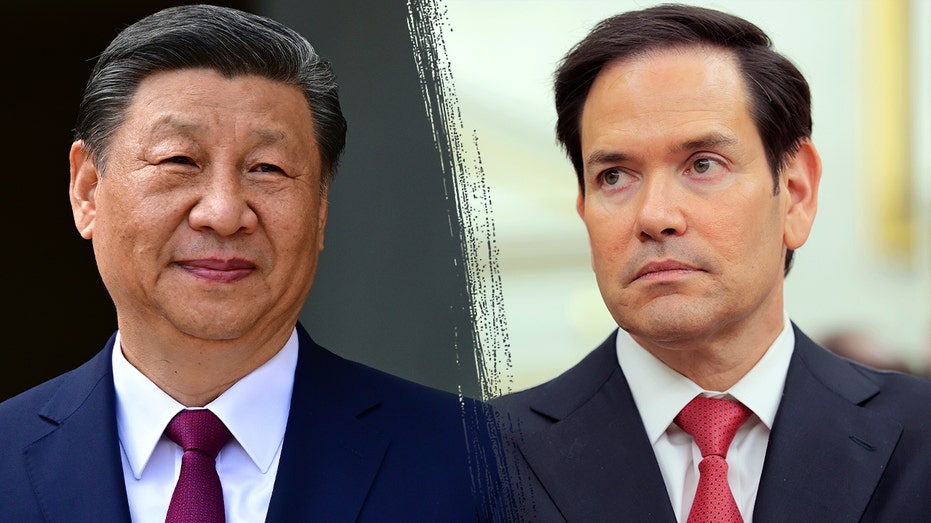
"China has used Iran to destabilize the Middle East. In effect, Iran has been China’s proxy," China expert Gordon Chang told Fox News Digital, arguing Beijing’s actions in Panama fit a broader global pattern in which China uses economic leverage, trade pressure and regional partners to expand influence while condemning similar tactics from Washington.

Chang said Beijing is now facing growing resistance as the U.S. increasingly moves not only against China directly, but also against governments and geopolitical flash points he argues have strengthened Beijing’s hand.

"Trump apparently decided that he would counter this sly tactic by taking China’s proxies — Venezuela, Cuba and Iran — off the board," Chang said.

HOUSE REPUBLICANS INTRODUCE BILL TO REPURCHASE PANAMA CANAL AFTER TRUMP RAISES CONCERNS OF CHINESE CONTROL

He also framed pressure on Iran and threats to the Strait of Hormuz as part of a larger strategic effort aimed at both Tehran and Beijing.
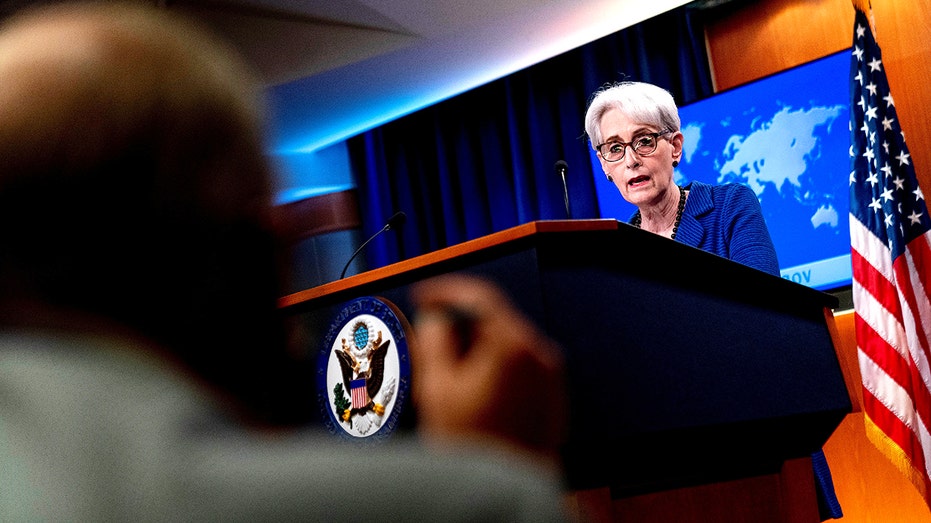
"Closing the Strait of Hormuz is a two-fer, starving Iran’s regime and shaking China’s already fragile economy," Chang said. "Trump is using energy to reorder the world."

Chang also accused Beijing of hypocrisy over trade.

"China’s Communists invented hypocrisy. Nobody does hypocrisy better than the Chinese Communists," he said, arguing that China long benefited from a global trading system it increasingly weaponized for geopolitical purposes.

"The elemental truth is that China started this cycle of action and retaliation," Chang said. "If China had not threatened America, America would not have leaned on Panama. If America had not leaned on Panama, China would not have detained Panamanian vessels."

China has rejected accusations that it is politicizing trade, with its foreign ministry arguing U.S. criticism reflects Washington’s own strategic ambitions around the canal.

China's Foreign Ministry called the statement on Wednesday "entirely baseless and misleading", said it would take steps to safeguard China's interests in Panama, and accused the United States of politicizing ports, according to Reuters.

The Chinese Embassy in Washington, D.C., spokesperson Liu Pengyu told Fox News Digital that, "Chinese competent authorities conducted routine inspections of vessels in accordance with laws and regulations. The allegations are completely unfounded and merely a distortion of facts. It is the United States that has framed normal affairs concerning relevant terminals as issues about politics and security, making pretenses and slandering others with rumors. China’s position on the Panamanian ports issue is clear and will firmly defend its legitimate rights and interests. We urge relevant countries not to be blinded and utilized by those with ill intentions."

Reuters contributed to this article.

(Auszug von RSS-Feed)

☐ ☆ ✇ Fox News

‘No credibility’: Obama’s top Iran negotiator torched by State Department after ripping Trump war plan

veröffentlicht.
Vorschau ansehen

As the leader of President Barack Obama’s negotiating team on the nuclear agreement with Iran, Wendy Sherman launched a no-holds-barred attack on President Donald Trump’s Iran strategy over the weekend.

Sherman, who served as undersecretary of state for political affairs during the Obama administration and as deputy secretary of state under President Joe Biden, took aim at Trump’s Iran policy in recent interviews.

Sherman’s assault on the Trump administration’s war strategy in a Bloomberg News interview raised eyebrows because it comes at a time when the administration is inflicting enormous economic pressure on Tehran’s rulers via the U.S. blockade of the Strait of Hormuz.

TRUMP UNLEASHES ON OBAMA'S 'DISASTER' IRAN NUCLEAR DEAL, SAYS HE WAS 'HONORED' TO RIP IT APART

Having played a key role in sealing the widely criticized 2015 nuclear deal with Iran, which Trump withdrew from in 2018, she slammed Trump’s Iran plan in the Bloomberg interview. "He doesn’t have a strategy. He’s very tactical [and] very transactional — as he was as a developer. In this case, I don’t think that approach will work."

She added, "He has cost our alliances, American taxpayers, 13 American lives, our inventory of weapons, our ability to project power abroad."

In response to her controversial comments, State Department spokesperson Tommy Pigott strongly pushed back, telling Fox News Digital, "She was literally part of the team that handed the Iranian regime billions of dollars and a roadmap to a nuclear weapon. She has no credibility. The facts: Under the previous administration, wars broke out, and our enemies grew stronger. Under President Trump, historic peace deals have been signed — including an unprecedented peace plan for Gaza — and the Iranian regime will never obtain a nuclear weapon."

NUCLEAR EXPERTS WARN IRAN’S URANIUM ‘RIGHT’ IS A MYTH, SAY TRUMP IS RIGHT TO HOLD FIRM

Harvard Law professor Alan Dershowitz, who just dropped his Democratic Party membership by registering as a Republican, told Fox News Digital: "She is the primary villain of the deal that gave Iran a nuclear bomb. She has no credibility. If Iran develops a bomb, it should put her name on it."

Adding to the growing anti-Israel sentiment among Democrats, Sherman also attacked Israel in the interview. She said, without giving any evidence, "I also believe that Prime Minister [Benjamin Netanyahu] has led us down a road — and we have been part of it — that has, in essence, created a genocide in Gaza that has destabilized the Middle East."

When asked about Sherman’s criticism of Israel, Dershowitz said, "She is a bigot and anti-Israel. She sees everything through the lens of Barack Obama."

Obama faced criticism during his tenure for his alleged anti-Israel policies, including allowing an anti-Israel U.N. Security Council resolution to pass in the last days of his presidency.

In a Wall Street Journal opinion article last week, Dershowitz wrote: "The Democratic Party has become the most anti-Israel party in U.S. history. Last week, all but seven Senate Democrats voted for an arms embargo against the Jewish state… There is no denying that the hard left, anti-Israel wing of the Democratic Party has moved from the fringe to the mainstream."

Asked to respond to the criticism of her remarks on Iran, Israel and Dershowitz’s comments, Solveig Reeker, a representative for Sherman, told Fox News Digital, "I'm sorry Ambassador Sherman is not available at this time and must decline."

(Auszug von RSS-Feed)

☐ ☆ ✇ Fox News

UN-backed data undercuts viral Gaza famine claims as child malnutrition falls

veröffentlicht.
Vorschau ansehen

EXCLUSIVE: A surge in online claims warning of famine in Gaza is gaining traction across social media and international outlets, but newly surfaced data reviewed by Fox News Digital from the United Nations, the Board of Peace and the Israeli military tells a sharply different story. 

The figures were shared at a meeting of the Ad Hoc Liaison Committee (AHLC), a forum that coordinates international aid to the Palestinians, by the Board of Peace and described as based on reporting from the U.N.

Children aged 6 to 59 months admitted for acute malnutrition treatment rose from 2,807 cases in January 2025 to a peak of 17,384 in August 2025 before declining steadily to 3,043 in March 2026, an approximately 83% drop, according to the data. 

EYEWITNESS TO FIGHTING HAMAS TERRORISTS IN GAZA'S DEADLY NETZARIM CORRIDOR: 'THE CHALLENGES ARE CONSTANT'

The figures challenge a rapidly spreading narrative that Gaza is facing widespread famine, a claim gaining traction across global media and shaping international pressure on Israel.

The dataset also indicates that most remaining cases are now classified as "moderate" or linked to chronic medical and genetic conditions requiring sustained support.

Separate figures presented at the same meeting, collected by the Board of Peace, show a sharp increase in humanitarian aid delivery following the establishment of the Civil-Military Coordination Center (CMCC) in October 2025. The U.S.-led, multinational hub, located in Israel, is designed to manage post-war Gaza stabilization. 

The Civil-Military Coordination Center oversees aid delivery, monitors a U.S.-brokered ceasefire, and coordinates efforts with 60 nations and organizations.

The figures show weekly truck deliveries into Gaza rose from approximately 1,300 to 4,200, while the percentage of trucks diverted en route dropped from roughly 90% to just 1% post-Civil-Military Coordination Center. 

The number of people reached with food assistance increased from about 400,000 before the Civil-Military Coordination Center was established to approximately 2.1 million post-coordination center. 

And yet, April has seen a spike in messaging alleging "engineered starvation" in Gaza, according to HonestReporting, a U.S.-based pro-Israel media watchdog, with the narrative spreading from Hamas-linked channels to mainstream platforms in a matter of days. 

"On April 13, our team began seeing posts about soda and Nutella entering Gaza at the same time that Doctors Without Borders accused Israel of trying to ‘destroy the conditions of life,’" said Jacki Alexander, CEO of HonestReporting. "We used our proprietary AI tool to identify whether this was part of a broader pattern, and that analysis formed the basis of our memo."
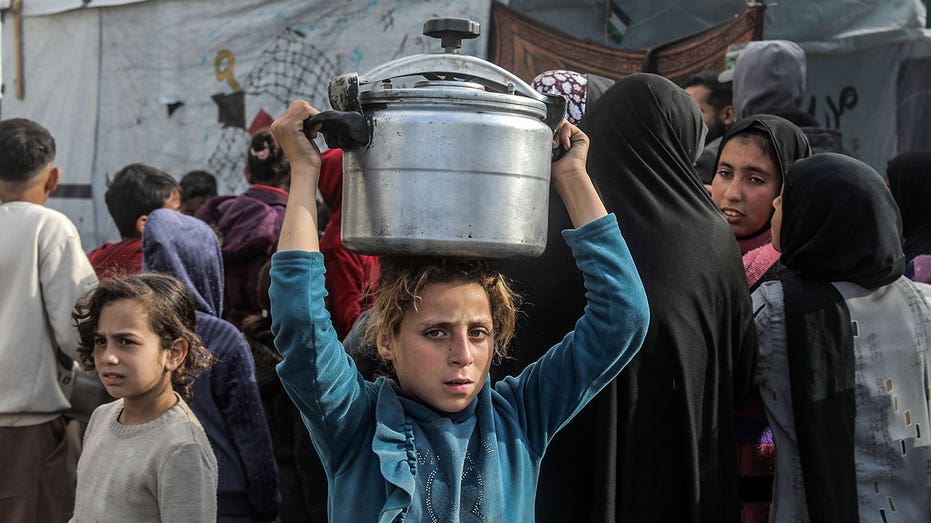
"Since then, we’ve seen continued use of famine-related language across social media and ideologically aligned outlets," Alexander said. "Content claiming mass starvation has reached millions of views, and the narrative has expanded to include allegations about blocked medical supplies."
The HonestReporting report said the messaging quickly escalated, with viral posts claiming bakeries were shutting down, food supplies were critically low and an "entire generation" of children faced irreversible harm. The narrative, claimed the report, was further reinforced by coverage in outlets including Drop Site News, Middle East Eye, Mondoweiss and Al Jazeera English.

"Hamas understands that its best leverage exists in the information war," Alexander said. 

"That’s why we developed these tools — to document narrative warfare and create a blueprint to dismantle it," Alexander told Fox News Digital. 

ISRAEL ANNOUNCES IMMEDIATE RESUMPTION OF GAZA AID AIRDROPS AMID GROWING HUNGER CRISIS

In an interview with Fox News Digital, Richard Goldberg, a senior advisor at the Foundation for Defense of Democracies nonprofit, said, "What we’re seeing is a recurring pattern in this conflict where the humanitarian narrative is being weaponized."

Goldberg argued that the timing of the famine claims is tied to growing pressure on Hamas to disarm and to broader diplomatic efforts involving the United States, Arab states and international partners.

"One of those weapons is trying to resurrect a narrative of famine," he said.

Hamas is seeking to "undermine" a coalition involved in shaping Gaza’s post-war future, according to Goldberg, and prevent consensus around next steps. 

"Hamas is the isolated party, and they do not want to disarm," he said.

Goldberg said that, unlike earlier stages of the war, the current environment makes it harder for such claims to take hold. 

"You now have months of ceasefire, and the U.N. and other partners have been directly involved in the humanitarian effort," he said.

"They all have the data… and they are all in a position where there’s a brick wall Hamas is going to find for its disinformation tactics," he added.

WARFARE EXPERT CALLS GAZA REBUILDING PLAN 'DISNEYLAND STRATEGY' TO DEFEAT HAMAS

"What worked against just Israel a year ago cannot work as well against an entire coalition," Goldberg said.

A senior Israeli military official told Fox News Digital that during the ceasefire, humanitarian throughput into Gaza averaged roughly 600 trucks per day, far above what the official said U.N. planning models estimated was required to meet baseline food needs.

"According to the U.N., it’s somewhere between 115 to 130 trucks a day," the official said, while emphasizing that recent aid levels have significantly exceeded that threshold.

The official said that despite temporary disruptions during the Iran conflict, crossings quickly reopened and aid volumes returned to high levels, arguing that current famine allegations are "completely false."

"It’s impossible with the amount of aid that is going in," the official said. "There is no shortage of food in the Gaza Strip for an extended period."

Israel's Coordinator of Government Activities in the Territories (COGAT) similarly told Fox News Digital that Israel’s defense establishment believes Hamas is attempting to exploit global attention shifting toward Iran and Lebanon by pushing renewed humanitarian collapse narratives about Gaza.

Hamas has repeatedly sought throughout the war to portray "a deliberately false narrative of the collapse of the humanitarian system" in Gaza in order to increase international pressure on Israel and shape negotiations, according to COGAT. 

A security official said Hamas intensifies such campaigns whenever diplomatic pressure rises.

"Hamas is trying to stall for time and is using all means to maintain its grip on power," the official said. "Whenever negotiations over an agreement take place, Hamas intensifies false campaigns about the humanitarian situation in the Gaza Strip in order to secure international support through fabricated crises."

Fox News Digital has reached out to the United Nations and the World Food Programme for comment. 

(Auszug von RSS-Feed)

☐ ☆ ✇ Fox News

Could Narges Mohammadi unite Iran’s opposition? Husband says imprisoned Nobel laureate still fighting

veröffentlicht.
Vorschau ansehen

EXCLUSIVE: As Iran’s opposition struggles to find a unifying figure amid war, repression and near-total internet blackouts, the husband of jailed Nobel Peace Prize laureate and Iranian human rights activist Narges Mohammadi says his wife remains physically battered but politically unbroken, even as she sits in prison after what he describes as a brutal arrest and beating.

"Narges is a human rights activist and an advocate for civil society," her husband, Taghi Rahmani, told Fox News Digital in an exclusive interview from Europe in exile. "In mobilizing society, and in organizing and shaping civil institutions, she is an active and courageous woman."

At a moment when Iran’s ruling establishment is reeling from the aftermath of U.S. and Israeli strikes, a fragile ceasefire, economic collapse and intensified crackdowns, Mohammadi’s name is emerging in a new light: Not only as a global symbol of resistance, but potentially as one of the few opposition figures whose legitimacy comes from suffering inside the system rather than exile, dynasty or factional politics.

INSIDE TEHRAN AFTER STRIKES: IRANIAN WOMAN DESCRIBES FEAR, CHECKPOINTS AND PEOPLE USED AS ‘HUMAN SHIELDS’

Mohammadi, awarded the 2023 Nobel Peace Prize while imprisoned, has spent decades as one of Iran’s most prominent women’s rights and human rights activists. 

Trained as an engineer and later a journalist, she served as vice president of the Defenders of Human Rights Center, founded by fellow Nobel laureate Shirin Ebadi and became internationally known for campaigning against compulsory hijab laws, solitary confinement, prisoner abuse and the death penalty.

Now, according to her husband, her condition has worsened dramatically.

"Narges is currently detained in Zanjan prison," he said. "She was arrested in Mashhad during the month of Dey (around January) and was severely beaten. During her arrest, she received numerous blows, resulting in severe injuries to her chest, head, body and lungs."

Rahmani said prison medical authorities determined she should be transferred for treatment under her own physician’s supervision in Iran, but that Iran’s Ministry of Intelligence is refusing the transfer and insisting she remain in Zanjan.

"Spiritually and mentally, Narges remains steadfast," he said. "She believes the Islamic Republic is not desirable for the Iranian people, and advocates for a system based on freedom, human rights and open relations with the world. Physically, however, she has sustained severe trauma and urgently requires medical attention."

Rahmani said the last time he spoke with his wife was the night before she left for Mashhad, Iran, where she was later arrested.

His account offers a rare inside look into the life of one of Iran’s most internationally recognized dissidents at a moment when questions over who could realistically lead opposition to the regime are intensifying.

"We hear a great deal about the Iranian opposition, yet media in the free world often lack a precise definition and a full understanding of what the Iranian opposition actually is," Iranian anti-regime activist Maryam Shariatmadari told Fox News Digital.

Shariatmadari, one of the most recognizable faces of Iran’s "Girls of Revolution Street" movement, a wave of anti-regime protests that began in 2017 when Iranian women publicly removed their hijabs and stood in defiance of the country’s mandatory veiling laws, was sentenced to prison in 2018 after publicly removing her hijab in protest.

WHAT'S NEXT FOR IRAN'S TERROR ARMY, THE IRGC, AFTER DEVASTATING MILITARY SETBACKS?

According to Shariatmadari, one camp consists of Iranians who view the 1979 Islamic Revolution itself as the foundational national disaster, believing Iran’s trajectory was derailed when the Shah fell. The second includes former revolutionaries, reformists, communist factions and groups such as the Mujahedin-e Khalq (MEK), many of whom emerged from or once supported the revolutionary system before later opposing it. 

"The first group considers the 1979 revolution a disaster and seeks a return to Iran’s previous path," she said, while the second includes "those who participated in the revolution but later became opposition figures after being excluded from power."

That distinction, she argues, helps explain why Reza Pahlavi, the exiled son of Iran’s last shah, remains uniquely recognizable among many anti-regime Iranians despite spending decades outside the country.

Lisa Daftari, foreign policy analyst and editor-in-chief of The Foreign Desk news platform, told Fox News Digital, "Inside Iran, Pahlavi remains one of the only opposition figures with broad name recognition, and his message clearly resonated during the January protests, which is why his name still carries weight for many Iranians both inside the country and in the diaspora."

Pahlavi himself sharpened that message Friday after a series of European appearances, accusing both European politicians and journalists of ignoring the scale of Iranian suffering.

"I spent the past several weeks traveling across Europe, speaking to members of parliaments, governments, and the press," Pahlavi said in a video statement on his official X account. "My visit had one objective: to give a voice to the millions of Iranians held hostage by the Islamic Republic ... But I can now say with confidence that silencing, that censorship is not just happening at the hands of the regime in Iran, but by the international and particularly the European media."

EXILED IRANIAN CROWN PRINCE REVEALS 6-STEP PLAN TO EXERT PRESSURE ON TEHRAN'S REGIME

He went on to condemn what he described as European indifference to the mass killing of protesters and political executions, saying that across two press conferences in Stockholm and Berlin attended by more than 150 journalists, "not a single one" asked about the tens of thousands he says were killed during January’s crackdown or the political prisoners facing execution.

"Whether or not Europe stands with us ... I will fight for my people and my country," Pahlavi said. "We will fight until Iran is free."

Still, even some supporters acknowledge why the administration has hesitated to openly embrace him as a transitional figure.

Daftari warned that overt Western backing could backfire by making him appear externally imposed rather than domestically legitimized.

"The Trump administration’s decision not to more openly embrace him as a transitional figure likely reflects several factors: a deep wariness of making regime change the explicit end goal or appearing to engineer it after Iraq and Afghanistan, concern that overt U.S. backing could put an even bigger target on his back and a strategy that is currently focused less on anointing a successor and more on degrading the regime’s capacity to threaten its own people, the region and the United States," she said.

If Pahlavi represents dynastic memory and explicit regime-change politics, Mohammadi represents something profoundly different.

AS AIRSTRIKES RAIN DOWN ON THE IRANIAN REGIME, CAN A FRACTURED OPPOSITION UNITE TO LEAD IF IT FALLS?

Mohammadi’s place within that landscape is distinct due to her unique kind of legitimacy at a time when many Iranians are searching not only for opposition to the regime, but for a figure who embodies endurance under it.

For now, however, Rahmani warns that Iran’s domestic conditions may make any mass uprising extraordinarily difficult

"As you know, war serves as an excuse to suppress domestic forces within a country," he said. "This war has now increased the intensity of the regime’s actions against the opposition."

He argued that despite internal divisions, the Islamic Revolutionary Guard Corps has effectively consolidated power, militarized the streets and severely weakened civil society.

"The Islamic Republic has practically taken control of the streets during wartime and has severely weakened Iran’s civil society, which is the guarantor of democracy. In our opinion, this war, under these conditions, is not to the benefit of Iran, nor to the benefit of the Iranian people."

That may be the defining challenge for Iran’s opposition today: not simply finding a leader, but surviving long enough under extraordinary repression for one to emerge.

Whether Mohammadi can become that figure remains uncertain. But from prison, her husband says, she has not stopped believing Iran’s future can be different.

The Iranian mission to the United Nations did not respond to a request for comment in time for publication.

(Auszug von RSS-Feed)

☐ ☆ ✇ Fox News

US condemns Iran’s leadership role at UN nuclear conference as ‘beyond shameful’

veröffentlicht.
Vorschau ansehen

The United States, joined by the United Arab Emirates and backed by concerns from key European powers, sharply condemned the United Nations’ decision Monday to grant Iran a leadership post at a major nuclear treaty conference.

Iran’s selection as one of dozens of vice presidents at the monthlong review conference for the Nuclear Non-Proliferation Treaty reignited scrutiny over what critics say is a recurring pattern of Iran gaining procedural legitimacy inside international institutions despite longstanding concerns over its nuclear conduct.

The clash erupted as the 11th Review Conference of the Nuclear Non-Proliferation Treaty opened at U.N. headquarters in New York, where Iran was selected as one of 34 vice presidents through the Non-Aligned Movement bloc. 

The conference includes 191 treaty parties and convenes every five years to review implementation of the pact aimed at preventing the spread of nuclear weapons.

IRAN SECURES UN ROLE WITH BACKING FROM UK, FRANCE, CANADA, AUSTRALIA AS US STANDS ALONE

For the administration, the symbolism was immediate and explosive.

"Rather than choosing to use this review conference to defend the integrity of the NPT and call Iran to account, we instead elect Iran a vice president," Christopher Yeaw, U.S. assistant secretary for arms control and nonproliferation, told delegates. "It is beyond shameful and an embarrassment to the credibility of this conference."

The UAE and Australia publicly backed the American objection, while Britain, France and Germany also expressed concern, marking a broader coalition than in earlier U.N. disputes where the U.S. often stood largely alone in challenging Iran’s procedural elevation.

The diplomatic uproar follows a pattern previously highlighted by Fox News Digital. On April 13, the United Nations Economic and Social Council (ECOSOC), a 54-member body that plays a central role in shaping U.N. policy and staffing key committees, nominated the Islamic Republic of Iran to the U.N.’s Committee for Program and Coordination, which helps shape policy on human rights, women’s rights, disarmament and counterterrorism, with the United States the only country to formally object.

IRAN VASTLY INCREASED NUCLEAR FUEL STOCKPILE AHEAD OF TRUMP RETURN, UN AGENCY FINDS

During Monday’s debate, Iranian envoy Reza Najafi rejected the criticism as "baseless and politically motivated," accusing the U.S. of hypocrisy and pointing to America’s nuclear history while defending Tehran’s right to peaceful nuclear development. Russia also defended Iran, with Ambassador-at-Large Andrey Belousov objecting to what he called the politicization of the conference.

The Iranian mission to the United Nations declined to comment to Fox News Digital.

U.N. spokesperson Stéphane Dujarric told Fox News Digital that the secretary-general "is not involved in any way in the election of Member States to leadership roles in various conferences or legislative bodies."

"Member States are responsible for electing other Member States, and they must be accountable for the results of these elections," Dujarric said.

He added that the U.N.’s focus remains on the broader nuclear threat rather than the procedural controversy surrounding Iran’s appointment. 

"We strongly encourage all Member States participating in the Nuclear Non-Proliferation Treaty Review Conference to focus on what is most important: stopping the spread and threat of nuclear weapons, which remains a global threat," he said.

Iran’s appointment comes amid heightened international concern over Iran’s nuclear trajectory. Western governments and the International Atomic Energy Agency have raised alarms over Iran’s enrichment of uranium to near weapons-grade levels and disputes over inspections, while Tehran insists its program is strictly civilian.

Critics say the controversy exposes a structural contradiction at the heart of the U.N. system: geopolitical blocs can elevate states under scrutiny into positions of procedural authority, even at conferences dedicated to the very norms those states are accused of violating.

The last NPT review conference in 2022 failed to produce a consensus document after Russia blocked the agreement, underscoring how great power divisions have increasingly paralyzed the treaty’s review process, according to The Associated Press. 

Hillel Neuer, executive director of UN Watch, told Fox News Digital the vote reflects what he described as a broader erosion of institutional credibility at the United Nations.

"This is part of a disturbing trend," Neuer said. "Iran has been accumulating senior roles across the U.N. system, from human rights bodies to key committees. Each appointment chips away at the credibility of international institutions, reinforcing the perception that political deal-making outweighs basic standards of conduct."

Reuters and the Associated Press contributed to this report.

(Auszug von RSS-Feed)
❌