NEWS 23

🔒
❌
Stats
Es gibt neue verfügbare Artikel. Klicken Sie, um die Seite zu aktualisieren.

☐ ☆ ✇ Fox News

As Hezbollah rejects truce, families on Israel's northern border describe life under fire

veröffentlicht.
Vorschau ansehen

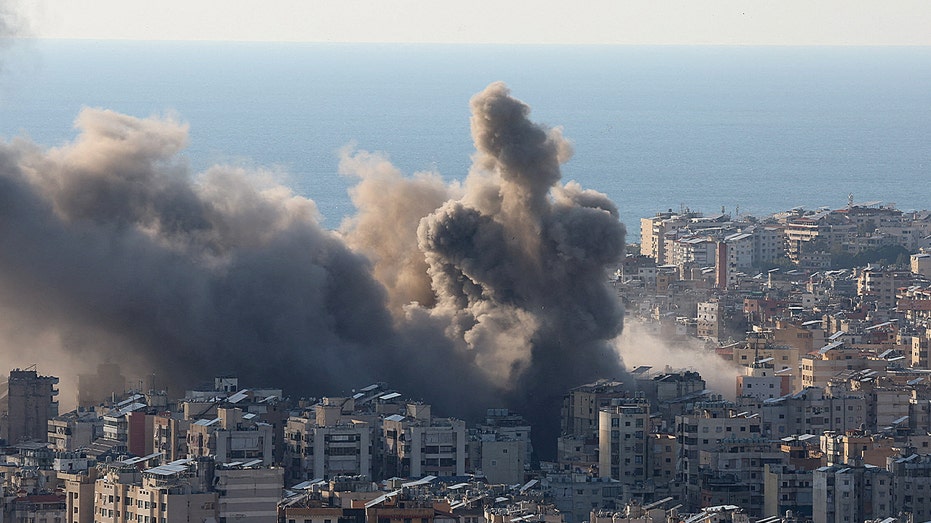
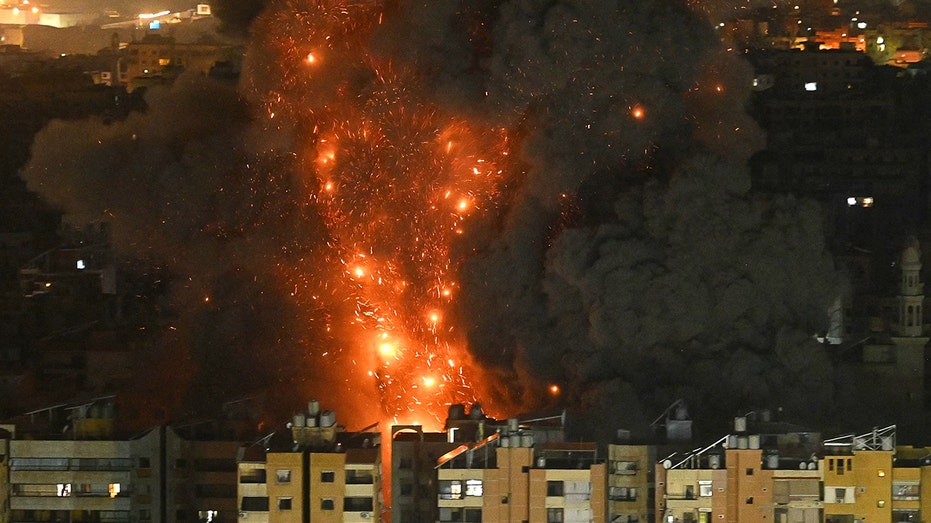
Two days after another ceasefire was announced between Israel and U.S. terrorist designated group Hezbollah, Yulia Bar-Dan was standing outside her temporary home in Kibbutz Manara in northern Israel when the familiar sound of an interceptor echoed overhead. 

"There will probably be another siren soon," she told Fox News Digital.

Minutes later, an alert appeared on her phone warning residents in northern Israel to take shelter.

For Bar-Dan, the scene captured the reality of life on Israel's northern border nearly two years after Hezbollah joined the war against Israel on Oct. 8, 2023. 

After Hezbollah entered the recent war in support of Iran, Washington launched a diplomatic effort aimed at turning the ceasefire into a broader arrangement for Lebanon. 

ISRAEL OPENS FIRE IN LEBANON AT ‘SUSPECTS’ ALLEGEDLY VIOLATING TRUCE, WHICH HAS ENTERED ITS SECOND DAY

Multiple rounds of talks between Israeli and Lebanese officials have taken place in Washington, and President Donald Trum repeatedly has announced ceasefire understandings aimed at restoring calm along the border. Residents of communities like Manara, Israel, say the rockets, drones and uncertainty never really stopped.

"A ceasefire is supposed to be on both sides," she said. "Not that Hezbollah keeps shooting at us and we just keep absorbing it."

When Fox News Digital first spoke to Bar-Dan in December 2024 during the war, she and her husband had fled Manara, Israel, with their three children and were living out of a single hotel room, unsure whether they would ever return home.

Today, roughly 200 of the kibbutz's 280 residents have returned, Bar-Dan said. But many, including Bar-Dan's family, still cannot live in their original homes because of war damage. 

Despite repeated ceasefire announcements, residents say normal life remains elusive.

"There hasn't really been a routine or a quiet day since February," she said.

Schools officially reopened in early June, but Bar-Dan decided not to send her children.

"They take the bus to school," she said. "What if there's a siren on the way? I can't take that chance."

ISRAEL DESTROYS HEZBOLLAH'S 'LARGEST PRECISION-GUIDED MISSILES MANUFACTURING SITE' AS GROUP VOWS TO 'FIGHT'

Her frustration is not directed at Hezbollah alone.

Like many residents interviewed by Fox News Digital, Bar-Dan says there is a growing disconnect between the reality experienced on the border and the reality described by politicians.

"It doesn't really matter where the decisions are being made," she said. "The decisions just need to match reality. Right now there is a decision, but the reality is completely different."

A year and a half after most of Manara's residents were evacuated amid fears of a Hezbollah invasion, community leader Yochai Wolfin says residents have developed their own name for the current situation. 

"We call it 'the ceasefire war,'" he said. 

The phrase has become common in the community.

First came a year and a half of evacuation. Then came the return home. Then came what Wolfin describes as three months of "fire within a ceasefire."

The uncertainty has become part of daily life.

Children study inside shelters. Parts of the kibbutz still lack protected rooms. Construction projects remain unfinished because contractors are reluctant to work so close to the border. 

He said many residents increasingly feel that the decisions determining their future are being made far from the communities that bear the consequences.

ISRAEL WARNS IT WILL GO AFTER LEBANON DIRECTLY IF CEASE-FIRE WITH HEZBOLLAH COLLAPSES

"Who knows what tomorrow will bring?" Wolfin said. "We know who is calling the shots. We saw it a few days ago when Trump announced another ceasefire. But for us, the reality on the ground hasn't changed."

The comments come as Hezbollah Secretary-General Naim Qassem warned Thursday that northern Israel would remain unsafe as long as Israeli strikes continue in Lebanon, according to Reuters.

In a written statement broadcast on June 4, 2026, Qassem condemned the Washington-mediated framework as "absurd, humiliating, and insulting," calling it a roadmap for surrender.

For residents of Israel's northern border communities, the statements reinforced what many say they have been experiencing for months: a ceasefire that exists on paper but not in daily life.

Naor Shamia, who heads Manara's emergency response team, says residents increasingly worry that temporary emergency measures are becoming permanent.

"The fear isn't today," he said. "The fear is that this becomes years. We are in a deadlock."

Across the border region, similar concerns are heard.

In the community of Adamit, resident Yael Cohen-Arazi described the contrast between the beauty surrounding her and the reality of living under constant threat.

"Every morning I wake up and think I'm living in paradise," she said in footage provided to Fox News Digital by the Israeli news agency TPS-IL. "Then there are the explosions that shake my soul."

Her children, she said, have spent so much of their lives under fire that they no longer know what normal looks like.

"I tell them there are children who don't live like this," she said.

Back in Manara, Israel, another alert interrupted the afternoon.

Bar-Dan says she is not angry anymore. Mostly, she is tired and sad.

"I feel bad for the soldiers," she said. "Every day there is another casualty, and there is still no solution."

Yet she insists she is staying.

"This is our home," she said. "Someone has to live on the borders of this country."

Then another explosion sounded in the distance.
(Auszug von RSS-Feed)

☐ ☆ ✇ Fox News

Bodycam footage fuels backlash after police handcuff dying stabbing victim

veröffentlicht.
Vorschau ansehen

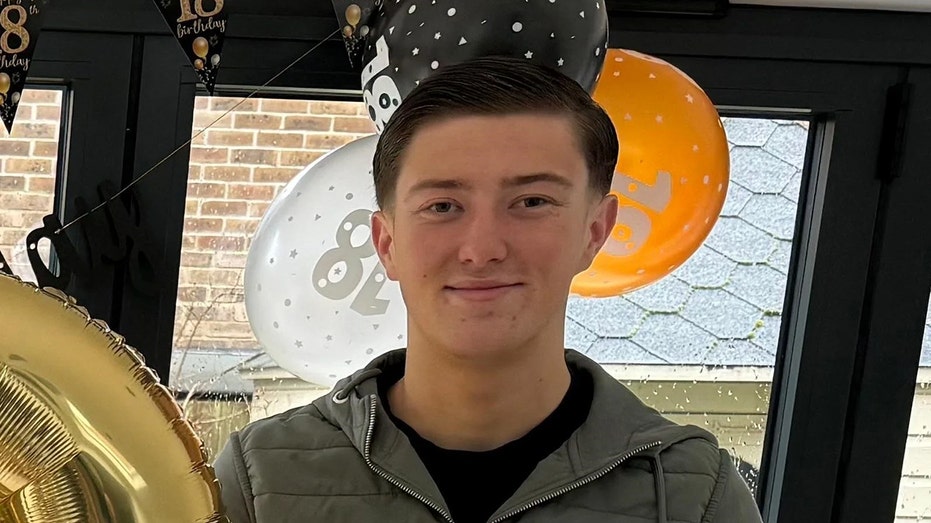
Newly released police bodycam footage is intensifying scrutiny of local police after officers handcuffed an 18-year-old university student who repeatedly told them he had been stabbed and could not breathe moments before dying on a Southampton street.

The video, released Monday following the murder conviction of 23-year-old Vickrum Digwa, shows Henry Nowak telling officers, "I’ve been stabbed" and "I can’t breathe" while lying on the ground after the Dec. 3, 2025, attack.

One officer responded: "I don’t think you have, mate," according to the video. 

Police handcuffed Nowak after Digwa claimed he had been the victim of a racist assault, according to court proceedings previously reported by Sky News.

BODYCAM FOOTAGE SHOWS MOMENT FLORIDA OFFICERS' ATTEMPT TO RESTRAIN SUSPECT GOES HORRIBLY WRONG

Reuters reported that officers later removed the handcuffs and attempted CPR after realizing Nowak had suffered serious stab wounds.

Digwa was sentenced Monday to life in prison after being convicted of murdering the 18-year-old University of Southampton finance student with a 21-centimeter blade prosecutors described as a Sikh kirpan-style weapon.

GRIEVING TEXAS FATHER SPEAKS OUT AFTER SON WAS STABBED TO DEATH AT HIGH SCHOOL TRACK MEET

The case has sparked political backlash in Britain and renewed debate over policing, race and knife crime.

In a statement read outside court Monday, Nowak’s father, Mark Nowak, said his son repeatedly pleaded for help before losing consciousness.

"Henry had been stabbed multiple times, and as his chest filled with blood, he tried to escape. He was chased, abused, and filmed by Vickrum Digwa and others," Mark Nowak said, according to Reuters. "When police arrived, Henry was lying on the floor, barely able to sit up and plainly in severe medical distress." 

"With his final words, he told officers that he could not breathe. He told them he had been stabbed," Mark Nowak said, according to Reuters. "The response from one officer was ‘I don’t think you have, mate,’" he added.

Mark Nowak said the family held Digwa "solely and 100% responsible" for their son's death, but criticized the police, saying, "Henry should not have died on the streets of Southampton in police custody. The way he was treated was inhumane and degrading."

Nigel Farage, leader of Reform UK, said the case showed "the fear of being called racist was greater than dealing with Henry Nowak’s murder," according to Reuters.

UK POLICE APOLOGIZE TO 'FATHER TED' CREATOR GRAHAM LINEHAN FOR ARREST OVER TRANS SOCIAL MEDIA POSTS

Reform UK MP Robert Jenrick also called for the release of body-worn camera footage and accused authorities of prioritizing allegations of racism over saving Nowak’s life during an appearance on GB News.

Meanwhile, Prime Minister Keir Starmer described the killing as "an awful, shocking case" and said it was right that the Independent Office for Police Conduct investigate the police response.

Hampshire & Isle of Wight Constabulary, the police force responsible for policing Southampton and surrounding areas in southern England, previously apologized after the conviction, with Temporary Deputy Chief Constable Robert France saying he was sorry that Nowak had been handcuffed "in the moments before he lost consciousness," according to Sky News.

The police force remains under investigation by the Independent Office for Police Conduct.

Fox News Digital reached out to Hampshire & Isle of Wight Constabulary for comment but did not receive a response. 

Reuters contributed to this story.

(Auszug von RSS-Feed)

☐ ☆ ✇ Fox News

Israeli official says EU sanctions reveal antisemitism hiding behind 'socially acceptable mask'

veröffentlicht.
Vorschau ansehen

Israel's Deputy Foreign Minister accused the European Union of weaponizing a "socially acceptable mask" of anti-Zionism to target Israel— after it sanctioned Israeli civil society groups that oppose a Palestinian state. It also sanctioned several individuals.

"We are witnessing a deeply troubling trend where traditional antisemitism has simply put on a new, socially acceptable mask: anti-Zionism," Israel’s Deputy Foreign Minister Sharren Haskel told Fox News Digital. "Where prejudice once targeted the individual Jew, it is now directed at the collective Jewish state and our fundamental right to live in our ancestral homeland. But make no mistake, the political targeting of Israel always bleeds into an assault on Jewish life itself," Haskel added. 

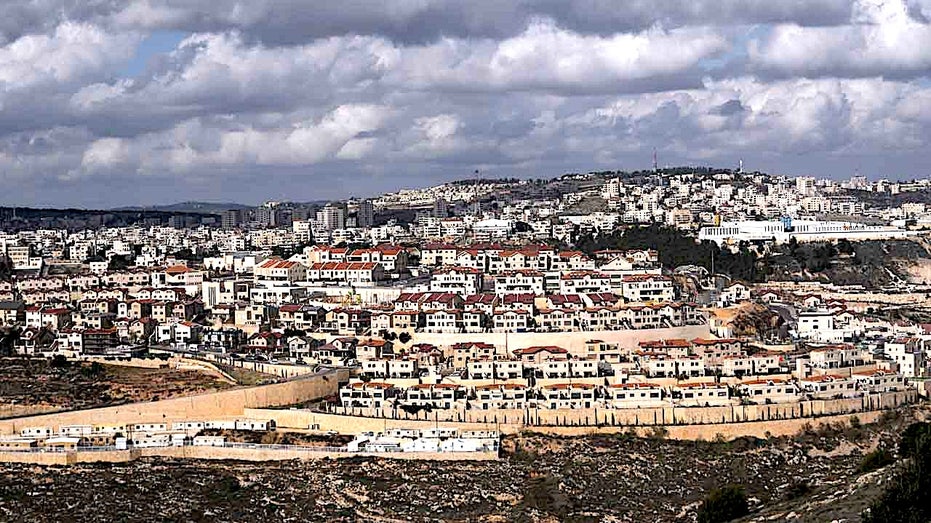
The European Union imposed the sanctions on four Israeli civil society organizations and three of their senior figures, alleging support for "settler violence" and claiming they undermine prospects for a Palestinian state — a move that Regavim, one of the groups targeted, described as an infringement on Israeli sovereignty.

LEADING EVANGELICALS IN PUSH TO HAVE PRESIDENT TRUMP RECOGNIZE ISRAELI SOVEREIGNTY OVER ‘BIBLICAL HEARTLAND’

"Our entire activity consists of legal and parliamentary work. We collect and analyze information and policies and go to court and the legislature to highlight areas where Israel’s policy is either lacking or misguided," Naomi Kahn, Regavim’s Director of International Division, told Fox News Digital.

"The European Union is trying to control the internal political system and policies of an independent state that is supposed to be an ally. When we point out the absurdity of the situation, they don’t like it," she said.

In its announcement, the European External Action Service (EEAS) stated that "extremist settlers and the organizations supporting them contribute directly to violence, forced displacement and dispossession across the West Bank."

The sanctions, according to the EEAS, "target entities and individuals that facilitate, finance or support activities contributing to settler violence and serious human rights abuses against Palestinians."

The statement also accused Regavim of lobbying for "the demolition of Palestinian property" and referenced an EU-funded school in Jabbet al-Dhib near Bethlehem.

'SQUAD' MEMBERS 'DECIDE TO LIE AND TWIST FACTS' ABOUT ISRAEL'S HISTORY, SAYS PROMINENT ARAB ACTIVIST

Kahn said the school was constructed illegally on Israeli state land in Area C, within a nature reserve connected to the Herodian complex. She said legal proceedings were carried out regarding the structure and that it was ultimately demolished.

Under the 1993 Oslo Accords, negotiated during the Clinton administration, the West Bank was divided into three areas: Area A, under full Palestinian control; Area B, under Palestinian civil authority with Israeli security control; and Area C, under full Israeli administrative and security control.

Kahn added that an engineering assessment found the school unsafe for use, arguing that placing students and teachers inside it posed "downright dangerous" conditions.

"We pointed out that the E.U. and the Palestinian Authority are simply violating the law in a very purposeful, systematic way to take control of Area C using structures like schools, sometimes mosques, and homes of innocent people that they push into those areas," she added.

Regavim has published a report claiming there are 100 illegal schools in Area C that it says are being used by the P.A. as part of a broader strategy of de facto annexation.

Separately, a 2023 mapping study by Regavim estimated that roughly 103,000 unauthorized Arab-built structures exist across the West Bank, asserting that the P.A.—often with external support — has facilitated extensive illegal construction activity.

SIGN UP FOR ANTISEMITISM EXPOSED NEWSLETTER

In response, Israel’s cabinet last month approved a set of broad measures aimed at countering efforts by the P.A. to establish de facto control over disputed territories.

Under the resolution, initiatives attributed to Ramallah to create a parallel land registry in Area C were declared to have no legal validity or standing.

"The real target here is not violence, but legitimate political opposition. The sanctioned organizations do not support violent action; rather, they have consistently challenged the concept of a two-state solution and exposed how the EU actively builds illegal structures in Judea and Samaria," Haskel said, referring to the biblical names of the territories," Haskel said.

She accused the EU of disregarding the Oslo Accords and "attempting to unilaterally alter facts on the ground to steal Israeli land."

Haskel acknowledged there was an issue, as in any society, "with some individuals who break the law, but emphasized they represent a small minority and that Israel investigates and prosecutes them. She said grouping hundreds of thousands of law-abiding Israeli residents in the West Bank together with Hamas — a genocidal terror organization responsible for mass murder — distorts moral distinctions."

She said, "This creates a false and dangerous symmetry that minimizes the exceptional threat of global terrorism while politically targeting individual Israelis. It is an unacceptable moral equivalence that blurs the line between a sovereign democracy defending its people and the savage terror apparatus trying to destroy it."

Following several requests for comment, European External Action Service (EEAS) referred Fox News Digitial to its original sanctions statement.

(Auszug von RSS-Feed)

☐ ☆ ✇ Fox News

US military attacks Iran in 'self-defense strikes' over weekend

veröffentlicht.
Vorschau ansehen

U.S. Central Command (CENTCOM) announced that it carried out "self-defense strikes" against Iran over the weekend.

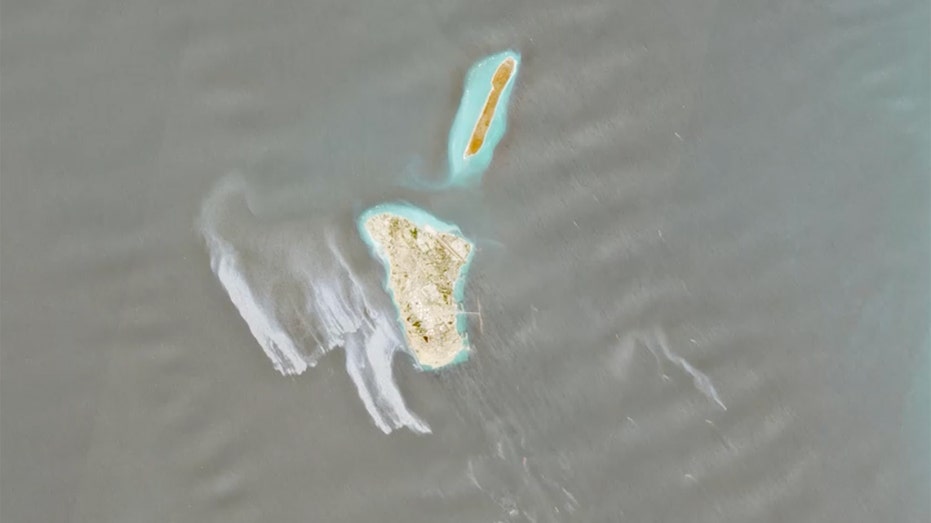
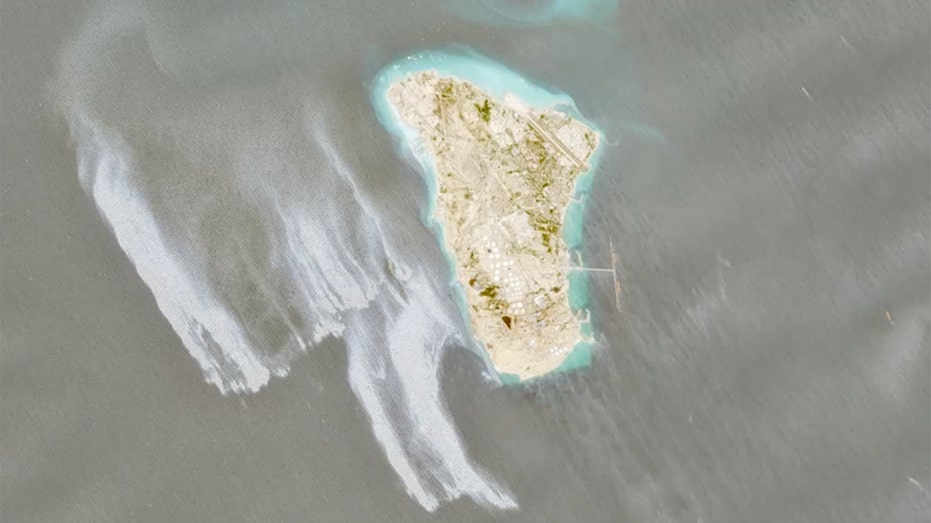
"U.S. Central Command (CENTCOM) conducted self-defense strikes on Iranian radar and command and control sites for drones in Goruk, Iran and Qeshm Island this weekend," a press release noted.

"The measured and deliberate strikes occurred on Saturday and Sunday in response to aggressive Iranian actions that included the shootdown of a U.S. MQ-1 drone that was operating over international waters. U.S. fighter aircraft swiftly responded by eliminating Iranian air defenses, a ground control station, and two one-way attack drones that posed clear threats to ships transiting regional waters," CENTCOM continued.

TRUMP WARNS IRAN US WILL 'FINISH THE JOB' IF DEAL COLLAPSES AS ISRAEL EXPANDS LEBANON OFFENSIVE

"No American service members were harmed. CENTCOM will continue to protect U.S. assets and interests in response to unwarranted Iranian aggression during the ongoing ceasefire," the release added.

The Associated Press reported that Kuwait noted its air defenses opened fire on Monday to intercept drone and missile attacks. Around the same time, Iran’s paramilitary Revolutionary Guard said it responded to an American attack without saying where, likely referring to the attack on Kuwait. The Guard, via a statement reported by the state-run IRNA news agency, indicated that America targeted a telecommunications tower, according to the AP.

U.S. Central Command (CENTCOM) said in a Monday post on X, "Last night at 11 p.m. ET, U.S. forces successfully intercepted two Iranian ballistic missiles targeting American forces based in Kuwait. These missiles were immediately defeated and no American personnel were harmed. U.S. Central Command remains vigilant and will continue to protect our forces from Iranian aggression while supporting the ongoing ceasefire."

Asserting that Iran "really wants" to strike an agreement, President Donald Trump declared in a Monday morning Truth Social post that chattering critics are making it more difficult for him to negotiate. 

MOJTABA KHAMENEI TOUTS NEW ANTI-US ALLIANCE AS GULF BACKCHANNELS SEEP INTO TEHRAN: ANALYST

He urged people to "sit back and relax," claiming that the issue will ultimately turn out "well."

"Iran really wants to make a deal, and it will be a good one for the U.S.A. and those that are with us. But don’t the Dumocrats, and various seemingly unpatriotic Republicans, understand that it is MUCH tougher for me to properly do my job and negotiate, when political hacks keep negatively ‘chirping,’ at levels never seen before, over and over again, that I should move faster, or move slower, or go to war, or not go to war, or whatever," he declared in a Truth Social post early on Monday.

"Just sit back and relax, it will all work out well in the end - It always does!" he declared.

TRUMP REVEALS KEY IRAN CONCESSION, WARNS US WILL 'FINISH IT OFF MILITARILY' IF DEAL FAILS

The U.S. is continuing to conduct a blockade against Iran.

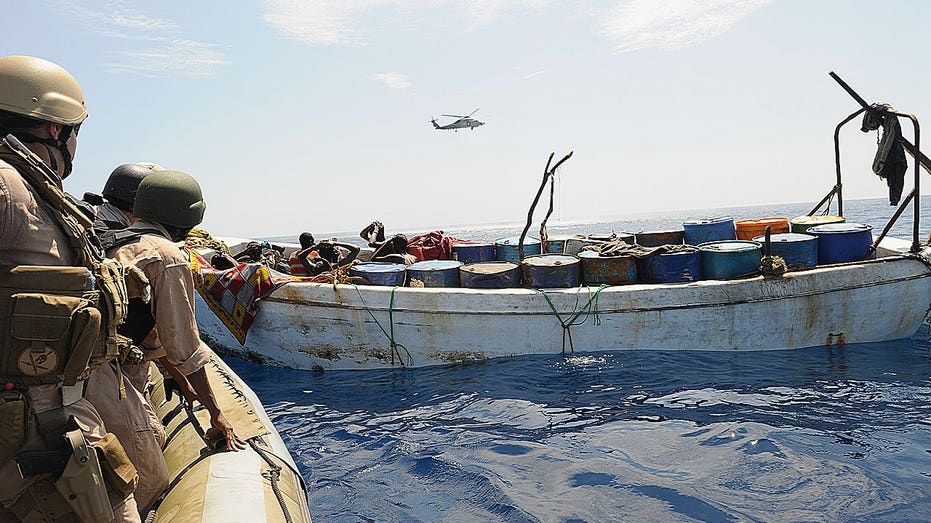
"U.S. forces operating in the Gulf of Oman enforced blockade measures by disabling a Gambia-flagged maritime vessel attempting to sail toward an Iranian port, May 29," CENTCOM announced in a Saturday press release.

The Associated Press contributed to this report

(Auszug von RSS-Feed)

☐ ☆ ✇ Fox News

Hezbollah's 'game changing' night-hunting weapon punches through Israel's defenses: expert

veröffentlicht.
Vorschau ansehen

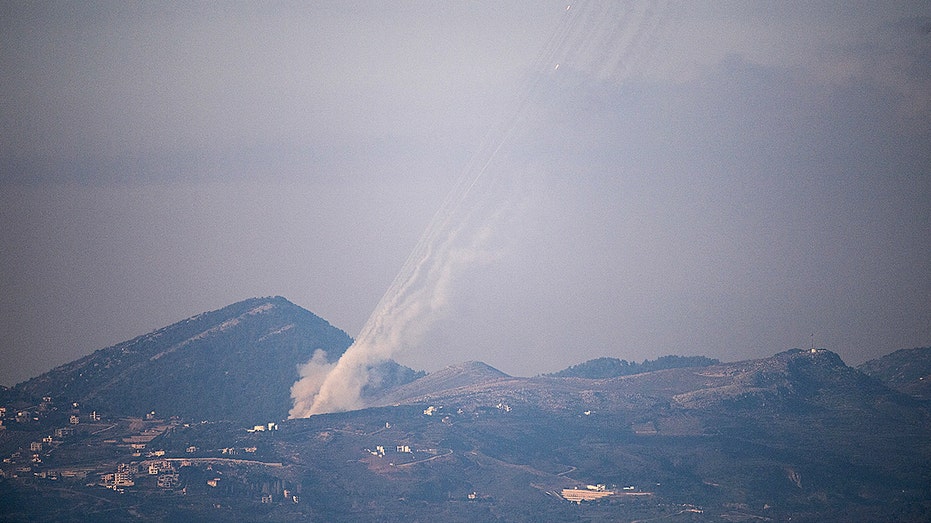
Hezbollah has begun unleashing "game changing" waves of "lethal" nighttime drones against Israel, a defense expert warns, with the attacks contributing to casualties, defense breaches and plunging parts of the border region into chaos, according to reports.

Escalating deployments by Hezbollah had also prompted Prime Minister Benjamin Netanyahu to convene an emergency security meeting on May 30 following a surprise Hezbollah strike, amid reports of "utter chaos" as Israeli forces scrambled to respond.

"These nighttime drones are the very small Category 1 and Category 2 drones," defense expert and Draganfly CEO Cameron Chell told Fox News Digital.

"They are generally used by squads on the ground to go and conduct tactical lethal missions or surveillance missions right in theater immediately. What they are able to do is use thermal sensors to be able to fly at night and use heat signatures to spot IDF troops," he said.

ISRAEL SAYS IT IS STRIKING HEZBOLLAH TARGETS IN LEBANON

"Hezbollah now has nighttime capabilities, which is game changing," Chell added.

"What you will see is an escalation of the use of drones and the innovation of asymmetric warfare in that particular area by Hezbollah," he warned.

Chell’s comments came amid reports of makeshift defenses with nets being deployed against the backdrop of a significant shift in the conflict.

Israeli soldiers have resorted to buying commercial fishing and soccer nets to entangle the incoming aerial threats, according to reports.

"This means that there is a whole other set of countermeasures that the IDF has to put in place, whether it is electronic jamming, net guns or the use of netting just to put in front of installations or in front of vehicles to try to stop the final impact of the drone if it is a strike drone," Chell added.

HEZBOLLAH DISARMAMENT DEADLOCK RISKS CIVIL WAR, ANALYSTS SAY, AS US PREPARES FOR ISRAEL–LEBANON TALKS

"The IDF will have to change a lot of their tactics regarding their ability to move around and conduct operations at night. Now they will have to factor in the fact that Hezbollah has nighttime capabilities to at least do observation using thermal cameras, as well as strike capabilities."

Netanyahu called a meeting with top officials following an intense Hezbollah rocket and drone blitz that caught the military off guard on Saturday.

According to a report by Channel 13, the Israeli army was surprised by the scale of the fire as well as Hezbollah's decision to shift its operational policy in response to the expansion of Israel’s ground operations beyond the Litani River.

IDF SOLDIERS ACCUSE UN PEACEKEEPERS OF ENABLING HEZBOLLAH TERRORISTS AMID INCREASING CEASE-FIRE VIOLATIONS

Reports from the ground described "utter chaos" in parts of the north. While rockets were said to have hit the cities, Hezbollah simultaneously launched waves of drone strikes.

Hezbollah leader Naim Qassem has also touted the militant group’s drone capabilities, calling them an effective weapon against Israeli forces operating near and inside southern Lebanon

Netanyahu has also described Hezbollah's drone capabilities as a major threat given the difficulty in detecting them.

"Hezbollah have got a supply line or supply chain of some sort set up," Chell added before stating that they are not "using stuff that is groundbreaking; this is very old technology and tactics that they are using."

"That said, somebody is making the equipment available to Hezbollah — whether it is coming via Iran, China, Russia, Afghanistan or the black market, someone is getting enough product and feeding it into their supply chains," Chell warned.

(Auszug von RSS-Feed)

☐ ☆ ✇ Fox News

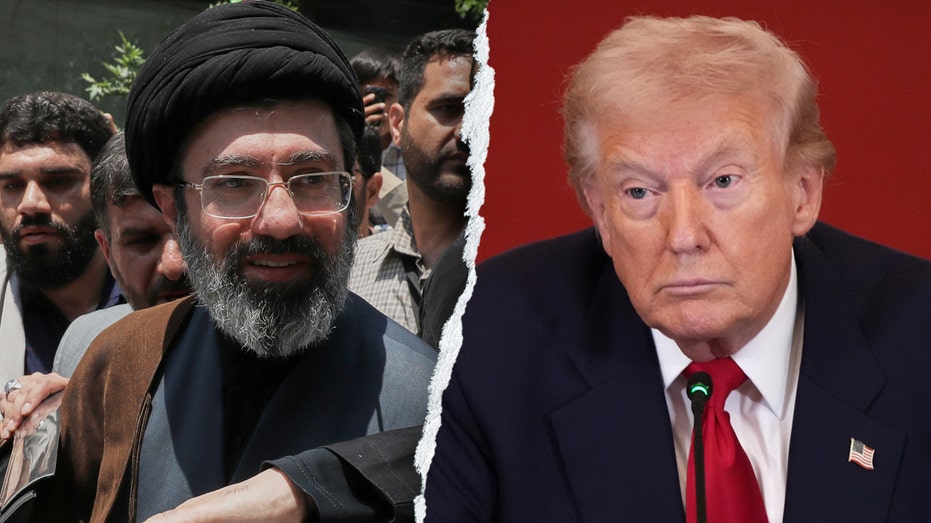
Mojtaba Khamenei touts new anti-US alliance as Gulf backchannels seep into Tehran: analyst

veröffentlicht.
Vorschau ansehen

Iran's supreme leader has launched a sweeping counteroffensive against President Donald Trump, attempting to rally Middle Eastern nations into an anti-American alliance, an analyst warned Sunday.

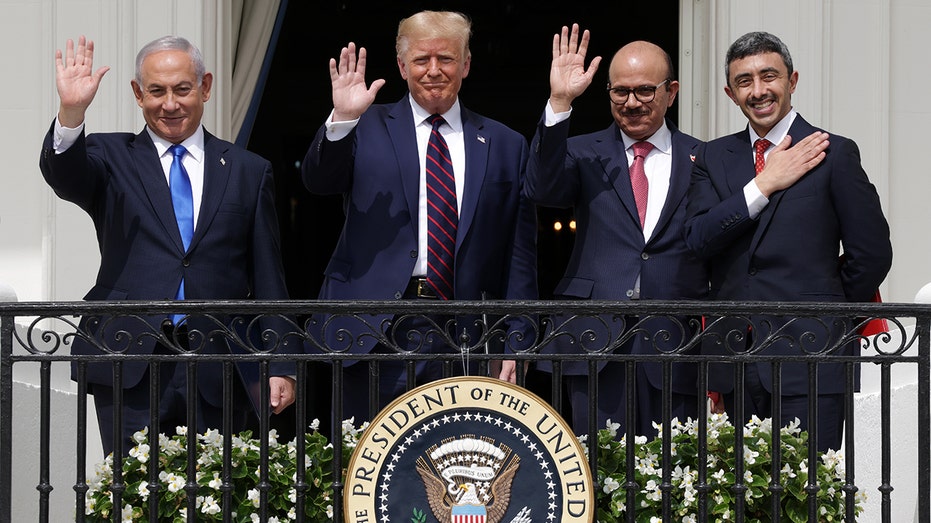
The aggressive maneuvering came hours after Trump pitched an expansion of the Abraham Accords, as an analyst said Tehran is seeking to position itself as the region’s "new sheriff" while forcing Gulf states with backchannels to Iran to choose between Washington’s security umbrella and a "New Islamic Civilization."

On Sunday, negotiations between Iran and the United States appeared to be ongoing, with Trump not yet signing off on a potential peace agreement.

Trump recently held a phone call with leaders from Saudi Arabia, the United Arab Emirates, Qatar, Turkey, Pakistan, Egypt, Jordan and Bahrain to discuss expanding the 2020 Abraham Accords, followed by a May 25 post on Truth Social.

IRAN'S KHAMENEI LAUNCHES BLISTERING ATTACK ON TRUMP AFTER MIDDLE EAST VISIT

Mojtaba Khamenei issued a direct counter-response on X on May 26, issuing a call for a "New Islamic Civilization" aimed at those same regional capitals.

"I, with sincerity and purity of intention, invite all Islamic countries and governments to friendship and cooperation in goodness, so that by working together we may take steps toward the advancement of the Islamic Ummah and the resolution of the Islamic world's problems," Khamenei posted.

Highlighting "the nations of the region" and "common interests that will shape the new order and the future architecture of the region and the world," he spoke of "the Islamic Ummah and the #New_Islamic_Civilization."

"The United States will no longer have a safe haven for its mischief and for establishing military bases in West Asia," he also warned.

"Mojtaba Khamenei's statement is that the Muslim world should consolidate under Iran's leadership — the 'Ummah,' the 'new Islamic civilization' — against the American-led order," Dr. Omar Mohammed told Fox News Digital.

"That is the theme, and it runs straight into the Accords narrative. This is a bid to build an alliance against the Abraham Accords," said Mohammed, director of the Antisemitism Research Initiative Program on Extremism at George Washington University.

TOP ISRAELI MILITARY OFFICIAL REVEALS OPERATION AGAINST IRAN INVOLVED 'STRATEGIC AND OPERATIONAL DECEPTION'

"In his statement, he also frames American bases on Muslim soil as an occupation to be expelled while wrapping it in religious language that casts the regime as God's instrument."

The counterterrorism expert noted that while the "Ummah" doctrine itself is not new — having been used by Mojtaba's father for years — the timing and targeted nature of the pitch represent a major escalation.

"This came into the Ummah with Iran, not into normalization with Israel under Washington," Mohammed explained. "Same audience, opposite frame, 24 hours apart, and a bid to assemble that alliance."

"The statement was published in full and carried by Iranian state media. It also tracks with his first statement as leader on March 12, when he demanded that U.S. bases in the region close."

"This was not a stray post," the expert warned. "While the doctrine is old, aiming it at these regions the day after Trump's pitch is what is new."

The posturing comes as Khamenei establishes his footing on the world stage, though his hidden nature complicates traditional diplomacy.

IRAN’S ‘STUNNING STRATEGIC MISCALCULATION’ COULD ACCELERATE GULF TIES TO ISRAEL, EX-CENTCOM DIRECTOR PREDICTS

"Tehran is selling itself to the region as the new sheriff of the neighborhood," Mohammed warned. 

"The Saudis, Qataris and Omanis have channels into the Iranian state, but you can't open a back channel to a man no one can locate. This has all been running through Pezeshkian and Araghchi."

Despite Iran's sudden rhetoric of "friendship," regional reality is defined by months of Iranian aggression against its neighbors.

Tehran's forces have actively fired upon Bahrain, Qatar, the UAE and Kuwait.

Mohammed added that Tehran wants to peel Gulf states away from Washington, while its threats remain aimed at both the United States and the countries that host American forces.

"Iran spent this war firing on them — it hit Bahrain, Qatar, the UAE and Kuwait, the same capitals it's now inviting to brotherhood, and the UAE alone reported intercepting close to 2,000 drones and hundreds of ballistic missiles since Feb. 28," Mohammed said. 

"These are the states that host our forces: the Fifth Fleet in Bahrain, Al Dhafra in the UAE and Al Udeid in Qatar. You don't take three months of Iranian fire and then sign onto its alliance."

Ultimately, Gulf capitals remain deeply skeptical of Tehran, Mohammed said, but they are equally watchful of American resolve.

"What actually worries the Gulf isn't Mojtaba's invitation — it's the deal Washington might sign," Mohammed noted, "one that hands Iran its money back with its missiles intact and reads as rewarding the regime that just attacked them."

(Auszug von RSS-Feed)

☐ ☆ ✇ Fox News

English cops cuffed teen stabbing victim after attacker claimed racial assault

veröffentlicht.
Vorschau ansehen

English police are facing mounting scrutiny after officers handcuffed an 18-year-old university student as he bled to death following a fatal stabbing, allegedly after believing the attacker’s false claim that he had been the victim of a racist assault.

The case has sparked outrage across Britain, fueled political debate over policing and prompted calls for the release of body-worn camera footage from the responding officers.

Alan Mendoza, executive director and co-founder of the London-based Henry Jackson Society think tank, told Fox News Digital that the case reflected broader failures in British policing culture. "The killing of Henry Nowak shows how far the rot of political correctness has set into the British policing mentality," Mendoza said.

"The reflex attitude today appears to be to believe any and every claim that mentions racism," he added. "It clearly trumped actual murder in this case as a dying Mr. Nowak was arrested on the say-so of his Sikh assailant without any facts being established by the officers attending."

BRITISH POLICE RELEASE DETAILS ON SUSPECTS AFTER 'SHOCKING' TRAIN ATTACK, UPDATE ON VICTIMS

Vickrum Digwa, 23, was convicted Thursday at Southampton Crown Court of murdering Henry Nowak, an 18-year-old finance student at the University of Southampton, during a confrontation on Dec. 3, 2025.

Officers arriving at the chaotic scene initially treated Nowak as the suspect after Digwa allegedly claimed he had been racially abused and attacked. Officers handcuffed Nowak before realizing the severity of his injuries. He later collapsed and died at the scene despite attempts to administer first aid, according to Sky News.

Following the verdict, Hampshire Constabulary publicly apologized and referred the case to the Independent Office for Police Conduct (IOPC), England and Wales' police watchdog, for investigation. "I’m sorry that he was handcuffed and arrested in the moments before he lost consciousness," Temporary Deputy Chief Constable Robert France said in a statement reported by Sky News.

Prosecutors told jurors Digwa stabbed Nowak multiple times using a 21-centimeter blade described in court as a Sikh kirpan-style weapon. Digwa claimed he acted in self-defense after being racially abused, but jurors rejected that argument and found him guilty of murder.

The case has since ignited fierce public debate online and in British media over whether police prioritized allegations of racism over basic investigative and medical procedures.

TEXAS PRESS CONFERENCE IN AUSTIN METCALF KILLING DEVOLVES INTO CHAOS OVER TRACK MEET STABBING

Speaking on GB News on Friday, Reform UK Member of Parliament Robert Jenrick called for the release of body-worn camera footage if the Nowak family consents.

"The officers chose to prioritize the accusation of racial abuse over saving the life of this young man," Jenrick said. "I think that was a terrible mistake."

Jenrick also criticized what he described as a muted response from Britain’s political establishment compared to reactions following the 2020 death of George Floyd in the United States.

"The Prime Minister says absolutely nothing. The Home Secretary says absolutely nothing."

The killing has also raised concerns about hostility toward Britain’s Sikh community, which Sikh organizations have sought to distance from the crime.

In a public statement issued following the verdict, Sikh community organizations condemned the killing and stressed that the case should not be viewed as representative of Sikhism.

2 JEWISH MEN STABBED IN LONDON ATTACK CLASSIFIED AS TERRORISM

"Henry’s life has tragically been cut short by a moment of madness by an individual for which there can be no excuses," the statement said.

The organizations also acknowledged that "the actions of police officers who handcuffed the victim just before he died" had intensified criticism of police and "unnecessarily stirred up community hatred."

The statement further emphasized that legal protections allowing Sikhs in Britain to carry ceremonial kirpans for religious purposes do not apply if the blade is used violently.

"We understand in this case the weapon that may have been used was not the normal Kirpan worn by fully practicing Sikhs," the statement read.

Mendoza stressed that Britain’s Sikh community broadly condemned the murder and supported the investigation.

"It’s legal for Sikhs to carry ceremonial knives in the U.K. but they are almost always tiny ones that religious authorities have ordained are sufficient to fulfil the obligation," Mendoza told Fox News Digital. "He had one of those, plus his [8 inch] blade."

He also described Digwa as "a weapons nut," referencing evidence presented during the trial that prosecutors said showed the defendant had a fascination with knives and weapons.

The IOPC investigation into the officers’ actions remains ongoing. Fox News Digital reached out to Hampshire & Isle of Wight Constabulary for comment but did not receive a response before publication.

(Auszug von RSS-Feed)

☐ ☆ ✇ Fox News

Pentagon hosts first-ever Israeli–Lebanese military talks aimed at curbing Hezbollah

veröffentlicht.
Vorschau ansehen

Israeli and Lebanese military delegations opened Pentagon-mediated talks Friday morning in Washington, launching a new U.S.-brokered security coordination track aimed at preventing renewed escalation along the Israel–Lebanon border and shoring up a fragile ceasefire reached in mid-April.

A State Department official told Fox News Digital, "As we have continuously stated, the only path to lasting peace is through direct negotiations between the two sovereign governments."

The discussions mark a shift from diplomatic negotiations into direct military coordination, with talks expected to focus on ceasefire enforcement, border stability, Israeli withdrawal from parts of southern Lebanon and the role of the Lebanese Armed Forces in containing Hezbollah.

ISRAEL MOVES TOWARD CEASEFIRE DEAL WITH HEZBOLLAH: REPORTS

The talks come weeks after a U.S.-brokered ceasefire first reached during the broader regional conflict tied to the U.S.–Iran war. While large-scale fighting has eased, Israeli forces continue operating inside parts of southern Lebanon, and Hezbollah maintains drone and rocket capabilities, keeping tensions high along the border.

The ceasefire was extended on May 15 for another 45 days, creating pressure on both sides to show progress before the current arrangement expires.

But analysts say the central question overshadowing the talks is whether Lebanon can realistically curb Hezbollah’s military power without risking internal collapse.

"This will be the first meeting between representatives of the militaries since the start of the negotiation process between Lebanon and Israel," Ahmad Sharawi, a research analyst at the Foundation for Defense of Democracies think tank, told Fox News Digital.

Representing Lebanon in the talks is Lebanese Armed Forces (LAF) commander Gen. Rodolphe Haykal, who previously served as commander of the Lebanese Armed Forces in southern Lebanon, an area where Hezbollah maintains a strong presence. Hezbollah is the Iran-backed Lebanese terrorist organization designated by the United States as a foreign terrorist organization. 

"What we should expect is talks regarding de-confliction and what the expectations are for the LAF in terms of the broader disarmament plan against Hezbollah’s weapons," he said.

Sharawi said the chances of a broader breakthrough remain limited so long as Hezbollah remains heavily armed and politically entrenched inside Lebanon.

"The biggest obstacle here is that the Lebanese state is yet to present a feasible plan to disarm Hezbollah," he said.

LAWMAKERS QUESTION WHETHER US MOVING FAST ENOUGH TO CAPITALIZE ON HEZBOLLAH'S WEAKENED STATE

He pointed to the terms of the November 2024 ceasefire agreements, which placed responsibility for disarming Hezbollah on the Lebanese state.

"We are yet to see the confiscation of one single bullet from Hezbollah," Sharawi said.

He also warned that Hezbollah’s deep support among Lebanon’s Shiite population complicates any attempt to move toward normalization with Israel.

"There’s a fear of a civil war," he said. "That also accounts for the Lebanese state’s unwillingness to disarm Hezbollah."

The talks opened as Prime Minister Benjamin Netanyahu signaled Israel intends to maintain military pressure on Hezbollah despite the negotiations.

Sharawi argued the Trump administration nevertheless appears determined to push the process forward as part of a broader effort to weaken Iranian influence in the region.

"The reason behind these meetings is that President Trump is really trying to push for a peace agreement between Israel and Lebanon," he said. "Peace between these two countries could really undermine Hezbollah and its influence in Lebanon."

WALTZ SAYS TRUMP HAS CREATED 'BEST CHANCE IN OUR LIFETIME' TO BREAK HEZBOLLAH’S GRIP ON LEBANON

Israeli analysts similarly described the talks less as a breakthrough and more as a strategic signal aimed at Hezbollah.

"The war between us and Hezbollah is continuing," Yossi Kuperwasser, head of the Jerusalem Institute for Strategy and Security and former head of the Research Division of Israeli Military Intelligence, told Fox News Digital.

"There is no doubt the Lebanese government does not have a monopoly on the use of force in Lebanon."

‘OVERBLOWN’ REPORTS ON ISRAEL–LEBANON NORMALIZATION RISK HINDERING BORDER TALKS BEFORE THEY BEGIN: OFFICIAL

Kuperwasser said expectations for an immediate diplomatic breakthrough should remain low but argued the talks themselves send an important political message.

"The purpose of these talks is first and foremost to send a message to Hezbollah and also to the Americans," he said. "Both sides are prepared to sit together against Hezbollah and signal that they are moving, even if slowly, toward normalization between Israel and Lebanon."

He argued Hezbollah has been weakened politically and militarily by the ongoing conflict and by growing frustration among Lebanese civilians displaced by the fighting.

"For years, Hezbollah portrayed itself as the defender of Lebanon," Kuperwasser said. "Now many Lebanese see Hezbollah as responsible for the suffering Lebanon is experiencing."

Kuperwasser added that while Israel supports strengthening the Lebanese army, Beirut fears direct confrontation with Hezbollah could ignite another civil war.

"The Lebanese government fears military action against Hezbollah would lead to civil war," he said. "That fear shapes everything."

The talks also come amid mounting domestic pressure inside Israel, where critics of Netanyahu have accused the government of pursuing containment rather than decisive military victory against Hezbollah.

Speaking Friday during a visit to Israel’s northern front, Netanyahu said Israeli forces had crossed the Litani River and were operating across multiple parts of Lebanon. 

"We are operating in Beirut, in the Bekaa Valley, across the entire front and striking Hezbollah hard," Netanyahu said.

Meanwhile, Lebanon’s leadership is attempting to balance growing American pressure with fears of internal instability and renewed sectarian conflict.

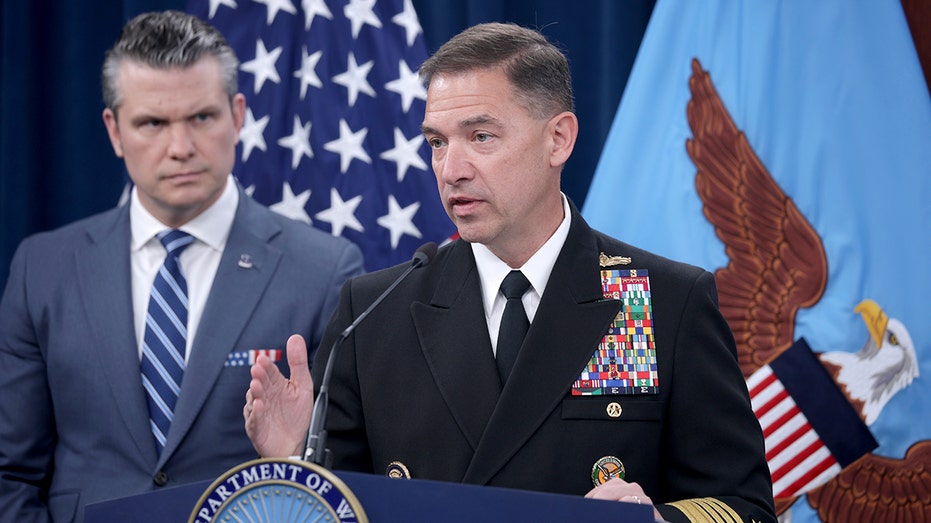
Following Friday's meeting, the Pentagon issued a statement, saying, "Under Secretary of War for Policy Elbridge Colby hosted military delegations from the State of Israel and the Republic of Lebanon to launch the security track supporting the ongoing talks between the two nations.

"The delegations engaged in productive, military-to-military talks focused on building practical frameworks for regional security and stability. The progress and tangible outcomes from these discussions will directly inform the Department of State-led political track, which is scheduled to reconvene next week.

"The Department of War deeply values its strategic partnerships with both the Israel Defense Forces (IDF) and the Lebanese Armed Forces (LAF). The Department supports Lebanon's sovereignty and territorial integrity, free of armed non-state actors, and welcomes the commitment of both militaries to these historic efforts. These are essential steps toward realizing President Trump's vision for a lasting peace in the Middle East.

"The United States anticipates reconvening soon to continue the security track."

Neither the Israeli Embassy in Washington nor the Lebanese Embassy in Washington immediately responded to requests for comment. 

(Auszug von RSS-Feed)

☐ ☆ ✇ Fox News

Israel eliminates head of Hamas' military wing in Gaza strike

veröffentlicht.
Vorschau ansehen

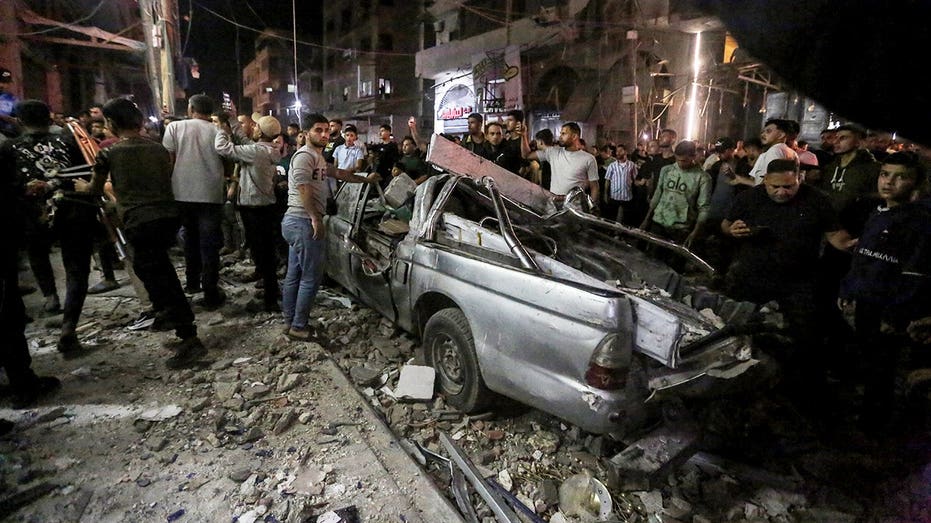
The new head of Hamas’ military wing has been taken out by Israeli forces in an airstrike. 

Mohammed Odeh, who was "responsible for planning and coordinating Hamas terrorists’ infiltration and attack targets during the October 7 Massacre," was killed in an operation in northern Gaza, the Israel Defense Forces announced Wednesday. 

"Odeh served as the Head of Hamas’ military wing following the elimination of Izz al-Din al-Haddad," according to the IDF, which shared a photo showing Odeh among other now-deceased Hamas leadership. 

"Odeh was responsible for the murder, abduction, and wounding of many Israeli citizens and IDF soldiers," Israeli Prime Minister Benjamin Netanyahu and Defense Minister Israel Katz said in a joint statement. "We will continue to pursue anyone who took part in the October 7 massacre. Sooner or later, Israel will reach them all."

TRUMP-BACKED BOARD OF PEACE, ISRAEL 'WILL TAKE ACTION' IF HAMAS REMAINS OUT OF COMPLIANCE

Haddad was eliminated by an Israeli Air Force strike in Gaza City earlier this month, military officials said.

"The IDF will continue to pursue our enemies, strike them, and hold accountable everyone who took part in the October 7 Massacre. We will not relent until we reach them all — this is our duty to all those who returned and to all our civilians," IDF Chief of the General Staff Lt. Gen. Eyal Zamir was quoted as saying following Haddad's death.

The IDF said, "Following the elimination of his predecessors, Yahya Sinwar and Mohammed Sinwar," Haddad had "assumed control of Hamas and worked to rebuild its military capabilities and infrastructure — a blatant violation of the ceasefire agreement." 

IDF KILLS KEY HAMAS FOUNDER AND MASTERMIND OF OCT 7 TERROR ATTACK IN ISRAEL

"Haddad was one of the longest-serving commanders in Hamas and played a key role in its terrorist rule. He climbed the ranks and advanced into crucial positions, then was tasked with coordinating and planning the October 7 Massacre invasion," the IDF said in the announcement of Haddad’s death.

CLICK HERE TO DOWNLOAD THE FOX NEWS APP

 "Throughout the war, he was involved in the holding of many Israeli hostages in Hamas captivity," the IDF added. 

"In every conversation I held with the hostages who returned, the name of the arch-terrorist Izz al-Din al-Haddad… came up again and again," Zamir said.

(Auszug von RSS-Feed)

☐ ☆ ✇ Fox News

Iran and Houthi terror proxy facing Red Sea threat from pro-US African nation

veröffentlicht.
Vorschau ansehen

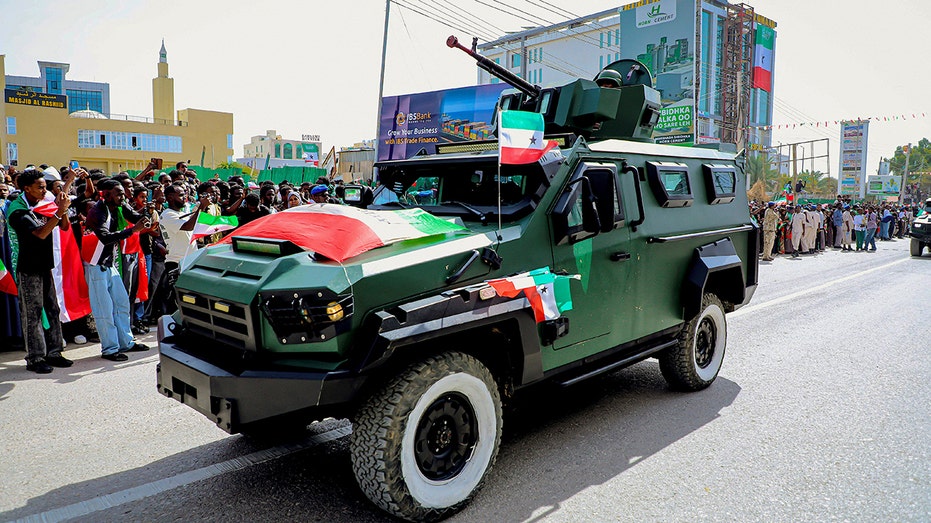
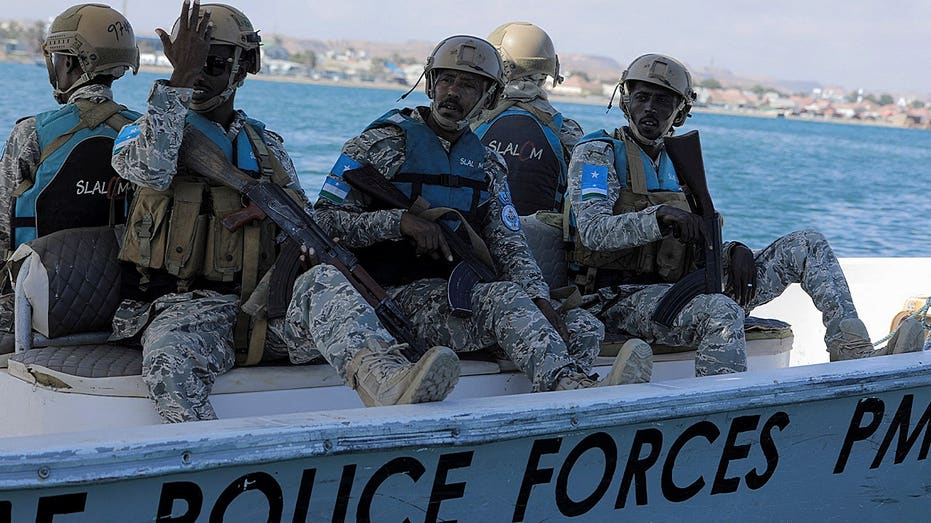
Iran is said to be ‘deeply threatened’ by the small African breakaway state, Somaliland, because of the potential for U.S., Israeli and Western powers to use its deep water port and airbase.

Such moves would severely disrupt Iran’s plan to use their proxy, Yemen’s Houthi terror group, to attack Red Sea shipping.

Iran has been accused of pressuring the Houthis to renew their strikes on shipping, particularly in the Red Sea’s Bab-el-Mandeb Strait. The waterway has become the main route for oil to ship out of the Middle East to Asia since the Strait of Hormuz was effectively closed.

COULD SOMALILAND BASE EMERGE AS US FOOTHOLD AGAINST IRAN, HOUTHIS IN KEY SEA LANES?

Lisa Daftari, a Middle East and foreign policy expert, told Fox News Digital, "Iran’s regime is deeply threatened by what Somaliland represents in an emerging pro‑Western, potentially pro‑Israel foothold overlooking the Bab el‑Mandeb, that could blunt Tehran’s leverage via the Houthis over Red Sea shipping and Israel."

Daftari, the editor‑in‑chief of The Foreign Desk, said, "that’s why Iran‑backed Houthis are already explicitly threatening to strike any Israeli or Western military presence in Somaliland and warning they could move to choke the Bab el‑Mandeb if the conflict with the U.S. and Israel escalates." 

The White House has said that Iran’s proxies, such as the Houthis, have been weakened. "The United States Military achieved all of the goals laid out for Operation Epic Fury – including weakening Iran’s proxies. Now, Iran is being strangled economically – giving President Trump all the cards as negotiations continue," Anna Kelly, special assistant to the President and White House principal deputy press secretary told Fox News Digital when asked if the U.S. was considering a full-time-basing relationship with Somaliland.

Edmund Fitton-Brown, a senior fellow at The Foundation for Defense of Democracies (FDD) told Fox News Digital that Somaliland’s recognition of Israel and Israel’s recognition of it last December has clearly irked Iran.

Fitton-Brown, who is a former U.K. ambassador to Yemen — the Houthis home country, said Iran "opposes any recognition of it (Somaliland) primarily because Israel is the first state to recognize it, and Iran will oppose anything that Israel does. Iran is also viscerally opposed to the U.S. and UAE, both of which have pragmatic engagement with Somaliland, short of recognition. Somaliland is a potential base for anti-Houthi enforcement, i.e. a threat to the Iranian Axis of Resistance."

IS TRUMP CONSIDERING BOLD AFRICA PLAY TO PUSH BACK ON CHINA, RUSSIA AND ISLAMIC TERRORISTS?

The U.S. already has a large base on the Red Sea in Djibouti, but Fitton-Brown says this is increasingly problematical "China is significantly expanding its military and commercial presence in Djibouti. There is a sense that Djibouti is not a reliable ally for the U.S. So Somaliland’s time has probably come."

And Somaliland hopes so. Its Foreign Minister, Abdirahman Dahir Adam, told Fox News Digital "At a time when the Strait of Hormuz is under pressure and threats to the Red Sea are escalating, Somaliland has reiterated its longstanding offer to provide the United States with access along our coast. We have been clear about this in times of peace, and we are equally clear today."

The Somaliland government is also offering storage space for tomahawk missiles, with a government source saying it’s "a unique way to advance security interests."

Adam added, "U.S. destroyers that expend their missile batteries in the Red Sea require (currently) up to two weeks of travel to be resupplied. Somaliland is ready to play a practical role in helping the U.S. to secure global trade routes."

But Somaliland’s offer of allowing use of its airbase and seaport is not all plain sailing.  Maj. Gen. (Ret.) Kenneth P. Ekman, former AFRICOM/J5 and West Africa coordination element lead, told Fox News Digital "a policy dilemma presents when conducting diplomatic and military relations with Somaliland directly, rather than through the Federal Government of Somalia and the SNA (Somali National Army)."

IRAN'S AFRICA ACTIVITIES POSE 'SIGNIFICANT THREATS TO US NATIONAL SECURITY'

"This same dilemma presents," Ekman continued. "While we (the U.S.) enjoy good access in Djibouti, this access is singular and competes with the Chinese presence.  Additional access to the port of Berbera, located in Somaliland, provides redundancy (backup) and a relationally different partner. Frankly, the U.S. military, along with some of our allies and partners, need port access in Berbera."

Sen. Ted Cruz, R-Texas., chairman of the Senate Subcommittee on Africa and Global Health, is strongly advocating for the U.S. to go all the diplomatic way and recognize Somaliland.

He told Fox News Digital in a statement that "Somaliland promises to be a critical counterterrorism ally for the United States, both because of its strong willingness to partner with us and because of its unique location. We should recognize the Republic of Somaliland as an independent state and, in the meantime, significantly boost our counterterrorism cooperation." 

The U.S. though, appears to be making below-the-radar moves. The Commander of U.S. Africa Command (AFRICOM), Gen. Dagvin Anderson, was recently in the country visiting port facilities, with a delegation, in November. This week, a Somaliland government source told Fox News Digital that U.S. military delegations come to the state every two months, with the last visit in the second half of April. 

Fitton-Brown told Fox News Digital that, "The U.S. is already using it (Somaliland) for counterterrorism operations. My understanding is that the U.S. doesn’t have a permanent military presence in Somaliland, but actively cooperates with Somaliland's security forces on regional counterterrorism and maritime security issues."

A former senior U.S. defense official agreed that American military specialists have been co-ordinating with Somaliland forces since 2023, when they came together to kill Bilal al-Sudani, reportedly a key facilitator and financier of the ISIS global network.

However, the U.S. aligns publicly with Somalia, from which Somaliland broke away in 1991. 

When asked this week about the U.S. military relationship with Somaliland when it comes to counter-terrorism operations in the country, a Pentagon official told Fox News Digital: "The United States maintains its strategic partnership with the Federal Government of Somalia.

"In northern Somalia, AFRICOM, alongside the Federal Government of Somalia and Somali Armed Forces, has conducted airstrikes to degrade ISIS—Somalia's ability to threaten the U.S. Homeland, our forces, and our citizens abroad. In southern Somalia, AFRICOM, also in close coordination with the Federal Government of Somalia, has conducted airstrikes to enable partner forces’ ability to degrade al Shabaab. Our strategic approach to countering terrorism in Africa relies on trusted partnerships and collaboration grounded in and through shared security interests."

Daftari added, "Somaliland is offering the United States what the mullahs fear most in this theater, namely an alternative, resilient platform on the African shore that includes an airfield, port, and over‑the‑horizon access that would dilute Houthi leverage and give Washington options that don’t depend on Djibouti or Persian Gulf partners alone."

(Auszug von RSS-Feed)

☐ ☆ ✇ Fox News

World's humanitarian system buckling, 'no longer fit for purpose,' US-based researchers say

veröffentlicht.
Vorschau ansehen

LONDON, England — From Sudan to Gaza, civilians are desperate, hospitals are under attack, and the humanitarian aid system cannot keep up, according to a new report in the Lancet medical journal. 

"The humanitarian system is no longer fit for purpose, given the types of emergencies that we have and their magnitude," report co-author Dr. Paul Spiegel told Fox News. 

AS WORLD FIXATES ON OTHER WARS, SUDAN SEES 12 MILLION FORCIBLY DISPLACED IN DEVASTATING CONFLICT

A professor at Johns Hopkins University and co-chair of its Center for Humanitarian Health, Spiegel has decades of experience working in refugee camps and war zones around the world. "I've been doing this for well over 30 years," he said. "We're in a very dark time."

Highlighting one of the world’s largest disasters, Sudan's brutal civil war — where tens of millions of people are in need as hospitals close and famine spreads — the panel of experts behind the report says the world knows how to save lives, but that the system is failing to deliver. The experts' report, titled 'Health in a World of Crises and Impunity,' argues that some agencies are too bureaucratic, and others too slow. The whole system, they say, needs revamping.

The report argues the United Nations is in need of reform, while in the U.S. it highlights the Trump Administration's shuttering of the United States Agency for International Development (USAID) over suspected fraud and abuse. 

During that restructuring, many of USAID's most vital programs were folded into the State Department, but the report calls USAID's closure a "shock" and "sudden," and part of a chain of decisions in the U.S. and elsewhere which it condemns as "a political and moral failure."

ANALYSTS SAY GAZA 'CIVILIAN' DEATHS INCLUDE HAMAS, OTHER TERROR MEMBERS WORKING AS MEDICS, MEDIA WORKERS

"USAID needed to be restructured," Spiegel told Fox News. "The U.N. needs to be restructured in a very significant way. But it's how you do that.

"It is the strategy to make sure that you do it in such a way that vulnerable populations across the globe are not going to be hurt, and that it wasn't done like that."

The authors are pushing for major global reforms, including overhauling funding, sending aid directly to local communities, greater accountability if governments or armed groups block aid, and upholding healthcare as a basic human right.

"It's really a complete rebalancing," Spiegel said, "to make sure that the system actually works for the people it's intended to help."

(Auszug von RSS-Feed)

☐ ☆ ✇ Fox News

Canadian teen girl charged with arson after allegedly torching American baseball team's charter bus

veröffentlicht.
Vorschau ansehen

A Canadian teenager is facing arson charges after authorities say she torched a charter bus belonging to an American professional baseball team during a road trip to Winnipeg, Canada.

The Kane County Cougars, a U.S.-based independent professional baseball team, were traveling in Canada for games against the Winnipeg Goldeyes.

On May 21, law enforcement agencies responded to the team’s bus engulfed in flames outside Blue Cross Park, according to Winnipeg Police Service.

FEDS SAY ARIZONA SUSPECT VANDALIZED ICE FACILITY AND ATTEMPTED TO IGNITE LOBBY AREA

Authorities determined that the fire was intentionally set. Two teenagers were initially taken into custody. A 15-year-old girl has since been charged with arson causing damage to property and possession of incendiary material.

COLLEGE BASKETBALL TEAM EVACUATES BUS BEFORE IT GOES UP IN FLAMES ON HIGHWAY

The teen was later released into the custody of a responsible adult, police said.

"The entire bus and contents were destroyed," the Winnipeg Police Service said in a release.

AUSTIN POLICE ARREST 2 JUVENILES ALLEGEDLY LINKED TO 12 RANDOM SHOOTINGS INJURING 4 PEOPLE

"We are very disappointed that this could happen to our family-owned company, and the loss of this vehicle will impact our business and operations," Windstar operations manager Jackson Greteman told a CBC Lite.

"We are happy that no one was hurt in this reckless act of vandalism and are co-operating with local authorities," he added.

VIDEO SHOWS TEENS CARVING UP GOLF COURSE GREENS IN RECKLESS STUNT, POLICE SAY

Greteman said damage to the 56-seat bus and destroyed equipment is estimated at roughly $425,000.

Authorities have not publicly discussed a possible motive as the investigation continues.

(Auszug von RSS-Feed)

☐ ☆ ✇ Fox News

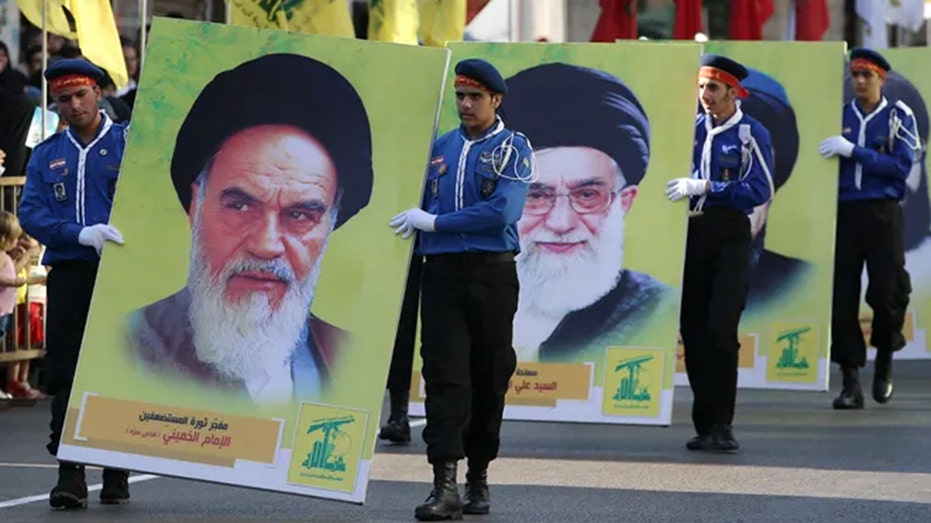
Hezbollah grooms children for martyrdom through its scout movement, report claims

veröffentlicht.
Vorschau ansehen

The U.S.-designated Lebanon-based terrorist movement Hezbollah exploits children from its version of the scout movement to carry out jihadi missions that result in their deaths, according to a recent report on Lebanon’s MTV television network.

The Lebanese network’s report — translated by the Washington, D.C.-based Middle East Media Research Institute (MEMRI) — comes amid U.S.-brokered peace talks between Israel and Beirut.

The report claims that Hezbollah gives child fighters heroes’ funerals and publicly glorifies them before their peers in order to encourage other children to follow in their footsteps. The MTV report said Hezbollah believes that every drop of bloodshed by child soldiers brings victory closer.

ISRAEL POUNDS HEZBOLLAH TARGETS, DARING LEBANON TO RECLAIM SOVEREIGNTY FROM IRAN-BACKED TERROR PROXY

It also claimed that Hezbollah uses its scout movements to cultivate an entire generation of obedient children prepared to die, through rhetoric that glorifies death and martyrdom. The MTV report, according to the MEMRI translation, said that "Hezbollah child soldiers have been used since the 1980s by this outlaw armed group. Not just as armed fighters but as Khomeini-loyal scouts."

The late Ayatollah Ruhollah Khomeini, founder of the Islamic Republic of Iran, reportedly exploited the use of Iranian children during the country’s 1980-1988 war against Iraq.

Matthew Levitt, a leading scholar on Hezbollah from the Washington Institute, said that "Hezbollah's recruitment and radicalization of youth through its Mahdi Scouts is long documented," other experts talking to Fox News Digital concurred.

"Hezbollah has boy scouts, and they have been taught jihad, and it is a well-known thing in Lebanon," Mideast expert Walid Phares told Fox News Digital.

UNRWA SCHOOLS ‘HIJACKED BY HAMAS,’ WATCHDOG REPORT WARNS

The Lebanon expert said they could be termed "children jihadists" who are preparing to become full Hezbollah fighters. Phares said they mostly assign them [the children of Hezbollah fighters] to spying and transporting ammunition. He argued if the scouts are getting funding from a ministry or national boy scouts association in Lebanon, they should be sanctioned if they have the evidence.

Multiple Fox News Digital Emails and phone calls to the World Organization of the Scouting Movement (WOSM) were not immediately returned. The U.S. branch of WOSM referred Fox News Digital to WOSM, which is in Kuala Lumpur, Malaysia.

A Hezbollah expert from the Israel Alma Research and Education Center, Sarit Zehavi, called for action against the exploitation of children by the terror group.

"The only way to bring a change is to designate all of these allegedly civilian activities of Hezbollah and close the movement of its scouts, and enable the Shiites of Lebanon to have a different source of services, whether it is educational, formal or informal, which will be part of the Lebanese state, and not part of Hezbollah. The loyalty will be to the Lebanese state and not to Khomeini and the Islamic Republic."

She added, "This is only something Lebanon can do with a lot of international pressure, of course, led by the United States."

An Israeli diplomat, Tammy Rahamimoff-Honig, posted on X: "Hezbollah sacrifices Lebanese children to further the ambitions of the Iranian regime. This isn’t ‘resistance’. It’s child abuse."

Lebanon’s Ambassador to the U.S. declined to provide comment for this article.

(Auszug von RSS-Feed)

☐ ☆ ✇ Fox News

Netanyahu 'blunder' threatens US-backed Israel-UAE alliance at critical moment with Iran: analyst

veröffentlicht.
Vorschau ansehen

The U.S.-brokered alliance designed to counter Iran in the Middle East is showing signs of strain amid tensions between Israel and the United Arab Emirates, an analyst says, as the possibility of a broader conflict with Tehran intensified Sunday.

The friction first surfaced May 13 after Israeli Prime Minister Benjamin Netanyahu’s office said he held a "historic breakthrough" meeting with UAE President Sheikh Mohammed bin Zayed Al Nahyan during a "secret visit" to Al Ain near the Oman border.

The UAE’s Ministry of Foreign Affairs issued a swift denial following the announcement.

The ministry said, "Its relations with Israel are public and were established within the framework of the well-known and publicly declared Abraham Accords. These relations are not based on secrecy or clandestine arrangements."

IRAN IS 'TRYING TO GIVE THE GLOBAL ECONOMY A HEART ATTACK' BY CLOSING STRAIT OF HORMUZ, UAE MINISTER SAYS

It added, "Therefore, any claims regarding undisclosed visits or arrangements are baseless unless issued by the relevant official authorities in the UAE."

"The stakes are high," Middle East Institute analyst Natan Sachs told Fox News Digital.

"I imagine the Israelis are working overtime to mend relations with the UAE, but it is too early to tell," he said.

President Donald Trump spoke with Netanyahu on Sunday as tensions over Iran escalated and with the Israeli leader saying he was "prepared for every scenario."

The leaders discussed the possibility of renewing the war with Iran as well as Trump’s recent trip to China, according to the Times of Israel.

Sachs, a senior fellow at the institute, said Netanyahu’s UAE meeting claim "seems like a diplomatic blunder because it embarrasses the UAE."

OFFICIALS IN BIDEN ADMIN WORKED TO UNDERMINE NETANYAHU AFTER CEASEFIRE TALKS COLLAPSED, FORMER AIDE SAYS

"This was an odd move to make since the UAE has been a close partner of Israel, even during this war," Sachs said.

"Either Netanyahu didn't think, or he was thinking about something else — domestic politics. It would not be the first time he did that."

"To the degree that the Emirati anger is genuine, it would have meant working to preserve trust with their Gulf Arab ally," Sachs added.

"I would also not rule out Emirati anger at the leak itself, which could be seen as a break of trust — something very important to the Emirati leadership."

The Abraham Accords, brokered by the United States in 2020, fundamentally altered the regional balance by normalizing relations between Israel and the UAE, Bahrain, Morocco and Sudan.

Security cooperation has since expanded significantly due to shared concerns over Iran’s military ambitions.

THE FUTURE OF WAR? US-ISRAEL BLITZ ON IRAN UNVEILS NEXT-GEN ALLIED COMBAT

That alliance was tested when Iran launched strikes against UAE military and energy infrastructure during Operation Epic Fury.

Israel is said to have deployed Iron Dome air-defense systems and personnel to the UAE, according to U.S. Ambassador to Israel Mike Huckabee. The UAE confirmed Sunday that it had intercepted three drones coming from the west.

"The UAE received much of the fire from Iran. It is the most vulnerable to Iranian short-range missiles, which are more plentiful and cheaper than the medium-range missiles fired at Israel," Sachs said.

"While short-range missiles can be intercepted, Iran has many more of them. The UAE took the most hits, yet it stood out by sticking most clearly to its strategy of open partnership with Israel."

"But the public disclosure that Netanyahu himself visited may have just been seen as a step too far," Sachs added.

(Auszug von RSS-Feed)

☐ ☆ ✇ Fox News

Lebanon accuses Iran of inserting IRGC terrorists into country 'under guise of diplomatic activity'

veröffentlicht.
Vorschau ansehen

The Lebanese government filed a sharply worded complaint with the United Nations arguing that the Islamic Republic of Iran has abused diplomatic immunity by refusing to recall its ambassador after Beirut demanded his expulsion and to stop alleged terrorist activities on its soil, according to a recently surfaced letter from late April.

The disclosure of the letter, which is reportedly a precedent-setting move by Lebanon, comes amid a second day of talks in Washington between Israel and Lebanon to normalize relations (the countries are in a state of war) and dismantle the Iranian-regime-backed Hezbollah terrorist movement in Lebanon.

A U.S. State Department spokesperson told Fox News Digital on Friday that "The United States facilitated talks between Israel and Lebanon have resumed today and are ongoing. The atmosphere of talks has been very positive, even exceeding expectations."

FAMILY OF AMERICAN HOSTAGE TORTURED IN LEBANON WINS LANDMARK CASE AGAINST IRAN

State Department spokesman Tommy Pigott wrote on X on Friday that "On May 14 and 15, the United States hosted two days of highly-productive talks between Israel and Lebanon. The April 16 cessation of hostilities will be extended by 45 days to enable further progress. The State Department will reconvene the political track of negotiations on June 2 and June 3."

He added that, "In addition, a security track will be launched at the Pentagon on May 29 with military delegations from both countries. We hope these discussions will advance lasting peace between the two countries, full recognition of each other’s sovereignty and territorial integrity, and establishing genuine security along their shared border."

As the sides report back to their capitals, the potentially game-changing letter in which Lebanese ambassador to the U.N. Ahmad Arafa, slammed Iran for inserting alleged terrorists from Iran’s Islamic Revolutionary Guard Corps (IRGC) into Lebanon "under the guise of diplomatic activity," has given hope to critics of Iran and Hezbollah.

Arafa said, according to the letter, that Iran committed "unlawful acts in blatant defiance of the decisions of the Government of Lebanon." He continued, "This Iranian conduct constitutes direct and blatant interference in the internal affairs of Lebanon and drags the country into a war it did not choose to become involved in."

The U.S. and the European Union have classified the IRGC as a terrorist entity.

The letter took the Iranian Ambassador to Beirut, Mohammad Reza Sheibani, to task for "blatant interference" in Lebanon.

According to Lebanon’s U.N. letter, Beirut argued that Iran is violating the 1961 Vienna Convention on Diplomatic Relations and interfering in Lebanon’s state of affairs.

IDF SOLDIERS ACCUSE UN PEACEKEEPERS OF ENABLING HEZBOLLAH TERRORISTS AMID INCREASING CEASE-FIRE VIOLATIONS

When asked about the details of the letter, a spokesperson for Lebanon’s ambassador to the U.S. declined to comment. The spokesperson also declined to weigh in on the current talks with Israel in Washington.

Walid Phares, a leading U.S. expert on Lebanon and the Mideast, told Fox News Digital that "Many have considered the Lebanese memo to the U.N. as the start of the Lebanese government change of attitude towards Iran and a sign of escalation by Beirut. While the tone of the letter and its narrative make people feel that there is a government resistance to Iran and Hezbollah reality is still lesser."

He added that "The subject of the last quarrel is a legal change of status regarding the presence of Iranians on Lebanese soil. The Lebanese government has decided not to grant Iranians, government, and private citizens an automatic visa waiver, which upset Iran and Hezbollah. Besides, Tehran is furious at the fact that the Lebanese government has not been helpful in dealing with the elimination of a number of IRGC members killed in Lebanon by Israel. Tehran blames the foreign ministry of Lebanon, particularly foreign minister Youssef Raggi, for the ‘lessening of solidarity with Iran."'

According to Phares, "Raggi represents a Lebanese Christian bloc in the parliament, who is not sympathetic to the regime. However, the actual talks in D.C. are designed by the Lebanese government to show the Trump administration that the ‘state wants to talk’ but not to reach an agreement that would trigger Hezbollah's wrath. The leaders of the Lebanese state are not yet where the U.S. and Israel expect them to be."

A regional official well-versed in the U.N. dispute told Fox News Digital that Lebanon "argued that Iran had not given the Lebanese foreign ministry the list of all Iranians and the details about their place of stay. And that’s why Israel targeted that hotel in Lebanon in which six were killed, which is true."

The official said that "Iran had not told the foreign ministry of Lebanon about those six people."

(Auszug von RSS-Feed)

☐ ☆ ✇ Fox News

Ship seized off coast of UAE near Strait of Hormuz may have been 'floating armory': report

veröffentlicht.
Vorschau ansehen

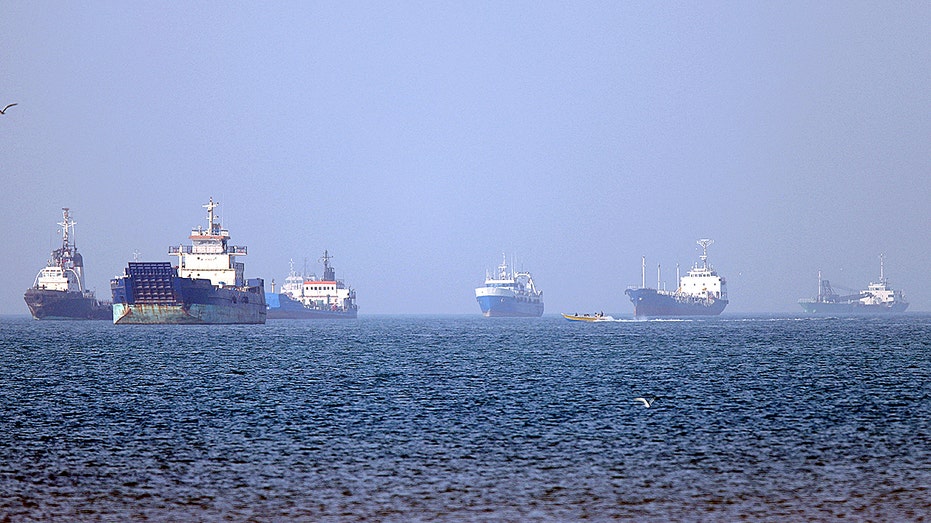
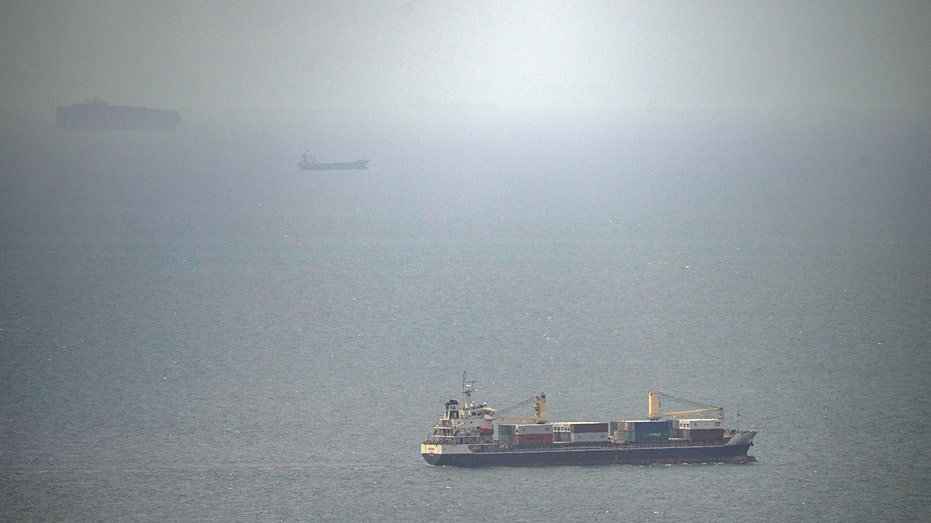
A ship was seized off the coast of the United Arab Emirates (UAE) near the Strait of Hormuz on Thursday morning, the British military reported.

The ship was boarded and "taken by unauthorized personnel" while it was roughly 38 nautical miles northeast of the United Arab Emirates’ oil export terminal Fujairah, the United Kingdom Maritime Trade Operations (UKMTO) reported Thursday.

UKMTO spotted the ship heading toward Iranian territorial waters after the seizure, it reported Thursday.

British authorities did not release information on who the ship belonged to or who seized it. Despite the lack of official corroboration, the BBC reported that the Honduras-flagged Hui Chuan was seized in the Strait on Thursday.

CARGO SHIP ATTACKED BY SMALL CRAFT NEAR STRAIT OF HORMUZ, UK MARITIME AGENCY SAYS

Citing the risk-management company Vanguard, the BBC reported that the ship's operators told Vanguard that the Hui Chuan was operating as a "floating armory" for ships in the Strait to defend themselves from pirates.

At least two other ships have already been seized in the Strait of Hormuz since February.

IRAN SAYS ITS SMALL SUBS DEPLOYED TO STRAIT OF HORMUZ AS EXPERT EXPLAINS THREAT: ‘VULNERABLE TO DETECTION’

In April, Iran's Islamic Revolutionary Guard Corps (IRGC) seized the Panamanian-flagged MSC Francesca and the Epaminondes ships in the Strait.

Fox News Digital contacted UKMTO and Vanguard for further information but did not immediately receive a response.

(Auszug von RSS-Feed)

☐ ☆ ✇ Fox News

Trump faces split among retired US commanders over whether to resume Iran strikes

veröffentlicht.
Vorschau ansehen

President Donald Trump said the ceasefire with Iran is on "massive life support," as retired U.S. commanders and national security experts are increasingly split whether Washington should resume military operations against Tehran or avoid what critics warn could become another prolonged Middle East conflict.

"I would say the ceasefire is on massive life support," Trump told reporters Monday. "Where the doctor walks in and says, ‘Sir, your loved one has approximately a 1% chance of living.’"

Trump also dismissed Iran’s latest response to a proposed agreement as "a piece of garbage," amid reports the White House is reviewing military options should negotiations collapse.

Retired Lt. Gen. H.R. McMaster, former national security adviser under Trump, said he believes Iran’s leadership is unlikely to make the concessions Trump considers necessary for a deal.

WHITE HOUSE WARNS IRAN AGAINST BALKING AT DEAL: TRUMP READY TO 'UNLEASH HELL'

"I think the Iranian leadership and IRGC are unwilling to make the kind of concessions that President Trump thinks are at the minimum," McMaster told Fox News Digital, referring to Iran's hardline Islamic Revolutionary Guard Corps. 

"President Trump always wants a deal," he added. "But he's not going to sign up for a bad deal."

The emerging debate now centers on a core question facing Washington: whether additional military pressure could force Iran to abandon its nuclear and missile ambitions, or whether renewed strikes would deepen a regional conflict without producing decisive results.

Retired Vice Adm. Mark Fox, former deputy commander of U.S. Central Command (CENTCOM), said he believes the current ceasefire and diplomatic track are unlikely to force Iran to back down.

"I really cannot envision anything other than a full return to combat operations," Fox told Fox News Digital. "The only thing that they will respond to, I think ultimately, is force."

Fox argued the U.S. military remains capable of reopening and securing commercial shipping through the Strait of Hormuz despite ongoing Iranian threats against vessels transiting the waterway.

HORMUZ CHOKE POINT PERSISTS AS IRAN HALTS OIL TRAFFIC DESPITE TRUMP CEASEFIRE

"This is a militarily obtainable objective," he said, outlining a strategy involving guided missile destroyers, attack helicopters, drones and expanded aerial surveillance to create a protected maritime corridor through the Strait.

Fox acknowledged the U.S. Navy is smaller than it was during the 1980s tanker wars, but argued American forces still possess the capability to secure the chokepoint if Washington commits enough naval assets and persistent monitoring operations.

"It’s not easy," Fox said. "But the geography is fixed."

He described a possible strategy that would rely on destroyers, drones and attack aircraft to create what he called an "unblinking eye" over the strait, allowing U.S. forces to identify and neutralize Iranian speedboats, drones and anti-shipping threats before they can strike commercial vessels.

Fox also warned against allowing Iran to preserve leverage over Hormuz while continuing to advance its missile and nuclear programs.

"If not now, when?" he said. "If they had a nuclear weapon, they would use it."

EXPERTS WARN IRAN’S NUCLEAR DOUBLE-TALK DESIGNED TO BUY TIME, UNDERMINE US PRESSURE

Fox, who also signed onto a recent policy paper by the Jewish Institute for National Security of America, echoed the report’s argument that Iran is using negotiations to buy time while preserving its military capabilities.

The paper was authored by several retired senior U.S. military officials and national security experts, including retired Gen. Chuck Wald, former deputy commander of U.S. European Command and retired Vice Adm. Robert Harward, former deputy commander of CENTCOM, argued the current ceasefire and diplomatic track "cannot reliably compel Iran" to meet U.S. demands and warned Tehran was seeking to "drag out talks, erode U.S. resolve, and use the time to strengthen itself."

The report called for expanded military operations targeting Iran’s maritime capabilities, missile infrastructure and internal coercive apparatus while avoiding broad attacks on civilian infrastructure that could trigger wider regional escalation.

But not everyone agrees that renewed military action would produce a better outcome.

Retired Lt. Col. Daniel Davis, a senior fellow at Defense Priorities and longtime critic of expanded U.S. military interventions, warned that calls to "finish the job" ignore the realities exposed during the recent fighting.

"To ‘finish the job,’ as they say, is irrational," Davis told Fox News Digital. "It’s illogical, and it violates any kind of military principle."

KEITH KELLOGG URGES US TO 'FINISH THE JOB' AGAINST IRAN BY SEIZING ISLANDS, STRANGLING ECONOMY

Davis argued that despite thousands of strikes and weeks of fighting, Iran retained significant missile and maritime capabilities.

"We couldn't knock them out with 14,000 targets hit," he said. "Why does anybody think that going back another time is going to have a different result?"

He described Iran’s geography, dispersed missile infrastructure and asymmetric naval tactics as creating what he called "a militarily unsolvable problem."

"The only thing left is a diplomatic outcome," Davis said.

The disagreement reflects a broader divide emerging in Washington as officials weigh what comes next if negotiations fail.

Supporters of renewed military action argue Iran is weaker than it has been in decades and that stopping now risks allowing Tehran to regroup, rebuild its missile arsenal and preserve leverage over one of the world’s most important energy choke points.

Critics counter that even extensive U.S. and Israeli strikes failed to fundamentally break the regime’s control or eliminate its military capabilities, raising the risk that further escalation could drag the United States into another drawn-out regional conflict with uncertain results.

(Auszug von RSS-Feed)

☐ ☆ ✇ Fox News

Inside the Christian border town in Lebanon that says it survived by defying Hezbollah

veröffentlicht.
Vorschau ansehen

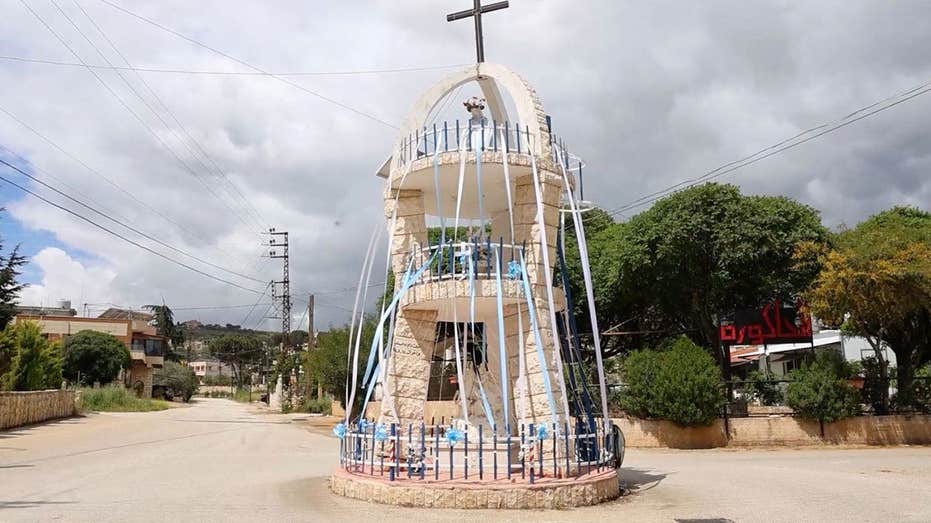
The church bells still ring in Rmeish on the Lebanon-Israel border.

While much of southern Lebanon has suffered destruction during the war between Israel and the terror group Hezbollah, the predominantly Christian border town close to Israel remained largely untouched. Churches are still standing. Homes remain intact. Residents say the village avoided Israeli strikes because locals refused to allow Hezbollah fighters to operate from inside the town.

"There was more than one attempt for them to come to the outskirts or the entrance of the village to launch rockets from there," one resident told Jusoor News. "The young men of Rmeish confronted them and prevented them from entering."

"That led to the protection of Rmeish from any Israeli attacks," the resident said. "The Israelis do not target aimlessly. They target launch sites."

HEZBOLLAH DISARMAMENT DEADLOCK RISKS CIVIL WAR, ANALYSTS SAY, AS US PREPARES FOR ISRAEL–LEBANON TALKS

The account offers a rare public glimpse into open resistance to Hezbollah inside southern Lebanon, where criticism of the Iranian-backed terrorist group is often met with accusations of treason or collaboration with Israel.

Tarek, a Christian social activist from Rmeish who spoke by phone with Fox News Digital, said residents of the town have long-faced pressure because they refused to align with Hezbollah.

"After 2000, when Israel left, we were always labeled as collaborators of Israel," Tarek said. "We suffered a lot from this stigma."

He said Hezbollah supporters accused the town of cooperating with Israel simply because it escaped the destruction seen in neighboring villages.

The interviews come as the Trump administration brokers talks between Israel and Lebanon aimed at stabilizing the border and addressing Hezbollah’s military presence in southern Lebanon. Hezbollah Secretary-General Naim Qassem recently rejected any discussion about disarming the group, while U.S. officials continue pushing to strengthen the Lebanese state over the armed terror group.

Tarek argued Hezbollah’s grip on Lebanon cannot be separated from Iran.

"The Lebanese government has been ruled by Hezbollah for almost 36 years," he told Fox News Digital. "They are deeply entrenched in all arms of the government, security, army and institutions."

"If the president or prime minister says they want peace, Hezbollah will resist that," he added.

Tarek said weakening Iran is the key to weakening Hezbollah.

IRAN COULD ‘ACTIVATE’ HEZBOLLAH IF US TARGETS REGIME, TRUMP’S INNER CIRCLE TO DECIDE: EXPERT

"It’s about cutting the head of the octopus, which is the Iranian regime," he said. "Once you cut the head, Hezbollah will no longer function."

Another resident said many in the town increasingly believe "Hezbollah’s project is an Iranian project, not a Lebanese one."

Another woman from the village described living surrounded by war while trying to keep the town outside the fighting.

‘WAR FOLLOWED US’: A SYRIAN FAMILY FLED BEIRUT AFTER ISRAELI BOMBARDMENT TO FACE REPRESSION, BOMBING AT HOME

"We are in the middle, and the war surrounds us from all sides," she said. "This makes us live in a state of fear, anxiety, insecurity and instability."

A man from the village said residents had endured decades of wars that they have nothing to do with.

"We decided to remain steadfast," he said. "Where would we go?"

An older resident said his family has suffered from violence along the border since the 1970s.

"We are tired of wars," he said. "We want nothing but peace."

Despite accusations from Hezbollah supporters, residents insisted they do not regret standing up to the terrorist group.

"All accusations of treason are rejected," one resident said. "The people of Rmeish want to live safely on their land."

Another resident added: "Just because I don’t believe in your project doesn’t mean I’m a traitor."

Ahed Al Hendi, a senior fellow at the Center for Peace Communications, told Fox News Digital that, "The defiance shown by Christians in southern Lebanon reflects a major shift in the country’s internal dynamics. For more than two decades, many Christians living near the border suffered under Hezbollah’s dominance, yet were stigmatized and often afraid to speak openly against it." 

"Today," Al Hendi added, "with the changing balance of power, they are increasingly confronting Hezbollah publicly and speaking out against what they see as its tyranny."

(Auszug von RSS-Feed)

☐ ☆ ✇ Fox News

Second suspected oil slick near Iran raises fears of major disaster in vital global oil corridor

veröffentlicht.
Vorschau ansehen

A second suspected oil slick has been detected near Iran’s Kharg Island export hub, according to maritime intelligence firm Windward AI, heightening fears of an environmental disaster as a larger spill identified May 8 continues drifting toward Saudi Arabian waters.

The suspected new slick comes as U.N. officials warned Sunday that oil spills in the region could trigger an environmental catastrophe amid the ongoing Strait of Hormuz crisis.

"Another possible oil spill was detected today at 11 a.m. local time," Windward told Fox News Digital. The approximate visible area, according to the firm, was between 12 to 20 square kilometers.

Tehran has pointed to foreign vessels, but maritime experts say the main slick — estimated at tens of thousands of barrels and covering about 65 square kilometers, according to the U.N. University Institute for Water, Environment and Health — is more likely linked to aging infrastructure, pipeline ruptures or a "war mode" environment that has threatened the waterway since February.

IRAN THREATENS MASS ‘WATER WAR’ WITH STRIKES ON KEY PLANTS IN DAYS, UN OFFICIAL WARNS

"We should worry about the cause of the slick and monitor things carefully to see if there are new developments," U.N. official Dr. Kaveh Madani told Fox News Digital.

"If this slick gets bigger, we should be seriously worried about there being a leakage of aging infrastructure," Madani said, adding the slick was "moving away toward the southwest of the island."

"We just have to see how it moves and if it gets closer to the centers of population. If it does, desalination operations also must be halted. The risk is low right now," he said.

Madani also noted the slick is near a zone with a heavy concentration of pipelines and energy infrastructure.

"Keeping these infrastructure systems healthy and operational has been very hard for the Iranians even in peacetime due to sanctions," he said, warning that amid conflict, a "major accident is very likely."

Water circulation in the Persian Gulf is slow, meaning pollution can persist for extended periods, he added.

"We saw similar instances during the Gulf wars and the Iran-Iraq War, with these things impacting coastal communities, the fishing industry, marine life and even the intake of desalination plants," he said.

BEFORE-AND-AFTER SATELLITE IMAGERY OFFERS A RARE LOOK AT DAMAGE INSIDE IRAN

The larger spill, visible in satellite images as a gray-and-white slick, was first detected west of Kharg Island, Windward AI reported May 8, and has been steadily moving.

"It is believed to be crude rather than bunker fuel and unlikely to have come from a ship, possibly originating from pipeline issues or a failed ship-to-ship transfer," the firm said.

The spill could pass through Qatar’s exclusive economic zone within about four days, with possible landfall near Al Mirfa in the United Arab Emirates in roughly 13 days, according to Windward.

The incident comes as Washington ramps up "Economic Fury," tightening sanctions and increasing its naval presence near the Strait of Hormuz to curb Iran’s oil exports.

Since Iran closed the strait in late February following the outbreak of hostilities, tankers have bottlenecked across the region as the vital oil chokepoint remains largely shut.

"We also know that there are many tankers in the area, so there is a chance of an accidental spill," Madani said.

US EYES SEIZING IRAN’S OIL LIFELINE — BUT IT MAY NOT CRIPPLE TEHRAN

"As long as the closure of the Strait of Hormuz is there and the region is in a war mode, the environment would not be a priority, but monitoring the behavior of tankers would not be trivial," he said.

Meanwhile, Jafar Pourkabgani, a lawmaker representing Bushehr province, claimed the slick was caused by "oil residue and ballast water waste from European tankers" discharged into the sea.

"This claim is false and part of the enemy’s psychological operation," he wrote on X, referring to allegations Iran released oil due to full storage tanks.

Iran’s Oil Terminals Company also denied reports of a leak near Kharg Island, according to Reuters.

The company’s chief executive said Sunday that inspections found no evidence of leaks from storage tanks, pipelines, loading facilities or nearby tankers.

(Auszug von RSS-Feed)

☐ ☆ ✇ Fox News

Trump blockade squeezing Iran so hard regime may be dumping oil into Gulf, experts say

veröffentlicht.
Vorschau ansehen

Satellite imagery revealed a massive suspected oil slick spreading near Kharg Island, Iran’s main oil export terminal, in what experts say could be evidence that Tehran’s oil infrastructure is buckling under mounting U.S. pressure.

The slick, seen in Copernicus Sentinel satellite images between Wednesday and Friday, covered roughly 45 square kilometers west of the island, according to analysts cited by Reuters.

The incident is emerging as a potential sign that Trump’s maritime pressure campaign is achieving one of its central objectives of overwhelming Iran’s export system to the point Tehran can no longer move or store crude fast enough to sustain normal production.

US ECONOMIC CHOKEHOLD ON IRAN REACHES PEAK LEVERAGE AS COLLAPSE RISKS EMERGE

The suspected spill near Iran’s main oil hub is raising concerns that mounting U.S. pressure is overwhelming Tehran’s ability to store or export crude, potentially forcing risky workarounds with environmental consequences in the Gulf.

"At this stage, I see two plausible explanations, and they’re not mutually exclusive," Miad Maleki, an Iran sanctions and energy expert at the Foundation for Defense of Democracies, told Fox News Digital.

"One is operational: They simply didn’t ramp down extraction fast enough relative to their true onshore capacity and over counted on empty tankers slipping through the blockade," he said.

"Now they’ve effectively over-delivered crude into the export system, with more oil at or near the terminals than they can actually load, and the ‘solution’ is to push some of that excess into the water."

Maleki said another possible explanation is mechanical failure tied to Iran’s use of aging tankers as floating storage or sanctions-busting carriers.

TRUMP CLAIMS IRAN 'STARVING FOR CASH,' 'COLLAPSING FINANCIALLY' AFTER EXTENDING CEASEFIRE

"They’ve dragged older, marginal tonnage into service as floating storage or sanctions-busting carriers, and some of those retired or poorly maintained hulls are now leaking," he said.

"Either way, the common denominator is the same — storage and evacuation capacity are out of sync with upstream output, and the Gulf is paying the price for that mismatch."

The incident comes as the Trump administration continues pressing its Economic Fury campaign against Iran, combining sanctions enforcement with a growing U.S. naval presence around the Strait of Hormuz aimed at restricting Iran’s oil exports.

Before the conflict, Iran exported roughly 1.5 million barrels of oil per day, much of it to China. Analysts say the blockade and the threat of sanctions on shipping companies and financial institutions have made it increasingly difficult for Tehran to move crude out of Kharg Island.

Reuters reported the slick appeared as a "grey and white" plume west of the 8-kilometer-long island. 

Leon Moreland, a researcher at the Conflict and Environment Observatory, told Reuters the slick was "visually consistent with oil," while Louis Goddard, co-founder of Data Desk, said it could be the largest spill since the start of the U.S.-Israel war against Iran roughly 70 days ago.

Kharg Island handles roughly 90% of Iran’s oil exports and has become a critical choke point in the Trump administration’s effort to cut off the regime’s main source of revenue during the ongoing war.

Energy analysts say Iran is now facing a dangerous dilemma. If Iran cannot export oil or find additional storage capacity, it may be forced either to shut down wells, risking long-term damage to oil fields, or dispose of excess crude in ways that could trigger environmental fallout across the Gulf.

US STRIKE ON KEY IRAN OIL HUB WOULD FIT TRUMP'S 'ENERGY DOMINANCE DOCTRINE,' SAYS EXPERT

"They’ve already reduced extraction. In a true blockade scenario, the constraint isn’t production at the wellhead, it’s the inability to load tankers at export terminals," Maleki said.

"Once onshore storage nears capacity, output has to be cut to match remaining headroom or wells get shut in," he added. "In Iran’s case, that’s roughly 13 days."

The environmental implications are also raising alarm across the Gulf.

Windward, a maritime risk intelligence firm, estimated the slick was moving southeast at roughly 2 kilometers per hour and warned it could reach Qatar’s exclusive economic zone within days and potentially drift toward the United Arab Emirates within two weeks.

The Gulf’s desalination infrastructure, relied upon by millions across the region, remains especially vulnerable to major oil contamination events.

The spill also is unfolding amid heightened military tensions in the Gulf. The war has trapped hundreds of vessels in the region and caused one of the largest disruptions to global crude and liquefied natural gas supplies in recent years.

Iranian authorities have not publicly commented on the suspected spill or its possible causes.

Fox News Digital reached out to the Iran mission to the U.N. for comment. 

Reuters contributed to this report.

(Auszug von RSS-Feed)

☐ ☆ ✇ Fox News

US-backed pipeline proposal targets global reliance on Strait of Hormuz amid Iran threats

veröffentlicht.
Vorschau ansehen

A new U.S.-backed proposal to build a network of overland energy pipelines bypassing the Strait of Hormuz is gaining attention as tensions in the region expose a critical vulnerability in the global energy system.

A policy memo reviewed by Fox News Digital outlines the concept, known as "ARAM Express," a proposed consortium between the United States and Gulf partners to develop a multidirectional overland network for oil, gas and petrochemicals, originating with Richard Goldberg of the Foundation for Defense of Democracies.

The plan envisions pipelines extending westward to the Red Sea and Mediterranean, as well as southern routes toward the Arabian Sea, creating multiple export pathways that would reduce reliance on the strait, through which roughly one-third of the world’s seaborne oil currently flows.

TRUMP OPENS HORMUZ UNDER FIRE WITH ‘PROJECT FREEDOM’ AS IRAN WARNS OF ATTACKS

The proposal would rely on broad international participation, with European and Asian buyers investing in infrastructure and securing long-term supply agreements.

"European buyers are desperate for long-term supply resilience, and Asian customers are equally exposed," Goldberg said. "Even China cannot tolerate the risk of a sustained disruption."

The push comes as Iran’s threats to commercial shipping and ongoing U.S. efforts to secure the waterway under President Donald Trump’s "Project Freedom" highlight the risks posed by a single chokepoint to global energy flows.

Roughly one-third of the world’s seaborne oil passes through the narrow waterway, making it a critical artery for global markets. With Iran threatening shipping and U.S. forces now guiding vessels through the strait under President Donald Trump’s "Project Freedom," the White House is framing the crisis in global terms. 

"The President will not allow Iran to hold the global economy hostage and undermine the free flow of energy," said White House spokeswoman Taylor Rogers, describing the launch of "Project Freedom" as a humanitarian effort to restore navigation through the strait.

That framing aligns with a growing view among U.S. officials and analysts that the risk is not only immediate but also structural.

U.S. Ambassador to the United Nations Mike Waltz signaled that Washington’s partners are already looking beyond the strait itself.

"I know our Gulf partners and allies are seriously thinking through that," Waltz told Fox News Digital when asked about long-term alternatives during a conference call with reporters Monday.

"I know they’re looking at additional alternatives to frankly diversify their pathways and diversify their economies," he added.

MIKE WALTZ PUSHES UN RESOLUTION TO STOP IRAN MINING KEY GLOBAL SHIPPING ROUTE

The idea that Hormuz represents a structural weakness is not new. But until now, it has largely been tolerated, with global markets relying on stability in the Gulf to keep energy flowing.

That assumption is now under strain.

Even with U.S. naval power deployed to secure the waterway, the current crisis has highlighted how quickly disruption, or even the threat of it, can ripple through global supply chains.

"This isn’t just a long-term idea anymore," said Rich Goldberg of the Foundation for Defense of Democracies think tank. "There is a real threat to the Strait of Hormuz that isn’t going away so long as the regime in Tehran remains."

AS IRAN WEAKENS, QUESTIONS GROW OVER MOHAMMED BIN SALMAN’S REGIONAL AMBITIONS

Saudi Arabia stands out as the country among Gulf states that has invested most heavily in reducing reliance on Hormuz.

Its East-West pipeline allows crude oil to travel from eastern fields on the Gulf to the Red Sea port of Yanbu, bypassing the strait entirely. From there, shipments can move toward Europe, Africa and Asia without entering the chokepoint.

"Saudi Arabia has treated the Strait of Hormuz risk with planning, not panic," said Salman Al-Ansari, a Saudi geopolitical analyst.

"The East-West pipeline is strategic insurance," he told Fox News Digital, "A Hormuz closure would be disruptive, but not paralyzing. Saudi Arabia has spent years reducing that vulnerability, and today it is uniquely positioned to absorb shocks and keep global flows moving."

Al-Ansari argued that the kingdom’s strategy goes beyond energy exports, positioning the country as a broader logistics hub.

"Ports, pipelines, land bridges, storage and Red Sea access are all part of one Saudi contingency architecture," he said.

HORMUZ CHOKE POINT PERSISTS AS IRAN HALTS OIL TRAFFIC DESPITE TRUMP CEASEFIRE

Saudi Arabia is not the only player adapting. 

The United Arab Emirates also has developed alternative export capacity through its pipeline to Fujairah, outside the Strait of Hormuz.

At the same time, some analysts argue that recent regional dynamics point to a deeper shift, one that goes beyond infrastructure and into the political structure of the Gulf itself.

Yonatan Adiri, an Israeli entrepreneur and former adviser to former Israeli President Shimon Peres, said the traditional model of a unified Gulf energy system centered on Hormuz is beginning to break down.

"The whole arrangement … it’s starting to expire," Adiri said, referring to the long-standing reliance on the strait as a central artery for Gulf exports. 

He pointed to emerging economic and geopolitical realignments, including new corridors and shifting alliances, that are fragmenting the region’s traditional energy architecture.

"The UAE stepping away from OPEC is not just about production policy," Adiri said, referring to the country’s decision to leave the Organization of the Petroleum Exporting Countries effective May 1, 2026. "It reflects a broader shift toward an independent strategy — building its own routes, partnerships and leverage rather than relying on a collective system."

These changes are driven in part by broader global competition, according to Adiri, particularly efforts by the United States and its partners to counter China’s Belt and Road Initiative.

"The entire system is being rethought," he said, describing a shift toward diversified routes that reduce reliance on single choke points.

WHY GULF STATES AREN’T JOINING THE WAR AGAINST IRAN — DESPITE ATTACKS ON THEIR SOIL

Despite these developments, not all Gulf states are equally prepared.

"If you’re Kuwait, you’re in a world of hurt," Goldberg said, pointing to countries that lack meaningful alternatives to maritime exports.

Qatar, one of the world’s largest exporters of liquefied natural gas, remains heavily dependent on the strait, with limited options to reroute supply if shipping is disrupted.

This uneven exposure could reshape regional dynamics, giving countries with alternative routes greater resilience and leverage in future crises.

While the technical case for alternative routes is growing stronger, political constraints remain.

One of the most sensitive issues is whether future corridors could involve Israel, even indirectly.

"As for routes involving Israel, even indirectly, the politics are extremely difficult under current circumstances," Al-Ansari said. "I genuinely do not see it happening now."

At the same time, he suggested that such cooperation could become more realistic in the future under different political conditions.

For now, the U.S. and its allies remain focused on stabilizing the immediate situation in the Strait of Hormuz, ensuring that ships can pass safely and global markets continue to function.

But as tensions persist, the current crisis is forcing a broader reassessment.

The question is no longer just how to secure the strait, but whether the global energy system can afford to depend on it to the extent it has for decades.

If the current trajectory continues, Hormuz may remain critical, but no longer dominant, experts argue, as countries invest in new routes, new partnerships and a more diversified energy map.

Fox News Digital reached out to Saudi Arabia and the UAE for comment but did not receive a response in time for publication.

(Auszug von RSS-Feed)

☐ ☆ ✇ Fox News

German officials warn Islamist, far-left rhetoric driving spike in antisemitic attacks

veröffentlicht.
Vorschau ansehen

Germany is facing a sharp rise in antisemitism, with officials warning that Islamist and left-wing extremist networks are exploiting the war in the Middle East to spread anti-Jewish rhetoric, mobilize supporters and contribute to harassment and violence against Jewish communities.

These groups are using the Israel–Hamas war and broader regional tensions as a pretext to amplify antisemitic narratives, according to a study by the Hessian State Office for the Protection of the Constitution, which includes accusations of "genocide" in Gaza and portrayals of Israel as a colonial state, language authorities say is increasingly being used to justify hostility and, in some cases, violence against Jews.

German Interior Minister for the State of Hesse Roman Poseck warned that the trend is escalating.

CALLS FOR US TO DO MORE AS ANTISEMITIC ACTS SKYROCKET IN EUROPE: 'ENORMOUSLY PAINFUL'

"Antisemitism is one of the greatest threats to our social cohesion — especially from Islamism and the left-wing extremist spectrum," Poseck said in a statement. 

The developments are raising broader concerns beyond Germany, as officials and Jewish leaders warn that similar patterns of antisemitic rhetoric tied to Middle East conflicts are emerging across Western democracies, including the United States. With Germany long seen as a bellwether due to its history and legal framework around hate speech, the findings are being viewed as a warning sign of how extremist narratives can move from the fringes into mainstream discourse.

Poseck, who commissioned the report of the Hessian State Office for the Protection of the Constitution, warned of a deteriorating social climate, saying that "antisemitic sentiments are becoming increasingly intolerable, even in public spaces." 

"I am deeply ashamed of what Jews in Germany have to endure 80 years after the end of the Second World War," he continued. "We Germans, in particular, bear a lasting responsibility never to forget what happened."

US ALLY WARNS ANOTHER ANTISEMITIC ATTACK IS HIGHLY LIKELY IN NEXT 6 MONTHS

Forty-six of 102 Jewish communities surveyed in Germany reported antisemitic incidents, highlighting the growing scale of the threat, a new nationwide report by the Central Council of Jews in Germany found. 

Among the most common incidents identified in the Central Council survey were verbal abuse, threatening phone calls, vandalism and antisemitic graffiti. Sixty-eight percent of respondents said they feel less safe living in Germany since the Hamas-led Oct. 7, 2023, attack on Israel.

"Following the explosive rise in antisemitism after Oct. 7, a ‘new normal’ has emerged," Central Council President Josef Schuster said in the press statement. "A situation in which Jewish communities require constant protection and antisemitism has become normalized as part of the public sphere."

The report also found that broader geopolitical developments continue to directly impact Jewish communities in Germany. Sixty-two percent of respondents said their sense of insecurity worsened following the recent war involving Iran, while two-thirds said a Gaza ceasefire did not improve their safety.

RECORD ANTISEMITIC INCIDENTS IN CANADA FUEL CRITICISM OF CARNEY GOVERNMENT RESPONSE

Jewish leaders say the consequences are being felt in daily life. Many Jews are increasingly avoiding visible signs of their identity, such as wearing a Star of David or a kippah, or Jewish skullcap, amid fears of harassment. In some cases, communities have canceled events due to security concerns.

At the same time, the report highlights a sharp decline in perceived societal support. Only 35% of communities said they feel solidarity from broader civil society, down from 62% in 2023.

Officials say the normalization of such rhetoric is shifting the boundaries of acceptable public discourse.

The findings underscore growing concern that antisemitism, once seen as confined to the margins, is becoming more visible in public life, leaving Jewish communities feeling increasingly isolated and under threat.

(Auszug von RSS-Feed)

☐ ☆ ✇ Fox News

Mike Waltz pushes UN resolution to stop Iran mining key global shipping route

veröffentlicht.
Vorschau ansehen

The United States is advancing a new United Nations Security Council resolution targeting Iran’s actions in the Strait of Hormuz as the administration seeks to reinforce its ongoing maritime operation with international backing.

U.S. Ambassador to the United Nations Mike Waltz said Monday the effort is designed to hold Iran accountable for mining international waters, threatening global shipping and attempting to disrupt one of the world’s most critical trade routes.

"The president and Secretary Rubio have instructed us to come to the Security Council in full cooperation and craft a resolution with Bahrain and the GCC countries," Waltz said during a press briefing. "We’re working on a parallel effort at the Security Council that is separate and distinct from Project Freedom, but obviously related."

"The resolution will involve holding Iran to account for its blatant violations of international law," he added, including requiring Tehran to stop laying sea mines, disclose their locations and work with the United Nations to establish humanitarian corridors used by dozens of U.N. agencies to deliver aid globally.

RUSSIA, CHINA VETO UN RESOLUTION AIMED AT REOPENING STRAIT OF HORMUZ, HOURS BEFORE TRUMP DEADLINE

The diplomatic push comes as U.S. forces moved Monday to secure commercial shipping through the strait under President Donald Trump’s Project Freedom. U.S. Central Command confirmed American forces sank six Iranian small boats threatening vessels, underscoring the fragility of the ceasefire and the ongoing risks to global energy flows.

Waltz framed the effort as part of a broader push to set a global precedent.

"We can’t set a standard that if two countries have a conflict … you can then embark on collective punishment for the economies of the rest of the world," he said.

When asked by Fox News Digital about the broader implications of Iran’s actions, Waltz said the U.S. is working to ensure that international waterways cannot be weaponized.

IRAN SEIZES SHIPS IN HORMUZ AS US TALKS FALTER AFTER CEASEFIRE EXTENSION

"You can’t start indiscriminately just throwing sea mines out into the ocean to sow doubt and fear into the international maritime community," he said. "And you certainly can’t see it as a revenue source … no country has a right to punish the rest of the world as part of a conflict."

He also pointed to the human toll of the crisis, noting that thousands of civilian mariners have been caught in the escalating tensions.

"These are captains, engineers, cooks, deckhands … they had no part in this conflict. They shouldn’t be forced to suffer," Waltz said, adding that the administration is emphasizing the humanitarian aspect of ensuring safe passage and aid delivery.

Fox News Digital also asked whether the U.S. and its partners should look beyond securing the strait and consider long-term structural solutions to bypass it altogether.

"I know our Gulf partners and allies are seriously thinking through that," Waltz said, referencing existing infrastructure such as Saudi Arabia’s East-West pipeline and export routes through the Gulf of Oman.

"I know they’re looking at additional alternatives to frankly diversify their pathways and diversify their economies," he added.

While the U.S. military effort is focused on immediate stabilization, including guiding vessels and deterring Iranian harassment, Waltz stressed that the U.N. resolution is intended to address the broader international implications and prevent similar crises in the future.

Despite the push, questions remain about whether Russia and China will support the measure after a previous attempt in April failed to pass. 

Waltz said the current proposal is narrower in scope and focused specifically on clear violations of international law, which he argued should make opposition less likely.

Fox News Digital reached out to the Iranian mission to the U.N. fo comment. 

(Auszug von RSS-Feed)

☐ ☆ ✇ Fox News

Brief alcohol ban in Damascus sparks concerns about President al-Sharaa's vision for Syria

veröffentlicht.
Vorschau ansehen

There are growing fears among some in Syria that the government of President Ahmed al-Sharaa has the aim of clamping down on the rights and freedoms of its civilians by promoting a more conservative interpretation of Islam.

Local authorities in Syria’s capital, Damascus, recently banned restaurants and bars from selling alcohol in most parts of the city. Only venues in the majority-Christian neighborhoods of Damascus would be allowed to continue to sell alcohol, but only for takeaway. The move sparked minor protests throughout the capital, with security forces sent in to maintain order. 

"What you're seeing is pressure from one part of Syrian society, the clerics and sort of harder-line Islamists who have a vision, an Islamist vision of how Syrian society should be," Robert Ford, former ambassador to Syria, told Fox News Digital. Syria's temporary constitution is guided by Islamic law.

EVANGELICAL LEADER SAYS US MUST PROTECT SYRIAN CHRISTIANS FROM ATTACKS BY JIHADI TERRORISTS

Syria’s social affairs minister, Hind Kabawat, a Christian and the only woman in al-Sharaa’s cabinet, pushed back on the idea that alcohol can only be consumed in Christian neighborhoods.

"Our neighborhoods are not places for alcohol, but the heart of Damascus," she said in a Facebook post.  

"The strength of our nation is in its diversity, and any radical, extremist voice will cause our nation's weakness," she added.

In response to the outcry, Damascus authorities walked back the ban, saying that alcohol purchases could remain in places important for tourism, such as hotels and certain restaurants.

The move is a significant departure for everyday Syrians living in Damascus, where alcohol was readily available in bars and restaurants for decades, even under the authoritarian and oppressive rule of former dictator Bashar al-Assad.

SYRIA GRANTED SANCTIONS WAIVER BY TRUMP ADMINISTRATION TO ENCOURAGE REBUILDING

"Steps like these, which restrict freedoms in Syria, are worrying. When they have occurred far from Damascus, the central government can argue that it lacks sufficient control. But it is particularly meaningful to see such steps in Damascus since President al-Sharaa dominates there," Mara Karlin, a former Department of Defense official and professor at Johns Hopkins School of Advanced International Studies (SAIS), told Fox News Digital.

"If he is pushing an Islamist Syria, then it calls into question how much he is moving beyond his history," Karlin added.

Al-Sharaa, who led the Islamist rebel group Hay’at Tahrir al-Sham (HTS) to victory over Assad, has been on an international charm offensive since taking power, visiting foreign capitals and reintegrating Syria into the global community.

President Trump even endorsed al-Sharaa, who first met with him in Riyadh, Saudi Arabia, in May 2025 and again in November 2025 when Trump hosted him at the White House, the first time a Syrian leader had visited the White House since the country gained independence in 1946.

Karlin, who testified before the House Foreign Affairs Committee in February on the challenges facing Syria after the fall of Assad, said that, while the Syrian government does include former jihadists, they have been mostly pragmatic and non-ideological in their governance.

She noted, however, that their reach beyond Damascus is weak and limited.

"There have been some troubling instances of restrictions on women’s freedom, for example, and indicators such as these merit close scrutiny for evidence of the Syrian government’s influence and ideology."

TRUMP ORDERS COMPLETE WITHDRAWAL OF ALL TROOPS FROM SYRIA WITHIN TWO MONTHS: REPORT

Ford, who was the last U.S. ambassador in Damascus in 2011, stressed that al-Sharaa is not a democrat and probably would like to impose parts of an Islamist vision on Syria, but has so far held back since overthrowing the Assad regime in 2024.

The ordinances in Damascus and elsewhere are imposed by local officials, but these officials are directly tied to the government and are loyal to al-Sharaa and likely support an Islamist vision for Syria.

Some worry the ban on alcohol could harm Syria’s fragile post-conflict reconstruction, particularly at a time when al-Sharaa is trying to reintegrate Syria into the world economy and rebuild the country’s tourism sector.

The World Bank estimated Syria’s reconstruction costs are about $216 billion after nearly 14 years of civil war. Syria’s minister of tourism previously said the country will need at least $100 million over the next seven years to rebuild the tourism industry.

Alcohol isn’t the only target of some local authorities in Syria. Officials in the port city of Latakia in February banned women from wearing makeup at work. Another town outside Damascus prohibited men from working in female clothing stores to uphold public decency.

Ford said although some of the local ordinances are a cause for concern, it is a domestic issue, and Syrians will have to determine the role of religion in post-Assad Syria.

THE Associated Press contributed to this article. 

(Auszug von RSS-Feed)

☐ ☆ ✇ Fox News

Somali pirate and Houthi alliance targets $1T oil trade route with revived hijack tactic

veröffentlicht.
Vorschau ansehen

A surge in Somali piracy is fueling fears of a Red Sea "security vacuum" across the region as analysts warn of a revived maritime crime playbook, now linked to Iran-backed Houthis.

The warning follows a May 2 report from Yemen’s coast guard that armed men hijacked an oil tanker off Shabwa and steered it toward the Gulf of Aden, and the vessel has since been located with recovery efforts underway, Reuters reported.

"There is a fundamental shift in the maritime center of gravity amid a new phase of maritime instability in the region," Ido Shalev, chief operating officer at RTCOM Defense, told Fox News Digital.

"Somali and Houthi-linked groups are teaming up — using skiffs and new tech to strike ships with coordination not seen in a decade — while Saudi crude rerouted from the Strait of Hormuz has created a ‘target-rich environment for them,’" he added.

COULD SOMALILAND BASE EMERGE AS US FOOTHOLD AGAINST IRAN, HOUTHIS IN KEY SEA LANES?

"There is an opportunistic alignment, with the Houthis providing geopolitical cover and advanced GPS and surveillance, and Somali groups providing the boots on the ground or skiffs on the water," Shalev said.

With the MT Eureka taken off Shabwa, Shalev, a former Israeli naval officer, suggested what he called the "Somali model" had returned "with a vengeance."

"This is a transactional collaboration, and in the exact area where the Houthis are active and would like to cause damage and support their IRGC sponsor," he said before describing how pirates would hijack the entire ship and cargo, taking them to a secure anchorage "like Qandala or Garacad."

"They then demand a ransom for the entire package: the vessel, the tens of millions of dollars in oil, and the crew," he said.

TRUMP HALTS MILITARY STRIKES ON HOUTHIS BUT EXPERT WARNS IRAN-BACKED TERRORIST GROUP REMAINS MAJOR THREAT

The surge in regional risk is also exacerbated, Shalev said, by the volatility of the Strait of Hormuz. As Iranian-backed threats persist in the Persian Gulf, global energy flows are shifting.

"Due to the closure and instability of the Strait of Hormuz, Saudi Arabia has diverted millions of barrels of crude per day through its East-West pipeline to the Red Sea port of Yanbu," the former Israeli naval officer said.

"This creates a target-rich environment in a sector that was previously a backbound route. With Brent Crude prices surging — peaking near $115/bbl this quarter — the prize for a successful hijacking has never been higher."

The risk level in waters off Somalia was recently upgraded to "substantial" following a wave of hijackings and attempted attacks that began April 21, according to Windward AI and alerts from the U.K. Maritime Trade Operations (UKMTO).

At least three vessels were hijacked within days: a Somali-flagged fishing boat on April 21, followed by the Palau-flagged tanker Honour 25 (IMO 1099735), and, by April 26, a general cargo ship seized and redirected to Garacad.

ISRAEL’S NAVY HITS HOUTHIS IN YEMEN IN 'UNIQUE' STRIKE AFTER TRUMP PROMISES END TO US OPS

Shalev, who served as the lead architect for Nigeria’s "Falcon Eye" project — a surveillance system that successfully reduced piracy in those waters to 0% — warned that the distraction of global warships is being exploited.

"Because international naval forces are preoccupied with missile threats, a ‘security vacuum’ has now opened in the region, so pirates can travel vast distances in skiffs to board vulnerable commercial vessels," he said.

"Somali piracy, which had been suppressed for years, has seen this sharp resurgence that also correlates perfectly with the Houthi crisis in the Red Sea and Gulf of Aden," Shalev said.

The Red Sea carries 12% to 15% of global trade and about 30% of container traffic, moving over $1 trillion in goods annually, including oil and LNG, according to reports.

"The current crisis proves that you cannot ‘patrol’ your way out of this; you have to see the threat before it ever reaches the ship," Shalev said.

(Auszug von RSS-Feed)

☐ ☆ ✇ Fox News

Cargo ship attacked by small craft near Strait of Hormuz, UK maritime agency says

veröffentlicht.
Vorschau ansehen

A large cargo ship was attacked by multiple small craft while transiting near the Strait of Hormuz on Sunday, roughly 11 nautical miles west of Sirik, Iran, according to the United Kingdom Maritime Trade Operations center.

The master of the northbound bulk carrier reported the attack to UKMTO, which said all crew members were safe and no environmental impact had been reported. Vessels in the area were advised to transit with caution and report suspicious activity while authorities investigate.

The incident occurred near one of the world’s most sensitive maritime chokepoints and comes amid heightened tensions over Iranian threats to assert control over the Strait of Hormuz. Iranian state media reported that Tehran’s latest peace proposal to the U.S. says the strait should be governed and controlled by Iran.

"What is certain is that we will not step back from the Strait of Hormuz, and it will not return to its pre-war state," Ali Nikzad, deputy speaker of Iran’s parliament, said Sunday.

IRAN’S REMAINING WEAPONS: HOW TEHRAN CAN STILL DISRUPT THE STRAIT OF HORMUZ

The location is significant because territorial waters generally extend up to 12 nautical miles from a nation’s coastline. But under international maritime law, foreign-flagged vessels are allowed innocent passage through territorial seas so long as they are not engaging in threatening conduct, fishing or other prohibited activity.

The United Nations Convention on the Law of the Sea says coastal states may claim a territorial sea up to 12 nautical miles, while foreign vessels are allowed "innocent passage" through those waters.

No group immediately claimed responsibility for Sunday’s attack. The vessel was not publicly identified in the initial UKMTO alert.

WHY THE STRAIT OF HORMUZ MATTERS AS TRUMP ISSUES FRESH ULTIMATUM TO IRAN

Iran has previously used fast-attack boats to harass or seize vessels in and around the strait. Sunday’s incident follows a series of maritime attacks in the region during the ongoing conflict involving Iran, the U.S. and Israel, with commercial shipping repeatedly caught in the middle.

The Strait of Hormuz connects the Persian Gulf with the Gulf of Oman and is a key route for global energy shipments. The U.S. Energy Information Administration has described it as a critical oil chokepoint, and roughly one-fifth of global petroleum liquids consumption moved through the strait in recent years.

The UKMTO alert did not say whether the small craft were Iranian, and authorities were continuing to investigate.

Fox News' Bryan Llenas and Nick Kalman contributed to this report.

(Auszug von RSS-Feed)

☐ ☆ ✇ Fox News

May Day protests across Europe and Asia turn into anti-American, anti-Israel political battlegrounds

veröffentlicht.
Vorschau ansehen

May Day demonstrations across Europe and Asia on Friday revealed how International Workers’ Day is increasingly transforming from a traditional labor rights event into a broader political battleground, where demands over wages, inflation and worker protections are now frequently intertwined with anti-war activism, anti-Israel rhetoric and wider ideological struggles over global power.

From Paris to Istanbul, Madrid, Manila and Seoul, protests often expanded far beyond workplace grievances, with demonstrators linking rising living costs and social inequality to war in the Middle East, U.S. foreign policy and broader anti-capitalist narratives.

Nile Gardiner, senior fellow at the Heritage Foundation, told Fox News Digital that the demonstrations reflected what he described as a ‘troubling moral inversion’.

600 GROUPS WITH $2B IN REVENUE MOBILIZE 3,000 MAY DAY PROTESTS IN ‘RED-BLUE’ ALLIANCE, PROBE FINDS

"These May Day protesters should be demonstrating against the brutal tyranny in Tehran instead of protesting against U.S. military action, and this is an illustration of the complete moral vacuum that exists in Europe today," Gardiner said.

In Paris, May Day protests reportedly escalated into clashes as police used tear gas grenades and forceful arrests after projectiles were thrown during demonstrations, according to publicly circulated social media footage.

Earlier, French labor leaders had focused on inflation, wages and social protections, but parts of the protests also featured anti-war slogans, Palestinian symbolism and criticism of military spending.

MAY DAY PROTESTS TO TAKE PLACE FRIDAY AS AGITATORS ACROSS THE US PUSH 'WORKERS OVER BILLIONAIRES' MOTTO

In Madrid, thousands marched under banners reading "Capitalism should pay the cost of their war," while demonstrators protested stagnant wages, housing shortages and militarism. Placards targeting President Donald Trump and Israeli Prime Minister Benjamin Netanyahu highlighted how international conflict featured prominently alongside domestic labor concerns.

Germany also saw unrest in Munich, where publicly circulated reporter footage showed riot police using batons to disperse radical leftist protesters after pyrotechnics were repeatedly ignited during a revolutionary May Day demonstration. 

Emma Schubart, Research Fellow at the Henry Jackson Society, a London-based think tank, warned that May Day demonstrations increasingly serve as platforms for ideological movements extending beyond labor activism.

"The May Day demonstrations across Europe increasingly feature Islamist elements. Militant anti-war, anti-capitalist rhetoric is now routinely accompanied by Palestinian flags and explicit anti-Israel slogans," Schubart said, adding that far-left activism and Islamist-linked networks are increasingly converging under broader anti-Western narratives.

In Istanbul, police blocked leftist groups from marching to the banned Taksim Square, the historic center of Turkey’s labor movement, where demonstrations have long carried symbolic political weight. Protesters attempted to break through barricades and clashed with police as authorities detained some of the protesters.

MORE KEY US ALLIES BLOCK MILITARY FLIGHTS AS IRAN WAR RIFT WIDENS WITH TRUMP

Outside Europe, similar themes emerged across Asia.

In Manila, workers clashed with police near the U.S. Embassy while protesting higher fuel and commodity prices, demanding wage increases and calling for an end to war in the Middle East.

A left-wing labor group paraded a giant effigy depicting Trump, Netanyahu and Philippine President Ferdinand Marcos Jr. as a three-headed monster, symbolically tying domestic hardship to both local and international political leadership.

In South Korea, thousands gathered near Seoul’s Gwanghwamun Square for major labor rallies centered on collective bargaining and worker rights, but speeches also incorporated broader geopolitical messaging. 

Korea Confederation of Trade Unions Chairman Yang Kyung-soo called on demonstrators to "unite with the Iranian and Palestinian workers and people suffering from American imperialist aggression," explicitly connecting labor solidarity to anti-American and Middle East political narratives.

While local priorities varied, from wages in France to labor rights in Seoul, May Day 2026 demonstrated a growing global pattern: labor demonstrations are increasingly becoming arenas for broader ideological and geopolitical confrontation.

"The United States is fighting to defend the free world against tyranny, and yet across Europe and beyond we are seeing protesters direct their outrage at America and its allies instead of the brutal regimes driving so much of this global instability," Gardiner said. "That should deeply concern anyone who cares about the future of Western civilization."

Reuters and the Associated Press contributed to this report.

(Auszug von RSS-Feed)

☐ ☆ ✇ Fox News

Global famine fears rise as Hormuz crisis threatens ‘eight-year,' Suez-scale disruption

veröffentlicht.
Vorschau ansehen

Analysts warn global famine fears are rising as food prices climb and fragile supply chains are strained during the Strait of Hormuz crisis, raising the risk of a prolonged, Suez-scale, eight-year disruption.

As the conflict entered Day 62, the U.S. maintained its naval blockade of traffic entering and exiting Iranian ports, while Iran continued to effectively close the Strait.

"Best case, there is an agreement between the U.S. and Iran within the next few weeks, and the Strait reopens," Lars Jensen, CEO and partner at Vespucci Maritime, told Fox News Digital.

"And it has to be a deal where there is trust that Iran is sufficiently satisfied with the deal such that they do not suddenly close the strait again.

LIVE UPDATES: IRAN THREATENS 'LONG AND POWERFUL STRIKES' ON U.S. POSITIONS AS TRUMP FACES WAR POWERS DEADLINE

"Even in that case, it will still take months for the supply chains to revert back to normality."

President Donald Trump announced April 21 he would delay renewed strikes on Iran until it presents a proposal for long-term peace, effectively extending a 14-day ceasefire indefinitely

AIRLINES MAY CUT FLIGHT SCHEDULES AS IRAN TENSIONS DRIVE UP FUEL COSTS, EXPERTS WARN

Trump said Washington’s blockade of Iranian ports has been effective, urging Tehran to "just give up" as tensions escalate over the waterway.

"Worst case, we can look at the eight-year closure of the Suez Canal from 1967 to 1975," Jensen said.

ISRAELI OFFICIALS REPORTEDLY WARN IRAN'S BALLISTIC MISSILES COULD TRIGGER SOLO MILITARY ACTION AGAINST TEHRAN

"Despite its importance to the global economy, it proved impossible to reopen the canal for those eight years," he said.

The Suez Canal, shut from 1967 to 1975 after the Arab-Israeli conflict, has faced recurring disruption, including Red Sea attacks since 2023, driving up insurance costs, creating a "shadow blockade" and curbing traffic.

For Hormuz, Jensen says fertilizer, which is central to agricultural production, is the most critical factor, and any sustained disruption could quickly ripple through global food systems.

"Fertilizer is the most important element. Thirty percent of the world’s seaborne fertilizer comes from the Persian Gulf," Jensen said. "Fertilizer prices are already rising fast," he warned.

IRAN FIRES LIVE MISSILES INTO STRAIT OF HORMUZ AS TRUMP ENVOYS ARRIVE FOR NUCLEAR TALKS

"In wealthy countries, it means more expensive food come harvest season, and, in poor countries, it means that farmers right now cannot afford fertilizer," Jensen added.

"This will lead to the harvest being lower later in the season, leading to rapid increases in food prices in very poor countries. And such a situation increases the risk of famine and conflict."

Diplomatic efforts remained fragile between the U.S. and Iran as of Thursday, with limited signs of progress.

According to reports, a giant banner hangs on a building in Tehran’s central Enqelab Square declaring, "The Strait of Hormuz will remain closed; the entire Persian Gulf is our hunting ground."

"Cargo vessels are not going through for the simple reason that commercial companies do not want to see their seafarers potentially killed," Jensen added.

(Auszug von RSS-Feed)

☐ ☆ ✇ Fox News

Mother-in-law of slain beauty queen arrested after international manhunt

veröffentlicht.
Vorschau ansehen

After a two-week manhunt, authorities have arrested the suspected fugitive mother-in-law accused of killing a former Mexican beauty queen, Mexican officials announced Thursday.

Authorities said 27-year-old Carolina Flores Gómez, who was crowned Miss Teen Universe Baja California in 2017, was fatally shot April 15 inside her apartment in one of Mexico City’s most affluent neighborhoods, according to local outlet El País.

Erika María Herrera was captured in Venezuela after Mexican authorities obtained an arrest warrant and worked in coordination with Interpol to issue a Red Notice, enabling Venezuelan law enforcement to locate and detain her after the alleged murder, Mexican officials said. 

"The detained individual is currently in the custody of authorities in that country, while the necessary procedures are carried out to formalize her extradition to Mexico," the Mexico City Attorney General’s Office said.

VIRGINIA NANNY’S JAILHOUSE LETTERS REVEAL CONFLICTING LOYALTIES IN LOVE TRIANGLE MURDER TRIAL

Herrera was identified as a lead suspect in the murder investigation, according to local reports, after video evidence later surfaced on social media showing the mother-in-law at the scene.

The victim was found with 12 gunshot wounds, including six to the head and six to the chest, inside a Polanco neighborhood apartment she shared with Herrera's son, Alejandro, and the couple’s 8-month-old child, Mexican outlet Record reported

The son is also under investigation after reports indicated he allowed his mother to flee before reporting the shooting the next day, raising the possibility of a cover-up, El País added.

CALIFORNIA MAN ACCUSED OF KILLING WIFE AND FLEEING WITH KIDS NABBED IN SOUTH AMERICA

Video recorded by a baby monitor and released by local outlet Reforma, appeared to capture the moments leading up to the alleged killing, all while the son was nearby caring for the baby.

In the clip, the mother was seen following Flores into a room before multiple gunshots were heard followed by a scream.

In response, the son appeared to walk into the frame holding his child to confront his mother, asking what had happened.

CONNECTICUT MAN ALLEGEDLY KILLED A MOTHER, HER INFANT SON OVER $400 SHE OWED HIM FOR RENTING CAR

In a baffling turn, Maria appeared to respond callously to her son.

"Nothing, she just made me angry," the mom said as she walked away.

"What are you doing? She is my family," he said. 

The mother was then heard explaining, "You are mine, and she stole you."

Flores’ mother, Reyna Gomez Molina, told Univision News the son allegedly delayed reporting the incident out of fear that the child would be placed in foster care.  

"Thinking that if he was arrested, the baby would go to a children’s home. He made sure to record videos so they would know how to feed the child while he was away taking care of all the paperwork. That’s what he told me," she said, adding that her offer to take care of her grandson was declined.

She had also pressed the son to clarify whether he had been next to the victim the entire time before reporting the incident but did not provide further details, according to the outlet. 

(Auszug von RSS-Feed)
❌