NEWS 23

🔒
❌
Stats
Es gibt neue verfügbare Artikel. Klicken Sie, um die Seite zu aktualisieren.

☐ ☆ ✇ Fox News

Inside Tehran: Iranians describe IRGC's brutal rule, poverty — ask Trump to 'stay the course'

veröffentlicht.
Vorschau ansehen

A fragile ceasefire that many Iranians say does not feel like a ceasefire has given some people inside Iran the courage to speak out, despite what they describe as enormous personal risk.

The accounts come as President Donald Trump said from the Oval Office that the U.S. had reached what he called "a great settlement of the war with Iran," adding that the agreement was still "subject to finalization of documents" and could be signed in Europe in the coming days. The announcement followed weeks of military escalation and fragile negotiations, including U.S. strikes after Trump blamed Iran for the downing of a U.S. Apache helicopter near the Strait of Hormuz and earlier warnings that Tehran would be hit "very hard" if it failed to accept a deal.

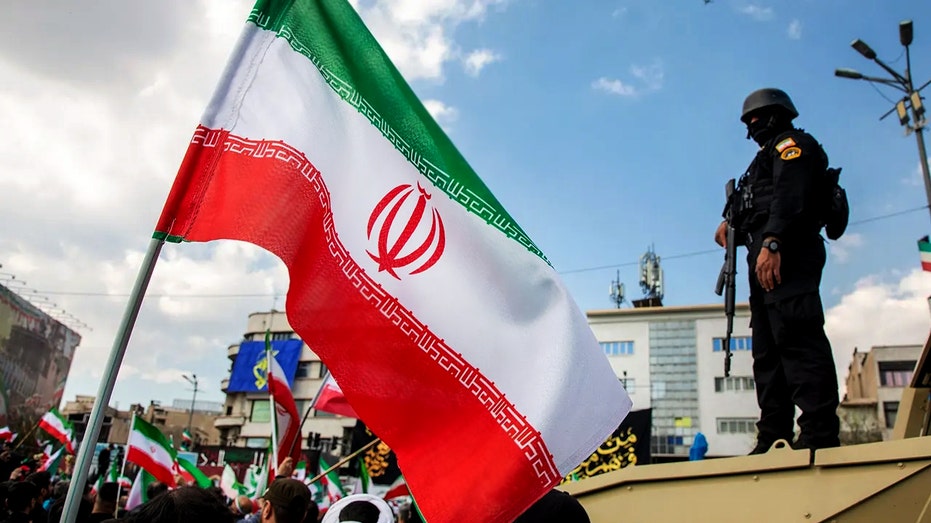
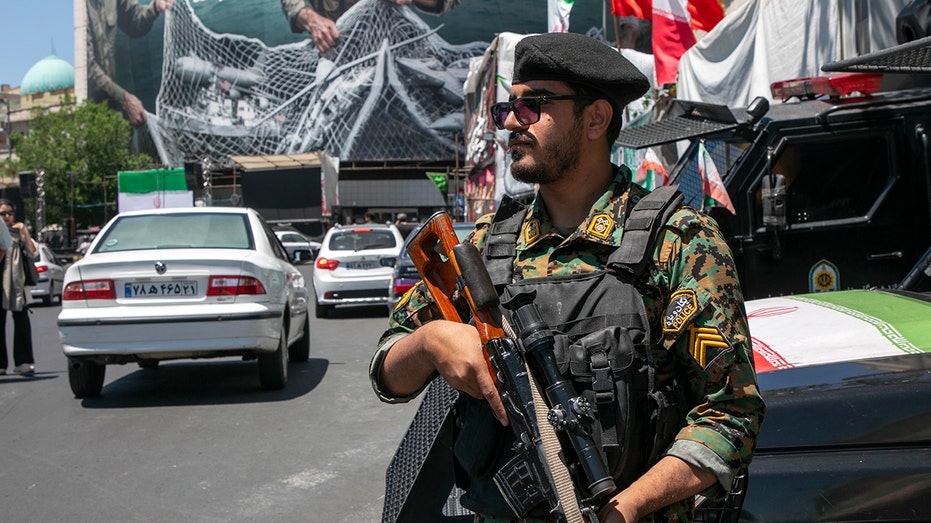
Inside Iran, three young voices described a country where repression is becoming even more visible, the Islamic Revolutionary Guard Corps is expanding its presence on the streets, and ordinary people are struggling to afford basic necessities.

RED CROSS SHARES AUDIO OF IRANIAN CIVILIAN EXPLAINING SITUATION ON THE GROUND IN TEHRAN: 'NO RESPITE'

All three spoke to Fox News Digital through written messages because of security concerns and internet restrictions inside Iran. Their names have been changed to protect their identities.

They described a similar reality: checkpoints across major streets, fear of the Basij, the hardline volunteer militia under the Islamic Revolutionary Guard Corps, and the Revolutionary Guards itself, renewed enforcement of hijab rules, mass layoffs, long lines outside bakeries and a growing sense among young Iranians that the future has disappeared.

"The influence of the Revolutionary Guards always has been present, and everything has operated within their ideological framework. Now, their interference is more obvious and easier to see," Hassan said. "Now the curtain has simply been pulled back."

Milad described a city transformed by security forces.

"The atmosphere in cities and government offices has become much more securitized. Security forces are now visible around almost every major square and intersection, and there are numerous checkpoints throughout the cities," he said. "Individuals affiliated with the security apparatus or the Basij are increasingly being given positions of authority and influence."

At the beginning of the war, Milad said, authorities appeared to ease some social restrictions, including enforcement of hijab rules. But he said that pressure has since returned, adding that the regime is not only targeting opponents, but also silencing supporters who cross political red lines.

IRAN REGIME REPORTEDLY ISSUED NATIONWIDE SHOOT-TO-KILL ORDERS AS PROTEST DEATH TOLL SURGES

"For example, a group staged a sit-in protest against negotiations with the United States," Milad said. "Security forces intervened and told them that they were disrupting public security. They were warned that if they did not leave, they would be arrested."

Ali, a student in Tehran, Iran, said the Islamic Revolutionary Guard Corps control feels more open than ever.

"It can be said that if previously 80% of the country was controlled by the Revolutionary Guard and the rest by the government, now 100% of the country is in the hands of the IRGC," Ali told Fox News Digital. "When you drive through the streets and reach checkpoints, you don’t even dare look them in the eye because they can do whatever they want."

"No one dares get into trouble with people who are members of organizations like the Basij, because they can report your name and have you arrested," he added. "They have become more brutal than ever, and people know that if they take to the streets, the Revolutionary Guards can easily kill them and no one can do anything about it."

Ali said Basij members who once hid their affiliation now display it openly. 

FORMER IRANIAN PRISONERS REVEAL TORTURE HORRORS AS REGIME KILLS PROTESTERS ON SIGHT DURING CRACKDOWN

The accounts come against the backdrop of Iran’s long history of violent crackdowns on dissent. 

Iran International reported that more than 36,500 people were killed during the January crackdown, while Amnesty International described January 2026 as the deadliest period of repression by Iranian authorities in decades and said deaths rose into the thousands.

Milad, who said he witnessed the crackdown, described the impact it had on ordinary Iranians.

"Before the war, we couldn’t even breathe. We couldn’t sleep at night," he said. "The conditions were very difficult for most people who had seen that massacre. After the war, we were able to sleep more easily at night, and we felt a bit more at ease. Now, even though the war is still ongoing, we continue to worry about the families of the martyrs and those who are in prison, under torture, and facing the executioner."

The new war and the U.S.-led pressure campaign that began Feb. 28 have raised hopes among some opponents of the regime that the Islamic Republic could be weakened or even collapse. But the Iranians who spoke to Fox News Digital said that, for now, the result on the ground has been a more visible security state.

US ECONOMIC CHOKEHOLD ON IRAN REACHES PEAK LEVERAGE AS COLLAPSE RISKS EMERGE

The economic pressure also is being felt across daily life.  

Iran already was struggling with inflation, currency collapse, corruption and sanctions before the war. 

Since then, growing economic strain has been reported, with businesses crushed by high prices, supply-chain disruptions, internet blackouts and rising unemployment. Iran’s official statistics center reported annual inflation of 53.7% in April, with food inflation above 115%, according to the Associated Press.

Ali said, many young Iranians see almost no path forward.

"The economic situation has become so bad that almost all industries are on the verge of collapse and are simply trying to survive," he said. "Many companies have laid off workers, including me. Many of my engineering-student friends have also been laid off. Families can no longer financially support their children." 

"I see many more older men and women than before who clearly were not garbage collectors but are now searching through trash," Ali said.

"Almost all of us young people are convinced that we have no future," he added. "At best, if there is anything left from what we earn, we can spend it on going to a café. Buying a phone or clothes has become difficult; buying a car is a dream. Prices have become so high that some days we can barely afford our two main meals and nothing else. Snacks, fruit and similar things are no longer part of life."

Milad described a similar picture, saying layoffs, unpaid salaries and rising utility bills are crushing families.

"The government is trying to collect more money from people through higher taxes. Utility bills for water, electricity and gas have become extremely expensive," he said.

He said bakeries remain crowded not only because of war fears, but because bread has become one of the only affordable foods left.

"Bread has become the main staple on many family tables," Milad said. "Medical costs are extremely high, and many people are afraid to visit a doctor because the costs of medication, tests and treatment are so expensive."

Hassan, however, said the economic pain is bearable only because some Iranians believe it could eventually help bring down the Islamic Republic.

"We believe that with the return of a government that truly represents the people, under the leadership of Crown Prince Reza Pahlavi, economic conditions will improve in the future," he said.

Reza Pahlavi, the son of Iran’s late shah, has lived in exile for decades and has increasingly presented himself as a unifying figure for Iranians seeking a post-Islamic Republic future. His supporters inside and outside Iran argue that any transition should lead to a referendum and a democratic system.

EXILED IRANIAN PRINCE SAYS REGIME ‘VERY CLOSE TO COLLAPSING' AMID NATIONWIDE UNREST

The Iranians who spoke to Fox News Digital warned the Trump administration against negotiating with the regime or easing pressure too soon.

"I would like to tell the Western world that appeasement of the Islamic Republic is futile," Hassan said. "These are dishonest and deceptive people who, according to their religious beliefs, practice taqiyya in order to deceive others and maneuver their way through difficult situations."

"These are not people who can be reformed," he added. "Appeasement of them is harmful to the entire world. It is extremely naive to believe that meaningful negotiations can be conducted with such individuals."

Ali said he believes the clerical regime would give up uranium if it allowed its leaders to stay in power.

"We only hope that the Islamic Republic falls, whether through war or through an agreement," Ali said. "The clerics are far too shameless to fight to the death over uranium. They would be willing to hand over the uranium to the United States if it meant staying in power and continuing to plunder Iran. But they are certainly careful to avoid suffering the same fate as Gaddafi."

His message to Washington was direct.

"The only message I have for the U.S. government is: save the people of Iran from the clerics and free Iran from the Islamic Republic," Ali said.

Milad said many Iranians are watching Trump closely and fear another moment when the West chooses negotiation over the people in the streets.

"Iranian people have hope that the American administration will be strong and stand on their side," he said. "We don’t want another Obama situation. Iranian people and their blood are not oil prices."

"We have one message to the president, and that is to continue," Milad said. "Here in Iran, we no longer say, ‘Obama, Obama, either with us or with them.’ Now we’re saying: ‘Trump, don’t be Obama. You are with us, not with them. President Trump, stay the course.’"

Fox News Digital reached out to Iran’s mission to the United Nations for comment. 
(Auszug von RSS-Feed)

☐ ☆ ✇ Fox News

Iran accelerates execution campaign against anti-regime activists amid internet censorship

veröffentlicht.
Vorschau ansehen

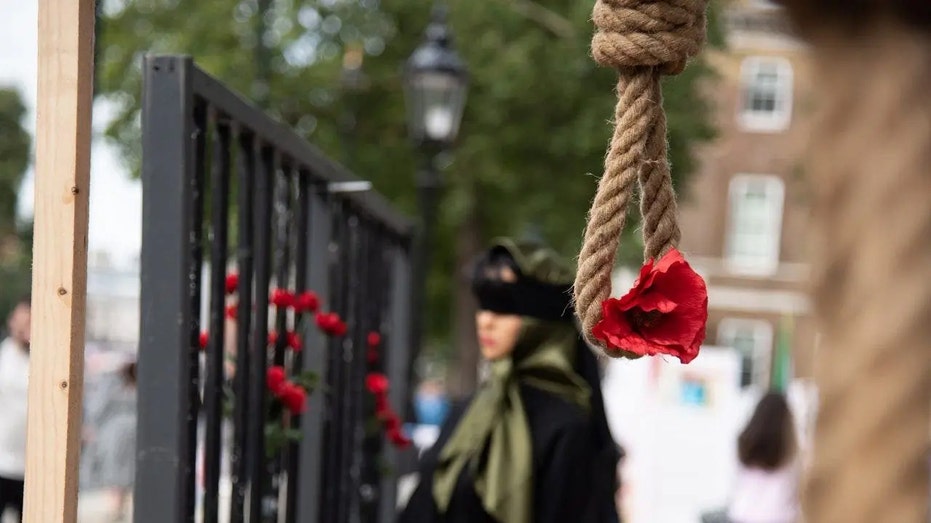
The Islamic Republic of Iran has accelerated its executions of dissidents and activists, with the true number of victims likely obscured by the regime’s internet censorship and blackout.

Ever since the January uprisings against the regime, Tehran has enforced a bloody clampdown against its opponents.

The Iran Human Rights Society has documented 784 executions so far in 2026. A representative from the organization told Fox News Digital that "these figures indicate a rapidly accelerating trend in executions since March," and explained that "in particular, the execution of political prisoners has reached a level not seen in the past 37 years."

'KILLING OFF THE COUNTRY': IRAN EXECUTES DOZENS, ARRESTS 4,000+ IN WAR CRACKDOWN

A State Department official told Fox News Digital that "we are aware of disturbing reports about the recent surge in executions in Iran." The official noted that "we strongly condemn the Iranian regime’s use of executions to punish people for exercising basic human rights, including Iranians peacefully protesting for a better life."

The official said that "for decades, Iranians have been subjected to torture and sham trials resulting in executions and severe punishments, often with coerced confessions as the only evidence presented against them."

According to information provided to Fox News Digital by the Secretariat of the National Council of Resistance of Iran (NCRI) on June 4, the Islamic Republic of Iran executed at least 18 prisoners between May 31 and June 1. These included 12 prisoners hanged on May 31, and an additional six prisoners executed on June 1, one of whom was said to be "hanged in public with utmost brutality."

IRAN REGIME USES WAR TO MASK 'BRUTAL' EXECUTION SURGE AGAINST POLITICAL OPPONENTS

The NCRI has counted a total of 32 executions between March 19 and June 1. These included eight members of Iranian dissident organization People’s Mojahedin Organization of Iran (PMOE/MEK) and 24 participants in Iran’s January 2026 protests.

In documents provided to Fox News Digital, the NCRI said on June 7 that there was "an imminent risk of execution" for five political prisoners in the Sheiban Prison in Ahvaz, four of whom were sentenced to death because they were charged with being members of PMOI/MEK.

Maryam Rajavi, President-elect of the NCRI, posted on X a call for "urgent action" from the U.N. "to prevent the execution."

Days earlier on June 2, following two other executions against January protesters, Rajavi said on X that the "clerical regime has committed another horrific crime in Iran." She called on the U.N. Security Council and European Union "to decisively condemn these criminal executions and take effective action to stop the killing of political prisoners and protesters in Iran."

The Iran Human Rights Society echoed NCRI’s account of 18 recent executions between May 31 and June 1. Their representative explained that despite the internet blackout, they receive reports from "a network of prison sources, prisoners' families, lawyers, and local contacts" and explained that "all reports are reviewed and cross-checked through multiple independent sources before publication." Though they say "internet restrictions make documentation more difficult," they stated they "continue to receive, verify, and document information."

IRAN GOES DARK AS REGIME UNLEASHES FORCE, CYBER TOOLS TO CRUSH PROTESTS

Alp Toker, the director of NetBlocks, a global internet monitor, told Fox News Digital that "internet connectivity in Iran is largely restored but the service that is available remains limited compared to the state of things before the protests and the war this year. For most users, in practice, that means international access is slow with indications of throttling and there's also increased filtering, particularly targeting messaging apps.

"It's been in this limbo state since the restoration with no significant change for better or worse," he said.

However, the Iran Human Rights Society representative noted that the actual number of executions is "almost certainly" higher than the figure they have captured. "The ruling authorities in Iran frequently carry out executions in secret and do not publicly announce many of them," the representative explained. Additionally, the representative added that "a significant number of executions, particularly in remote areas or locations with limited access to information, may remain undocumented or reach us only after a considerable delay."

The representative also noted that the quantity of executions the Iran Human Rights Society documents "has consistently been lower than the actual number carried out."

The United Nations Special Rapporteur on the situation of human rights in the Islamic Republic of Iran, Dr. Mai Sato, did not respond to Fox News Digital’s request for comment on the increased executions in Iran.

On June 20th, up to 100,000 Iranian expats from both sides of the Atlantic are expected to hold a major rally in Paris to urge an end to the executions. More than 100 lawmakers, officials, former heads of state and ministers are also expected to join, according to the NCRI.

(Auszug von RSS-Feed)

☐ ☆ ✇ Fox News

Iranian dissidents seize on Trump remarks about armed resistance, fueling revival of Reagan doctrine

veröffentlicht.
Vorschau ansehen

After President Donald Trump suggested this week that Iranians "would fight back" if they had weapons, Iranian dissidents, military analysts and some Republican lawmakers are openly reviving a once-taboo question: should the West move beyond "maximum pressure" on Tehran and actively support armed resistance inside Iran?

"They have to have guns. And I think they’re getting some guns. As soon as they have guns, they’ll fight like, as good as anybody there is," Trump said in an interview with "The Hugh Hewitt Show," while discussing anti-regime unrest and the Iranian government’s crackdown on protesters.

The comments come as the Iranian regime emerges weakened from weeks of war, while frustration continues to simmer among many Iranians after years of failed protests and violent crackdowns by the Islamic Revolutionary Guard Corps.

LINDSEY GRAHAM URGES US, ISRAEL TO ARM IRANIAN CIVILIANS IN 'SECOND AMENDMENT SOLUTION' TO TOPPLE REGIME

Supporters of a more aggressive approach argue sanctions, diplomacy and unarmed demonstrations have failed to produce meaningful change inside Iran and say the current moment may represent the best opportunity in decades to challenge the regime from within. Critics warn that openly discussing armed resistance could endanger protesters, deepen divisions inside the opposition and risk pushing Iran toward civil war.

The idea of armed resistance echoes aspects of the Reagan Doctrine, the Cold War-era strategy in which the U.S. backed anti-Soviet resistance movements around the world, from Afghanistan to Nicaragua.

"We need to give Iranians the tools now, and they’ll finish the job themselves," Brett Velicovich, founder of Powerus and a former U.S. military and intelligence specialist focused on drone warfare, told Fox News Digital.

"It’s their time to do something. There has never been a better chance."

AS AIRSTRIKES RAIN DOWN ON THE IRANIAN REGIME, CAN A FRACTURED OPPOSITION UNITE TO LEAD IF IT FALLS?

Velicovich described the strategy as "Reagan Doctrine 2.0," updated for the age of drones and decentralized warfare.

"Cheap FPV drones, loitering munitions, and small arms let motivated fighters turn Iran’s streets and mountains into a nightmare for the IRGC," he said. "This isn’t fantasy; it’s asymmetric warfare that works."

He argued that modern drone technology has fundamentally changed the balance between governments and insurgent or resistance movements.

"Drones democratize power," Velicovich said. "The regime’s monopoly on violence ends the day the people get eyes in the sky and precision strike capability."

IRANIAN KURDISH FIGHTERS SAY THEY’RE READY TO STRIKE TEHRAN, WAITING FOR OPENING

Still, even some critics of the Iranian regime caution that the comparison to Cold War proxy movements has limits.

Unlike Soviet-controlled Eastern Europe or Afghanistan in the 1980s, Iran is a highly nationalistic country with a fragmented opposition and deep fears of foreign intervention following decades of conflict across the Middle East.

Still, calls for more direct support for anti-regime forces are increasingly moving into mainstream Republican foreign policy discussions.

Sen. Lindsey Graham, R-S.C., recently called for what he described as a "Second Amendment solution" inside Iran.

"If I were President Trump and I were Israel, I would load the Iranian people up with weapons so they could go to the streets armed and turn the tide of battle inside Iran," Graham said on "Hannity."

The question of who would actually receive support, however, remains deeply controversial.

Some opposition supporters continue to rally around exiled Crown Prince Reza Pahlavi, whose name has surfaced during anti-regime protests inside Iran and who has urged the international community not to give Tehran "another lifeline."

Another group that has acted in various operations against the regime is the controversial People’s Mujahedin Organization of Iran, or MEK, which has long positioned itself as an organized opposition force against the Islamic Republic. The MEK recently posted videos showing its members targeting "regime centers and symbols of crime and repression," in response to the execution of two of its members last month — Hamed Validi and Mohammad (Nima) Massoum-Shahi.

Others point to existing armed or semi-organized anti-regime groups, including Kurdish organizations, Baloch insurgent networks and underground resistance cells operating inside Iran.

Sardar Pashaei, director of the Hiwa Foundation and a former Iranian wrestling champion now living in the United States, warned that publicly discussing arming protesters could itself put lives at risk.

"I think we must be extremely cautious on this issue, especially publicly, because the regime can use it as a pretext to arrest protesters, fabricate cases and even justify executions," Pashaei told Fox News Digital.

IRAN'S INTERNET BLACKOUT HIDING STRIKE DAMAGE AND SUPPRESSING DISSENT, ISRAELI OFFICIALS SAY

"For decades, the Islamic Republic has used accusations of ties to the United States, Israel, or espionage to target dissidents and political prisoners."

Pashaei argued the better approach is supporting Iranian civil society, restoring internet access and backing democratic opposition groups that reflect Iran’s ethnic and political diversity.

The issue became even more sensitive after Trump said during a phone interview with "Fox News Sunday" in early April that his administration had previously attempted to send firearms to Iranian protesters through Kurdish channels, though the effort failed.

IRAN REGIME FACES 'BEGINNING OF THE END' AS EXILED CROWN PRINCE SEES 'GOLDEN OPPORTUNITY'

"We sent guns to the protesters, a lot of them. We sent them through the Kurds. And I think the Kurds took the guns," Trump said.

Several Kurdish groups have denied receiving such shipments.

Pashaei warned that claims of foreign weapons support could deepen divisions inside the opposition while also exposing Kurdish groups to further retaliation from Tehran.

"During the so-called ceasefire period, Kurdish opposition groups were targeted more than 30 times with drone and missile attacks," he said, adding that four young Kurdish Peshmerga fighters were killed, including 19-year-old Ghazal Mowlan.

One source familiar with discussions surrounding Iranian opposition strategy said supporters of a more aggressive approach increasingly believe the current moment presents a rare opportunity to identify, train and support local resistance networks capable of protecting protesters and challenging the regime from within.

The source argued that while Iran spent decades building and cultivating proxy networks across the Middle East, Western governments largely avoided investing in organized anti-regime infrastructure inside Iran itself.

Others warn that empowering armed factions could trigger ethnic fragmentation, civil war or a Syria-style conflict inside Iran.

According to the source, supporters of a more aggressive approach increasingly believe the current moment presents a rare opportunity to identify, train and support local resistance networks capable of protecting protesters and challenging the regime from within.

Whether Washington is willing to move beyond pressure campaigns and sanctions toward something closer to a modernized Reagan Doctrine remains unclear.

For now, Trump’s comments have pushed a once-theoretical conversation into the open, while some argue the current moment may represent the best opportunity in decades to challenge the regime.

(Auszug von RSS-Feed)

☐ ☆ ✇ Fox News

May Day protests across Europe and Asia turn into anti-American, anti-Israel political battlegrounds

veröffentlicht.
Vorschau ansehen

May Day demonstrations across Europe and Asia on Friday revealed how International Workers’ Day is increasingly transforming from a traditional labor rights event into a broader political battleground, where demands over wages, inflation and worker protections are now frequently intertwined with anti-war activism, anti-Israel rhetoric and wider ideological struggles over global power.

From Paris to Istanbul, Madrid, Manila and Seoul, protests often expanded far beyond workplace grievances, with demonstrators linking rising living costs and social inequality to war in the Middle East, U.S. foreign policy and broader anti-capitalist narratives.

Nile Gardiner, senior fellow at the Heritage Foundation, told Fox News Digital that the demonstrations reflected what he described as a ‘troubling moral inversion’.

600 GROUPS WITH $2B IN REVENUE MOBILIZE 3,000 MAY DAY PROTESTS IN ‘RED-BLUE’ ALLIANCE, PROBE FINDS

"These May Day protesters should be demonstrating against the brutal tyranny in Tehran instead of protesting against U.S. military action, and this is an illustration of the complete moral vacuum that exists in Europe today," Gardiner said.

In Paris, May Day protests reportedly escalated into clashes as police used tear gas grenades and forceful arrests after projectiles were thrown during demonstrations, according to publicly circulated social media footage.

Earlier, French labor leaders had focused on inflation, wages and social protections, but parts of the protests also featured anti-war slogans, Palestinian symbolism and criticism of military spending.

MAY DAY PROTESTS TO TAKE PLACE FRIDAY AS AGITATORS ACROSS THE US PUSH 'WORKERS OVER BILLIONAIRES' MOTTO

In Madrid, thousands marched under banners reading "Capitalism should pay the cost of their war," while demonstrators protested stagnant wages, housing shortages and militarism. Placards targeting President Donald Trump and Israeli Prime Minister Benjamin Netanyahu highlighted how international conflict featured prominently alongside domestic labor concerns.

Germany also saw unrest in Munich, where publicly circulated reporter footage showed riot police using batons to disperse radical leftist protesters after pyrotechnics were repeatedly ignited during a revolutionary May Day demonstration. 

Emma Schubart, Research Fellow at the Henry Jackson Society, a London-based think tank, warned that May Day demonstrations increasingly serve as platforms for ideological movements extending beyond labor activism.

"The May Day demonstrations across Europe increasingly feature Islamist elements. Militant anti-war, anti-capitalist rhetoric is now routinely accompanied by Palestinian flags and explicit anti-Israel slogans," Schubart said, adding that far-left activism and Islamist-linked networks are increasingly converging under broader anti-Western narratives.

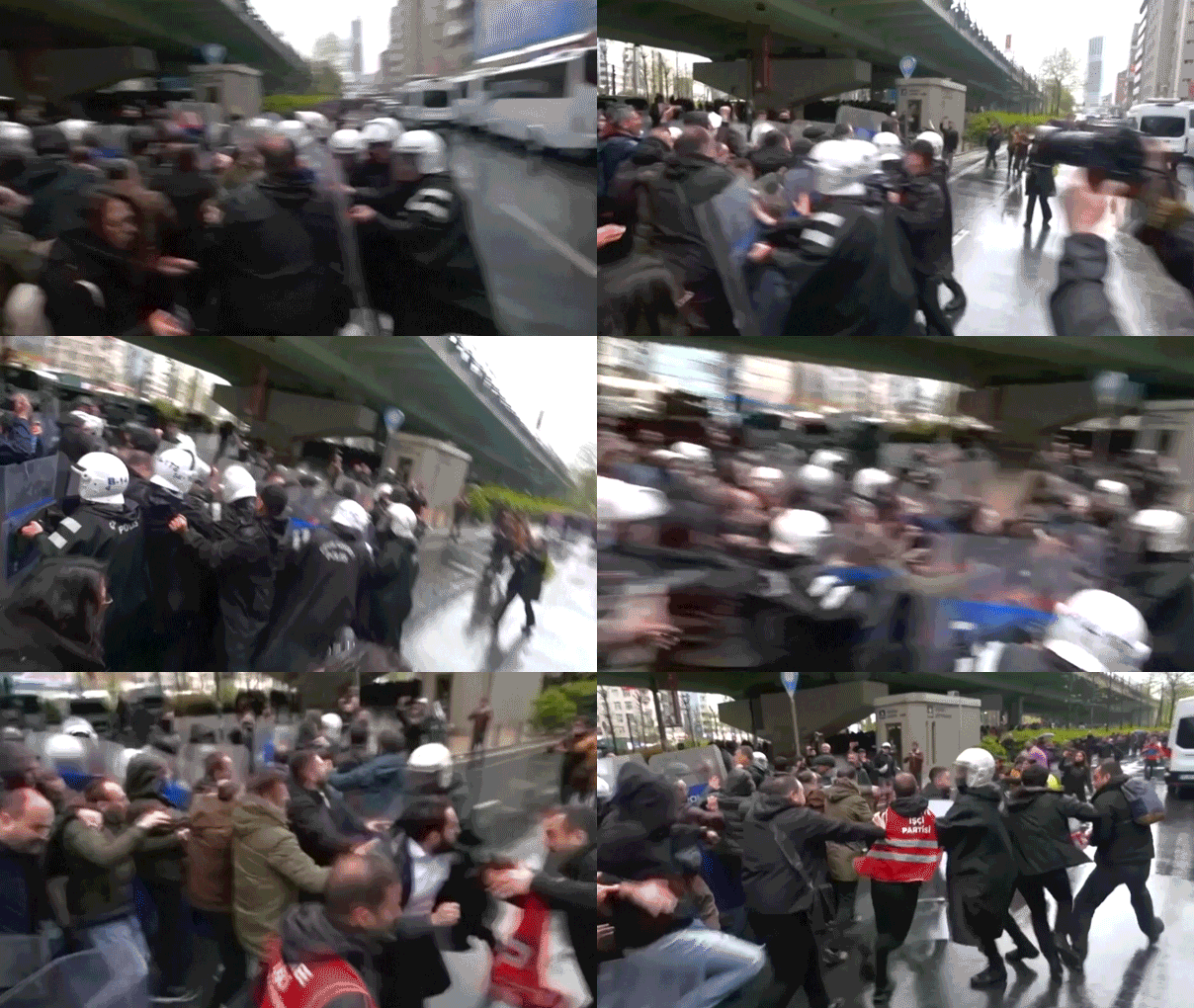
In Istanbul, police blocked leftist groups from marching to the banned Taksim Square, the historic center of Turkey’s labor movement, where demonstrations have long carried symbolic political weight. Protesters attempted to break through barricades and clashed with police as authorities detained some of the protesters.

MORE KEY US ALLIES BLOCK MILITARY FLIGHTS AS IRAN WAR RIFT WIDENS WITH TRUMP

Outside Europe, similar themes emerged across Asia.

In Manila, workers clashed with police near the U.S. Embassy while protesting higher fuel and commodity prices, demanding wage increases and calling for an end to war in the Middle East.

A left-wing labor group paraded a giant effigy depicting Trump, Netanyahu and Philippine President Ferdinand Marcos Jr. as a three-headed monster, symbolically tying domestic hardship to both local and international political leadership.

In South Korea, thousands gathered near Seoul’s Gwanghwamun Square for major labor rallies centered on collective bargaining and worker rights, but speeches also incorporated broader geopolitical messaging. 

Korea Confederation of Trade Unions Chairman Yang Kyung-soo called on demonstrators to "unite with the Iranian and Palestinian workers and people suffering from American imperialist aggression," explicitly connecting labor solidarity to anti-American and Middle East political narratives.

While local priorities varied, from wages in France to labor rights in Seoul, May Day 2026 demonstrated a growing global pattern: labor demonstrations are increasingly becoming arenas for broader ideological and geopolitical confrontation.

"The United States is fighting to defend the free world against tyranny, and yet across Europe and beyond we are seeing protesters direct their outrage at America and its allies instead of the brutal regimes driving so much of this global instability," Gardiner said. "That should deeply concern anyone who cares about the future of Western civilization."

Reuters and the Associated Press contributed to this report.

(Auszug von RSS-Feed)
❌