NEWS 23

🔒
❌
Stats
Es gibt neue verfügbare Artikel. Klicken Sie, um die Seite zu aktualisieren.

☐ ☆ ✇ Fox News

Ukraine races to bolster air defenses as Putin’s strike pause nears end

veröffentlicht.
Vorschau ansehen

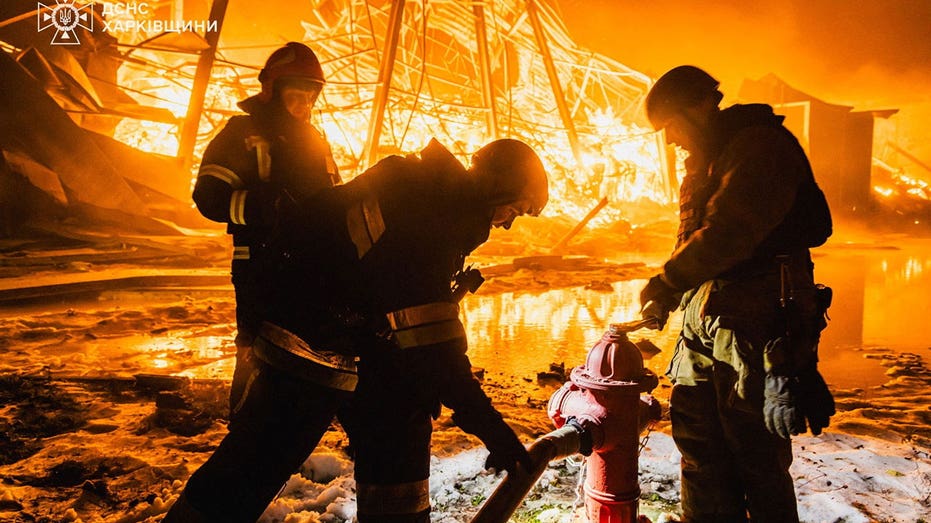
Ukraine is racing to reinforce its air defenses as a brief pause in Russian strikes on Kyiv and other cities approaches its expiration, and military and diplomatic experts warn the move may do little to change conditions on the battlefield and could ultimately strengthen Moscow’s negotiating position.

Earlier Friday, President Donald Trump said at the White House, "I think we’re getting very close to getting a settlement," expressing optimism about the upcoming Russia-Ukraine talks. "Zelenskyy and Putin hate each other, and it makes it very difficult, but I think we have a good chance of getting it settled."

The Kremlin said President Vladimir Putin agreed to a personal request from Trump to halt airstrikes on Kyiv until Feb. 1 to create what it described as favorable conditions for negotiations. Ukrainian officials stressed there is no formal ceasefire.

TRUMP SAYS PUTIN AGREED TO HALT KYIV STRIKES FOR ONE WEEK AMID BRUTAL COLD

As temperatures in Kyiv are expected to plunge to minus-26 degrees Celsius beginning Sunday, President Volodymyr Zelenskyy said Ukraine is moving to strengthen short-range air defenses against drones to protect frontline cities in the south and northeast.

"Protection against Russian drones must be reinforced in our cities, such as Kherson and Nikopol, as well as in the border communities of the Sumy region, where the Russians have essentially set up an ongoing ‘safari’ against civilians," Zelenskyy said on Telegram.

Despite the pause, Russian lawmakers and regional leaders have publicly urged escalation. Russian parliament speaker Vyacheslav Volodin said deputies are calling for the use of more powerful "weapons of retribution," while Chechen leader Ramzan Kadyrov said he opposed negotiations altogether.

Against that backdrop, experts told Fox News Digital the pause appears far more symbolic than transformative.

Vice Adm. Robert S. Harward, a retired Navy SEAL and deputy commander of U.S. Central Command, said the halt in strikes reflects political signaling rather than a military shift.

PUTIN CALLS TRUMP’S PEACE PLAN A ‘STARTING POINT’ AS HE WARNS UKRAINE TO PULL BACK OR FACE 'FORCE'

"It’s symbolic in the sense of the dialogue and where we are in the negotiations," Harward told Fox News Digital. "President Trump wants to illustrate to the U.S. that his relationship with Putin delivers results. This is a validation of that relationship, which could be an indicator of where the overall negotiations are on ending the war."

Carrie Filipetti, executive director of the Vandenberg Coalition and a former senior State Department and U.S. Mission to the United Nations official, said Russia’s agreement should not be misread as a move toward peace.

"While I am certain that Ukrainian civilians welcome any brief pause, they also aren’t holding their breath because Putin’s war machine will not stop until his calculus is changed on the risks of continuing his war," Filipetti said.

TRUMP TOUTS 'TREMENDOUS PROGRESS' BUT SAYS HE'LL MEET PUTIN AND ZELENSKYY 'ONLY WHEN' PEACE DEAL IS FINAL

She added that the short duration of the pause leaves Ukraine exposed.

"Given how short the pause is and the duplicity of Russia saying it agreed to a week-long pause that expires in two days, this does not meaningfully change any conditions on the battlefield," she said.

Harward said Ukraine could face diplomatic consequences once the pause expires.

"The risk to Ukraine is that this further weakens and isolates their role and position in the negotiations," he said.

Zelenskyy has also warned that Ukraine’s ability to defend civilians has been strained by delays in Western funding. He said European allies delayed payments under the PURL weapons purchase program, leaving Ukraine without Patriot air defense missiles ahead of recent Russian strikes that knocked out power across parts of Kyiv.

"This is a critical issue for protecting civilians and Ukrainian cities and Ukraine’s energy infrastructure during the brutally cold winter months," Filipetti said. "As President Zelenskyy has said, there will be no electricity and therefore no heat for civilians if they don’t have enough Patriot missiles to defend against Russia’s ballistic missiles."

Harward noted that the problem extends beyond Ukraine. 

"Air Defense has been in high demand globally, considering the threats from Russia and China," he said. "Resources, expenses and the increased time to deliver and implement the capabilities add to the challenge."

On whether the pause could open the door to broader de-escalation, both experts expressed caution.

"This tactical pause only serves to reinforce Russia’s negotiating position," Harward said. "Putin is showing the world that he is willing to listen and respond. In return, he’ll want more support of his position and demands."

"Only time will tell," Filipetti said. "Diplomacy can always appear fruitless until there is a real deal. If this short pause, delivered by President Trump's continued engagement and pressure on Putin, can be used to build additional progress in the trilateral talks, that would be a very positive outcome."

Reuters contributed to this report.
(Auszug von RSS-Feed)

☐ ☆ ✇ Fox News

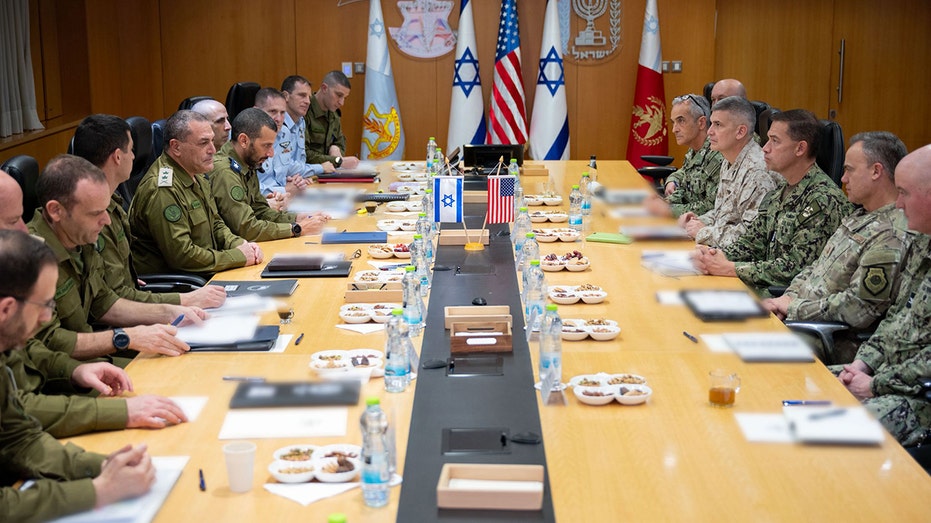
Trump admin labels Israel 'model US ally' ahead of major military aid talks

veröffentlicht.
Vorschau ansehen

Last week, Secretary of War Pete Hegseth released the 2026 National Defense Strategy (NDS), a Pentagon blueprint that elevates Israel as a "model ally" and translates President Donald Trump’s national security doctrine into concrete military policy.

"Israel has long demonstrated that it is both willing and able to defend itself with critical but limited support from the United States. Israel is a model ally, and we have an opportunity now to further empower it to defend itself and promote our shared interests, building on President Trump’s historic efforts to secure peace in the Middle East," the NDS states.

The document is now influencing parallel debates over the future of U.S. security assistance to Israel and whether the next Memorandum of Understanding (MOU) should continue delivering traditional U.S. military aid to Israel amid dissenting voices that portray the alliance as a burden rather than a strategic asset.

DIRECT AID TO ISRAEL SHOULD BE PHASED OUT TO 'REDUCE US LEVERAGE,' INFLUENTIAL CONSERVATIVE GROUPS ARGUE

According to the strategy, Israel proved its ability and willingness to defend itself following the Oct. 7 attacks, demonstrating that it is not a passive partner but an operational force that supports U.S. interests in the region. The strategy emphasizes empowering capable allies rather than constraining them, building on President Trump’s earlier push for regional integration through the Abraham Accords.

Jonathan Ruhe, director of foreign policy at the Jewish Institute for National Security of America, said the strategy reflects a broader American shift toward partnerships that strengthen both U.S. security and domestic industry.

"U.S. defense assistance to Israel in the MOU is spent in dollars here in America to support our industry," Ruhe told Fox News Digital. "And like in the national security strategy, it then enables Israel to go and do more to protect U.S. interests."

He said a future agreement would likely extend beyond funding alone. "A new MOU would also likely be broader and include things that are more 50-50 partnership, like joint research and development, co-production, intelligence sharing and things like that to reflect the changing partnership going forward," Ruhe said.

The strategy also highlights the importance of revitalizing the American defense industrial base, noting that allies purchasing U.S. systems help strengthen domestic production while enabling partners to shoulder greater responsibility for regional security.

Avner Golov, vice president of the Israeli think tank Mind Israel, said the document makes clear that Israel is viewed not merely as a recipient of aid: "Israel is in the fight. We are protecting ourselves by ourselves. We just need the tools to do that. And by doing so, we enhance not only America’s standing in the Middle East, but also worldwide and contribute to the American economy."

That framing comes as Israel and the United States prepare for negotiations over the next 10-year MOU, which governs U.S. military assistance to Israel. The current agreement, signed in 2016, provides $3.3 billion annually in foreign military financing, along with $500 million a year for missile defense cooperation.

The debate follows tensions during the Biden administration, when the White House paused the delivery of certain U.S. weapons to Israel in May 2024, including a shipment of 2,000-pound bombs. At the time, Netanyahu warned that Israel "will stand alone" if Washington halted weapons deliveries, reflecting concern that limits or delays in U.S. military support could undermine Israel’s readiness and deterrence. 

Experts have noted that U.S. leaders have not always approved every Israeli weapons request and that roughly 70% of Israel’s military imports come from the United States, underscoring the strategic calculus behind Prime Minister Netanyahu's recent push for greater independent production.

Golov criticized that approach, arguing it risks prioritizing optics over readiness. "I believe that is a short-term vision," Golov said. "In the long term, Israel must first be prepared for the next round of escalation. If we are not ready, we will face another war. If we are prepared, perhaps we can deter it."

PENTAGON WARNS FUTURE WARS MAY HIT US SOIL AS 'DIRECT MILITARY THREATS' GROW

"Israel must remain the strongest army in the region, and that is also a fundamental American interest," Golov said.

Ruhe said the debate reflects lessons learned from nearly two years of war. "You’ve got this sort of topsy-turvy world now where the Israelis are saying we don’t want to take any more U.S. money, and the Americans are saying, no, you’re going to take our money," he said.

According to Ruhe, the conflict exposed vulnerabilities created by heavy dependence on U.S. supply chains and political delays.

"The war of the last two years showed that Israel can’t afford to be as dependent on the U.S. or continue to maintain the same defense partnership that it has because that creates a dependence," he said. "Israel becomes vulnerable to U.S. shortages in weapons output or politically motivated embargoes and holdups that can impact Israel’s readiness."

At the same time, Ruhe noted that Israel remains reliant on the United States for major platforms.

"Even Israel will say we’re utterly dependent on the U.S. for those big-ticket platforms," he said, pointing to aircraft such as the F-15 and F-35 that Israel has already committed to purchasing.

For that reason, Ruhe argued that maintaining stable funding under the next MOU may be the most practical path forward.

"It’s actually much easier for Congress just to go ahead and approve that money," he said, explaining that predictable funding reduces annual political battles on Capitol Hill.

TRUMP REWRITES NATIONAL SECURITY PLAYBOOK AS MASS MIGRATION OVERTAKES TERRORISM AS TOP US THREAT

Golov said Israel’s long-term objective should not be reducing ties with Washington, but deepening them. "I don’t want to reduce dependency," he said. "I want to increase contribution to America."

He described the emerging vision as a fundamental shift in how the alliance is structured. "We are moving from a 20th-century aid model to a 21st-century strategic merger," Golov said. "Israel is the only partner that delivers a 400% return on investment without asking for a single American soldier."

Golov said the proposed framework is built around three pillars: an industrial defense ecosystem, a joint technology ecosystem and a regional ecosystem connecting Israeli innovation, Gulf infrastructure and American power.

He emphasized that maintaining U.S. security assistance during the transition period is critical.

"We need a final ten-year ‘bridge’ with the current security aid MOU," Golov said. "A sudden cut would be a dangerous signal of American retreat to our enemies and may hinder IDF preparedness."

"I don’t know who the next president of the United States will be," he added. "This is where our enemies can read it in a very dangerous way."

(Auszug von RSS-Feed)

☐ ☆ ✇ Fox News

China infiltrates key Pacific territory of Micronesia with infrastructure projects as US urged to act

veröffentlicht.
Vorschau ansehen

FIRST ON FOX: China’s expanding push into the Pacific Islands is raising alarms among experts, who warn that Beijing is quietly working to establish a foothold in territory long viewed as vital to American defense.

Rather than deploying troops or building overt military bases, experts say China is using infrastructure projects, political influence and economic leverage to gain access to strategically sensitive areas across Micronesia, a region tied to the United States through decades-old security agreements.

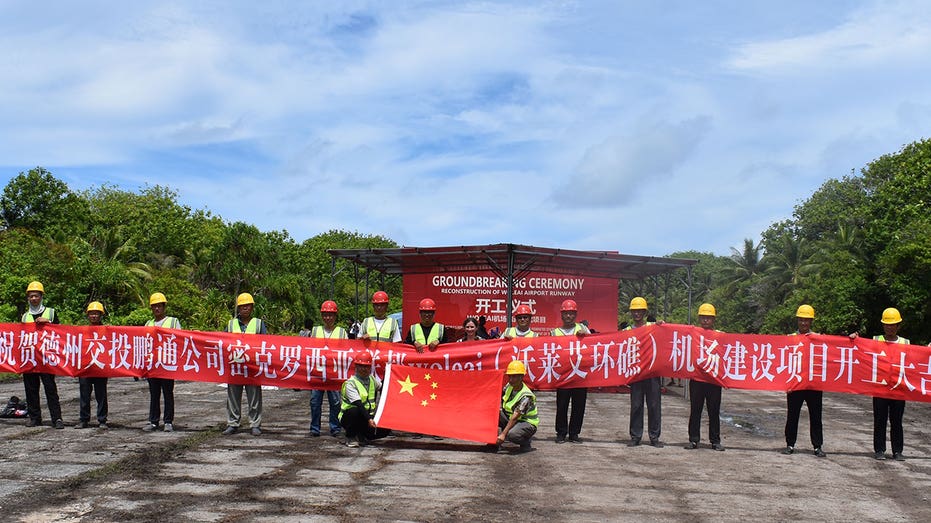
Fox News Digital has learned that a Chinese-backed runway on the island of Yap is due to be officially opened during a handover ceremony on Feb 9. The president of the Federated States of Micronesia is expected to attend, along with representatives from the Chinese company involved in the project.

One of the experts tracking the developments, Foundation for Defense of Democracies (FDD) senior fellow Cleo Paskal, traveled to the Federated States of Micronesia to see them firsthand. She told Fox News Digital she spent four days sleeping on the open deck of a Chinese-donated cargo ship in order to witness a Chinese company breaking ground on a project to rehabilitate a World War II Imperial Japanese runway.

NATIONAL SECURITY EXPERTS SOUND ALARM OVER CCP-LINKED LAND OWNERSHIP NEAR US MILITARY BASES: 'UNTHINKABLE'

"It’s not a huge runway, but what it does is it gets China in the door and on the ground in a very strategic location," Paskal said.

The project is located in the state of Yap, a remote east-to-west island chain that sits along key maritime and air routes connecting Hawaii, Guam and East Asia. U.S. military planners have long considered Yap one of the most strategically important locations in the Pacific.

Paskal said the same Chinese company involved in the runway is now working on another major infrastructure project on Yap: the reconstruction of a bridge on the main island.

"At the same time, because of how strategic it is, Secretary Hegseth announced not that long ago about $2 billion worth of defense infrastructure investment for Yap," she said. "Now, when he says Yap, what he means is the main island of Yap."

According to Paskal, that distinction matters.

"The story here is that the Department of War is focused on the main island, but, from what I’ve seen, there are no plans for the rest of the island chain," she said. "Meanwhile, the Chinese are using other entry points into the political and economic system in order to start to break open access to Yap."

She described China’s approach as fundamentally different from Washington’s.

"So it’s not just a physical kinetic infrastructure operation," Paskal said. "It’s also a political warfare operation, whereas the U.S. is focusing more just on a very narrow band of the kinetic map."

CHINA’S MISSILE SURGE PUTS EVERY US BASE IN THE PACIFIC AT RISK — AND OFFICIALS SAY THE WINDOW TO RESPOND IS CLOSING

The geography at stake has shaped American security strategy for generations.

During World War II, the lagoon at Ulithi, part of the Yap island chain, served as the largest U.S. naval base in the world, hosting hundreds of American warships as the military prepared for operations against Imperial Japan.

That history, Paskal said, helps explain why the region remains so sensitive today.

Under the Compact of Free Association, the United States retains exclusive defense rights in Micronesia. The agreements allow Washington to deny military access to other powers, establish defense facilities and maintain strategic control, while granting Micronesian citizens the right to live and work in the United States and serve in the U.S. military. The Compact creates such deep ties that Micronesia is considered part of the U.S. domestic mail system.

The compacts were designed after World War II to ensure Pacific islands once controlled by Japan could never again be used as launch points for attacks against the United States.

But Paskal warned that China is finding ways to work around, and potentially undermine, those arrangements.

She said U.S. officials often focus on visible construction sites while underestimating the broader political campaign that enables Chinese access in the first place. This includes cultivating ties with national leaders, engaging local officials such as customs and immigration officers and securing contracts through regional development banks in order to place Chinese companies and personnel on the ground.

According to Paskal, Chinese firms are often willing to absorb financial losses in exchange for long-term strategic positioning.

CHINA QUIETLY BUILDS WORLDWIDE SPACE NETWORK, ALARMING US OVER FUTURE MILITARY POWER

The concern is heightened by political shifts within Micronesia itself. While states such as Yap have historically been more resistant to Chinese engagement, the national government has grown closer to Beijing in recent years.

Former President of the Federated States of Micronesia David Panuelo warned in a March 9, 2023, letter that China was engaging in political warfare, including alleged bribery and pressure campaigns. He later lost his re-election bid, while the current government is viewed as more receptive to China.

When asked by Fox News Digital about China’s activities in Micronesia, a spokesperson for the Chinese Embassy in Washington said, "I am not aware of the specifics."

The spokesperson emphasized that China views Pacific Island Countries (PICs) as partners in development and denied any geopolitical intent.

"China always respects the sovereignty and territorial integrity of PICs," the spokesperson said, adding that Beijing has "never interfered in the internal affairs of PICs, never attached any political strings, and never sought any geopolitical self-interest."

Paskal said this characterization is not accurate, pointing to what she described as China’s targeted efforts to interfere with the internal decisions of three Pacific Island countries — Palau, the Marshall Islands and Tuvalu — to recognize Taiwan, including explicitly attaching support to derecognition.

The spokesperson’s statement added that the South Pacific should be "a stage for cooperation, rather than an arena for vicious competition" and insisted China’s engagement does not target any country.

For U.S. security experts, however, the concern is not a single runway or bridge, but the gradual erosion of strategic access in a region that has underpinned American defense for more than 80 years.

China expert Gordon Chang told Fox News Digital, "We lost so many American lives in World War Two, taking these islands from the Japanese. And now we are letting China dominate them. This is just wrong. I can't, I get angry when I think about this. But the important point here is that we have the power to stop this," he said.

"The three compact states are our closest military allies, our closest allies full stop. We said that again. The three complex states in the Western Pacific are our closet allies. Guam is actually part of the United States. So we have the power to stop this and we're not doing that. And this is now on us, a strategic failure, a failure to understand what China is doing. I hope that the administration starts to understand the significance of what's occurring and moves to block Chinese infiltration of the Western Pacific."

As Paskal warned, China’s campaign in the Pacific is unfolding not through force, but through influence, access, patience and presence.

Neither the White House nor the Department of War responded to requests for comment from Fox News Digital.

(Auszug von RSS-Feed)

☐ ☆ ✇ Fox News

How Israel’s West Bank security realities are reshaping the two-state debate

veröffentlicht.
Vorschau ansehen

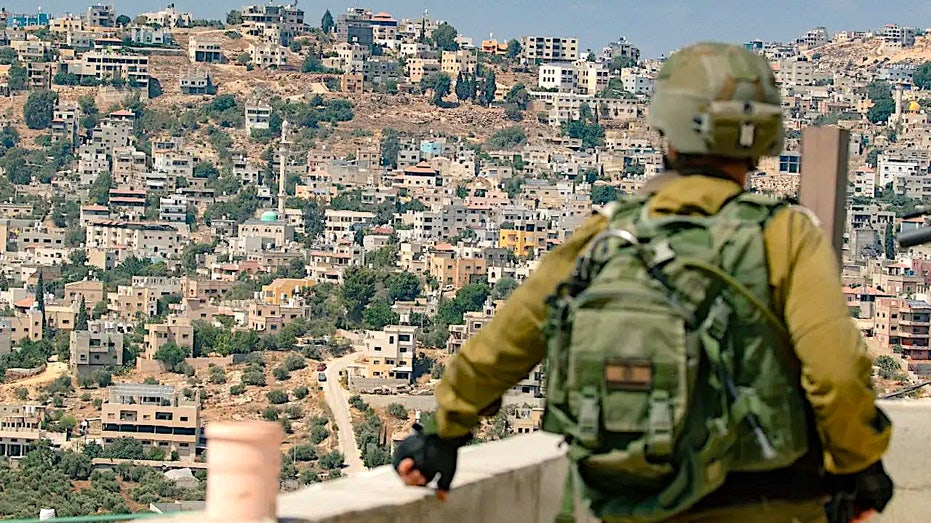
The Israel Defense Forces conducted approximately 80 brigade-level counterterrorism operations over the past year in the West Bank — known to Israelis as Judea and Samaria — neutralizing hundreds of terrorists and seizing more than 1,300 weapons, according to data released by the military.

The IDF said overall Palestinian terrorist activity in the area declined sharply in 2025, with incidents down 78% compared to the previous year. Attacks involving firearms dropped by 86%, the data showed.

Security remains essential in Israel’s ancient heartland, home to more than 500,000 Jews and up to 3 million Palestinians, and is at the center of intense political and diplomatic debate. Many Israeli officials argue that Jerusalem must assert sovereignty over the territory. 

TRUMP LAUNCHES PHASE 2 OF GAZA PEACE PLAN — BUT HAMAS DISARMAMENT REMAINS THE REAL TEST

Under the 1993 Oslo Accords, brokered during the Clinton administration, the West Bank was divided into three areas: Area A, under full Palestinian control; Area B, under Palestinian civil authority and Israeli security control; and Area C, under full Israeli authority.

A 2020 plan by the Trump administration, known as "Peace to Prosperity," envisioned Israeli annexation of parts of Judea and Samaria but was shelved in favor of the Abraham Accords, which normalized Israel’s relations with four Arab countries. In July 2024, the Knesset plenum overwhelmingly rejected the establishment of a Palestinian state, and in July 2025, approved a declaration calling on the government to apply sovereignty in Judea and Samaria as well as the Jordan Valley, something Vice President JD Vance described as a "very stupid political stunt," when asked his thoughts on the vote.

On a visit to Israel, he said, "The West Bank is not going to be annexed by Israel… The policy of the Trump administration is that the West Bank will not be annexed by Israel. That will continue to be our policy. And if people want to take symbolic votes, they can do that, but we certainly weren't happy about it."

VANCE REBUKES ISRAEL ON 'VERY STUPID' VOTE TO ANNEX WEST BANK

Focusing on the national security significance of the area, Lt. Col. (Ret.) Jonathan Conricus, a former IDF international spokesperson and now a senior fellow at the Foundation for Defense of Democracies, told Fox News Digital that fundamental principles of warfare apply to the area.

"High ground, or elevated terrain, remains critical and extremely important in defending a country, its people and its sovereignty," Conricus said. "I cannot identify any credible professional military assessment that would suggest it is wise for Israel to allow a hostile entity to dominate high terrain that controls, by line of sight and fire, most of modern Israel west of the 1949 armistice line, where 80% of Israel’s GDP and 70% of its population reside."

WALTZ HAILS ‘NIGHT-AND-DAY’ MIDDLE EAST SHIFT AS TRUMP’S GAZA PLAN RESHAPES REGION

Conricus said that no Israeli government could relinquish military control over the area without endangering the most basic security of the State of Israel.

He emphasized that the area defines Israel’s eastern border and noted that, while Israel currently maintains strategic peace with Jordan, the kingdom remains unstable and vulnerable to both internal and external pressures.

"It could be jihadist elements, the Muslim Brotherhood, Hamas or the Iranian regime," he said. "Israel has to have an eastern border that is a natural barrier. The Jordan River is a natural barrier that limits the movement of troops, tanks and vehicles, and provides a border that is defensible," he said.

ISRAEL FM ACCUSES PALESTINIAN AUTHORITY OF AIDING TERROR WITH ‘PAY-FOR-SLAY’ AFTER DEADLY ATTACK

Dan Diker, president of the Jerusalem Center for Security and Foreign Affairs, pointed to the concept of defensible borders that emerged after the 1967 Six-Day War.

"As a result, Israel gained a major defensive position and strategic depth it had never previously possessed," Diker said, noting that Israel had been only nine miles wide at its narrowest point in the north.

After the Hamas-led Oct. 7, 2023, massacre, Diker said its strategic importance has increased amid concerns that a similar large-scale attack could occur there, given the widespread flow of weapons.

"Although we control between 60% and 75% of the region, Iran has been penetrating the Jordanian border," he said, adding that Hamas incitement has energized jihadist networks.

Yishai Fleisher, international spokesman for Hebron — the cradle of Jewish civilization located in Judea — told Fox News Digital that the vast majority of events described in the Bible took place in Judea and Samaria.

Hebron, he said, is home to the Tomb of the Patriarchs and Matriarchs, while Jerusalem is where the two Jewish Temples stood and where King David reigned. In Bet El, the Biblical account of Jacob’s dream of the ladder took place.

"The reason we have national aspirations in the Land of Israel is because of our history," Fleisher said. He also cited an initiative to rename Route 60 — which runs through many Biblical cities — the "Biblical Highway."

Earlier this month, IDF troops were dispatched to the Shavei Shomron Junction following reports that dozens of masked Israeli suspects had vandalized property in the area. Several Palestinian vehicles were torched, and two Palestinians were injured. A day later, IDF troops were dispatched to the area of Jalud following reports that Israeli civilians had vandalized a local school. In a separate incident in the Bizzariya area, several Palestinian vehicles were set on fire and property was damaged.

In 2025, the IDF recorded an increase of approximately 27% in anti-Palestinian crimes.

Governor of Binyamin and Chairman of the Yesha Council Yisrael Ganz told Fox News Digital that Judea and Samaria has been in a state of war since Oct. 7. Over the past year, he said, citing Shin Bet data, there were more than 4,000 attempted attacks against Israelis.

UN AMBASSADOR WALTZ REVEALS TRUMP'S MIDDLE EAST PEACE PLAN IS ‘THE ONLY WAY FORWARD’

Ganz cited former Shin Bet head Yoram Cohen, who said only 1.5% of Shin Bet cases involve Jews, while roughly 80% focus on Arab terrorism.

"Yes, there are incidents of violence, but the number of Jews who attack Arabs is negligible," Ganz said, condemning extremist youth as a small and unrepresentative minority.

Ganz argued that the absence of Israeli sovereignty creates a legal gray zone that enables extremism.

"When there is governance, security and economic opportunity, there is no room for anarchy or violence," he said, envisioning Judea and Samaria as "the Israeli Tuscany."

Former Israeli Ambassador to the United States Michael Oren told Fox News Digital that the two-state solution was never viable but rather a diplomatic reflex.

"The Palestinians hold the world record for a people who have been offered a two-state solution and have rejected it," Oren said. "They rejected it in 1937, the British offer in 1947, the American-Israeli offer in 2001, and the subsequent offer in 2008."

According to polls, Oren said, most Palestinians oppose a two-state solution and support the Oct. 7 attacks.

"Rather, the two-state solution is viewed as an interim stage toward a one-state solution," he said, a phrase often used as a euphemism for the eventual destruction of Israel through demographic change.

While acknowledging Palestinian self-rule in Areas A and B, Oren said a fully sovereign Palestinian state is impossible.

"It could not have control over its borders, nor control over strategic affairs, such as entering a defense pact with Iran. It will never be a classic sovereign state, but it could be more than what they have today," he said.

While a two-state solution once seemed inevitable, Dan Shapiro — who served as U.S. ambassador to Israel under President Barack Obama and as deputy assistant secretary of Defense for the Middle East under President Joe Biden — told Fox News Digital that it has not been viable for many years and may now be harder to envision than ever, particularly in the aftermath of Oct. 7.

ISRAEL CALLS UN PUSH FOR PALESTINE STATEHOOD A ‘CHARADE,’ WARNS OF ‘CONSEQUENCES’ FOR RECOGNITION MOVES

Still, Shapiro said, the framework remains a fixture of Middle East diplomacy due to the lack of viable alternatives for resolving the conflict between two peoples living in one land, each with legitimate claims to a homeland.

"President Trump includes a credible pathway to a Palestinian state in his 20-point plan to stabilize Gaza and remove Hamas from power. Presidents Biden and Trump have both viewed progress toward a Palestinian state as part of the formula to achieve Saudi normalization with Israel," Shapiro said.

"None of this means it can happen soon, or perhaps at all. If it ever does, it will take longer and look different from earlier efforts. It is not a copy-and-paste of ideas from the Oslo era. But that credible pathway to a Palestinian state — one that would live peacefully alongside a secure Israel — difficult as it is, remains relevant," he added.

Shapiro noted that even Israel’s current government — the most right-wing in the country’s history and one that includes multiple proponents of annexation — has stopped short of applying sovereignty across the West Bank, a sign, he said, that the political and diplomatic costs remain too high.

"President Trump has announced that it will not happen because he promised Arab states — the same ones he does business with and relies on to help stabilize Gaza — that it will not happen, and Netanyahu will not oppose him on it," Shapiro said.

Shapiro said that preserving the possibility of establishing a Palestinian state on some portion of the territory — even if it appears distant and would require major changes in Palestinian leadership and society — has remained relevant, even under Israeli governments that profess to oppose any two-state outcome. 

(Auszug von RSS-Feed)

☐ ☆ ✇ Fox News

Trump says Iran called 'numerous' times to make deal as carrier enters Middle East waters

veröffentlicht.
Vorschau ansehen

President Donald Trump said Iran appears to be looking to negotiate with the U.S. amid a growing military buildup in the Middle East.

In a Monday interview with Axios, Trump suggested that Tehran had reached out on "numerous occasions" and "want[s] to make a deal."

"They want to make a deal. I know so. They called on numerous occasions. They want to talk," the president told the outlet.

According to U.S. officials, also cited by Axios, any potential agreement would need Tehran to remove all enriched uranium, cap its long-range missile stockpile, a change in support for regional proxy forces, and cease independent uranium enrichment, terms Iranian leaders have not agreed to.

ISRAELI UN AMBASSADOR SENDS STARK WARNING TO IRAN AMID GROWING UNREST

Trump also described the situation with Iran as "in flux," and pointed to the arrival of what he called "a big armada next to Iran. Bigger than Venezuela," referencing the recent deployment of U.S. naval assets.

As previously reported by Fox News Digital, the USS Abraham Lincoln aircraft carrier entered CENTCOM waters in the Indian Ocean on Monday amid increasing threats from Iran, a senior U.S. official said.

Trump had told reporters Jan. 21, "We have a big flotilla going in that direction, and we’ll see what happens. We have a big force going towards Iran. I’d rather not see anything happen, but we’re watching them very closely."

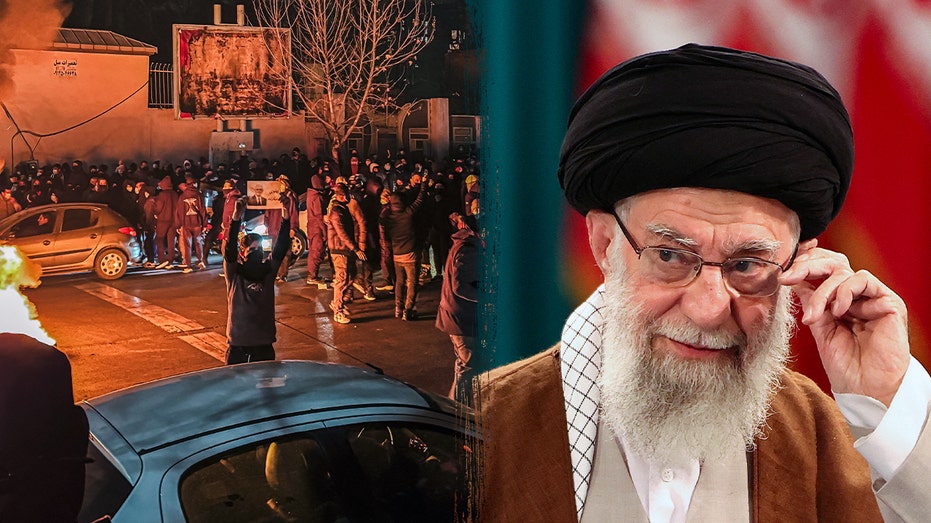
The U.S. military buildup comes amid widespread unrest inside Iran following protests that began Dec. 28.

SECRET SERVICE AWARE AFTER IRANIAN STATE TV AIRS TRUMP THREAT FEATURING PHOTO OF BUTLER ASSASSINATION ATTEMPT

According to a recent report from Human Rights Activists News Agency (HRANA), the confirmed death toll from the protests has reached 5,848, with an additional 17,091 deaths under investigation.

Supreme Leader Ayatollah Ali Khamenei has been sheltering in a fortified underground facility, according to Iran International.

Trump is expected to hold further consultations this week, Axios said, before adding that White House officials said an attack is still on the table.

Fox News Digital has reached out to the White House for comment.

(Auszug von RSS-Feed)

☐ ☆ ✇ Fox News

Chinese hackers reportedly breached phones at 'heart of Downing Street' in global spy campaign

veröffentlicht.
Vorschau ansehen

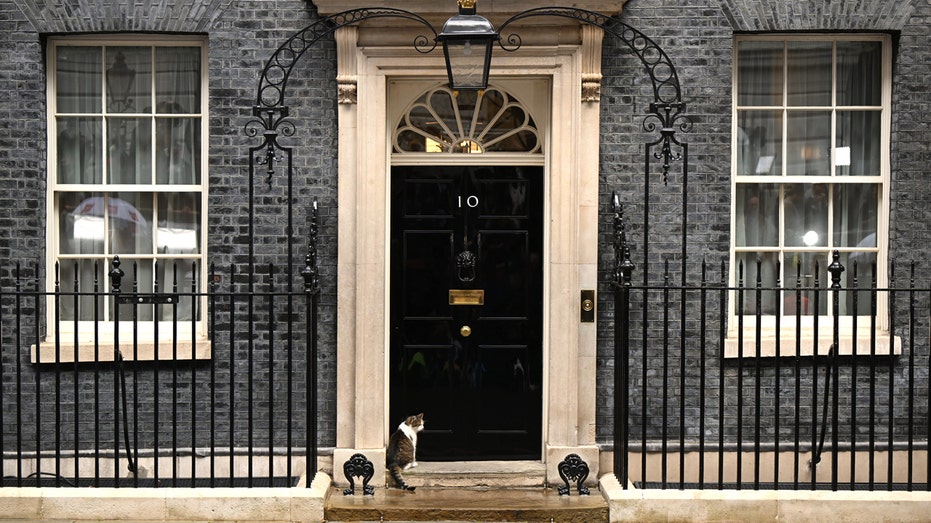
Chinese state-linked hackers breached mobile phones at "the heart of Downing Street" amid a global cyber-espionage campaign over several years targeting telecommunication networks, according to reports.

U.S. officials first alerted its allies in 2024 after finding out that hacking groups had gained access to telecom companies around the world, according to The Associated Press.

The campaign reportedly targeted multiple countries, including the U.S. and the other members of the Five Eyes intelligence alliance: Australia, Canada and New Zealand.

The breaches allegedly gave China access to the phone data of millions and the possible ability to eavesdrop on calls, read text messages and track users’ locations.

EX-TRUMP DHS OFFICIAL SOUNDS ALARM OVER NATIONAL SECURITY THREAT WITHIN CRITICAL US INDUSTRY

The hackers also had the ability to record calls "at will" according to Anne Neuberger, who was a deputy U.S. national security adviser between January 2021 and January 2025, The Telegraph reported.

Neuberger said that the "Chinese gained access to networks and essentially had broad and full access," giving them the capability to "geolocate millions of individuals, to record phone calls at will."

U.S. intelligence agencies believe the breaches date back to at least 2021, but they were only identified and disclosed by U.S. authorities in 2024.

SECRET ROOM TO BE BUILT AT CHINESE EMBASSY NEAR CABLE LINES, SPARKING WIDESPREAD ESPIONAGE FEARS

In 2024, The Associated Press reported that U.S. federal authorities urged telecommunication companies to boost network security. The guidance, issued by the FBI and the Cybersecurity and Infrastructure Security Agency, was to help root out the hackers and prevent similar attacks in the future.

A joint cybersecurity advisory was issued in August 2025, with the U.S. National Security Agency (NSA) and allied partners warning that Chinese state-sponsored actors were targeting networks globally.

"The malicious activity outlined in the advisory partially overlaps with cybersecurity industry reporting on Chinese state-sponsored threat actors referred to by names such as Salt Typhoon," an NSA release said.

In the U.K., officials raised concerns that senior government figures may also have been exposed. One source told The Telegraph that the breach went "right into the heart of Downing Street."

MASSIVE TELECOM BUST IN MAJOR CITY IS ‘WAKE-UP CALL’ AS FOREIGN ADVERSARIES THREATEN US SECURITY: EXPERTS

Similarly, The Telegraph was told that there were "many" different hacking attacks on the phones of Downing Street staff and across wider government, especially when Rishi Sunak was prime minister between 2022 and 2024.

Yuval Wollman, a former Israeli intelligence chief, also told The Telegraph that Salt Typhoon was "one of the most prominent names" in the cyber-espionage world.

"While much of the public reporting has focused on U.S. targets, Salt Typhoon’s operations have extended into Europe, the Middle East and Africa, where it has targeted telecoms firms, government entities and technology companies," Wollman of cybersecurity platform CyberProof added.

In the past, China’s foreign ministry dismissed the claims as "baseless" and "lacking evidence," according to The Telegraph.

Fox News Digital has reached out to Downing Street for comment.

(Auszug von RSS-Feed)

☐ ☆ ✇ Fox News

Russia reportedly slams Trump’s Golden Dome as 'provocative' as trillion-dollar shield takes shape

veröffentlicht.
Vorschau ansehen

Russia criticized the U.S.’ proposed Golden Dome missile defense system Monday, warning it could destabilize global nuclear deterrence, according to reports.

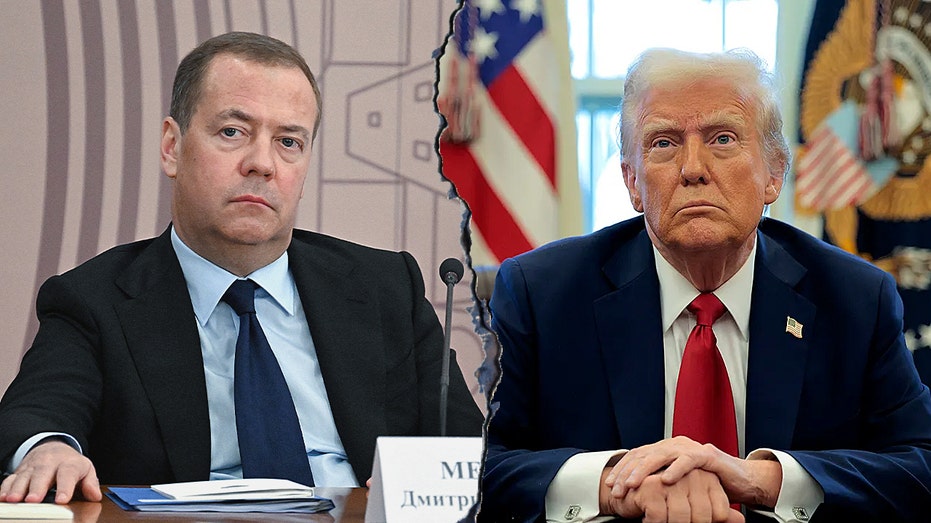
According to TASS, Deputy Chairman of the Russian Security Council Dmitry Medvedev told Kommersant newspaper that the ambitious project is extremely "provocative."

"Problems in the strategic sphere resulting from destabilizing U.S. actions only continue to grow. It is enough to recall the highly provocative anti-missile project ‘Golden Dome for America,’" he said, TASS reported.

"It fundamentally contradicts the assertion of the inseparable interrelationship between offensive and defensive strategic arms, which, by the way, was enshrined in the preamble of New START," Medvedev added, citing the treaty that protects U.S. national security by placing limits on Russia’s deployed intercontinental nuclear weapons.

TRUMP CHALLENGES CARNEY AT DAVOS, ASSERTS CANADA SHOULD BE 'GRATEFUL' FOR GOLDEN DOME MISSILE DEFENSE

A defense expert says Russia’s reaction underscores the Golden Dome’s power as a geopolitical signal to the world.

"Even before it has been built, the dome is military focused and politically focused and an incredible bargaining chip with U.S. adversaries," defense expert Cameron Chell told Fox News Digital.

"In this case, it is Russia and China in particular, in terms of how the U.S. postures for negotiating peace terms, treaty terms and whether the U.S. will be negating their already existing arsenal," the Draganfly CEO claimed.

The Golden Dome is a long-term missile defense concept aimed at protecting North America from ballistic, cruise and hypersonic missile threats.

Chell spoke after the Pentagon released its National Defense Strategy on Jan. 23, outlining a renewed focus on homeland defense, expanded missile defense, counter-drone systems, cyber capabilities and long-range strike forces.

The planned Golden Dome missile defense shield is designed to defeat "large missile barrages and other advanced aerial attacks," the strategy said, while also hardening military and key civilian infrastructure against cyber strikes as Russia and China continue expanding their hypersonic weapons programs.

'GOLDEN DOME' MISSILE SHIELD TO BE TESTED BY TRUMP IN KEY AMERICAN TERRITORY

As previously reported by Fox News Digital, China has also pushed back against the Golden Dome missile defense initiative, accusing Washington of undermining global strategic stability and risking the weaponization of outer space.

"There’s big value in the talk and the build-out of Golden Dome, even long before it gets built, not to mention the research and technology development that comes out of it," Chell said.

"The posturing and the economic benefits of building something like this are also factored into why the dome is so important."

The project’s sheer scale is expected to drive its strategic impact but could also come with an enormous price tag.

"The dome is going to take trillions to build and is the largest military project, probably the largest engineering and technology project ever attempted, so there are going to be challenges getting it done," Chell explained.

"The U.S. has ten years of planning, including where they are going to have communication links, radar systems, and early warning systems." That planning, Chell noted, is shifting focus north.

GERMANY WARNS RUSSIA COULD ATTACK NATO BY 2029 AS INTELLIGENCE THREAT ASSESSMENTS MOUNT

"In order to protect the U.S., you want to take things down before they get over the top of the country," Chell said.

"Places like Canada, or even further north, become the dropping ground. You want to get these threats as soon as possible."

Canada and Greenland are viewed by U.S. defense planners as critical for radar coverage, space tracking and early-warning infrastructure.

"The idea is something being shot down from space, but to do that you need very detailed landscape data of the entire North and you need access to the North," Chell said.

President Trump has long argued the U.S. must control Greenland for national security reasons, citing its strategic Arctic location and natural resources.

"There needs to be infrastructure and oversight in the far north, in Canada, in Greenland, and places like that," Chell said. "All that planning has to be done well ahead of time, before we have anything operational."

Chell also pointed to the potential role of drones in supporting the Golden Dome’s broader mission.

"Drones could be part of informing the Golden Dome as reconnaissance, surveillance and intelligence tools," he said, adding that the "entire military complex is integrated."

Fox News Digital has reached out to the Department of War for comment.

(Auszug von RSS-Feed)

☐ ☆ ✇ Fox News

Trump slams UK island handoff deal that could put key US military base at risk

veröffentlicht.
Vorschau ansehen

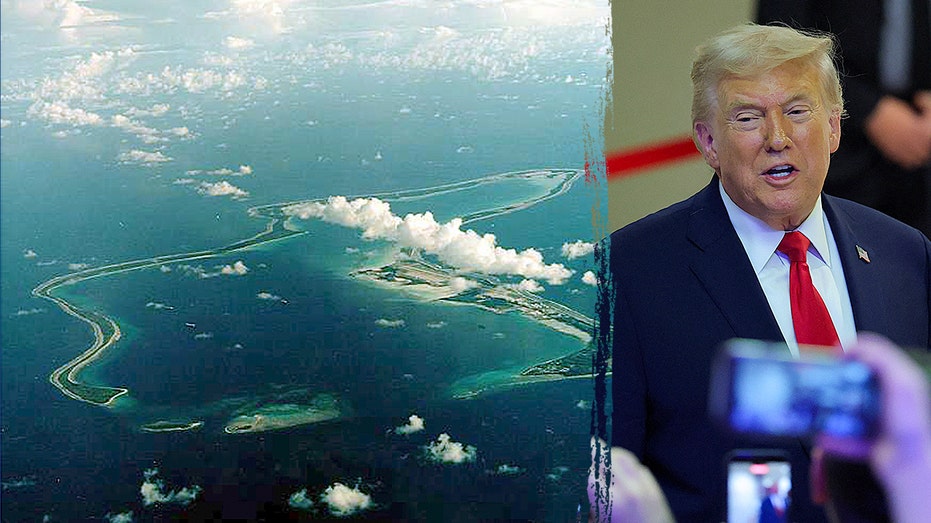
President Donald Trump dramatically reversed course Tuesday on a U.K. plan to transfer sovereignty of the Chagos Islands to Mauritius while warning it could jeopardize U.S. access to the Diego Garcia military base.

Trump’s reversal highlights what a defense expert called a "new Trump Doctrine" before linking the president's opposition to the Chagos deal with his Greenland push and citing fears Mauritius could later back out.

Writing on his Truth Social platform Tuesday, Trump called the U.K.’s Chagos decision "an act of great stupidity."

"Shockingly, our ‘brilliant’ NATO Ally, the United Kingdom, is currently planning to give away the Island of Diego Garcia, the site of a vital U.S. Military Base, to Mauritius, and to do so FOR NO REASON WHATSOEVER," Trump wrote. "There is no doubt that China and Russia have noticed this act of total weakness."

TRUMP ISSUES STERN WARNING TO NATO AHEAD OF VANCE'S HIGH-STAKES GREENLAND MEETING

"Trump has done a 180, partly because of the U.K.’s support for Denmark’s sovereign claims over Greenland and partly because of a new strategy outlined by the White House," John Hemmings, director of the National Security Center at the Henry Jackson Society, told Fox News Digital.

"These moves are linked and part of a ‘new Trump Doctrine’" outlined in November’s National Security Strategy," he explained.

"Diego Garcia is a potential threat to Beijing’s strategy to control vital shipping lanes between the oil-rich Middle East and China’s industrial heartland," he added, describing how "nearly 23.7 million barrels of oil transit the Indian Ocean every day, with the base being vital in any U.S.-China conflict over Taiwan."

TRUMP TELLS DAVOS US ALONE CAN SECURE GREENLAND, INSISTS HE WON’T 'USE FORCE'

In a separate post, Trump explicitly linked the Chagos dispute to his Greenland push.

"The U.K. giving away extremely important land is an act of GREAT STUPIDITY, and is another in a very long line of national security reasons why Greenland has to be acquired," Trump wrote.

The Chagos Islands were separated from Mauritius during Britain’s decolonization process, a move the International Court of Justice ruled unlawful in 2019. 

The U.K. later agreed to transfer sovereignty while leasing Diego Garcia back for at least 99 years at a cost of at least $160 million annually.

Diego Garcia is a hub for long-range bombers, logistics and power projection across the Middle East, the Indo-Pacific and Africa. Around 2,500 personnel, mostly American, are stationed there.

TRUMP DOUBLES DOWN ON GREENLAND PUSH AS POLLS SHOW LITTLE PUBLIC SUPPORT

"If Mauritius were to offer the islands to China after taking de jure control, it would put immense pressure on the U.S. in the eyes of international public opinion," Hemmings explained.

"After all, once Mauritius has de jure sovereignty, it can renegotiate the lease terms or even renege on the treaty at any time it wants.

"It might also provide access to the exclusive economic zone, with all of its rich fishing grounds, to Chinese fishing fleets, adding another layer of risk to U.S. Air Force operations around the island," Hemmings said.

"At this moment, the U.S. base at Diego Garcia is thought to be secure, with Mauritius promising the U.K. (and by proxy, the U.S.) a 99-year lease, which will not, it is supposed, interfere with the operations of the air base at all. But the devil is in the details."

Fox News Digital has reached out to the White House for comment.

(Auszug von RSS-Feed)

☐ ☆ ✇ Fox News

Trump told to 'f--- off' by Danish lawmaker during European Parliament debate about Greenland

veröffentlicht.
Vorschau ansehen

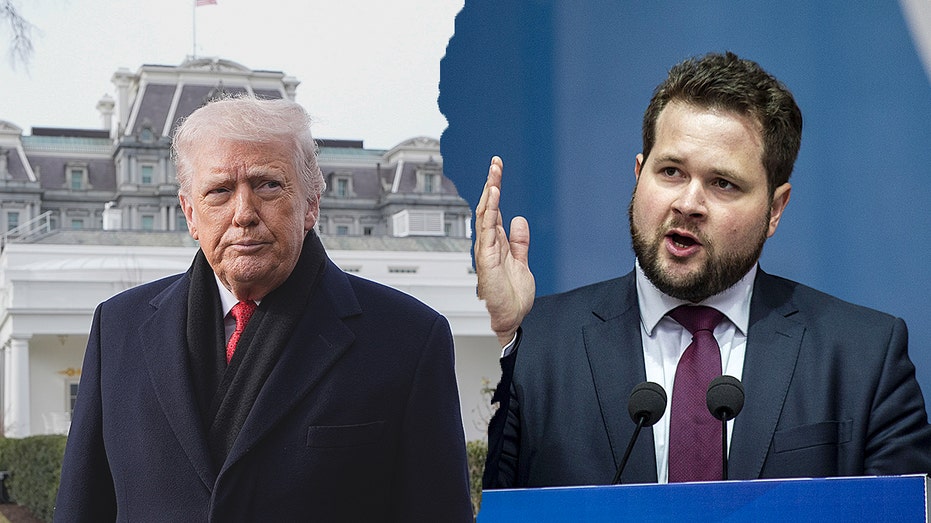
A Danish lawmaker told President Donald Trump to "f--- off" during a recent heated debate at the European Parliament over the future of Greenland.

Footage shows European Parliament member Anders Vistisen unleashing the rebuke during a session focused on U.S. interest in Greenland and amid Trump's drive to acquire the Arctic territory, according to reports.

The outburst came as Trump continued to float the idea of bringing Greenland under American control in a bid to bolster what he says is a national and global security necessity.

DENMARK RAMPS UP DEFENSES IN GREENLAND AS TRUMP ZEROS IN ON CONTROL OF TERRITORY

Addressing the European Union’s legislative body, Vistisen, 38, directly confronted Trump’s long-standing interest.

Vistisen said Greenland was not for sale before escalating his remarks in language that violated parliamentary rules. 

"Let me put this in words you might understand: Mr. President, f--- off," Vistisen added, drawing reactions from the chamber.

TRUMP'S GREENLAND TAKEOVER WOULD LIKELY ENTAIL ENORMOUS PRICE TAG: REPORT

Parliament Vice President Nicolae Ștefănuță quickly intervened, admonishing the lawmaker for his language and warning of consequences.

"I am sorry, colleague, this is against our rules," Ștefănuță said. 

"We have clear rules about cuss words and language that is inappropriate in this room. I am sorry to interrupt you. It is unacceptable, even if you might have strong political feelings about this."

Following the reprimand, Vistisen finished the remainder of his remarks in Danish before leaving the podium.

The incident comes as Trump has renewed public pressure on the issue of Greenland, a strategically located Arctic territory that belongs to Denmark and a NATO ally of the U.S.

WHY TRUMP ZEROED IN ON GREENLAND AND WHY IT MATTERS IN 3 MAPS

Asked Monday in an NBC interview whether he would consider using force to take Greenland, Trump responded, "No comment."

As previously reported by Fox News Digital, Trump continued to push the issue Jan. 19, revealing on Truth Social that he spoke with NATO Secretary General Mark Rutte and agreed to further discussions in Davos, Switzerland.

"Greenland is imperative for national and world security," Trump wrote. "There can be no going back."

Trump is also scheduled to speak Jan. 21 at the World Economic Forum in Davos, where the Greenland question is expected to loom large.

Meanwhile, the topic of Greenland has strained relations with U.S. allies, including Canada. 

Prime Minister Mark Carney has emphasized solidarity with Denmark, stating, "We are NATO partners with Denmark, and our obligations stand."

(Auszug von RSS-Feed)

☐ ☆ ✇ Fox News

Denmark ramps up defenses in Greenland as Trump zeros in on control of territory

veröffentlicht.
Vorschau ansehen

Denmark on Monday ramped up its military presence in Greenland, deploying extra troops to the strategic Arctic territory amid escalating tensions with President Donald Trump.

Local Danish broadcaster TV 2 said the Danish Armed Forces confirmed a new contingent of troops, described as "a substantial contribution," were arriving at Greenland’s main international airport Monday night.

Maj. Gen. Søren Andersen, head of Denmark’s Arctic Command, said about 100 Danish soldiers have already arrived in Nuuk, Greenland’s capital, with others later deployed to Kangerlussuaq in western Greenland.

The new military move comes in the wake of comments made by Trump over the region's strategic and military importance. 

WHITE HOUSE URGES 'COOLER HEADS TO PREVAIL' AS EU FIRES BACK ON TRUMP TARIFFS OVER GREENLAND

In a Truth Social post Jan. 18, Trump warned that Denmark had failed to secure Greenland against foreign threats.

"NATO has been telling Denmark, for 20 years, that ‘you have to get the Russian threat away from Greenland,’" Trump wrote. 

"Unfortunately, Denmark has been unable to do anything about it. Now it is time, and it will be done!!!" he said.

US CONGRESSIONAL DELEGATION VISITS DENMARK AMID BACKLASH OVER TRUMP'S PUSH TO ACQUIRE GREENLAND

On Monday, a text message exchange between Trump and Norwegian Prime Minister Jonas Gahr Støre over Greenland and the Nobel Peace Prize was released in a statement.

"Denmark cannot protect that land from Russia or China, and why do they have a ‘right of ownership’ anyway?" Trump said before adding that there were "no written documents; it’s only that a boat landed there hundreds of years ago, but we had boats landing there, also," he said in part of the exchange.

"I have done more for NATO than any other person since its founding, and now, NATO should do something for the United States. The world is not secure unless we have complete and total control of Greenland. Thank you! President DJT," he added.

Before now, according to Reuters, Andersen had said that Danish troop deployment was driven by broader security concerns, not by Trump’s statements.

NATO AMBASSADOR SAYS EUROPE 'HAS A TENDENCY TO OVERREACT' OVER GREENLAND DISPUTE

Danish Defense Minister Troels Lund Poulsen also said that Denmark has begun increasing its military footprint in and around Greenland in cooperation with its NATO allies and as part of efforts to strengthen Arctic defense, Reuters reported.

Danish forces already stationed in Greenland could remain for a year or more, with additional rotations planned in the coming years.

Meanwhile, White House press secretary Karoline Leavitt said Jan. 15 the presence of European troops would not affect Trump’s interest in acquiring Greenland.

"I don't think troops from Europe impact the president's decision-making process, nor does it impact his goal of the acquisition of Greenland at all," she told reporters.

The additional Danish troop deployment also came following Trump’s announcement that the U.S. would impose a 10% import tax starting in February on goods from countries that have supported Denmark and Greenland, including Norway.

Fox News Digital has reached out to the White House for comment.

(Auszug von RSS-Feed)

☐ ☆ ✇ Fox News

Top GOP senator says Syria ceasefire welcome but actions must match words

veröffentlicht.
Vorschau ansehen

The Syrian army’s rapid-fire conquest of important areas and towns previously controlled by the U.S.-allied Syrian Democratic Forces (SDF), culminated on Sunday in a fragile ceasefire agreement with a stern warning from a powerful U.S. Senator and experts about the reported crimes of forces controlled by President Ahmed al-Sharaa.

Jim Risch, R-Idaho., chairman of the Senate Foreign Relations Committee, told Fox News Digital, "The Syrian government’s decree to respect Kurdish rights is a good sign, but the conduct of its forces on the ground must match. Division and violence in Syria between U.S. partners only benefit bad actors like ISIS and Iran who exploit Syria to use as a breeding ground for international terrorism, including against the U.S. I welcome the announcement of a ceasefire and will be watching its implementation closely."

Al-Sharaa, a former U.S.-designated terrorist who was a member of the Islamic State and al-Qaeda, greenlighted an incursion into territory ruled peacefully by the SDF for over a decade.

Amid Risch's warning, reports coming out of Syria claim skirmishes between the Syrian army and SDF are continuing. 

134 HOUSE REPUBLICANS DEMAND 'ASSURANCES' BEFORE US EASES SYRIA SANCTIONS

The news organization, Kurdistan 24, showed alleged footage of  al-Sharaa’s forces releasing Islamic State prisoners. According to the report, "The Syrian Arab Army releases ISIS prisoners in al-Tabqah city." 

The footage has been widely posted on social media. Fox News Digital could not independently verify the video.

The State Department referred Fox News Digital to an X post from the U.S. Ambassador to Turkey, Tom Barrack, who also serves as the Special Envoy for Syria. Barrack wrote on X about the deal between SDF General Mazloum Abdi and al-Sharra.

"Two great Syrian leaders, driven by the shared vision of liberating their country and people from tyranny, have now come together to forge a brighter future for all Syrians. This agreement and ceasefire represent a pivotal inflection point, where former adversaries embrace partnership over division."

TRUMP HOLDS KEY TO SAVING SYRIA'S VANISHING CHRISTIANS IN CRUCIAL WHITE HOUSE MEETING

Barrack added, "President al-Sharaa has affirmed that the Kurds are an integral part of Syria, and the United States looks forward to the seamless integration of our historic partner in the fight against ISIS with the Global Coalition’s newest member, as we press forward in the enduring battle against terrorism."

However, the People's Protection Units (YPG) commander Sipan Hamo — a Syrian organization that is part of the SDF — said on the Saturday meeting between U.S. envoy Tom Barrack and Kurdish officials produced no roadmap to a ceasefire. He denied Syria's Kurds wanted to secede or create an independent state and said their future was in Syria.

"Our greatest hope is that there will be a tangible outcome, especially from the coalition and the United States, meaning that they will intervene more forcefully in the existing problems than what they are currently doing," Hamo said.

The head of the main Kurdish forces told Reuters that the U.S. should intervene more forcefully to end a Syrian offensive that has gained key territory from Kurdish fighters in recent days.

DEADLY STRIKE ON US TROOPS TESTS TRUMP’S COUNTER-ISIS PLAN — AND HIS TRUST IN SYRIA’S NEW LEADER

Government troops launched an offensive on Saturday into territory run for the last decade by semi-autonomous Kurdish authorities in the northeast of Syria, capturing towns on both sides of the Euphrates River and the country's largest oil and gas field, officials and security sources said.

But given Kurdish "concerns about the changes taking place," the U.S. should offer assurances of protection to them.

Hamo said that, "In the current situation and the chaos we are living in, the only ones who can offer guarantees are the United States or the coalition," he added in a rare interview from Hasakeh province, which is still under Kurdish control.

"We believe that the responsibility for everything currently happening inside Syria lies with the Western countries, and especially the United States of America," he said.

"Of course, we consider Israel a powerful state in the region with its own agenda. We hope that the same stance taken by other countries in the region towards certain minorities in Syria will be extended to the Kurds as well," Hamo said.

Asked if he was referring to Israel's stance towards the Druze minority last summer — when Israel carried out air strikes on the defense ministry, near the presidential palace in Damascus and on Syrian troops advancing on Druze cities, Hamo said, "of course."

ISRAEL AND SYRIA RESUME DIPLOMATIC DIALOGUE AFTER MONTHS OF SILENCE UNDER US MEDIATION

Mutlu Civiroglu, a Kurdish affairs analyst, told Fox News Digital that, "President Trump has spoken about giving Syria and all its peoples a fresh opportunity to turn a new page. Yet, Ahmed al Sharaa’s actions appear to move against that intention, and many Kurds believe he is abusing the political space that was meant to support stability rather than deepen tensions. "

Civiroglu added that "I don’t think the U.S. is abandoning the Kurds, but President Trump’s good intention is being abused by Sharaa. Lawmakers in Washington have also expressed unease about the interim Syrian government’s treatment of minorities, which reflects broader questions about its commitment to inclusive governance."

Civiroglu posted footage on his popular X account of al-Sharaa supporters toppling "a statue of a female Kurdish fighter after interim Syrian government forces seized Tabqa from the SDF. Kurdish fighters backed by the United States had liberated the town from ISIS in May 2017."

Civiroglu said, "al-Sharaa’s confrontations with Kurdish forces, following earlier pressure on Alawite and Druze areas, reinforce doubts about the interim government’s legitimacy and its ability to represent Syria’s diverse population.

"The International community must remember that the Kurdish people have long fought alongside the United States, France and the West in the campaign against ISIS, and many are watching closely to see how these partners interpret the latest escalation," he said.

Max Abrahms, a leading expert on counter-terrorism and a professor of political science at Northeastern University, told Fox News Digital, "The YPG and then SDF were America’s primary counterterrorism forces against Islamic State in Syria during the war. Unlike the so-called "rebels," our Kurdish warrior friends exhibited both capability and moderation. It’s not surprising that the jihadists, upon taking power in Damascus, would turn their guns on the Kurdish forces. Of course, we need to stand with them."

(Auszug von RSS-Feed)

☐ ☆ ✇ Fox News

Trump announces escalating tariffs on Denmark and other European nations to force Greenland purchase deal

veröffentlicht.
Vorschau ansehen

President Donald Trump announced the United States would impose 10% tariffs on multiple European countries unless Denmark agrees to the "complete and total purchase of Greenland," warning that global security and U.S. national defense were at stake.

Trump made the announcement in a lengthy Truth Social post on Saturday, arguing that the U.S. has subsidized Denmark and other European Union nations for decades by failing to charge tariffs and providing what he described as "maximum protection."

"We have subsidized Denmark, and all of the Countries of the European Union, and others, for many years by not charging them Tariffs, or any other forms of remuneration," Trump wrote.

TRUMP TAPS REPUBLICAN GOVERNOR TO SERVE AS SPECIAL ENVOY TO GREENLAND

"Now, after Centuries, it is time for Denmark to give back — World Peace is at stake!"

Trump wrote that both China and Russia want Greenland and he said there was "not a thing that Denmark can do about it."

"They currently have two dogsleds as protection, one added recently. Only the United States of America, under PRESIDENT DONALD J. TRUMP, can play in this game, and very successfully, at that!" Trump wrote. 

"Nobody will touch this sacred piece of Land, especially since the National Security of the United States, and the World at large, is at stake."

Trump said that Denmark, Norway, Sweden, France, Germany, the United Kingdom, the Netherlands and Finland have "journeyed" to Greenland, for "purposes unknown," posing a very dangerous situation for the safety, security and survival of our planet.

EUROPEAN ALLIES WORKING ON PLAN IF US ACTS ON ACQUIRING GREENLAND: REPORT

"All of the above-mentioned Countries… will be charged a 10% Tariff on any and all goods sent to the United States of America," Trump wrote. 

On June 1, 2026, the tariff will be increased to 25%, he said. 

"This Tariff will be due and payable until such time as a Deal is reached for the Complete and Total purchase of Greenland."

In recent weeks, Trump has zeroed in on Greenland, the world’s largest island at a strategic crossroads in the Arctic, and floated the idea of tariffs being imposed on Friday. 

A semi-autonomous territory of Denmark, Greenland is home to a crucial U.S. military base and has taken on growing strategic importance as melting ice opens new shipping lanes and access to a wealth of natural resources.

In his Saturday post, Trump said the United States has tried to purchase Greenland for more than 150 years but that Denmark has repeatedly refused. 

He tied the push to modern weapons systems and the "Golden Dome," saying hundreds of billions of dollars are being spent on related security programs and that the system can only work at maximum efficiency if Greenland is included. 

"The United States of America is immediately open to negotiation with Denmark and/or any of these countries that have put so much at risk, despite all that we have done for them, including maximum protection, over so many decades," Trump wrote. "Thank you for your attention to this matter!"

Trump’s remarks come as his administration awaits a Supreme Court ruling on whether some of the tariffs he imposed in 2025 were legal.

Fox News' Amanda Macias contributed to this report. 

(Auszug von RSS-Feed)

☐ ☆ ✇ Fox News

NATO ambassador says Europe 'has a tendency to overreact' over Greenland dispute

veröffentlicht.
Vorschau ansehen

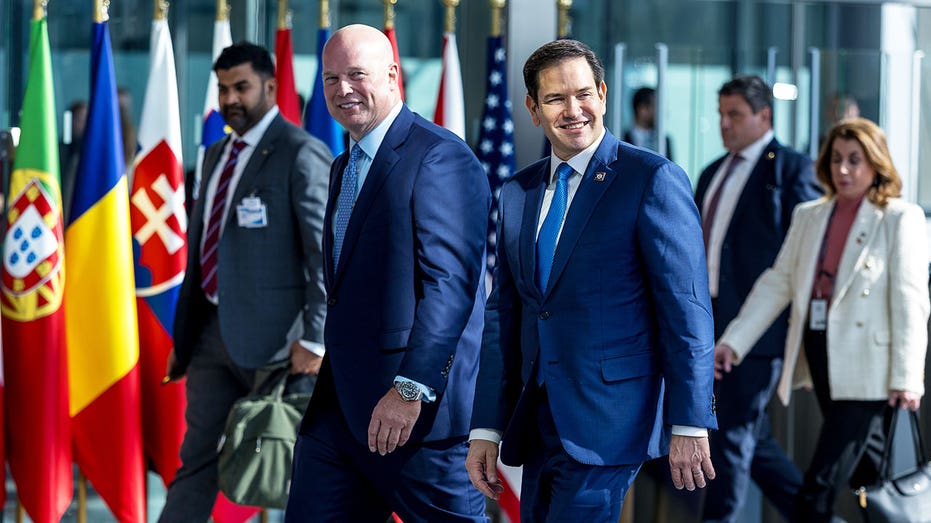
In an exclusive interview with Fox News Digital, U.S. ambassador to NATO Matthew Whitaker pushed back against growing European backlash over Washington’s focus on Greenland after France announced new military exercises with Denmark, saying Arctic security is a core American defense interest and that Europe "has a tendency to overreact."

Asked whether the dispute reflects American pressure or European inaction, Whitaker said, "This is ultimately an issue between the United States, Denmark and Greenland."

Whitaker said Greenland’s importance has been clear for years as the ice melts, it reshapes the Arctic and opens new routes. "The security of the high north, which I’ve talked about a lot before this ever happened, is the most important issue," he said. "As the ice thaws and as routes open up in the Arctic, Arctic security, and therefore the security of Greenland, which is the northern flank of the continental United States, is crucial."

GREENLAND LEADERS PUSH BACK ON TRUMP'S CALLS FOR US CONTROL OF THE ISLAND: 'WE DON’T WANT TO BE AMERICANS'

He stressed that Greenland’s location makes it central to U.S. defense planning. "If you think about Greenland as part of the access to the naval assets, that monitoring and awareness and fortification of that part of the Western Hemisphere is crucial for the long-term security of the United States," Whitaker said.

Whitaker said recent diplomacy shows the issue can be addressed without escalation. "I know that a very successful meeting happened between the Danes and Greenland and Vice President Vance and Secretary of State Rubio, so I think it’s going to be constructive," he said.

Still, he cautioned European allies against inflaming tensions. "Europe sometimes has a tendency to overreact anytime that an issue is put out on the table," Whitaker said. "This is one of those things where cooler heads need to prevail."

Speaking from the Ronald Reagan Presidential Library, Whitaker used Reagan’s "peace through strength" doctrine as justification for pushing NATO allies to spend more and move faster.

"The most important thing that we're doing at NATO is, one, the United States is strong. Nobody denies that. We have demonstrated through Midnight Hammer, through what we did in Venezuela and elsewhere, that the United States is capable and can project power. We want all of our allies inside of NATO to be equally as strong, and they're not at this point in time," he said.

He added, "Some of them have certainly become more capable, and that's why you can't just paint with a broad brush when it comes to all of our NATO allies. But there are some that are not."

TRUMP GREENLAND TAKEOVER WOULD END NATO, DENMARK ASSERTS

"Europe and the EU are going to have to untie their hands from behind their back," he continued. "They’re going to have to deregulate, they are going to have to find more capital and economic growth, because at the end of the day, that's what's going to allow them to live up to the promises they've made to increase their defense spending and therefore their defense capabilities."

"One of the things that I'm talking about constantly with our friends downtown in the EU," Whitaker added, "is that they have to get their economy going, and there are proven, tried-and-true ways to do it."

Whitaker said his top priority is ensuring NATO allies follow through on the major defense commitments agreed to last year in The Hague.

"This is number one on my list right now," he said, "making sure that the political commitments we made in The Hague turn into real military capabilities at NATO."

He said proximity to Russia has shaped how seriously countries take the threat.

"You look at the Baltic countries like Latvia, Lithuania and Estonia, and you look at the Nordic countries … they’re very aware of the threats that Russia [poses]," Whitaker said, citing Russia’s 2014 annexation of Crimea and its 2022 invasion of Ukraine.

MOST AMERICANS SAY 'NO' TO GREENLAND TAKEOVER, WITH EVEN REPUBLICANS SPLIT: POLL

Poland, he added, stands out. "Poland is clear-eyed," Whitaker said. "They’re gonna spend over 5% on core defense in the coming year or two."

Others, he said, are still lagging. "I keep a dashboard, a one-page dashboard on my desk that is updated regularly," Whitaker said. "It’s too soon to tell." "It has to be on capabilities," he said. "It has to make them stronger, ready to fight tonight."

"President Trump announced a $1.5 trillion defense budget," Whitaker said. "We’ve demonstrated our capabilities that nobody else can match right now."

"I’m here at the Reagan Library, and it reminds me, Ronald Reagan really was able to put those policies in place to spur growth," Whitaker said. "President Trump certainly has followed that same tradition, to unleash the American entrepreneur, unleash American innovation, and get out of the way, get the regulations out of the way so that American companies can grow and prosper."

As NATO moves forward, Whitaker said pressure on allies will remain. "We’re asking our European and Canadian allies to do more," he said. "So far, so good."

(Auszug von RSS-Feed)

☐ ☆ ✇ Fox News

Trump’s push to acquire Greenland sparks international media frenzy on remote island

veröffentlicht.
Vorschau ansehen

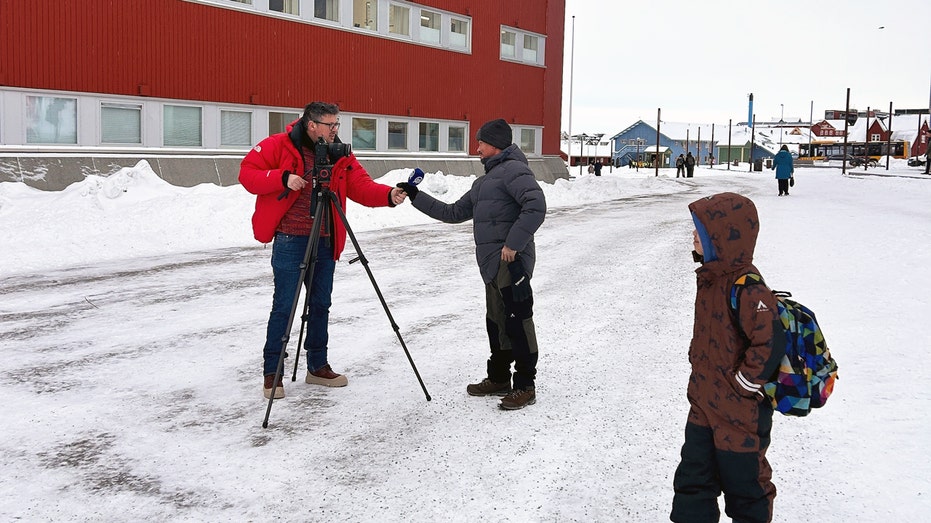
As President Donald Trump ramps up his effort to acquire Greenland, a surge of international journalists have rushed to the island to take the pulse of its political leaders and residents.

In recent weeks, media from around the world — including The Associated Press, Reuters, the BBC and Al Jazeera, as well as outlets from Scandinavian countries and Japan — have made their way to the semi-autonomous Danish territory, overwhelming its politicians and community leaders with interview requests.

While Trump has argued that controlling the roughly 800,000-square-mile island is necessary for national security purposes, its leaders have repeatedly insisted it's not for sale.

Juno Berthelsen, a member of Parliament for the Naleraq opposition party, said the media storm intensified last year when Trump first expressed interest in acquiring Greenland, adding that he has been doing multiple interviews a day for the past two weeks.

TRUMP TAPS REPUBLICAN GOVERNOR TO SERVE AS SPECIAL ENVOY TO GREENLAND

"We’re very few people and people tend to get tired when more and more journalists ask the same questions again and again," Berthelsen told The Associated Press.

Greenland’s population is about 57,000 people, with roughly 20,000 living in Nuuk, the small capital city where the same collection of business owners are repeatedly asked to do news interviews, sometimes as many as 15 a day.

Many residents interviewed by the AP said they want the world to know that Greenlanders will decide their own future and expressed confusion about why Trump wants to control the island.

TRUMP ISSUES STERN WARNING TO NATO AHEAD OF VANCE'S HIGH-STAKES GREENLAND MEETING

"It’s just weird how obsessed [Trump] is with Greenland," Maya Martinsen, 21, told the AP.

She said Trump is "basically lying about what he wants out of Greenland," asserting that the president is using U.S. national security as a means to take control of "the oils and minerals that we have that are untouched."

The Americans, Martinsen continued, "only see what they can get out of Greenland and not what it actually is."

EUROPEAN ALLIES WORKING ON PLAN IF US ACTS ON ACQUIRING GREENLAND: REPORT

"It has beautiful nature and lovely people. It’s just home to me. I think the Americans just see some kind of business trade," she added.

Americans, however, appear ambivalent about the acquisition, with 86% of voters nationwide saying they would oppose military action to take over Greenland, according to a Quinnipiac University poll. By a 55%-37% margin, voters surveyed said they opposed any U.S. effort to try to buy Greenland.

On Wednesday, Trump said in a social media post that "anything less" than U.S. control of Greenland is "unacceptable," but Greenland Prime Minister Jens-Frederik Nielsen said during a news conference this week that the island will not be owned or governed by the United States.

Trump's recent comments have sparked tension with Denmark and other NATO allies, and troops from several European countries, including France, Germany, Sweden and Norway, deployed to Greenland this week for a brief two-day mission to bolster the territory’s defenses. 

Fox News Digital's Paul Steinhauser and The Associated Press contributed to this report.
(Auszug von RSS-Feed)

☐ ☆ ✇ Fox News

Secret room to be built at Chinese embassy near cable lines, sparking widespread espionage fears

veröffentlicht.
Vorschau ansehen

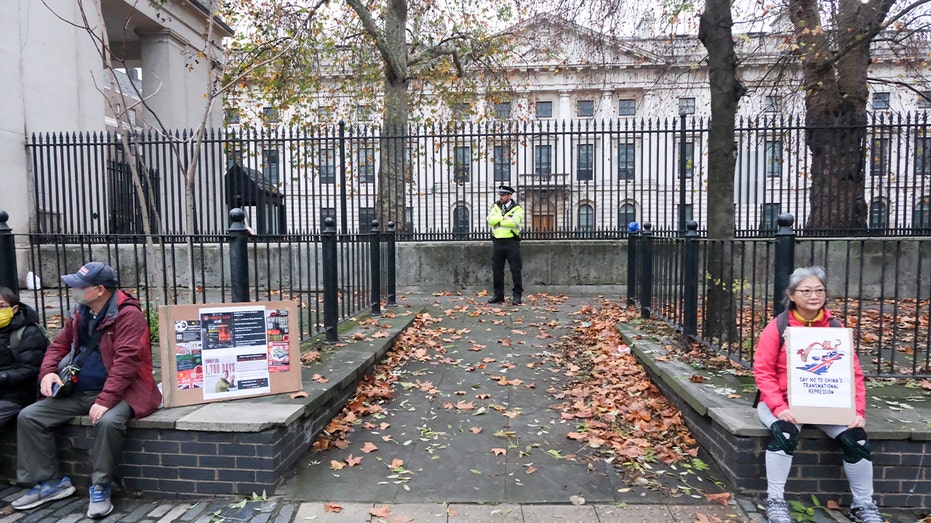
Recently unredacted construction plans for China’s new super embassy in London have ignited a storm of national security concerns across the United Kingdom, as blueprints reveal a hidden underground room positioned alarmingly close to some of Britain’s most sensitive communication cables.

Major critics of the proposed site, which will run as close as three feet to the internet infrastructure, warned that the secret room could serve as a hub for Chinese espionage. While the British government reportedly assured its allies that the lines do not carry sensitive government data, the cables transmit financial transactions as well as communication traffic for millions of internet users.  

The blueprints were publicly unredacted Monday by The Telegraph, just one week before Prime Minister Keir Starmer is widely expected to approve the plans before his visit to see President Xi Jinping in China.  

A government spokesman told the outlet that despite the security concerns, "national security is our first duty and government security experts have been involved throughout the process so far."

CCP-LINKED FIRMS QUIETLY HOLD STAKES IN US SOLAR COMPANIES FUELING DEMS' GREEN PUSH

According to the blueprint, the facility will be located at the former Royal Mint and will become Europe’s largest Chinese embassy. 

Construction plans indicate that China intends to demolish and rebuild a basement wall, placing officials and equipment just over three feet from critical fiber-optic cables. Security experts have warned that such proximity could create opportunities for "cable-tapping," which involves inserting wiretaps or reading light signals leaking from the lines.

Professor Alan Woodward, a security expert at the University of Surrey, highlighted the technical feasibility of espionage given the physical layout, the Telegraph reported. He described the demolition as a "red flag" and noted, "If I were in their shoes, having those cables on my doorstep would be an enormous temptation."

NAVY SAILOR CONVICTED AFTER SELLING MILITARY SECRETS TO CHINA FOR $12,000 PAYMENT

Additionally, the concealed chamber appears to be equipped with at least two hot-air extraction systems designed to ventilate heat-generating equipment. Experts reportedly inferred that this infrastructure suggests that the room is designed to accommodate high-powered technology such as advanced computers typically used for espionage and data processing. 

Beyond the single chamber near the cables, the unredacted plans also revealed a network of 208 secret rooms beneath the diplomatic site. The basement appears to allow for emergency backup generators, sprinkler systems, communications cabling and showers, suggesting that officials could remain underground for extended periods, potentially to operate or monitor equipment.

The construction plans have generally raised fears that the London complex could serve as a Beijing intelligence hub. According to U.K. outlet The Times, Britain has been pressured to reassure the United States and other intelligence partners that the cables do not transmit any sensitive government data.

Alicia Kearns, the shadow national security minister and prominent critic of the project, described the approval of the embassy as handing Beijing a strategic advantage against British interests.  

"Giving China the go-ahead for its embassy site would be to gift them a launchpad for economic warfare at the very heart of the central nervous system of our critical financial national infrastructure," she said in a post on X.  

(Auszug von RSS-Feed)

☐ ☆ ✇ Fox News

As Iran weakens, questions grow over Mohammed bin Salman’s regional ambitions

veröffentlicht.
Vorschau ansehen

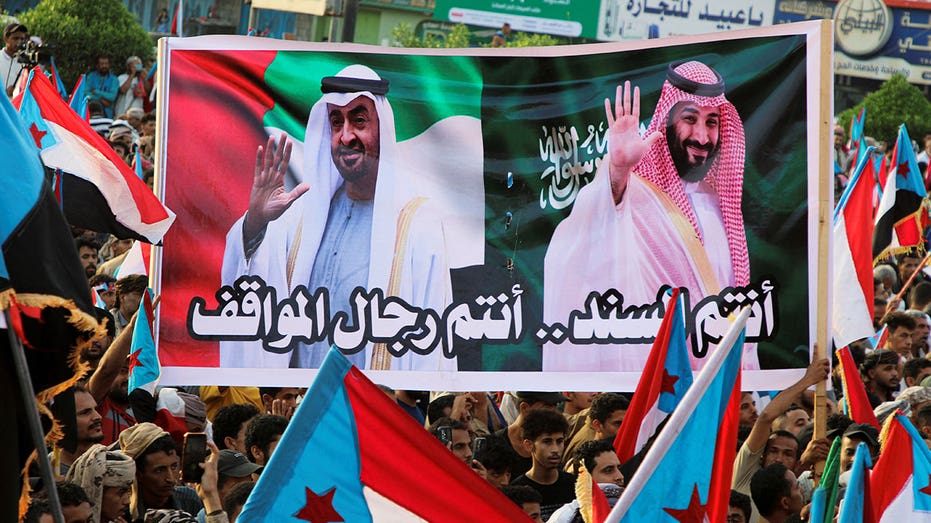
As Iran weakens, a power vacuum is emerging across the Middle East — and Saudi Arabia is moving to fill it by recalibrating relations with former rivals, hedging global partnerships and asserting a more independent foreign policy, according to several experts.

Javed Ali, former senior official at the National Security Council and professor at the University of Michigan, told Fox News Digital that "Since Iran’s 1979 revolution, both Saudi Arabia and Iran have vied for influence across the broader Muslim world. Mohammed bin Salman’s consolidation of power in the kingdom has also introduced a markedly different vision from that of his predecessors."

Riyadh’s recent moves, from Yemen to Turkey, are fueling debate over whether Crown Prince Mohammed bin Salman’s expanding regional role still aligns with U.S. interests. As part of that recalibration, Bloomberg reported on Jan. 9  that Turkey is seeking entry into the Saudi–Pakistan mutual defense pact signed four months earlier, according to people familiar with the talks.

TRUMP FACES MIDDLE EAST TEST AS NETANYAHU BALKS AT ERDOGAN’S GAZA TROOP HOPES

Michael Rubin, a senior fellow at the American Enterprise Institute, said Saudi Arabia’s current trajectory must be viewed through years of accumulated frustration with U.S. policy.

"To be fair to MBS, previous U.S. administrations did not uphold their end of the bargain either," Rubin told Fox News Digital, pointing to repeated Houthi attacks on Saudi territory. "The Houthis launched hundreds of drones and rockets that the Obama administration ignored."

Rubin said tensions deepened as Mohammed bin Salman pursued reforms long urged by U.S. policymakers, only to face sharp criticism from Washington. He cited the Biden administration’s decision to remove the Houthis’ terror designation.

"By no objective measure should Secretary of State Antony Blinken have removed the terror designation from the Houthis," Rubin said, calling the move "pure spite directed at MBS and Donald Trump."

Rubin said that decision marked a turning point. "MBS calculated that if the United States did not have his back, he would need to embrace a Plan B," he said, describing outreach to Russia and China as tactical signaling rather than ideological realignment.

Saudi geopolitical researcher Salman Al-Ansari rejects claims that Riyadh is drifting ideologically or embracing Islamist movements, framing Saudi policy as interest-driven.

"Saudi Arabia does not base its foreign policy on ideological alignment, but on pragmatic considerations aimed at stability and development," Al-Ansari told Fox News Digital. He said outreach to Turkey reflects an effort to de-escalate rivalries. "The rapprochement with Turkey reflects this diplomatic approach, which seeks to transform the Middle East from a region of chronic conflict into one of greater stability."

Al-Ansari said the shift has already delivered results. "This shift has given Riyadh increased flexibility in engaging regional powers, a change Ankara quickly recognized and that has translated into expanding economic cooperation."

He rejected claims of alignment with the Muslim Brotherhood. "Saudi Arabia designated the group as a terrorist organization in 2014, and this position remains unchanged," he said.

SAUDI DEFENSE MINISTER SECRETLY MEETS WITH TRUMP TO DISCUSS IRAN DE-ESCALATION, ISRAEL: SOURCES

Those competing interpretations of Saudi intent are now colliding most visibly in Yemen, where the Saudi-Emirati alliance originally formed to counter Iran’s Houthi proxy. While both entered the war to roll back Iranian influence, their strategies diverged. Riyadh backs a unified Yemeni state under the internationally recognized government, arguing fragmentation strengthens Iran. The UAE has supported southern separatists, including the Southern Transitional Council, prioritizing control over ports and security corridors.

In the last few days, Saudi and Yemeni government forces have largely recaptured southern and eastern Yemen from the UAE-backed Southern Transitional Council (STC), and the STC’s leader reportedly fled to the UAE amid the group’s reported dissolution, highlighting a sharp rift involving Emirati support for separatists

Rubin called Yemen the clearest warning sign. "This is best seen in Yemen, where he has been supporting the Muslim Brotherhood faction militarily and attacking the more secular Southern Forces in a way that only empowers al Qaeda in the Arabian Peninsula and the Houthis," he said.

Al-Ansari countered that "differences with the UAE stem from its backing of separatist armed actors in Yemen, which complicates the political process, fragments the anti-Houthi front, and ultimately benefits the Iranian-backed Houthi militia."

Rubin warned of long-term consequences. "By ‘blowback’ I mean the same Islamists MBS cultivates today will end up targeting Saudi Arabia in the future," he said.

With Iran weakened and regional power shifting, Washington now faces a central question: whether Saudi Arabia’s expanding role will reinforce U.S.-backed stability, or redefine the balance of power in ways that test the limits of the long-standing partnership.

(Auszug von RSS-Feed)

☐ ☆ ✇ Fox News

Iran protests spark regime survival question as exiled dissident says it feels like a ‘revolution’

veröffentlicht.
Vorschau ansehen

As protests spread across Iran and the government responds with lethal force, amid increasing reports claiming thousands have been killed, a growing question is being debated by analysts and Iranians alike: Is the Islamic Republic facing its most serious threat since the 1979 revolution, or does it still retain enough coercive power to survive?

For Mehdi Ghadimi, an Iranian journalist who spent decades protesting the regime before being forced to leave the country, this moment feels fundamentally different from anything that came before.

"From 1999, when I was about 15, until 2024, when I was forced to leave Iran, I took part in every street protest against the Islamic Republic," Ghadimi told Fox News Digital. "For roughly half of those years, I supported the reformist movement. But after 2010, we became certain that the Islamic Republic is not reformable, that changing its factions is a fiction."

EXILED IRANIAN CROWN PRINCE APPEALS TO TRUMP AS IRAN PROTESTS MARK ‘DEFINING' MOMENT

According to Ghadimi, that realization gradually spread across Iranian society, culminating in what he describes as a decisive shift in the current unrest.

"For the first time in the 47 years of struggle by the Iranian people against the Islamic Republic, the idea of returning to the period before January 1979 became the sole demand and the central point of unity among the people," he said. "As a result, we witnessed the most widespread presence of people from all cities and villages of Iran in the streets, on a scale unprecedented in any previous protests."

Ghadimi claimed the chants on the streets reflected that shift. Instead of demanding economic relief or changes to dress codes, protesters openly called for the fall of the Islamic Republic and the return of the Pahlavi dynasty.

"At that point, it no longer seemed that we were merely protesting," he said. "We were, in fact, carrying out a revolution."

IRAN'S KHAMENEI ISSUES DIRECT WARNING TO UNITED STATES IN RUSSIAN-LANGUAGE POSTS

Still, Ghadimi was clear about what he believes is preventing the regime’s collapse.

"The answer is very clear," he said. "The government sets no limit for itself when it comes to killing its own people."

He added that Tehran appears reassured by the lack of consequences for its actions. "It has also been reassured by the behavior of other countries that if it manages to survive, it will not be punished for these blatant crimes against humanity," he said. "The doors of diplomacy will always remain open to them, even if their hands are stained with blood."

Ghadimi described how the regime cut off internet access to disrupt coordination between protesters and opposition leadership abroad. He said that once connectivity was severed, the reach of video messages from the exiled Prince Reza Pahlavi dropped dramatically.

While Iranian voices describe a revolutionary moment, security and policy experts caution that structural realities still favor the regime.

Javed Ali, an associate professor at the Gerald R. Ford School of Public Policy, said the Islamic Republic is facing far more serious threats to its grip on power than in years past, driven by a convergence of military, regional, economic and diplomatic pressures.

IRAN REGIME SAID TO UNLEASH HEZBOLLAH AND IRAQI MILITIAS AS UPRISING SPREADS

"The IRGC is in a much weaker position following the 12-day war with Israel last summer," Ali said, citing "leadership removals, ballistic missile and drone capabilities that were used or damaged, and an air and radar defense network that has been significantly degraded."

Ali said Iran’s regional deterrence has also eroded sharply. "The so-called Axis of Resistance has been significantly weakened across the region," he said, pointing to setbacks suffered by Hamas, Hezbollah, the Houthis and Shiite militias allied with Tehran.

Internally, Ali said demographic pressure is intensifying the challenge. "Iran’s younger population is even more frustrated than before with deteriorating economic conditions, ongoing social and cultural restrictions and repeated violent crackdowns on dissent," he said.

US HOSTAGES IN IRAN FACE HEIGHTENED RISK AS PROTESTS SPREAD, EXPERTS SAY NUMBER HELD MAY EXCEED ESTIMATES

Ali also pointed to shifting external dynamics that are limiting Tehran’s room to maneuver, including what he described as a stronger U.S.-Israel relationship tied to the Netanyahu-Trump alliance. He added that there are "possible joint operations already underway to support the protest movement inside Iran."

Israeli security sources, speaking on background, said Israel has no such interest in intervening in a way that would allow Tehran to redirect domestic unrest outward.

"Everyone understands it is better to sit and wait quietly and not attract the fire toward Israel," one source said. "The regime would like to make this about Israel and the Zionist enemy and start another war to repress internal protests."

"It is not Israel against Iran," the source added. "We recognize that the regime has an interest in provoking us, and we do not want to contribute to that."

The source said a collapse of the Islamic Republic would have far-reaching consequences. "If the regime falls, it will affect the entire Middle East," the official said. "It could open a new era."

Ali said Iran is increasingly isolated diplomatically. "There is growing isolation from Gulf monarchies, the fall of Assad in Syria and only muted support from China and Russia," he said.

Despite those pressures, Ali cautioned that Iran’s coercive institutions remain loyal.

"I think the IRGC, including Basiji paramilitary elements, along with the Ministry of Intelligence, are still loyal to the regime out of a mix of ideology, religion, and self-interest," he said, citing "power, money and influence."

Whether fear of collapse could drive insiders to defect remains unclear. "Whether there are insiders willing to flip because of a sense of imminent collapse of the clerical structure is hard to know," Ali said.

TRUMP SAYS IRAN 'STARTING TO' CROSS US RED LINES AS PROTESTERS DIE IN GOVERNMENT CRACKDOWN

He placed the probability of an internal regime collapse at "25% or less," calling it "possible, but far less probable."

For now, Iran appears caught between two realities: a population increasingly unified around the rejection of the Islamic Republic and a security apparatus still willing to use overwhelming force to preserve it.

As Ali noted, pressure alone does not bring regimes down. The decisive moment comes only when those ordered to enforce repression decide it is no longer in their interest to do so.

Despite the scale of unrest, Ghadimi cautioned that the outcome remains uncertain.

"After these four hellish days, without even knowing the fate of our friends and loved ones who went into the streets, or whether they were alive or not, it is truly difficult for me to give you a clear assessment and say whether our revolution is now moving toward victory or not," he said.

He recalled a message he heard repeatedly before leaving Iran, across cities and social classes.

"The only thing I consistently heard was this: ‘We have nothing left to lose, and even at the cost of our lives, we will not retreat one step from our demand for the fall of the Islamic Republic,’" Ghadimi said. "They asked me to promise that now that I am outside Iran, I would be their voice."

"That spirit is what still gives my heart hope for victory," he added. "But my mind tells me that when mass killing carries no punishment, and when the government possesses enough bullets, guns and determination to suppress it, even if it means killing millions, then victory would require a miracle."

(Auszug von RSS-Feed)

☐ ☆ ✇ Fox News

Iran's Khamenei issues direct warning to United States in Russian-language posts

veröffentlicht.
Vorschau ansehen

As Iran faces escalating nationwide protests and rising verbal threats from the Trump administration, Iran’s Supreme Leader Ayatollah Ali Khamenei delivered a pointed warning to the United States this week from an unusual platform — his Russian-language account on X — a move analysts say underscores Tehran’s alignment with Moscow as pressure mounts on the regime.

In a post dated Jan. 11, Khamenei wrote in Russian, "The United States today is miscalculating in its approach toward Iran." Hours later, he followed with a second message, also in Russian, warning that Americans had suffered defeat before because of "miscalculations" and would do so again because of "erroneous planning."

Ksenia Svetlova, executive director of the Regional Organization for Peace, Economy and Security (ROPES) and an associate fellow at Chatham House, said the language choice was telling, even if the execution was clumsy.

PROTESTS SPREAD ACROSS IRAN AS REGIME THREATENS US FORCES AS 'LEGITIMATE TARGETS' AFTER TRUMP WARNING

"This is bad Russian," Svetlova told Fox News Digital. "It seems that it’s translated by Google Translate, not by a human being." Still, she said the use of Khamenei’s Russian-language account was no surprise given how closely Iran and Russia have aligned in recent years.

Khamenei’s warning came as Iran’s internal crisis continued to deepen. According to HRANA, a human rights organization tracking the unrest, at least 544 people have been killed in nationwide protests, with dozens of additional cases still under review. Opposition group NCRI has claimed the death toll is far higher — more than 3,000 — though exact figures remain difficult to verify amid widespread internet blackouts imposed by Iranian authorities.

President Donald Trump has led U.S. criticism in response to the rising death toll. In response to a question about whether Iran had crossed a red line, Trump responded by saying, "They're starting to, it looks like. And they seem to be some people killed that aren't supposed to be killed. These are violent. If you call them leaders, I don't know if they're leaders, or just they rule through violence. But we're looking at it very seriously," he said on Sunday aboard Air Force One. 

IRANIAN PRESIDENT SAYS HIS COUNTRY IS AT 'TOTAL WAR' WITH THE US, ISRAEL AND EUROPE: REPORTS

"We’re looking at some very strong options," he added.

Iranian leaders have pushed back, accusing Washington of interference and warning that any U.S. military action would trigger retaliation against American forces and allies in the region.

At the same time, Tehran has signaled it wants to keep diplomatic back channels open. Iranian Foreign Ministry spokesman Esmaeil Baghaei said Monday that communication between Foreign Minister Abbas Araghchi and U.S. special envoy Steve Witkoff remains active. Axios separately reported that Araghchi reached out to Witkoff over the weekend amid Trump’s warnings of possible military action.

IRANIAN MILITARY LEADER THREATENS PREEMPTIVE ATTACK AFTER TRUMP COMMENTS

Despite those overtures, analysts say Khamenei’s Russian-language message reflects where Iran sees its most reliable strategic partner.

Russia has become a critical lifeline for Tehran, particularly as Moscow relies on Iranian-supplied drones and other military equipment for its war in Ukraine. That dependence, Svetlova said, means Iran’s internal instability could carry serious consequences for the Kremlin.

"I think that could be a dramatic effect, because they do depend on Iran — specifically military production, the drones and ballistic missiles," she said. "They need them to continue their war against Ukraine."

Yet the partnership has also fueled resentment inside Iran. Svetlova pointed to criticism following the 12-day war with Israel, when many Iranians accused Moscow of failing to come to Tehran’s aid.

"There was a lot of criticism in Iran against Russia that it did not come to help," she said. "It didn’t reach out. It didn’t do anything, basically."

Still, she said Russia has few alternatives as its global position narrows. With longtime allies weakened or toppled, such as Bashar al-Assad in Syria and Nicolás Maduro in Venezuela, Moscow is increasingly reliant on Tehran — even as it remains largely silent about the protests rocking Iran.

Against that backdrop, Svetlova explained, Khamenei’s warning in Russian appears like a signal — to Washington and to Moscow — that Iran sees its confrontation with the United States as part of a shared front with President Vladimir Putin.

(Auszug von RSS-Feed)
❌