NEWS 23

🔒
❌
Stats
Es gibt neue verfügbare Artikel. Klicken Sie, um die Seite zu aktualisieren.

☐ ☆ ✇ Fox News

US positions F-22 stealth fighters in Israel, puts 'almost any target in Iran at risk'

veröffentlicht.
Vorschau ansehen

As the Trump administration weighs its next move on Iran, one of the most advanced aircraft in the U.S. arsenal has taken up position closer to Tehran.

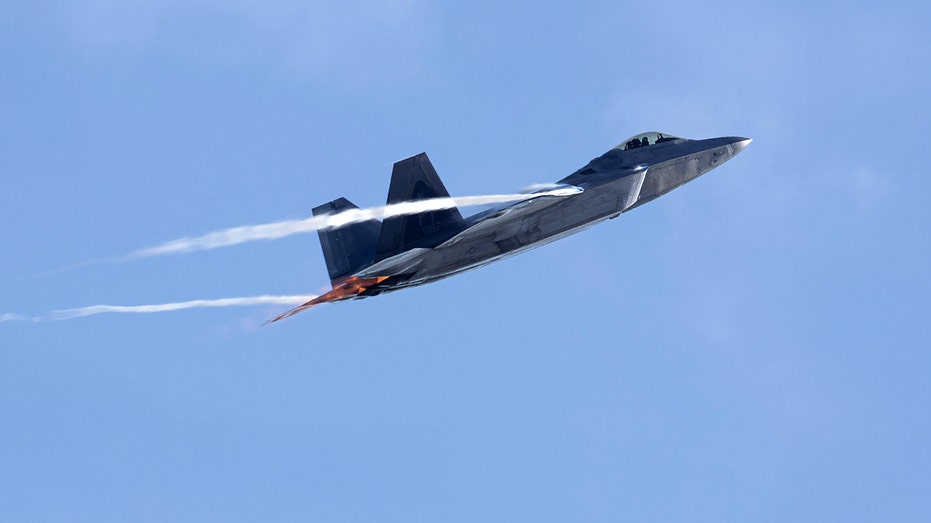
Eleven U.S. Air Force F-22 Raptor stealth fighters have arrived at Israel’s Ovda Air Base in the country’s south, Fox News reported, marking the first-ever operational deployment of American combat aircraft to Israel. The move comes amid a broader U.S. military buildup in the region not seen at this scale in years and as concerns grow over Iran’s nuclear program and missile capabilities.

For American decision-makers, the significance is straightforward: The F-22 changes the military equation.

"The F-22 is indeed the most air-to-air capable fighter in the world; nothing comes close to it in the air-to-air role," said retired Lt. Gen. Joseph Guastella, former deputy chief of staff for operations at U.S. Air Force headquarters. During a May 26 webinar hosted by the Jewish Institute for National Security of America (JINSA), he described its presence as "a very clear deterrent signal" that allows the United States to "negotiate with strength."

TRUMP 'NOT HAPPY' WITH IRAN TALKS, HASN'T MADE 'FINAL DECISION' ON US STRIKES

Designed to establish and maintain air superiority, the F-22 can operate in heavily defended airspace and suppress enemy air defenses. In any potential strike scenario against Iran, that capability would be critical. Before bombers or strike aircraft can reach hardened nuclear or missile targets, someone has to clear the skies. That is the F-22’s core mission, former generals explained in the webinar.

Guastella underscored what forward positioning means in practical terms. "The advantage of the large force that’s there is that it can hold almost any target in Iran at risk … if that’s what the president wants to do," he said.

Retired Lt. Gen. Charles Moore, former deputy commander of U.S. Cyber Command, said in the webinar that the deployment is about expanding presidential options rather than signaling a predetermined strike.

TRUMP ISSUES STERN IRAN WARNING AS TEHRAN ANGRILY REACTS TO SPEECH AMID MUTED WORLD REACTION

"There is a lot of combat capability that’s been moved into the region … the more capability, the more assets we put, the more options that the President has. We don’t box him in," Moore said.

He added that the posture allows the United States "to be prepared for a long-term type of deployment and sustainment of combat capability if that’s what the President decides he wants us to do."

Trump signaled Friday that diplomacy remains his preference but did not rule out force. Speaking to reporters as he departed the White House for a trip to Texas, he said he was not happy with Iran and wants to make a deal with Tehran, but warned that "sometimes you have to" use military force. He added that Iran remains unwilling to forswear nuclear weapons as demanded by the United States.

The choice of Israel as the deployment site also matters. Unlike some Gulf bases, where operational restrictions can apply, Israel offers fewer political constraints, they explained. That gives U.S. planners additional freedom of action in a fast-moving crisis.

THE ONLY MAP YOU NEED TO SEE TO UNDERSTAND HOW SERIOUS TRUMP IS ABOUT IRAN

JINSA’s fellow for American Strategy, Jonathan Ruhe, said the move follows a JINSA recommendation to expand U.S. basing options in Israel, outlined in a report the organization published last fall.

That report argued that forward basing in Israel would enhance U.S. flexibility and deterrence in the region. The organization has for months pushed the idea that Israel could function as a land-based platform for American airpower in the Middle East.

Former Israeli Air Force commander Maj. Gen. (ret.) Amikam Norkin said deploying such high-end aircraft to the region is not routine and framed the move as both operational and strategic. "It presents the American commitment to Israeli security once you are landing with your best airplane in Israel," he said, adding that regional actors "understand the very strong commitment of the American government, American military, American President, to the national security of Israel."

At the same time, he rejected the idea that the deployment represents a shift toward American "boots on the ground" in Israel.

"Well, it’s not the first time that America is on the ground. As you remember the 12-Day War, the American Air Defense System supported us. So it’s already been done," Norkin said.

More broadly, he emphasized that Iran is not solely an Israeli problem. "The Iranian threat, it’s not just an Israeli threat, it’s a regional threat, and the American forces support the region, not just Israel."

Adm. Brad Cooper, head of U.S. Central Command briefed President Donald Trump at the White House on Thursday on potential military options targeting Iran, a source familiar with the meeting confirmed to Fox News. The president’s top military adviser, Joint Chiefs of Staff Chairman Gen. Dan Caine, also attended the briefing.

For now, officials describe the move as part of preparedness rather than a prelude to immediate conflict. But the arrival of America’s premier air-dominance fighter on Israeli soil signals a new phase in U.S.-Israel military coordination and a clear message to Tehran: If the president chooses to strike, the tools are already in place.
(Auszug von RSS-Feed)

☐ ☆ ✇ Fox News

Iran rebuilding nuclear program despite Trump talks, opposition figure claims

veröffentlicht.
Vorschau ansehen

Iran is rebuilding nuclear sites damaged in previous U.S. strikes and "preparing for war," despite engaging in talks with the Trump administration, according to a prominent Iranian opposition figure.

Alireza Jafarzadeh, deputy director of the Washington office of the National Council of Resistance of Iran (NCRI), said newly released satellite images also prove the regime has accelerated its efforts to restore its "$2 trillion" uranium enrichment capabilities.

"The regime has clearly stepped up efforts to rebuild its uranium enrichment capabilities," Jafarzadeh told Fox News Digital. "It is preparing itself for a possible war by trying to preserve its nuclear weapons program and ensure its protection."

IRAN SAYS US MUST 'PROVE THEY WANT TO DO A DEAL' ON NUCLEAR TALKS IN GENEVA

"That said, the ongoing rebuilding of Iran’s uranium enrichment capabilities is particularly alarming as the regime is now engaged in nuclear talks with the United States," he added.

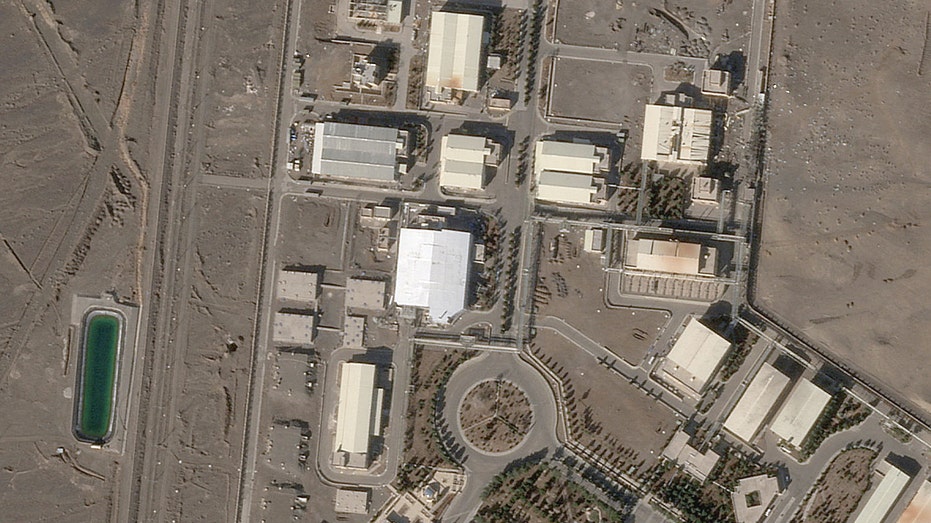
New satellite images released by Earth intelligence monitor Planet Labs show reconstruction activity appears to be underway at the Isfahan complex.

Isfahan is one of three Iranian uranium enrichment plants targeted in the U.S. military operation known as "Midnight Hammer."

The June 22 operation involved coordinated Air Force and Navy strikes on the Fordow, Natanz and Isfahan facilities.

US POSITIONS AIRCRAFT CARRIERS, STRIKE PLATFORMS ACROSS MIDDLE EAST AS IRAN TALKS SHIFT TO OMAN

Despite the damage, the satellite images show Iran has buried entrances to a tunnel complex at the site, according to Reuters.

Similar steps were reportedly taken at the Natanz facility, which houses two additional enrichment plants.

"These efforts in Isfahan involve rebuilding its centrifuge program and other activities related to uranium enrichment," Jafarzadeh said.

The renewed movements come as Iran participated in talks with the U.S. in Geneva.

On Thursday, President Donald Trump warned that "bad things" would happen if Iran did not make a deal.

While the talks were aimed at curbing Iran's nuclear program in exchange for sanctions relief, Jafarzadeh argues that for the regime, talks would be nothing more than a tactical delay.

TRUMP SAYS IRAN ALREADY HAS US TERMS AS MILITARY STRIKE CLOCK TICKS

"Supreme Leader Ali Khamenei agreed to the nuclear talks as it would give the regime crucial time to avoid or limit the consequences of confrontation with the West," he said.

Jafarzadeh also described the regime spending at least "$2 trillion" on nuclear capabilities, which he said "is higher than the entire oil revenue generated since the regime came to power in Iran in 1979." 

"Tehran is trying to salvage whatever has remained of its nuclear weapons program and quickly rebuild it," he said. "It has heavily invested in the nuclear weapons program as a key tool for the survival of the regime."

IRANIAN OFFICIAL SAYS NUCLEAR TALKS WILL CONTINUE AFTER US, TEHRAN NEGOTIATIONS HAD 'A GOOD START' IN OMAN

Jafarzadeh is best known for publicly revealing the existence of Iran’s Natanz nuclear site in 2002, which led to inspections by the International Atomic Energy Agency and intensified global scrutiny of Tehran’s nuclear ambitions.

"The insistence of the Iranian regime during the nuclear talks on maintaining its uranium enrichment capabilities, while rebuilding its damaged sites, is a clear indication that Supreme Leader Ali Khamenei has no plans to abandon its nuclear weapons program," he said.

The National Council of Resistance of Iran, led by Maryam Rajavi, exposed for the first time the nuclear sites in Natanz, Arak, Fordow and more than 100 other sites and projects, Jafarzadeh said, "despite a massive crackdown by the regime on this movement."

(Auszug von RSS-Feed)

☐ ☆ ✇ Fox News

Israeli officials reportedly warn Iran's ballistic missiles could trigger solo military action against Tehran

veröffentlicht.
Vorschau ansehen

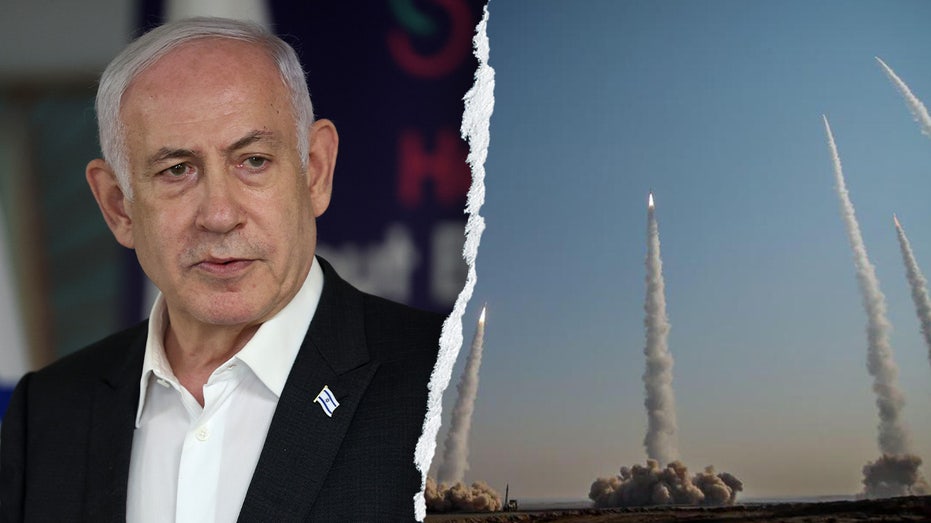
As U.S.-Iran diplomacy remains primarily focused on Tehran’s nuclear program, Israeli officials and analysts warn that ballistic missiles remain a central red line for Jerusalem and could shape any decision on unilateral action.

Before departing for his trip to Washington, Prime Minister Benjamin Netanyahu said he plans to press Israel’s priorities in the talks. "I will present to the president our views regarding the principles of the negotiations — the important principles — and, in my view, they are important not only for Israel, but for anyone in the world who wants peace and security in the Middle East."

Those priorities, Israeli officials say, extend beyond the nuclear file and include Iran’s missile capabilities. Israeli defense officials have recently warned U.S. counterparts that Iran’s ballistic missile program constitutes an existential threat to Israel and that Jerusalem is prepared to act alone if necessary, according to reporting by The Jerusalem Post.

‘ISRAEL IS ONLY THE APPETIZER’: HUCKABEE WARNS IRAN THREAT LOOMS AS NETANYAHU EYES TRUMP TALKS

The outlet reported that Israeli security officials conveyed in recent weeks their intent to dismantle Iran’s missile capabilities and production infrastructure through a series of high-level exchanges with Washington. Military planners outlined potential operational concepts aimed at degrading the program, including strikes on key manufacturing and development sites.

A spokesperson for Israel’s defense minister declined to comment on the issue.

Sima Shine, a former senior Israeli intelligence official and current senior researcher at the Institute for National Security Studies, told Fox News Digital that limiting talks to the nuclear issue risks missing what Israel considers the broader threat.

IRAN REPORTEDLY DEVELOPING CHEMICAL, BIOLOGICAL MISSILE WARHEADS AS PROTESTS SPREAD OVER COLLAPSING ECONOMY

"If negotiations deal only with the nuclear file and ignore the missiles, Israel will remain exposed," Shine said. "Iran treats its ballistic missile program as its main deterrence and will not give it up." She stressed that Tehran views them as a defensive and deterrent capability dictated by the supreme leader. Iranian Foreign Minister Abbas Araghchi said his country would not negotiate on its ballistic missile program, rejecting a core U.S. demand and further dimming prospects for a breakthrough deal. Shine described that stance as a fundamental red line for Israel. 

She also warned that Tehran may be stalling diplomatically while assessing whether Washington will limit the talks to nuclear constraints alone.

"They have room to show flexibility on enrichment," she said, noting that activity slowed after strikes on facilities, "but missiles are different. That they would not discuss."

Israeli concerns extend beyond the negotiating table. A former intelligence official familiar with strategic planning said Israel retains the capability to strike independently if necessary.

TRUMP WARNS IRAN, DELAYS STRIKES AS RED LINE DEBATE ECHOES OBAMA’S SYRIA MOMENT

"Israel can act by itself if there is no choice," the former official said, adding that missile expansion and regional threats would be key triggers.

Shine says the optics of Israeli pressure on Washington could complicate matters.

"If missiles become the central public demand, it may look as if Israel is pushing the U.S. toward military action," she said. "If that fails, Israel could be blamed."

She added that Iran’s missile arsenal is not aimed solely at Israel but forms part of a broader deterrence strategy against the United States and regional adversaries.

For Israel, the implication is clear. A nuclear agreement that leaves Iran’s missile infrastructure untouched could be seen in Jerusalem as stabilizing the regime while leaving the most immediate threat in place. That calculation, Israeli analysts say, defines the red line.

(Auszug von RSS-Feed)
❌