NEWS 23

🔒
❌
Stats
Es gibt neue verfügbare Artikel. Klicken Sie, um die Seite zu aktualisieren.

☐ ☆ ✇ Breitbart

Dem Rep. Crow: Khamenei Had Fatwa Against Nukes, Now That's Gone

veröffentlicht.
Vorschau ansehen

On Monday’s broadcast of the Fox News Channel’s “The Story,” Rep. Jason Crow (D-CO) said that Ali Khamenei “did have a fatwa in place that said no development of nuclear weapons.” But now that fatwa has been ended. Host Martha MacCallum

The post Dem Rep. Crow: Khamenei Had Fatwa Against Nukes, Now That’s Gone appeared first on Breitbart.

(Auszug von RSS-Feed)

☐ ☆ ✇ Fox News

Iran in crisis as US talks collapse, Mojtaba’s ‘mafia’ regime blocks Khamenei burial: analyst

veröffentlicht.
Vorschau ansehen

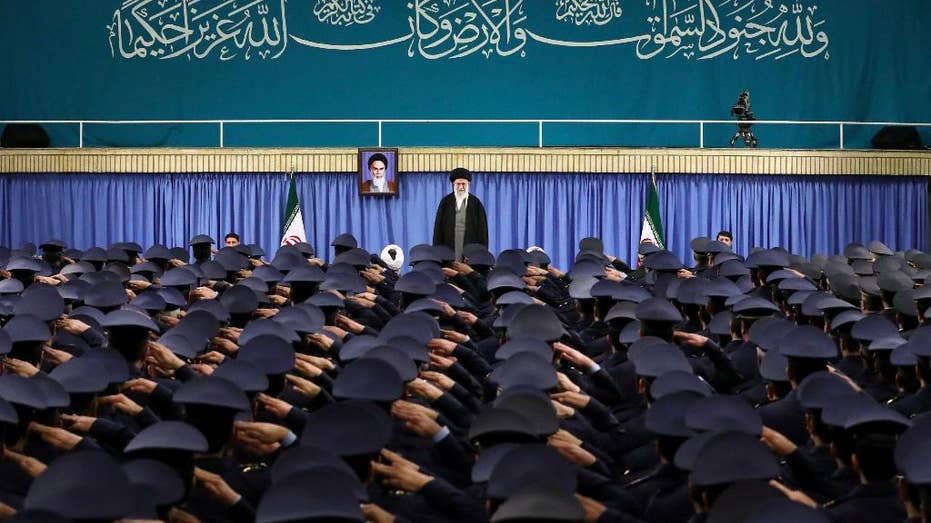
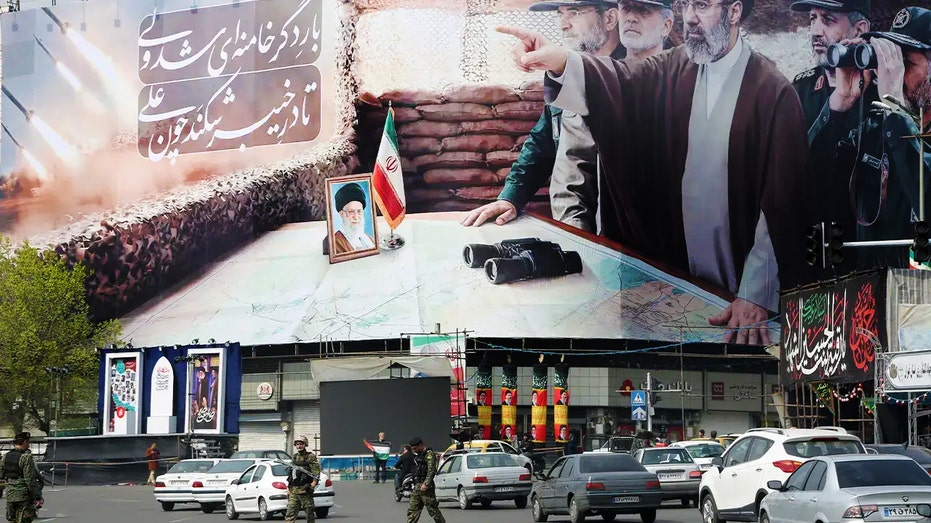
A prolonged delay in the burial of Iran’s supreme leader, Ayatollah Ali Khamenei, signals a deepening crisis inside the Islamic Republic, according to a prominent Iranian strategist.

Dr. Ramesh Sepehrrad’s remarks came as peace talks between the United States and Iran stalled and internal tensions raised questions about the regime’s stability.

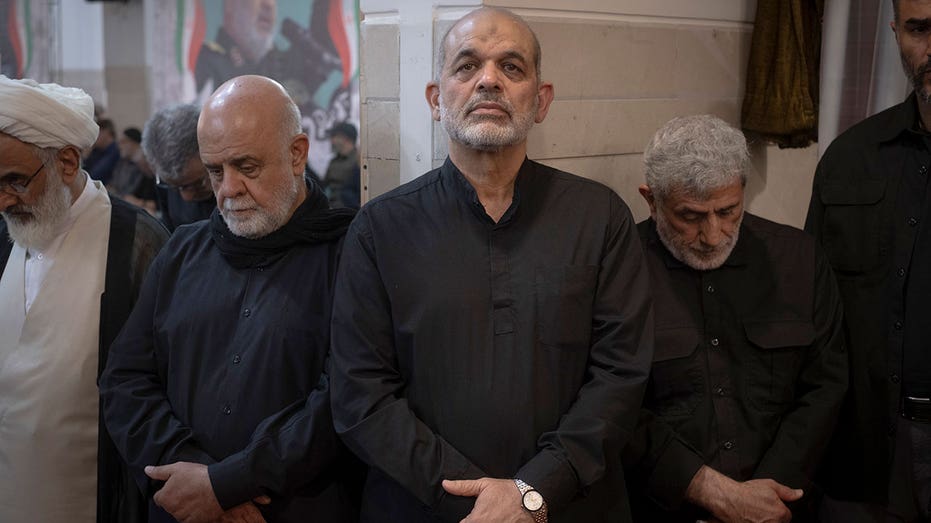
Fortieth-day mourning ceremonies for Khamenei began in Iran on April 9, with authorities withholding information about his burial more than 40 days after his killing. A three-day state funeral scheduled for early March 2026 had already been postponed.

IRAN'S CEASEFIRE PUSH MAY BE A 'CYCLE OF DECEPTION,' ANALYSTS WARN AS SHADOWY FIGURE GAINS POWER

"Forty-four days have passed, and the regime does not have the confidence to publicly bury Mojtaba’s dead father," Sepehrrad of the Organization of Iranian American Communities (OIAC) told Fox News Digital.

"That is an indicator of the fear within this regime from top to bottom," Sepehrrad added, before describing how, usually, "a religious regime believes that their dead must be buried in 24 hours."

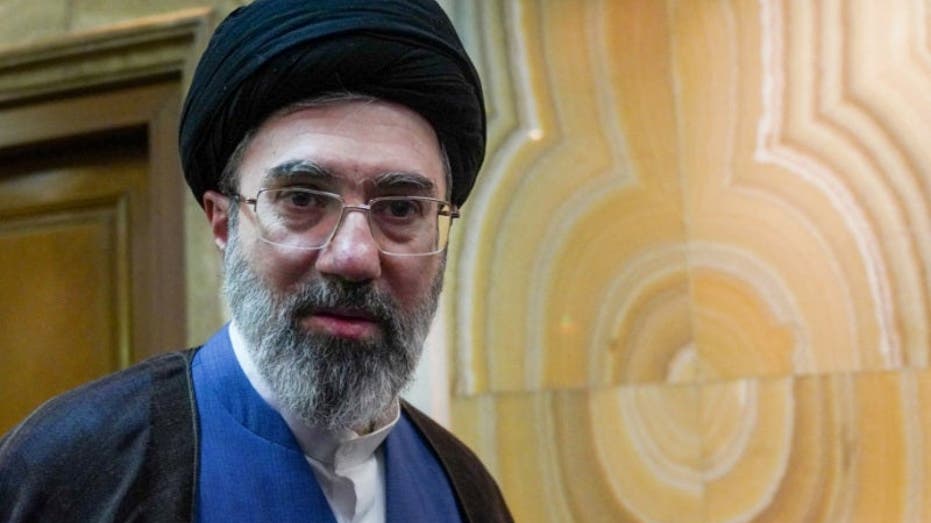
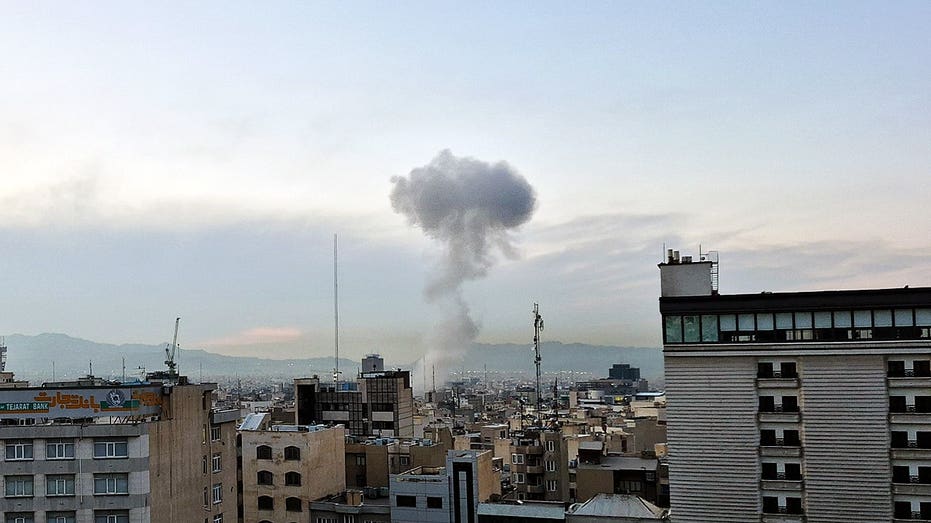
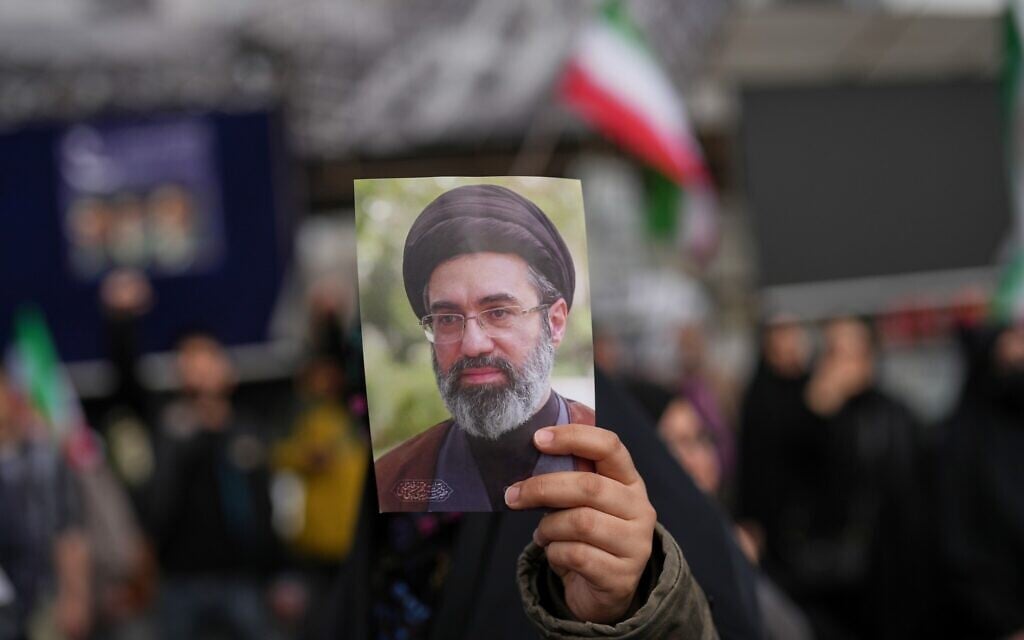
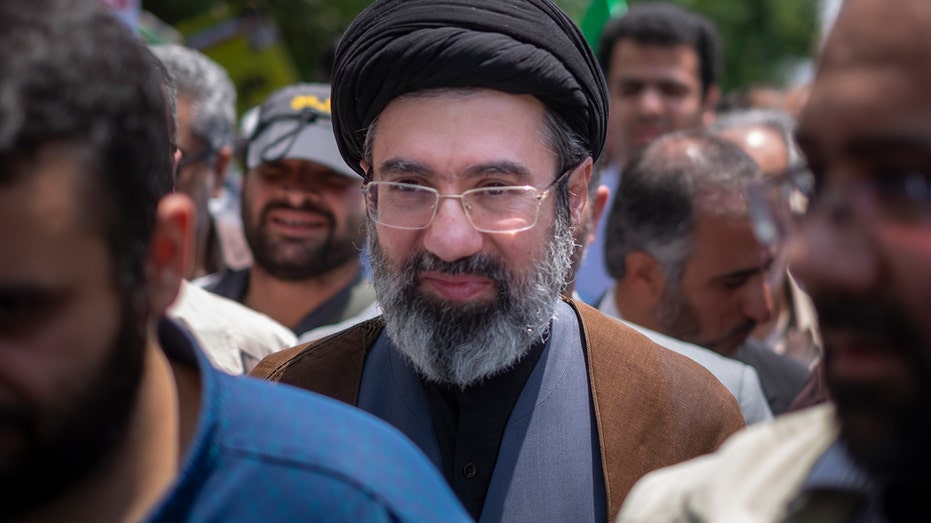
Khamenei was killed Feb. 28 in a strike targeting a regime compound in central Tehran, with a separate strike affecting his son, Mojtaba Khamenei, 56, who succeeded him.

Mojtaba is said to be still recovering from severe facial and leg injuries, three people close to his inner circle told Reuters on April 11.

Khamenei’s face was disfigured in the attack on the supreme leader’s compound in central Tehran, and he suffered a significant injury to one or both legs, three sources told the outlet.

"The 56-year-old is nonetheless recovering from his wounds and remains mentally sharp, according to the people, who requested anonymity to discuss sensitive matters."

IRAN MODERATES PUSHING TRUMP DEAL RISK BEING ‘ELIMINATED’ AS REGIME FRACTURES DEEPEN

He is taking part in meetings with senior officials via audio conferencing and is engaged in decision-making on major issues, including the war and negotiations with Washington, two of the sources say, according to reports.

The report came as Iran navigated diplomatic efforts with the U.S. in Islamabad aimed at easing tensions amid a two-week ceasefire, which ultimately failed to produce a breakthrough.

"Mojtaba input in the broad red lines of negotiations, even if he is not the public face," Sepehrrad claimed. "At the end of the day, for more than 10 years, he served as his father’s right-hand man and as a conduit to the IRGC."

"Mojtaba may be less rhetorical, less publicly ideological, and more operational because his primary focus is survival of the regime."

Iran also confirmed Sunday it had no plans for further peace talks after the marathon summit, where Pakistan mediated.

"No plan has yet been announced for the time, place, or next round of negotiations," Iranian state news agency Nour reported Saturday, citing the country’s Supreme National Security Council, with no statement from the new Supreme Leader.

IRAN'S SUPREME LEADER MOJTABA KHAMENEI 'MISFUNCTIONING,' NOT CONTROLLING REGIME: SOURCES

"Mojtaba is less the supreme leader in the traditional sense and more the coordinator of a security-led system," Sepehrrad explained before describing him as "more like a security-backed coordinator."

"This regime does not communicate with one unified voice. It communicates by function," Sepehrrad said.

"One channel negotiates, another threatens, another punishes, and another tries to maintain ideological continuity. It is now a mafia," the strategist claimed.

"The key point is not harmony but division of labor. What holds them together is regime survival, not trust."

"What we are seeing now is deeper: a leader who lacks organic authority and therefore governs through the institution that controls force," Sepehrrad said.

On the Iranian side, negotiations, the analyst said, also did involve "diplomats," but a wider circle of security-linked figures shaping Tehran’s posture, reflecting the increasing dominance of hardline institutions.

US-SANCTIONED MOJTABA KHAMENEI NAMED IRAN’S NEXT SUPREME LEADER AFTER FATHER’S DEATH: REPORTS

"This was a brittle coalition of security men," Sepehrrad said, before describing how Mojtaba is "at the top, but is heavily reliant on the Guards, Parliament Speaker Mohammad Bagher Ghalibaf, SNSC chief Mohammad Bagher Zolghadr, IRGC commander Ahmad Vahidi, Judiciary chief Mohseni-Ejei, and law enforcement chief Ahmad-Reza Radan."

"Several of the most important surviving figures are not primarily diplomats," Sepehrrad said before suggesting that that should "change how we should read everything coming out of Tehran."

"That is a different system from the one many Western analysts still think they are dealing with," Sepehrrad explained. "Dual track — tactical flexibility in talks and a harsher repression at home."

"While the regime negotiates to buy time, reduce pressure on its forces, and prevent broader external escalation, internally, it is likely to intensify arrests, executions, intimidation, and internet controls now," the strategist warned.

"The regime fears internal unrest more than diplomacy," Sepehrrad said.

(Auszug von RSS-Feed)

☐ ☆ ✇ Breitbart

‘Crushed’: Netanyahu Says U.S.–Israel Campaign Destroyed Iran’s Nuclear, Missile Programs -- Regime ‘Fighting to Survive’

veröffentlicht.
Vorschau ansehen

Israeli Prime Minister Benjamin Netanyahu said Saturday night the joint U.S.-Israel campaign against Iran has delivered “historic achievements,” declaring it has succeeded in “crushing” the regime’s nuclear and ballistic missile programs.

The post ‘Crushed’: Netanyahu Says U.S.–Israel Campaign Destroyed Iran’s Nuclear, Missile Programs — Regime ‘Fighting to Survive’ appeared first on Breitbart.

(Auszug von RSS-Feed)

☐ ☆ ✇ Fox News

Iran's supreme leader severely disfigured by US strikes: report

veröffentlicht.
Vorschau ansehen

Iran's new Supreme Leader Mojtaba Khamenei is severely disfigured after sustaining leg and face injuries during joint U.S.-Israel airstrikes on Tehran in February, Reuters reported Saturday.

Khamenei is recovering after incurring the injuries in the February 28 airstrikes that killed his father, former Supreme Leader Ayatollah Ali Hosseini Khamenei. He has not been seen publicly since being hospitalized.

Despite the injuries, Khamenei allegedly remains "mentally sharp," Reuters reported, citing a trio of anonymous sources within his inner circle. The new supreme leader is in communication with the Iranian delegation in Pakistan for peace talks with a U.S. delegation led by Vice President JD Vance.

The Reuters report corroborates an earlier statement from Secretary of War Pete Hegseth, who told reporters March 13 that Khamenei was "likely disfigured."

IRAN POSTPONES TEHRAN FAREWELL CEREMONY FOR KHAMENEI WHERE LARGE CROWDS WERE EXPECTED TO GATHER

He then reiterated the claim at a press conference Thursday while outlining the U.S. military's achievements in Iran.

"Their top leadership was systematically eliminated, their previous Iranian supreme leader dead, the supreme national security council secretary dead, the supreme leader office advisor dead, the supreme leader military office chief dead, the defense minister no longer with us, the IRGC commander dead, the armed forces general staff commander dead, the intelligence minister dead, the IRGC navy commander no longer here, the IRGC Intel chief dead," Hegseth said.

"I skipped over a bunch, and I could go on and on and on, to include the new so-called new supreme leader, wounded and disfigured. This new regime was out of options and out of time, so they cut a deal."

NEW IRANIAN SUPREME LEADER 'LIKELY DISFIGURED,' HEGSETH SAYS

Despite his weakened condition, Khamenei vowed to put up resistance in a defiant written statement Thursday.

"Iran is not seeking war but will not forfeit its rights and considers all resistance fronts as a unified entity," the statement said.

Hegseth dismissed the statement as "weak" in his March press conference.

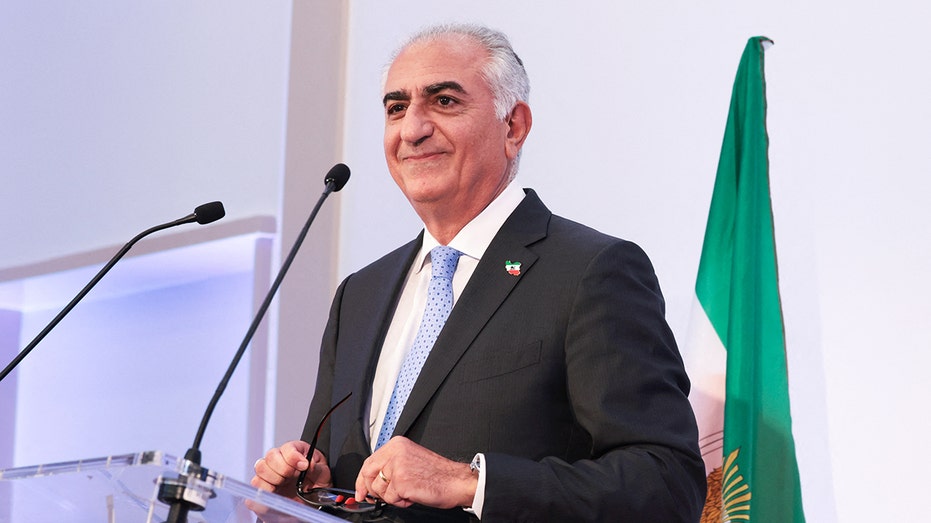
EXILED IRANIAN CROWN PRINCE SAYS REGIME IS 'CRUMBLING' AFTER KILLING OF KHAMENEI, OTHER LEADERS

"It was a written statement. Iran has plenty of cameras and plenty of voice recorders. Why a written statement?" Hegseth asked. "I think you know why. His father, dead. He's scared, he's injured, he's on the run and he lacks legitimacy. It's a mess for them. Who's in charge? Iran may not even know."

Sources reportedly told Reuters that Khamenei could enter the public spotlight in a month or two but only if "his health and the security situation allowed.

While many publicly question where and when we may see the supreme leader again, Iranian hardliners stress the importance of him keeping a low-profile.

"Why should he ​appear in public? To become a target for these criminals?" an Iranian militiaman asked Reuters in a text message.

(Auszug von RSS-Feed)

☐ ☆ ✇ Times of Israel

Iran’s supreme leader has disfiguring facial wounds and may have lost a leg, sources say

veröffentlicht.
Vorschau ansehen

Individuals close to Mojtaba Khamenei's inner circle say he's mentally sharp, engaged in decision-making, meeting with officials via audio conferencing; US intel said to believe he lost limb on war's 1st day

The post Iran’s supreme leader has disfiguring facial wounds and may have lost a leg, sources say appeared first on The Times of Israel.

(Auszug von RSS-Feed)

☐ ☆ ✇ Breitbart

Iran’s Quds Force Chief Esmail Qaani Resurfaces After Disappearance Sparks Rumors

veröffentlicht.
Vorschau ansehen

Brig. Gen. Esmail Qaani, commander of the Iranian Islamic Revolutionary Guard Corps (IRGC) Quds Force, resurfaced on Thursday with a message to his forces, after an absence that led to speculation he was killed by a U.S. or Israeli airstrike.

The post Iran’s Quds Force Chief Esmail Qaani Resurfaces After Disappearance Sparks Rumors appeared first on Breitbart.

(Auszug von RSS-Feed)

☐ ☆ ✇ Fox News

Inside Iran’s ruling ideology: How a ‘holy mission’ and messianic doctrine fuel regime extremism

veröffentlicht.
Vorschau ansehen

For Mehdi Ghadimi, the ideology behind Iran’s ruling system is not theoretical. It was something he was taught from childhood.

"You were told you are a part a small group chosen by God… to revive God’s religion and fight to defend it," the Iranian journalist told Fox News Digital, describing the message repeated in schools, mosques and state media.

That early indoctrination, he said, framed the world in stark terms: a divine struggle between good and evil, with Iran’s leadership positioned at the center of a religious mission.

Iran’s ruling system is often described in political terms, but critics and former insiders say its core is far more radical — a belief structure rooted in religious absolutism, messianic expectation and a worldview that leaves little room for compromise.

IRAN'S SUPREME LEADER MOJTABA KHAMENEI 'MISFUNCTIONING,' NOT CONTROLLING REGIME: SOURCES

As a new generation of commanders rises within the Islamic Revolutionary Guard Corps following recent military blows under Operation Epic Fury, analysts warn that this ideology may become even more entrenched.

Figures such as Mohammad Bagher Ghalibaf and Ahmad Vahidi are often cited as part of a cohort shaped by years of conflict in Iraq and across the region — one that sees religion, security and survival as inseparable.

At the center of that worldview is the belief in the Mahdi — a messianic figure in Shiite Islam whose return is expected to usher in a final era of justice after chaos.

Twelver Shiism is the dominant belief for Shias, the Mahdi, identified as the 12th Imam, is alive but hidden and will one day return. Iran’s political system positions the supreme leader as his caretaker. 

Critics say that framework gives political authority a religious dimension that can make it difficult to challenge.

"For the mullahs in Iran, the Mahdi idea is less about personal faith and more about power," said Lisa Daftari, foreign policy analyst and editor-in-chief at The Foreign Desk. "They use it to suggest that the supreme leader’s views are not just political opinions, but carry a kind of divine weight."

"The system is set up so that disagreeing with the leader can be portrayed as questioning the Hidden Imam himself," she said.

"That turns ordinary policy debates into something almost untouchable… you’re no longer arguing with a politician, you’re seen as pushing back against a sacred figure."

IRAN'S CEASEFIRE PUSH MAY BE A 'CYCLE OF DECEPTION,' ANALYSTS WARN AS SHADOWY FIGURE GAINS POWER

Ghadimi argues that this structure leaves little room for genuine political diversity.

"Groups labeled as ‘moderate,’ ‘reformist,’ or ‘pro-Western’ are created so that the West can negotiate with them," he said.

"No one within the structure of the Islamic Republic thinks about anything other than defeating the Western world and establishing Islamic dominance globally."

For Iran expert Daftari, the Mahdi doctrine also provides a flexible justification for policy.

"A lot of insiders know perfectly well that this language is being used strategically," she said. "The Mahdi story gives the leadership a way to claim moral and religious cover for decisions that are often about preserving the regime or expanding its reach."

"When they talk about ‘preparing the ground’ for the Mahdi, that phrase can be stretched to cover almost anything — crushing protests, backing militias abroad or asking people to accept more economic pain."

"This religious framing makes compromise much harder," she added. "If you convince your base that you are carrying out a holy mission… backing down can be painted as a betrayal of God’s plan."

MEET IRAN'S HARDLINE SPEAKER WHO THREATENED TO BURN US FORCES — REPORTEDLY TEHRAN'S POINT MAN FOR TALKS

Ghadimi said that message is reinforced from childhood, shaping how generations understand their role in society.

In schools, media and mosques, he said, ideology was embedded into everyday life, leaving little space for alternative narratives.

That framing, analysts say, helps explain how the system sustains itself even under pressure.

It also contributes to a worldview in which conflict is not temporary, but part of a larger, ongoing struggle.

"The Islamic government, based on its own interpretation of the Quran, considers itself obligated to enforce Islamic law across the entire world," Ghadimi told Fox News Digital, adding that the regime "sees itself as the leader of this belief globally."

"They harbor hatred toward Iranians and Jews, whom they regard as enemies of Islam since its very beginning, and they consider killing them—such as on Oct. 7 and in the recent killings in Iran — to be divinely rewarded acts, much like the beliefs once held by Abu Bakr al-Baghdadi," he said.

"No one within the structure of the Islamic Republic thinks about anything other than defeating the Western world and establishing Islamic dominance globally," Ghadimi said.

In that framework, critics say, Iran is not simply pursuing national interests but acting within what it sees as a broader religious mandate.

INSIDE IRAN’S MILITARY: MISSILES, MILITIAS AND A FORCE BUILT FOR SURVIVAL

Some critics argue that within this framework, violence can take on religious meaning.

"They consider killing them… to be divinely rewarded acts," Ghadimi said.

Still, analysts say the combination of messianic belief and absolutist ideology creates a system in which confrontation is not only expected, but justified.

An Iranian official rejected those characterizations and warned that economic collapse and destruction caused by war could drive long-term resentment.

"If a country is turned into ruins, poverty spreads. Out of such poverty comes hatred, resentment and a desire for revenge, and this cycle of hostility can continue for years. It is not correct to think that everything will simply end the day after a ceasefire. Even if there were no hostile government left in place, people within society who have lost everything may still be driven to seek retribution."

For Ghadimi, the issue is not just how Iran behaves, but how it understands itself.

If the system is rooted in a belief that blends religion, power and mission, critics say, then policies like repression at home and confrontation abroad may not be temporary tactics but structural features.

And if moderation within that system is limited, as some argue, then the challenge for policymakers is not simply negotiation, but understanding the ideology that drives it.

(Auszug von RSS-Feed)

☐ ☆ ✇ Fox News

Iran's ceasefire push may be a 'cycle of deception,' analysts warn as shadowy figure gains power

veröffentlicht.
Vorschau ansehen

President Donald Trump suggested Wednesday that Iran may be seeking a ceasefire, but analysts say real power lies with hardline figures inside the Islamic Revolutionary Guard Corps, including newly prominent Commander Ahmad Vahidi.

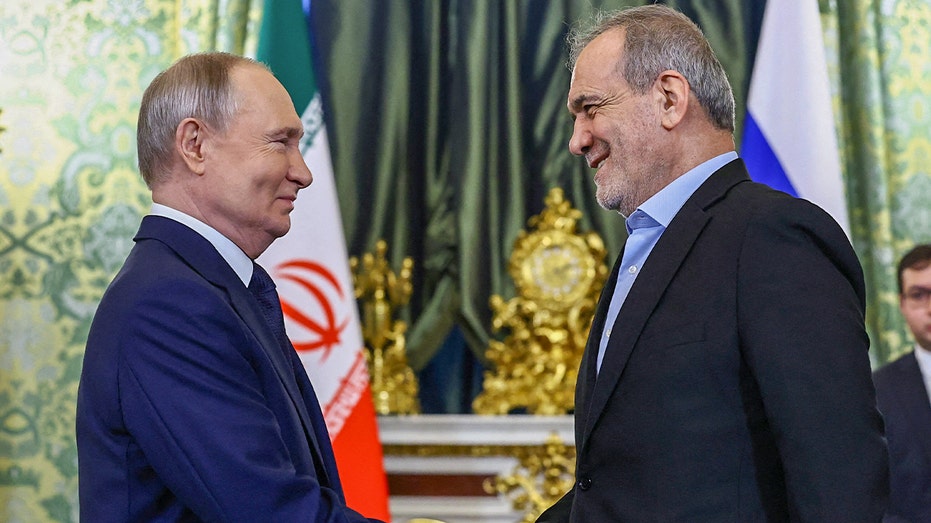
Trump did not name the Iranian figure he was referring to, but his comment likely pointed to President Masoud Pezeshkian, writing: "Iran’s New Regime President, much less Radicalized and far more intelligent than his predecessors, has just asked the United States of America for a CEASEFIRE! We will consider when Hormuz Strait is open, free, and clear. Until then, we are blasting Iran into oblivion or, as they say, back to the Stone Ages!!!"

Experts caution, however, that Iran’s president does not control decisions of war and peace.  

"He clearly does not have the authority to turn on or turn off a major military conflict with the United States," Behnam Ben Taleblu, a senior fellow at the Foundation for Defense of Democracies, told Fox News Digital.

TRUMP’S IRAN STRATEGY SHOWCASES ‘DOCTRINE OF UNPREDICTABILITY’ AMID STRIKE THREATS AND SUDDEN PAUSE

Instead, analysts say real power lies with senior figures tied to the Islamic Revolutionary Guard Corps, including Vahidi, Parliamentary speaker Mohammad Bagher Ghalibaf, and security official Mohammad Zolghadr, all of whom operate within overlapping centers of influence.

Attention is turning to the new terror chief seen as an extremist pulling strings, Vahidi — a longtime Islamic Revolutionary Guard Corps commander whose reemergence highlights a broader shift underway inside Iran’s leadership.

Beni Sabti, an Iran expert at the Israeli Institute for National Security Studies, warned that even when Iran signals interest in a "ceasefire," it may not reflect a Western understanding of the term. 

He pointed to the concept of "hudna," describing it as "a ceasefire with deception — they stop when they are weak, rebuild their strength, and then attack again, whether against Israel or the United States." 

Sabti added that such pauses can become "a cycle of violence that does not end," driven by ideological motivations, and should not be interpreted as a genuine end to hostilities.

At the center of that uncertainty is Vahidi, the new Islamic Revolutionary Guard Corps (IRGC) commander. 

"He is a very violent man and belongs to a generation that fought in guerrilla warfare," Sabti told Fox News Digital.

Sabti described Vahidi as part of an early cadre of Iranian operatives who built ties with militant groups in Lebanon before and after the 1979 revolution, relationships that later became central to Iran’s regional strategy. Some accounts suggest Vahidi trained in camps linked to Palestinian and Lebanese factions in southern Lebanon, helping lay the groundwork for Iran’s long-standing alliance with Lebanon-based terror group Hezbollah. 

DESTROY THE REGIME’S POWER WITHOUT OCCUPYING IRAN: A SMARTER WAR PLAN

Vahidi rose through the ranks of the Islamic Revolutionary Guard Corps and went on to serve as commander of its elite Quds Force in the 1990s, a unit responsible for overseas operations.

He has been linked to some of the deadliest attacks attributed to Iranian-backed networks abroad, including the 1992 bombing of the Israeli Embassy in Argentina and the 1994 bombing of the AMIA Jewish community center in Buenos Aires.

Sabti said Vahidi was also accused of maintaining connections with al Qaeda figures following the Sept. 11 attacks, reflecting what he described as Iran’s willingness to cooperate with groups targeting Western and Israeli interests.

Despite later holding positions that appeared political or bureaucratic, Sabti said Vahidi never truly stepped away from the Revolutionary Guards, Iran’s powerful military and intelligence arm, meaning his role remained closely tied to the regime’s security and operational apparatus.

"He always remained part of the Revolutionary Guards — even wearing uniform," he said. "That’s common in Iran. Even when they move into politics, they stay within the force."

Sabti also pointed to Vahidi’s alleged role in suppressing Kurdish uprisings in northwestern Iran in the aftermath of the 1979 Islamic Revolution, underscoring his longstanding involvement in internal security operations. 

HEGSETH REVEALS COVERT VISIT TO TROOPS FIGHTING IN OPERATION EPIC FURY

Vahidi’s renewed prominence comes as Iran’s internal structure appears increasingly fragmented, with authority concentrated in overlapping and sometimes competing networks.

"It’s not clear how coordinated either the military or political actions of the government of the Islamic Republic is today," Ben Taleblu said.

He described Iran as "a system of men, not a system of laws," where personal ties and informal influence often outweigh formal titles.

That dynamic has intensified as the war continues

"We are seeing the IRGC ascendancy… across a host of Iranian political and security institutions," he said.

"This IRGC ascendancy will mean a more crass Islamic Republic, but it comes at a time when this regime is militarily less capable than ever before," he added.

Sabti said Vahidi may now be more influential than other prominent figures in Tehran, including parliamentary speaker Mohammad Bagher Ghalibaf and Supreme Leader Ali Khamenei’s son, Mojtaba Khamenei.

"In my view, he is more dominant right now, even if they are coordinated. This is not a time for internal competition," Sabti said.

He warned that Vahidi’s rise could further harden Iran’s posture.

"He brings even more radicalization into the system and may not want to stop the war, because it serves the interests of the Revolutionary Guards to continue," Sabti said.

"They could become masters of the region if the United States folds — and that is very much in his interest."

Trump’s suggestion that Iran is seeking a ceasefire has raised hopes of a potential diplomatic opening, but experts caution that such signals may not reflect a unified position inside Iran. 

"The question is what was shared with President Trump genuine, or is it wheeling and dealing of just one ambitious person?" Ben Taleblu said.

"Pezeshkian clearly does not have the authority to turn on or turn off a major military conflict with the United States," Ben Taleblu said.

That leaves open the possibility that any outreach could be tactical, fragmented, or even contradictory.

Fox News Digital reached out to the White House for comment but did not receive a response in time for publication.

(Auszug von RSS-Feed)

☐ ☆ ✇ Fox News

Iran's war against the US and Israel is being fueled by North Korean weapons, expert warns

veröffentlicht.
Vorschau ansehen

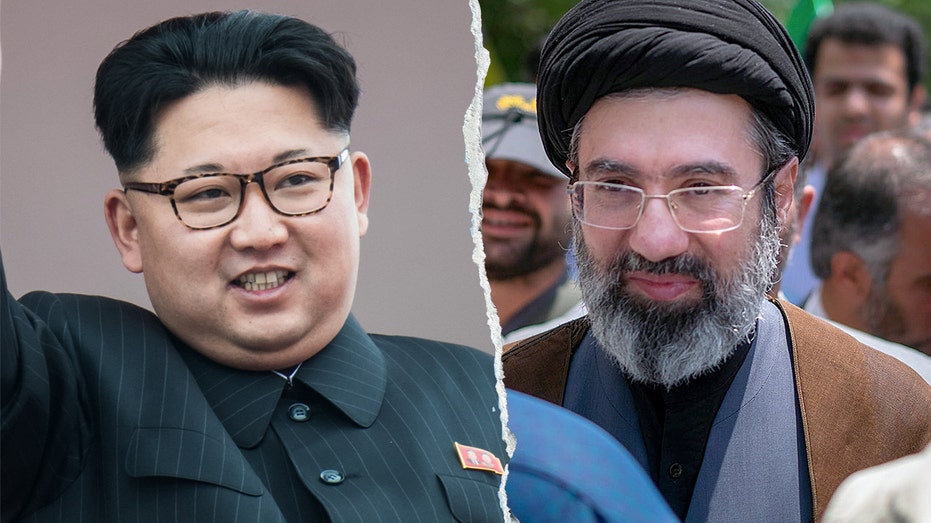
The Islamic Republic of Iran’s vast missile system is the brainchild of the U.S.-designated state-sponsor of terrorism, the communist North Korea regime, which works hand in glove with Iran, according to one of the world’s leading experts on the Iran-North Korea strategic alliance.

"The missile launched at Diego Garcia was a Musudan. The Iranians bought 19 of these from the North Koreans and took delivery in 2005. They have had this capability since 2005 — and this is no ‘secret weapon,'" Bruce Bechtol, who co-authored with Anthony Celso the groundbreaking book "Rogue Allies: The Strategic Partnership Between Iran and North Korea," told Fox News Digital.

Fox News Digital reported last week that Iran significantly escalated its war effort against the U.S. with its launch of two intermediate-range ballistic missiles toward Diego Garcia—roughly 2,500 miles from Iran.

TRUMP PROVEN RIGHT ON IRAN'S LONG-RANGE MISSILE CAPABILITY AS REGIME TARGETS US-UK BASE, EXPERTS SAY

Bechtol said, "The most important threat from Iran as the war with the United States and Israel has evolved has been the ballistic missiles, launched not only at U.S. facilities and Israeli cities, but also at neighboring Islamic countries. Thus, it is important to consider this capability and where Iran got it."

He said, "The short-range ballistic missiles that Iran has launched at key U.S. facilities and at neighboring Arab states include a key system – the 'QIAM.' The QIAM was developed and improved with North Korean assistance… North Korea has proliferated a lot to Iran that we are seeing right now in the war."

The joint U.S.-Israeli war against Iran’s regime, the world’s worst state-sponsor of terrorism, according to the U.S. State Department, has entered its fifth week.

Bechtol, who is a professor of political science in the Department of Security Studies at Angelo State University in Texas, noted that, according to the Wisconsin Project, North Korea had constructed a large missile test facility at Emamshahr, a city in the Fars Province in Iran, and a tracking facility at Tabas in South Khorasan province.

He said North Korea aided Iran with crucial technology "for targets farther away from Iran."

"The North Koreans proliferated around 150 No Dong systems to Iran in the late 1990s. The Iranians were apparently very happy with the missiles the North Koreans provided them, and, following the earlier precedent of the Scud C factory, contracted with Pyongyang to build a No Dong facility in Iran."

AFTER THE STRIKES, HOW WOULD THE US SECURE IRAN’S ENRICHED URANIUM?

Bechtol continued, "The Iranians called this ‘new’ missile the Shahab-3. The Shahab-3 is almost an exact copy of the No Dong. Once the Shahab-3 was up and running, the North Koreans moved forward with the Iranians in improving its range and lethality."

He said, "With assistance from the North Koreans, the Iranians were then able to produce (at the No Dong facility) the Emad and the Ghadr. The Emad has a range of 1,750 kilometers (approx 1,087 miles) and the Ghadr has a range of 1,950 kilometers (approximately 1,212 miles.) The Iranians have used these two systems to target not only Israel, but their Arab neighbors (including U.S. bases located in these countries) throughout the ongoing first stages of this conflict."

Bechtol said the North Koreans spawned an Iranian missile warhead that weighs a ton and a half to two tons on the powerful Khorramshahr-4. "There is another system capable of hitting Israel that has been even more lethal than any of the systems described thus far. This system is called the ‘Khorramshahr,’ and the fourth version of this system, appropriately called the ‘Khorramshahr-4,’ has been proven to carry a warhead larger than any other in Iran’s missile inventory, armed with what appears to be cluster munitions," he said.

He described the strategic partnership, noting: "North Korea is the seller and Iran is the buyer. North Korea proliferates weapons systems, technology, parts and components, technicians, engineers and specialists and military capabilities (such as the building of underground facilities) to Iran. Iran pays North Korea with cash and oil. Simple as that."

Bechtol said the only way to stop this is through sanctions enforcement against North Korea. "The sanctions that are needed are already on the books. But the USA and our key allies need to robustly enforce them. We need to go after banks, front companies and cyber entities in order to squeeze the money and contain or destroy the supply chain."

He said, "More emphasis needs to be placed, and more action needs to be taken using the Proliferation Security Initiative — an underused aspect of preventing North Korea's arms from flowing to rogue nations and terrorist groups.  If you cut off the supply chain, you cut off the proliferation."

(Auszug von RSS-Feed)

☐ ☆ ✇ Fox News

Meet Iran's hardline speaker who threatened to burn US forces — reportedly Tehran's point man for talks

veröffentlicht.
Vorschau ansehen

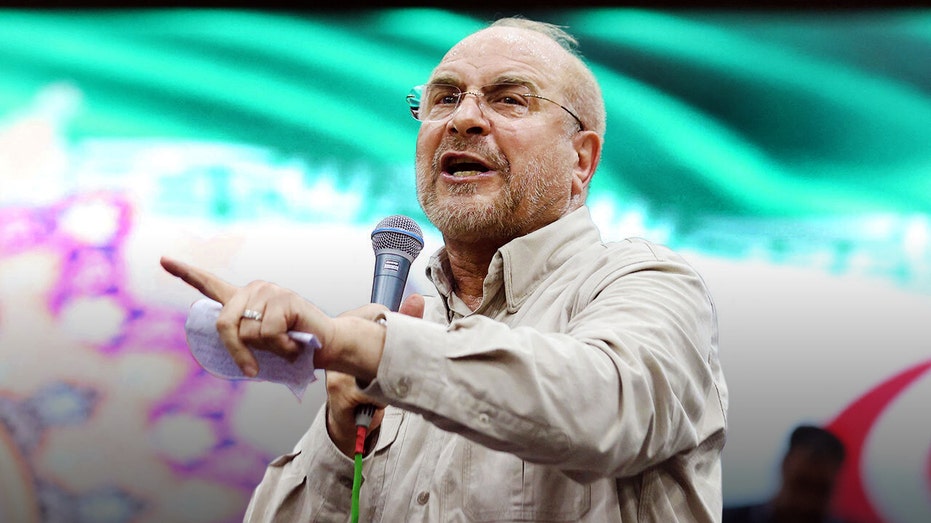
The man reportedly being floated by the Trump administration as a possible interlocutor with Iran is also one of the regime’s most hardline figures — Iranian parliament speaker Mohammad Bagher Ghalibaf. The longtime Revolutionary Guards commander is widely described by experts as a loyal "yes man," with a record of threats against the United States and deep ties to the system’s inner circle.

That contradiction underscores the central question facing U.S. policymakers: Even if Washington is speaking to the "right people," as President Donald Trump has claimed, can someone like Ghalibaf actually deliver?

"Ghalibaf doesn’t have an independent line. His strength is that he is a ‘yes man,’" said Beni Sabti, an Iran expert at the Institute for National Security Studies. He added, "If he is told to shake hands with Special Envoy Steve Witkoff, he will do it. If he is told to escalate, he will. It is not about moderation, it is about who gives the orders."

AS AIRSTRIKES RAIN DOWN ON THE IRANIAN REGIME, CAN A FRACTURED OPPOSITION UNITE TO LEAD IF IT FALLS?

Ghalibaf, 64, is a product of Iran’s security establishment.

He rose through the ranks of the Islamic Revolutionary Guard Corps during the Iran-Iraq War, eventually becoming commander of the IRGC air force.

"He even completed flight training abroad, which was not unusual at the time, with France reportedly assisting at one stage. Until recently, he was still conducting training flights in France," said Sabti.

He later served as Iran’s national police chief, overseeing internal security forces responsible for suppressing protests, including the 1999 student uprising, alongside Qassem Soleimani.

After transitioning into politics, Ghalibaf attempted to run for president multiple times but failed. He instead built his career through loyalty to the system, serving as Tehran’s mayor for more than a decade before becoming speaker of parliament in 2020.

"Ghalibaf went on to serve in senior national roles and is now speaker of parliament. He has consistently aligned himself with the supreme leader and follows directives rather than setting his own independent positions," Sabti said.

"His name has also been linked to multiple corruption allegations, including misuse of oil revenues and sanctions evasion networks involving his family. His sons have reportedly been involved and are under sanctions," Sabti said, adding, "There have also been public scandals involving family members traveling abroad and making luxury purchases, including widely circulated images of them arriving with numerous high-end Gucci suitcases."

IRAN’S NEW SUPREME LEADER IS ‘HIS FATHER ON STEROIDS,’ EXPERTS WARN OF HARDLINE RULE

Ghalibaf’s wartime statements reflect a hardening tone inside Iran’s leadership.

He has rejected ceasefire terms, declaring Iran would continue fighting "until the enemy truly regrets its aggression."

He has also warned that attacks on Iranian infrastructure would trigger retaliation across the region, including against energy targets.

At the same time, he has publicly denied any negotiations with the United States, calling reports of talks "fake news" and accusing Washington of manipulating markets.

In remarks aired on Iranian television on Jan. 12, 2026, he warned that U.S. forces would face catastrophic consequences if they confronted Iran. "Come, so you can see what catastrophe befalls American bases, ships and forces," he said, adding that American troops would be "burned by the fire of Iran’s defenders."

In the same remarks, broadcast and translated by MEMRI, he described the U.S. president as "delusional and arrogant," and framed Iran’s ideology as a growing global movement.

More recently, he escalated further. He warned that "the blood of American soldiers is the personal responsibility of Trump," and vowed Iran would "settle accounts with the Americans and Israelis," adding that "Trump and Netanyahu crossed our red lines and will pay the price."

He has also threatened retaliation against regional energy infrastructure, signaling a willingness to expand the conflict beyond direct military confrontation.

"He’s considered relatively moderate in the current Iranian context, but he’s not the one calling the shots. He’s not the leader himself," Danny Citrinowicz, Middle East, national security and intelligence expert, told Fox News Digital, adding that Ghalibaf may serve as a channel to Iran’s leadership, but not as the ultimate authority.

"If you want to speak to someone in Iran, he’s probably the point of contact," he said. "But he’s not deciding anything. Even if he wants to do something, he has to get approval from the IRGC and the supreme leadership."

Sabti said, "Some point to periods during Rouhani’s presidency when he appeared to align with Rouhani and describe him as somewhat moderate, but that is misleading."

TRUMP SAYS IRAN WANTS TO TALK BUT WHO WILL LEAD AFTER KHAMENEI?

Analysts say the bigger issue is not Ghalibaf himself, but the system he operates within.

Behnam Ben Taleblu, a senior fellow at the Foundation for Defense of Democracies, said: "Those who see the ascendance of someone like Ghalibaf, who is an IRGC veteran, as extending power outside his traditional civilian role have missed how personality, not profession, has been the driving force in Iranian politics for decades. Those who focus on IRGC backgrounds in the Supreme National Security Council may also overlook that recent secretaries — Shamkhani, Larijani and Ahmadian — all had IRGC backgrounds."

"The system today is more radicalized and decentralized," Citrinowicz agreed. "It’s not one person. It’s multiple actors you need to coordinate with, which makes it much harder to negotiate."

"I’m not saying it’s impossible, because this is still the Middle East, but it will be very difficult to reach an agreement with them, let alone one that reflects the same demands the U.S. was making before the war. There is no way they are going to agree to that," he added.

Citrinowicz said the regime sees themselves as prevailing. "From Iran’s perspective, they are winning, not losing. They are using their strategic capabilities and effectively threatening a choke point in the global economy, namely the Strait of Hormuz. That only reinforces the radicalization taking place inside the regime. Under those conditions, they will be the ones making demands of Trump, not the other way around."

Even if talks were to take place, he said, Ghalibaf would not be able to commit Iran without broader approval.

(Auszug von RSS-Feed)

☐ ☆ ✇ Fox News

Who actually runs Iran right now? The key power players as Trump claims talks to 'top' official

veröffentlicht.
Vorschau ansehen

"Nobody knows who to talk to," President Donald Trump said Tuesday at the White House, describing what he portrayed as both chaos and opportunity inside Iran’s leadership. "But we're actually talking to the right people, and they want to make a deal so badly." 

His remarks come as the U.S. claims it is engaged in talks with a "top" Iranian figure, even as Tehran publicly denies negotiations are taking place.

The question now is not just whether talks are happening, but whether anyone in Tehran has the authority to deliver. With U.S.-Israel strikes on senior Iranian leadership and growing internal fractures, Iran appears to be operating less like a centralized theocracy and more like a wartime system run by overlapping power centers, with the Islamic Revolutionary Guard Corps (IRGC) at its core.

Here’s who matters now.

TRUMP’S MIDDLE EAST ENVOY REVEALS WHAT LED TO BREAKDOWN IN IRAN TALKS BEFORE OPERATION EPIC FURY

Across intelligence assessments and recent reporting, one conclusion is consistent: the Islamic Revolutionary Guard Corps has emerged as the dominant force in Iran’s political system.

Behnam Ben Taleblu, senior fellow at the Foundation for Defense of Democracies Washington, D.C., think tank, said the current moment is accelerating a long-standing trend. 

"No doubt both the 12-Day war and this current conflict have trimmed the commanding heights of the Islamic Republic's political and military leadership," he said.  "But it has also expedited the trend lines inherent in Iranian politics, which is the dominance of the security forces and the ascendance of the IRGC."

"Yes, there is more IRGC control over the state than ever before, but the state is weaker than ever before and more of a national security rump state than ever before," he said. 

"It shouldn't particularly preoccupy Washington, who is and isn't offering negotiations," Ben Taleblu added. "The preeminent preoccupation of Washington has to be working toward a military win at a political win, and that does not come by working with the IRGC, but actually beating them on the battlefield and supporting the forces most arrayed against them in Iran, which are the Iranian people."

If the Islamic Revolutionary Guard Corps is the power in Iran, the Supreme National Security Council appears to be the mechanism through which that power is exercised.

The Supreme National Security Council is Iran’s top forum for coordinating military and foreign policy, bringing together senior Islamic Revolutionary Guard Corps commanders and government officials under the authority of the supreme leader. It was established after the 1979 revolution and has played a central role in managing major crises, from nuclear negotiations to wartime operations.

Iran appointed Mohammad Bagher Zolghadr, a former Islamic Revolutionary Guard Corps commander, as secretary of the council, reinforcing its central role in coordinating military and political decisions, Reuters reported Tuesday.

A Middle Eastern official source with knowledge of the system described the structure. 

"Right now, the power is in the hands of the IRGC," the source said. "The Supreme National Security Council makes the decisions, of course, with the backing of the majority of IRGC commanders."

Formally, Iran’s system centers on Supreme Leader Mojtaba Khamenei. But his actual grip on power remains uncertain.

Khamenei inherited the position’s sweeping authority following his father’s death, but "lacks the automatic authority enjoyed by his father," the Middle Eastern official said.

Moreover, he has not appeared publicly since taking power and only has issued written statements, raising questions about both his health and his ability to govern, after reportedly being injured in the initial Feb. 28 U.S.–Israeli strikes that killed his father and other senior Iranian leaders.

Brig. Gen. (res.) Yossi Kuperwasser, head of the Jerusalem Institute for Strategy and Security, suggested his role may currently be limited: "For the time being, since Mojtaba has been injured, it seems he's a hologram and not holding power. However, if Mojtaba recovers, he will be involved in ruling Iran. He is not just a figurehead. But anyhow, for the time being, the control of Iran is in the hands of the revolutionary guards."

WITH DOGS, DANCE AND UNCOVERED HAIR, IRANIANS DEFY 'UNHOLY ALLIANCE' OF SOCIALISTS, RADICALS: ‘HYPOCRITES!’

Trump’s statement that he is speaking to a "top person" has focused attention on one name in particular: Mohammad Bagher Ghalibaf.

The White House is quietly exploring Ghalibaf as a potential interlocutor and even a possible future leader, Axios reported.

A former Islamic Revolutionary Guard Corps commander and current parliament speaker, Ghalibaf represents a hybrid figure inside the system, bridging military credentials and political authority.

He was one of the key security figures involved in the crackdown on student protests in July 1999 and has run for president four times since 2005.

IRAN WAR, 11 DAYS IN: US CONTROLS SKIES, OIL SURGES AND THE REGION BRACES FOR WHAT’S NEXT

Ghalibaf is expected to meet U.S. special envoys Steve Witkoff and Jared Kushner in the capital of Pakistan as early as the end of the week. 

Ben Taleblu said: "Those who see the ascendants of someone like Ghalibaf, who is an IRGC veteran, having extended power outside his traditional civilian rule, have missed the decades of how personality, not profession, has been the driving force in Iranian politics for the past few decades. I would also say those who worry about the IRGC background of the Supreme National Security Council are all that in Iran today, may have missed the fact that the past few Supreme National Security Council Secretaries, Shamkhani, Larijani, Ahmadian, all also had IRGC backgrounds."

At the same time, Ghalibaf has publicly denied engaging in talks with the United States, and no direct confirmation of negotiations has been provided by either side.

Foreign Minister Abbas Araghchi remains one of the most visible figures internationally.

If talks were to take place, Araghchi likely would be part of the Iranian delegation alongside Ghalibaf, Reuters reported.

But analysts caution that his role is limited. He may act as a channel for communication, but does not set policy independently. 

Strategic decisions, particularly on war and negotiations, are still shaped by the Islamic Revolutionary Guard Corps and the broader security establishment.

Beyond the headline figures, a broader group of officials who continue to shape Iran’s direction can be identified.

These include Islamic Revolutionary Guard Corps chief Ahmad Vahidi, Quds Force commander Esmail Qaani, naval commander Alireza Tangsiri, Judiciary Chief Gholamhossein Mohseni-Ejei, President Masoud Pezeshkian and senior clerical and political figures such as Saeed Jalili and Ayatollah Alireza Arafi.

Each represents a different pillar of the system: military power, regional proxy operations, control of strategic waterways, internal repression and religious legitimacy.

Together, they form what analysts describe as a fragmented but resilient governing network.

Despite internal divisions, Iran’s leadership remains united on one core objective: survival of the regime.

Kuperwasser described the split: "There are the more pragmatic elites, like Araghchi, Rouhani, and Zarif. There are also the hardliners who have usually held the upper hand … But they are united in one issue — that the regime should survive and stay in power."

Iran’s U.N. mission did not respond to a request for comment in time for publication. 

(Auszug von RSS-Feed)

☐ ☆ ✇ Fox News

Families of Iran's elite live lavishly abroad while ordinary citizens suffer at home

veröffentlicht.
Vorschau ansehen

For decades, Iran’s Islamic Revolutionary Guard Corps and ruling clerical elite have relied on a system critics say is as strategic as it is cynical: Denounce the West in public, while quietly securing a future there for their own families.

"The Islamic regime in Iran is corrupt to its core," Kasra Aarabi, director of IRGC research at United Against Nuclear Iran, told Fox News Digital. "While regime clerics and IRGC commanders violently Islamize Iranian society and export anti-Americanism globally, their sons and daughters live lavish lifestyles on blood money in Western capitals."

Iranian journalist Banafsheh Zand still remembers the girl from her school, the kind of memory that only becomes meaningful years later, when a familiar face reappears in a completely different context.

IRAN’S NEW SUPREME LEADER IS ‘HIS FATHER ON STEROIDS,’ EXPERTS WARN OF HARDLINE RULE

They sat together in classrooms at Tehran’s elite Iranzamin School, an institution designed for the children of diplomats and Iran’s upper class, where students spoke multiple languages and moved easily between cultures. The girl was quiet and studious, already shaped in part by years spent in the United States, where she had lived as a child and picked up fluent English that would later define her public role.

Years later, Zand would see her again, not across a desk or in a school hallway but on television screens around the world. Her former classmate had become the voice of the 1979 U.S. embassy hostage crisis.

The girl was Masoumeh Ebtekar, the English-speaking spokesperson for the extremists who held 52 Americans hostages for 444 days, and who would go on to defend the takeover of the U.S. embassy and later describe it as "the best move" for the revolution.

And yet, decades later, the story did not end in Tehran. It continued, quietly and almost predictably, in California.

Ebtekar son, Eissa Hashemi, was living in the United States, pursuing graduate studies and eventually building a career in academia in Los Angeles, Zand exposed on her substack "Iran So Far Away" — a trajectory that stands in stark contrast to the ideology his mother helped articulate to the world. 

For Zand, this is not an anecdote or an isolated irony but a window into how the system itself functions.

WITH DOGS, DANCE AND UNCOVERED HAIR, IRANIANS DEFY 'UNHOLY ALLIANCE' OF SOCIALISTS, RADICALS: ‘HYPOCRITES!’

"They take the money from corruption inside the country and use it to live a better life elsewhere," she said. "It’s not a few cases. It’s how they operate."

What Zand is describing is widely referred to inside Iran as the "aghazadeh" phenomenon, a term used for the children of the Iranian regime’s elite who live lives of privilege abroad while their families enforce ideological restrictions at home, and who have come to symbolize for many Iranians the gap between the regime’s rhetoric and its reality.

CHASING THE APOCALYPSE: RADICAL SHIITE CLERICS ON AMERICAN SOIL PREACH PROPHETIC SHOWDOWN WITH US

Exiled Iranian journalist Mehdi Ghadimi, now based in Canada, argues that this phenomenon is structured. 

"When we talk about the presence of agents of the Islamic Republic, especially the IRGC, here in Canada, we should understand this is not random," Ghadimi told Fox News Digital. "It operates in layers."

The system functions as a three-tiered structure that allows regime-linked individuals to embed themselves across Western societies, according to Ghadimi, beginning with those who arrive as students and academics, often presenting themselves as ordinary immigrants while maintaining ties to the regime or its security apparatus.

"They come as students or professors," he said, "but many have prior connections to the IRGC, and part of their role is to normalize the Islamic Republic in universities and gather information on activists."

That category includes individuals identified in recent reporting across U.S. campuses, such as Leila Khatami, daughter of former Iranian President Mohammad Khatami at Union College in New York, Zeinab Hajjarian, the daughter of Saeed Hajjarian, a founder of Iran’s Ministry of Intelligence, at the University of Massachusetts Lowell, according to a March 18 New York Post report.

The second layer, Ghadimi explained, is financial, consisting of former insiders and trusted affiliates who enter Western countries as investors or business figures, often carrying significant capital that raises questions about its origin.

"In Iran, a monthly salary might be $100 or $200, while an apartment costs $100,000," he said. "So when someone arrives with millions, they are not an ordinary individual."

These individuals, he said, often serve as conduits for moving money out of Iran, operating under the cover of private enterprise while maintaining ties to the system that enabled their wealth. "They change their professional status and enter as private-sector investors," he said. "But they are trusted by the system."

The third layer involves individuals who receive explicit approval from the regime to move large sums abroad, a process that, according to Ghadimi, requires a "green light" from the security apparatus and often comes with expectations in return. "In order to move that level of money, you need permission," he said, "and in return, they help finance networks connected to the regime."

One of the most prominent examples is Mahmoud Reza Khavari, the former chairman of Bank Melli Iran, who fled the country in 2011 after the bank was implicated in a roughly $2.6 billion embezzlement scandal, one of the largest corruption cases in Iran’s history.

Khavari later settled in Canada, where public reporting shows that he and his family acquired millions of dollars in real estate, including properties in Toronto, where he remains more than a decade later.

For Zand, the pattern is unmistakable. "It’s a mafia structure," she said.

FORMER IRANIAN MINISTER PRAISES TRUMP ASSASSINATION FATWA AS DAUGHTER LIVES IN NEW YORK

As previously reported by Fox News Digital, Fatemeh Ardeshir-Larijani, the daughter of senior Iranian political figure Ali Larijani and a conservative force within Iran’s theocracy, who was killed in an Israeli strike this week, held a position at Emory University’s Winship Cancer Institute in Atlanta before leaving earlier this year following public pressure.

At the same time, a February 2026 report by The Guardian highlighted how relatives of Iranian elites have built lives not only in the United States but also in Britain and Canada, including members of the Larijani family and relatives of other senior officials, even as the regime continues to position itself in opposition to the West.

Thousands of relatives of Iranian officials were believed to be living across Western countries, IranWire reported in 2022, though precise figures remain difficult to verify independently, underscoring both the scale of the phenomenon and the opacity of the system behind it.

"The problem is even more visible in Europe," Aarabi said, "Governments, not least the U.K., have turned a blind eye."

IRAN'S SUPREME LEADER MOJTABA KHAMENEI 'MISFUNCTIONING,' NOT CONTROLLING REGIME: SOURCES

Mojtaba Khamenei, who is slated as the country’s new supreme leader, has been linked to a network of overseas assets, including high-value real estate in Europe. 

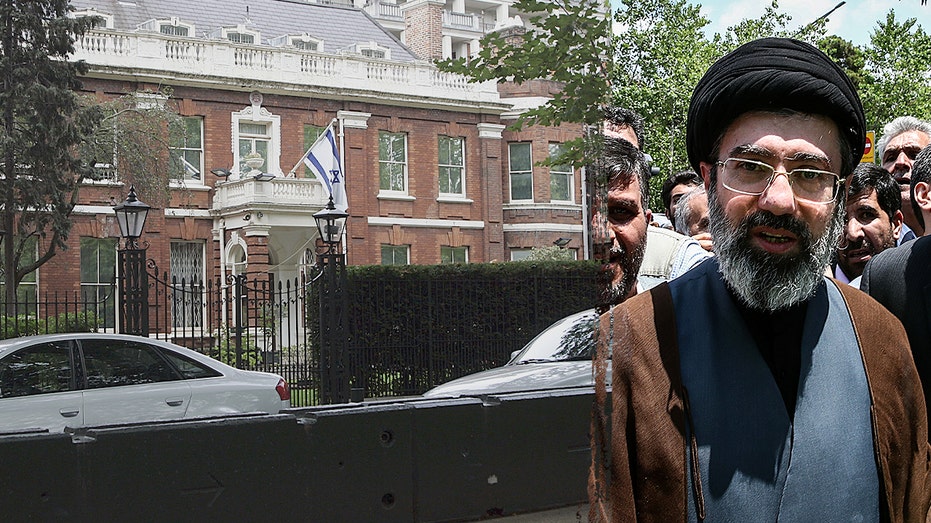
A March 2026 investigation by The Times of London, identified two luxury apartments in London’s Kensington neighborhood, acquired in 2014 and 2016 through intermediaries, that sit directly adjacent to the Israeli Embassy compound.

The findings are part of a broader probe into Khamenei’s alleged overseas holdings, with a Bloomberg investigation estimating a portfolio spanning multiple countries and totaling roughly $138 million in assets across Europe and the Gulf, pending verification of full ownership structures.

"He has been operating behind the scenes, managing a large part of the Revolutionary Guard’s security and economic cartel," Ghadimi said. "His hands are deeply stained with corruption and crimes, and the same Revolutionary Guard is now the main force backing his rise."

US OFFERS $10M REWARD FOR INFO ON IRAN’S NEW SUPREME LEADER, TOP IRGC OFFICIALS

Inside Iran, the contrast with everyday life is stark. Women are arrested for violating dress codes, protesters are jailed, and economic hardship has deepened across much of the population. Outside Iran, the children of the elite live differently.

"They’re telling people how to live, what to wear, what to believe," Zand said. "But their own families don’t live like that."

For her, the issue is not only hypocrisy, but strategy. "It’s also about influence," she said. "They integrate into societies, they build networks, they learn how the West works."

Aarabi believes Western governments have failed to respond accordingly. "The Islamic regime’s oligarchs should be treated no differently from Putin’s oligarchs," he said. "The West should identify, sanction and deport these individuals."

(Auszug von RSS-Feed)

☐ ☆ ✇ Fox News

Iran’s new supreme leader linked to properties with ‘line of sight’ into Israeli UK Embassy

veröffentlicht.
Vorschau ansehen

Iran’s supreme leader, Mojtaba Khamenei, has been linked to two luxury apartments overlooking the Israeli Embassy in London, a location that security experts said could provide "permanent surveillance," according to multiple reports.

The multimillion-dollar Kensington properties sit next to the high-profile embassy compound and were identified by UK media, drawing on findings from a yearlong probe into Khamenei’s potential overseas assets.

The Times of London reported on March 5 that the one building "sits next to the Israeli Embassy on Palace Green," placing the residences in exceptional proximity to one of Israel’s most sensitive diplomatic sites.

LETHAL ELITE 'BLACK-CLAD' KILL SQUAD GUARDS IRAN'S NEW SUPREME LEADER MOJTABA KHAMENEI

The revelations stem from a Bloomberg investigation that alleged that the Khamenei portfolio could span multiple countries and include high-value real estate in London, totaling around $138M as well as assets in Europe and the Gulf.

The two London apartments were reportedly acquired in 2014 and 2016 via intermediaries and occupy upper floors of the building, offering a direct vantage point toward the rear of the Israeli embassy compound, UK media reported.

A terrorism specialist quoted in reports said the positioning effectively means "Iran owns the view into the back of the Israeli Embassy from less than 50 meters away," describing the situation as a potential "serious security breach."

US OFFERS $10M REWARD FOR INFO ON IRAN’S NEW SUPREME LEADER, TOP IRGC OFFICIALS

Roger Macmillan, a former director of security at the Iranian dissident satellite channel Iran International, also said the two apartments had "a direct line of sight, held through Mojtaba Khamenei. That's not a property portfolio — it's a permanent surveillance platform."

"This is a serious security breach," he added.

Further details from Bloomberg’s investigation indicated that a businessman acted as a financial conduit, buying up high-end properties on Khamenei’s behalf and channeling funds through a network of investments.

TRUMP SAYS HE'S 'NOT HAPPY' WITH IRAN'S CHOICE OF NEW SUPREME LEADER

The investigation also found that 11 mansions on London's "Billionaire’s Row" were purchased using an Isle of Man shell company.

The Financial Times has also similarly reported on links between Khamenei’s associates and luxury assets across Europe.

Khamenei, 56, has been viewed as a powerful figure within Iran’s ruling establishment, ultimately becoming the leading successor to his father, who was killed in a Tehran compound strike on Feb. 28. 

So far, since he was selected by Iran's Assembly of Experts, he has not been seen in public.

(Auszug von RSS-Feed)

☐ ☆ ✇ Fox News

Iran's supreme leader Mojtaba Khamenei 'misfunctioning,' not controlling regime: sources

veröffentlicht.
Vorschau ansehen

Iran’s new supreme leader, Mojtaba Khamenei, is little more than an "empty entity" who is not at the helm of the regime, according to Israeli national security sources.

The son of Ayatollah Ali Khamenei, who was killed in a targeted Israeli strike on Feb. 28, is also linked to what officials describe as a "misfunctioning" regime.

"The new leader is an empty entity," Kobi Michael, a defense analyst at the Institute for National Security Studies and the Misgav Institute, told Fox News Digital.

TRUMP VOWS TO HIT IRAN 'VERY HARD' AFTER OBLITERATING NEARLY '90 PERCENT' OF REGIME MISSILES

"Mojtaba Khamenei does not appear in public, but we also have reliable indications that he does not control or lead the regime or what has been left of the regime.

"The current Iranian leadership is broken, confused and is almost misfunctioning."

Mojtaba reportedly escaped death by minutes when his father was killed Feb. 28, leaving the compound for a walk shortly before an Israeli missile strike, according to leaked audio accessed by The Telegraph.

The audio, reportedly from a March 12 meeting, revealed details about the strikes that also took out several members of the Khamenei family.

Mazaher Hosseini, head of protocol for Khamenei’s office, is supposedly heard in the audio telling senior leaders that Mojtaba sustained "a minor injury to his leg." 

Since being named supreme leader, Mojtaba has not made one public appearance. Instead, a message by him was read on Iranian state TV, warning of continued strikes and urging Gulf nations to shut down U.S. bases.

ISRAEL KILLS IRANIAN INTELLIGENCE MINISTER WHO SURVIVED INITIAL STRIKE, OFFICIAL SAYS

Other reports claimed Mojtaba was in critical condition or even in a coma, though Iranian officials have insisted that the new supreme leader is in good health.

Mojtaba Khamenei vowed revenge Wednesday after the killing of senior security official Ali Larijani in an Israeli strike.

"Such acts of terror only reflect the enemies’ hostility and will strengthen the resolve of the Islamic nation. Undoubtedly, justice will be served," the statement said.

Larijani, one of Iran’s top security figures, was killed after Israeli intelligence reportedly located him and other officials on the outskirts of Tehran.

Other senior figures have also been killed in recent strikes, including Basij militia leader Gholamreza Soleimani, according to the Israel Defense Forces (IDF).

"This is not a new phase, but a continuing effort and a very successful and impressive one and a crucial component of the strategy meant to weaken the Iranian regime," Michael said of the continued strikes at regime figures.

"This is to the degree that it will not be able to reconstitute itself and/or to become again a severe threat and destabilizing player in the broader Middle East."

US-SANCTIONED MOJTABA KHAMENEI NAMED IRAN’S NEXT SUPREME LEADER AFTER FATHER’S DEATH: REPORTS

After the opening U.S.-Israeli strikes, President Donald Trump told the Iranian people that their "moment of freedom" was at hand.

"When we are finished, take over your government. It will be yours to take," Trump said, suggesting the U.S. would help bring down the Iranian regime.

"At the very same time, by weakening the regime and paralyzing its capacities generally speaking and its domestic control specifically, the U.S. and Israel are facilitating the required conditions for the Iranian people to topple the regime," Michael added.

"This is the ultimate victory in their eyes, and the route to this destination is that they are trying to increase any damage wherever they can."

(Auszug von RSS-Feed)

☐ ☆ ✇ apolut

Israel meldet Tod von iranischem Sicherheitschef Laridschani

veröffentlicht.
Vorschau ansehen Israel meldet Tod von iranischem Sicherheitschef Laridschani

Israel hat den Tod des iranischen Sicherheitschefs Ali Laridschani bei einem Luftangriff in der Nacht zum 17. März 2026 verkündet. Israels Verteidigungsminister Israel Katz erklärte, Laridschani, Generalsekretär des nationalen Sicherheitsrats, sei zusammen mit Basidsch-Kommandeur Gholamresa Soleimani getötet worden.

Laridschani (67) galt als zentrale Figur im iranischen Machtapparat seit seiner Berufung im August 2025 und spielte eine Rolle bei der Niederschlagung von Protesten im Januar. Er war der ranghöchste Iraner, der seit dem Tod von Ajatollah Ali Chamenei am 28. Februar bei israelischen Angriffen getötet wurde. Die Basidsch-Miliz unter Soleimani unterdrückt innerstaatliche Unruhen.

Teheran hat die Tötung nicht bestätigt; stattdessen veröffentlichten Medien eine Notiz Laridschanis. Der neue Oberste Führer Modschtaba Chamenei lehnt Deeskalation ab und fordert die Niederlage Israels und der USA. Premier Netanjahu befahl die Eliminierung hochrangiger Regimevertreter. Dies eskaliert den Iran-Krieg aktuell weiter.

+++

Bildquelle: CC-BY-SA-4.0 | Self-published work | Photographs by Mostafa Meraji

(Auszug von RSS-Feed)

☐ ☆ ✇ Fox News

US warns Iraq must act against Iran-backed militia attacks on American assets

veröffentlicht.
Vorschau ansehen

Iraq's Prime Minister Mohammed Shia al-Sudani is facing mounting criticism for his government’s inability to stop pro-Iranian militias and the Islamic Republic of Iran from attacking American, French, Italian and Kurdish military personnel and facilities in Iraq.

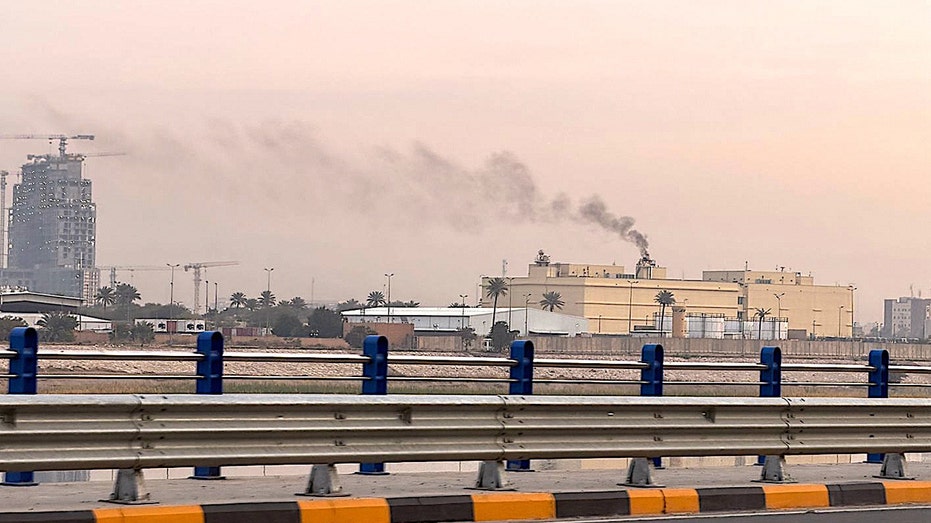
On Saturday, the U.S. Embassy in Baghdad said that all U.S. citizens in Iraq should leave "immediately," as "Iran-aligned terrorist militias have attacked the International Zone in central Baghdad on multiple occasions."

The announcement came after a missile reportedly struck a helipad inside the U.S. Embassy in Baghdad early Saturday.

Speaking on background, a State Department spokesperson told Fox News Digital, "The United States strongly condemns attacks by Iran and Iran-backed terrorist militias against U.S. diplomatic personnel and facilities, civilian targets and energy infrastructure in Iraq, particularly in the Iraqi Kurdistan Region."

US EMBASSY IN BAGHDAD TARGETED AS IRAN LAUNCHES ATTACKS DURING OPERATION EPIC FURY

The statement added, "As Secretary Rubio has said, the Iraqi government must take all possible measures to safeguard U.S. diplomatic personnel and facilities and ensure militia groups cannot use Iraqi territory to threaten the United States or the region. Doing so is in Iraq’s interest," the spokesperson noted, "We retain a range of options to protect our interests. We do not preview sanctions or sanction actions."

A Kurdish official, speaking on condition of anonymity, told Fox News Digital that the Iran-backed Popular Mobilization Forces (PMF) in Iraq "are paid and armed by the Iraqi government.  They are on the Iraqi payroll. This is not the first time they have fired on the U.S., the Kurdistan Regional Government [KRG] and the energy sector. These PMF have brazenly attacked U.S. military bases."

According to the official, "Many of these leaders [from the PMF] are part of al-Sudani’s government and his very coalition."

In a statement to Fox News Digital on Sunday, an official for Iraq’s Embassy in Washington D.C. flatly denied the allegations against al-Sudani. "We would like to unequivocally confirm that the allegations claiming the Prime Minister granted a ‘green light’ to any armed group to target U.S. or Western interests are completely false. The Iraqi government has repeatedly emphasized its firm rejection of any attacks on diplomatic missions or foreign interests."

The representative added, "The Prime Minister has also issued several statements condemning such acts, describing them as terrorist activities, and has directed the relevant authorities to pursue those responsible and bring them to justice."

Al-Sudani raised eyebrows last week when he congratulated the Islamic Republic of Iran’s selection of its new Supreme Leader, Mojtaba Khamenei, the son of the assassinated second Supreme Leader of Iran, Ali Khamenei. "We express our confidence in the ability of the new leadership in the Islamic Republic of Iran to manage this sensitive stage, and continue to strengthen the unity of the Iranian people in facing the current challenges," al-Sudani reportedly said.

When asked about the congratulatory statement to Khamenei, the Iraqi Embassy official said, "This action falls within the scope of standard diplomatic practices carried out by many countries, including several Gulf states. Iraq maintains diplomatic relations with neighboring countries, including Iran, while simultaneously ensuring balanced relations with all its regional and international partners."

IRAN PROXIES WAGE WAR ON ISRAEL, THREATEN US INTERESTS AS IRAQ SLAMMED FOR NOT DISARMING THEM

The intensified attacks on the international anti-jihadi coalition in Iraq’s autonomous Kurdistan region on Friday resulted in the death of a French soldier and injuries to six other people. According to France 24, the commanding officer, Colonel Francois-Xavier de la Chesnais, said the French soldier, Arnaud Frion, was murdered by an Iranian-designed Shahed lethal drone.

The Iraqi Kurdish news outlet Rudaw reported on Saturday that the "Kurdistan Region was targeted with seven explosive-laden drones early Saturday as Iran and its proxy forces in Iraq continue to target the U.S. consulate in Erbil and other military and civilian sites in the Region." Rudaw said since the start of U.S. Operation Epic Fury the Kurdistan area has been targeted with over 300 drone and missile attacks, resulting in the killing of seven people and 35 injured.  

The Kurdish official complained that al-Sudani’s "government is not serious about taking on militias because the militias are part of the government." However, the official praised the U.S. "The Americans are going after them aggressively over the last week with attacks on their [PMF] positions."

According to a Long War Journal report, "Airstrikes, likely conducted by the U.S. as part of the U.S.-Israeli operation against the Islamic Republic, have continued targeting Iran-backed Iraqi militias." Neither the U.S. or Israel have not commented on reports that they are striking the PMF.

Fox News Digital secured information in early March from the Israeli Defense Forces that drones have bee fired at Israel from Iraqi territory since the start of the war. 

The PMF told the Iraqi News Agency that American military forces have conducted 32 airstrikes against PMF headquarters since February 28.

The Kurdish official urged the Trump administration to "demand that Iraq’s government stop paying and arming the PMF and target their banking system that finances the PMF." The official continued, "We have shared information with the Iraqis and the Americans, who have in turn shared information with the Iraqi government." On the terrorist activities of the PMF the official said, "The al-Sudani government has been unwilling to confront them."

TRUMP THREATENS TO END IRAQ SUPPORT OVER AL-MALIKI COMEBACK BID TIED TO IRAN INFLUENCE

The official bemoaned that the al-Sudani government initiated a "handful of arrests last year, and they were released on bail and were able to flee to Iran." The Kurdish official said the KRG "provided the information to the Iraqi government about the perpetrators" who fled to the Islamic Republic.

An Iraqi official dismissed the reports on PMF terrorists, stating," I have not heard of such a thing. I guess that's not true."

The Kurdish official cited two PMF groups as the most bellicose toward the U.S.: Asaib Ahl al Haq (League of the Righteous) and Kataib Hezbollah. The Trump administration sanctioned  Asaib Ahl al Haq in March 2024. The State Department said Asaib Ahl al Haq "and its leaders are violent proxies of the Islamic Republic of Iran" and the group "is extensively funded and trained by Iran’s Islamic Revolutionary Guard Corps (IRGC) Qods Force."

The U.S. government sanctioned Kataib Hezbollah in 2023. The Kurdish official also charged the al-Sudani’s government with imposing an embargo on imported goods to Iraqi Kurdistan as way "to strip away our autonomy and everything we can built over 30 years." The autonomous Kurdish government is widely considered a robust pro-American ally.

The Iraqi official denied the embargo, stating, "The federal government does not pursue a policy of ‘embargo’ against the Kurdistan Region. The current measures aim to unify the legal, customs, and trade framework across all Iraqi borders in line with the federal constitution. 

"No country can afford contradictory internal trade and customs regimes, as this risks  harming the national economy as a whole. Our objective is a unified, fair economic framework that protects state revenues while respecting the region’s specificities, and we believe this is best achieved through dialogue and cooperation."

Entifadh Qanbar, a former spokesman for the deputy prime minister of Iraq, told Fox News Digital that "One could even describe the PMF as the Iraqi branch of the Iranian Revolutionary Guard, effectively functioning as an Iraqi Islamic Revolutionary Guard Corps. The PMF operates through a network of militias that frequently attack U.S. forces, foreign interests, and targets in Kurdistan."

He argued for "The dismantling of the mother organization — the PMF itself. As long as the PMF exists, militias operating under its umbrella will continue to attack U.S. forces and regional targets."

Fox News Digital reporter Greg Norman-Diamond contributed to this report.

(Auszug von RSS-Feed)

☐ ☆ ✇ apolut

Hollisters Geopolitik-Radar vom 9.-15. März 2026

veröffentlicht.
Vorschau ansehen Hollisters Geopolitik-Radar vom 9.-15. März 2026

Der Krieg zwischen den USA, Iran und Israel tritt in eine neue Phase - militärisch, technologisch und geopolitisch. Während Drohnen und Streumunition klassische Luftüberlegenheit infrage stellen, nutzt eine chinesische KI-Firma amerikanische Satellitendaten, um US-Militärpositionen öffentlich zu kartieren. Gleichzeitig gerät die Türkei als einziger NATO-Staat mit direkten Kommunikationskanälen zu allen Konfliktparteien in eine strategische Schlüsselrolle. Der aktuelle Geopolitik-Radar analysiert die entscheidenden Entwicklungen dieser Woche - vom Ölkrieg um Hormus über den Informationskrieg im Orbit bis zur Frage, ob sich die militärische Logik moderner Kriege gerade fundamental verändert.

Der Geopolitik-Radar vom 9.-15. März 2026.

Ein Meinungsbeitrag von Michael Hollister.

Ticker

1. Mojtaba Khamenei zum neuen Obersten Führer Irans gewählt (8./9. März) Der 56-jährige Sohn des getöteten Ali Khamenei wurde von der Expertenversammlung zum dritten Obersten Führer der Islamischen Republik ernannt. Er gilt als noch kompromissloser als sein Vater, hat enge IRGC-Verbindungen - und wurde von Trump als „inakzeptabel" bezeichnet, bevor er ernannt wurde.

2. Mojtaba Khameneis erste Botschaft: Hormuz bleibt geschlossen (12. März) In seiner ersten öffentlichen Erklärung - nicht als Video, sondern schriftlich über Staatsfernsehen verlesen - erklärte der neue Oberste Führer die Straße von Hormuz zum dauerhaften Druckmittel, forderte die Schließung aller US-Basen in der Region und drohte mit der Eröffnung neuer Fronten.

3. USA greifen Kharg Island an - 90 Prozent der iranischen Ölexporte in Reichweite (13. März) Trump ließ Militärziele auf der iranischen Ölexportinsel Kharg Island bombardieren und drohte explizit, beim nächsten iranischen Angriff auf Schiffe in der Hormuzstraße auch die Ölinfrastruktur zu treffen. Iran antwortete: Jeder Angriff auf eigene Ölfelder ziehe Angriffe auf Energieinfrastruktur von Drittstaaten nach sich.

4. Iran setzt Clusterbomben gegen Israel ein - Iron Dome strukturell überfordert (ab 10. März) Laut israelischem Militär wurden rund 50 Prozent der auf Israel abgefeuerten Raketen mit Streumunition bestückt. Die Sprengköpfe öffnen sich in großer Höhe und streuen Dutzende Bomblets über weite Gebiete - ein Angriffsmuster, gegen das Iron Dome konstruktionsbedingt nicht ausgelegt ist.

5. Dritte iranische Rakete auf die Türkei - NATO-Ernstfall bleibt aus (13. März) NATO-Luftabwehr über dem östlichen Mittelmeer schoss am 13. März eine dritte ballistische Rakete ab, die von Iran in Richtung türkischen Luftraum abgefeuert wurde. Ziel war offenbar die Incirlik-Basis, wo US-Taktikwaffen lagern. US-Verteidigungsminister Hegseth schloss Artikel-5-Aktivierung aus.

6. HRW dokumentiert israelischen Weißphosphor-Einsatz in libanesischen Wohngebieten (9. März) Human Rights Watch verifizierte und geolokalierte sieben Bilder, die den Einsatz von Artillerie-Weißphosphor über dem südlibanesischen Wohnort Yohmor am 3. März belegen. Mindestens zwei Häuser und ein Fahrzeug gerieten in Brand. Seit dem 2. März wurden im Libanon 394 Menschen getötet, über 500.000 vertrieben.

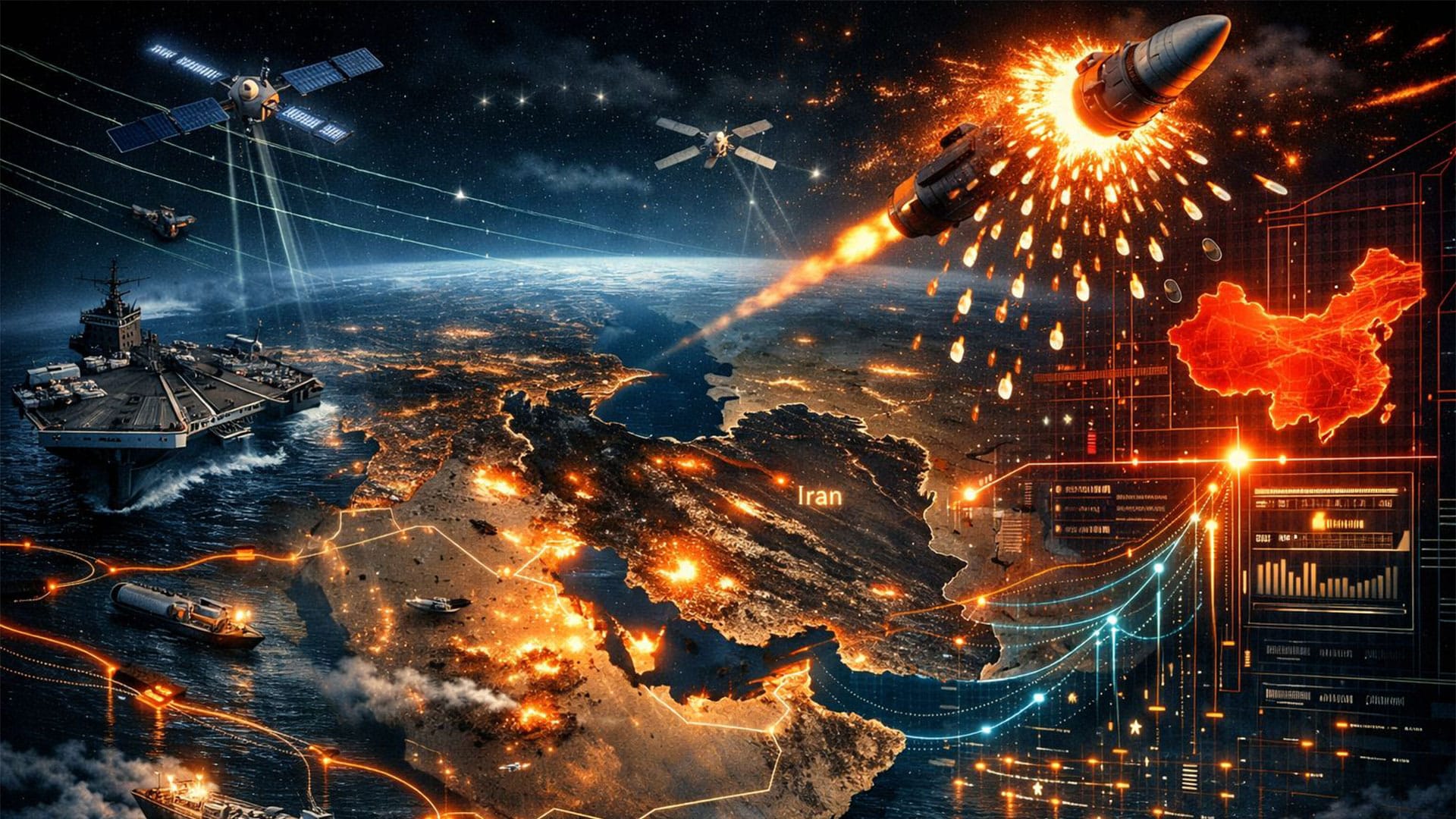
7. MizarVision: Chinesische KI-Firma publiziert US-Militärpositionen - mit amerikanischen Satellitendaten (laufend) Die in Hangzhou ansässige Firma MizarVision veröffentlichte seit Kriegsbeginn auf X täglich hochauflösende Satellitenbilder aller US-Militärpositionen im Nahen Osten - F-22 auf Ovda, F-35 in Jordanien, Trägerpositionen, Patriot-Batterien. Bezogen werden die Bilder von US-amerikanischen kommerziellen Satellitenfirmen wie Planet Labs. Effektiv fließen amerikanische Aufklärungsdaten durch China zum Iran.

8. Russland liefert Iran Satellitendaten zur Zielerfassung US-Sondergesandter Witkoff forderte Moskau öffentlich auf, die Weitergabe von Satelliteninformationen an den Iran zu unterlassen. Russland bestritt die Praxis nicht. Analytiker verweisen auf die Parallele: Die USA tun dasselbe seit Jahren für die Ukraine.

9. Indien: Rupie auf Rekordtief 92,45 - Börse verliert 6 Prozent in einer Woche (12./13. März) Die indische Zentralbank musste intervenieren, nachdem die Rupie durch den Ölpreisschock auf ein historisches Tief fiel. Indien importiert 85 Prozent seines Rohöls, ist Irans Nachbar über den Indischen Ozean - und befindet sich diplomatisch im Klemme zwischen Washington, Teheran und Peking.

10. IEA gibt 400 Millionen Barrel aus strategischen Reserven frei - größte Intervention der Behördengeschichte Die Internationale Energieagentur reagierte auf den Hormuz-Schock mit der größten koordinierten Reservenfreigabe seit ihrer Gründung 1974. Brent-Öl notierte dennoch über 100 Dollar pro Barrel, 42 Prozent über dem Vorkriegsniveau.

11. China positioniert sich global: Vermittler-Rolle, BRICS-Koordination, Aufklärung vor Ort Außenminister Wang Yi telefonierte mit russischen, iranischen, französischen und omanischen Kollegen und forderte sofortigen Waffenstillstand. Gleichzeitig drängte Peking auf stärkere BRICS-Koordination und setzte Aufklärungsschiffe der Dongdiao-Klasse im Golf von Oman ein. Chinas Position: verbale Verurteilung des Krieges, informationelle Unterstützung des Iran.

12. Frankreich plant Tanker-Eskort-Mission für die Hormuzstraße Paris konsultiert europäische, asiatische und arabische Partner über eine mögliche Schiffsgeleit-Mission für die geschlossene Hormuzstraße. Die USA signalisierten, Navy-Eskorten „bald" einzusetzen. Ein iranischer Funktionär deutete an, Teheran könnte chinesischen Yuan-Transaktionen den Durchlass ermöglichen.

Im Fokus

1. Drohnen, Clusterbomben und das Ende der Luftüberlegenheit

Der Iran-Krieg schreibt Militärgeschichte - nicht wegen der beteiligten Mächte, sondern wegen der Waffen. Zum ersten Mal in einem Großkonflikt dominieren Drohnen und Streumunition das Schlachtfeld gleichzeitig, zu Lande, zu Wasser und in der Luft.

Irans Strategie ist präzise kalkuliert: Rund 50 Prozent der auf Israel abgefeuerten Raketen wurden mit Clusterbomben-Sprengköpfen bestückt. Die Warheads öffnen sich in 3.000 bis 5.000 Metern Höhe und verstreuen 20 bis 80 Bomblets über Flächen von sieben bis acht Quadratkilometern. Iron Dome, das für niedrigfliegende Kurzstreckenraketen konzipiert ist, kann die Trägerrakete abfangen - aber nicht die bereits freigesetzten Submunition. Das Arrow-System fängt ballistische Raketen ab, nicht Bomblets. Die Lücke ist konstruktionsbedingt und mit vorhandener Technologie nicht zu schließen.

Parallel dominierten Drohnen die maritime Dimension: Irans schienenlose Torpedodrohnen operierten bis zu 48 Stunden autonom im Golf von Oman, Angriffsdrohnen trafen Tanker, Häfen und Militärinstallationen in Katar, Kuwait und Dubai. Auf Kharg Island flogen US-Präzisionsdrohnen Begleitschutz für Bomberangriffe.

Diese Woche beweist: Überlegenheit in der Luft bedeutet nicht mehr automatisch Sicherheit am Boden.

Deep-Dive-Analyse: Der ewige Wettlauf - Panzerfaust, Iron Dome und die Illusion des perfekten Schilds

Ergänzende Analyse: [Deutsche Chips für russische Drohnen - Das kalkulierte Sanktionsleck Europas]

Fragen:

  • Warum investieren USA und Israel 175 Milliarden Dollar in Golden Dome, wenn der strukturelle Nachteil der Abwehr gegenüber Streumunition bekannt ist?
  • Iran produziert Drohnen für unter 30.000 Dollar. Die USA feuern Patriot-Abfangraketen für 3 Millionen Dollar pro Stück. Wie lange ist diese Kostenasymmetrie durchzuhalten?
  • Welche europäischen Rüstungskonzerne liefern weiterhin Bauteile, die in iranischen und russischen Drohnen landen?

2. MizarVision: Wenn der Feind deine eigenen Satellitendaten benutzt

Am 28. Februar 2026 - 24 Stunden vor dem ersten US-Angriff auf Iran - veröffentlichte ein chinesisches KI-Startup auf X die exakten Positionen von elf F-22-Tarnkappenjägern auf der israelischen Ovda-Luftwaffenbasis, 18 F-35 und sechs EA-18G Störflugzeugen in Jordanien, sieben AWACS-Maschinen in Saudi-Arabien sowie die Position beider US-Flugzeugträger. Die Quelle: US-amerikanische kommerzielle Satellitenfirmen wie Planet Labs und Maxar.

MizarVision sitzt in Hangzhou, wurde vor fünf Jahren gegründet, betreibt keine eigenen Satelliten und kauft seine Bilder auf dem freien Markt. KI wertet aus, beschriftet, geolokalisisert - und publiziert auf X, für jeden zugänglich, täglich. Laut FlightGlobal, Aviation Week und South China Morning Post wurden dabei mindestens 2.500 US-Militärassets katalogisiert. Mehrere der veröffentlichten Positionen wurden kurz darauf von iranischen Drohnen und Raketen angegriffen.

Das Pikante: Die Bilder stammen aus amerikanischen Quellen. Washington verkauft kommerziell Satellitendaten - und schaut dabei zu, wie dieselben Daten durch eine chinesische Firma gefiltert und als Aufklärung für den Feind genutzt werden. US-Sondergesandter Witkoff mahnte Russland wegen Satellitendaten an den Iran. Dass dieselbe Praxis über den kommerziellen Markt täglich stattfindet, thematisierte Washington bislang nicht öffentlich.

Hintergrund Iran-Krieg und Informationsdimension: Iran/USA: Das Kalkül des Angriffs

Aktuelle Updates zum Konflikt: https://michaelhollister.substack.com

Fragen:

  • Warum verkaufen US-Satellitenfirmen hochauflösende Militärbilder an Kunden ohne Endverbleibskontrolle?
  • Ist MizarVision ein kommerzielles Unternehmen - oder ein staatlich gelenktes Aufklärungsinstrument mit zivilem Deckmantel?
  • Was bedeutet es für künftige Konflikte, wenn Open-Source-Satellitendaten jeden Tarnversuch obsolet machen?

3. Türkei 2026: Die Macht, die niemand benennen will

Dreimal in zehn Kriegstagen schlug eine iranische Rakete in Richtung türkischen Luftraum - dreimal wurde sie von NATO-Systemen abgefangen. Dreimal erklärte Iran, es habe die Türkei nicht absichtlich getroffen. Dreimal sagte Washington, Artikel 5 sei kein Thema.

Hinter dieser Abfolge verbirgt sich eine geopolitische Realität, die in westlichen Medien kaum benannt wird: Die Türkei ist derzeit der einzige NATO-Staat, der gleichzeitig mit Washington, Moskau, Teheran und dem globalen Süden kommuniziert. Auf der Incirlik-Basis lagern US-Taktikwaffen. In Kurecik steht das NATO-Frühwarnsystem, das Europa vor iranischen Raketen schützt. Ankara verkauft Bayraktar-Drohnen an die Ukraine und hält gleichzeitig Gesprächskanäle nach Teheran offen.

Außenminister Fidan stand am Freitag am Podium und fragte öffentlich, was kein anderer NATO-Minister fragte: „Welche Chancen gibt es noch für Verhandlungen?" Die dritte Rakete schlug ein, während er noch sprach.

Das Narrativ, das gerade in westlichen Medien aufgebaut wird - Türkei als nächster strategischer Gegner des Westens - verdient eine genaue Betrachtung: Wer formt dieses Narrativ? Welche Interessen stehen dahinter? Und warum ist Ankara ausgerechnet jetzt unbequem?

Deep-Dive-Analyse: Türkei 2026 - Die Macht, die niemand benennen will

Fragen:

  • Drei iranische Raketen auf NATO-Gebiet ohne Artikel-5-Reaktion: Was bedeutet das für die Glaubwürdigkeit des Bündnisses?
  • Warum ist die Türkei der einzige Staat, der gleichzeitig mit allen Konfliktparteien spricht - und warum wird das im Westen als Bedrohung gerahmt statt als Asset?
  • Wer profitiert davon, Ankara aus der westlichen Ordnung herauszudrängen?

+++

Quellen

Iran-Krieg KW 11 - Allgemein

Mojtaba Khamenei

Kharg Island

Clusterbomben / Iron Dome

Türkei / NATO

Weißer Phosphor Libanon

MizarVision / Informationskrieg

Indien / Globale Wirtschaft

+++

Michael Hollister war sechs Jahre Bundeswehrsoldat (SFOR, KFOR) und blickt hinter die Kulissen militärischer Strategien. Nach 14 Jahren im IT-Security-Bereich analysiert er primärquellenbasiert europäische Militarisierung, westliche Interventionspolitik und geopolitische Machtverschiebungen. Ein Schwerpunkt seiner Arbeit liegt auf dem asiatischen Raum, insbesondere Südostasien, wo er strategische Abhängigkeiten, Einflusszonen und Sicherheitsarchitekturen untersucht. Hollister verbindet operative Innensicht mit kompromissloser Systemkritik - jenseits des Meinungsjournalismus. Seine Arbeiten erscheinen zweisprachig auf www.michael-hollister.com , bei Substack unter https://michaelhollister.substack.com sowie in kritischen Medien im deutsch- und englischsprachigen Raum.

+++

Bildquelle: Michael Hollister

(Auszug von RSS-Feed)

☐ ☆ ✇ Fox News

Exiled Iranian crown prince says he’s ready to lead Iran ‘as soon as the Islamic Republic falls’

veröffentlicht.
Vorschau ansehen

Exiled Iranian Crown Prince Reza Pahlavi said Saturday he is ready to lead Iran’s transition "as soon as the Islamic Republic falls."
As the war in Iran entered its third week, Pahlavi — the son of the late Shah Mohammad Reza Pahlavi — said he has been working in recent months to develop a transition plan should the Iranian regime collapse to ensure the country does not experience a disruption in governance.

Pahlavi said in a social media post that "capable individuals" have been identified both inside and outside Iran to lead what he called a "transitional system."

"The transitional system, under my leadership, will be ready to assume governance of the country as soon as the Islamic Republic falls and, in the shortest possible time, establish order, security, freedom and the conditions for Iran’s prosperity and flourishing," he said.

MIKE POMPEO: OPERATION EPIC FURY IS RIGHTEOUS — AND REGIME CHANGE MUST FOLLOW

Pahlavi has lived in exile since the 1979 Islamic Revolution toppled Iran’s monarchy and established the Islamic Republic.

He has in recent years sought to position himself as a unifying opposition figure and has said he would help guide a transition of power from theocracy to democracy in Iran.

In a message addressed to his "compatriots," Pahlavi said his plan for governing the country would fall within the framework of the "Iran Prosperity Project."

IRAN’S NEW SUPREME LEADER IS ‘HIS FATHER ON STEROIDS,’ EXPERTS WARN OF HARDLINE RULE

He said that many compatriots with valuable experience and expertise have declared "their readiness to participate in the rebuilding of the country and to serve the homeland."

Since joint operations between the U.S. and Israel began, nearly 50 regime figures have been killed, including Supreme Leader Ayatollah Ali Khamenei.

His son, Mojtaba Khamenei, was elected this week by Iran’s Assembly of Experts as the country’s new supreme leader.

TRUMP EXPLORING BACKING MILITIAS IN IRAN TO TOPPLE WEAKENED REGIME FOLLOWING STRIKES: REPORTS

In an appearance last week on Fox News’ "My View" with Lara Trump, Pahlavi said the Iranian people would not accept any outcome moving forward tied to the current regime.

"Only a clean break will ensure that not only we achieve a democratic solution and alternative to this regime, but there will be people who are not in any form or shape directly associated with this regime," he said.

Pahlavi said the Iranian people must decide their country’s leadership and that "only the ballot box should determine the outcome and who will be responsible for our country in the future."

"I think what we will expect any government, including, of course, the current Trump administration to recognize that indeed the best way to help the Iranian people is to allow them to make that choice freely and to support that choice as a Western democracy, as the leading democracy in the world," he said.

(Auszug von RSS-Feed)

☐ ☆ ✇ Fox News

Transactional partners: How 200-year distrust shapes Russia’s response to the Iran conflict

veröffentlicht.
Vorschau ansehen

In March 2026, as the smoke cleared over Tehran after the U.S.-Israeli campaign against Iran’s leadership, Russia’s response was strikingly restrained. Despite a 20-year strategic partnership treaty signed with Tehran just last year, Moscow limited its reaction to condemnation and calls for diplomacy. 

Kremlin spokesman Dmitry Peskov confirmed that Russia had received no request from Iran for military assistance.

 "There were no requests from Iran in this case," Peskov told reporters March 5.

For analysts who study the relationship between Moscow and Tehran, the moment felt familiar. 

HEGSETH WARNS RUSSIA AS SIGNS POINT TO MOSCOW SHARING INTEL WITH IRAN

"The relationship has always been transactional," said Ksenia Svetlova, executive director of the Regional Organization for Peace, Economy and Security (ROPES) and an associate fellow at Chatham House. "Russia does what serves its own interests."

While Iran and Russia have moved closer in recent years — particularly after Moscow’s 2022 invasion of Ukraine — experts say the partnership has never resembled a true alliance. Instead, they say, it reflects a long history of cooperation shaped by convenience, rivalry and shifting geopolitical needs.

The uneasy relationship between the two powers stretches back nearly two centuries. In 1828, the Treaty of Turkmenchay forced Persia to cede large parts of the Caucasus to the Russian Empire after a military defeat. The treaty remains one of the most painful symbols of foreign domination in Iranian political memory.

In the 20th century, Russia’s relationship with Iran shifted dramatically. Before the 1979 Islamic Revolution, Moscow maintained relatively stable ties with Iran under Shah Mohammad Reza Pahlavi. 

"It actually had good relations with the Shah who visited Moscow after World War II," Svetlova said.

"But Communist Russia was very suspicious of Islamist Iran after the 1979 revolution," said Svetlova. 

It was a mutual distrust. Ayatollah Ruhollah Khomeini denounced both Cold War superpowers, calling the United States the "Great Satan" and the Soviet Union the "Lesser Satan." 

Even during the Iran-Iraq War of the 1980s, the Soviet Union maintained ties with Tehran while simultaneously supplying weapons to Iraq. 

"The Soviet Union was very suspicious of Islamist Iran," Svetlova said. "Even after the revolution, the relationship could not really be considered an alliance."

AS UKRAINE WAR DRAGS ON, TRUMP HITS PUTIN BY SQUEEZING RUSSIA’S PROXIES

In recent years, however, geopolitical pressures pushed the two countries closer together. Russia’s full-scale invasion of Ukraine in 2022 created new military cooperation between Moscow and Tehran. 

Though Russia and Iran have not shared a land border since the 1991 collapse of the Soviet Union, they remain "neighbors" via the Caspian Sea. This "blue border" became a vital artery in 2022 when Iran supplied the Shahed-series drones used in Ukraine that Russia has used extensively in attacks on Ukrainian infrastructure.

Vice Adm. Robert S. Harward, a retired Navy SEAL and former deputy commander of U.S. Central Command, said the partnership has had direct consequences on the battlefield. 

"Sadly, the world is just now getting a taste of Iranian drones. But there's one group that already knows them well, the Christians in Ukraine," Harward said. 

"Close to 600 Ukrainian churches have been destroyed by Russian attacks, including from the Iranian Shahed drones."

Carrie Filipetti, executive director of the Vandenberg Coalition and a former deputy assistant secretary of state, argued that Russia’s continued use of Iranian drones against Ukrainian targets underscores the depth of the military relationship while its calls for restraint in the current conflict highlight a fundamental contradiction. 

"If Russia were serious about peace, we would see a ceasefire with Ukraine months ago," she said. "Yet, Putin continues to attack Ukrainian cities, churches and civilians with Iranian drones day after day."

And yet Russia’s dependence on Iranian drones during the early stages of the Ukraine war has also diminished as Moscow built its own production capacity. A report cited by The Washington Post found that Russia has "transitioned from importing Iranian Shahed drones to mass-manufacturing them" under the name Geran-2.

War Secretary Pete Hegseth said Tuesday that Russia "should not be involved" in the escalating conflict between the United States, Israel and Iran amid reports Russia has provided information that could help Iran identify U.S. military assets in the Middle East. Moscow has not publicly confirmed the claims. 

"I believe Russia is providing Iran intelligence to more effectively target Americans, our allies and partners in the CENTCOM region," said Lt. Gen. Richard Y. Newton III, a retired Air Force officer who served as assistant vice chief of staff of the U.S. Air Force. "It's absolutely clear Russia is not our friend.

IRAN LAUNCHES SATELLITES ON RUSSIAN ROCKETS AS MOSCOW-TEHRAN TIES DEEPEN

"They are doing for the Iranians without spending money, spending troops or spending equipment," Svetlova added. "They share knowledge. They supplied the Iranians with a target list, basically, through their satellites — American targets, but also air targets in the Gulf and Iraq."

Harward argued that confronting this growing cooperation requires a broader strategy. 

"If we want to break the threat of the increasingly dangerous Russian-Iranian alliance, we need to fully decimate Iran's capabilities to threaten our allies and the United States, and we need to continue to support Ukraine and get Europeans to do their part," he said.

Filipetti remains skeptical of Moscow’s role as a mediator. 

"The idea that Russia would call on the U.S. and Israel to cease military operations against the regime in Iran and suggest that we should negotiate is absurd," Filipetti said.

Although Russia is falling short of helping Iran in a straightforward military way, experts say the cooperation in the world of intelligence has been profound. 

Ultimately, Newton argued that Russia’s actions should be viewed through the lens of President Vladimir Putin’s broader geopolitical goals. 

"Putin only does what serves Putin, and right now escalating the war in the Middle East and driving up oil prices only serves his interests so he can continue to fund his war machine against Ukraine," he said.

(Auszug von RSS-Feed)

☐ ☆ ✇ Fox News

Iran deploys explosive ‘suicide skiffs’ disguised as fishing boats in Strait of Hormuz

veröffentlicht.
Vorschau ansehen

Iran is deploying explosive-laden drone boats disguised as wooden fishing vessels in the Strait of Hormuz, a defense expert has warned — a move that signals a new phase of hybrid maritime warfare in one of the world’s most critical shipping lanes.

Cameron Chell, CEO of drone technology firm Draganfly, spoke after the United Kingdom Maritime Trade Operations (UKMTO) confirmed that a Marshall Islands–flagged oil tanker was struck March 1 by an Iranian unmanned surface vehicle north of Muscat, Oman.

"UKMTO has received confirmation that the vessel was attacked by an uncrewed surface vehicle (USV), and that the crew has been evacuated to shore," UKMTO said in a threat assessment.

Reports also indicated that two additional oil tankers were hit March 11 by remote-controlled explosive boats in the Gulf, as Iran intensified attacks on foreign vessels following the start of the U.S. Operation Epic Fury against the regime on Feb. 28.

FIRES RAGE AT IRAN'S BANDAR ABBAS NAVAL HEADQUARTERS, STRAIT OF HORMUZ TRAFFIC STALLED

The use of so-called "suicide skiffs" represents a growing asymmetric threat in the narrow, 21-mile-wide Strait, Chell warned, while highlighting the technological capabilities behind these attacks.

"The Iranians probably have use of radio remote control, line of sight, frequency hopping, or encrypted radio communication between the skiffs and the Hormuz shoreline," Chell told Fox News Digital.

"These can be jammed and tracked, but when there's 50 of these boats, it's hard to try to find them all along this shoreline or to find a 20-foot wooden fishing boat that is laden with explosives.

"They can have one person controlling a swarm of 10 boats," he said before describing how there "could also be autonomous swarming where they might have 10 boats that can act with a large level of independence, because they're pre-programmed."

"The boats would be used to ram into targets and explode," Chell clarified.

EX-NAVY SEAL WARNS WITHDRAWING FROM IRAN NOW WOULD HAND 'VICTORY' TO REGIME

Chell’s comments followed a March 12 Reuters report stating that six vessels had been attacked in the Gulf and Strait of Hormuz. 

Sources said that Iran had also deployed about a dozen mines, complicating efforts to maintain any traffic through the critical waterway.

U.S. Treasury Secretary Scott Bessent told Sky News Thursday that the U.S. Navy, potentially alongside an international coalition, would escort ships when militarily feasible.

U.K. Defense Secretary John Healey also said discussions were underway with European counterparts stressing the global economic stakes tied to the strait. Chell, however, questioned current defensive readiness.

"The drone defense fleets that the U.S. Navy would not have been set up to take these suicide skiffs out," Chell said.

"The U.S. would be using manned aircraft in order to take them out, which are fantastic at taking out a large target, but inefficient in taking out 50 boats at one time that are an average of 25 or 30 feet in size, laden with explosives.

IRAN’S DRONE SWARMS CHALLENGE US AIR DEFENSES AS TROOPS IN MIDDLE EAST FACE RISING THREATS

"Given the Strait's geography, it would require patrolling by many aircraft and would require pervasive surveillance over the area, a rapid response to any activity that's happening," he said.

As Supreme Leader Mojtaba Khamenei vowed to keep the Strait closed as leverage against the U.S. and Israel, oil prices continue to surge, with Chell also highlighting the geographic advantage Iran holds.

"The geographic layout of the Strait lends itself very well to relatively unsophisticated suicide skiffs, unmanned surface vehicles or USVs," he warned before describing how the area "lends itself to this low-cost, automatic, asymmetric warfare."

"The Iranians can disguise them as fishing boats and can be anywhere from 12 to 30 feet, and a boat could be of any description," Chell said.

"These skiffs are equipped with basic remote control capabilities that may or may not be using GPS waypoints or manual remote control."

"The skiffs are not autonomous, because the distance across the Strait is so short, and it's very flat across this waterway, the communication signal could be carried for quite some time via a line of sight," he added.

"They could literally have hundreds out there at a time, because they're also so inexpensive to defend against," Chell said.

(Auszug von RSS-Feed)

☐ ☆ ✇ Fox News

Lethal elite 'black-clad' kill squad guards Iran's new Supreme Leader Mojtaba Khamenei

veröffentlicht.
Vorschau ansehen

An elite counterterrorism unit has been deployed to protect Iran’s newly appointed Supreme Leader, Ayatollah Mojtaba Khamenei, following the assassination of his father, Ayatollah Ali Khamenei, Fox News Digital has learned.

The force, known as NOPO — Iran’s black-clad Counterterrorism Special Force — was assigned to safeguard the leader after a U.S.-Israel strike on a Tehran compound on Feb. 28 killed the elder Khamenei amid the start of Operation Epic Fury.

"With Khamenei gone, NOPO will likely now be protecting Mojtaba Khamenei," Ali Safavi, an official with the Foreign Affairs Committee of the Paris-based National Council of Resistance of Iran, or NCRI said.

The NOPO force, formed in 1991, had the 28th Ruhollah (Khomeini’s first name) Division as its "nucleus", according to Safavi, and typically handles hostage rescue operations. "Its task was not to protect Khamenei," he added.

IRAN’S NEW SUPREME LEADER IS ‘HIS FATHER ON STEROIDS,’ EXPERTS WARN OF HARDLINE RULE

The history of the unit also includes deployments against internal security threats, and it has often been called on to suppress protests.

Iran’s Assembly of Experts elected Mojtaba Khamenei on March 8, 2026, elevating him as the third Supreme Leader of the Islamic Republic.

His succession comes amid ongoing war with the U.S. and Israel, but so far, Mojtaba Khamenei has not been heard from since the start of the conflict.

According to The Times of Israel, Iranian state television reported that Mojtaba Khamenei was wounded in the war, with the reports yet unconfirmed.

"NOPO is the Farsi acronym for Nirouyeh Vijeh Pasdaran Velayat, which translates into the Special Force to Protect the Supreme Leader," Safavi further explained before clarifying that "Velayat is not necessarily the supreme leader, but the entirety of the regime."

IRAN POSTPONES TEHRAN FAREWELL CEREMONY FOR KHAMENEI WHERE LARGE CROWDS WERE EXPECTED TO GATHER

Over time, NOPO has evolved into a highly specialized unit distinct from the broader Islamic Revolutionary Guard Corps (IRGC), the military branch established in 1979 to defend the Islamic Republic and its leadership from internal and external threats.

"The NOPO is composed of six brigades only. Four are stationed in Tehran, one in Mashhad and one in Isfahan," Safavi said.

"They are far more lethal, ruthless and well-trained than the IRGC," he claimed before describing how the brigade’s loyalty was to the Supreme Leader.

"This force was used for the protection of Khamenei," Safavi continued. "They are very well-equipped. Khamenei did not trust any other security force for his protection."

Safavi also said that with battalions distributed in other provinces, some members of the unit are involved in protest suppression and the brigade is fully operational.

"Some of the NOPO are now involved in the suppressive and security measures the regime has also undertaken in recent days to prevent any outbreak of protests anywhere," Safavi said.

The elite force’s activities extend beyond personal protection in times of crisis, Safavi added.

KHAMENEI’S DEATH OPENS UNCERTAIN CHAPTER FOR IRAN’S ENTRENCHED THEOCRACY

"But in times of crisis, such as what happened during the January uprising, they were heavily involved in opening fire on the protesters," he said.

This comes amid reports that hundreds of NOPO members have also been widely deployed around prisons in Iran that are holding political detainees.

"Hundreds of suppressive forces are widely deployed around the prison. In Ghezel Hesar Prison," the NCRI said in a statement.

On Tuesday, March 3, 2026, following the bombing of a military center near Mahabad Prison, prisoners whose ward doors had been locked protested and set fire to their blankets, demanding their release under wartime conditions.

"Suppressive forces responded by firing tear gas into the ward," the NCRI reported.

Reports also indicated NOPO had taken control of Evin Prison in Tehran following the flight of regular prison officials amid intensified conflict.

In 2021, the U.S. Treasury Department imposed sanctions on NOPO for its part in committing "serious human rights abuses against persons in Iran or Iranian citizens or residents, or the family members of the foregoing."

(Auszug von RSS-Feed)

☐ ☆ ✇ Fox News

Iran’s new supreme leader is ‘his father on steroids,’ experts warn of hardline rule

veröffentlicht.
Vorschau ansehen

"Think of Mojtaba Khamenei as his father on steroids."

That is how Kasra Aarabi, director of Islamic Revolutionary Guard Corps research at the advocacy group United Against Nuclear Iran, described Iran’s new supreme leader in comments to Fox News Digital following reports that the son of Ayatollah Ali Khamenei has been selected to lead the Islamic Republic.

"Mojtaba was already operating as a ‘mini supreme leader’ in the Bayt-e Rahbari — his father’s office and the core nucleus of power in the regime," Aarabi said.

IF KHAMENEI FALLS, WHO TAKES IRAN? STRIKES WILL EXPOSE POWER VACUUM — AND THE IRGC’S GRIP

"His father had created the Bayt’s extensive apparatus as a hidden power structure to ensure continuity should he be eliminated — and through Mojtaba’s appointment, this is exactly what we will get," Aarabi said.

President Donald Trump also reacted to Mojtaba Khamenei’s rise. In an interview with the New York Post, Trump said he was "not happy with" the younger Khamenei replacing his father as leader of Iran’s theocratic system but declined to elaborate on how the United States might respond. "Not going to tell you," Trump said when asked about his plans regarding the new supreme leader. "Not going to tell you. I’m not happy with him."

An Iranian source with knowledge of the leadership transition told Fox News Digital that earlier speculation Mojtaba might pursue reforms now appears unlikely given the circumstances surrounding his appointment.

"Previously there were whispers suggesting that if Mojtaba were to become the leader, he might introduce reforms that would both open up the domestic political space and bring a more interactive approach to foreign policy," the source said.

"However, now this possibility seems very weak."

Mojtaba was chosen "amid disputes, controversies, and pressure from the IRGC," according to the source, meaning he "owes his appointment to their support and therefore cannot act against their wishes."

TRUMP SAYS IRAN’S SUCCESSION BENCH WIPED OUT AS ISRAELI STRIKE HITS LEADERSHIP DELIBERATIONS

Mojtaba Khamenei, 56, has spent decades building influence inside the power structures surrounding Iran’s supreme leader.

Born in 1969 in Mashhad, he pursued clerical studies in Tehran, Iran, after the 1979 Islamic Revolution that brought his father to prominence. Over time, however, analysts say his influence developed less through traditional clerical authority and more through Iran’s security institutions.

In 2019, the United States sanctioned Mojtaba under Executive Order 13867. The U.S. Treasury Department said he had been "representing the supreme leader in an official capacity despite never being elected or appointed to a government position aside from work in the office of his father."

Behnam Ben Taleblu, senior director of the Foundation for Defense of Democracies' Iran Program, said Mojtaba’s background reflects a broader shift inside the Islamic Republic.

"Despite donning a turban, Mojtaba is the product of the regime’s national security deep state," Ben Taleblu told Fox News Digital. "Expect him to work with and through the IRGC to keep his hold on power."

Aarabi said Mojtaba has spent years consolidating influence behind the scenes.

"His past tells us he enjoys micromanaging every aspect of authority to satisfy his thirst for power," Aarabi said, describing how Mojtaba allegedly relocated IRGC command centers to his office during protests, engineered election outcomes and installed loyalists across state institutions.

Since 2019, Aarabi added, Mojtaba has also been implementing what he described as his father’s effort to "purify" the regime by promoting ideological loyalists across the political system.

"Mojtaba is a deeply antisemitic, anti-American, and anti-Western ideologue," Aarabi said. "He has personally been involved in repression in Iran and terror plots abroad."

IRAN'S SENIOR CLERICS ‘EXPOSED’ AFTER BUILDING STRIKE IN QOM, SUCCESSION CHOICE LOOMS

Analysts say Mojtaba’s rise may further strengthen the role of Iran’s security institutions.

"The rise of the younger Khamenei expedites trendlines seen in Iranian politics and national security for years," Ben Taleblu said. "From one Khamenei to another, things in Iran can be expected to go from bad to worse if this regime survives."

"And like the elder Khamenei, corruption runs in the family," he added.

Ben Taleblu warned that the regime may also escalate tensions externally as a survival strategy.

"The regime knows it is weak, but believes it can extract a price and widen a crisis in order to survive," he said.

For opposition groups inside Iran, the leadership transition signals continuity rather than reform.

"He's the son of Khamenei and they have same ideology and they same strategy and they try to continue the same policy," said Khalid Azizi, spokesperson for the Kurdistan Democratic Party of Iran.

"So far it's very difficult to say what he will be done and is he going to have a different policy? I don't expect this."

The Iranian source who spoke with Fox News Digital said that while engagement with the United States and the West is theoretically possible in the future, the chances remain slim.

"As I mentioned," the source said, "this possibility is very weak."

"In short," Aarabi said, "Mojtaba is his father on steroids. He’s certainly no MBS."

(Auszug von RSS-Feed)

☐ ☆ ✇ apolut

Mojtaba Khamenei als neuer Oberster Führer Irans ernannt

veröffentlicht.
Vorschau ansehen Mojtaba Khamenei als neuer Oberster Führer Irans ernannt

Irans Expertenrat hat den Sohn des getöteten Ajatollah Ali Khamenei, Mojtaba Khamenei (auch Modschtaba geschrieben), zum neuen geistlichen Oberhaupt gewählt. Der Hardliner übernimmt das höchste Amt inmitten des Krieges mit USA und Israel.

Staatsmedien bestätigen: Der 56-Jährige, der bereits im Schatten seines Vaters großen Einfluss ausübte, wurde trotz fehlendem Ajatollah-Rang durch den Sicherheitsapparat durchgesetzt. Er setzt auf Ausdauerstrategie mit Angriffen auf US-Basen und Drohungen zur Straßensperrung von Hormus.

US-Präsident Trump droht: Ohne US-Zustimmung halte der Nachfolger nicht lange durch. Irans Außenminister Araghchi lehnt Einmischung ab und betont die normale Funktionsfähigkeit der Institutionen.

+++

Bild: Mojtaba Chamenei

Bildquelle: IRNA

(Auszug von RSS-Feed)

☐ ☆ ✇ Fox News

US-sanctioned Mojtaba Khamenei named Iran’s next supreme leader after father’s death: reports

veröffentlicht.
Vorschau ansehen

Iran’s Assembly of Experts has elected Mojtaba Khamenei, the son of the late Supreme Leader Ayatollah Ali Khamenei, as the country’s new supreme leader, according to Iranian state television.

Mojtaba Khamenei, 56, is the second-eldest son of Ali Khamenei and was born in Mashhad in 1969.

His early childhood coincided with his father’s rise as a revolutionary figurehead opposing the monarchy of Shah Mohammad Reza Pahlavi.

TRUMP SAYS IRAN’S SUCCESSION BENCH WIPED OUT AS ISRAELI STRIKE HITS LEADERSHIP DELIBERATIONS

After the Islamic Revolution in 1979, Ali Khamenei moved from a dissident cleric to a senior government official, holding key posts in the regime including deputy defense minister.

The family moved from Mashhad to Tehran, where Mojtaba attended Alavi High School, which is a school that is known for educating members of Iran’s political and religious elite.

There, he received a general and religious education and graduated in 1987. In 1989, after the death of Ayatollah Ruhollah Khomeini, Ali Khamenei was appointed supreme leader.

ISRAEL STRIKES IRANIAN LEADERSHIP MEETING CHOOSING KHAMENEI SUCCESSOR

That same year, Mojtaba began his formal clerical studies in Tehran. He studied under his father as well as Mahmoud Hashemi Shahroudi, who later served as Iran’s chief justice.

Over the years, Mojtaba was seen constantly with his father and was also regarded as an influential figure behind the scenes.

In an Axios interview last week, when asked about reports suggesting Mojtaba Khamenei was the new supreme leader, President Donald Trump said, "Khamenei's son is unacceptable to me. We want someone who will bring harmony and peace to Iran." Trump also said "They are wasting their time. Khamenei's son is a lightweight. I have to be involved in the appointment, like with Delcy [Rodriguez] in Venezuela."

In 2019, the U.S. sanctioned Mojtaba Khamenei under Executive Order 13867. The U.S. Treasury Department stated that he had been "representing the supreme leader in an official capacity despite never being elected or appointed to a government position aside from work in the office of his father." 

IRAN'S SUPREME LEADER ALI KHAMENEI DEAD AFTER IDF STRIKE HITS TEHRAN COMPOUND, ISRAELI SOURCE CONFIRMS

The Treasury also said that the supreme leader had delegated part of his leadership responsibilities to Mojtaba. 

It said he worked closely with commanders of the IRGC’s Quds Force and the Basij Resistance Force, positioning him as a key player in both domestic and international security affairs.

Mojtaba is married to the daughter of former Iranian Parliament Speaker Gholam Ali Haddad-Adel.

Among Ali Khamenei’s sons, he is considered the most powerful and politically influential, according to reports.

(Auszug von RSS-Feed)

☐ ☆ ✇ apolut

Hollisters Geopolitik-Radar vom 1.-8. März 2026

veröffentlicht.
Vorschau ansehen Hollisters Geopolitik-Radar vom 1.-8. März 2026

Der Iran brennt. Operation „Epic Fury" - der erste gemeinsame US-israelische Angriffskrieg gegen Iran - hat in einer Woche die geopolitische Weltlage grundlegend verändert: Khamenei tot, die Straße von Hormus geschlossen, über 1.300 Tote, der Ölpreis auf Jahreshoch. Gleichzeitig herrscht in der Taiwan-Straße eine bemerkenswerte Stille - China schickt seit dem ersten Angriffstag kein einziges Militärflugzeug mehr. Und Europa? Sitzt erneut draußen, während andere über seine Sicherheitsarchitektur entscheiden.

Der Geopolitik-Radar vom 1.-8. März 2026.

Ein Meinungsbeitrag von Michael Hollister.

Ticker

  1. USA/Israel greifen Iran an - Operation „Epic Fury" beginnt (28. Feb.)

In den frühen Morgenstunden des 28. Februar eröffneten US- und israelische Streitkräfte koordinierte Angriffe auf iranische Führungsstrukturen, Nuklearanlagen und Militärbasen - die erste gemeinsame US-israelische Militäroperation gegen Iran.

  1. Irans Oberster Führer Khamenei getötet (28. Feb.) 


Ayatollah Ali Khamenei kam bei einem US-israelischen Angriff auf sein Führungskomplex in Teheran ums Leben. Iran erklärte 40 Tage Staatstrauer und setzte einen dreiköpfigen Übergangsrat ein.

  1. Iran schließt Straße von Hormus (3. März) 


Die Iranischen Revolutionsgarden erklärten die Straße von Hormus für geschlossen - durch die täglich rund 20 Prozent des weltweiten Ölhandels fließen. Der Ölpreis stieg auf den höchsten Stand seit September 2023.

  1. Iran feuert über 500 Raketen und 2.000 Drohnen auf US-Ziele in der Region (bis 5. März)

Kuweit, Saudi-Arabien, die VAE, Katar und Jordanien meldeten Einschläge und Abfangmanöver. Die US-Basis Al Udeid in Katar wurde von zwei Raketen getroffen. Drei US-Soldaten kamen ums Leben.

  1. Israel greift parallel Hisbollah im Libanon an (ab 2. März)

Parallel zu den Iran-Operationen begann Israel erneut Angriffe auf Hisbollah-Strukturen im Libanon. Mehr als 123 Tote und über 680 Verletzte wurden gemeldet, über 95.000 Menschen sind vertrieben.

  1. WHO meldet 13 getroffene Gesundheitseinrichtungen im Iran (bis 5. März)

Die Weltgesundheitsorganisation dokumentierte Treffer auf iranische Krankenhäuser und medizinische Einrichtungen sowie eine Mädchenschule in Südiran mit mindestens 165 Todesopfern laut iranischen Staatsmedien.

  1. China verurteilt Angriffe - schweigt über Taiwan (ab 28. Feb.)

Peking sprach von einer Verletzung des Völkerrechts und des Souveränitätsprinzips. Gleichzeitig: Seit dem 27. Februar schickte China kein einziges Militärflugzeug mehr in Taiwans Luftverteidigungszone - die längste Pause seit Jahren.

  1. Koalition der Willigen tagt in Paris - Absichtserklärung unterzeichnet (Anfang März)

Frankreich, Großbritannien und die Ukraine unterzeichneten eine Absichtserklärung über die Entsendung einer multinationalen Sicherungstruppe nach einem möglichen Waffenstillstand. Merz nahm nur virtuell teil. 26 Länder erklärten sich bereit, Truppen zu stellen.

  1. Russland lehnt europäische Truppen in Ukraine als „inakzeptabel" ab

Der Kreml wies die europäischen Sicherheitsgarantie-Pläne zurück und bezeichnete die Koalition der Willigen als rein europäisches Projekt. Putin stellte Treffen mit Selenskyj in Aussicht - jedoch nur in Moskau.

  1. Ukraine-Verhandlungen nach Genf ohne neues Momentum 


Nach den Gesprächen vom 17./18. Februar in Genf gibt es keine neuen Verhandlungsrunden. Die Territorialfragen bleiben ungeklärt. Washington setzt weiter auf seine Juni-Deadline.

  1. Baden-Württemberg wählt neuen Landtag (8. März)

Bei der Landtagswahl in Baden-Württemberg trat Ministerpräsident Kretschmann nicht mehr an. Ergebnis zum Redaktionsschluss noch nicht endgültig ausgezählt.

  1. EU/Schweiz unterzeichnen Bilaterale III (Anfang März) 


Die Europäische Union und die Schweiz unterzeichneten ein Paket aktualisierter bilateraler Verträge - ein diplomatischer Meilenstein nach jahrelangen Verhandlungen.

Im Fokus

  1. Operation „Epic Fury": Der Krieg, den niemand stoppen wollte

Am 28. Februar 2026 um 2:30 Uhr EST verkündete Donald Trump in einem achtminütigen Video auf Truth Social den Beginn von Militäroperationen gegen Iran mit dem erklärten Ziel des Regimewechsels. Was folgte, war die intensivste US-Militäroperation im Nahen Osten seit dem Irakkrieg 2003.

Innerhalb von sieben Tagen führten USA und Israel rund 2.500 Angriffe gegen iranische Ziele durch - Militärbasen, Führungsstrukturen, Nuklearanlagen, Medieneinrichtungen, den staatlichen Rundfunk IRIB. Iran antwortete mit über 500 ballistischen Raketen und fast 2.000 Drohnen auf US-Ziele in der gesamten Region: Kuweit, Saudi-Arabien, VAE, Katar, Jordanien, Irak. Die Straße von Hormuz wurde für geschlossen erklärt.

Bemerkenswert: Die IAEA bestätigte zum Redaktionsschluss, dass keine iranischen Nuklearanlagen getroffen wurden, obwohl Washington das als Kriegsgrund anführte. Trump erklärte öffentlich, Irans Militär sei „demoliert" - Iran feuerte gleichzeitig seine 23. Angriffswelle ab.

Khameneis Tod löste eine Nachfolgefrage aus, die Iran strukturell destabilisiert. Sein Sohn Mojtaba gilt als Favorit. Israel drohte, jeden neuen Obersten Führer als „legitimes Ziel" zu behandeln.

Deep-Dive-Analyse (27. Feb. 2026 - einen Tag vor Angriff): Iran/USA: Das Kalkül des Angriffs


Ad-hoc-Meldung (28. Feb.): USA und Israel greifen Iran an

Update (1. März): Operation Epic Fury - Chamenei tot, Krieg eskaliert


Update (4. März): USA und Israel greifen Iran an - Stand 4. März

Update (8. März): USA und Israel greifen Iran an – Stand 8. März

Fragen:

  • Warum erklärt Trump das Ziel als Regimewechsel - und was passiert, wenn kein funktionsfähiges Regime folgt?
  • Die IAEA findet keine getroffenen Nuklearanlagen. War das der eigentliche Kriegsgrund?
  • Iran schließt die Straße von Hormus. Wie lange kann die Weltwirtschaft das verkraften?
  1. Chinas stilles Manöver: Was Peking während des Iran-Feuers wirklich tut

Seit dem 27. Februar 2026 - dem Tag vor den ersten US-israelischen Angriffen auf Iran - hat China kein einziges Militärflugzeug mehr in Taiwans Luftverteidigungszone geschickt. Sieben Tage Stille in einer Meerenge, in der Eskalation zur Normalität geworden war: Bis dahin lagen die monatlichen PLA-Einflüge bei durchschnittlich über 300 Sorties. Im Februar waren es noch 147 - der niedrigste Wert seit Amtsantritt von Präsident Lai im Mai 2024.

Was steckt dahinter? Drei Erklärungsansätze kursieren in Taipeh und Washington. Erstens: Peking will die Atmosphäre vor einem erwarteten Trump-Xi-Gipfel nicht vergiften. Zweitens: Die PLA wertet intern die Erkenntnisse aus eigenen Großmanövern aus. Drittens - und das ist die unbequemste Lesart - Peking beobachtet, wie die USA Munition verbrauchen, Aufmerksamkeit binden und Truppenverlegungen aus dem Indopazifik vornehmen.

Die Marine und die Küstenwache blieben aktiv. Vier Einbrüche in Taiwans Gewässer nahe Kinmen wurden im Februar dokumentiert. Chinas Außenministerium verurteilte die Iran-Angriffe verbal scharf - und blieb militärisch vollständig ruhig.

Deep-Dive-Analyse (08. März 2026): China - Das stille Manöver

Fragen:

  • Ist die Stille ein diplomatisches Signal an Washington - oder operative Vorbereitung?
  • Wie verändert der Iran-Krieg Chinas Kalkül für Taiwan, wenn die USA militärisch und logistisch gebunden sind?
  • Warum schweigen westliche Medien über die Kombination aus Iran-Krieg und Taiwan-Funkstille?
  1. Europa wartet draußen: Der Deal, den andere schreiben

Vier Verhandlungsrunden über den größten Krieg auf europäischem Boden seit 1945 - und kein einziger EU-Vertreter saß am Tisch. Genf, 17./18. Februar: USA, Russland, Ukraine - plus Steve Witkoff und Jared Kushner auf der amerikanischen Seite, Vladimir Medinsky auf der russischen. Europa war physisch nicht präsent, obwohl UK, Frankreich und Deutschland in einem separaten Hotelflügel warteten.
Diese Woche versucht die Koalition der Willigen in Paris, das Vakuum zu füllen:

Frankreich, Großbritannien und die Ukraine unterzeichneten eine Absichtserklärung für eine multinationale Sicherungstruppe nach einem möglichen Waffenstillstand. 26 Länder erklärten grundsätzliche Bereitschaft, Truppen zu stellen. Merz sagte zu, Deutschland werde sich engagieren - über Umfang und Form entscheide der Bundestag „wenn die Rahmenbedingungen geklärt sind."

Russland nannte das gesamte Konstrukt „inakzeptabel". Die Territorialfragen - der Kern jedes möglichen Abkommens - blieben in Paris wie in Genf ungeklärt. Und Washington setzt weiter auf seine eigene Agenda: Juni-Deadline, bilaterale Pendeldiplomatie, kein multilaterales Format.

Deep-Dive-Analyse (1. März 2026): Genf 2026: Der Deal ohne Europa

Fragen:

  • Kann Europa Sicherheitsgarantien anbieten, die Russland ernst nimmt - ohne die USA als Rückendeckung?
  • Warum nimmt Merz an einem Treffen über Europas Sicherheitsarchitektur nur virtuell teil?
  • Was bedeutet es, wenn der Rahmen für Europas Sicherheit der nächsten Jahrzehnte ohne Europa gesetzt wird?

+++

Quellen

Operation Epic Fury / Iran-Krieg

Wikipedia-Übersicht (laufend aktualisiert): https://en.wikipedia.org/wiki/2026_Israeli–United_States_strikes_on_Iran

Al Jazeera Live-Tracker (Opferzahlen): https://www.aljazeera.com/news/2026/3/1/us-israel-attacks-on-iran-death-toll-and-injuries-live-tracker

NPR (Tag 1 & 2): https://www.npr.org/2026/03/01/nx-s1-5731365/us-israeli-strikes-region

CNN (Tag 5, Überblick): https://www.cnn.com/2026/03/03/middleeast/iran-us-israel-what-we-know-intl-hnk

House of Commons Library (Analyse): https://commonslibrary.parliament.uk/research-briefings/cbp-10521/

Fortune (Wirtschaftliche Folgen, Ölpreis): https://fortune.com/2026/03/02/european-markets-slide-iran-war-trade-joins-the-global-ai-scare-trade/

China / Taiwan

AEI/ISW China & Taiwan Update, 6. März 2026: https://www.aei.org/articles/china-taiwan-update-march-6-2026/

Reuters / U.S. News (PLA-Flüge): https://www.usnews.com/news/world/articles/2026-03-05/chinese-military-flights-around-taiwan-fall-trump-xi-meeting-may-be-factor

Modern Diplomacy (Analyse): https://moderndiplomacy.eu/2026/03/05/china-scales-back-taiwan-flights-ahead-of-possible-trump-xi-meeting/

Chinesisches Außenministerium (Offizielle Position, 3. März): https://www.fmprc.gov.cn/mfa_eng/xw/fyrbt/202603/t20260303_11867987.html

Koalition der Willigen / Ukraine

Bundesregierung (Merz-PK nach Paris-Treffen): https://www.bundesregierung.de/breg-en/news/press-conference-ukraine-2401844

ORF (Absichtserklärung Paris, Selenskyj 90%): https://orf.at/stories/3416365/
taz (26 Länder, Truppenbereitschaft): https://taz.de/Koalition-der-Willigen/!6108157/

Wikipedia Genf-Verhandlungen (17./18. Feb.): https://en.wikipedia.org/wiki/2026_United_States–Ukraine–Russia_meetings_in_Geneva

+++

Bildquelle: Michael Hollister

(Auszug von RSS-Feed)

☐ ☆ ✇ Overton Magazin

Große Männer machen Geschichte?

veröffentlicht.
Vorschau ansehen

Sind Donald Trump, Benjamin Netanjahu und Ali Khamenei große Männer, die Geschichte machen? Kommt darauf darauf an, von welchem Standpunkt aus gesehen.

Der Beitrag Große Männer machen Geschichte? erschien zuerst auf .

(Auszug von RSS-Feed)

☐ ☆ ✇ apolut

Trumps Vier-Wochen-Szenario | Von Jochen Mitschka

veröffentlicht.
Vorschau ansehen
Trumps Vier-Wochen-Szenario | Von Jochen Mitschka
Standpunkte 20260305 apolut
0:00
/849.048
Trumps Vier-Wochen-Szenario | Von Jochen Mitschka

Alle wissen, dass die Abwehrraketen der USA und ihrer Verbündeter für höchstens 3-4 Wochen intensiven Luftkrieg ausreichen. Was passiert danach? Die befürchtete Nuklear-Eskalation? Wie ist das Kriegsszenario der USA? Oder geht's nur ums "Geschäft"?

Ein Standpunkt von Jochen Mitschka.

Der Konflikt begann mit koordinierten US-amerikanisch-israelischen Angriffen auf iranische Ziele im Bereich Nuklearwaffen, Raketen und Führung. Der Angriff startete (1) am 28. Februar 2026 mit gemeinsamen US-israelischen Luftangriffen auf iranische Militär- und Führungsziele, einschließlich nuklearer Einrichtungen, Raketenbasen und Kommandostrukturen. Der US-Präsident Donald Trump kündigte (2) "große Kampfoperationen" an, und Israel bestätigte den Einsatz von über 200 Kampfflugzeugen gegen 500 Ziele – den größten Angriff in der Geschichte der israelischen Luftwaffe. Der iranische Supreme Leader Ali Khamenei wurde in den ersten Stunden ermordet (3). Die Operationen zielten explizit auf die Zerstörung von Irans Nuklear- und Raketenfähigkeiten ab, um einen Regimewechsel zu erzwingen.

Erwartungsgemäß reagierte der Iran mit Raketenangriffen und regionalen Stellvertreterangriffen gegen Israel und US-Stützpunkte, darunter auch in den Golfstaaten mit US-Militärstützpunkten wie dem Luftwaffenstützpunkt Al Udeid in Katar, Ali Al Salem in Kuwait, Al Dhafra in den Vereinigten Arabischen Emiraten und der Fünften US-Flotte in Bahrain. Über 400 Raketen und 800 Drohnen wurden in den ersten zwei Tagen abgefeuert (4), was zu Schäden an Flughäfen und Infrastruktur führte (z.B. in Dubai, Abu Dhabi und Manama). Die Hisbollah (als iranischer Proxy) feuerte Raketen auf Israel ab, was nach vorherigen ca. 10.000 Waffenstillstandsverletzungen durch Israel zu "Gegenangriffen" (5) Israels in Libanon führte.

Außerdem forderte Israel die Bevölkerung auf, den Süden des Libanons zu verlassen, offensichtlich versucht Israel nun im Schatten des Irankrieges, endlich den Süden bis zum Fluss Litani zu besetzen, wie schon 1967 geplant. Die Angriffe des Irans haben den Angriffskrieg der USA und Israels auf die gesamte Region ausgeweitet.

Berichten zufolge waren die US-amerikanisch-israelischen Operationen auf mehrere Wochen angelegt (6). Laut israelischen Streitkräften umfasste der gemeinsame Angriff über 200 Kampfflugzeuge, die 500 Ziele attackierten – der größte Angriff in der Geschichte der israelischen Luftwaffe. Insgesamt seien von der angreifenden Koalition 2.000 Ziele bombardiert (7) worden. Laut Trump sollte der Angriffskrieg lediglich vier Wochen dauern (8). Am Freitag wurden in der Anfangsphase über 200 Tote und Hunderte Verletzte im Iran gemeldet, am 2. März stiegen die Zahlen (9) auf über 550 mit steigender Tendenz. Entgegen den Zusicherungen der USA und Israels wurden bereits zivile Zwischenfälle gemeldet (z. B. Opfer bei Angriffen auf Schulen (10)). Iranische Medien beschreiben drastische Kollateralschäden (11). Diese Angriffe werden die globalen Wirtschaftsaussichten beeinträchtigen, die bereits durch geoökonomische Fragmentierung (Sanktionsblöcke, Aufspaltung der Lieferketten) und die extrem hohe Sensibilität des Ölmarktes (Hormus-Risikoprämie) eingeschränkt sind.

Der Konflikt hat zu einem sprunghaften Anstieg (12) der Ölpreise geführt (Brent-Crude um 7–13% auf bis zu 82 USD/Barrel). Worüber sich Russland freuen dürfte, was zum Zeitpunkt der Veröffentlichung bereits überholt sein dürfte. Analysten warnen (13) vor Preisen von 115–140 USD bei anhaltender Eskalation, mit Verdopplung von Versicherungskosten für Schiffe im Golf und Roten Meer. Die globale Inflation könnte um 1–1,5% steigen, das BIP im Nahen Osten um 5–8% sinken, und das globale Wachstum (14) um 0,7%. Der Konflikt verstärkt (15) die geoökonomische Fragmentierung (Sanktionen, Lieferketten) und erzeugt Unsicherheiten, welche Investitionen verzögern oder verhindern.

Aus globalwirtschaftlicher Sicht findet der US-amerikanisch-israelische Angriff auf den Iran inmitten einer verstärkten geoökonomischen Fragmentierung statt. Außerdem basiert die US-Militärdoktrin auf einer stufenweisen Eskalation, die von Zwang über Lähmung bis hin zu einem politischen Ergebnis reicht. Hier noch mal die üblichen Phasen von US-Militär-Einsätzen:

  • Phase 1: Schock (16). Gezielte Angriffe auf die Führungsebene, Unterdrückung von Zweitschlagsfähigkeiten und Raketen sowie psychologische Dominanz. Diese Phase war bisher nur bedingt erfolgreich. Der Iran hat die ermordete Führungspersönlichkeiten sofort ersetzt, und statt Panik wurden die Reihen im Land geschlossen.
  • Phase 2: Systemlähmung (17). Ziele sind die Zerstörung der Luftverteidigung, die Störung der Führung der Revolutionsgarden und die Eskalation der wirtschaftlichen Isolation. Auch hier ist der Erfolg bisher schwer zu erkennen. Angeblich sollen israelische Jets über Teheran fliegen, um die Luftabwehr gegen anfliegende Raketen zu unterstützen.
  • Phase 3: Politisches Ergebnis (18). Strategisches Ziel ist der interne Zusammenbruch oder die Kapitulation nach Verhandlungen. Hierzu bleibt zu sagen, dass der Iran verlauten ließ, nicht mit den USA verhandeln zu wollen. Entgegen der Behauptung Trumps "Die Iraner haben mich schon angesprochen". Trumps Doktrin zielt auf Eskalationsdominanz ab, aber Erfolg ist begrenzt (19). Trump behauptete, Iran wolle verhandeln, aber er habe abgelehnt; iranische Offizielle widerlegten (20) das.

Das Problem ist, dass diese militärischen Phasen noch keine politische Lösung gewährleisten. In den Vereinigten Staaten war Präsident Trump den Fragen von Journalisten ausgewichen, da sich die Begründung für die US-amerikanisch-israelischen Angriffe auf den Iran – Irans geplanter Präventivschlag gegen amerikanische Interessen – als falsch erwiesen hat, wie die US-Geheimdienste eingeräumt haben.

In einem Interview mit der britischen Daily Mail am 1. März enthüllte Präsident Trump einen möglichen Zeitplan für den Krieg mit dem Iran und deutete an, dass die Kämpfe einen Monat (21) dauern könnten:

Es war immer ein Vier-Wochen-Prozess. Wir gingen davon aus, dass es etwa vier Wochen dauern würde. Es ging immer um einen Vier-Wochen-Prozess, also – so stark der Iran auch ist, es ist ein großes Land, es wird vier Wochen dauern – oder weniger.“

Betrachten wir also das Ein-Monats-Szenario vor dem Hintergrund einer erhöhten geoökonomischen Fragmentierung (nicht des Zweiten Kalten Krieges). In diesem Fall funktioniert die US-Strategie der schrittweisen Eskalation nur unvollkommen. Daher ist der realistischste Weg eine kontrollierte Eskalation ohne Zusammenbruch des Regimes im Iran.

Dieses Szenario birgt neue Risiken, da die USA und Israel in diesem Szenario die strategischen Kapazitäten Irans so weit schwächen wollen, dass eine Neuausrichtung der Abschreckung erzwungen wird, ohne dabei einen Bodenkrieg auszulösen. Iran reagiert asymmetrisch, vermeidet aber Aktionen, die eine US-Invasion provozieren könnten. Das wahrscheinliche Ergebnis ist ein militärischer Erfolg, jedoch ein politischer Stillstand und ein wirtschaftlicher Schock in einem äußerst schwierigen historischen Moment.

Politische Unruhen, wirtschaftliche Unsicherheit, Marktvolatilität

Dauerhaft werden die Angriffe der USA und Israels in der ersten Woche als Schock- und Demonstrationsmaßnahme dienen, mit Präzisionsschlägen auf nukleare Infrastruktur, Stützpunkte der Revolutionsgarden und Luftverteidigungssysteme. Iran feuert Raketensalven auf Israel und US-Regionalstützpunkte ab. Gleichzeitig weiten sich die Cyberoperationen in beide Richtungen aus.

Politisch gesehen entsteht im Iran ein innenpolitischer Zusammenhalt (22). Die Golfstaaten unterstützen die USA im Stillen, fordern aber eine Deeskalation und sichern sich ab. Wirtschaftlich gesehen steigen die Ölpreise sprunghaft an, mit Risikoprämien von 20–30 % und einem Anstieg der Schiffsversicherungskosten im Golf und im Roten Meer.

In den kommenden zwei bis drei Wochen zielen die Angriffe der USA und Israels auf eine Systemlähmung im Iran ab. Sollte es bis dahin keine spürbare Spaltung der iranischen Elite geben, die Neutralität des Globalen Südens zunehmen und sich der Zusammenhalt des westlichen Bündnisses abzeichnen, zwingen die Eskalationsrisiken die USA und Israel in die diplomatische Defensive. Daher ist in der vierten Woche mit einem Verhandlungsdruck zur Stabilisierung auf beiden Seiten zu rechnen. Das Ergebnis könnte ein effektiver Waffenstillstand ohne Abkommen sein.

Wirtschaftliche Folgen

Wirtschaftlich gesehen wird dieser, wie noch selten ein anderer ungerechtfertigter einmonatiger Krieg jedoch einen Energieschock (23) auslösen: Der Ölpreis (24) wird wahrscheinlich auf (mindestens) 115–140 US-Dollar steigen, die Gaspreise aufgrund von Transportrisiken und der teilweisen Freigabe strategischer Reserven ebenfalls. Im Schifffahrts- und Handelssektor könnten sich die Versicherungsprämien für das Rote Meer und den Persischen Golf verdoppeln oder verdreifachen, während sich die Lieferzeiten aufgrund von Lagerengpässen verlängern.

Die makroökonomischen Auswirkungen wären eine erhöhte Inflation, da die Energiepreise mit steigenden Kosten für Transport, Lebensmittel und Produktion einhergehen, die Zentralbanken die erwarteten Zinssenkungen verzögern und sich das globale Wachstum verlangsamt. Auf den Finanzmärkten würden Schwellenländer (25) unter Kapitalabflüssen leiden. Die zivile Wirtschaft entwickelt sich schwächer als der Verteidigungs- und Energiesektor. Risikoanlagen brechen zwar möglicherweise nicht ein, weisen aber eine außergewöhnliche Volatilität auf.

Erhöhtes Risikopotential für die ganze Welt

Die Gesamtzahl (26) der Todesopfer dürfte auf 15.000 bis 35.000 steigen, ein Drittel oder die Hälfte davon Zivilisten. Die Zahl der Verletzten würde auf 60.000 bis 120.000 ansteigen. Die Zahl der Vertriebenen könnte 2 bis 4 Millionen betragen.

Die globale Inflation könnte um 1 bis 1,5 Prozentpunkte steigen. Das BIP des Nahen Ostens könnte um 5 bis 8 % sinken, und die globalen Wachstumsaussichten würden um 0,7 % nach unten korrigiert.

Wie die Handelskriege unter Trump würde auch diese Eskalation keine wirtschaftlichen Gewinner (27) hervorbringen. Sie könnte die Weltwirtschaft jedoch an den Rand des Abgrunds treiben. Sie wäre genauso ungerechtfertigt wie die Stellvertreterkriege in der Ukraine, im Gazastreifen und anderswo im Nahen Osten. Letztendlich würden die Zivilisten die Zeche zahlen, während die Insider der Rüstungsindustrie die Gewinne einstreichen würden.

Aussichten

Die Aussichten sind dunkel, besonders für Donald Trump. Nach einem Geheimdienstbriefing gab es vernichtende Kommentare von einigen der Abgeordneten. Zusätzlich wird bekannt, dass die Luftschläge des Irans offensichtlich schlimmere Folgen sind, als in den Medien vermittelt. US-Schiffe müssen bis Indien, weil fast alle Hafenanlagen, welche die USA benutzten, die in Reichweite iranischer Drohnen und Raketen sind, beschädigt wurden. Wichtige Radaranlagen wurden zerstört, CIA-Gebäude, Konsulate und Botschaften beschädigt, Flugzeuge abgeschossen. Der Iran blutet zwar, aber er führt einen existentiellen Krieg, auf den er sich seit Jahrzehnten vorbereitet hat. Und Gerüchte erklärten, dass China im Iran Tests seiner neuen Hyperschallwaffen durchführt, um sie unter realen Kriegsbedingungen zu testen. So wie die USA die Ukraine nutzt, scheint dies nun China nachzumachen.

Auch Israel wird härter getroffen, als die israelische Zensur es zulässt, bekannt zu werden. Und hier liegt die größte Gefahr für die Welt. Sollte Israel in seiner Verzweiflung ob der möglichen Niederlage zu Kernwaffen greifen, und das letzte und schlimmste der möglichen Kriegsverbrechen, nach Völkermord und Angriffskriegen auch noch begehen, kann man sicher sein, dass der Iran seine Zurückhaltung aufgeben wird, und entweder mit schmutzigen Bomben TelAviv und Haifa unbewohnbar macht, oder sogar eine traditionelle A-Bombe entwickelt und einsetzen wird. Schließlich hat die angreifende Koalition alle Kleriker bzw. Geistliche, die bisher die Produktion von Kernwaffen aus ethischen Gründen verhinderten, ermordet.

Offensichtlich versucht der Iran dieses Szenario zu vermeiden, indem es die Schläge einsteckt, und zwar konsequent, aber dosiert die Liste der Ziele abarbeitet, welche schon lange für den Fall eines Angriffs gegen das Land aufgestellt wurde. Interessanterweise hört man nichts von hektischen Lieferungen militärischer oder geheimer Ausrüstung aus Russland oder China. Alles scheint für den Iran "nach Plan" zu verlaufen. Aber natürlich ist in diesem Krieg, wie in allen Kriegen NICHTS sicher. Oder vielleicht doch Eines. Nämlich dass Donald Trump in den nächsten Wahlen von der MAGA-Bewegung einen Denkzettel verpasst bekommt, der ihn möglicherweise sogar das Amt kosten könnte.

Quellen und Anmerkungen

(1) https://www.cnn.com/world/live-news/israel-iran-attack-02-28-26-hnk-intl

(2) https://www.jpost.com/middle-east/iran-news/article-888293

(3) https://www.aljazeera.com/news/2026/3/2/what-we-know-on-day-three-of-us-israeli-attacks-on-iran

(4) https://www.npr.org/2026/03/02/nx-s1-5731472/iran-targets-gulf-states-and-u-s-bases-as-retaliation-for-u-s-israel-strikes

(5) https://www.nytimes.com/live/2026/03/02/world/iran-us-israel-attack-trump

(6) https://www.businessinsider.com/israel-hundreds-fighters-struck-iran-largest-ever-air-operation-2026-2

(7) https://understandingwar.org/research/middle-east/iran-update-evening-special-report-march-1-2026

(8) https://www.dailymail.co.uk/news/article-15604385/donald-trump-daily-mail-interview-iran.html

(9) https://www.aljazeera.com/news/liveblog/2026/3/2/us-israel-attack-iran-live

(10) https://www.cnn.com/world/live-news/israel-iran-attack-02-28-26-hnk-intl

(11) https://www.pbs.org/newshour/classroom/daily-news-lessons/2026/03/what-we-know-about-the-us-israel-attacks-on-iran

(12) https://www.nbcnews.com/business/business-news/oil-prices-iran-strikes-rcna261209

(13) https://www.bbc.com/news/articles/c75evve6l63o

(14) https://www.juancole.com/2026/03/provoke-economic-downturn.html

(15) https://www.nytimes.com/section/world/middleeast

(16) https://www.irananalytica.org/p/the-war-of-regime-change-has-begun

(17) https://understandingwar.org/research/middle-east/iran-update-evening-special-report-march-1-2026

(18) https://www.setav.org/en/u-s-and-israel-strikes-on-iran-day-one

(19) https://www.nytimes.com/section/world/middleeast

(20) https://www.aljazeera.com/news/liveblog/2026/3/2/us-israel-attack-iran-live

(21) https://www.dailymail.co.uk/news/article-15604385/donald-trump-daily-mail-interview-iran.html

(22) https://www.nytimes.com/section/world/middleeast

(23) https://www.bbc.com/news/articles/c75evve6l63o

(24) https://www.theguardian.com/business/live/2026/mar/02/oil-price-us-israel-iran-war-100-dollars-a-barrel-stock-markets-drop-travel-news-updates

(25) https://www.juancole.com/2026/03/provoke-economic-downturn.html

(26) https://www.nytimes.com/section/world/middleeast

(27) https://www.juancole.com/2026/03/provoke-economic-downturn.html

+++

Wir danken dem Autor für das Recht zur Veröffentlichung dieses Beitrags.

+++

Bild: Die Raketen richten sich bei Sonnenuntergang gegen den Himmel mit iranischer Flagge.
Bildquelle: Hamara / shutterstock

(Auszug von RSS-Feed)
❌