 Anmelden


Friday on MS NOW’s "The Weeknight," Sen. Chris Coons (D-DE) said President Donald Trump is making the United States a "colonial power," seizing other countries' natural resources.
The post Coons: Trump Making the U.S. a ‘Colonial Power’ by Seizing Oil in Venezuela, Iran appeared first on Breitbart.
Cuba's figurehead "President" Miguel Díaz-Canel said he is "not stepping down" in an interview with NBC News.
The post Cuba’s Díaz-Canel Says He Is ‘Not Stepping Down’ in NBC News Interview appeared first on Breitbart.
Venezuela's National Assembly on Thursday passed a new mining law, opening its doors to private entrepreneurship as the nation's socialist regime seeks to attract U.S. and other foreign investment after decades of socialist restrictions.
The post Venezuela Passes New Mining Law to Attract U.S. and Foreign Investment appeared first on Breitbart.
"Acting president" of Venezuela Delcy Rodríguez on Wednesday evening acknowledged that the Venezuelan socialist regime committed "errors in the past" that led to the nation's unprecedented hyperinflation spiral and exodus of millions of Venezuelans.
The post Under the Bus: Venezuelan Leader Delcy Rodríguez Laments Maduro ‘Errors’ Under Socialism appeared first on Breitbart.
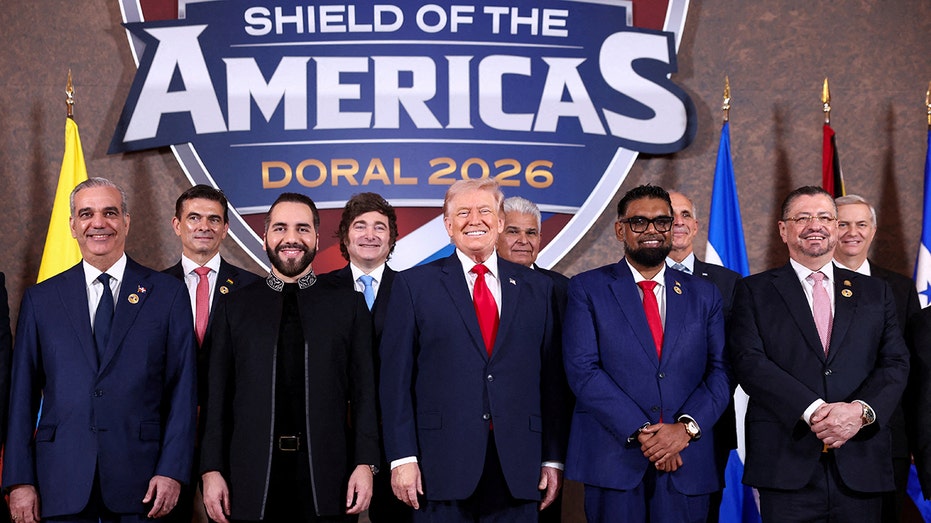
FIRST ON FOX: The United States is advancing a sweeping hemispheric security strategy aimed at dismantling transnational criminal organizations and countering the growing footprint of geopolitical rivals across Latin America, according to Joseph M. Humire, acting assistant secretary of War for Homeland Defense and Americas Security Affairs.
At the center of this effort is the "Shield of the Americas," a multi-layered initiative designed to integrate military, intelligence, and law enforcement capabilities across partner nations in the Western Hemisphere.
"Shield of the Americas is a presidential framing to form an alliance in the Western Hemisphere. The Americas Counter Cartel Coalition fits within it, but it's not exclusive to it. We now have 18 members in the coalition. And in the Shield, there are 13 countries," Humire said.
CARTELS FEAR US RETALIATION AS TRUMP-ERA PRESSURE RESHAPES STRATEGY: 'THEY FEAR THE UNITED STATES'
"The proclamation that President Trump signed on March 7, was centered around the coalition, and the coalition is centered around having partner nations in Latin America start looking at partner-led, deterrence-focused operations against cartel infrastructure and targets inside their sovereign territory, both on land and in the maritime territory."
Humire said, "In the past, we would provide training, capacity building and a bunch of different things to our partners so that they could go after the cartels. What is different in this administration is we are now accompanying our partners to go after the shared threats. In some cases, we've already gotten permission to do that, like in Ecuador, where we have permission from President Daniel Noboa to not just advise and assist his military as they engage in counter-narcotic terrorist operations, but also accompany his military forces when they engage in those operations."
Humire says, "The second difference to previous administrations is that we are leaning in on deterrence-focused operations, which means we are encouraging our partners to use hard power to send a signal to the cartels to complement interdiction. We are still seizing narcotics. We're still arresting major cartel members. We are also now destroying cartel infrastructure and, in some cases, taking out cartel members. That's something that is new."
"Mexico is not a member of the coalition. We are encouraged by Mexico's recent operation against El Mencho. That was an offensive operation against a high-value individual tied to a major cartel. We look forward to Mexico becoming a member in the future. Our relationship with Mexico is very strong military-wise. We have done a lot of training and capacity building with Mexico. But as of today, we still don't have U.S. forces accompanying Mexico inside the sovereign territory of the country," he said.
"Mexico, like many countries, saw what happened in Venezuela and now understand that there's a partner of preference inside the Western Hemisphere and in the world, which is the United States, not China, Russia or Iran."
Pentagon actions under this framework include the deployment of additional surveillance assets, enhanced maritime patrol operations, and the integration of cyber capabilities to track and disrupt illicit networks. It has also prioritized capacity-building efforts to strengthen partner nations’ ability to sustain long-term counter-cartel operations.
CRUZ WARNED MEXICO OFFICIALS 'PRESIDENT TRUMP WAS GOING TO' ACT IF THEY DIDN'T FIGHT CARTELS
Humire continued, "This is a historic effort to put the Western Hemisphere as a top regional priority for U.S. national security in ways we have never done before. President Trump has made a monumental shift in U.S. foreign policy and national security."
Beyond cartel activity, the initiative reflects growing concern over the influence of China, Russia and Iran in the region.
Expanding Chinese infrastructure investments with dual-use potential, Iranian-linked networks tied to illicit finance and proxy activities and Russian disinformation campaigns are key threats to regional stability.
To counter these efforts, the Pentagon has increased intelligence cooperation with allied governments, expanded joint cybersecurity initiatives, and supported efforts to secure critical infrastructure from foreign control or exploitation. Military-to-military engagements have also been scaled up to reinforce alignment with U.S. strategic priorities.
"Since Secretary Hegseth and Secretary Rubio went to Panama last year, China has had significantly less influence inside that country. They lost access to the ports and are no longer advancing their investments," Humire said.
"China also had a lot of influence over the Panamanian government. That influence is no more. Panama has withdrawn from the Belt and Road Initiative, becoming the first country in Latin America to do so. From the Department of War, we have partnered with Panama to build up an enduring presence on the Panama Canal which includes a jungle operations school on the Atlantic side, and a joint security operation group on the Pacific side. This is all to advance security of the Panama Canal."
KAROLINE LEAVITT WARNS CARTELS TO 'NOT LAY A FINGER' ON AMERICANS OR PAY 'SEVERE CONSEQUENCES'
Humire continued, "The stabilization efforts in Venezuela are going well. Despite Maduro's very close relationship with Iran, China and Russia, this was not enough to defend him. In the aftermath of Operation Absolute Resolve, we have seen tension among these different external actors, because while they had levels of cooperation, they don't have the same exact interests."
"This is evidenced by the fact that before, during and after Operation Absolute Resolve, neither Russia, China, or Iran, or even Cuba for that matter, were able to do anything to keep Nicolas Maduro in power. They might have sent some equipment and armament, but that didn't defend Maduro from that operation, and the Cuban security that was with him wasn't able to defend him. Russia, China, Iran or Cuba could not stop a very successful U.S. military action in support of U.S. law enforcement."
"The message to all the countries in Latin America, and frankly the world, is that they need to think twice when they partner with Russia, China or Iran because that partnership does not produce results," Humire said.
As part of its broader hemispheric strategy, the administration is also recalibrating its policy toward Cuba, viewing the island as a persistent security concern due to its ties with U.S. adversaries.
"The White House is leading conversations with Cuba in the aftermath of Venezuela. Cuba was reliant on subsidized oil from Venezuela, in exchange for security services. But those security services didn't do much for Venezuela when it mattered, so I believe there is a bit of a friction between the Cuban and Venezuelan governments," he said.
"The Western Hemisphere is our neighborhood; it is intricately tied to U.S. homeland defense. Hemispheric defense is and always has been a key part of U.S. homeland defense. Acknowledging this is why the Western Hemisphere is now a top priority for the Trump administration and especially for the Department of War, as reflected by official policy in the 2025 National Security Strategy and 2026 National Defense Strategy," Humire told Fox News Digital.
Der argentinische Staatschef Milet ist alles andere als begeistert. Zwar befindet sich die Regierung in Caracas unter der Fuchtel von Donald Trump, aber irgendwie hängt ihr immer noch der Ruf der „Chavistas“ an. Und von einer lateinamerikanischen Integration hält Milei sowieso nichts.
Der Beitrag Venezuela will zurück in den Mercosur erschien zuerst auf .
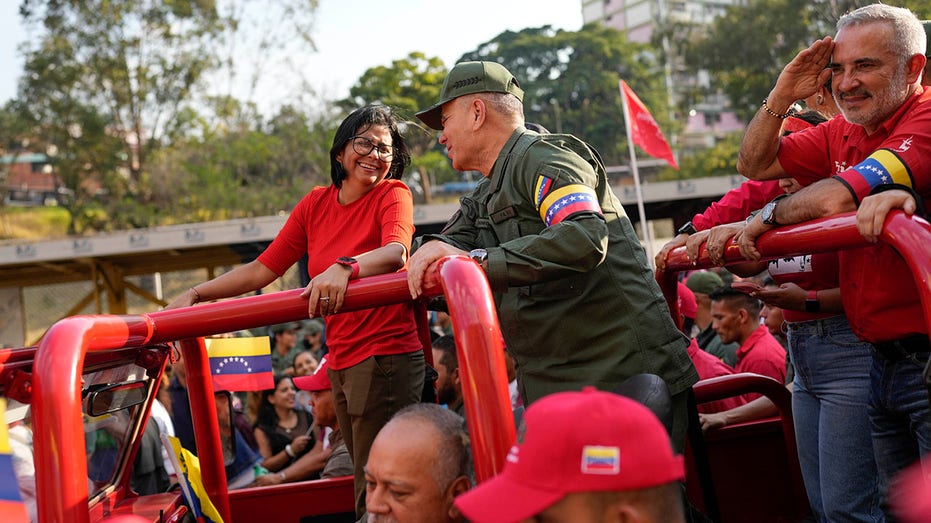
Venezuela's acting President Delcy Rodriguez on Wednesday replaced a longtime loyalist military official, as she continues to make changes to her cabinet amid relations with the Trump administration.
General Gustavo Gonzalez Lopez, 65, will replace General Vladimir Padrino as defense minister, who held the position for more than a decade, Reuters reported.
In a Telegram post, Rodriguez thanked Padrino for his service and said he would be given new responsibilities.
MADURO'S SON GIVES 'UNCONDITIONAL SUPPORT' TO NEWLY SWORN IN INTERIM VENEZUELA PRESIDENT
Lopez, who is among several officials sanctioned by the United States and European Union for human rights violations and corruption, was appointed by Rodriguez in January as the head of the presidential guard and the General Directorate of Military Counterintelligence (DGCIM).
TRUMP ISSUES DIRECT WARNING TO VENEZUELA'S NEW LEADER DELCY RODRÍGUEZ FOLLOWING MADURO CAPTURE
He previously worked with Rodriguez as head of strategic affairs at PDVSA, the state-owned oil company, which she previously oversaw as energy minister.
Padrino had also been sanctioned by the U.S. over alleged drug trafficking and his support for ousted President Nicolas Maduro.
Despite the U.S. intervention, Venezuela's repressive apparatus remains intact, the United Nations said last week. The government has repeatedly denied allegations of human rights and political oppression.
The United States recently restored diplomatic relations with the South American nation following years of heightened tensions between the two states.
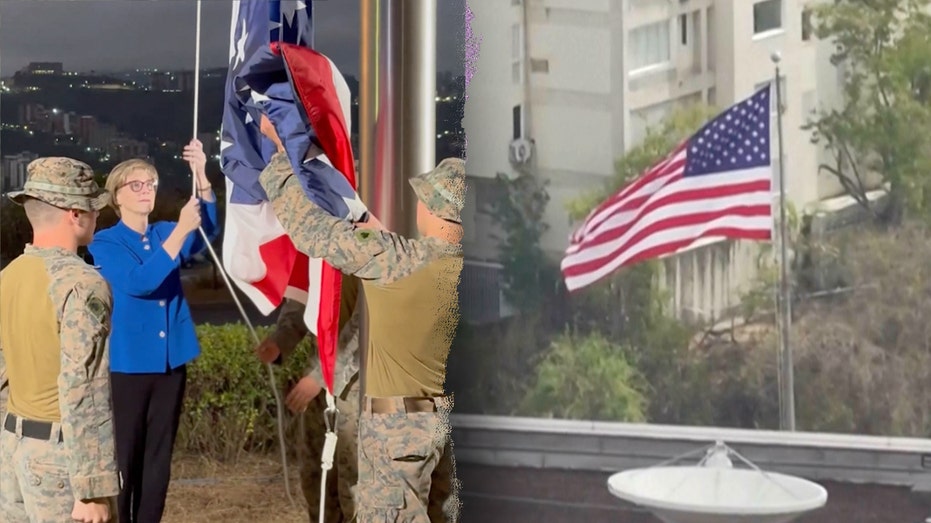
The American flag flew again over the U.S. Embassy in Venezuela on Saturday, marking the first time it has been raised in the South American country in seven years.
The embassy compound in Caracas is still undergoing renovations, and officials have not announced when the building will fully reopen, The Associated Press reported.
The flag’s return comes months after former Venezuelan President Nicolás Maduro was captured by U.S. forces in January.
FROM PALACE TO PRISON: VENEZUELAN STRONGMAN MADURO LOCKED IN TROUBLED BROOKLYN JAIL
The U.S. Embassy highlighted the moment in a social media post, calling it the start of a new chapter in relations between Washington and Caracas.
"A new era for U.S.-Venezuela relations has begun," the U.S. Embassy wrote on X.
Some residents expressed hope that the flag signals improved ties with the international community.
Caracas resident Alessandro Di Benedetto said the atmosphere among onlookers was optimistic, according to The Associated Press.
TRUMP BACKS MADURO LOYALIST OVER VENEZUELA OPPOSITION LEADER IN POST-CAPTURE TRANSITION
"I found several people here surprised and happy because today they raised the U.S. flag at the embassy," he said. "This is positive; this is another step."
The embassy had been closed since March 12, 2019, when the U.S. and Venezuela cut diplomatic relations, according to the website for the U.S. Department of State.
Maduro was captured during a U.S. military operation in Caracas on Jan. 3 and flown to New York, where he is currently being held in a federal jail.
He faces multiple charges, including narco-terrorism conspiracy, cocaine importation conspiracy, possession of machine guns and destructive devices, and conspiracy to possess those weapons.
Maduro’s wife, Cilia Flores, is also facing federal charges related to drug trafficking and weapons offenses.
Both pleaded not guilty during a federal court appearance in New York on Jan. 5.
The Associated Press contributed to this report.
As Cuba faces rolling blackouts, food shortages and renewed protests, Cuban human rights activist Rosa María Payá is warning in an interview to Fox News Digital that the island’s deepening crisis cannot be solved with economic reforms alone and is urging the United States to maintain pressure on the communist government in Havana.
The recent outages and shortages are tied to Cuba’s worsening energy and economic crisis.
A recent nationwide blackout was triggered by a failure at the Antonio Guiteras thermoelectric plant, the island’s largest power station, cutting electricity across much of the country, according to Reuters. The crisis has been compounded by fuel shortages after the Trump administration moved to curtail oil shipments to the island, particularly from Venezuela — one of Cuba’s main suppliers.
Cuban officials say U.S. sanctions have worsened the country’s economic difficulties, while repeated power plant failures and an aging electrical grid have left millions facing prolonged blackouts that have fueled growing public frustration and protests.
The state-run company blamed U.S. sanctions in an official statement, saying, "Without ending the financial blockade, there can be no permanent energy stability," according to CubaHeadlines.
The Trump administration has increased pressure on Cuba in recent months, tightening sanctions and targeting oil shipments that help power the island’s energy system. The measures are part of a broader effort to weaken the Cuban government and support democratic change on the island.
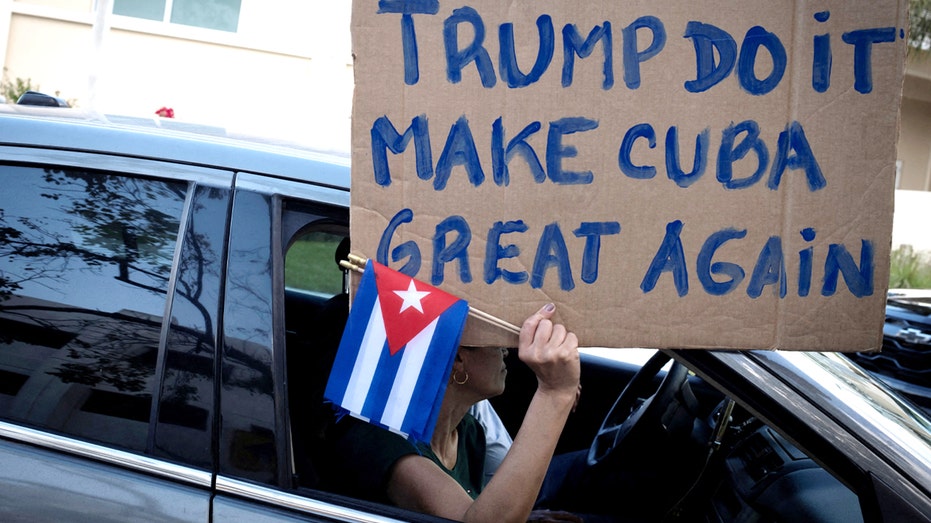
"To President Trump, it's important for you to know that the Cuban people are grateful for what this administration is doing and that we are ready, and we want to make Cuba great again," Payá said, addressing him directly. "And that means an end to the communist dictatorship, not just a new economy, but a new republic."
Her appeal comes as Cuba has re-emerged in Washington’s foreign policy discussions. Secretary of State Marco Rubio, the son of Cuban immigrants and one of the most prominent Cuban–American voices in U.S. politics, long has advocated a tougher stance toward Havana and stronger support for pro-democracy movements on the island.
The Trump administration has recently increased pressure on the Cuban government, including measures targeting oil shipments that help sustain the island’s struggling energy sector.
Trump praised Rubio during a press conference Tuesday and suggested he could play a central role in any potential negotiations with Havana.
"Marco Rubio is doing a great job," Trump said. "I think he's going to go down as the greatest secretary of state in history. They trust Marco."
A White House official told Fox News Digital Tuesday that, "The United States supports the Cuban people’s pursuit of democracy, prosperity, and fundamental freedoms. The United States calls on the Cuban regime to end its repression, release all unjustly detained political prisoners, and respect the rights and freedoms of all Cuban people."
"We want to work with President Trump and with Secretary Rubio, the opposition is united," Payá said. "We have a plan. It's called the Freedom Accord," she added, referring to a democratic transition framework promoted by opposition groups in Cuba. "We are ready to lead this process. The moment is now, Mr. President."
Opposition groups have developed the Freedom Accord, a political roadmap for democratic change, which she says would guide a transition away from the current system in Cuba.
Payá, 37, who escaped the country 13 years ago, has spent the past decade advocating internationally for democratic change in Cuba.
She is the daughter of prominent dissident Oswaldo Payá, founder of the Christian Liberation Movement and architect of the Varela Project, a petition campaign in the early 2000s that gathered more than 25,000 signatures demanding free elections and civil liberties in Cuba.
Her father died in 2012 alongside fellow activist Harold Cepero in what Payá describes as an assassination by the Cuban regime. Cuban authorities said the men were killed in a car crash in eastern Cuba, but the Inter-American Commission on Human Rights later concluded there were "serious indications" that Cuban state agents were involved in the deaths.
"After the Cuban regime assassinated my father … I have been trying to follow his legacy together with many, many other Cubans on the island and in exile that today believe that we have a real chance and freedom," she said, describing a movement that today includes activists both on the island and in exile.
FLORIDA LAUNCHES PROBE AFTER CUBA KILLS 4 ABOARD US-FLAGGED SPEEDBOAT NEAR KEYS
The crisis inside Cuba has reached a level where basic survival has become a daily struggle for many families, according to Payá.
"The situation today is that mothers don't know if they are going to be able to feed their child tonight," she said. "Most of the island has been suffering blackouts that last for days on many occasions."The island has experienced waves of unrest in recent years driven by economic collapse and political repression.
The largest demonstrations against the regime erupted on July 11, 2021, when thousands of Cubans took to the streets across the island chanting "freedom" in the biggest protests since the 1959 revolution.
Authorities responded with mass arrests and prison sentences for many demonstrators.
For Payá, those protests reflected something deeper than economic frustration.
"The Cuban people have been fighting for freedom for the last 67 years," she said. "We are demanding political freedom, not just a new economy."
Despite comparisons between Cuba’s crisis and the political turmoil in Venezuela, Payá argues the situation in Cuba is fundamentally different.
"Cuba's situation is quite different," she said. "This is the longest running communist dictatorship in the Western hemisphere."
MARCO RUBIO EMERGES AS KEY TRUMP POWER PLAYER AFTER VENEZUELA OPERATION
While she emphasized that Cubans themselves must ultimately drive political change, Payá said international pressure remains essential because of the regime’s ability to repress dissent.
Her appeal comes as Cuba has re-emerged in Washington’s foreign policy discussions.
Payá said the Cuban opposition hopes the United States will continue supporting democratic change on the island.
"I believe that President Trump knows very well, better than anyone, the difference between a real deal and a better one," she said. "He understands that this dictatorship must end."
"To end the crisis," she added, "we need to end the regime."
Fox News Digital reached out to the White House and Rubio for comment and has not yet received a reply.
US-Militär, Geheimdienste, Finanzgiganten und Tech-Konzerne orchestrierten Maduros Entführung — ein offenes Geständnis modernen Rohstoffraubs, bei dem Gewalt, Profit und digitale Macht zur neuen Weltordnung verschmelzen. …
Der Beitrag Maduro-Entführung: Die USA und ihre neue Methode der Rohstoffrauberei erschien zuerst auf Contra24.

Geht es bei Washingtons Karibik-Offensive gegen Venezuela vielleicht nicht wirklich um Drogen, sondern vielmehr um die Hisbollah-Aktivitäten auf der Isla de Margarita? Von Michael Steiner …
Der Beitrag Amerikas Karibik-Aufmarsch: Geht es wirklich um Drogen – oder um eine Insel voller Iran-Connections? erschien zuerst auf Contra24.
Mitten im Hurrikangebiet fliegen US-Langstreckenbomber bedrohlich nahe an Venezuela vorbei – offiziell nur eine „Übung“. Doch in Wahrheit könnte Washington erneut ein Regimewechsel-Szenario vorbereiten. Von …
Der Beitrag US-Bomber an Venezuelas Küste: Drohgebärde oder Vorbote eines neuen Kriegsabenteuers? erschien zuerst auf Contra24.
Das US-Militär konzentriert immer mehr Kräfte im karibischen Raum und in der Nähe Venezuelas. Das sozialistische Regime in Caracas steht schon lange auf Washingtons Abschussliste. …
Der Beitrag Militärischer Aufbau – ziehen die USA gegen Venezuela in den Krieg? erschien zuerst auf Contra24.