Anmelden


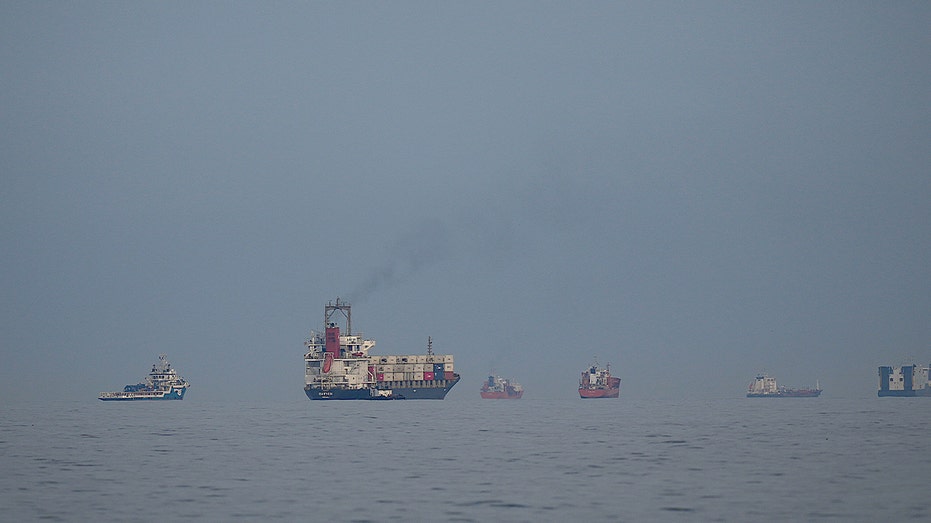
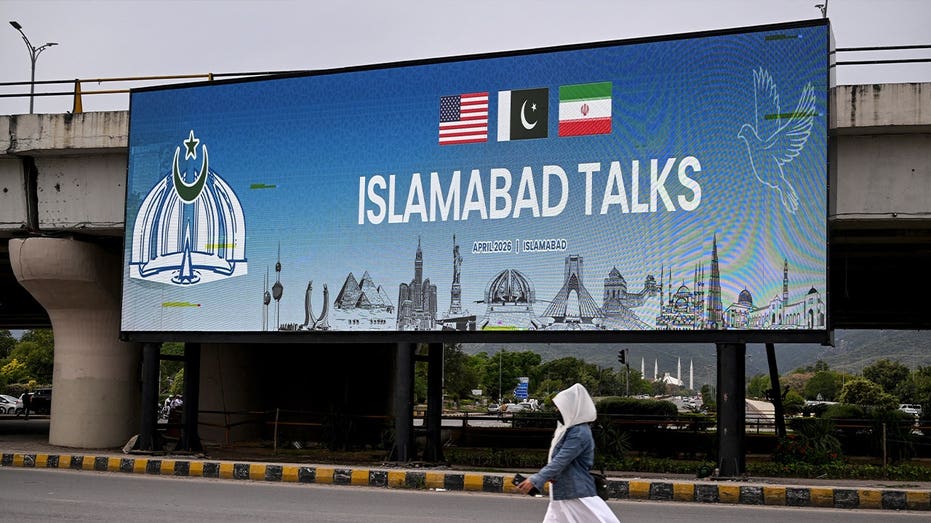
The United States began enforcing a naval blockade targeting Iranian maritime traffic Monday, sharply escalating tensions in the Gulf just hours after high-level talks in Pakistan between Washington and Tehran collapsed without a deal.
The move, announced by President Donald Trump, came after negotiations in Islamabad ended without a breakthrough, despite what participants described as rare direct engagement between the two sides.
But Lt. Gen. (ret.) Mohammed Saeed, former chief of general staff of the Pakistan Army, said in an exclusive interview with Fox News Digital that the talks came far closer to success than their outcome suggests — and argued that diplomacy is still within reach.
"Both sides are saying they were very close … even inches away from a solution," he said based on his own knowledge and reports. Saeed retired in 2023 but remained part of the core team handling operational planning, internal security coordination, and sensitive periods of political tension.
JD VANCE RETURNS TO WASHINGTON AFTER 16 HOURS OF IRAN PEACE TALKS COLLAPSE IN PAKISTAN
"They talked to each other in a very friendly manner. There was, from both sides, an expression of accommodation and understanding from each other. So, what you can briefly say is that the engagement has sufficient potential to resume."
Speaking at the White House Monday, Trump defended the blockade, saying, "Right now, there’s no fighting. Right now, we have a blockade … Iran is doing absolutely no business, and we’re going to keep it that way very easily."
He added that Iran’s military capabilities had been significantly degraded, saying its "Navy has gone, their air force is gone, their anti-aircraft is gone, their radar is gone and their leaders are gone."
Vice President JD Vance, who led the U.S. delegation, pressed Iran to accept a strict "zero enrichment" policy and remove its stockpile of highly enriched uranium.
"The simple fact is that we need to see an affirmative commitment that they will not seek a nuclear weapon, and they will not seek the tools that would enable them to quickly achieve a nuclear weapon," Vance said at a press conference in Islamabad.
Iranian leaders rejected those demands, insisting that any agreement must include the immediate release of billions of dollars in frozen assets.
Now, with the blockade in place, Saeed suggested the move may be designed less as a military endgame and more as leverage.
"This blockade could be … a maneuver to build further pressure on Iran to negotiate," he said.
TRUMP WARNS CHINA OF 'STAGGERING' 50% TARIFF IF CAUGHT SUPPLYING MILITARY AID TO IRAN
The escalation has raised concerns globally, particularly for countries dependent on Gulf energy flows, including Pakistan.
"Everyone in the world must be worried about what kind of economic negative spin-offs such a blockade would have," Saeed said.
Saeed, who until recently sat at the center of Pakistan’s military leadership, framed the Islamabad talks as a critical reopening of dialogue after decades of hostility.
"It is the first time in 47 years … that there was engagement at the highest level," he said, calling it "a great moment for diplomacy" and a demonstration of Pakistan’s ability to maintain credibility with both Washington and Tehran.
He pointed in particular to Pakistan’s army chief, Asim Munir, a figure who has drawn unusual attention in Washington.
Trump has publicly praised Munir, at one point calling him his "favorite field marshal," elevating his profile as a key intermediary in regional diplomacy.
Munir, who rose through Pakistan’s intelligence ranks before becoming army chief, previously served as director general of military intelligence and later led the Inter-Services Intelligence (ISI). His career has been defined by deep involvement in regional security and intelligence coordination, including longstanding engagement with Iran.
‘GATE OF TEARS’ AT RISK: IRAN THREATENS MAJOR NEW GLOBAL CHOKEPOINT IF US MOVES ON HORMUZ
Those ties could prove critical in the current crisis, according to Saeed.
"What people do not know is that when he was director general of military intelligence … he was interacting with Iranians at multiple levels continuously," Saeed said, describing years of direct engagement with Iran’s military, intelligence and political leadership, including former Islamic Revolutionary Guard Corps commander Qassem Soleimani, who was killed in a U.S. strike during Trump’s first term.
"He has had interaction with them for a long time … visiting Iran frequently and interacting on multiple issues," Saeed said, adding that many current Iranian officials would already be familiar with Munir from earlier roles.
That continuity, he argued, gives Pakistan a rare advantage at a moment when formal diplomatic channels are strained.
"What one can say is that he continues to be one figure internationally who has a personal interaction … in the intelligence community in Iran in the military hierarchy and also on the side of the political leadership," Saeed said.
"So that’s a huge advantage he has on the other side."
TRUMP VOICES FRUSTRATION WITH NATO, SAYS IRANIAN NAVY ‘DESTROYED’ AS US PREPS FOR BLOCKADE
For Pakistan, that personal access — combined with its simultaneous relationship with Washington — has become central to its effort to position itself as a credible intermediary, even as the region edges closer to confrontation.
At the same time, Pakistan’s role as a mediator has drawn scrutiny, particularly given its longstanding position on Israel and recent inflammatory remarks by senior officials.
When asked whether Pakistan can be seen as a neutral broker while not recognizing Israel — an actor directly involved in strikes on Iran — Saeed downplayed the issue, saying Israel was not part of the diplomatic track.
"Pakistan’s position with regard to relations with Israel has been consistent since our independence," he said, adding that Islamabad’s mediation efforts were focused solely on Washington and Tehran.
"Neither of their representatives was on the table … Pakistan was mediating between the U.S. and Iran," he said.
Despite the current escalation, Saeed maintained that diplomatic channels remain open.
"There is a lot of space … for resuming the process," he said, suggesting talks could restart in Islamabad or elsewhere if both sides shift course.
"On Pakistan's side, from my personal knowledge of the field marshal, they are relentless. They would not give up. They must not have given up. They must be continuously in touch with both sides. And they would try their best to convince both sides that the blockade is not going to be in their interest, in the interest of the region and in the interest of the international community."
Es gab gestern Samstag und heute 12.4. eine Unzahl höchst widersprüchlicher Gerüchte über eine Druchfahrt von US-Schiffen durch die Straße von Hormus. Je nach Quelle fuhren sie raus oder rein sowie mit oder ohne Genehmigung. Sie räumten Minen oder fuhren heim. PressTV hat nun eine offizelle iranische Version. Der Versuch des US-Militärs am Samstag zwei [...]
Der Beitrag Versuch des Passierens von Hormus durch US-Kriegsschiffe hätte fast zu ihrer Zerstörung geführt – Quellen erschien zuerst unter tkp.at.
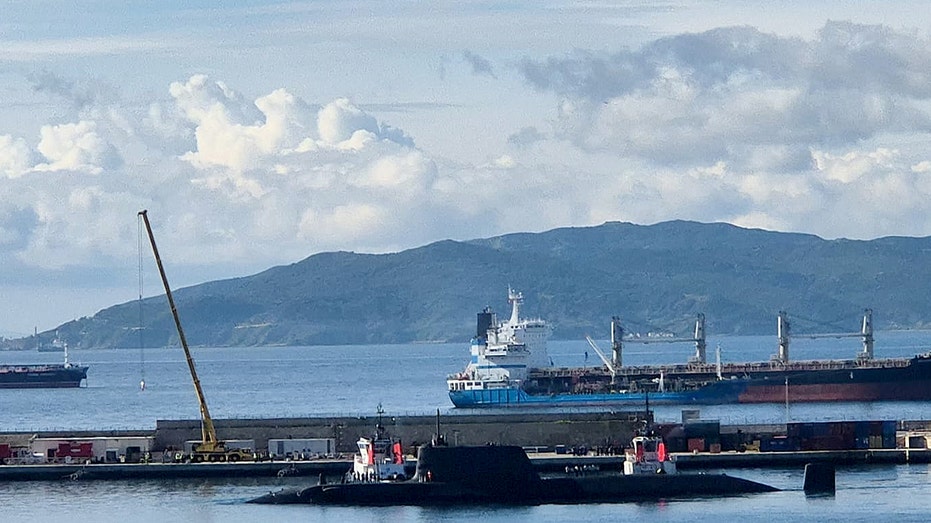
A British nuclear-powered submarine has been deployed to the Arabian Sea amid rising tensions in the region and came ahead of Iran’s failed ballistic missile attempt targeting Diego Garcia, a key U.S.-U.K. military base in the Indian Ocean, according to reports.
HMS Anson — a Royal Navy Astute-class submarine armed with Tomahawk Block IV cruise missiles and Spearfish heavyweight torpedoes — traveled about 5,500 miles from HMAS Stirling, near Perth, Australia, to the region earlier in March.
The submarine is reportedly operating in the northern Arabian Sea, positioning Britain to respond quickly if the conflict escalates.
HMS Anson periodically surfaces to maintain communications with the U.K.’s Permanent Joint Headquarters in London, GB News reported.
TRUMP SAYS US ‘OBLITERATED’ TARGETS IN STRIKE ON KEY IRANIAN OIL HUB
The outlet reported that Anson is typically based at Faslane in Scotland, where an Iranian man has been charged with attempting to gain entry.
The deployment was said to have come shortly after the U.K. government authorized the United States to use British military bases for defensive operations targeting Iranian missile capabilities that have threatened shipping in the Strait of Hormuz.
In a statement, Downing Street said the aim of those operations was to "degrade the missile sites and capabilities" used in attacks on ships, while emphasizing that Britain does not want to be drawn into a wider regional conflict.
Tensions intensified Sunday after Iran launched two ballistic missiles toward Diego Garcia, according to multiple reports. Neither missile reached its target; one reportedly failed in flight, while the other was intercepted.
The attempted strike has raised concerns about Iran’s missile range, as Diego Garcia is roughly 2,485 miles from Iran.
Iranian Foreign Minister Seyed Abbas Araghchi had warned Britain against supporting U.S. or Israeli military action, saying such involvement could further escalate the conflict.
Araghchi told U.K. Home Secretary Yvette Cooper that Iran views Britain’s decision to allow U.S. forces to use its bases as "participation in aggression," according to his account of the call, the BBC reported.
IRAN’S DRONE SWARMS CHALLENGE US AIR DEFENSES AS TROOPS IN MIDDLE EAST FACE RISING THREATS
He also criticized what he described as the U.K.’s "negative and biased" approach and demanded that it cease cooperation with the United States.
The U.K. did not allow the U.S. to use its bases for initial offensive strikes against Iran but later granted permission for defensive operations in response to Iranian missile threats.
Downing Street said: "We didn’t participate in the initial strikes, and we’re not getting drawn into the wider war."
Tehran has said it would exercise what it calls its right to self-defense if threatened.
Meanwhile, the U.K. Ministry of Defence said Sunday that Royal Air Force assets, including Typhoon jets, remain engaged in defensive operations in the region.
The ministry added that British forces have helped counter Iranian drone threats while coordinating closely with allies.
Fox News Digital has reached out to the U.K. Ministry of Defence for comment.
Iran is deploying explosive-laden drone boats disguised as wooden fishing vessels in the Strait of Hormuz, a defense expert has warned — a move that signals a new phase of hybrid maritime warfare in one of the world’s most critical shipping lanes.
Cameron Chell, CEO of drone technology firm Draganfly, spoke after the United Kingdom Maritime Trade Operations (UKMTO) confirmed that a Marshall Islands–flagged oil tanker was struck March 1 by an Iranian unmanned surface vehicle north of Muscat, Oman.
"UKMTO has received confirmation that the vessel was attacked by an uncrewed surface vehicle (USV), and that the crew has been evacuated to shore," UKMTO said in a threat assessment.
Reports also indicated that two additional oil tankers were hit March 11 by remote-controlled explosive boats in the Gulf, as Iran intensified attacks on foreign vessels following the start of the U.S. Operation Epic Fury against the regime on Feb. 28.
FIRES RAGE AT IRAN'S BANDAR ABBAS NAVAL HEADQUARTERS, STRAIT OF HORMUZ TRAFFIC STALLED
The use of so-called "suicide skiffs" represents a growing asymmetric threat in the narrow, 21-mile-wide Strait, Chell warned, while highlighting the technological capabilities behind these attacks.
"The Iranians probably have use of radio remote control, line of sight, frequency hopping, or encrypted radio communication between the skiffs and the Hormuz shoreline," Chell told Fox News Digital.
"These can be jammed and tracked, but when there's 50 of these boats, it's hard to try to find them all along this shoreline or to find a 20-foot wooden fishing boat that is laden with explosives.
"They can have one person controlling a swarm of 10 boats," he said before describing how there "could also be autonomous swarming where they might have 10 boats that can act with a large level of independence, because they're pre-programmed."
"The boats would be used to ram into targets and explode," Chell clarified.
EX-NAVY SEAL WARNS WITHDRAWING FROM IRAN NOW WOULD HAND 'VICTORY' TO REGIME
Chell’s comments followed a March 12 Reuters report stating that six vessels had been attacked in the Gulf and Strait of Hormuz.
Sources said that Iran had also deployed about a dozen mines, complicating efforts to maintain any traffic through the critical waterway.
U.S. Treasury Secretary Scott Bessent told Sky News Thursday that the U.S. Navy, potentially alongside an international coalition, would escort ships when militarily feasible.
U.K. Defense Secretary John Healey also said discussions were underway with European counterparts stressing the global economic stakes tied to the strait. Chell, however, questioned current defensive readiness.
"The drone defense fleets that the U.S. Navy would not have been set up to take these suicide skiffs out," Chell said.
"The U.S. would be using manned aircraft in order to take them out, which are fantastic at taking out a large target, but inefficient in taking out 50 boats at one time that are an average of 25 or 30 feet in size, laden with explosives.
IRAN’S DRONE SWARMS CHALLENGE US AIR DEFENSES AS TROOPS IN MIDDLE EAST FACE RISING THREATS
"Given the Strait's geography, it would require patrolling by many aircraft and would require pervasive surveillance over the area, a rapid response to any activity that's happening," he said.
As Supreme Leader Mojtaba Khamenei vowed to keep the Strait closed as leverage against the U.S. and Israel, oil prices continue to surge, with Chell also highlighting the geographic advantage Iran holds.
"The geographic layout of the Strait lends itself very well to relatively unsophisticated suicide skiffs, unmanned surface vehicles or USVs," he warned before describing how the area "lends itself to this low-cost, automatic, asymmetric warfare."
"The Iranians can disguise them as fishing boats and can be anywhere from 12 to 30 feet, and a boat could be of any description," Chell said.
"These skiffs are equipped with basic remote control capabilities that may or may not be using GPS waypoints or manual remote control."
"The skiffs are not autonomous, because the distance across the Strait is so short, and it's very flat across this waterway, the communication signal could be carried for quite some time via a line of sight," he added.
"They could literally have hundreds out there at a time, because they're also so inexpensive to defend against," Chell said.