NEWS 23

🔒
❌
Stats
Es gibt neue verfügbare Artikel. Klicken Sie, um die Seite zu aktualisieren.

☐ ☆ ✇ Fox News

Pakistani general says Iran diplomacy still alive, despite US blockade, failed talks

veröffentlicht.
Vorschau ansehen

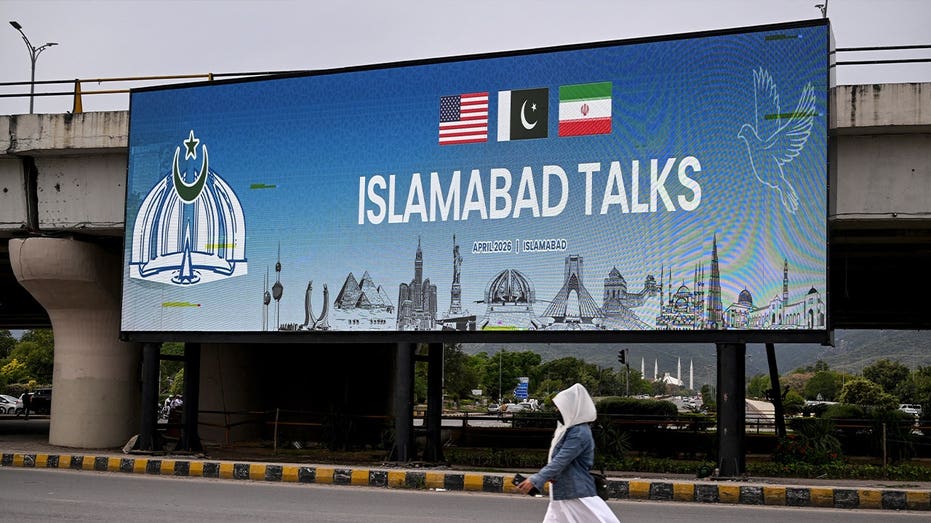
The United States began enforcing a naval blockade targeting Iranian maritime traffic Monday, sharply escalating tensions in the Gulf just hours after high-level talks in Pakistan between Washington and Tehran collapsed without a deal.

The move, announced by President Donald Trump, came after negotiations in Islamabad ended without a breakthrough, despite what participants described as rare direct engagement between the two sides.

But Lt. Gen. (ret.) Mohammed Saeed, former chief of general staff of the Pakistan Army, said in an exclusive interview with Fox News Digital that the talks came far closer to success than their outcome suggests — and argued that diplomacy is still within reach.

"Both sides are saying they were very close … even inches away from a solution," he said based on his own knowledge and reports. Saeed retired in 2023 but remained part of the core team handling operational planning, internal security coordination, and sensitive periods of political tension. 

JD VANCE RETURNS TO WASHINGTON AFTER 16 HOURS OF IRAN PEACE TALKS COLLAPSE IN PAKISTAN

"They talked to each other in a very friendly manner. There was, from both sides, an expression of accommodation and understanding from each other. So, what you can briefly say is that the engagement has sufficient potential to resume."

Speaking at the White House Monday, Trump defended the blockade, saying, "Right now, there’s no fighting. Right now, we have a blockade … Iran is doing absolutely no business, and we’re going to keep it that way very easily."

He added that Iran’s military capabilities had been significantly degraded, saying its "Navy has gone, their air force is gone, their anti-aircraft is gone, their radar is gone and their leaders are gone."

Vice President JD Vance, who led the U.S. delegation, pressed Iran to accept a strict "zero enrichment" policy and remove its stockpile of highly enriched uranium. 

"The simple fact is that we need to see an affirmative commitment that they will not seek a nuclear weapon, and they will not seek the tools that would enable them to quickly achieve a nuclear weapon," Vance said at a press conference in Islamabad.

Iranian leaders rejected those demands, insisting that any agreement must include the immediate release of billions of dollars in frozen assets.

Now, with the blockade in place, Saeed suggested the move may be designed less as a military endgame and more as leverage.

"This blockade could be … a maneuver to build further pressure on Iran to negotiate," he said.

TRUMP WARNS CHINA OF 'STAGGERING' 50% TARIFF IF CAUGHT SUPPLYING MILITARY AID TO IRAN

The escalation has raised concerns globally, particularly for countries dependent on Gulf energy flows, including Pakistan.

"Everyone in the world must be worried about what kind of economic negative spin-offs such a blockade would have," Saeed said.

Saeed, who until recently sat at the center of Pakistan’s military leadership, framed the Islamabad talks as a critical reopening of dialogue after decades of hostility.

"It is the first time in 47 years … that there was engagement at the highest level," he said, calling it "a great moment for diplomacy" and a demonstration of Pakistan’s ability to maintain credibility with both Washington and Tehran.

He pointed in particular to Pakistan’s army chief, Asim Munir, a figure who has drawn unusual attention in Washington. 

Trump has publicly praised Munir, at one point calling him his "favorite field marshal," elevating his profile as a key intermediary in regional diplomacy.

Munir, who rose through Pakistan’s intelligence ranks before becoming army chief, previously served as director general of military intelligence and later led the Inter-Services Intelligence (ISI). His career has been defined by deep involvement in regional security and intelligence coordination, including longstanding engagement with Iran.

‘GATE OF TEARS’ AT RISK: IRAN THREATENS MAJOR NEW GLOBAL CHOKEPOINT IF US MOVES ON HORMUZ

Those ties could prove critical in the current crisis, according to Saeed. 

"What people do not know is that when he was director general of military intelligence … he was interacting with Iranians at multiple levels continuously," Saeed said, describing years of direct engagement with Iran’s military, intelligence and political leadership, including former Islamic Revolutionary Guard Corps commander Qassem Soleimani, who was killed in a U.S. strike during Trump’s first term.

"He has had interaction with them for a long time … visiting Iran frequently and interacting on multiple issues," Saeed said, adding that many current Iranian officials would already be familiar with Munir from earlier roles.

That continuity, he argued, gives Pakistan a rare advantage at a moment when formal diplomatic channels are strained.

"What one can say is that he continues to be one figure internationally who has a personal interaction … in the intelligence community in Iran in the military hierarchy and also on the side of the political leadership," Saeed said.

"So that’s a huge advantage he has on the other side."

TRUMP VOICES FRUSTRATION WITH NATO, SAYS IRANIAN NAVY ‘DESTROYED’ AS US PREPS FOR BLOCKADE

For Pakistan, that personal access — combined with its simultaneous relationship with Washington — has become central to its effort to position itself as a credible intermediary, even as the region edges closer to confrontation.

At the same time, Pakistan’s role as a mediator has drawn scrutiny, particularly given its longstanding position on Israel and recent inflammatory remarks by senior officials.

When asked whether Pakistan can be seen as a neutral broker while not recognizing Israel — an actor directly involved in strikes on Iran — Saeed downplayed the issue, saying Israel was not part of the diplomatic track.

"Pakistan’s position with regard to relations with Israel has been consistent since our independence," he said, adding that Islamabad’s mediation efforts were focused solely on Washington and Tehran.

"Neither of their representatives was on the table … Pakistan was mediating between the U.S. and Iran," he said.

Despite the current escalation, Saeed maintained that diplomatic channels remain open.

"There is a lot of space … for resuming the process," he said, suggesting talks could restart in Islamabad or elsewhere if both sides shift course.

"On Pakistan's side, from my personal knowledge of the field marshal, they are relentless. They would not give up. They must not have given up. They must be continuously in touch with both sides. And they would try their best to convince both sides that the blockade is not going to be in their interest, in the interest of the region and in the interest of the international community."
(Auszug von RSS-Feed)

☐ ☆ ✇ Fox News

Ukraine peace talks on ‘situational pause’ as Middle East conflict intensifies: Kremlin

veröffentlicht.
Vorschau ansehen

Ukraine peace talks are on a "situational pause" as the Middle East conflict intensifies, the Kremlin said Thursday, even as Kyiv signaled negotiations could resume as soon as this weekend.

Following reports in Russian media that the Kremlin had paused talks on Ukraine and that the Middle East conflict could push Kyiv toward compromise, Kremlin spokesperson Dmitry Peskov confirmed the pause.

"This is a situational pause, for obvious reasons," Peskov told reporters when asked about the report, according to Reuters.

Peskov added that as soon as "our American partners" could refocus on the Ukraine conflict, Moscow hopes the pause will end and new talks can begin, the outlet reported.

UKRAINE TO MEET TRUMP ENVOYS AHEAD OF HIGH-STAKES GENEVA TALKS WITH RUSSIA AS WAR ENTERS FIFTH YEAR

Ukrainian President Volodymyr Zelenskyy said in a video posted on X that Kyiv has received signals from the U.S. that it is ready to resume talks aimed at ending the war.

"There has been a pause in the talks, and it is time to resume them," he said. "We are doing everything to ensure that the negotiations are genuinely substantive."

Zelenskyy added that a Ukrainian negotiating team is already on its way to the U.S. and is expected to hold meetings Saturday.

RUSSIA, UKRAINE TO DISCUSS TERRITORY AS TRUMP SAYS BOTH SIDES 'WANT TO MAKE A DEAL'

Earlier this month, President Donald Trump said the "hatred" between Russia and Ukraine was getting in the way of reaching a peace deal.

Speaking at the Shield of the Americas Summit in Doral, Florida, Trump said the "hatred between Putin and his counterpart is so great."

"It's so great that, you know, Ukraine, Russia, you'd think there would be a little bit of camaraderie, [but] there’s not. And the hatred is so great. It's very hard for them to get there. It's very, very hard to get there. So we'll see what happens," Trump said. "But we've been close a lot of times and one or the other would back out."

UKRAINE'S ZELENSKYY: RUSSIA TRYING 'TO PLAY' GAME WITH TRUMP, STALL PEACE TALKS

Trump’s comments came after NATO Secretary General Mark Rutte said in January that Russia was losing between 20,000 and 25,000 troops each month in its war against Ukraine.

The pause in talks comes as Ukraine is increasingly being drawn into the wider Middle East conflict.

With the conflict in Iran now in its third week, Ukraine is providing technology and battlefield-tested tactics to counter Iranian drone attacks.

U.S. and Gulf partners have requested Ukrainian assistance, with Kyiv signaling it is prepared to share both systems and personnel to help defend against Iranian aerial threats.

Fox News Digital's Greg Norman-Diamond and Morgan Phillips contributed to this report, along with Reuters.

(Auszug von RSS-Feed)

☐ ☆ ✇ Fox News

EU pushes for end of Iran war in a manner where 'everybody saves face'

veröffentlicht.
Vorschau ansehen

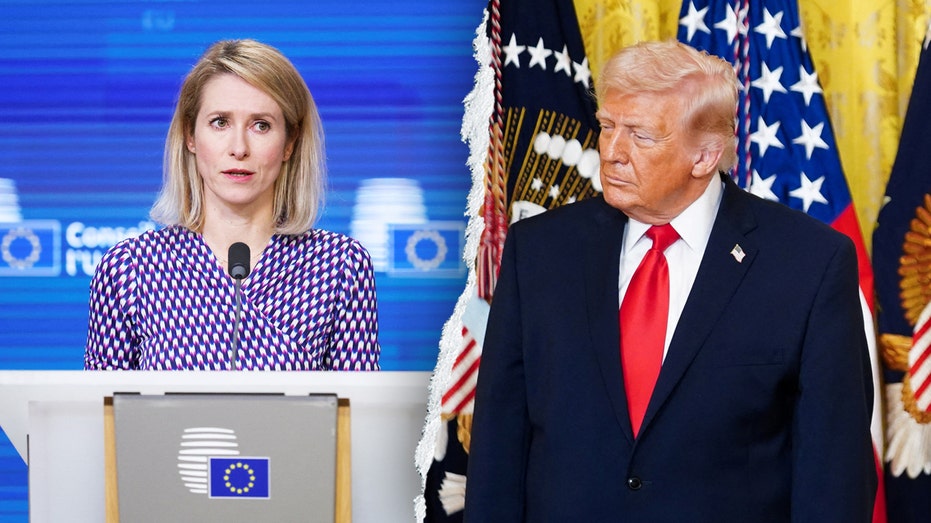
The European Union's foreign policy chief said Tuesday that the bloc is consulting with Gulf countries to potentially "bring forward proposals for Iran, Israel and the U.S." to get out of their war in a situation where "everybody saves face."

Kaja Kallas, the EU High Representative for Foreign Affairs and Security Policy, made the remark to Reuters, adding that "it would be in the interest of everybody if this war stops."

"We have been consulting with regional countries like ‌the Gulf ⁠countries, Jordan, Egypt, [about] whether we could also bring forward proposals for Iran, Israel and the U.S. to get out of this situation so that everybody saves face," Kallas was quoted as saying. 

"The problem with wars is that it's easier to start than to stop them, and it always gets out of hand," she also reportedly said, noting that the EU is willing to assist "diplomatically to bring the parties together to really stop this war."

TRUMP SEEKS WARSHIPS FROM OTHER COUNTRIES TO HELP SECURE STRAIT OF HORMUZ

Kallas also pushed back after President Donald Trump said over the weekend that, "Many Countries, especially those who are affected by Iran’s attempted closure of the Hormuz Strait, will be sending War Ships, in conjunction with the United States of America, to keep the Strait open and safe." 

"Nobody is ready to put their people in harm's way ‌in ⁠the Strait of Hormuz," Kallas told Reuters on Tuesday. "We have to find diplomatic ways to keep this open ⁠so that we don't have a food crisis, fertilizers crisis, energy ⁠crisis as well."

TOP COUNTERTERRORISM OFFICIAL RESIGNS IN PROTEST OF US WAR AGAINST IRAN

Trump said on Truth Social on Saturday that, "We have already destroyed 100% of Iran’s Military capability, but it’s easy for them to send a drone or two, drop a mine, or deliver a close range missile somewhere along, or in, this Waterway, no matter how badly defeated they are." 

"Hopefully China, France, Japan, South Korea, the UK, and others, that are affected by this artificial constraint, will send Ships to the area so that the Hormuz Strait will no longer be a threat by a Nation that has been totally decapitated," Trump wrote. "In the meantime, the United States will be bombing the hell out of the shoreline, and continually shooting Iranian Boats and Ships out of the water. One way or the other, we will soon get the Hormuz Strait OPEN, SAFE, and FREE!" 

(Auszug von RSS-Feed)

☐ ☆ ✇ Fox News

Why Gulf states aren’t joining the war against Iran — despite attacks on their soil

veröffentlicht.
Vorschau ansehen

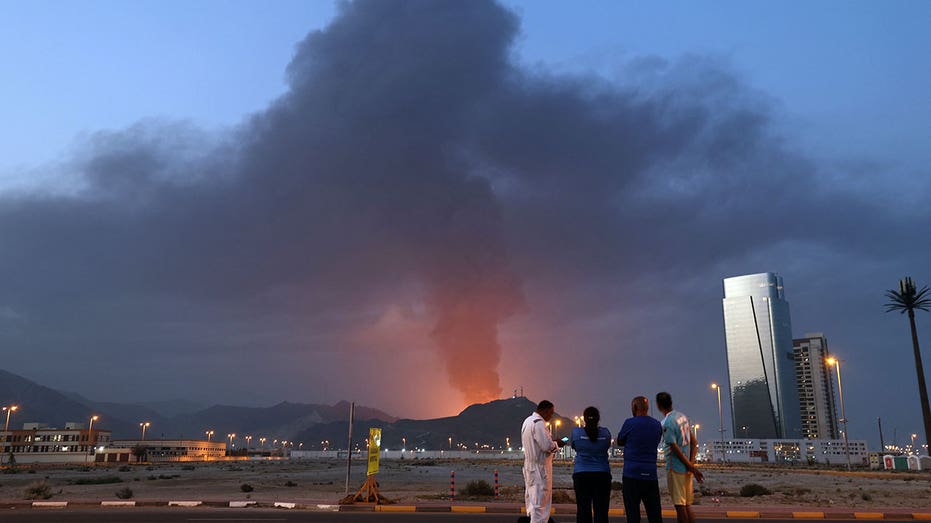
Even as Iran expands attacks across the Persian Gulf, several of the countries directly targeted are still refusing to join the fight against Iran, opting instead for restraint and diplomacy. Gulf governments say their priority is defending their territory while preventing a wider conflict that could destabilize the region and global energy markets.

When asked by Fox News White House senior correspondent Peter Doocy about Iran’s strikes on Gulf states Monday, Donald Trump said experts had not anticipated Tehran would target neighboring countries.

"Nobody. Nobody. The greatest experts — nobody thought they were going to hit," Trump said when Doocy asked about Iranian attacks targeting Qatar, Saudi Arabia, the United Arab Emirates, Bahrain and Kuwait.

TRUMP SEEKS WARSHIPS FROM OTHER COUNTRIES TO HELP SECURE STRAIT OF HORMUZ

Tehran widened the conflict after U.S.-Israeli strikes on Iranian oil facilities earlier this month, expanding retaliation to Gulf energy infrastructure and shipping routes in the Strait of Hormuz, according to the Armed Conflict Location & Event Data Project.

Armed Conflict Location & Event Data Project (ACLED) recorded at least 25 Iranian attacks against shipping in the Gulf and the Strait of Hormuz since Feb. 28, as well as strikes targeting energy infrastructure across several Gulf states.

"Tehran targeted Gulf energy infrastructure and shipping in the Strait of Hormuz seeking to raise the costs of the war for the U.S. and its regional partners," said Luca Nevola, ACLED’s senior analyst for Yemen and the Gulf.

Jacob Olidort, chief research officer at the America First Policy Institute, told Fox News Digital that, "Since Operation Epic Fury began, our Gulf partners have responded with an unprecedented unified front against threats posed by the Iranian regime," he said, adding that their actions have focused on stopping attacks rather than expanding the war. "This reflects not just a desire to stabilize the region but also a recognition that the U.S. military’s success is what makes that possible."

Salman Al-Ansari, a Saudi geopolitical researcher, told Fox News Digital that Riyadh is focusing on maintaining global market stability. "Riyadh is exercising maximum restraint at the moment, but the real question is how long that restraint can last," Al-Ansari said.

Al-Ansari pointed to a long-standing Saudi strategic philosophy. "Over a hundred years ago, the founder of Saudi Arabia, King Abdulaziz Al Saud, said: ‘The living do not fight the dead.’ Perhaps Riyadh is following this doctrine, at least until further developments unfold," he said.

Qatar has taken a similar approach. "The State of Qatar’s policies always seek to de-escalate conflicts," a Qatari official told Fox News Digital. "Qatar is not a party to this war, and we strongly believe that the violence must end through negotiations. At the same time. Qatar continues to defend its country and sovereignty following the Iranian attacks."

IRAN WAR, 11 DAYS IN: US CONTROLS SKIES, OIL SURGES AND THE REGION BRACES FOR WHAT’S NEXT

Another factor shaping Gulf restraint is a regional policy of refusing to allow their territory to be used for attacks on Iran. Some U.S. military experts say the Gulf’s hesitation is also tied to long-standing concerns about Washington’s reliability in the region.

Vice Adm. Robert S. Harward, a former deputy commander of U.S. Central Command, told Fox News Digital that inconsistent U.S. policies have eroded trust among Gulf partners. "Our policies in the Middle East have been more cyclical than a revolving door," Harward said. "We have failed to earn the trust and confidence of our Gulf partners over the last decade and a half. And that lack of trust and confidence has only exacerbated the threat from Iran to the region."

The now retired vice admiral said Gulf governments are weighing the risks of escalation carefully. "As these countries consider whether to go on the offensive, they are worried about what happens when we leave," he said. "Admittedly, these countries are challenged to defend themselves against a country of 90 million without us."

Regional analysts say Gulf leaders are concerned that if even one country joins the fighting, the conflict could quickly engulf the region.

Abdullah Aljunaid, a Bahraini analyst, told Fox News Digital that if one member of the Gulf Cooperation Council enters the war, it could drag the entire bloc with it. "If any member of the GCC decided to join this offensive, it would obligate the rest of the GCC countries to join at the same time," Aljunaid said.

The consequences could extend far beyond the battlefield. "You could imagine what the oil prices would be. We are definitely talking about north of $150 per barrel," he claimed.

HEGSETH BLASTS BRITS, SAYS IRAN'S CHAOTIC RETALIATION HAS DRIVEN ITS OWN ALLIES 'INTO THE AMERICAN ORBIT'

Aljunaid said Gulf leaders are also wary of open-ended military campaigns in the region. "Past experiences show that every time military action is initiated in the region, it never ends according to what was promised," he said.

Instead, he said Gulf countries are focusing on defensive measures while quietly supporting diplomatic channels, including mediation efforts through Oman.

Lt. Gen. Richard Y. Newton III said Iran made a major strategic mistake by striking Gulf countries. "Iran made a strategic blunder by striking Gulf nations – our allies and friends – with ballistic missiles and drone attacks," Newton told Fox News Digital.

The retired Air Force commander warned that attacks on key infrastructure such as oil fields or desalination plants could push Gulf states toward a more aggressive response.

"I'm inclined to believe there may potentially be one or two nations in the region inclined to join with the U.S. by going offensive against Iran," Newton said. "That is certainly within the realm of possibility in the coming weeks."

Newton added that the long-term objective for the U.S. and its partners should be preventing Iran from threatening regional stability and global shipping routes. "That includes achieving maritime dominance in the Persian Gulf and setting the conditions for safe passage for commercial shipping through the Strait of Hormuz," he said.

For now, however, Gulf leaders appear determined to contain the conflict rather than escalate it, even as Iranian strikes have already reached their territory.

The UAE did not immediately respond to requests for comment.

(Auszug von RSS-Feed)

☐ ☆ ✇ Fox News

Iranian Kurdish fighters say they’re ready to strike Tehran, waiting for opening

veröffentlicht.
Vorschau ansehen

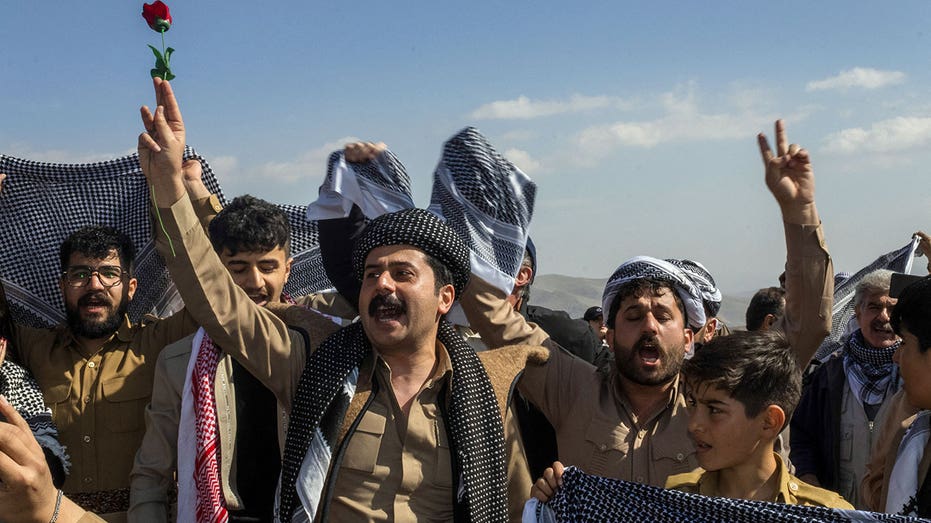
EXCLUSIVE: Iranian Kurdish opposition groups say they are prepared to challenge Tehran but are holding back for now as the war between the United States, Israel and the Islamic Republic continues to unfold.

Khalid Azizi, spokesperson for the Democratic Party of Iranian Kurdistan (KDPI), told Fox News Digital in an exclusive interview that Kurdish forces are closely watching developments but have no plans to launch a ground offensive at this stage.

Reports in recent days have suggested that President Donald Trump spoke with Mustafa Hijri, the leader of the Democratic Party of Iranian Kurdistan, as Washington explores possible Kurdish involvement in pressure on Iran. 

Azizi declined to confirm or deny whether such a conversation took place.

74 RETIRED US GENERALS, ADMIRALS BACK IRAN STRIKES, WARN TEHRAN SEEKS TO ‘SPILL AMERICAN BLOOD’

Azizi himself has firsthand experience with Iran’s military retaliation. 

In 2018, Iran’s Islamic Revolutionary Guard Corps launched ballistic missiles at the KDPI headquarters in Koy Sanjaq in Iraq’s Kurdistan Region during a leadership meeting, killing at least 18 people and injuring dozens.

"We have been targeted by the Islamic Republic," Azizi said. "The first Iranian missile was sent to my headquarters and I was personally injured in that attack," Azizi said.

Despite the risks, Azizi said Kurdish resistance remains strong after decades of confrontation with Iran. 

"The Iranian Kurdish resistance movement is actually very strong because we have been on the ground since the Iranian revolution," he said.

Azizi spoke from Washington, D.C., where he said Kurdish representatives were meeting with policymakers and institutions to discuss the situation in Iran and the role Kurdish groups could play if the conflict evolves.

But for now, Kurdish groups say they are waiting to see how the broader war develops.

"We are ready and our party is well organized," Azizi said. "But right now we do not have any intention to enter Iranian Kurdistan because the ground forces in this war have not been a topic."

"It’s very easy to start a war," he added. "But it will be more complicated how to end this war."

KEANE WARNS IRAN STRIKE BECOMING ‘REGIONAL WAR,' SAYS THREE GULF STATES PREPARING FOR COMBAT

The KDPI is one of the oldest Kurdish opposition movements fighting Iran’s Islamic Republic. The group is a member of the Socialist International and operates primarily from bases in the Kurdistan Region of Iraq and has been in armed and political opposition to Tehran since the 1979 Iranian Revolution.

Azizi said Kurdish political movements have recently taken a significant step by forming a joint alliance aimed at coordinating their political strategy.

"We have managed to create a unity among the Kurdish political parties," he said. "This has been welcomed by the Iranian Kurdish people and by different Iranian political parties."

The alliance, known as the Coalition of Political Forces of Iranian Kurdistan, brings together several historically divided Kurdish factions that oppose the Islamic Republic.

Azizi said the future of Iran will ultimately depend on whether Iranians themselves rise up against the regime.

US SURGES FORCES TO MIDDLE EAST AS PENTAGON WARNS IRAN FIGHT ‘WILL TAKE SOME TIME'

"If you look at the goal of the United States and Israel in this war, they have been targeting the Iranian military, security and political institutions. In this aspect Iran has been weakened," he said.

"But the regime still remains in power because people are not on the streets and there is no alternative right now to replace this regime."

Azizi urged Western governments to focus not only on the military campaign but also on helping Iranian opposition movements coordinate politically.

Iran, he said, is a multi-ethnic country whose future stability will depend on building a democratic system that includes all of its communities.

"The path and the roadmap for rebuilding Iran must be based on the participation of all ethnic groups," Azizi said. "Iran is a multi-ethnic society."

For now, he said, Kurdish fighters remain in a holding pattern.

"We have the ability and we have the capacity," Azizi said. "But it is not easy right now for us to make any decision regarding entering Iranian Kurdistan."

(Auszug von RSS-Feed)
❌