NEWS 23

🔒
❌
Stats
Es gibt neue verfügbare Artikel. Klicken Sie, um die Seite zu aktualisieren.

☐ ☆ ✇ Fox News

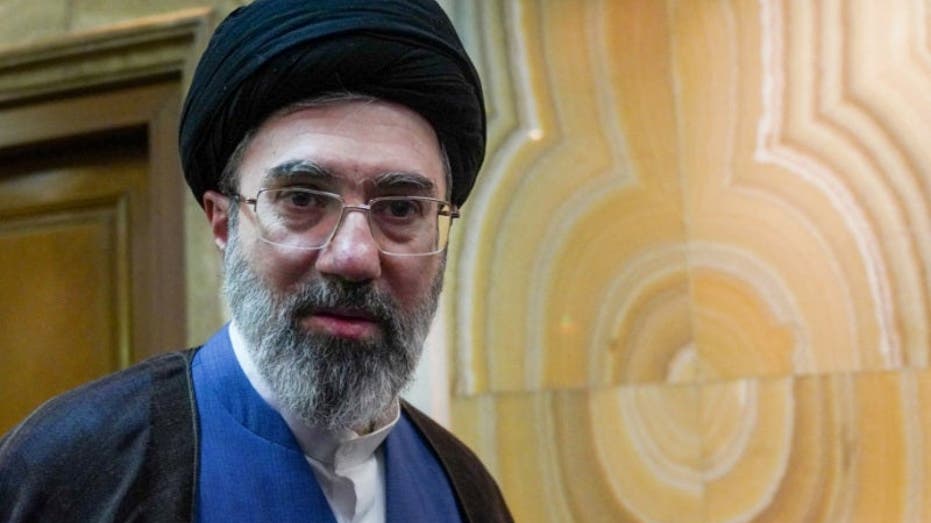
Iran in crisis as US talks collapse, Mojtaba’s ‘mafia’ regime blocks Khamenei burial: analyst

veröffentlicht.
Vorschau ansehen

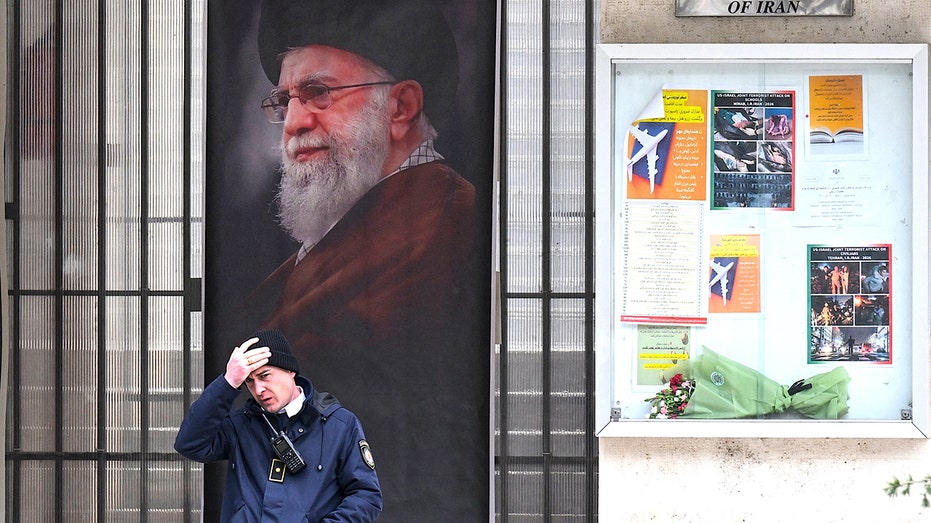
A prolonged delay in the burial of Iran’s supreme leader, Ayatollah Ali Khamenei, signals a deepening crisis inside the Islamic Republic, according to a prominent Iranian strategist.

Dr. Ramesh Sepehrrad’s remarks came as peace talks between the United States and Iran stalled and internal tensions raised questions about the regime’s stability.

Fortieth-day mourning ceremonies for Khamenei began in Iran on April 9, with authorities withholding information about his burial more than 40 days after his killing. A three-day state funeral scheduled for early March 2026 had already been postponed.

IRAN'S CEASEFIRE PUSH MAY BE A 'CYCLE OF DECEPTION,' ANALYSTS WARN AS SHADOWY FIGURE GAINS POWER

"Forty-four days have passed, and the regime does not have the confidence to publicly bury Mojtaba’s dead father," Sepehrrad of the Organization of Iranian American Communities (OIAC) told Fox News Digital.

"That is an indicator of the fear within this regime from top to bottom," Sepehrrad added, before describing how, usually, "a religious regime believes that their dead must be buried in 24 hours."

Khamenei was killed Feb. 28 in a strike targeting a regime compound in central Tehran, with a separate strike affecting his son, Mojtaba Khamenei, 56, who succeeded him.

Mojtaba is said to be still recovering from severe facial and leg injuries, three people close to his inner circle told Reuters on April 11.

Khamenei’s face was disfigured in the attack on the supreme leader’s compound in central Tehran, and he suffered a significant injury to one or both legs, three sources told the outlet.

"The 56-year-old is nonetheless recovering from his wounds and remains mentally sharp, according to the people, who requested anonymity to discuss sensitive matters."

IRAN MODERATES PUSHING TRUMP DEAL RISK BEING ‘ELIMINATED’ AS REGIME FRACTURES DEEPEN

He is taking part in meetings with senior officials via audio conferencing and is engaged in decision-making on major issues, including the war and negotiations with Washington, two of the sources say, according to reports.

The report came as Iran navigated diplomatic efforts with the U.S. in Islamabad aimed at easing tensions amid a two-week ceasefire, which ultimately failed to produce a breakthrough.

"Mojtaba input in the broad red lines of negotiations, even if he is not the public face," Sepehrrad claimed. "At the end of the day, for more than 10 years, he served as his father’s right-hand man and as a conduit to the IRGC."

"Mojtaba may be less rhetorical, less publicly ideological, and more operational because his primary focus is survival of the regime."

Iran also confirmed Sunday it had no plans for further peace talks after the marathon summit, where Pakistan mediated.

"No plan has yet been announced for the time, place, or next round of negotiations," Iranian state news agency Nour reported Saturday, citing the country’s Supreme National Security Council, with no statement from the new Supreme Leader.

IRAN'S SUPREME LEADER MOJTABA KHAMENEI 'MISFUNCTIONING,' NOT CONTROLLING REGIME: SOURCES

"Mojtaba is less the supreme leader in the traditional sense and more the coordinator of a security-led system," Sepehrrad explained before describing him as "more like a security-backed coordinator."

"This regime does not communicate with one unified voice. It communicates by function," Sepehrrad said.

"One channel negotiates, another threatens, another punishes, and another tries to maintain ideological continuity. It is now a mafia," the strategist claimed.

"The key point is not harmony but division of labor. What holds them together is regime survival, not trust."

"What we are seeing now is deeper: a leader who lacks organic authority and therefore governs through the institution that controls force," Sepehrrad said.

On the Iranian side, negotiations, the analyst said, also did involve "diplomats," but a wider circle of security-linked figures shaping Tehran’s posture, reflecting the increasing dominance of hardline institutions.

US-SANCTIONED MOJTABA KHAMENEI NAMED IRAN’S NEXT SUPREME LEADER AFTER FATHER’S DEATH: REPORTS

"This was a brittle coalition of security men," Sepehrrad said, before describing how Mojtaba is "at the top, but is heavily reliant on the Guards, Parliament Speaker Mohammad Bagher Ghalibaf, SNSC chief Mohammad Bagher Zolghadr, IRGC commander Ahmad Vahidi, Judiciary chief Mohseni-Ejei, and law enforcement chief Ahmad-Reza Radan."

"Several of the most important surviving figures are not primarily diplomats," Sepehrrad said before suggesting that that should "change how we should read everything coming out of Tehran."

"That is a different system from the one many Western analysts still think they are dealing with," Sepehrrad explained. "Dual track — tactical flexibility in talks and a harsher repression at home."

"While the regime negotiates to buy time, reduce pressure on its forces, and prevent broader external escalation, internally, it is likely to intensify arrests, executions, intimidation, and internet controls now," the strategist warned.

"The regime fears internal unrest more than diplomacy," Sepehrrad said.
(Auszug von RSS-Feed)

☐ ☆ ✇ Fox News

Iran regime uses former Soviet republic to dodge sanctions, fund war machine: report

veröffentlicht.
Vorschau ansehen

With Iran increasingly isolated among its Gulf neighbors, recent reports say Tehran has been deepening its ties in the South Caucasus with the Republic of Georgia.

The former Soviet republic, which was until recently seen as an aspiring European Union and potential NATO member candidate, has slowly moved closer to Tehran.

"Iran has built a vast influence infrastructure in Georgia, which includes entities sanctioned by the U.S. government for links to extremism and viewed in Washington as fronts for the Islamic Revolutionary Guard Corps (IRGC)," Giorgi Kandelaki, former member of the Georgian Parliament, told Fox News Digital. 

IRAN BACKLASH FORCES GULF ALLIES TOWARD WASHINGTON AS REGIONAL TENSIONS RISE

Kandelaki, co-author of a recent report with the Hudson Institute titled Georgia’s Iranian Turn: Tehran’s Rapid Expansion of Influence in a Once-Committed U.S. Ally, said that Tbilisi’s turn toward Iran is bad for Georgians but also bad for U.S. interests in the region.

"Georgia has an overwhelmingly pro-U.S. public opinion committed to Western values with it also being viewed as a traditional U.S. ally in Washington. This reality presents a terrible precedent and reversing this trajectory is in the interest of both the U.S. but also Georgian society," he added.

While Georgia has remained diplomatically neutral, the Hudson report details the budding ties between the two countries and how Iran uses Georgia as a network for intelligence infrastructure, penetrating Georgia’s religious, educational and cultural institutions to impact society.

BLOODY NYC KHAMENEI VIGIL REVEALS ANTI-US PROTEST NETWORK LINKED TO IRAN

As far back as 2007, Iran opened the Georgian branch of Al-Mustafa University, which is considered one of Iran’s main arms for the dissemination of Islamic Republic founder Ayatollah Ruhollah Khomeini's ideology abroad, according to United Against a Nuclear Iran.

The U.S. Treasury Department stated in 2020 that Iran’s IRGC-Quds Force uses Al-Mustafa University in Georgia as an international recruitment network for Iran and acts as a conduit for the Islamic Republic’s ideological and security interests.

"Al-Mustafa has facilitated unwitting tourists from Western countries to come to Iran, from whom IRGC-Qud's Force members sought to collect intelligence," the Treasury Department said. It also said that the university facilitated student exchanges with foreign universities to develop intelligence sources.

RUSSIA ALLEGEDLY SHARING SATELLITE INTELLIGENCE ON US BASES WITH IRAN, WORLD LEADER CLAIMS

GEORGIAN DEMONSTRATORS WATCH IRAN CLOSELY AS THEIR OWN PROTESTS GRIND ON

A report from the Foundation for Defense of Democracies estimated the university’s annual budget is $100 million and has trained tens of thousands of emissaries across the world who spread Iran’s revolutionary ideology.

Iran has utilized sympathetic Georgians to commit international crimes to advance its domestic agenda.

While no links have ever been made with the Tbilisi government, a Georgian national, Agil Aslanov, who had ties to organized crime, was reportedly recruited by the Quds Forces to assassinate a prominent Jewish leader in Azerbaijan in 2022. In another case in 2025, Georgian national Polad Omarov was indicted in federal court in New York City and sentenced to 25 years in prison for attempting to assassinate prominent Iranian activist Masih Alinejad, a vocal critic of the Islamic Republic’s use of violence against peaceful protesters.

Georgia once made significant inroads to foster political and security ties with the United States following the Rose Revolution in 2003, becoming a bedrock of regional security in the Black Sea region. After decades of Soviet rule, Georgia aligned itself with the United States, contributing to missions in Iraq and Afghanistan, and eventually signed a Strategic Partnership Charter with the United States in 2009.

Tbilisi's ties with Tehran have been expanded under the pro-Russia Georgian Dream party that took power in 2012. That bond, according to analysts, has tightened after Georgia’s pro-Western President Salome Zourabichvili finished her six-year term in office in 2024 and was replaced by Mikheil Kavelashvili, who was chosen as her successor by a newly established electoral college reportedly dominated by Georgian Dream supporters.

INSIDE IRAN’S MILITARY: MISSILES, MILITIAS AND A FORCE BUILT FOR SURVIVAL

Kavelashvili’s installment followed parliamentary elections in Oct. 2024 marred by some irregularities, according to the U.S. embassy in Tbilisi, in which the Georgian Dream declared victory. 

Leadership ties between both countries have steadily grown since the Georgian Dream's disputed 2024 parliamentary victory.

Georgian Prime Minister Irakli Kobakhidze visited Iran in May 2024 for the funeral of Iranian President Ibrahim Raisi, who died in a helicopter accident, and again in July to attend the inauguration of Iran’s current president, Masoud Pezeshkian, where Iranian news agencies reported both leaders praised the growing relationship between the two countries.

WHO ACTUALLY RUNS IRAN RIGHT NOW? THE KEY POWER PLAYERS AS TRUMP CLAIMS TALKS TO 'TOP' OFFICIAL

Many Georgian companies are also importing oil and petroleum products from Iran, a key economic lifeline for the regime and its regional war efforts, according to Georgian NGO Civic IDEA. In 2024, Iranian oil export revenue was approximately $43 billion, which accounts for roughly 57% of Iran’s total export revenue.

According to Civic IDEA, between 2022 and 2025, 72 companies registered in Georgia imported Iranian oil and petroleum, including eight inked to donors of the ruling Georgian Dream party, boosting Iran’s revenue stream even while heavily sanctioned by Western nations.

"Georgia has become Iran’s primary sanctions-evasion hub . . . funneling hard currency back to Tehran’s war machine and the IRGC through specific schemes in oil imports," Nicholas Chkhaidze, national security and strategic communications analyst based in Tbilisi, told Fox News Digital.

Chkhaidze said these Georgian companies that import Iranian oil pay in cash and can bypass international banking sanctions. 

"The scale is massive, as Tehran uses the revenue from these schemes to fund its regional operations," Chkhaidze claimed.

Telephone and email requests for comment sent to the government of Georgia were not returned. A spokesman for Iran's mission to the United Nations would not comment on the relations between the two countries.

(Auszug von RSS-Feed)

☐ ☆ ✇ Fox News

Mauro compares Iran rescue of missing colonel to Maduro capture, credits intelligence preparation

veröffentlicht.
Vorschau ansehen

U.S. intelligence agencies had already done the groundwork needed to locate a missing colonel inside Iran, Paul Mauro said Monday, arguing the operation relied on intelligence gathered well before the mission began.

"You've got to collect, you collect, you collect and a lot of it sometimes you're never going to use," Mauro told "Fox & Friends."

"The key is when you need it, it has to be there."

Mauro pointed to the Maduro case, which unfolded at the behest of the Trump administration in January, noting U.S. forces' ability to pinpoint where the Venezuelan dictator and his wife were going to be at the time in order to make an effective capture.

RESCUE EXPERT SAYS MOST DANGEROUS MOMENT COMES AFTER ‘JACKPOT’ CALL IN RECOVERY BEHIND ENEMY LINES

"They got him as they were running to a safe room without a scratch. Everybody comes out without a scratch," he said.

"They got them as they were fleeing. That's how detailed the messaging was, and that's how synchronized the operation was."

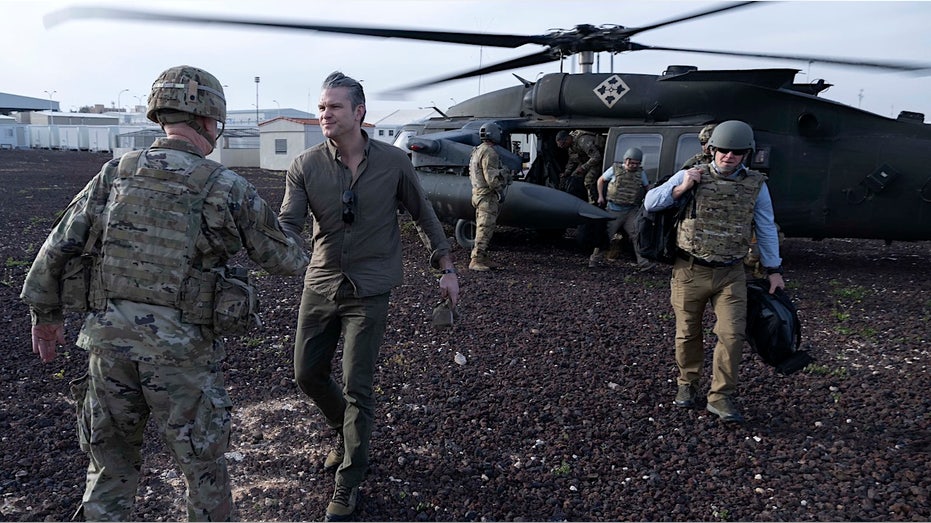
Mauro said that same level of preparation and coordination was on display in the Iran mission, where U.S. forces rescued a missing U.S. weapons systems officer from a downed F-15E following a multi-day search inside enemy territory.

TRUMP CALLS RESCUE OF DOWNED AIR FORCE PILOT AN 'EASTER MIRACLE'

U.S. intelligence was able to act quickly to retrieve the missing colonel once his location was confirmed.

"[This] was one of those situations where the bell rang. 'Guys, what [have] you got?' President turns around, [War Secretary] Hegseth turns around, [and] they all talk to [CIA Director John] Ratcliffe and they say, 'What [have] you got, director?' and fortunately it was there."

Mauro said the operation highlights a broader fact about intelligence work that is apparent to those working within its community: its success comes down to the people running the sources.

"At the end of the day… it comes down to people," he said.

"If you think that you can sit in a cubicle someplace and get everything you need to be done, that's not how it's going to go. You need people in country, in dangerous areas, Americans working on our behalf that you'll never hear about... they're running the sources so that, again, when you need it, they say, 'My source is good.'"

(Auszug von RSS-Feed)

☐ ☆ ✇ Fox News

Inside Iran’s ruling ideology: How a ‘holy mission’ and messianic doctrine fuel regime extremism

veröffentlicht.
Vorschau ansehen

For Mehdi Ghadimi, the ideology behind Iran’s ruling system is not theoretical. It was something he was taught from childhood.

"You were told you are a part a small group chosen by God… to revive God’s religion and fight to defend it," the Iranian journalist told Fox News Digital, describing the message repeated in schools, mosques and state media.

That early indoctrination, he said, framed the world in stark terms: a divine struggle between good and evil, with Iran’s leadership positioned at the center of a religious mission.

Iran’s ruling system is often described in political terms, but critics and former insiders say its core is far more radical — a belief structure rooted in religious absolutism, messianic expectation and a worldview that leaves little room for compromise.

IRAN'S SUPREME LEADER MOJTABA KHAMENEI 'MISFUNCTIONING,' NOT CONTROLLING REGIME: SOURCES

As a new generation of commanders rises within the Islamic Revolutionary Guard Corps following recent military blows under Operation Epic Fury, analysts warn that this ideology may become even more entrenched.

Figures such as Mohammad Bagher Ghalibaf and Ahmad Vahidi are often cited as part of a cohort shaped by years of conflict in Iraq and across the region — one that sees religion, security and survival as inseparable.

At the center of that worldview is the belief in the Mahdi — a messianic figure in Shiite Islam whose return is expected to usher in a final era of justice after chaos.

Twelver Shiism is the dominant belief for Shias, the Mahdi, identified as the 12th Imam, is alive but hidden and will one day return. Iran’s political system positions the supreme leader as his caretaker. 

Critics say that framework gives political authority a religious dimension that can make it difficult to challenge.

"For the mullahs in Iran, the Mahdi idea is less about personal faith and more about power," said Lisa Daftari, foreign policy analyst and editor-in-chief at The Foreign Desk. "They use it to suggest that the supreme leader’s views are not just political opinions, but carry a kind of divine weight."

"The system is set up so that disagreeing with the leader can be portrayed as questioning the Hidden Imam himself," she said.

"That turns ordinary policy debates into something almost untouchable… you’re no longer arguing with a politician, you’re seen as pushing back against a sacred figure."

IRAN'S CEASEFIRE PUSH MAY BE A 'CYCLE OF DECEPTION,' ANALYSTS WARN AS SHADOWY FIGURE GAINS POWER

Ghadimi argues that this structure leaves little room for genuine political diversity.

"Groups labeled as ‘moderate,’ ‘reformist,’ or ‘pro-Western’ are created so that the West can negotiate with them," he said.

"No one within the structure of the Islamic Republic thinks about anything other than defeating the Western world and establishing Islamic dominance globally."

For Iran expert Daftari, the Mahdi doctrine also provides a flexible justification for policy.

"A lot of insiders know perfectly well that this language is being used strategically," she said. "The Mahdi story gives the leadership a way to claim moral and religious cover for decisions that are often about preserving the regime or expanding its reach."

"When they talk about ‘preparing the ground’ for the Mahdi, that phrase can be stretched to cover almost anything — crushing protests, backing militias abroad or asking people to accept more economic pain."

"This religious framing makes compromise much harder," she added. "If you convince your base that you are carrying out a holy mission… backing down can be painted as a betrayal of God’s plan."

MEET IRAN'S HARDLINE SPEAKER WHO THREATENED TO BURN US FORCES — REPORTEDLY TEHRAN'S POINT MAN FOR TALKS

Ghadimi said that message is reinforced from childhood, shaping how generations understand their role in society.

In schools, media and mosques, he said, ideology was embedded into everyday life, leaving little space for alternative narratives.

That framing, analysts say, helps explain how the system sustains itself even under pressure.

It also contributes to a worldview in which conflict is not temporary, but part of a larger, ongoing struggle.

"The Islamic government, based on its own interpretation of the Quran, considers itself obligated to enforce Islamic law across the entire world," Ghadimi told Fox News Digital, adding that the regime "sees itself as the leader of this belief globally."

"They harbor hatred toward Iranians and Jews, whom they regard as enemies of Islam since its very beginning, and they consider killing them—such as on Oct. 7 and in the recent killings in Iran — to be divinely rewarded acts, much like the beliefs once held by Abu Bakr al-Baghdadi," he said.

"No one within the structure of the Islamic Republic thinks about anything other than defeating the Western world and establishing Islamic dominance globally," Ghadimi said.

In that framework, critics say, Iran is not simply pursuing national interests but acting within what it sees as a broader religious mandate.

INSIDE IRAN’S MILITARY: MISSILES, MILITIAS AND A FORCE BUILT FOR SURVIVAL

Some critics argue that within this framework, violence can take on religious meaning.

"They consider killing them… to be divinely rewarded acts," Ghadimi said.

Still, analysts say the combination of messianic belief and absolutist ideology creates a system in which confrontation is not only expected, but justified.

An Iranian official rejected those characterizations and warned that economic collapse and destruction caused by war could drive long-term resentment.

"If a country is turned into ruins, poverty spreads. Out of such poverty comes hatred, resentment and a desire for revenge, and this cycle of hostility can continue for years. It is not correct to think that everything will simply end the day after a ceasefire. Even if there were no hostile government left in place, people within society who have lost everything may still be driven to seek retribution."

For Ghadimi, the issue is not just how Iran behaves, but how it understands itself.

If the system is rooted in a belief that blends religion, power and mission, critics say, then policies like repression at home and confrontation abroad may not be temporary tactics but structural features.

And if moderation within that system is limited, as some argue, then the challenge for policymakers is not simply negotiation, but understanding the ideology that drives it.

(Auszug von RSS-Feed)

☐ ☆ ✇ Fox News

Exclusive: Sara Netanyahu warns of surging antisemitism and importance of Jewish-Christian alliance

veröffentlicht.
Vorschau ansehen

EXCLUSIVE: Sara Netanyahu, the wife of Israeli Prime Minister Benjamin Netanyahu, has warned about the growing dangers of antisemitism and attempts to undermine the relationship between Christian and Jewish communities.

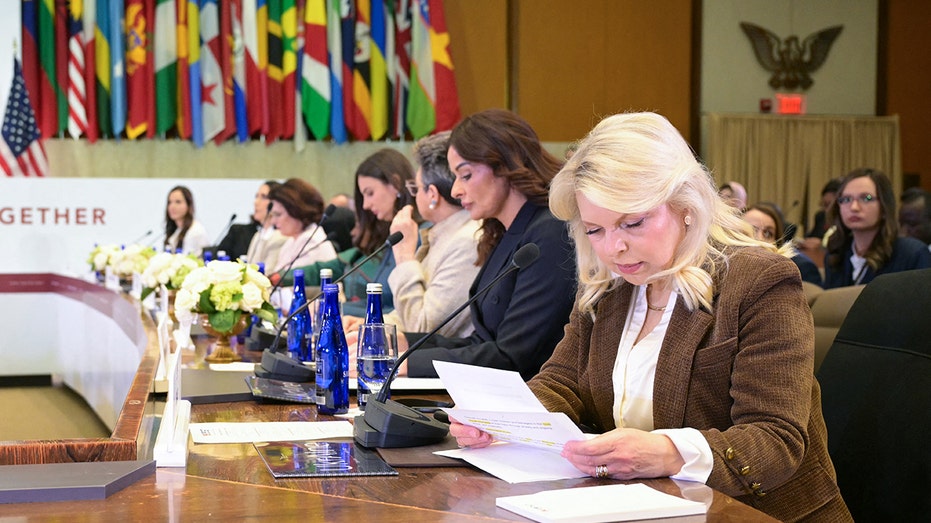
Her remarks followed her four-day visit to the U.S. for the "Be Best" First Ladies’ Summit, attending at the invitation of first lady Melania Trump.

In exclusive comments to Fox News Digital, she said extremist elements on both the far left and right continue to promote antisemitism despite the historical record of where it leads and are seeking to undermine Israel and divide support within the Christian community.

"Israel has never had a prime minister like my husband, who during every visit to the United States makes it a point to meet with leaders of the Christian community, embrace them, listen to them, and maintain a close and genuine relationship as true partners and friends," she told Fox News Digital.

CHRISTIAN PASTORS, INFLUENCERS JOIN 1,000-STRONG ISRAEL MISSION BACKING JEWISH STATE, FIGHTING ANTISEMITISM

"Their courage in standing firm against the enemies of Israel is worthy of appreciation. They are our [unofficial] ambassadors, and I hope our partnership will continue to grow and strengthen," she added.

Netanyahu said that in July, Israel hosted the president’s close adviser and White House Faith Office head, Paula White-Cain, for a special event attended by both her and the prime minister, which was broadcast to millions of Christian viewers worldwide.

Following Hamas’s Oct. 7, 2023, killing of 1,200 people in Israel, antisemitism surged globally, including in the U.S.

Sara Netanyahu was raised in Israel by her parents, Shmuel and Hava Ben-Artzi. Her father, a Bible scholar and educator, instilled in her an appreciation for the Jewish people’s historical connection to the land of Israel.

"The Holocaust was a moment in history that cannot and will not be repeated," Netanyahu told Fox News Digital, against the backdrop of the ongoing U.S.-Israel military operation against the Islamic Republic of Iran, whose leaders have repeatedly threatened to commit genocide against the Jewish state.

Post-Oct. 7 attacks include the May 2025 killing of two Israeli Embassy staff in Washington by Elias Rodriguez, who allegedly shouted "Free Palestine!" upon arrest, and a June attack by Mohamed Sabry Soliman that wounded 12 at a pro-Israel rally, later killing one victim.

TRUMP ADMINISTRATION SUES HARVARD OVER ALLEGED FAILURE TO PROTECT JEWISH AND ISRAELI STUDENTS, SEEKS BILLIONS

Incidents also rose after Operation Epic Fury began Feb. 28, described by Netanyahu as a preemptive move against Iran and its terror proxies.

Investigators said Ayman Mohamad Ghazali, accused of attempting a March 12 attack on a Michigan synagogue, was radicalized by Hezbollah.

Meanwhile, a federal probe last month found some faculty members "legitimized and amplified antisemitism" during protests against Israel’s war in Gaza. Encampments spread on campuses, often demanding divestment from Israel-linked institutions and Jewish organizations.

On March 20, the Trump administration sued Harvard, alleging it failed to protect Jewish and Israeli students and enabled antisemitism.

"We are in an existential war — a war of good versus evil — against a force that seeks to destroy Israel and the world," she said.

"Leaders of the Iranian regime have publicly burned the flags of Israel and the United States. They have called Israel the ‘Little Satan’ and America the ‘Great Satan.’"

She continued, "Israel has never had a better friend than Donald Trump. Together with the [Israeli] prime minister, they are reshaping the Middle East and creating an opportunity for a new future for the entire free world," she added.

During her U.S. visit, Netanyahu met with multiple first ladies, delivered a speech at the U.S. State Department, held talks with Sen. Lindsey Graham, R-S.C., engaged with technology and AI companies and hosted a large meeting with parents of children serving in the Israel Defense Forces.

MELANIA TRUMP WELCOMES HUMANOID ROBOT TO WHITE HOUSE FOR HISTORIC AI SUMMIT

Netanyahu attended the "Be Best" First Ladies’ Summit, a global technology conference of first ladies hosted by Melania Trump, focused on expanding access to distance-learning technologies for children and teenagers.

Netanyahu, a child psychologist who works three times a week at the Jerusalem municipality, has immersed herself in the issue.

The visit also carried economic implications, leading to expanded dialogue with Microsoft and Meta at the global level.

Netanyahu told Fox News Digital that companies expressed interest in advancing investments worth tens of millions of dollars to implement advanced AI models for remote learning among children and youth — particularly in Israel, where educational continuity has been disrupted by the security situation.

"Israel is a leading country among advanced Western nations — in morality, values and certainly technology. Israeli innovation impacts people around the world every day in fields such as cybersecurity, fintech and agriculture. We contribute our knowledge and build strategic partnerships that bring Israel closer to its allies," she said.

"There is strong appreciation for Israel worldwide, and when countries recognize our contributions, they choose partnership over extremism and hatred," Netanyahu concluded.

(Auszug von RSS-Feed)

☐ ☆ ✇ Fox News

North Korea tests solid-fuel missile engine as Kim boosts threat to US mainland

veröffentlicht.
Vorschau ansehen

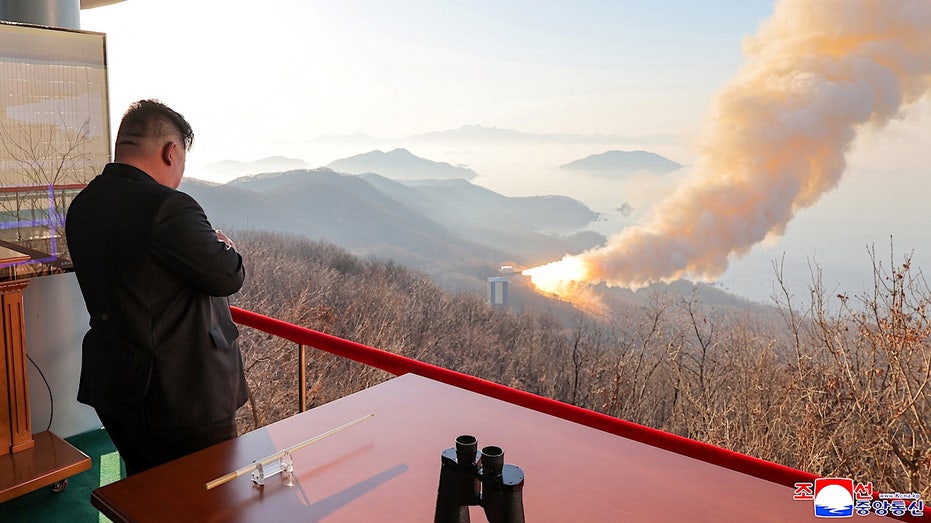
North Korean dictator Kim Jong Un oversaw a test of a new high-thrust solid-fuel rocket engine, according to state media, working on weapons capable of striking the U.S. mainland.

The test, reported Sunday by KCNA, involved an engine made with carbon-fiber materials and was described as part of a new five-year defense plan to upgrade the country’s "strategic strike" capabilities.

Kim said the test had "great significance in putting the country’s strategic military muscle on the highest level," according to KCNA.

The engine reportedly produced 2,500 kilonewtons of thrust, higher than a similar engine it tested last year. Analysts say such engines could support more mobile or compact long-range missiles.

NORTH KOREAN DICTATOR SAYS GOVERNMENT WILL KEEP CEMENTING NATION'S 'IRREVERSIBLE STATUS AS A NUCLEAR POWER'

North Korea’s report on the latest test could be "bluffing" as it did not disclose some key information like the engine’s total combustion time, said Lee Choon Geun, an honorary research fellow at South Korea’s Science and Technology Policy Institute.

Solid-fuel systems are significant because they can be launched more quickly and with less warning than older liquid-fuel missiles, making them harder to detect and potentially more survivable in combat.

Pyongyang still faces major technical barriers before fielding a fully reliable intercontinental ballistic missile, especially ensuring a warhead can survive atmospheric reentry.

KIM JONG UN CALLS SOUTH KOREA ‘MOST HOSTILE ENEMY,’ SAYS NORTH COULD ‘COMPLETELY DESTROY’ IT

Kim’s latest military activities also included inspections of special operations training and tests of a new main battle tank, underscoring a broader push to modernize both North Korea’s missile program and conventional forces, according to KCNA.

Kim claimed the tank’s protection system could defeat nearly all existing anti-tank weapons, though such assertions could not be independently verified, Reuters reported.

The developments fit a wider pattern of stepped-up military activity by Pyongyang. Since the collapse of Kim’s diplomacy with President Donald Trump in 2019, North Korea has accelerated work on nuclear and missile systems despite sanctions, while keeping open the possibility of talks if Washington drops demands for denuclearization first.

KIM JONG UN APPEARS WITH TEENAGE DAUGHTER AT LIVE-FIRE ROCKET TEST IN NORTH KOREA

At a rare ruling party congress held in February, Kim unveiled a new five-year plan that reaffirmed continued development of nuclear weapons, while calling for a broad upgrade of the country’s military capabilities.

Analysts and regional governments also pointed to new tank and combined-arms drills as part of Pyongyang’s effort to adapt its military doctrine to modern warfare, drawing lessons from recent conflicts and emphasizing integration across ground and missile forces.

South Korea and the United States say they are closely monitoring North Korea’s weapons developments.

The Associated Press and Reuters contributed to this report.

(Auszug von RSS-Feed)

☐ ☆ ✇ Fox News

Inside Iran’s military: missiles, militias and a force built for survival

veröffentlicht.
Vorschau ansehen

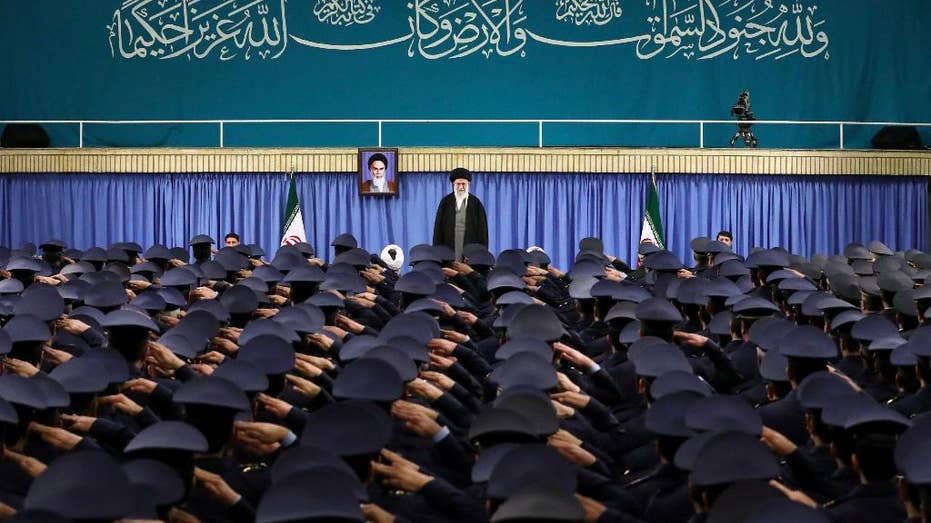
Iran’s military is not designed to win a conventional war against the United States or Israel. It is designed to survive one, absorb damage and continue fighting over time, experts say.

That strategy is reflected both in how the force is built and how it is performing now, after weeks of sustained U.S. and Israeli strikes.

The scale of the campaign has been significant. More than 9,000 targets have been struck since the launch of Operation Epic Fury, according to a March 23, 2026, fact sheet from U.S. Central Command, alongside more than 9,000 combat flights, hitting missile sites, air defenses, Islamic Revolutionary Guard Corps command centers and weapons production facilities.

NEXT MOVE ON IRAN: SEIZE KHARG ISLAND, SECURE URANIUM OR RISK GROUND WAR ESCALATION

U.S. officials say the objective is clear. 

"We are targeting and eliminating Iran’s ballistic missile systems … destroying the Iranian Navy … and ensuring Iran cannot rapidly rebuild," Joint Chiefs of Staff Chairman Gen. Dan Caine said during a March Pentagon briefing.

But analysts caution that the picture is more complex.

"It’s a mixed bag," Nicholas Carl, a fellow at the conservative American Enterprise Institute think tank and assistant director of the Critical Threats Project, told Fox News Digital. "On one hand, (Iran’s military) is badly degraded across the board, but the regime still retains a significant amount of capability." 

INSIDE THE ISRAELI DRONE UNIT TAKING ON IRAN AND HEZBOLLAH

At the heart of Iran’s military system is a deliberate dual structure: the conventional army, known as the Artesh, and the Islamic Revolutionary Guard Corps, a parallel force created after the 1979 revolution to safeguard the regime.

According to Carl, Supreme Leader Ali Khamenei has shaped the armed forces throughout decades around one central objective: preserving the Islamic Republic and exporting its revolutionary ideology.

"You need to separate between the IRGC and the regular army," Middle East intelligence expert Danny Citrinowicz told Fox News Digital. "The IRGC gets all of the budgets — better salaries, better equipment, better everything."

Carl describes the Islamic Revolutionary Guard Corps as a "deeply ideological praetorian guard," while the Artesh remains a more conventional force tasked with defending Iran’s borders.

But the distinction is not absolute. 

"The IRGC is probably the more dangerous of the two, but we cannot discount the threat that the regular military poses as well," Carl said.

TRUMP’S IRAN STRATEGY SHOWCASES ‘DOCTRINE OF UNPREDICTABILITY’ AMID STRIKE THREATS AND SUDDEN PAUSE

Iran’s missile program remains the backbone of its military power, even after extensive strikes.

The Islamic Revolutionary Guard Corps Aerospace Force has spent years building what Carl describes as the largest missile inventory in the Middle East.

U.S. officials say those capabilities have been significantly reduced with recent strikes. 

"Iran’s ballistic missile shots fired are down 86% from the first day of fighting," Caine said in a Pentagon briefing earlier in March, adding that drone launches have dropped by roughly 73%.

Secretary of War Pete Hegseth said in the same briefing that the campaign has sharply limited Iran’s ability to sustain attacks. 

"The enemy can no longer shoot the volume of missiles they once did, not even close," he said. 

But even U.S. officials acknowledge the threat persists. 

"Iran will still be able to shoot some missiles … and launch one-way attack drones," Hegseth said.

Carl said the decline in fire has plateaued.

"Iranian missile and drone fire has dropped precipitously … about 90% since the war began … but that number has been consistent for weeks," he said. "That means they still retain enough capability to sustain strikes across the region."

Citrinowicz offered a similar assessment. 

"They suffered blows but still hold the ability and still have the capacity to launch missiles for weeks to come," he said.

U.S. estimates cited by Carl suggest roughly a third of Iran’s missile capabilities remain active.

"The regime still does have a significant capability to threaten targets across the region … especially as it demonstrates the ability to shoot beyond 2,000 kilometers," Carl said.

WHY TRUMP, IRAN SEEM LIGHT-YEARS APART ON ANY POSSIBLE DEAL TO END THE WAR

The Pentagon says it has made major gains against Iran’s naval forces.

More than 140 Iranian vessels have been damaged or destroyed, according to U.S. Central Command.

Caine said U.S. forces have "effectively neutralized" Iran’s major naval presence in the region.

But analysts warn that Iran’s naval threat was never dependent on large ships.

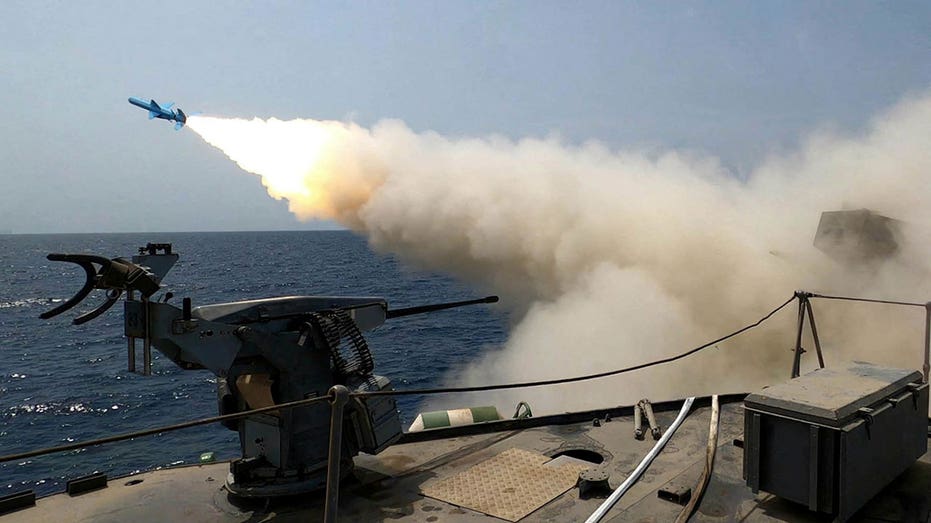
The Islamic Revolutionary Guard Corps Navy is built around "area denial capabilities," including fast attack craft, mines, missiles and drones designed to swarm adversaries and disrupt maritime movement.

"They still have the capacity — speedboats, drones, surface-to-sea missiles — allowing them to block the Strait of Hormuz," Citrinowicz said.

Carl cautioned against a common misconception.

"It’s not technically accurate to say the Strait of Hormuz is closed … Iran is selectively denying access … firing at some ships while allowing others to pass," he said.

"Iran has to do very, very little to achieve a meaningful effect."

HEZBOLLAH, IRAN UNLEASH COORDINATED CLUSTER BOMB STRIKES ON ISRAEL IN MAJOR ESCALATION

U.S. officials say the campaign has achieved major progress in the air.

"We will have complete control of Iranian skies, uncontested airspace," Hegseth said.

Caine added that U.S. forces have already established "localized air superiority" and are expanding operations deeper into Iranian territory.

But Iran’s air force was never the centerpiece of its strategy. Years of sanctions have left it reliant on aging aircraft and limited modernization, making it far less capable than its Western or regional adversaries.

"There is definitely a setback … but Iran was never built on an air force," Citrinowicz said.

Instead, Iran relies on missiles, drones and layered defenses.

WHO ACTUALLY RUNS IRAN RIGHT NOW? THE KEY POWER PLAYERS AS TRUMP CLAIMS TALKS TO 'TOP' OFFICIAL

On the ground, Iran retains a key advantage: its forces have largely not been directly engaged.

The Artesh ground forces, which include tens of brigades, are positioned primarily to defend Iran’s borders, according to Carl’s report.

"The ground troops are still intact, nobody has invaded Iran," Citrinowicz said.

He noted that ground forces are increasingly launching drones, signaling a broader shift in how Iran fights.

Beyond its borders, Iran’s military power is extended through a network of proxy forces managed by the Islamic Revolutionary Guard Corps’ Quds Force.

Carl said the Quds Force provides "leadership, materiel, intelligence, training and funds" to allied militias across the Middle East, including Hezbollah, Hamas and the Houthis.

"The ‘Axis of Resistance’ is the central mechanism by which Iran can further regionalize the conflict … to endanger as many actors’ interests as possible," Carl said.

US MOVES AIRBORNE TROOPS, MARINES AS IRAN REJECTS CEASEFIRE, RAISING GROUND WAR POTENTIAL

Iran’s military is also structured to confront internal threats, reinforcing its core purpose: regime survival.

The result is a force built on redundancy, asymmetry and endurance.

Even after weeks of sustained strikes, Iran retains enough capability to continue launching missiles, harassing global shipping and leveraging proxy forces across the region.

It may be weakened, but it remains strategically dangerous. 

"We cannot discount the threat that the Iranian military poses," Carl said, "it remains a force capable of threatening regional and international security."

(Auszug von RSS-Feed)

☐ ☆ ✇ Fox News

US strikes against Iran-backed militias in Iraq reportedly continue as Baghdad warns of 'right to respond'

veröffentlicht.
Vorschau ansehen

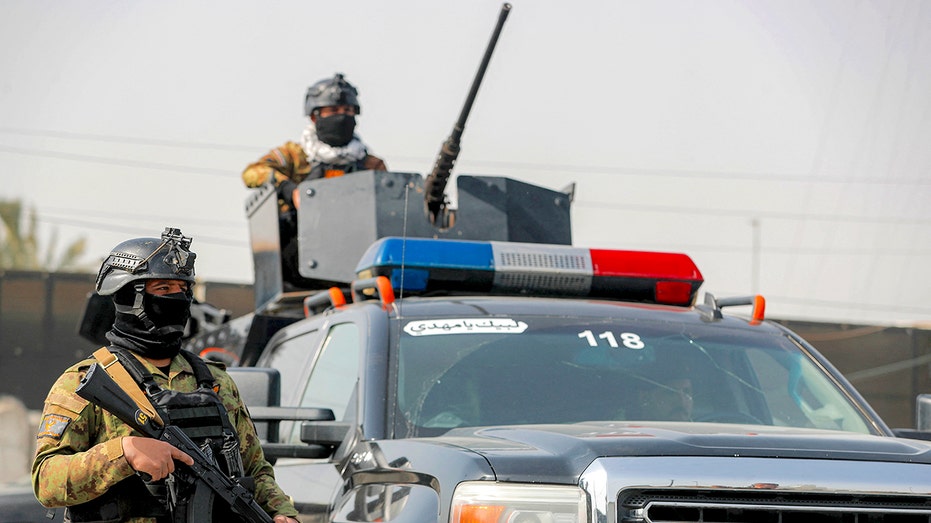
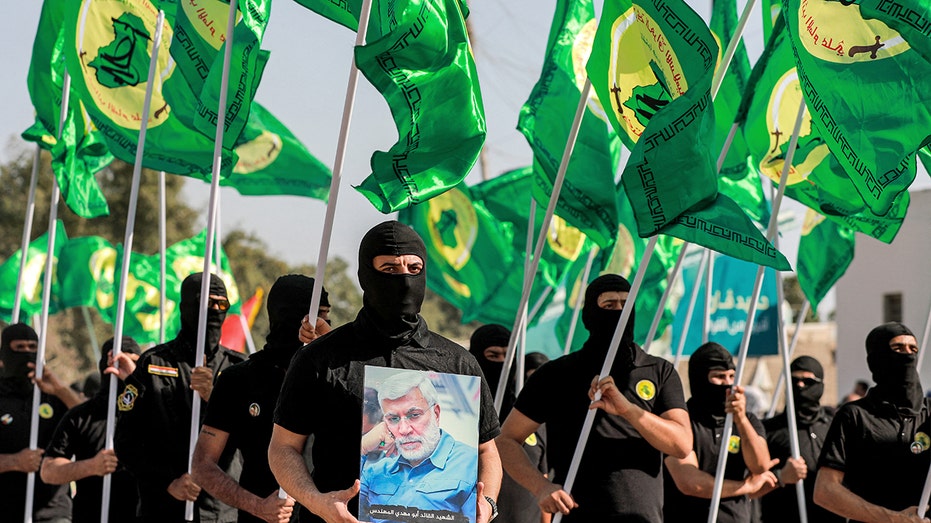
The United States military reportedly launched airstrikes targeting the headquarters of Iraq's ​Iran-backed Shiite militia (PMF) and a residence belonging to its leader on ‌Tuesday, in an escalation of strikes against Tehran's prized militias. 

The latest strikes from the U.S. military follows a statement last week from Gen. Dan Caine, chairman of the Joint Chiefs of Staff, who said AH-64 helicopters "have been striking against Iranian-aligned militia groups to make sure that we suppress any threat in Iraq against U.S. forces or U.S. interests." 

In what appears to be an Iraqi threat against the U.S., Iraq’s Prime Minister Mohammed Shia al-Sudani said in a statement on Tuesday, "In light of the unjustified attacks and grave violations of Iraqi sovereignty, including the targeting of official security headquarters, the Council decided the following: To confront and respond to military attacks carried out by military aircraft and drones targeting the headquarters and formations of the Popular Mobilization Forces Commission and other formations of our armed forces, using available means, in accordance with the right to respond and self-defense."

US WARNS IRAQ MUST ACT AGAINST IRAN-BACKED MILITIA ATTACKS ON AMERICAN ASSETS

Sudani also said Iraq’s foreign ministry planned to summon the U.S. chargé d’affaires and separately the Iranian ambassador on Wednesday. The PMF is part of Sudani's government.

An Iraqi Kurdish government official said to Fox News Digital, "So what the Iraqi government will now fight the Americans?"

When asked about the Iraqi Kurdish government official’s comment, an offiical for Iraq’s embassy in Washington, D.C., told Fox News Digital, "Absolutely not. It is against elements that target them."

According to the Times of Israel, a fresh airstrike on Wednesday hit the PMF in western Iraq. "Two missiles were fired from a fighter jet" at a base in Anbar province, a security official said. The Anbar base was also reportedly struck by U.S. forces on Tuesday.

The Iraqi embassy official said, responding to additional Fox News Digital press questions, that he lacked the current information to comment regarding the fast-moving developments in Iraq.

The PMF has launched attacks on the U.S. Embassy in Baghdad, Israel and other American assets in the region, especially in the Kurdistan Region of Iraq, following the U.S.-Israel joint attack on the Islamic Republic on Feb. 28. Over the years, the PMF has been accused of killing American military personnel in the Middle East.

DEFIANT IRAN VOWS TO FIGHT 'UNTIL COMPLETE VICTORY,' DESPITE HEAVY MILITARY LOSSES

PMF leader Falih al-Fayadh was not present when his residence was hit in the northern city of ​Mosul on Tuesday. At least 15 PMF terrorists were killed in other ⁠airstrikes that hit a headquarters of the group in Iraq's Euphrates valley ​province of Anbar, according to sources and a statement from the group.

The Kurdish government official told Fox News Digital on Tuesday: "The militias are brazenly doing Iran’s bidding. They’ve attacked U.S. forces and diplomats, Iraq’s own intelligence services, French troops, and the KRG’s Peshmerga [Kurdish Regional Government]. Energy and civilian infrastructure haven’t been spared. This does not require analysis — these groups openly claim responsibility."

The Kurdish official added: "So why does the Iraqi government continue to pay those it itself describes as terrorists and criminals? There are four principal groups: Harakat al-Nujaba, Kataeb Hezbollah, Kataeb Sayyid al-Shuhada and Asaib Ahl al-Haq. This government is unwilling to defend its own interests, let alone those of its partners. At this point, the distinction between the PMF and the state is increasingly hard to discern."

Elizabeth Tsurkov, a senior non-resident fellow at the New Lines Institute for Strategy and Policy and an expert on the PMF, told Fox News Digital there was a "sense of delusion" during the Biden administration, which tried to differentiate between the PMF and six of its pro-Iran militia members that are U.S.-designated terrorist entities.

She said the recent strikes clearly "show that the U.S. is tired of this inane distinction," Tsurkov said. She stressed the "entire PMF structure is a problem."

Tsurkov, who was held hostage by the pro-Iranian regime, Kataib Hezbollah, for two and half years in Iraq, said, "The U.S. possesses immense leverage over Iraq. The U.S. can sanction certain ministries and certain directors generals." She added that the U.S. can also sanction Iraqi banks that transfer money to Iran.

Tsurkov said the PMF are highly sensitive to U.S. strikes on their top leadership.

The PMF movement is reeling from the devastating alleged U.S. airstrikes. The dead included its operations commander, Saad al-Baiji. The statement said ​U.S. forces had targeted a command headquarters in Anbar while personnel were on ​duty. The security sources said the strikes were hit during a meeting attended by senior commanders.

TRUMP’S MIDDLE EAST ENVOY REVEALS WHAT LED TO BREAKDOWN IN IRAN TALKS BEFORE OPERATION EPIC FURY

A State Department official told Fox News Digital, "The United States strongly condemns the widespread attacks by Iran and Iran-backed militias against U.S. citizens and targets associated with the United States throughout Iraq, including U.S. diplomatic personnel and facilities."

The official continued: "As Secretary Rubio has said, the Iraqi government must take all measures to safeguard U.S. diplomatic personnel and facilities and ensure militia groups cannot use Iraqi territory to threaten the United States, our Iraqi partners, or the region. Doing so is in Iraq’s interest. Continued attacks by Iran-backed militias undermine Iraq’s stability and risk drawing Iraq into a broader regional conflict."

A spokesperson for U.S. Central Command referred Fox News Digital to the White House and to the Office of the Secretary of War for comment on the administration’s policy. Fox News Digital reached out to the White House and Pentagon for comment.

CLICK HERE TO DOWNLOAD THE FOX NEWS APP

On Monday, the U.S. Embassy in Baghdad issued a security alert warning: "Iraq Iran-aligned terrorist militias have conducted widespread attacks on U.S. citizens and targets associated with the United States throughout Iraq, including the Iraqi Kurdistan Region (IKR). U.S. citizens should leave Iraq now."

Fox News Digital reached out to the Israel Defense Forces regarding Israel's role in the ongoing strikes against Iran-backed militias.

Reuters contributed to this report.

(Auszug von RSS-Feed)

☐ ☆ ✇ Fox News

US warns Iraq must act against Iran-backed militia attacks on American assets

veröffentlicht.
Vorschau ansehen

Iraq's Prime Minister Mohammed Shia al-Sudani is facing mounting criticism for his government’s inability to stop pro-Iranian militias and the Islamic Republic of Iran from attacking American, French, Italian and Kurdish military personnel and facilities in Iraq.

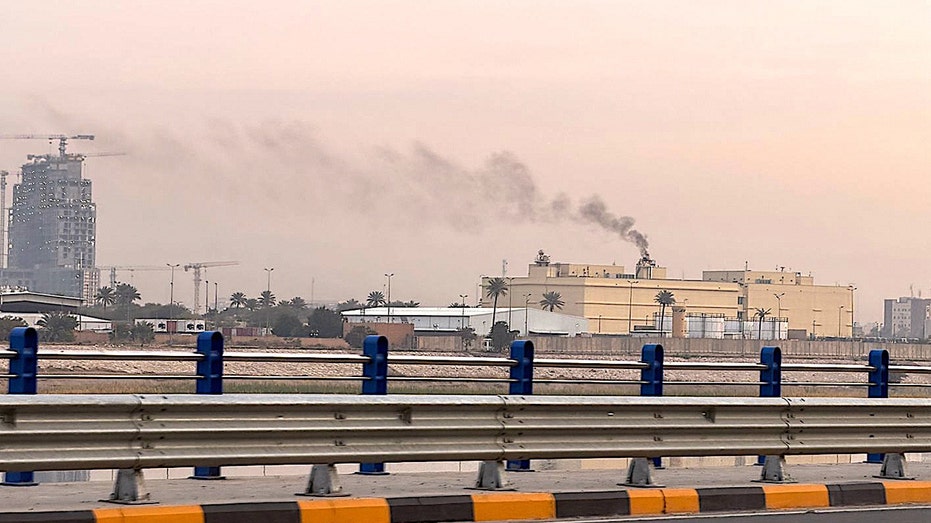
On Saturday, the U.S. Embassy in Baghdad said that all U.S. citizens in Iraq should leave "immediately," as "Iran-aligned terrorist militias have attacked the International Zone in central Baghdad on multiple occasions."

The announcement came after a missile reportedly struck a helipad inside the U.S. Embassy in Baghdad early Saturday.

Speaking on background, a State Department spokesperson told Fox News Digital, "The United States strongly condemns attacks by Iran and Iran-backed terrorist militias against U.S. diplomatic personnel and facilities, civilian targets and energy infrastructure in Iraq, particularly in the Iraqi Kurdistan Region."

US EMBASSY IN BAGHDAD TARGETED AS IRAN LAUNCHES ATTACKS DURING OPERATION EPIC FURY

The statement added, "As Secretary Rubio has said, the Iraqi government must take all possible measures to safeguard U.S. diplomatic personnel and facilities and ensure militia groups cannot use Iraqi territory to threaten the United States or the region. Doing so is in Iraq’s interest," the spokesperson noted, "We retain a range of options to protect our interests. We do not preview sanctions or sanction actions."

A Kurdish official, speaking on condition of anonymity, told Fox News Digital that the Iran-backed Popular Mobilization Forces (PMF) in Iraq "are paid and armed by the Iraqi government.  They are on the Iraqi payroll. This is not the first time they have fired on the U.S., the Kurdistan Regional Government [KRG] and the energy sector. These PMF have brazenly attacked U.S. military bases."

According to the official, "Many of these leaders [from the PMF] are part of al-Sudani’s government and his very coalition."

In a statement to Fox News Digital on Sunday, an official for Iraq’s Embassy in Washington D.C. flatly denied the allegations against al-Sudani. "We would like to unequivocally confirm that the allegations claiming the Prime Minister granted a ‘green light’ to any armed group to target U.S. or Western interests are completely false. The Iraqi government has repeatedly emphasized its firm rejection of any attacks on diplomatic missions or foreign interests."

The representative added, "The Prime Minister has also issued several statements condemning such acts, describing them as terrorist activities, and has directed the relevant authorities to pursue those responsible and bring them to justice."

Al-Sudani raised eyebrows last week when he congratulated the Islamic Republic of Iran’s selection of its new Supreme Leader, Mojtaba Khamenei, the son of the assassinated second Supreme Leader of Iran, Ali Khamenei. "We express our confidence in the ability of the new leadership in the Islamic Republic of Iran to manage this sensitive stage, and continue to strengthen the unity of the Iranian people in facing the current challenges," al-Sudani reportedly said.

When asked about the congratulatory statement to Khamenei, the Iraqi Embassy official said, "This action falls within the scope of standard diplomatic practices carried out by many countries, including several Gulf states. Iraq maintains diplomatic relations with neighboring countries, including Iran, while simultaneously ensuring balanced relations with all its regional and international partners."

IRAN PROXIES WAGE WAR ON ISRAEL, THREATEN US INTERESTS AS IRAQ SLAMMED FOR NOT DISARMING THEM

The intensified attacks on the international anti-jihadi coalition in Iraq’s autonomous Kurdistan region on Friday resulted in the death of a French soldier and injuries to six other people. According to France 24, the commanding officer, Colonel Francois-Xavier de la Chesnais, said the French soldier, Arnaud Frion, was murdered by an Iranian-designed Shahed lethal drone.

The Iraqi Kurdish news outlet Rudaw reported on Saturday that the "Kurdistan Region was targeted with seven explosive-laden drones early Saturday as Iran and its proxy forces in Iraq continue to target the U.S. consulate in Erbil and other military and civilian sites in the Region." Rudaw said since the start of U.S. Operation Epic Fury the Kurdistan area has been targeted with over 300 drone and missile attacks, resulting in the killing of seven people and 35 injured.  

The Kurdish official complained that al-Sudani’s "government is not serious about taking on militias because the militias are part of the government." However, the official praised the U.S. "The Americans are going after them aggressively over the last week with attacks on their [PMF] positions."

According to a Long War Journal report, "Airstrikes, likely conducted by the U.S. as part of the U.S.-Israeli operation against the Islamic Republic, have continued targeting Iran-backed Iraqi militias." Neither the U.S. or Israel have not commented on reports that they are striking the PMF.

Fox News Digital secured information in early March from the Israeli Defense Forces that drones have bee fired at Israel from Iraqi territory since the start of the war. 

The PMF told the Iraqi News Agency that American military forces have conducted 32 airstrikes against PMF headquarters since February 28.

The Kurdish official urged the Trump administration to "demand that Iraq’s government stop paying and arming the PMF and target their banking system that finances the PMF." The official continued, "We have shared information with the Iraqis and the Americans, who have in turn shared information with the Iraqi government." On the terrorist activities of the PMF the official said, "The al-Sudani government has been unwilling to confront them."

TRUMP THREATENS TO END IRAQ SUPPORT OVER AL-MALIKI COMEBACK BID TIED TO IRAN INFLUENCE

The official bemoaned that the al-Sudani government initiated a "handful of arrests last year, and they were released on bail and were able to flee to Iran." The Kurdish official said the KRG "provided the information to the Iraqi government about the perpetrators" who fled to the Islamic Republic.

An Iraqi official dismissed the reports on PMF terrorists, stating," I have not heard of such a thing. I guess that's not true."

The Kurdish official cited two PMF groups as the most bellicose toward the U.S.: Asaib Ahl al Haq (League of the Righteous) and Kataib Hezbollah. The Trump administration sanctioned  Asaib Ahl al Haq in March 2024. The State Department said Asaib Ahl al Haq "and its leaders are violent proxies of the Islamic Republic of Iran" and the group "is extensively funded and trained by Iran’s Islamic Revolutionary Guard Corps (IRGC) Qods Force."

The U.S. government sanctioned Kataib Hezbollah in 2023. The Kurdish official also charged the al-Sudani’s government with imposing an embargo on imported goods to Iraqi Kurdistan as way "to strip away our autonomy and everything we can built over 30 years." The autonomous Kurdish government is widely considered a robust pro-American ally.

The Iraqi official denied the embargo, stating, "The federal government does not pursue a policy of ‘embargo’ against the Kurdistan Region. The current measures aim to unify the legal, customs, and trade framework across all Iraqi borders in line with the federal constitution. 

"No country can afford contradictory internal trade and customs regimes, as this risks  harming the national economy as a whole. Our objective is a unified, fair economic framework that protects state revenues while respecting the region’s specificities, and we believe this is best achieved through dialogue and cooperation."

Entifadh Qanbar, a former spokesman for the deputy prime minister of Iraq, told Fox News Digital that "One could even describe the PMF as the Iraqi branch of the Iranian Revolutionary Guard, effectively functioning as an Iraqi Islamic Revolutionary Guard Corps. The PMF operates through a network of militias that frequently attack U.S. forces, foreign interests, and targets in Kurdistan."

He argued for "The dismantling of the mother organization — the PMF itself. As long as the PMF exists, militias operating under its umbrella will continue to attack U.S. forces and regional targets."

Fox News Digital reporter Greg Norman-Diamond contributed to this report.

(Auszug von RSS-Feed)

☐ ☆ ✇ Fox News

Cartels fear US retaliation as Trump-era pressure reshapes strategy: 'They fear the United States'

veröffentlicht.
Vorschau ansehen

MEXICO CITY: Mexican drug cartels are increasingly calculated in their targeting decisions, often avoiding deliberately attacking American tourists and citizens out of concern it could prompt intensified U.S. retaliation, according to experts.

Following last month's killing of Ruben "Nemesio" Oseguera Cervantes, known as "El Mencho," the powerful leader of the Mexican Jalisco New Generation Cartel (CJNG) White House press secretary Karoline Leavitt joined "Fox & Friends" and had a warning for the drug gangs: "The Mexican drug cartels know not to lay a finger on a single American, or they will pay severe consequences under this president."

Analysts say actions by President Donald Trump — including the designation of cartels as foreign terrorist organizations and high-profile operations abroad such as the capture of Nicolás Maduro and the killing of Ayatollah Khamenei in Iran — have reinforced cartel perceptions of heightened risk. 

TRUMP’S ‘TOTAL ELIMINATION’ STRATEGY PAVED WAY FOR FALL OF CARTEL KINGPIN ‘EL MENCHO’

Mexican drug cartels have long operated with a primary objective: protect revenue streams and avoid actions that could trigger an overwhelming government response. Security analysts and former U.S. officials say that calculus often includes avoiding the deliberate targeting of American tourists and citizens inside Mexico.

"Of course, drug cartels are afraid of President Trump since he declared them terrorist organizations. That may be one of the reasons why they don't attack American citizens or tourists," cartel expert and activist Elena Chávez told Fox News Digital.

She said the cartels "modernized and are well-informed about what is happening, especially because they know there are bounties on their heads. That's why they fear the United States, even more so since Trump became president and declared the cartels terrorist organizations. Of course, they monitor all of this and have people who keep the leaders informed about how things are moving. The price on 'El Mencho's' head in the United States was very high."

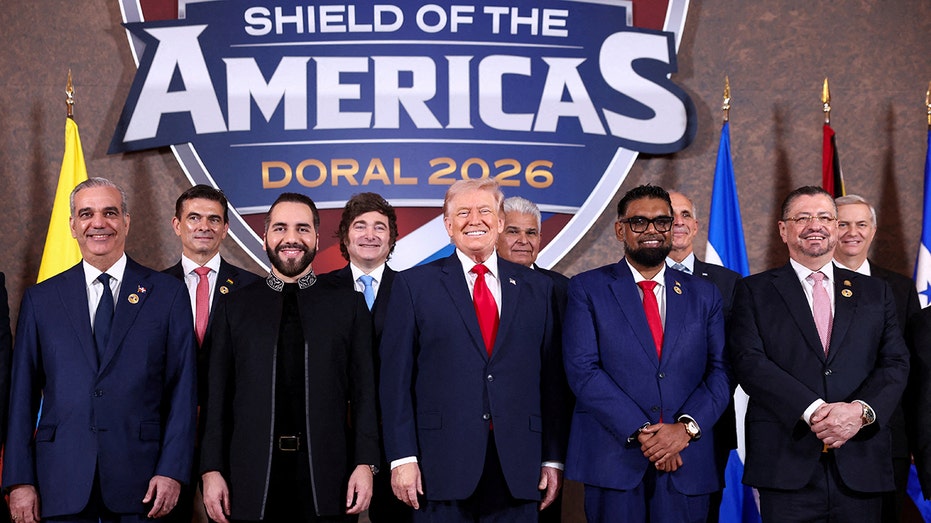
Adding to the pressure, Trump spoke Saturday at the newly minted Shield of the Americas Summit in Florida — a coalition of 12 Latin American and Caribbean nations — coming together to take on the cartels, among other policies. 

"We have to knock the hell out of them because they're getting worse. They're taking over their country. The cartels are running Mexico. We can't have that. Too close to us," Trump warned.

"Right now, there must be more than a million Americans coming to Mexico to spend their vacations in their homes. The drug cartels don't mess with them or their homes. They know there's no way to avoid a reaction from the United States if they mess with its citizens. There's an unwritten rule that says you shouldn't mess with American citizens; if you do, you'll suffer retaliation from the United States. And even more so now with the Trump administration" Samuel González, national security expert and former prosecutor of the specialized unit on organized crime, told Fox News Digital.

TRUMP DISCUSSES EXPANSION OF DRUG CARTEL CRACKDOWN, ISSUES GRIM WARNING TO IRAN

While high-profile killings of Americans in Mexico have occurred, experts describe them as isolated and liabilities to cartel interests rather than part of a strategic campaign.

"There are several precedents that demonstrate why the cartels are particularly careful not to touch American citizens. One of the most important was the Camarena case: the kidnapping, torture, and murder of DEA agent Enrique ‘Kiki’ Camarena in 1985 in Mexico, perpetrated by leaders of the Guadalajara Cartel (Rafael Caro Quintero, Miguel Ángel Félix Gallardo, and Ernesto Fonseca Carrillo) in retaliation for the destruction of ‘El Búfalo’ marijuana ranch.

"This crime marked a turning point in the anti-drug relationship between Mexico and the U.S., prompting the DEA's ‘Operation Leyenda’ to capture those responsible and revealing the complicity between drug traffickers and high-ranking Mexican officials."

He added, "Another case is that of Agent Zapata. On Feb. 15, 2011, gunmen from ‘Los Zetas’ cartel killed Special Agent Jaime Zapata of Immigration and Customs Enforcement (ICE/HSI) and shot Agent Victor Avila on a highway in San Luis Potosí, Mexico. The murder triggered intense pressure from the United States on Mexico to combat the cartels, resulting in the capture of several implicated Los Zetas members, including Julián Zapata Espinoza, alias ‘El Piolín.’

"All these precedents are examples of why the cartels learned that it is not in their best interest to attack American citizens."

TROOPS REINFORCE PUERTO VALLARTA AS UNREST SHOWS SIGNS OF EASING FOLLOWING EL MENCHO’S DEATH

Security experts say cartels closely monitor political rhetoric in Washington, particularly statements suggesting unilateral U.S. military action or expanded cross-border operations. Public debate over labeling cartels as terrorist groups has resurfaced in recent years, with some lawmakers arguing it would provide additional tools to disrupt financing and logistics networks.

According to former federal officials, cartels’ avoidance of deliberately targeting Americans is rooted less in ideology and more in risk management. High-profile attacks on U.S. citizens can generate intense media coverage, diplomatic strain and increased enforcement operations that disrupt trafficking routes.

Director General of the National Citizen Observatory, Francisco Rivas, told Fox News Digital: "Drug traffickers are much more afraid of attacking a foreigner than a Mexican because crimes against foreigners are prosecuted much more severely by the Mexican authorities. The greater media pressure when the victim is a foreigner creates more incentive for the police and prosecutors to investigate a kidnapping, extortion, disappearance or homicide."

"In Mexico, more than 90% of intentional homicides and disappearances are related to people who had specific contact with the cartels, primarily for business reasons. The problems tourists experience in Mexico are the same as they might encounter in Miami, London, Rome or Paris: robberies, fraud and even some extortion, but these are proportionally marginal. Most crimes suffered in Mexico are suffered by Mexicans, and most violent crimes involve Mexican victims linked to cartels," he said.

While millions of Americans travel to Mexico each year without incident, law enforcement officials emphasize that criminal violence remains widespread in regions where cartels operate.

Authorities on both sides of the border maintain that cartel decision-making is driven by financial incentives and survival calculations. Actions perceived as likely to trigger direct U.S. retaliation are widely viewed by analysts as counterproductive to those interests.

(Auszug von RSS-Feed)

☐ ☆ ✇ Fox News

Iran’s last line of resistance holds back — but Houthi terror group warns it’s ready to act

veröffentlicht.
Vorschau ansehen

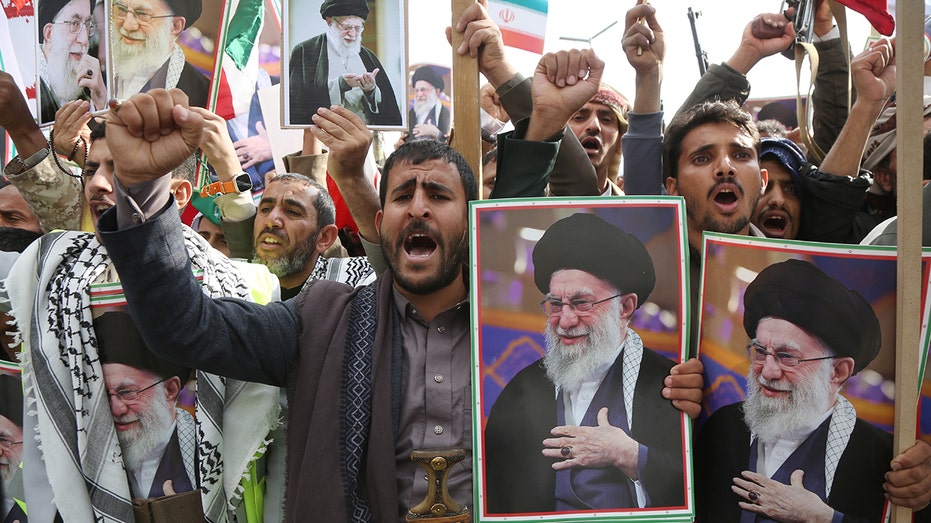
The Iran-backed Houthi terrorist movement has yet to enter the conflict on Iran's side but in recent days has been ratcheting up its rhetoric in support of Tehran, with its leader, Abdul Malik al-Houthi, declaring that it was prepared to enter the war against the U.S. and Israel if necessary.

"Regarding military escalation and action, our fingers are on the trigger, ready to respond at any moment should developments warrant it," al-Houthi said on Thursday.

"The reason why the Houthis have not intervened is they are last line of resistance for the axis. Especially after other axis members were degraded," Nadwa Al-Dawsari, an expert on Yemen and an associate fellow at the Middle East Institute, told Fox News Digital.

IRAN PROXIES WAGE WAR ON ISRAEL, THREATEN US INTERESTS AS IRAQ SLAMMED FOR NOT DISARMING THEM

The official slogan of the Houthi movement (Ansar Allah) reads, "Allah is Greater. Death to America. Death to Israel. Curse on the Jews. Victory to Islam." 

Al-Dawsari, who has written extensively about Yemen and the Houthis, said: "I think the Houthis will intervene at some point. The longer the war continues, the more likely the Houthis will intervene. I think what the Houthis want to do — and they have been itching for a while to do — is to attack the Saudis. If the Saudis intervene, the Houthis will find a reason to attack the Saudis."

HEGSETH BLASTS BRITS, SAYS IRAN'S CHAOTIC RETALIATION HAS DRIVEN ITS OWN ALLIES 'INTO THE AMERICAN ORBIT'

The Islamic Republic of Iran formed an "Axis of Resistance" prior to Hamas’ invasion of Israel on Oct. 7, 2023. Iran’s axis coalition of Shiite and Sunni terrorist proxies, includes the Lebanon-based Hezbollah, Hamas and Palestinian Islamic Jihad in the Gaza Strip, the Houthis, Shiite militias in Iraq, and the now-defunct Baathist regime in Syria.

Within the first few weeks of his administration, President Joe Biden launched a reset with the Houthis and pressured the Saudis to end the war against the bellicose Houthi movement. "The war in Yemen must end," Biden declared in his first major foreign policy speech about the Mideast in February 2021.

TRUMP URGED TO AID YEMEN’S ANTI-HOUTHI FORCES AS TERROR GROUP ESCALATES ATTACKS ON SHIPPING

Biden’s reversal of American support for the Saudi-led allies in their war against the Houthis was also coupled with his administration de-listing the Houthis as a foreign terrorist organization. President Donald Trump swiftly reimposed the terrorist designation for the Houthis at the start of his second term and launched military strikes against the terrorists in Yemen.

Al-Dawsari said another reason why the Houthis have yet to join the conflict is that it's not in the interests of Iran’s Islamic Revolutionary Guard Corps (IRGC) "to drag the Houthis into a suicidal war." She argues "If the Iranian regime collapses, and if a new regime emerges, I think the IRGC will regroup in Yemen or Somalia. Yemen is the key ally."

ISRAEL POUNDS HEZBOLLAH TARGETS, DARING LEBANON TO RECLAIM SOVEREIGNTY FROM IRAN-BACKED TERROR PROXY

There has been discussion between the IRGC and Houthis about why the "Houthis' continued existence is of strategic importance to the IRGC," she said.

"The IRGC can’t afford to lose the Houthis. Yemen is so important to them. They need to preserve the Houthis for tomorrow for the IRGC to continue even after the regime," Al-Dawsari continued.

She noted that "Houthis have established themselves in the Horn of Africa. The IRGC is behind the Houthis. Intervention might be symbolic by the Houthis." She continued that Iran's "tactic now is to prolong the war and widen it across the region and to put more pressure on the U.S." 

In May 2025, Trump announced that the U.S. would stop its air bombing campaign against the Houthis because, he said, the Houthis "don't want to fight."

"They just don't want to, and we will honor that. We will stop the bombings," Trump said. The Houthis had launched attacks against commercial vessels in the Red Sea, as well as the Jewish state, to support their ally Hamas in Gaza.

Al-Dawsari said after the Trump announcement the Houthis did not attack American ships. "They know Trump does not joke. They know they will suffer consequences."

(Auszug von RSS-Feed)

☐ ☆ ✇ Fox News

Iran proxies wage war on Israel, threaten US interests as Iraq slammed for not disarming them

veröffentlicht.
Vorschau ansehen

FIRST ON FOX: The Israeli military spokesman confirmed to Fox News Digital this week that multiple unmanned aerial vehicles, UAVs, have been launched into Israel from Iraqi territory since the start of the conflict with Iran to eradicate the Islamic Republic of Iran’s illicit nuclear weapons facilities, missile systems and terrorism infrastructure. 

Lt. Col. Nadav Shoshani, the Israeli military spokesman, said that the army has had a "near complete success" rate in stopping Iranian drones from hitting Israeli targets. 

The drones fired from Iraq are presumed to come from the Iranian regime-controlled Popular Mobilization Forces, or PMF. An umbrella organization of Shiite terrorists, that attacked Israel with drones in 2024 during Israel’s war against the Tehran-backed Hamas movement. 

TRUMP THREATENS TO END IRAQ SUPPORT OVER AL-MALIKI COMEBACK BID TIED TO IRAN INFLUENCE

An Iraqi Kurdish official told Fox News Digital, "Iraq has become a vessel for the Iranians. Is it so hard to see? I don’t see a distinction between the PMF and the state. They’re paid by the state, hold sovereign portfolios in this cabinet, go on foreign travel and now they’ve entered the federal legislature."

The official continued: "In the last two decades, Iran has systemically taken over the state, weaponizing what were supposed to be institutions into tools to protect the Shia regime in Baghdad and punish any threat to it, including the Kurdistan Regional Government (KRG). Through Baghdad and state institutions, it has economically strangled the Kurdistan Region, torn strips from our autonomy and exposed us to more attacks."

An attack was reported on the country’s shrinking Christian community. The Chaldean Archbishop Bashar Warda of Erbil, Iraq, from the capital city of Iraqi Kurdistan, wrote on X on Thursday: "A miracle no one was injured when 2 drones struck our community, 150 meters from our Catechist Center that serves 1,000 Catholic children. Our university & schools are also closed so the young can be with their parents. Please pray for us & for all who suffer in this war." 

Kurdistan Regional Government authorities confirmed the attack and ​said it was carried out by two ​drones.

ISRAEL POUNDS HEZBOLLAH TARGETS, DARING LEBANON TO RECLAIM SOVEREIGNTY FROM IRAN-BACKED TERROR PROXY

Phillip Smyth, an expert on Shiite militias in Iraq, told Fox News Digital about the strikes on the Chaldean Catholic school that "Kata'ib Hezbollah was first to talk about it and it was likely Kata'ib Hezbollah, but it is possible it was another two pro-Iran militias because they all work together on drone launches."

A drone attack struck an oil field operated by U.S. firm HKN Energy in Iraq’s ​Kurdistan region on Thursday, causing a fire ‌and halting production, according to a Reuters report citing security sources and an oilfield engineer.

No group claimed responsibility, but Kurdish officials accused Iran-allied Iraqi militias of carrying out the attack.

If so, the attack would mean Iran‑aligned ​Iraqi militias, who have vowed to retaliate for the killing ‌of ⁠Iran’s supreme leader, have expanded targets from U.S. military bases in Iraqi Kurdistan to U.S. energy interests.

Production at the field was halted as a precaution ​after an ​explosion at ⁠its power unit, the engineer told Reuters.

Some ⁠energy companies operating in Iraqi Kurdistan shut oil and gas production at their fields as a precaution ⁠after ​the U.S. and Israel ​launched strikes on neighboring Iran.

Entifadh Qanbar, a former spokesman for the deputy prime minister of Iraq, echoed the comments of the Iraqi Kurdish official in his statement to Fox News Digital: "The Popular Mobilization Forces (PMF) are fully funded by the Iraqi government. In fact, they are formally included as a line item in Iraq’s federal budget. Officially, more than $3 billion is allocated annually just for salaries, but when logistics, weapons, food, and other operational costs are included, the PMF’s budget likely exceeds $10 billion. That is the size of the budget of a small country in the Middle East," he claimed.

IRAQI STATE BANK ACCUSED OF PROCESSING PAYMENTS FOR HOUTHI TERRORISTS WHO DISRUPT RED SEA COMMERCE

Qanbar said there is a way to change Iraq’s behavior: "If the United States wants to stop this situation, there are clear tools available. Sanctions must be imposed on the Iraqi government for funding these militias. Another powerful mechanism involves Iraq’s oil revenues, which are deposited at the U.S. Federal Reserve. The United States could suspend transfers of those funds unless Baghdad halts the financing of the PMF. Make no mistake: every terrorist who launches drones or rockets against Kurdistan, U.S. interests, Gulf states or military bases is effectively being paid by the Iraqi government," he claimed.

When asked if the Islamic Republic of Iran urged Shiite militias from the PMF to fire drones at Israel, a spokesman for Iran’s U.N. mission said, "The Mission declined to comment."

On Tuesday, Iraqi Prime Minister Mohammed Shia al-Sudani said his government is "not tolerating any attempt aimed at dragging Iraq into war or threatening the country’s stability," according to Kurdistan24. 

Salwan Sinjari, chief of staff to the Iraqi foreign minister, referred Fox News Digital to the Iraqi foreign ministry page for official statements by his minister and the government. He did not respond to follow-up messages and calls on whether Iraq’s government was failing to crack down on the PMF.

Iraqi Foreign Minister Fuad Hussein claimed the government was seeking to convince Iran-backed militias to disarm in January 2025, according to the Long War Journal.

However, Iraq’s government has issued mixed messages about the PMF over the years. In May 2025 al-Sudani was quoted as saying, "Today, the Popular Mobilization Forces constitute a basic force in defending Iraq."

Iraq’s ambassador to the U.S. did not immediately respond to email, WhatsApp and telephone queries. A second Iraqi diplomat said he was unable to provide Fox News Digital a comment.

The Times of Israel reported on Thursday, after military strikes eliminated a senior officer from Kataeb Hezbollah — Iraq’s largest pro-Iran militia — south of Baghdad that PMF militias pledged to strike the Middle East interests of European nations that joined in the "Zionist-American" strikes on the Islamic Republic and its proxies.

Fox News Digital reached out to the U.S. State Department.

(Auszug von RSS-Feed)

☐ ☆ ✇ Fox News

Canada's Mark Carney under fire as ‘all over the place’ on Iran, risking wider US rift

veröffentlicht.
Vorschau ansehen

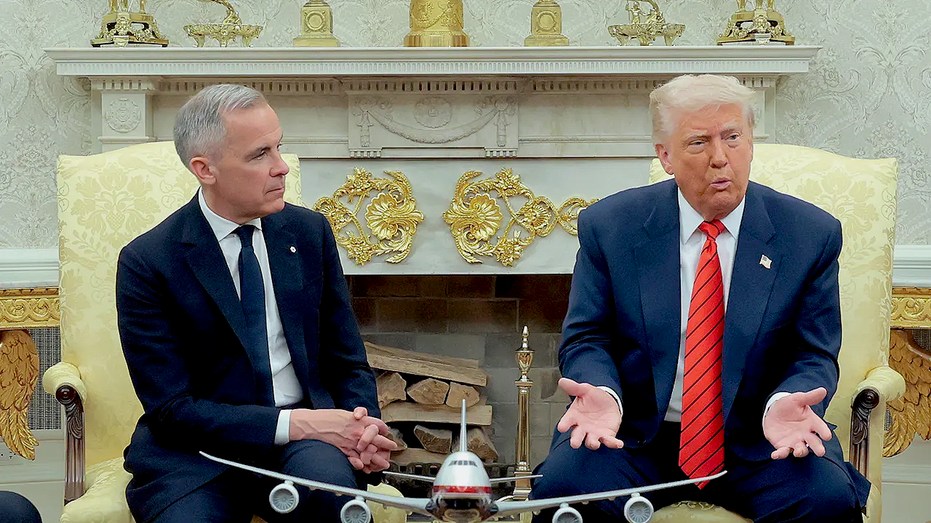
In less than a week, Canadian Prime Minister Mark Carney has gone from supporting U.S. actions against Iran to raising the issue that the U.S. and Israel "acted without engaging the United Nations or consulting with allies, including Canada" to on Wednesday not ruling out Canadian military participation in the conflict.

"He’s been all over the place," Nader Hashemi, a Canadian-born associate professor of Middle East politics at Georgetown University, told Fox News Digital. "It doesn’t look very good for him or for the government of Canada."

"My own reading is that he’s influenced by public opinion and his understanding of Canada’s national interests and where they lie, and specifically the relationship with the United States at its core. His first statement was very supportive of the American-Israeli attack and then he walked it back two days later when he got a lot of pushback because there was no reference to Canada’s support for international law, rules-based order and the United Nations."

TRUMP PRESSES NATO PARTNERS ON SUPPORT AS HEGSETH BLASTS HESITATION

When asked whether Canada would join the U.S. military against Iran during his visit to Australia on Wednesday, Carney told reporters that "one can never categorically rule out participation" and that Canada "will stand by our allies, when makes sense."

However, former NATO commander and retired Canadian major-general David Fraser told CTV News Channel that it’s "unlikely" that Canada would be drawn into the U.S.-Israeli war against Iran unless a member state, such as Turkey, called for assistance under Article 5 of the North Atlantic Treaty.

Carney’s latest comments signal the Canadian prime minister’s desire to ensure that "it doesn’t create a deeper rupture with the United States than already exists," said Hashemi.

Melissa Lantsman, deputy leader of the Canadian Conservative Party, summarized the prime minister’s changing position on the U.S.-Israeli attacks on Iran with a post on X: "We support it, we’re upset about it, we think it’s bad, but also, we might join in."

Her colleague, Michael Chong, the Conservative shadow minister for foreign affairs, told Canadian broadcaster CTV that "supporting the airstrikes and at the same time calling for a secession of those strikes" is "an inherent contradiction."

NATO CHIEF PRAISES TRUMP’S IRAN STRIKES, SAYS KEY ALLIES ‘ALL FOR ONE, ONE FOR ALL’

Carney has also had pushback from the political left.

After the airstrikes against Iran began, Alexandre Boulerice, foreign affairs critic for the New Democratic Party of Canada, said in a statement that his party "strongly condemns the American and Israeli bombings of Iran" and "deplores the Carney government’s decision to blindly support this dangerous venture by Israel and Donald Trump's administration. We want Canada to be a voice for diplomacy, peace and international law."

During his Australian tour this week, the prime minister said that "hegemons are increasingly acting without constraint or respect for international norms or laws while others bear the consequences."

He also said Canada supports "efforts to prevent Iran from obtaining a nuclear weapon and to prevent its regime from further threatening international peace and security," but noted that Canada "take[s] this position with regret because the current conflict is another example of the failure of the international order."

Carney said that "Canada calls for a rapid de-escalation of hostilities and is prepared to assist in achieving this goal."

At a security and defense conference in Ottawa, also this week, Foreign Affairs Minister Anita Anand said that Canada calls "on all sides to respect the rules of international engagement" and that "international law binds all parties" in the Middle East conflict.

The results of an Angus Reid Institute poll, involving 1,619 respondents and released on Tuesday, showed that 49% of Canadians opposed the U.S.-Israeli airstrikes against Iran, while 34% were supportive.

(Auszug von RSS-Feed)
❌