NEWS 23

🔒
❌
Stats
Es gibt neue verfügbare Artikel. Klicken Sie, um die Seite zu aktualisieren.

☐ ☆ ✇ Breitbart

Iran Threatens ‘Widespread Consequences’ for Strait of Hormuz Blockade

veröffentlicht.
Vorschau ansehen

Iranian President Masoud Pezeshkian threatened “widespread consequences” for the U.S. blockade of Iran’s ports in a phone call with French President Emmanuel Macron on Tuesday.

The post Iran Threatens ‘Widespread Consequences’ for Strait of Hormuz Blockade appeared first on Breitbart.

(Auszug von RSS-Feed)

☐ ☆ ✇ Fox News

Macron under fire over Iran, Hezbollah policy as Trump admin hosts Israel-Lebanon talks

veröffentlicht.
Vorschau ansehen

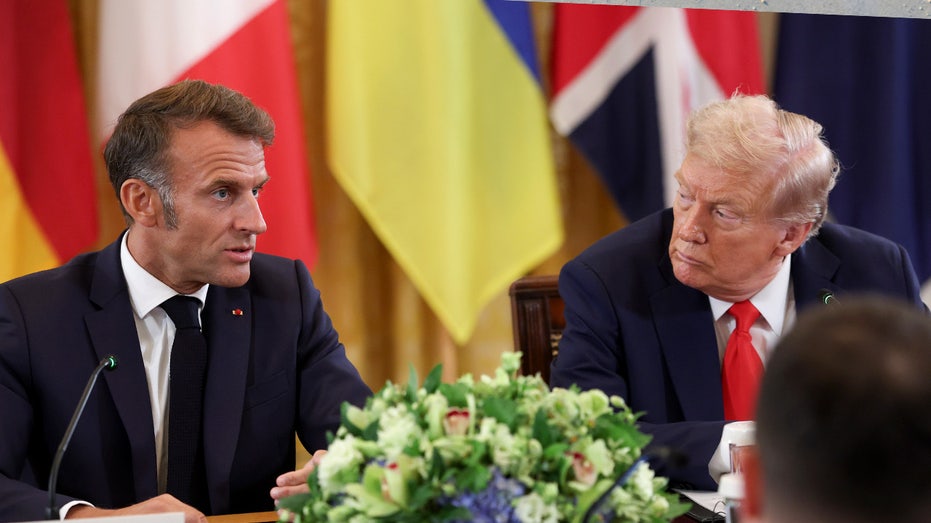
France’s President Emmanuel Macron is facing renewed criticism for his lack of support for President Donald Trump’s war against Iran and demands to include Lebanon in the current ceasefire as historic talks between Israel and Lebanon are set to begin Tuesday.

The historic meeting brokered by President Trump between Lebanon, a former French mandate, and Israel will take place at the ambassador level as hopes for an agreement evolve ­— most noticeably without French involvement. Secretary of State Marco Rubio is expected to host both nations' ambassadors.

The Jerusalem Post reported that Israel’s government requested that France be excluded from the talks. An Israeli official told the paper that "France’s conduct over the past year – including initiatives aimed at limiting Israel’s ability to fight in Iran, and a complete lack of willingness to take concrete steps to help Lebanon disarm Hezbollah – has led Israel to view France as an unfair mediator."

IRAN'S TERROR PROXIES FROM IRAQ-TO-LEBANON SAY READY TO RESPOND TO US-ISRAEL ATTACKS

On Monday, Hezbollah chief Naim ​Qassem on Monday ‌called on the Lebanese government to ​cancel the ​Tuesday meeting in Washington, while ⁠describing the talks as pointless. In ​a televised ​speech, Qassem said the ‌armed ⁠group will continue to confront Israeli attacks on ​Lebanon.

Hezbollah violated a ceasefire to enter the war on its patron, Iran’s side, in March when it launched rockets into Israel after the U.S.-Israel joint attack on the Islamic Republic began, still Macron has demanded Israel stop attacking Hezbollah's terror infrastructure in Lebanon.

Israeli Brig. General (Res.) Yosef Kuperwasser told Fox News Digital that Macron was "working against the best interests of the Lebanese state and government. This is a very problematic direction." He accused Macron of "taking the side of Hezbollah and normalizing Hezbollah because he is focused on "narrow interests."

IRAN THREATENS TO END CEASEFIRE OVER HEZBOLLAH'S EXCLUSION FROM TRUCE DEAL

The former head of research for the Israel Defense Forces’ Military Intelligence Directorate, Kuperwasser, added that the "Americans want us to engage with the Lebanese along with the military [in Lebanon]. Our expectations are very similar. We want to see Lebanon do something about Hezbollah, something real, not just issue statements and pledges. We believe we have helped them by weakening Hezbollah militarily since they decided to launch missiles on March 2. If there is a breakthrough, Lebanon has a lot to gain," but said it has to "disarm Hezbollah."

The Israeli Ministry of Foreign Affairs did not immediately respond to a Fox News Digital request for comment.

Macron has faced accusations over the years that he has normalized Hezbollah. His government, in contrast to Germany, the U.S., Canada, the Netherlands, Japan, Austria and many other Western and non-Westen countries, refuses to designate Hezbollah’s entire organization a terrorist entity. France has classified Hezbollah’s "military wing" a terrorist organization but declined to ban its "political wing." Hezbollah considers itself a unified movement without branches.

The French politician François-Xavier Bellamy, who is a member of the European Parliament for the Republicans Party, said last week on French television that "France must stop normalizing Hezbollah." Macron sparked outrage in 2020 when he reportedly held a private conversation with a top elected Hezbollah official, according to the Paris-based daily Le Figaro.

Edy Cohen, an Israeli security expert on Hezbollah, who was born in Lebanon, told Fox News Digital, "France is forced not to come out against Hezbollah in order to legitimize its involvement in Lebanon."

A French diplomat told the Times of Israel that "what we are hoping for is not a ticket to the meeting, but that Israel stops its offensive on Lebanon."

When asked if France would pressure Lebanon to recognize Israel as a state, Pascal Confavreux, a spokesman for France’s Foreign Ministry, told "Fox News Sunday" that, "Iran has to stop terrorizing Israel through Hezbollah because Hezbollah chose to bring Lebanon into a war which is not Lebanon’s war… Lebanon has to be included in the ceasefire, something that we are pushing diplomatically," He continued that we are in favor of direct talks between Lebanon and Israel.

It is not known if France asked for a seat at the talks. Fox News Digital sent multiple press queries to France’s embassies in Washington D.C. and Tel Aviv.

IDF UNCOVERS HEZBOLLAH WEAPONS STASH INSIDE HOSPITAL IN LEBANON

On Saturday, Macron again pushed his desire for a ceasefire and wrote on X that he had discussions with Iran’s President Massoud Pezeshkian on Saturday: "I stressed the importance of full respect for the ceasefire, including in Lebanon. France extends its full support to the actions of the Lebanese authorities, who alone are legitimate to exercise the sovereignty of the State and decide the destiny of Lebanon."

Walid Phares, an expert on Lebanon and the region, told Fox News Digital that while the talks are important, problems exist. "It is at ambassadors’ level, which means it is not destined to reach a top level of decision-making."

He added, "Strangely, the Lebanese president and prime minister declined to invite the Lebanese foreign minister to the Washington talks, provoking a representation by Israel, also at ambassadorial level, showing that Hezbollah still has a strong influence on the Lebanese government. The militia is being rejected by the population on the ground and fears a meeting in D.C. would ostracize Hezbollah further."

Sethrida Geagea, a member of parliament from the Lebanese Forces party, posted on X ahead of the Israel-Lebanon talks an open letter to Nabih Berri, the powerful speaker of the Lebanese Parliament and leader of the Shiite Amal Movement. She issued indirect criticism of Hezbollah and its terrorist army within the state. Geagea appealed to Berri to unify the Lebanese to be "protected by a single army."

Without naming Hezbollah, her letter stated that young Shiites have been plunged into war that has nothing to do with them and the conflict is really about an Iranian decision to retaliate for the joint U.S.-Israel war that assassinated the Islamic Republic’s Supreme Leader, Ali Khamenei, on February 28.

The State Department did not immediately respond to a Fox News Digital press query.

Reuters contributed to this report.

(Auszug von RSS-Feed)

☐ ☆ ✇ Fox News

Iran secures UN role with backing from UK, France, Canada, Australia as US stands alone

veröffentlicht.
Vorschau ansehen

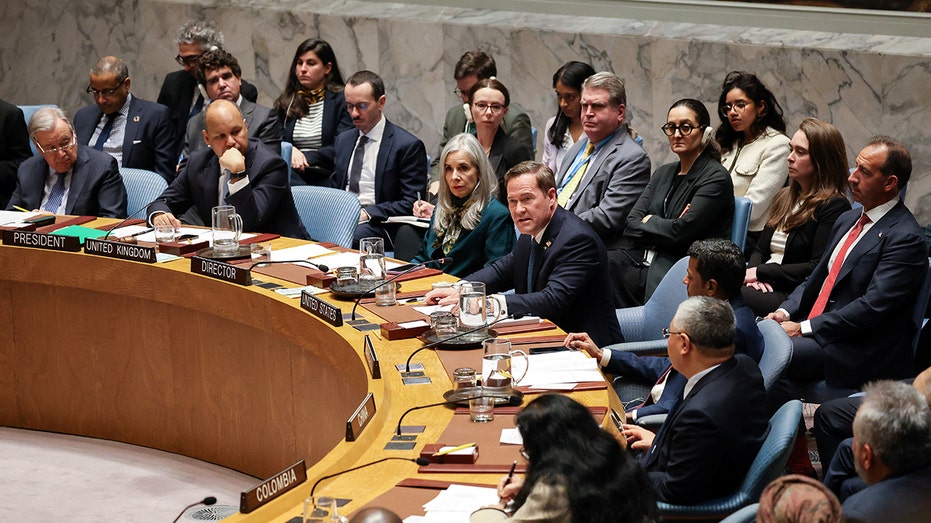
Western democracies, including the UK, France, Canada and Australia, are facing backlash after allowing Iran and other authoritarian regimes to secure seats on influential United Nations (U.N.) bodies, with the United States standing alone in opposition.

The controversy stems from decisions by the United Nations Economic and Social Council (ECOSOC), a 54-member body that plays a central role in shaping U.N. policy and staffing key committees.

Critics warn the outcome could allow governments accused of human rights abuses to influence global policy and control which civil society groups are granted access to the United Nations.

TERROR SPONSOR IRAN GETS UN LEADERSHIP OVERSEEING CHARTER PRINCIPLES

ECOSOC nominated the Islamic Republic of Iran to the U.N.’s Committee for Program and Coordination Wednesday, a body that helps shape policy on human rights, women’s rights, disarmament and counterterrorism.

The nomination is widely expected to be finalized, as the United Nations General Assembly typically approves such recommendations without a vote.

At the same session, ECOSOC elected China, Cuba, Nicaragua, Saudi Arabia and Sudan to the Committee on Non-Governmental Organizations, which oversees accreditation and access for thousands of NGOs operating within the U.N. system.

The United States was the only member state to formally break from consensus.

MIKE WALTZ TURNS TABLES ON IRANIAN ENVOY AT HEATED UN MEETING

In remarks delivered April 8, U.S. Representative to ECOSOC Ambassador Dan Negrea said the U.S. "disassociates from consensus" on both decisions, calling several of the countries involved unfit for such roles.

"The regime threatens its neighbors and has, for decades, infringed on the Iranian people’s ability to exercise their basic human rights," Negrea said, adding that "we believe Iran is unfit to serve" on the committee.

The decision drew sharp criticism from UN Watch, a Geneva-based watchdog group.

Hillel Neuer told Fox News Digital: "By their cynical actions at the UN, major Western states have betrayed their own human rights principles, severely undermining the rules-based international order that they claim to support."

"We note that the EU states clearly had another option. They did take action in recent years to stop Russia from getting elected to similar bodies, and so we deeply regret that they failed to do the same now to stop the election of serial violators such as Iran, China, China, Cuba, Nicaragua, Saudi Arabia and Sudan."

"We salute the United States for their moral clarity and leadership in objecting to the election of the Islamic Republic of Iran and other brutal regimes."

Neuer warned the composition of the NGO committee could allow authoritarian governments to influence which organizations are accredited, potentially sidelining independent human rights groups.

"This means dictatorships will have a majority on the committee in order to deny United Nations accreditation to independent organizations that call out their human rights violations, and to accredit more fake front groups created by the regimes," he said.

Israel’s mission to the United Nations also pointed to political tensions surrounding the vote, saying Iran attempted to challenge Israel’s candidacy during the same ECOSOC session.

AMBASSADOR MIKE WALTZ LAYS OUT ‘AMERICA FIRST’ VISION FOR US LEADERSHIP AT THE UN

Israel was elected to several U.N. bodies, according to the Permanent Mission of Israel to the United Nations, including the Commission on the Status of Women and the NGO Committee, despite opposition.

"Iran also tried to turn the elections at the UN into an arena for incitement against Israel and failed," Israeli Ambassador Danny Danon said. "Those who oppress women and trample on human rights in their own country will not teach us what women's rights are."

Ahead of the vote, around 70 civil society groups warned that countries with poor human rights records could secure seats on key oversight bodies, but the elections proceeded without a formal vote, a process known as approval "by acclamation."

Critics argue that this procedure allows controversial candidates to secure influential roles with limited transparency or accountability.

The developments are likely to intensify scrutiny over how U.N. bodies are staffed and whether political considerations are outweighing human rights concerns.

Fox News Digital reached out to the UK, France, Canada, Australia and U.S. mission for comment but did not receive responses in time for publication.

The Iranian mission to the United Nations declined to comment.

(Auszug von RSS-Feed)

☐ ☆ ✇ Fox News

Malnourished boy found locked in father's van for more than a year unable to walk, hadn't showered since 2024

veröffentlicht.
Vorschau ansehen

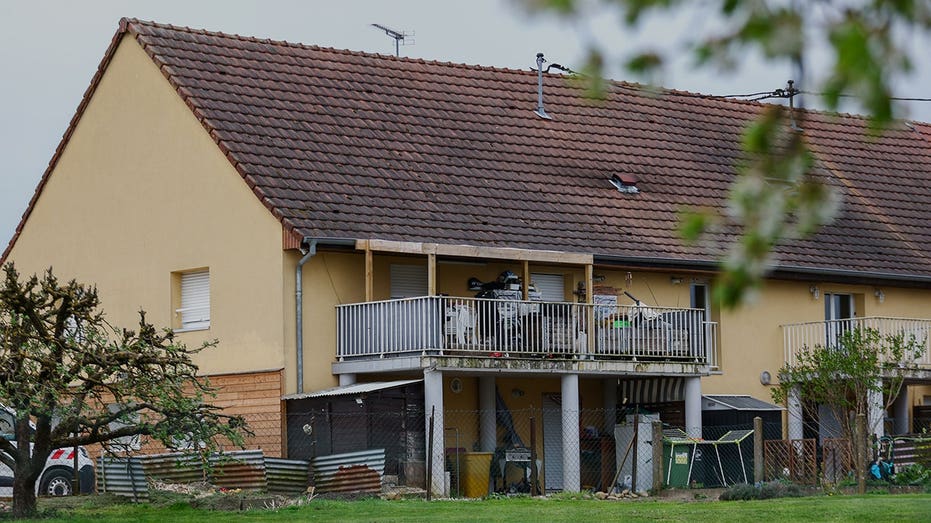
A malnourished 9-year-old boy was found lying in the fetal position in his father’s utility van in eastern France this week after allegedly being locked in the vehicle two years ago.

The boy, who was unable to walk after sitting for so long, was discovered Monday after a neighbor heard the "sounds of a child" coming from the van, local prosecutor Nicolas Heitz said Saturday.

Officers in the village of Hagenbach, near the border with Switzerland and Germany, found the boy "lying in a fetal position, naked, covered by a blanket on top of a mound of trash and near excrement" after forcing the van open, Heitz said.

The boy told authorities he hadn’t showered since 2024.

WISCONSIN COUPLE ALLEGEDLY STARVED SIX CHILDREN FOR YEARS, FORCING THEM TO EAT MOLD, BUGS AND DOG FOOD

The boy’s father was charged with kidnapping. He claimed to police that he had locked his son in the van in November 2024 to "protect" him from his partner who wanted to send him to a psychiatric hospital, according to the prosecutor.

But the prosecutor said there was no medical record of the boy having psychiatric problems, and he had gotten good grades in school.

When the boy disappeared, his teachers were told he had transferred to another school.

The man’s partner, who denied knowing the boy was locked in the van, has also been charged, including for failure to help a minor in danger.

MICHIGAN WOMAN ARRESTED FOR ALLEGEDLY STARVING, TORTURING DISABLED SISTER-IN-LAW SHE LOCKED IN BASEMENT

The boys’ family and friends told police they believed the boy was in a psychiatric hospital.

The boy’s 12-year-old sister and the 10-year-old daughter of the man’s partner are under the care of social services.

The boy has been taken to a hospital.

He told authorities he thought his father had no choice but to lock him in the van and that he’d had "big difficulties" with his father’s partner.

The Associated Press contributed to this report.

(Auszug von RSS-Feed)

☐ ☆ ✇ Breitbart

Iran and Its Terrorist Proxies Start Freeing Western Hostages

veröffentlicht.
Vorschau ansehen

Iran-backed Shiite militants in Iraq released captive American journalist Shelly Kittleson, and Iran released two French nationals.

The post Iran and Its Terrorist Proxies Start Freeing Western Hostages appeared first on Breitbart.

(Auszug von RSS-Feed)

☐ ☆ ✇ Times of Israel

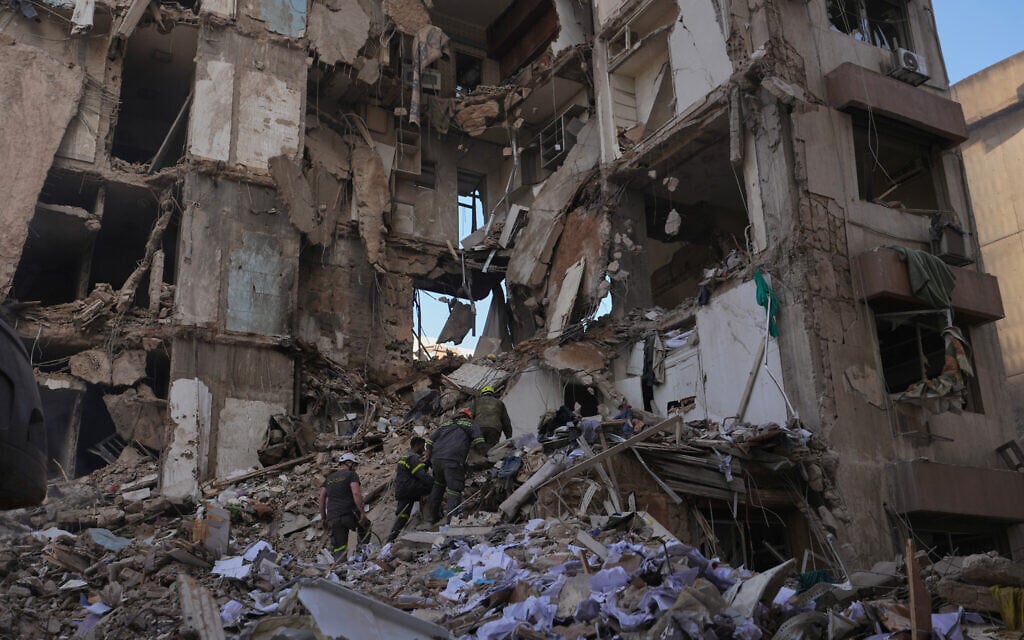
‘Unacceptable’: European countries slam IDF strikes on Hezbollah amid US-Iran truce

veröffentlicht.
Vorschau ansehen

UK says it is 'deeply troubled' by Israeli attacks, France calls them 'unacceptable'; Italy condemns 'bombings on civilian population'

The post ‘Unacceptable’: European countries slam IDF strikes on Hezbollah amid US-Iran truce appeared first on The Times of Israel.

(Auszug von RSS-Feed)

☐ ☆ ✇ Fox News

Iran releases 2 French citizens after 'three and a half years of detention,' Macron says

veröffentlicht.
Vorschau ansehen

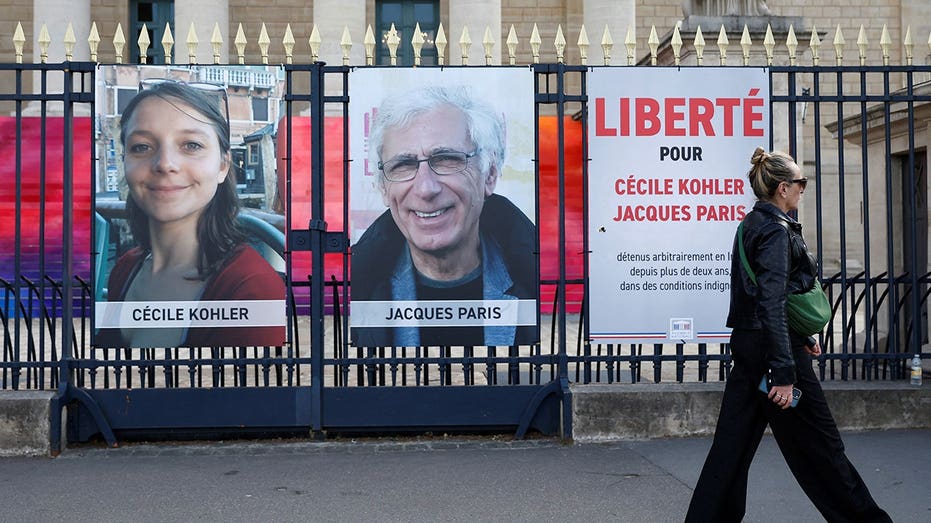
French nationals Cécile Kohler and Jacques Paris were released by Iran on Tuesday after "three and a half years of detention," President Emmanuel Macron announced. 

The pair, who were arrested in May 2022 while visiting Iran, were accused by Iranian state television of being spies who sought to stir up unrest, according to Reuters. France previously denounced their detention as unjustified and unfounded. 

"Cécile Kohler and Jacques Paris are free and on their way to French territory, after three and a half years of detention in Iran. This is a relief for all of us and obviously for their families," Macron wrote on X. 

"Thank you to the Omani authorities for their mediation efforts, to the State services, and to the citizens who mobilized tirelessly and thus contributed to their return," he added.

SON OF BRITISH COUPLE DETAINED IN IRAN 'LET DOWN' BY STARMER'S LEADERSHIP ON PARENT'S IMPRISONMENT AMID WAR

The nonprofit United Against Nuclear Iran described Kohler as the head of a federation of teachers unions in France, with Paris being her partner. 

France’s foreign ministry said last May that Kohler and Paris were being detained as "state hostages by the Islamic Republic of Iran." 

AFGHANISTAN FREES US CITIZEN DENNIS COYLE OVER A YEAR AFTER TALIBAN ARREST

"They are being held in shameful conditions and have been able to receive only four consular visits, under very restrictive conditions," the ministry said at the time. 

Iranian authorities freed the pair from prison in November but didn't let them leave the country, according to The Associated Press.

French officials said they were then being kept safe at the French Embassy in Tehran, until their departure from Iran on Tuesday. 

The Associated Press contributed to this report. 

(Auszug von RSS-Feed)

☐ ☆ ✇ EIKE

Trumps „Milliarden-Dollar-Geschenk“ ist in Wirklichkeit eine Rückerstattung, um Offshore-Windparks zu stoppen

veröffentlicht.
Vorschau ansehen

DCNF, Frank Lasee, Gastkommentar, 31. März 2026

Letzte Woche verkündeten Schlagzeilen (New York Times, NPR, CNN), Präsident Donald Trump würde einem französischen Energiekonzern fast eine Milliarde Dollar zahlen, um den Bau von Offshore-Windparks zu stoppen. Die Berichterstattung war klassischer Sensationsjournalismus – irreführend, unvollständig und darauf ausgelegt, ein abgedroschenes Narrativ zu bedienen. Die wahre Geschichte ist weitaus einfacher und vernünftiger.

Am 23. März 2026 erzielte das US-Innenministerium eine Einigung mit TotalEnergies. Die US-Regierung erstattet 928 Millionen US-Dollar – genau den Betrag, den das Unternehmen 2022 an die Biden-Administration gezahlt hatte, als es zwei Offshore-Windparklizenzen vor der Küste von New York/New Jersey und North Carolina erhielt.

Im Gegenzug wird TotalEnergies beide Pachtverträge kündigen und sich formell verpflichten, keine neuen Offshore-Windprojekte in den Vereinigten Staaten zu verfolgen. Das Unternehmen wird das Kapital stattdessen in amerikanische Öl-, Erdgas- und LNG-Projekte investieren.

Das ist keine Unternehmenssubvention. Es handelt sich um eine Rückerstattung bereits gezahlter Gelder, damit zwei teure und unzuverlässige Projekte gestoppt wurden, bevor sie die amerikanischen Stromkunden belasten konnten. TotalEnergies verpflichtete sich außerdem, das Geld in den USA zu behalten und für Öl und Erdgas zu verwenden. Die Schlagzeile hätte lauten sollen:

„Win-Win – Trump bringt das französische Unternehmen TotalEnergies dazu, eine Milliarde Dollar in zuverlässige und bezahlbare amerikanische Energie anstatt in Offshore-Windkraft zu investieren.

Strom aus Offshore-Windparks ist deutlich teurer als Strom aus Erdgas. Jüngste Analysen der Stromgestehungskosten zeigen, dass neue Offshore-Windprojekte zwischen 100 und 140 US-Dollar pro Megawattstunde kosten – 50 bis 150 Prozent teurer als Strom aus neuen Gas- und Dampfkraftwerken, die typischerweise 60 bis 80 US-Dollar pro Megawattstunde liefern.

Diese Kluft vergrößert sich dramatisch, sobald wir die Realität berücksichtigen.

Wind ist unbeständig. Wenn der Wind nicht weht, muss der Strom von woanders herkommen. Offshore-Winde im Atlantik wehen je nach Standort etwa die Hälfte der Zeit. Das bedeutet entweder den Bau und die Wartung teurer Batteriespeichersysteme oder das Bereithalten von Gaskraftwerken als Reserve. Die doppelten Kosten – einmal für die bedarfsgerechte Gasversorgung und ein weiteres Mal für die nur zeitweise verfügbare Offshore-Windenergie – werden in den positiven Schlagzeilen über Offshore-Windkraft selten erwähnt. Das ist teuer.

Trump versteht diese grundlegende wirtschaftliche Realität ganz klar. Warum sollte man massive Investitionen in teure, wetterabhängige Energiequellen tätigen, wenn unsubventionierte Erdgas- und Erdölprojekte günstigeren, bedarfsgerechten Strom und höhere Renditen liefern? Der einzige Grund für diese unkluge wirtschaftliche Entscheidung ist die Klimaideologie. Konventionelle Energiequellen bieten nach wie vor deutlich höhere Gewinne ohne die endlosen Steuergelder, die für die Förderung von Offshore-Windparks benötigt werden. Deshalb ist die Umleitung dieser fast eine Milliarde Dollar in das profitablere, unsubventionierte amerikanische Erdgas ein Gewinn für das Unternehmen und die USA.

TotalEnergies hätten diese Investition überall auf der Welt tätigen können, aber die Amerikaner denken an Ihre eigenen Arbeitzplätze,  sie verhandeln, dass die Gelder im eigenem Land bleiben und zur amerikanischen Energiedominanz beitragen. [Was hätte wohl die Deutsche Regierung verhandelt? – Der Übersetzer]

Der größte Erfolg dieses Deals ist nicht die Rückerstattung selbst, sondern die endgültige Streichung dieser beiden Pachtverträge. TotalEnergies hat sich nun verpflichtet, in den USA keine Offshore-Windparks mehr zu bauen. Das ist ein direkter Gewinn für zuverlässigen und bezahlbaren Strom und ein klares Signal dafür, dass die Ära teurer Ökostromauflagen zu Ende geht.

Sogar einige Demokraten beginnen, diese Wahrheit einzugestehen. Die demokratische Gouverneurin von New York, Kathy Hochul (die wiedergewählt werden will), schlug kürzlich vor, wichtige Bestimmungen des Klimaschutzgesetzes des Bundesstaates zu verschieben. Sie verschob die Regeln zur Reduzierung von Treibhausgasen und räumte ein, dass die ursprünglichen Zeitpläne „kostspielig und unerreichbar“ geworden seien.

Wenn selbst das tiefblaue New York stillschweigend auf die Bremse tritt, sollte der Rest des Landes aufmerksam werden. Jahrelang wurde uns erzählt, Wind- und Solarenergie seien billig und würden unsere Strompreise senken. In Wirklichkeit verteuert deren Ausbau die Strompreise – ähnlich wie ein zusätzliches, unzuverlässiges Auto, das nur gelegentlich genutzt wird, die Kosten für Ratenzahlung, Wartung und Versicherung erhöht, ohne das zuverlässige Auto, das man ständig nutzt, zu ersetzen.

Die Weigerung der Mainstream-Medien, dies korrekt darzustellen, ist aufschlussreich. Anstatt eine pragmatische Entscheidung anzuerkennen, die Verbraucher vor höheren Rechnungen und Netzinstabilität schützt, stellten viele Medien die Geschichte so dar, als würde Trump fossile Brennstoffe gegenüber „grüner Energie“ bevorzugen, indem er Steuergelder für den Aufkauf von TotalEnergies ausgab, anstatt die Gebühr zurückzuerstatten, die TotalEnergies für den Verkauf überteuerter, subventionierter Teilzeitstrom gezahlt hatte.

In Wirklichkeit handelte es sich um eine unkomplizierte Geschäftstransaktion: Die Leasingraten wurden zurückerstattet, die Projekte abgebrochen und das Kapital in funktionierende Energiequellen fließen gelassen.

Zuverlässiger und bezahlbarer Strom ist kein parteipolitischer Luxus, sondern eine wirtschaftliche und nationale Sicherheitsnotwendigkeit. Indem die Trump-Regierung die ursprünglichen Leasingzahlungen zurückerstattete und Investitionen weg von teuren Offshore-Windparks umleitete, erzielte sie einen klaren Gewinn für amerikanische Familien, Unternehmen und die Energiesicherheit.

Frank Lasee ist leitender politischer Analyst bei CFACT. Er war ein ehemaliger Senator des US-Bundesstaates Wisconsin und ehemaliges Mitglied der Regierung von Gouverneur Scott Walker.

 Die in diesem Kommentar geäußerten Ansichten und Meinungen sind die des Autors und spiegeln nicht die offizielle Position der Daily Caller News Foundation wider.

Alle Inhalte der Daily Caller News Foundation, einem unabhängigen und überparteilichen Nachrichtendienst, stehen seriösen Medienunternehmen mit großer Reichweite kostenlos zur Verfügung. Alle wiederveröffentlichten Artikel müssen unser Logo, den Namen des/der jeweiligen Reporters/Reporterin und dessen/deren Zugehörigkeit zur DCNF enthalten. Bei Fragen zu unseren Richtlinien oder einer möglichen Partnerschaft kontaktieren Sie uns bitte unter [email protected].

https://dailycaller.com/2026/03/31/opinion-trumps-billion-dollar-giveaway-actually-a-refund-to-kill-costly-offshore-wind-frank-lasee/


Der Beitrag Trumps „Milliarden-Dollar-Geschenk“ ist in Wirklichkeit eine Rückerstattung, um Offshore-Windparks zu stoppen erschien zuerst auf EIKE - Europäisches Institut für Klima & Energie.

(Auszug von RSS-Feed)

☐ ☆ ✇ Fox News

Rubio meets G7 ministers in France as US leads on Iran — allies under fire for tepid response

veröffentlicht.
Vorschau ansehen

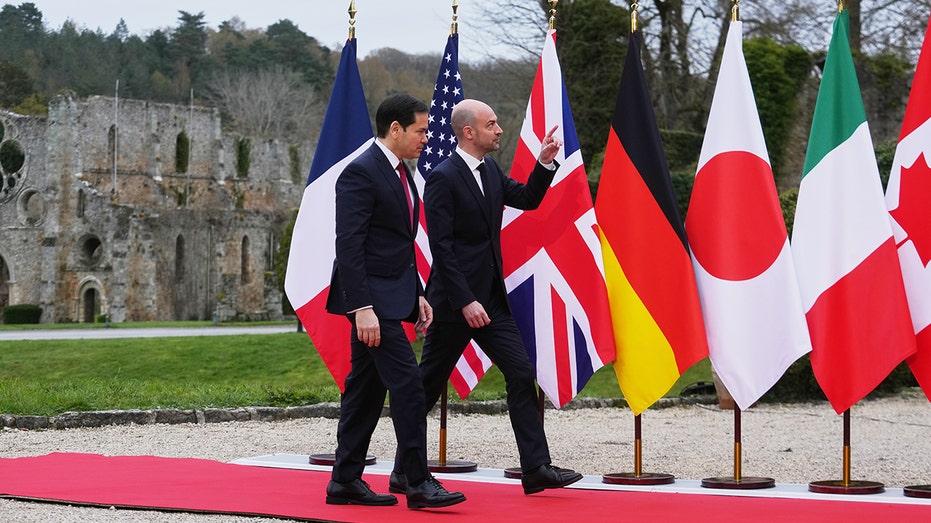
Secretary of State Marco Rubio arrived in France on Friday to attend the G7 foreign ministers' meeting where he will deliver a clear message on U.S. priorities for the ongoing war with Iran.

In the days leading up to the meeting, other members have taken markedly different approaches to the war. Nearly all of Washington’s partners — Britain, Canada, France, Germany, Italy and Japan — have reacted cautiously to the U.S.-Israeli military campaign and declined to participate in offensive operations, even as they condemn Iranian actions.

Before departing on Thursday, Rubio signaled a defiant approach to the talks: "I don’t work for France or Germany or Japan … the people I’m interested in making happy are the people of the United States. I work for them," he said in a video posted on X.

The divergence has drawn frustration from President Donald Trump, who has pressed allies to contribute more, particularly in securing key maritime routes such as the Strait of Hormuz. While some countries have signaled a willingness to support defensive or maritime security efforts, they have stopped short of joining direct military strikes.

TRUMP PRESSES NATO PARTNERS ON SUPPORT AS HEGSETH BLASTS HESITATION

"The U.S. is constantly asked to help in wars, and we have. But when we had a need, it didn’t get positive responses from NATO. A couple leaders said that Iran was not Europe’s war. Well, Ukraine isn’t our war, yet we’ve contributed more to that fight than anyone," Rubio added.

"The Strait of Hormuz could be open tomorrow if Iran stops threatening global shipping, which is an outrage and a violation of international law. For all these countries that care about international law, they should be doing something about it," he said before boarding his plane to France.

The remarks set the tone for a summit already marked by growing friction between Washington and some of its closest allies over how to handle the Iran conflict. Rubio has framed the stakes in stark terms. "Iran has been at war with the United States for 47 years . . . Iran has been killing Americans and attacking Americans across this planet," he said during a White House cabinet meeting, adding that allowing Tehran to obtain nuclear weapons would be "an unacceptable risk for the world."

But even before Rubio arrived at the meeting, European officials were signaling a markedly different approach.

"We need to exit from the war, not escalate this further, because the consequences for everybody around the world are quite severe," Vice President of the European Commission Kaja Kallas said during a briefing on the sidelines of the G7 on Thursday.

JACK KEANE CALLS OUT NATO'S WEAKNESS AS SHIPPING CRISIS GRIPS STRAIT OF HORMUZ

"It can only be a diplomatic solution … sit down and negotiate to have a way out," she added.

The contrast between Rubio’s framing and Kallas’s message captures the core tension shaping the meeting.

U.S. officials say Rubio is heading into the talks with a broader agenda that goes beyond Iran.

According to a State Department spokesperson, who spoke to Fox News Digital on background, Rubio will use the meeting to "advance key U.S. interests" and push discussions on the wars in Ukraine and the Middle East, as well as "international burden sharing" and the overall effectiveness of the G7.

The U.S. is also expected to emphasize maritime security, including freedom of navigation in the Strait of Hormuz and the Red Sea, while urging allies to take on a greater share of responsibilities in conflict zones and international organizations, the spokesperson said.

RUBIO, RATCLIFFE TO DELIVER CLASSIFIED IRAN BRIEFING TO 'GANG OF EIGHT' AHEAD OF TRUMP'S STATE OF THE UNION

European officials have instead emphasized the broader risks of the conflict.

France’s foreign minister, Jean-Noël Barrot, said discussions at the G7 would build on a recent joint statement condemning Iran’s actions while also addressing maritime security concerns.

He said the "discussions will provide an opportunity to revisit positions already agreed at the G7 level… including the unjustifiable attacks carried out by Iran against Gulf countries … which we condemned in the strongest possible terms."

Barrot added that ministers would also focus on securing global shipping routes.

"We will also have the opportunity to address maritime security and freedom of navigation … including an international mission … to ensure the smooth flow of maritime traffic in a strictly defensive posture, thereby helping to ease pressure on energy prices," he said.

Kallas echoed that global framing. "All the countries in the world are one way or another affected by this war … it is in the interest of everybody that this war stops," she said.

IRAN SIGNALS NUCLEAR PROGRESS IN GENEVA AS TRUMP CALLS FOR FULL DISMANTLEMENT

Her remarks also pointed to the interconnected nature of the crisis. "Russia is helping Iran with intelligence … and also supporting Iran now with drones," she said, linking the Iran conflict to the war in Ukraine.

That uncertainty is already affecting the structure of the summit, with officials dropping plans for a unified final communiqué to avoid exposing divisions, Reuters reported.

Analysts say those differences reflect deeper structural tensions in the alliance. "Europe has criticized Donald Trump’s ‘maximum pressure’ strategy towards Iran while pursuing a failed diplomatic approach that has enabled the regime to expand its terrorist networks and edge closer to nuclear threshold status," Barak Seener, senior research fellow at the Henry Jackson Society, told Fox News Digital.

"This reflects a lack of European capability to project power in the region, particularly in safeguarding the Strait of Hormuz."

Seener added that years of reliance on Washington have left Europe increasingly exposed as the U.S. shifts its strategic priorities. "Years of underinvestment in defense and reliance on the United States have created a dependency that Washington increasingly views as a betrayal of the peace it has guaranteed Europe since the Second World War," he said.

"With the U.S. placing greater value on its relationship with Israel than NATO, the result may be further erosion of the alliance, reduced support for Ukraine and rising economic pressure on Europe."

He warned that the immediate test will come at the G7 itself. "Divisions over how to respond to Iran and to any U.S. request for support are likely to expose a deeper transatlantic split," Seener said.

"Operation Epic Fury has showcased President Trump’s ability to assemble a coalition of allies to eliminate a common threat — in this case the Iranian regime — and stabilize international trade," Jacob Olidort, chief research officer and director of American security at the America First Policy Institute, told Fox News Digital.

"The failure of Western Europe to participate in securing the Strait of Hormuz is particularly egregious because those countries depend on it more than we do," he added.

"At the same time, the historic successes of Operation Epic Fury have awakened a new confidence in our Middle East partners to eradicate the threats from the Iranian regime and to work together to shape a more peaceful and prosperous region."

(Auszug von RSS-Feed)

☐ ☆ ✇ Fox News

Trump rates Macron 'an 8' as France and US split over Middle East strategy

veröffentlicht.
Vorschau ansehen

French President Emmanuel Macron on Thursday called for an immediate de-escalation in the Middle East, urging a halt to U.S.–Israeli strikes on critical infrastructure as fighting intensifies across the region.

"France calls for the immediate implementation of a moratorium on strikes targeting civilian infrastructure, whether related to water or to energy," Macron wrote on X, reinforcing France’s push for diplomacy even as the United States and Israel emphasize military pressure against Iran and its proxies. "Freedom and security of navigation must be restored." 

President Donald Trump recently struck a mixed tone on France’s role, saying he had spoken with Macron and was cautiously optimistic Paris ultimately would help secure the Strait of Hormuz, a critical global shipping route for oil and energy supplies.

MULTIPLE ALLIES DECLINE US CALLS FOR STRAIT OF HORMUZ SUPPORT AMID RISING MIDDLE EAST TENSIONS

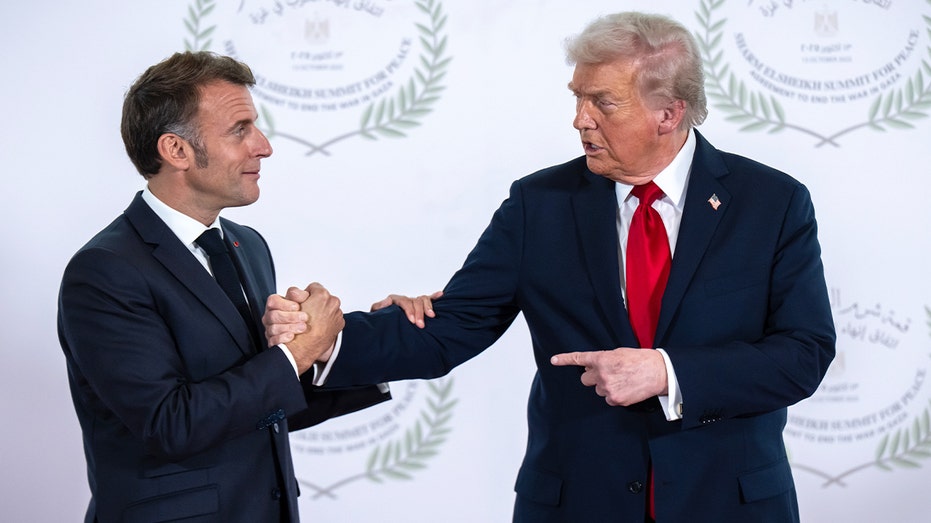
On "a scale of 0 to 10," Trump said Macron had been "an eight." 

"Not perfect, but it’s France," he said at a press briefing in the White House Monday.

Trump went on to say he believes Macron "is going to help" regarding securing the Strait of Hormuz, but added, "I don’t do a hard sell on them, because my attitude is we don’t need anybody. We’re the strongest nation in the world."

"I’m almost doing it . . . because I want to find out how they react," Trump said, suggesting the U.S. is also testing its allies. 

In a future crisis, he warned, "I’ve been saying for years that if we ever did need them, they won’t be there. Not all of them, but they won’t be there."

The divide reflects a broader question shaping the conflict: whether diplomacy can contain Iran’s regional network, or whether force is required to dismantle it.

WORLD LEADERS SPLIT OVER MILITARY ACTION AS US-ISRAEL STRIKE IRAN IN COORDINATED OPERATION

That tension is playing out most clearly over the Strait of Hormuz, a narrow waterway between Iran and Oman that serves as one of the world’s most critical energy choke points, with roughly one-fifth of global oil supplies passing through it each day. 

In recent weeks, Iran has disrupted traffic through the strait with drone, missile and naval threats, raising fears of a broader economic shock as commercial shipping slows and global energy markets face increasing uncertainty.

Macron said France "will never take part in operations to open or free" the critical waterway "in the current context," emphasizing that France is "not a party to the conflict." 

Paris instead has proposed escorting commercial vessels only after hostilities subside, in coordination with regional actors.

At the same time, European allies — including France — signaled they are not entirely stepping back from efforts to secure the strategic waterway.

Leaders of the United Kingdom, France, Germany, Italy, the Netherlands and Japan expressed in a joint statement released Thursday a "readiness to contribute to appropriate efforts" to ensure safe passage through the Strait of Hormuz, while calling on Iran to "cease immediately its threats" against commercial shipping.

A European diplomat told Fox News that the United Kingdom is leading a diplomatic effort to build support among European and Gulf partners for a coordinated response, with discussions underway on how such a mission could be structured.

NATO HEAVYWEIGHTS BALK AT HORMUZ MISSION AS TRUMP WARNS ALLIANCE AT RISK

However, European officials remain divided over timing, with concerns that launching such an effort during active hostilities could introduce new high-value targets into the conflict, according to the diplomat.

Lebanon has emerged as a second front in the war after Hezbollah, the Iran-backed militant group, began attacking Israel following U.S. and Israeli strikes on Iran in late February. 

The group launched rockets and drones from southern Lebanon, prompting Israeli retaliatory strikes and escalating the conflict into a broader regional confrontation tied directly to Tehran, Iran, and its proxy network.

While distancing itself from direct military involvement, France is intensifying its diplomatic push in Lebanon, urging direct negotiations between Israel and Beirut following signals from Lebanese President Joseph Aoun that he is open to talks.

French officials view this as a "window of opportunity" to stabilize the border and prevent further escalation, arguing that both sides share an interest in preventing Lebanon from becoming a launchpad for attacks against Israel.

But Israeli officials have sharply pushed back, arguing that diplomacy cannot succeed while Hezbollah remains armed and active. 

The Israel Defense Forces said Thursday that since Hezbollah joined the fighting following strikes on Iranian regime, the group has launched hundreds of rockets, missiles and drones toward Israel.

Israeli Foreign Minister Gideon Sa'ar said Israel has come under sustained attack from Lebanese territory in recent weeks. 

"Since March 2nd, Israel has been attacked from Lebanese territory more than 2,000 times with missiles and drones," he wrote on X Tuesday

Sa’ar warned that the crisis extends beyond the region, calling disruptions to maritime routes "naval terrorism that harms the global economy."

While expressing openness to normalization with Lebanon, Sa’ar made clear, "The obstacle to this is Hezbollah," adding that Beirut must take "meaningful action" against the group’s weapons, funding and leadership.

Analysts say that gap — between France’s diplomatic push and Israel’s security demands — reflects a deeper structural problem that has persisted for years.

France has "potential influence that they never use … essentially the stick," David Schenker, a former U.S. assistant secretary of state for Near Eastern Affairs who oversaw Lebanon policy during the first Trump administration and now directs the Program on Arab Politics at the Washington Institute for Near East Policy, told Fox News Digital. 

He argued that Paris has failed to use its leverage to pressure Hezbollah or its backers.

While Schenker said direct negotiations between the Lebanese government and Israel could be useful, he questioned whether they would change realities on the ground.  

"I don’t see how a ceasefire in and of itself changes the status quo," he said.

TRUMP PRESSES NATO PARTNERS ON SUPPORT AS HEGSETH BLASTS HESITATION

Lebanese leaders repeatedly have pledged to assert a state monopoly over weapons, but "they haven’t really done much," Schenker said, adding there is "zero confidence" they would move forward given Hezbollah’s opposition.

Even the Lebanese army has signaled its limits, prioritizing "national unity and the safety of the army above disarmament," he said.

On the ground, the situation continues to deteriorate rapidly.

Violence in Lebanon has surged dramatically since the war in Iran began.

"There has been a 400% increase in violence events in Lebanon," said Bassel Doueik, a researcher at the Armed Conflict Location & Event Data (ACLED), adding that Israeli strikes and Hezbollah clashes have displaced at least 1 million people.

Doueik said Israel appears to be seeking to create a buffer zone south of the Litani River in Lebanon, warning the escalation could lead to "another occupation of southern Lebanon similar to 1982."

At the same time, Hezbollah — long backed by Iran — continues to operate as a powerful armed force inside Lebanon, complicating efforts to reach any durable political settlement.

France has played a leading diplomatic role in Lebanon for years, including backing the United Nations Interim Force in Lebanon (UNIFIL). But the mission has faced growing challenges, including restrictions on movement and attacks on its personnel, raising criticism about its effectiveness.

Critics argue that repeated diplomatic initiatives have failed to curb Hezbollah’s military buildup, leaving Israel increasingly skeptical of new proposals.

"The French are specializing in carrots," Schenker said, arguing that Paris has been reluctant to use pressure despite its influence in Lebanon.

But he added that the transatlantic divide is not entirely one-sided. 

"This is a war that was launched by Israel and the United States, and they disagreed with it," he said, noting that protecting global energy flows through the Strait of Hormuz should be "an international responsibility."

(Auszug von RSS-Feed)

☐ ☆ ✇ The Expose

“Have a Baby While You Still Can”: France Sends Dystopian Letters to Citizens

veröffentlicht.
Vorschau ansehen

Every 29-year-old in France is to receive a letter from the government reminding them to plan their family “before it’s too late”. Macron’s government is attempting to raise awareness about declining fertility […]

The post “Have a Baby While You Still Can”: France Sends Dystopian Letters to Citizens first appeared on The Expose.

(Auszug von RSS-Feed)
❌