NEWS 23

🔒
❌
Stats
Es gibt neue verfügbare Artikel. Klicken Sie, um die Seite zu aktualisieren.

☐ ☆ ✇ Fox News

Iran moderates pushing Trump deal risk being ‘eliminated’ as regime fractures deepen

veröffentlicht.
Vorschau ansehen

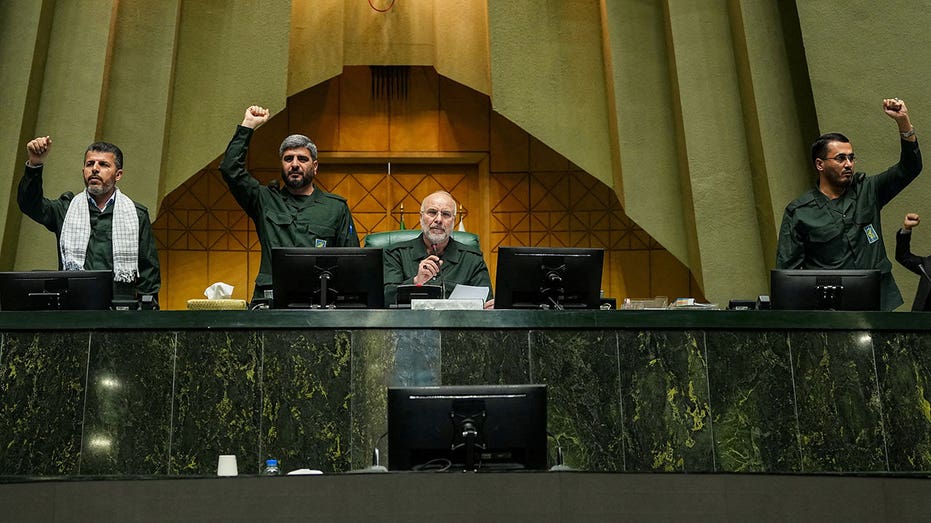
Iranian officials pushing for negotiations with the United States risk being labeled traitors and "most likely eliminated," according to a policy expert, as internal fractures emerge inside Iran’s new regime.

Hooshang Amirahmadi, president of the American Iranian Council, said moderates advocating engagement with Washington are increasingly vulnerable at a moment when the Trump administration says it is in contact with elements of a "new" leadership.

"If the moderates were to push toward negotiation and a ceasefire, they will be considered traitors and will most likely be eliminated," Amirahmadi told Fox News Digital.

MEET IRAN'S HARDLINE SPEAKER WHO THREATENED TO BURN US FORCES — REPORTEDLY TEHRAN'S POINT MAN FOR TALKS

Amirahmadi’s warning came as Washington also appears to be navigating internal "fractures" amid the ongoing conflict.

President Donald Trump on Monday said the U.S. is engaged in serious talks with a "new" and "more reasonable" regime in Iran as the war enters its fifth week, while Secretary of State Marco Rubio declined to say who exactly the U.S. is negotiating with but cited "fractures."

"Well, I'm not going to disclose to you who those people are, because it probably would get them in trouble with some other groups of people inside of Iran. Look, there are some fractures going on there internally," Rubio said on "Good Morning America."

"Anyone in Iran who speaks of negotiation is suspected of paving the way for more war and destruction," Amirahmadi said before stating that the moderate reformers are thought of as "infiltrators and deemed traitors."

Amirahmadi also confirmed Rubio’s comments and highlighted an internal struggle within Tehran’s power structure, where remnants of what he called the "old regime," or the Khamenei-era system, still exist.

"Many of them support negotiation or a ceasefire. But the emerging new regime is made up of more hard-line elements and views the others as traitors," he said.

"For a long time, there has been a serious gap — what we call a cleavage — between the hardliners or radicals and the moderates or reformists."

PAKISTAN'S AMBASSADOR WARNS IRAN TOO 'WAR-TORN' TO RESPOND QUICKLY AS TRUMP EXTENDS STRIKE DEADLINE

Amirahmadi also described how "assassination in the Islamic Republic is not a new phenomenon. It has been there for a long time."

Amirahmadi spoke ahead of Secretary of Defense Pete Hegseth saying Tuesday that Washington remains firm on reaching an agreement to end the monthlong conflict involving the U.S., Israel and the Islamic Republic.

Speaking at a news conference, Hegseth reiterated that Trump is willing to make a deal to end the war, adding the new regime is now in place.

"If Iran is smart, it will make a deal. The new Iranian regime should already know that. This new regime, having undergone a regime change, should be smarter than the previous one. President Trump does not bluff and will not back down. He will make a deal, he is willing and the terms of the deal are known to them," Hegseth said.

"The field and the war are in the control of the radical colonels, and that is what matters at this point," Amirahmadi added.

"The established bureaucracy is still run by the same old moderate regime, but then that is not a new regime. The new regime is certainly more radical."

WHO ACTUALLY RUNS IRAN RIGHT NOW? THE KEY POWER PLAYERS AS TRUMP CLAIMS TALKS TO 'TOP' OFFICIAL

Since the death of Supreme Leader Ayatollah Ali Khamenei and the succession of his son, Mojtaba Khamenei, the regime appears more reliant on the Islamic Revolutionary Guard Corps (IRGC).

Iran’s power structure is increasingly dominated by IRGC figures like Ahmad Vahidi and Qods Force chief Esmail Qaani, alongside judicial figures such as Mohammad Bagher Ghalibaf and Ayatollah Gholam-Hossein Mohseni-Ejei.

While President Masoud Pezeshkian’s influence could have waned, figures like Saeed Jalili, Guardian Council insider Ayatollah Alireza Arafi and Foreign Minister Abbas Araghchi continue shaping Iran’s security posture.

"There are basically the colonels; there are the Revolutionary Guards, people that are in the military. A few non-military hardliners are in universities, in government and places," Amirahmadi added.

"They have changed the regime into a very radical regime," Amirahmadi warned, "I don’t even think Khamenei’s son would favor negotiation, at least initially.

"His position and condition are not entirely clear. His leadership appears symbolic — a reaction, even a gesture against figures like Trump.

"Trump and Netanyahu wanted regime change, and they have already achieved it, but the regime has just become more radical," Amirahmadi concluded.
(Auszug von RSS-Feed)

☐ ☆ ✇ Fox News

Rubio meets G7 ministers in France as US leads on Iran — allies under fire for tepid response

veröffentlicht.
Vorschau ansehen

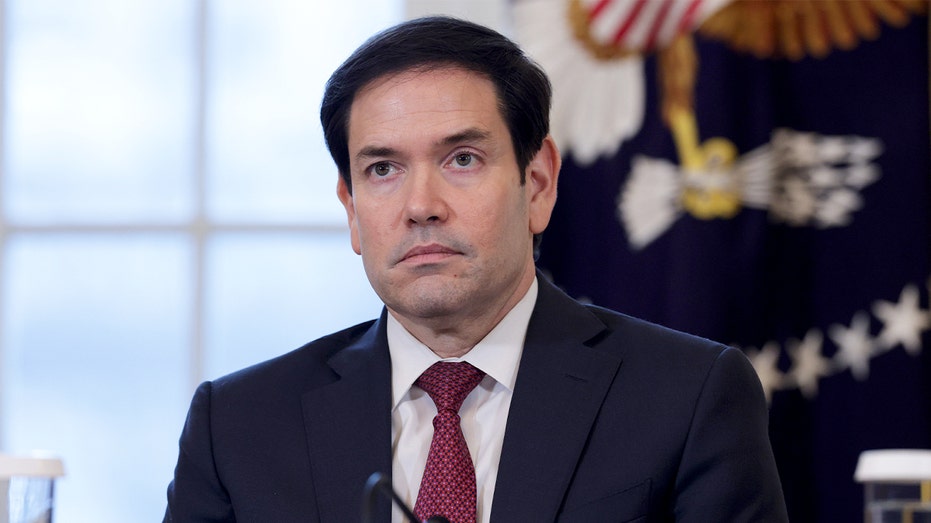
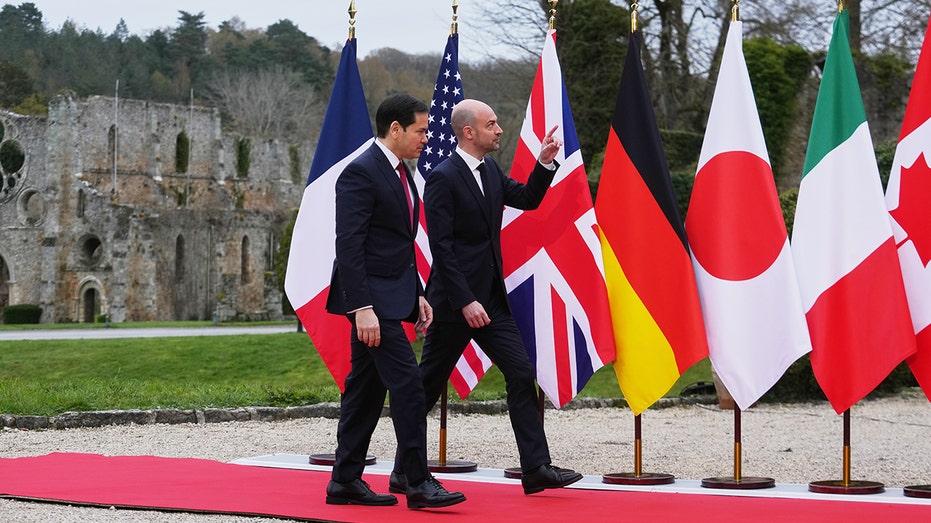
Secretary of State Marco Rubio arrived in France on Friday to attend the G7 foreign ministers' meeting where he will deliver a clear message on U.S. priorities for the ongoing war with Iran.

In the days leading up to the meeting, other members have taken markedly different approaches to the war. Nearly all of Washington’s partners — Britain, Canada, France, Germany, Italy and Japan — have reacted cautiously to the U.S.-Israeli military campaign and declined to participate in offensive operations, even as they condemn Iranian actions.

Before departing on Thursday, Rubio signaled a defiant approach to the talks: "I don’t work for France or Germany or Japan … the people I’m interested in making happy are the people of the United States. I work for them," he said in a video posted on X.

The divergence has drawn frustration from President Donald Trump, who has pressed allies to contribute more, particularly in securing key maritime routes such as the Strait of Hormuz. While some countries have signaled a willingness to support defensive or maritime security efforts, they have stopped short of joining direct military strikes.

TRUMP PRESSES NATO PARTNERS ON SUPPORT AS HEGSETH BLASTS HESITATION

"The U.S. is constantly asked to help in wars, and we have. But when we had a need, it didn’t get positive responses from NATO. A couple leaders said that Iran was not Europe’s war. Well, Ukraine isn’t our war, yet we’ve contributed more to that fight than anyone," Rubio added.

"The Strait of Hormuz could be open tomorrow if Iran stops threatening global shipping, which is an outrage and a violation of international law. For all these countries that care about international law, they should be doing something about it," he said before boarding his plane to France.

The remarks set the tone for a summit already marked by growing friction between Washington and some of its closest allies over how to handle the Iran conflict. Rubio has framed the stakes in stark terms. "Iran has been at war with the United States for 47 years . . . Iran has been killing Americans and attacking Americans across this planet," he said during a White House cabinet meeting, adding that allowing Tehran to obtain nuclear weapons would be "an unacceptable risk for the world."

But even before Rubio arrived at the meeting, European officials were signaling a markedly different approach.

"We need to exit from the war, not escalate this further, because the consequences for everybody around the world are quite severe," Vice President of the European Commission Kaja Kallas said during a briefing on the sidelines of the G7 on Thursday.

JACK KEANE CALLS OUT NATO'S WEAKNESS AS SHIPPING CRISIS GRIPS STRAIT OF HORMUZ

"It can only be a diplomatic solution … sit down and negotiate to have a way out," she added.

The contrast between Rubio’s framing and Kallas’s message captures the core tension shaping the meeting.

U.S. officials say Rubio is heading into the talks with a broader agenda that goes beyond Iran.

According to a State Department spokesperson, who spoke to Fox News Digital on background, Rubio will use the meeting to "advance key U.S. interests" and push discussions on the wars in Ukraine and the Middle East, as well as "international burden sharing" and the overall effectiveness of the G7.

The U.S. is also expected to emphasize maritime security, including freedom of navigation in the Strait of Hormuz and the Red Sea, while urging allies to take on a greater share of responsibilities in conflict zones and international organizations, the spokesperson said.

RUBIO, RATCLIFFE TO DELIVER CLASSIFIED IRAN BRIEFING TO 'GANG OF EIGHT' AHEAD OF TRUMP'S STATE OF THE UNION

European officials have instead emphasized the broader risks of the conflict.

France’s foreign minister, Jean-Noël Barrot, said discussions at the G7 would build on a recent joint statement condemning Iran’s actions while also addressing maritime security concerns.

He said the "discussions will provide an opportunity to revisit positions already agreed at the G7 level… including the unjustifiable attacks carried out by Iran against Gulf countries … which we condemned in the strongest possible terms."

Barrot added that ministers would also focus on securing global shipping routes.

"We will also have the opportunity to address maritime security and freedom of navigation … including an international mission … to ensure the smooth flow of maritime traffic in a strictly defensive posture, thereby helping to ease pressure on energy prices," he said.

Kallas echoed that global framing. "All the countries in the world are one way or another affected by this war … it is in the interest of everybody that this war stops," she said.

IRAN SIGNALS NUCLEAR PROGRESS IN GENEVA AS TRUMP CALLS FOR FULL DISMANTLEMENT

Her remarks also pointed to the interconnected nature of the crisis. "Russia is helping Iran with intelligence … and also supporting Iran now with drones," she said, linking the Iran conflict to the war in Ukraine.

That uncertainty is already affecting the structure of the summit, with officials dropping plans for a unified final communiqué to avoid exposing divisions, Reuters reported.

Analysts say those differences reflect deeper structural tensions in the alliance. "Europe has criticized Donald Trump’s ‘maximum pressure’ strategy towards Iran while pursuing a failed diplomatic approach that has enabled the regime to expand its terrorist networks and edge closer to nuclear threshold status," Barak Seener, senior research fellow at the Henry Jackson Society, told Fox News Digital.

"This reflects a lack of European capability to project power in the region, particularly in safeguarding the Strait of Hormuz."

Seener added that years of reliance on Washington have left Europe increasingly exposed as the U.S. shifts its strategic priorities. "Years of underinvestment in defense and reliance on the United States have created a dependency that Washington increasingly views as a betrayal of the peace it has guaranteed Europe since the Second World War," he said.

"With the U.S. placing greater value on its relationship with Israel than NATO, the result may be further erosion of the alliance, reduced support for Ukraine and rising economic pressure on Europe."

He warned that the immediate test will come at the G7 itself. "Divisions over how to respond to Iran and to any U.S. request for support are likely to expose a deeper transatlantic split," Seener said.

"Operation Epic Fury has showcased President Trump’s ability to assemble a coalition of allies to eliminate a common threat — in this case the Iranian regime — and stabilize international trade," Jacob Olidort, chief research officer and director of American security at the America First Policy Institute, told Fox News Digital.

"The failure of Western Europe to participate in securing the Strait of Hormuz is particularly egregious because those countries depend on it more than we do," he added.

"At the same time, the historic successes of Operation Epic Fury have awakened a new confidence in our Middle East partners to eradicate the threats from the Iranian regime and to work together to shape a more peaceful and prosperous region."

(Auszug von RSS-Feed)

☐ ☆ ✇ Fox News

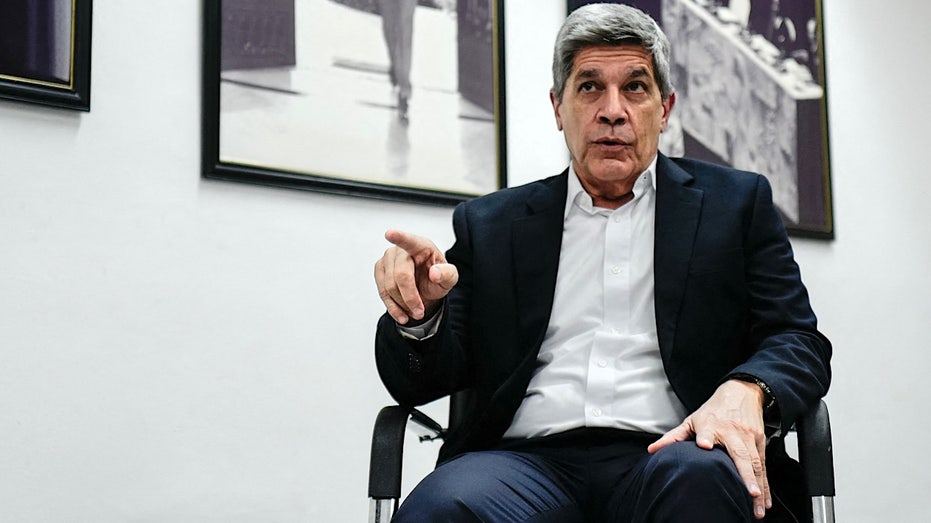
Carlos Fernández de Cossío: Cuba 'preparing' for 'possibility of military aggression'

veröffentlicht.
Vorschau ansehen

Cuba is preparing for possible U.S. aggression even as Trump administration officials have recently signaled they are not planning an invasion, Cuban Deputy Foreign Minister Carlos Fernández de Cossío said Sunday.

"Our military is always prepared, and in fact it is preparing these days for the possibility of military aggression," Fernández de Cossío told NBC News’ "Meet the Press" in an interview that aired Sunday.

"We would be naive if, looking at what’s happening around the world, we would not do that."

"But we truly hope that it doesn’t occur. We don’t see why it would have to occur, and we find no justification whatsoever — why would the government of the United States force its country to take military action against a neighboring country like Cuba?"

CUBAN ACTIVIST TO TRUMP: ‘MAKE CUBA GREAT AGAIN’ BY ENDING COMMUNIST RULE

The Cuban official’s remarks come just days after President Donald Trump said it would be "a big honor" to be the president that has the "honor of taking Cuba."

"Taking Cuba in some form, yeah, taking Cuba – I mean, whether I free it, take it: I think I can do anything I want with it, you want to know the truth," Trump said, despite the fact Secretary of State Marco Rubio stressed diplomacy with the failing regime over any talk of an invasion as Trump's statement might suggest.

"They’re in a lot of trouble, and the people in charge, they don’t know how to fix it," Rubio said this week. "So they have to get new people in charge."

TRUMP TOUTS US HAS 'TREMENDOUS' AMOUNT OF VENEZUELAN OIL, VOWS TO 'TAKE CARE' OF CUBA AFTER IRAN FOCUS

But Fernández de Cossío said Cuba is "absolutely" opposed to regime change, signaling defiance of Trump and Rubio's public statements and setting the stage for potential military action down the road.

"Our country has historically been ready to mobilize, as a nation as a whole, for military aggression," he told NBC's Kristen Welker. "We truly always see it as something far from us. We don’t believe it is something that is probable. But we would be naive if we do not prepare. That’s what I can tell you."

Asked whether Cuba was bracing for the United States "to take it in some form," Fernández de Cossío answered: "Truly, we don’t know what they’re talking about."

RUBIO HOLDING SECRET TALKS WITH RAUL CASTRO’S GRANDSON OVER CUBA’S FUTURE: REPORT

"But I can tell you this: Cuba is a sovereign country and has the right to be a sovereign country and has the right to self-determination," he added. "Cuba would not accept to become a vassal state or a dependent state from any other country or any other superpower."

Fernández de Cossío said Cuba was prepared to negotiate with Rubio despite the secretary of state’s long-standing criticism of the Cuban government.

"We are ready to negotiate with the person that the U.S. government, as a sovereign nation, designates as their spokesperson, as their lead negotiator, and we’re ready to negotiate with whoever is designated by the U.S. government," he said. "They’re a sovereign nation. We don’t interfere with that."

PROTESTERS TORCH COMMUNIST PARTY HQ IN CUBA AS VIDEO APPEARS TO CAPTURE GUNFIRE

Throughout the interview, the Cuban diplomat cast Havana’s position as defensive, saying Cuba "has no quarrel with the United States" and wants "a respectful relationship," while blaming the island’s worsening energy and economic crisis on U.S. pressure, including efforts to choke off fuel supplies. Recent reporting has documented Cuba’s deepening blackout crisis and the Trump administration’s increased efforts to isolate the government economically.

"What does ‘on its own’ mean when it’s being forced by the United States?" Fernández de Cossío said when asked about Trump’s claim that Cuba could collapse on its own. "It’s a very bizarre statement."

His closing message to Trump was conciliatory, even as he warned that Cuba was preparing for the worst.

"Cuba has no quarrel with the United States," Fernández de Cossío said. "We do have the need and the right to protect ourself. 

"But we are willing to sit down, we’re open for business, and we’re all being open to having a respectful relationship that I’m sure the majority of Americans would support, and I’m sure the president of the United States would support, if we could sit down and talk meaningfully about it."

(Auszug von RSS-Feed)

☐ ☆ ✇ Fox News

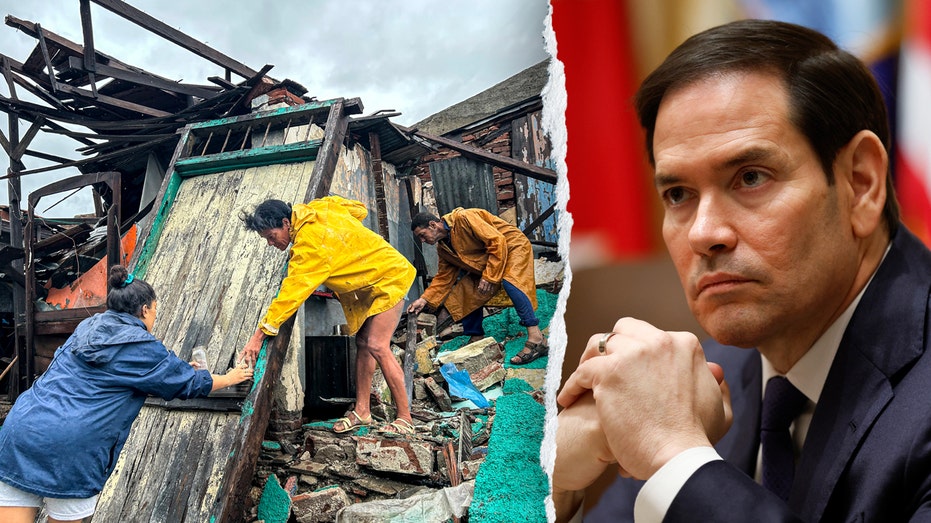
Rubio says Cuba needs ‘new people in charge’ as blackouts, unrest grip island

veröffentlicht.
Vorschau ansehen

Secretary of State Marco Rubio said Tuesday that U.S. sanctions on Cuba are tied to political change on the island, as the country faces widespread blackouts, unrest and a worsening economic crisis.

"Suffice it to say that the embargo is tied to political change on the island," Rubio told reporters at the White House. "The law, it's been codified. And, but the bottom line is their economy doesn't work. It's a nonfunctional economy. It's an economy that has survived.… That thing they have, has survived on subsidies from the Soviet Union and now from Venezuela. They don't get subsidies anymore. So they're in a lot of trouble. And the people in charge of them don't know how to fix it. So they have to get new people in charge."

Rubio’s comments come as Cuba faces a deepening energy crisis that has fueled protests and instability. 

A nationwide power grid collapse left roughly 10 million people without electricity, according to U.S. Embassy statements and Cuban authorities.

PROTESTERS TORCH COMMUNIST PARTY HQ IN CUBA AS VIDEO APPEARS TO CAPTURE GUNFIRE

President Donald Trump indicated his administration is actively engaged. 

"Cuba right now is in very bad shape. They're talking to Marco," Trump told the reporters, "We’ll be doing something with Cuba very soon.… We’re dealing with Cuba."

Trump escalated his rhetoric against Cuba Monday, saying ‌he expected to have the "honor" of "taking Cuba in some form" and that "I can do anything I want" with the neighboring country.

A senior State Department official rejected claims that U.S. sanctions are responsible for the humanitarian situation, saying, "Widespread blackouts have sadly become common for many years in Cuba — a symptom of the failing regime’s incompetence and inability to provide even the most basic goods and service for its people."  

"This is the tragic result of over 60 years of Communist rule," the official added. "An island that was once the crown jewel of the Caribbean has plunged into extreme poverty and darkness. 

"As President Trump has said, what is left of the regime should make a deal and finally let the Cuban people be free and prosperous, with the help of the United States," the official told Fox News Digital.

TRUMP DECLARES NATIONAL EMERGENCY OVER CUBA, THREATENS TARIFFS ON NATIONS THAT SUPPLY OIL TO COMMUNIST REGIME

Cuban human rights activist Rosa María Payá argued that the current crisis reflects systemic collapse inside the regime, not external pressure. 

"The blackout is the regime's collapse made visible: 65 years of totalitarianism finally consuming itself," Payá told Fox News Digital. "The protests are Cubans refusing to disappear into that darkness." 

She rejected claims that U.S. sanctions are driving the humanitarian situation. 

"Cubans are not suffering because of American policy," she said. "They are suffering because of a dictatorship. Pressure on the regime works. What hurts the Cuban people is legitimizing it." 

"The only way to end the humanitarian catastrophe is to end the regime," Payá added. "That’s the demand of the Cuban people." 

Recent blackouts and shortages have been linked to failures at key infrastructure, including the Antonio Guiteras thermoelectric power plant, as well as fuel shortages following U.S. actions to curtail oil shipments from Venezuela, one of Cuba’s primary energy suppliers.

At the same time, Pentagon officials told lawmakers there are no plans to invade Cuba, even as they described it as a long-standing security concern.

Joseph Humire, performing the duties of assistant secretary of defense for homeland defense and Americas security affairs, said he was "not familiar with any plans on Cuba" when asked during a House Armed Services Committee hearing Tuesday.

He described Cuba as "one of the strongest intelligence adversaries that we've had in the United States," adding that Cuban officials have operated across the region and were "defending Nicolás Maduro… in Caracas" during past operations. 

Cuba’s government has blamed U.S. sanctions for worsening the crisis, while U.S. officials argue it stems from decades of economic mismanagement and reliance on foreign subsidies.

(Auszug von RSS-Feed)

☐ ☆ ✇ Fox News

Rubio designates Afghanistan as 'state sponsor of wrongful detention': 'Despicable tactics'

veröffentlicht.
Vorschau ansehen

U.S. Secretary of State Marco Rubio designated Afghanistan as a "state sponsor of wrongful detention," accusing the Taliban of "unjustly" detaining Americans and other foreign nationals.

In his announcement on Monday, Rubio said the Taliban continues to use "terrorist tactics" that he insisted "need to end."

"I am designating Afghanistan as a State Sponsor of Wrongful Detention," Rubio said in a statement. "The Taliban continues to use terrorist tactics, kidnapping individuals for ransom or to seek policy concessions. These despicable tactics need to end."

The secretary also called on the terror group to free a pair of Americans who are "unjustly detained" in Afghanistan.

IRAN REGIME CITED AS TRUMP ADMIN SET TO DESIGNATE SUDAN'S MUSLIM BROTHERHOOD A TERROR GROUP

"It is not safe for Americans to travel to Afghanistan because the Taliban continues to unjustly detain our fellow Americans and other foreign nationals," he said. "The Taliban needs to release Dennis Coyle, Mahmoud Habibi, and all Americans unjustly detained in Afghanistan now and commit to cease the practice of hostage diplomacy forever."

Coyle, 64, was detained more than a year ago without charges by the Taliban General Directorate of Intelligence, according to his family, noting that he still has not been charged. His family said he was legally working to support Afghan language communities as an academic researcher.

Habibi, a 38-year-old American citizen who was born in Afghanistan, was taken along with his driver from their vehicle in the capital of Kabul in August 2022 by the Taliban General Directorate of Intelligence, according to the State Department.

The FBI said Habibi was previously Afghanistan’s director of civil aviation and worked for the Kabul-based telecommunications company Asia Consultancy Group. The FBI said the Taliban detained 29 other employees of the company but has released most of them.

Habibi has not been heard from since his arrest, and the Taliban has not disclosed his whereabouts or condition, according to the State Department and FBI. The Taliban has previously denied it detained Habibi.

The U.S. is also calling for the return of the remains of Paul Overby, an author who was last seen close to Afghanistan's border with Pakistan in 2014, according to Reuters, citing two sources familiar with the situation.

The State Department could restrict the use of U.S. passports for travel to Afghanistan if the Taliban does not meet the U.S. government's demands, the sources told the outlet.

A passport restriction of this kind is currently only in place for North Korea.

The Taliban called the decision by Rubio to designate Afghanistan a "state sponsor of wrongful detention" regrettable, adding that it wanted to resolve the matter through dialogue.

STATE DEPARTMENT DEFENDS 'PROACTIVE' EVACUATION EFFORTS AGAINST DEMS' CLAIMS OF DIPLOMATIC CHAOS

The Taliban took control of Afghanistan in 2021 during the U.S. military’s chaotic withdrawal from the country that ended the 20-year war in the region.

Rubio gave the "state sponsor of wrongful detention" designation to Iran late last month, just one day before the U.S.-Israeli strikes on the country. He warned that the U.S. could restrict travel to Iran over its detention of U.S. citizens, but there have not been any restrictions yet.

"The Iranian regime must stop taking hostages and release all Americans unjustly detained in Iran, steps that could end this designation and associated actions," Rubio said at the time.

Reuters contributed to this report.

(Auszug von RSS-Feed)

☐ ☆ ✇ Fox News

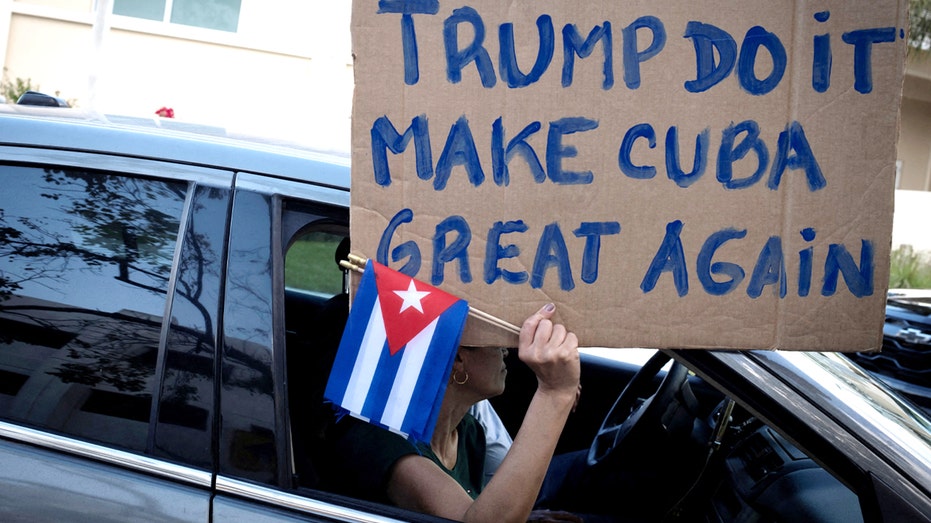
Cuban activist to Trump: ‘Make Cuba great again’ by ending communist rule

veröffentlicht.
Vorschau ansehen

As Cuba faces rolling blackouts, food shortages and renewed protests, Cuban human rights activist Rosa María Payá is warning in an interview to Fox News Digital that the island’s deepening crisis cannot be solved with economic reforms alone and is urging the United States to maintain pressure on the communist government in Havana.

The recent outages and shortages are tied to Cuba’s worsening energy and economic crisis. 

A recent nationwide blackout was triggered by a failure at the Antonio Guiteras thermoelectric plant, the island’s largest power station, cutting electricity across much of the country, according to Reuters. The crisis has been compounded by fuel shortages after the Trump administration moved to curtail oil shipments to the island, particularly from Venezuela — one of Cuba’s main suppliers. 

Cuban officials say U.S. sanctions have worsened the country’s economic difficulties, while repeated power plant failures and an aging electrical grid have left millions facing prolonged blackouts that have fueled growing public frustration and protests.

RUSSIA WARNS AGAINST 'PROVOCATIVE ACTIONS' AROUND CUBA AFTER 4 KILLED ONBOARD US-REGISTERED SPEEDBOAT

The state-run company blamed U.S. sanctions in an official statement, saying, "Without ending the financial blockade, there can be no permanent energy stability," according to CubaHeadlines.

The Trump administration has increased pressure on Cuba in recent months, tightening sanctions and targeting oil shipments that help power the island’s energy system. The measures are part of a broader effort to weaken the Cuban government and support democratic change on the island. 

"To President Trump, it's important for you to know that the Cuban people are grateful for what this administration is doing and that we are ready, and we want to make Cuba great again," Payá said, addressing him directly. "And that means an end to the communist dictatorship, not just a new economy, but a new republic." 

Her appeal comes as Cuba has re-emerged in Washington’s foreign policy discussions. Secretary of State Marco Rubio, the son of Cuban immigrants and one of the most prominent Cuban–American voices in U.S. politics, long has advocated a tougher stance toward Havana and stronger support for pro-democracy movements on the island. 

The Trump administration has recently increased pressure on the Cuban government, including measures targeting oil shipments that help sustain the island’s struggling energy sector. 

Trump praised Rubio during a press conference Tuesday and suggested he could play a central role in any potential negotiations with Havana.

"Marco Rubio is doing a great job," Trump said. "I think he's going to go down as the greatest secretary of state in history. They trust Marco."

A White House official told Fox News Digital Tuesday that, "The United States supports the Cuban people’s pursuit of democracy, prosperity, and fundamental freedoms. The United States calls on the Cuban regime to end its repression, release all unjustly detained political prisoners, and respect the rights and freedoms of all Cuban people."

"We want to work with President Trump and with Secretary Rubio, the opposition is united," Payá said. "We have a plan. It's called the Freedom Accord," she added, referring to a democratic transition framework promoted by opposition groups in Cuba. "We are ready to lead this process. The moment is now, Mr. President."

Opposition groups have developed the Freedom Accord, a political roadmap for democratic change, which she says would guide a transition away from the current system in Cuba. 

Payá, 37, who escaped the country 13 years ago, has spent the past decade advocating internationally for democratic change in Cuba. 

She is the daughter of prominent dissident Oswaldo Payá, founder of the Christian Liberation Movement and architect of the Varela Project, a petition campaign in the early 2000s that gathered more than 25,000 signatures demanding free elections and civil liberties in Cuba.

Her father died in 2012 alongside fellow activist Harold Cepero in what Payá describes as an assassination by the Cuban regime. Cuban authorities said the men were killed in a car crash in eastern Cuba, but the Inter-American Commission on Human Rights later concluded there were "serious indications" that Cuban state agents were involved in the deaths.

"After the Cuban regime assassinated my father … I have been trying to follow his legacy together with many, many other Cubans on the island and in exile that today believe that we have a real chance and freedom," she said, describing a movement that today includes activists both on the island and in exile.

FLORIDA LAUNCHES PROBE AFTER CUBA KILLS 4 ABOARD US-FLAGGED SPEEDBOAT NEAR KEYS

The crisis inside Cuba has reached a level where basic survival has become a daily struggle for many families, according to Payá.  

"The situation today is that mothers don't know if they are going to be able to feed their child tonight," she said. "Most of the island has been suffering blackouts that last for days on many occasions."The island has experienced waves of unrest in recent years driven by economic collapse and political repression. 

The largest demonstrations against the regime erupted on July 11, 2021, when thousands of Cubans took to the streets across the island chanting "freedom" in the biggest protests since the 1959 revolution.

Authorities responded with mass arrests and prison sentences for many demonstrators. 

For Payá, those protests reflected something deeper than economic frustration.

"The Cuban people have been fighting for freedom for the last 67 years," she said. "We are demanding political freedom, not just a new economy."

Despite comparisons between Cuba’s crisis and the political turmoil in Venezuela, Payá argues the situation in Cuba is fundamentally different. 

"Cuba's situation is quite different," she said. "This is the longest running communist dictatorship in the Western hemisphere." 

MARCO RUBIO EMERGES AS KEY TRUMP POWER PLAYER AFTER VENEZUELA OPERATION

While she emphasized that Cubans themselves must ultimately drive political change, Payá said international pressure remains essential because of the regime’s ability to repress dissent.

Her appeal comes as Cuba has re-emerged in Washington’s foreign policy discussions.

Payá said the Cuban opposition hopes the United States will continue supporting democratic change on the island.

"I believe that President Trump knows very well, better than anyone, the difference between a real deal and a better one," she said. "He understands that this dictatorship must end."

"To end the crisis," she added, "we need to end the regime."

Fox News Digital reached out to the White House and Rubio for comment and has not yet received a reply. 

(Auszug von RSS-Feed)
❌