NEWS 23

🔒
❌
Stats
Es gibt neue verfügbare Artikel. Klicken Sie, um die Seite zu aktualisieren.

☐ ☆ ✇ Breitbart

Report: Israel Deployed Elite Forces to Azerbaijan as Part of Secret Regional Iran War Network

veröffentlicht.
Vorschau ansehen

Israel secretly deployed elite military and intelligence personnel to Azerbaijan during the U.S.-Israeli campaign against Iran as part of a broader network of covert positions established across the Middle East to support operations against the Islamic Republic, according to a report published Friday.

The post Report: Israel Deployed Elite Forces to Azerbaijan as Part of Secret Regional Iran War Network appeared first on Breitbart.

(Auszug von RSS-Feed)

☐ ☆ ✇ Times of Israel

Powerful Iran-backed militias claim they’ll start handing in weapons to Iraqi authorities

veröffentlicht.
Vorschau ansehen

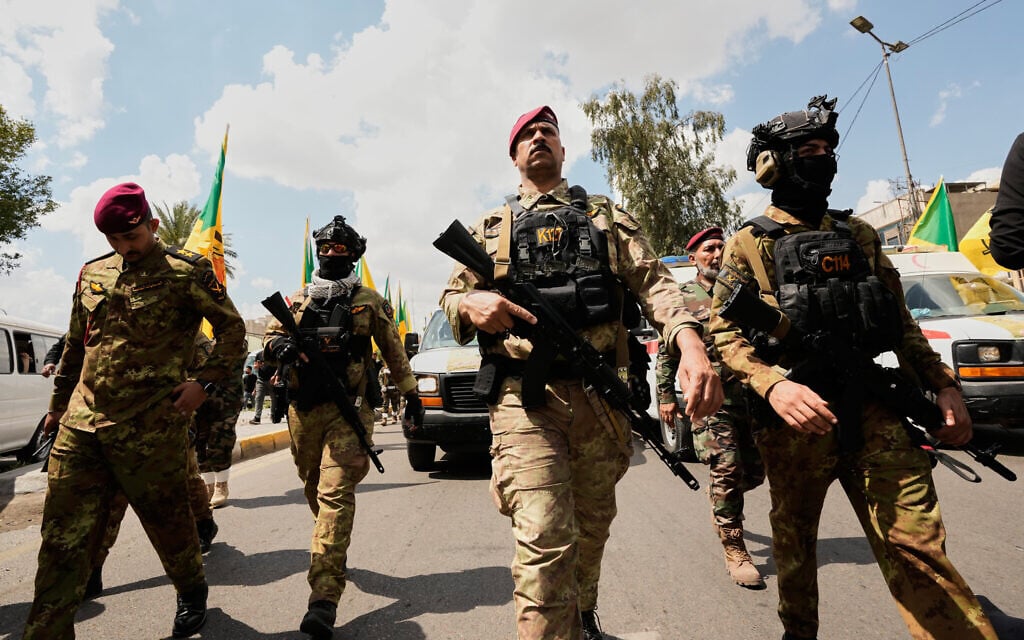
Announcements by Asaib Ahl al-Haq and Imam Ali Brigades come as Iraq's recently elected PM has made establishment of state monopoly on arms a key focus, facing pressure from US

The post Powerful Iran-backed militias claim they’ll start handing in weapons to Iraqi authorities appeared first on The Times of Israel.

(Auszug von RSS-Feed)

☐ ☆ ✇ Times of Israel

85 years after Baghdad’s Farhud massacre, survivors fear their story is being forgotten

veröffentlicht.
Vorschau ansehen

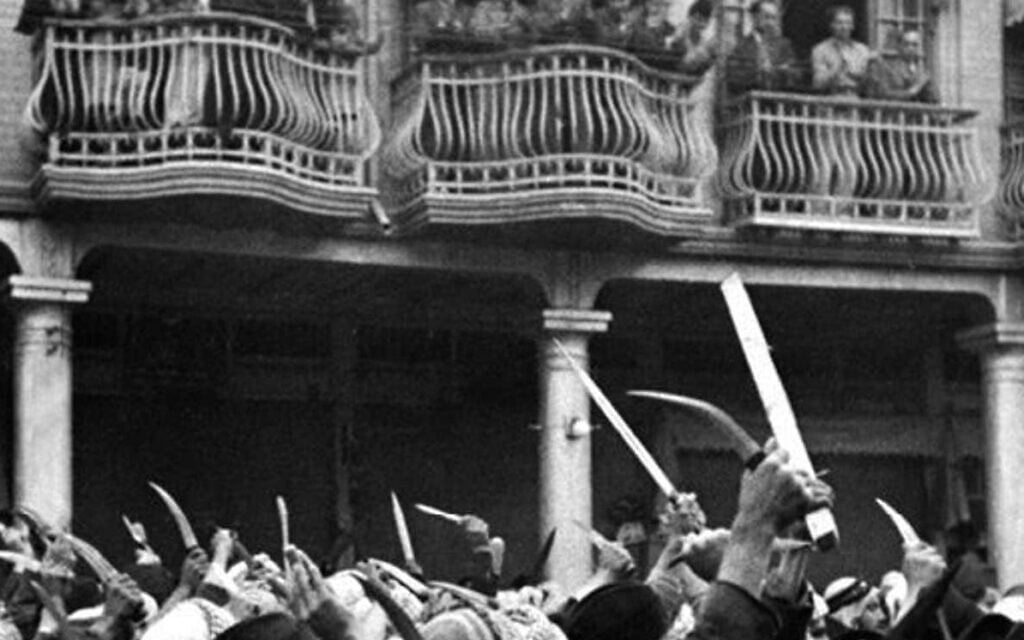
Inaugural commemoration Monday sees Iraqi Jews remember the June 1, 1941, pogrom that killed about 180 Jews and marked the decline of one of the world's oldest Jewish communities

The post 85 years after Baghdad’s Farhud massacre, survivors fear their story is being forgotten appeared first on The Times of Israel.

(Auszug von RSS-Feed)

☐ ☆ ✇ Fox News

Iran signals ‘mass sacrifice’ in 'high stakes' Saddam-era warning amid Trump deal talks

veröffentlicht.
Vorschau ansehen

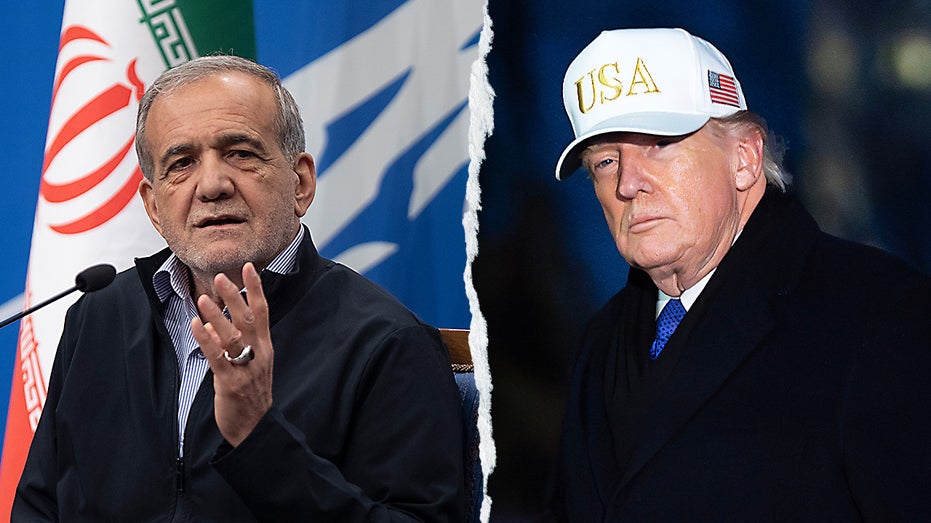
President Masoud Pezeshkian invoked one of Iran’s strongest wartime symbols on May 24, signaling Tehran’s resolve to hold its ground against the U.S. and Israel across the region, a counterterrorism expert said.

The Iranian leader's remarks came at a key moment in diplomacy, as President Donald Trump said a deal with Tehran to end the war is "largely negotiated" and warned the U.S. would either sign "a great and meaningful" agreement or walk away entirely.

While Iran signaled broad agreement with Washington on some points, it said a final deal is not imminent and that negotiations over the remaining details are still underway.

IRAN’S TOP DIPLOMAT SAYS NATION’S POWER LIES IN DEFYING PRESSURE: ‘NO TO THE GREAT POWERS’

In an X post marking the anniversary of the 1982 recapture of Khorramshahr from Iraqi forces during the Iran-Iraq War, Pezeshkian said, "Khorramshahr today is Iran, the Persian Gulf, and the Strait of Hormuz," adding that "resistance, self-sacrifice, and repelling aggression are rooted in the culture of this land."

Analysts claimed Pezeshkian was deliberately invoking one of the deepest ideological touchstones of the Islamic Republic — the battle that came to symbolize national resistance, civilian sacrifice and defiance against invasion.

"This is the Iran-Iraq War reference, and the timing is the point," said Dr. Omar Mohammed, director of the Antisemitism Research Initiative Program on Extremism at George Washington University.

May 24 marks the anniversary of the 1982 liberation of Khorramshahr, the southwestern city Saddam Hussein captured early in the war and Iranian forces retook after months of brutal urban combat.

FROM HOSTAGE CRISIS TO ASSASSINATION PLOTS: IRAN’S NEAR HALF-CENTURY WAR ON AMERICANS

"This is one of the Islamic Republic’s foundational mythological moments — civilian resistance, mass sacrifice, repelling an ‘aggressor army.’ Roughly what the Great Patriotic War is to Russia. The rhetorical move is the extension," Mohammed told Fox News Digital.

"He’s mapping the 1980-82 defensive-war frame onto the current confrontation: Iran attacked by an aggressor, ordinary citizens (‘battle-untested but brave’) expected to stand and fight, with ‘resistance, sacrifice, repelling aggression’ cast as the cultural default mode."

Some of the phrasing, Mohammed said, also evokes volunteer and Basij fighters versus a professional invading army. The analyst noted that Pezeshkian’s "Hormuz line" comment reflects a standard Iranian escalation tactic.

IRAN TO HOLD LIVE-FIRE DRILLS IN STRAIT OF HORMUZ WITH US ARMADA IN MIDDLE EAST

"Invoking the strait inside a wartime-mobilization frame — even rhetorically — is a deliberate signal, not throat-clearing," he added.

"The Khorramshahr frame is the deepest register the regime has. It’s what they reach for to signal existential war, not a managed crisis."

Mohammed explained that Pezeshkian’s X post is framing the current confrontation from the presidential account to send a "high-stakes message."

"It’s also a tell on internal posture: Khorramshahr, in short, means ‘we are being invaded and we will not negotiate,’" he added.

(Auszug von RSS-Feed)

☐ ☆ ✇ Fox News

ISIS terror leader at large after US strike kills top commander amid rising Africa threat: analyst

veröffentlicht.
Vorschau ansehen

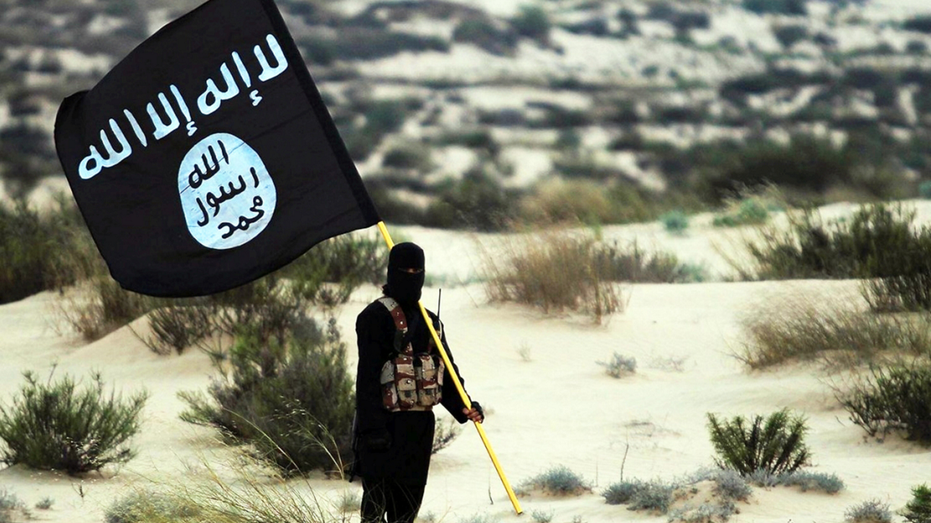
Abu-Bilal al-Minuki, ISIS’s shadow commander in West Africa, was killed May 16 using what an extremism analyst describes as one of the hardest forms of intelligence to detect, after decades being shielded by "deep local networks" across the region.

While the killing dealt one of the biggest blows to ISIS’s global network in years, disrupting operations in northeastern Nigeria, the terror group's top leader, Abu Hafs al-Hashimi al-Qurashi, remains at large as Africa becomes the movement's global epicenter.

"There is no single ISIS ‘headquarters’ in Nigeria; ISWAP (Islamic State West Africa Province) operates dozens of small, shifting camps scattered across the Lake Chad islands and the Borno bush," Dr. Omar Mohammed, Senior Research Fellow at the GW Program on Extremism, told Fox News Digital.

"Al-Minuki would have had no smartphones, relying instead on courier-based communications and constant movement between these small camps," he said.

TRUMP TARGETS ISIS IN NIGERIA AMID WARNINGS SAHEL REGION IS BECOMING ‘EPICENTER OF TERRORISM’

President Donald Trump’s explicit reference to "sources who kept us informed" points directly to human intelligence, or HUMINT — the hardest form of intelligence for a target to detect or counter, Mohammed explained.

The precision strike successfully penetrated defenses that had been held for years.

"He would have utilized deep local networks the Nigerian military has struggled to penetrate for over a decade," Mohammed added.

MS NOW GUEST SUGGESTS TRUMP STRIKE IN NIGERIA WAS RACIALLY MOTIVATED VIOLENCE

"His operational security would have been severe," Mohammed said. "But two things eventually undo even careful targets: time generates patterns, and human sources are extremely difficult to defeat."

"Despite severe operational security, al-Minuki was ultimately compromised through persistent human intelligence," he noted. "Al-Minuki knew he was marked."

ISIS FIGHTERS STILL AT LARGE AFTER SYRIAN PRISON BREAK, CONTRIBUTING TO VOLATILE SECURITY SITUATION

The Nigerian army described the strike as "a meticulously planned and highly complex precision air-land operation" carried out Saturday between midnight and 4 a.m. in Metele, located in Borno State in northeast Nigeria.

U.S. Africa Command, or AFRICOM, placed the strike in northeastern Nigeria, with Nigerian army communications pointing specifically to the Metele region.

Despite the tactical success, the current ISIS "caliph," or overall leader, remains on the run, according to reports.

Al-Qurashi was "named following his predecessor’s death in Syria," Mohammed claimed.

"He is deliberately faceless, with analysts describing this line of leaders as the ‘caliphs of the shadows,’" Mohammed said, noting al-Qurashi assumed leadership after Turkish authorities killed his predecessor in 2023.

While al-Qurashi’s exact location is unknown, reports indicate he traveled from Syria or Iraq through Yemen to Somalia’s semi-autonomous Puntland region.

"This is where the financial hub also sits, meaning the entire center of gravity of the organization — leadership, finance, operational direction — has been quietly relocating to Africa for years," Mohammed said.

RUSSIAN MERCENARIES REPLACE WESTERN FORCES AS ISIS SURGES ACROSS AFRICA'S SAHEL REGION

Data from the Armed Conflict Location & Event Data Project confirms this regional shift, showing more than two-thirds of all Islamic State global activity now takes place in Africa.

"Africa has transitioned from a peripheral theater to the operational and financial center of global ISIS activity," Mohammed explained. "Africa is no longer a peripheral theater. It is the main one. Funding is overwhelmingly local and extractive — taxation, ransom, smuggling — which is precisely why these networks are so resilient."

"Al-Minuki, for example, rose through ISWAP and operated across the Lake Chad Basin and into the wider Sahel," he noted.

"Still, staking out al-Minuki is the most significant blow to ISIS’ global leadership architecture since the al-Baghdadi raid in 2019, executed in the theater that has quietly become the group’s beating heart," Mohammed said before adding the strike was "not a one-off kinetic moment."

(Auszug von RSS-Feed)

☐ ☆ ✇ Fox News

Trump admin warns Iraq over Iran terror proxies as US reportedly blocks cash payments

veröffentlicht.
Vorschau ansehen

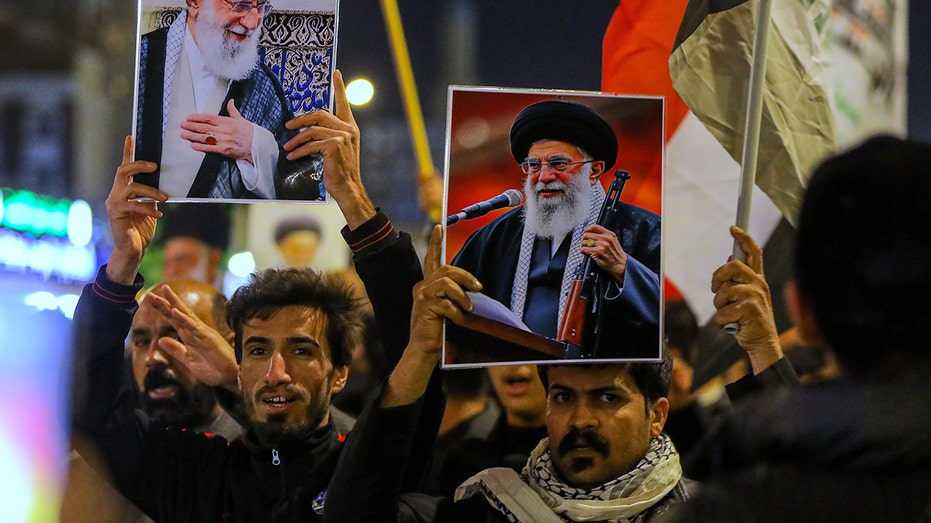
The Trump administration has reportedly ramped up its punitive measures to compel Iraq to disband Iranian regime-backed militias known as the Popular Mobilization Force (PMF) that form part of its government after sustained attacks on U.S. personnel and facilities.

Amid a tenuous ceasefire between the U.S. and the Islamic Republic of Iran, the administration tightened the screws on Iraq by stopping U.S. dollar shipments to Baghdad. The growing disagreements over policy between the U.S. and Iraq could lead to weakening Iran’s presence in the region and advance U.S. war aims against Tehran.

In a statement against Iraq’s government, a State Department spokesperson told Fox News Digital, "The United States has consistently been clear we will take all measures to counter Iran’s destabilizing activities in Iraq, protect U.S. interests against Iran-aligned terrorist militias in Iraq, and make clear our concerns about the Iraqi government’s failure to prevent this terrorism."

US WARNS IRAQ MUST ACT AGAINST IRAN-BACKED MILITIA ATTACKS ON AMERICAN ASSETS

The spokesperson added, "While we acknowledge the efforts of Iraqi Security Forces to respond to terrorist attacks by Iran-aligned militia groups, we continue to emphasize the Iraqi government’s failure to prevent these attacks while some elements associated with the Iraqi government continue to actively provide political, financial, and operational cover for the militias adversely impacts the U.S.-Iraq relationship. The United States will not tolerate attacks on U.S. interests and expects the Iraqi government to immediately take all measures to dismantle the Iran-aligned militia groups in Iraq."

The Wall Street Journal first reported last week about the security and financial penalties imposed on Iraq. According to the report, the U.S. halted security cooperation programs with Iraq’s military and stopped "a cargo-plane delivery of nearly $500 million in U.S. banknotes, the proceeds from Iraqi oil sales from Federal Reserve Bank of New York accounts."  

The newspaper said it was the second blocked delivery of dollars to the Central Bank of Iraq since the start of the U.S.-Israel war on Feb. 28 against Iran. 

The Treasury Department declined to comment on the blocked payments.

An Iraqi official told Fox News Digital, "With regard to relations with the United States, Iraq views them as an important partnership based on shared interests and cooperation. The two sides have fought together in a decisive battle against ISIS, reflecting the depth and significance of this relationship."

In reference to the pro-Iran militias, the Iraqi official said, "As for the issue of armed factions, it is important to note that the Iraqi reality is highly complex, with overlapping political, security and social dimensions. Some of these factions also possess political and popular influence. Accordingly, addressing this issue requires careful and gradual approaches grounded in a deep understanding of the domestic context, in a way that strengthens state authority and ensures that weapons are confined to the hands of the state while maintaining internal stability."

TRUMP THREATENS TO END IRAQ SUPPORT OVER AL-MALIKI COMEBACK BID TIED TO IRAN INFLUENCE

The official added, "External measures that fail to take into account the particularities of this reality may lead to counterproductive outcomes and negatively affect internal balances, which would not serve the stability efforts undertaken by Iraq and its partners, foremost among them Washington."

The PMF is an umbrella organization of militias largely loyal to the Islamic Republic of Iran — the world’s worst state-sponsor of terrorism, according to the State Department. Members of the PMF have launched attacks on U.S. assets in Iraqi Kurdistan and against Iraqi Kurds — a valuable U.S. ally in the Mideast.

A senior Kurdish official told Fox News Digital, "The dollar pause is part of the nuclear option in the Treasury Department, and the Americans have always been reluctant to leverage it. The Iraqis, meanwhile, have been cruel to their partners — Americans and the KRG [Kurdish Regional Government], as this war has shown — and now Washington is drawing a red line."

The Kurdish official said, "They’ve made it clear things will only get worse for Iraq if militias resume attacks against U.S. interests, including in the Kurdistan Region. It’s high time the Americans pulled this lever; for too long, it has allowed Iran to pick a premier and dictate the rules, despite repeated encouragement to veto Iran’s cut-outs in Iraq."

Both Iraqi and Kurdish officials said the government is in flux as the different sides position themselves to select a new Iraqi prime minister.

IRAQI STATE BANK ACCUSED OF PROCESSING PAYMENTS FOR HOUTHI TERRORISTS WHO DISRUPT RED SEA COMMERCE

The Trump administration opposes the return of former Iraqi Prime Minister Nouri al-Maliki because of his close ties to Iran. 

The Kurdish official stressed the role of the majority Shiite population in Iran: "In the end, though, it’s still the Shia house that chooses the premiership. They have some latitude, but ultimately, they will select a candidate acceptable to both Iran and the United States. That’s the game — and America has always reacted to Iran’s game. This time, however, Washington appears intent on influencing the outcome rather than just observing it."

The official added, "This matters especially because Iraq depends on oil, and its proceeds are deposited in the U.S. Federal Reserve and American banks. How Washington behaves vis-à-vis those deposits influences the process and reconfigures the balance within the Shia house. It matters enormously."

Entifadh Qanbar, a former spokesman for the deputy prime minister of Iraq, warned that there is a pressing need for Iraqi Prime Minister Mohammed Shia' al-Sudan to swiftly dismantle the PMF because they represent a clear and present danger to the U.S. Embassy in Baghdad.

He told Fox News Digital, "The Iraqi government also provides these groups with state identification cards, vehicles, and official government license plates under the cover of the PMF structure. This allows them to enter Baghdad’s high-security Green Zone at will and threaten the U.S. Embassy or any Iraqi state institution."

To underscore the dangers of the PMF, the U.S. Department of Justice announced on Monday a $10 million bounty on the terrorist leader of the pro-Iranian militia Harakat Ansar Allah al-Awfiya (HAAA).
 

The U.S. embassy on Monday wrote on X that the pro-Iran militia "Harakat Ansar Allah al-Awfiya (HAAA) terrorists have launched attacks across Iraq and the region, including the April 8 ambush of U.S. diplomats near the Baghdad International Airport.  HAAA terrorists continue to undermine Iraqi sovereignty while threatening the safety and security of both Iraqi and U.S. civilians. We will not tolerate attacks on U.S. interests and expect all measures will be taken to dismantle Iran-aligned terrorist militia groups in Iraq."

(Auszug von RSS-Feed)

☐ ☆ ✇ Fox News

Hormuz crisis spurs $24B Iraq trade corridor as Gulf routes shift

veröffentlicht.
Vorschau ansehen

The Strait of Hormuz crisis is driving nations’ efforts to develop alternative Gulf-to-Europe trade routes, with Iraq’s $24 billion "Development Road" project at the forefront, analyst says.

The route from Iraq’s Grand Faw Port to Turkey and on to Europe, is advancing "with discipline," Middle East Council on Global Affairs analyst Muhanad Seloom told Fox News Digital, calling it a "permanent" and "transformative" wartime shift.

Seloom’s comments came as President Donald Trump warned Tehran against further escalation in the Gulf and signaled the U.S. is prepared to act to keep the strait open.

Iranian forces have laid mines and threatened commercial traffic in the narrow waterway. As of Sunday, the shipping route remains effectively closed.

IRAN IS 'TRYING TO GIVE THE GLOBAL ECONOMY A HEART ATTACK' BY CLOSING STRAIT OF HORMUZ, UAE MINISTER SAYS

"Iraq’s Development Road means every container moving through Basra instead of Iranian-controlled waters is a reduction in Tehran’s leverage over Iraq," said Seloom.

"The real scale, independent estimates put the Development Road closer to $24 billion, and the project is now moving with discipline," he said.

Iraq’s Prime Minister Mohammed Shia al-Sudani inaugurated the first 63-kilometer stretch of the Development Road in 2025. Phase 1 is due for completion by 2028.

"What was described by the Iraqi government as a flagship of Iraqi statecraft now has a regional rationale that governments and financiers treat as essential rather than aspirational," Seloom, an assistant professor at the Doha Institute for Graduate Studies, explained.

"Sudani seems to be positioning Iraq exactly where he thinks its geography always suggested, as a connecting state between the Gulf, Turkey and Europe," he said.

WATCH SHIPPING THROUGH THE STRAIT OF HORMUZ GRIND TO A HALT AMID IRAN CONFLICT

But other regional infrastructure, Seloom says, is also being pushed forward in parallel.

Saudi Arabia’s East-West Petroline pipeline is operating near its 7 million-barrel-per-day capacity, with expansion plans under review.

The UAE’s ADCOP pipeline to Fujairah is also at maximum use, with a second line under discussion, he said. "Turkey’s Zangezur and Middle Corridors bypass Iran via the Caucasus and are four to five years out."

He added: "Six Gulf-backed overland fiber projects are also underway through Syria, Iraq and the Horn of Africa."

Iran reimposed closure measures on the Strait of Hormuz on April 18, reducing traffic to just a handful of vessels per day compared with a pre-war average of roughly 130 to 140.

The restrictions, including on ships, have come under fire in recent days, and interceptions trace back to the start of the war on Feb. 28, when Tehran first moved to block transit following U.S.-Israeli strikes.

IRAN WAR, 11 DAYS IN: US CONTROLS SKIES, OIL SURGES AND THE REGION BRACES FOR WHAT’S NEXT

"Hormuz remains indispensable for energy, but it is no longer treated as a default. That shift is permanent given the war," Seloom said.

For Iraq’s corridor, it is "potentially transformative," Seloom said, with $4 billion per year in projected transit revenue and a repositioning from an oil rentier state to a logistics state.

"Turkey will be the single largest beneficiary. Combined with the Zangezur and Middle Corridors, Ankara becomes the overland bridge between Asia and Europe," he said. "Europe will have an additional overland option on a 2028-plus timeline, but nothing for the current crisis. It marginally reduces structural dependence on the unreliable Suez–Red Sea axis."

(Auszug von RSS-Feed)
❌