Anmelden


The Venezuelan non-governmental human rights organization Justice, Encounter, and Forgiveness (JEP) said this week that the Venezuelan socialist regime's largest and most infamous torture complex, the Helicoide (“The Helix”), remains operational despite the regime's claims.
The post Venezuelan Activists: Helicoide Torture Complex Still Active Despite Regime Claims of ‘Shutdown’ appeared first on Breitbart.

Peru is approaching a decisive presidential runoff election on June 7, in what many analysts describe as one of the country’s most consequential elections in years.
After a fragmented first round featuring dozens of candidates, voters must now choose between conservative politician Keiko Fujimori and left-wing congressman Roberto Sánchez. The election is taking place amid deep political polarization, rising crime, economic concerns, and widespread distrust of state institutions.
Encuesta electoral – 2da vuelta en Perú (Ipsos – 29 al 30/5 – 1204 casos)
K – Fujimori 40,4%
JP – Sánchez 38,3%
En blanco: 21,3% pic.twitter.com/1UrSQ0ojaY— Carlos Nasserna (@NassorIzBrasil) June 2, 2026
Peru has experienced extraordinary political instability over the past decade, marked by a succession of presidents who have ended up imprisoned, impeached, embroiled in corruption scandals, or caught in institutional crises. The winner of the June runoff will become the country’s ninth president in roughly ten years and will take office on July 28 for a five-year term—provided they are not removed from office or jailed beforehand.
The election follows a first round held in April, in which no candidate came close to securing the absolute majority needed to win outright. Fujimori finished first with approximately 17% of the vote, while Sánchez received about 12%, earning both candidates a place in the runoff.
Recent polls continue to show a slight advantage for Keiko Fujimori over Sánchez.
Keiko Fujimori is the more conservative candidate and represents the Fuerza Popular party. She is seeking the presidency for the fourth time. The daughter of former President Alberto Fujimori, a highly significant figure in Peruvian history, he is remembered by supporters for defeating insurgent groups and stabilizing the economy. Critics, however, point to his authoritarian tendencies and the human rights violations committed during his administration, which some nonetheless justify in the name of law and order.
Her campaign has emphasized tougher policies against both domestic and international crime, advocating for stronger police forces and enhanced security measures. She also promotes economic stability, market-friendly policies, stricter immigration controls, and reforms aimed at strengthening institutional order and governance.
During the final debate, Fujimori defended measures such as deploying more security forces and adopting tougher responses to organized crime, an issue that has become increasingly central to politics in Peru and across the region.
Roberto Sánchez is a left-wing nationalist representing the Juntos por el Perú party. A congressman and former minister, he emerged as the surprise candidate of the left. He has sought to distance himself from more radical positions, presenting himself as a reformist committed to reducing inequality and strengthening public institutions—issues of major importance in the Andean nation.
His platform includes policies focused on industrial development and economic diversification, police reform, anti-corruption measures, greater state involvement in economic development, expanded social welfare programs, and stronger support for regions outside Lima. Sánchez argues that Peru needs deep structural reforms rather than simply tougher security policies.
The contest remains extremely close. Much attention has been paid to the high proportion of undecided voters and those who may cast blank or invalid ballots. In several surveys, more than 20% of the electorate has yet to clearly support either candidate.
An Ipsos poll conducted on May 29 and 30 gave Fujimori 40.4% voting intention compared with 38.3% for Sánchez. When considering only valid votes, her lead widens slightly to 51.4% versus 48.6%.
A Datum Internacional survey found similar results: 39.8% for Fujimori and 35.9% for Sánchez, with a very high percentage of undecided voters or those planning to vote blank or null.
Reuters reported that both polls show a narrow lead for Fujimori but emphasize that nearly a quarter of the electorate remains undecided, keeping the election wide open.
Finally, it is important to note that Peru remains geographically divided. Fujimori performs strongly in Lima and certain urban areas, while Sánchez maintains advantages in rural regions, the south, and the Amazon basin. However, both candidates face significant levels of public rejection. Fujimori continues to encounter opposition due to the political legacy of Fujimorismo, while Sánchez faces questions regarding his political alliances and governing capabilities.
Internationally, the U.S. ambassador to Peru stressed the importance of transparent elections, while former regional leaders such as Iván Duque openly expressed support for Keiko Fujimori.
Estados Unidos apoya a las instituciones democráticas del Perú. Hoy me reuní con @JNE_Peru. Tienen una tarea de suma importancia: garantizar elecciones transparentes y creíbles. La democracia es fundamental para nuestra región. pic.twitter.com/79kfOCfBYv
— Embajador Navarro (@USAmbPeru) June 3, 2026
El Perú enfrenta una decisión trascendental para su futuro este domingo 7 de junio. Catorce exjefes de Estado y de Gobierno de Iberoamérica, que pertenecemos al Grupo Libertad y Democracia, expresamos nuestro respaldo a @KeikoFujimori y a la defensa de los valores democráticos,… pic.twitter.com/ygz6nLeWr7
— Iván Duque
(@IvanDuque) June 3, 2026
The post Everything You Need to Know About Peru’s June 7 Presidential Election: Polls, Candidates, and Proposals appeared first on The Gateway Pundit.
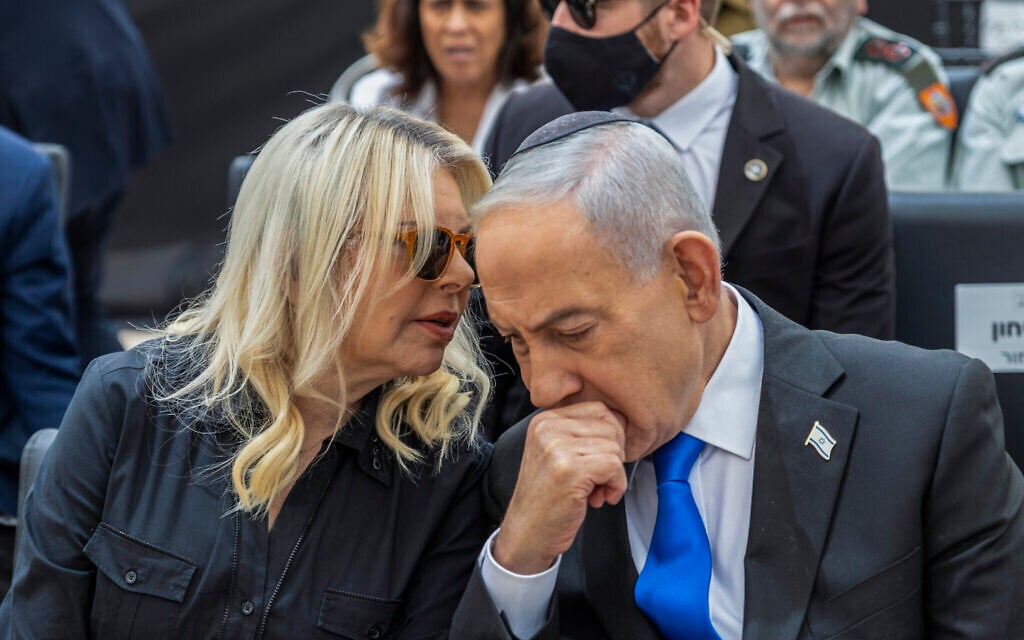
Sources says premier was not present for PM's wife's conversation with Brig. Gen. Guy Markizeno, and that it was 'not just small talk'
The post Sara Netanyahu took part in interview of PM’s military secretary candidate — reports appeared first on The Times of Israel.

With nearly all votes counted, right-wing outsider Abelardo de la Espriella and left-wing senator Iván Cepeda emerged as the two finalists, setting up a stark ideological confrontation between a hardline security agenda and a continued peace-and-reform strategy.
#ColombiaElections Right-wing presidential candidate Abelardo de la Espriella outperformed expectations in Colombia’s first-round election, finishing ahead of the left-wing candidate despite polling deficits leading up to the vote. He has campaigned on a tough anti-crime platform… pic.twitter.com/qeSBAg0tOi
— Gateway Hispanic (@GatewayHispanic) June 1, 2026
Colombia is heading into a decisive presidential runoff on June 21 after a tightly contested first round that highlighted deep political polarization, rising insecurity, and growing debate over the direction of the country under outgoing President Gustavo Petro.
Violence Shadows the Campaign
The electoral season has unfolded under unusual levels of political tension and violence.
According to Colombia’s electoral observation authorities, at least 63 incidents of violence—including threats, attacks on campaign offices, vandalism of political materials, and targeted intimidation—were recorded across 21 departments during the campaign period affecting multiple presidential teams, including those of De la Espriella and Cepeda.
In addition, reports from regional media indicate that members of campaign teams have been killed or threatened in separate incidents, prompting increased security measures for candidates and forcing several rallies to be held under heavy protection.
The wave of violence has reinforced concerns that armed groups and criminal organizations are attempting to influence or destabilize the electoral process, a recurring issue in Colombia’s modern democratic history.
Abelardo de la Espriella: Hardline Security Outsider
Abelardo de la Espriella, a 47-year-old lawyer and businessman, enters the runoff as one of the most unconventional candidates in recent Colombian politics.
With no prior elected experience, he built his public profile as a high-profile criminal defense attorney and media personality before entering politics. His campaign has surged on a platform centered almost exclusively on security.
¡Vamos a derrotar la tiranía y el absolutismo!
Pasamos a segunda vuelta gracias a los más de 10 millones de colombianos que respondieron al rugido.
¡En 21 días haremos historia!
Los espero en el cubo de cristal del Malecón del Río, para celebrar juntos esta victoria.
Hoy más… pic.twitter.com/wf7ANOusVZ
— Abelardo De La Espriella (@ABDELAESPRIELLA) May 31, 2026
De la Espriella proposes a major expansion of state coercive power, including the construction of large-scale prisons, intensified military operations against armed groups, and an end to ongoing peace negotiations with criminal organizations.
Enhorabuena, amigo Abelardo @ABDELAESPRIELLA, por tu gran victoria en primera vuelta de las elecciones presidenciales en Colombia.
Los colombianos tienen en la firmeza y valentía del tigre una oportunidad histórica para que su nación recupere la libertad, la prosperidad y la… pic.twitter.com/mwNsQsqlwc
— Santiago Abascal
(@Santi_ABASCAL) May 31, 2026
He has also framed his campaign as a response to what he describes as institutional weakness and policy failures in the fight against drug trafficking and illegal armed groups. His rhetoric has drawn strong support from voters frustrated by persistent violence, but also criticism from human rights advocates who warn of potential democratic and civil liberties risks.
During the campaign, De la Espriella also claimed to have received intelligence warnings about potential assassination attempts, underscoring the heightened security climate surrounding the election.
Iván Cepeda: Continuity of Peace and Reform
Iván Cepeda, a longtime senator and «human-rights advocate», represents the continuity wing of Colombia’s current governing coalition.
Closely aligned with President Gustavo Petro, Cepeda supports ongoing negotiations with armed groups as part of a broader “total peace” strategy aimed at reducing conflict through dialogue and reintegration rather than purely military solutions.
His platform emphasizes structural reforms, including expanded social programs, rural development, and efforts to reduce inequality—issues he argues are the root causes of Colombia’s decades-long internal conflict.

Supporters see him as a defender of long-term peacebuilding and institutional reform. Critics argue that previous negotiation efforts have failed to significantly reduce violence and have allowed armed groups to reorganize and expand.
Petro’s Legacy at the Center of the Election
The election was further overshadowed by controversy after President Gustavo Petro wrote on social media that he did not accept the preliminary vote count (preconteo), arguing that only the official scrutiny process conducted by electoral authorities would determine the final result.
El llamado conteo transmitido no tiene fuerza vinculante. sus datos no son norma pública. Como presidente no acepto los resultados del preconteo de la firma privada de los hermanos Bautista, porque debiendo estar quietos los algoritmos del software de conteo y escrutinios, en la…
— Gustavo Petro (@petrogustavo) June 1, 2026
Although President Gustavo Petro is constitutionally barred from seeking re-election, his administration remains central to the political debate shaping the runoff.
Petro’s government pursued ambitious reforms in healthcare, labor policy, and environmental regulation, while also prioritizing «peace negotiations» with multiple armed groups. However, his tenure has been marked by persistent security challenges, political polarization, and criticism over the effectiveness of his “total peace” strategy.
The election is widely interpreted as a referendum on whether Colombia should continue Petro’s reform-oriented approach or shift toward a more forceful security-first model.
A Battle for the Political Center
With both candidates mobilizing their bases, the outcome is likely to depend on centrist and undecided voters who did not strongly align with either camp in the first round.
Turnout is expected to play a decisive role, especially given that participation in the first round was lower than anticipated for an election of this magnitude.
Economic concerns, security conditions, corruption, and trust in state institutions are expected to dominate the final weeks of campaigning.
A Defining Moment for Colombia
The runoff between De la Espriella and Cepeda reflects a broader struggle over how Colombia should confront long-standing challenges: armed conflict, inequality, and institutional weakness.
The result will determine not only the country’s political direction but also its approach to peace and security at a time when violence continues to shape public life.
For many voters, the choice is not simply ideological—but a question of which path offers greater stability in an uncertain moment.
The post Colombia Enters High-Stakes Runoff Between Hardline Security Candidate and Petro-Aligned Left appeared first on The Gateway Pundit.
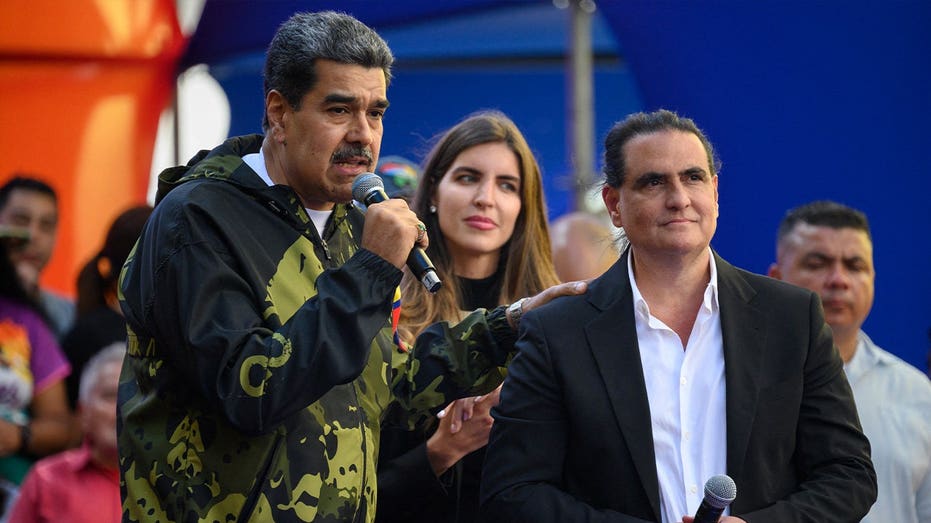
A close ally of ousted Venezuelan President Nicolás Maduro has been deported by Venezuela to the United States, according to Venezuelan officials, to face federal charges accusing him of orchestrating a sweeping money laundering and bribery scheme tied to Venezuela’s state-run food program and oil industry.
Alex Nain Saab Moran, 55, of Colombia, a former minister of industry and national production under the Maduro regime, appeared in federal court in Miami Monday, according to the U.S. Attorney’s Office for the Southern District of Florida. The Justice Department said Saab is presumed innocent unless proven guilty beyond a reasonable doubt.
Prosecutors allege Saab led a yearslong scheme beginning around 2015 to defraud a humanitarian program intended to provide food to impoverished Venezuelans.
He and his co-conspirators later allegedly sold billions of dollars’ worth of Venezuelan state-owned oil while circumventing U.S. sanctions, according to the Justice Department. Authorities say the proceeds were routed through U.S. bank accounts in an effort to conceal the transactions and further advance the scheme.
MADURO ALLY ALEX SAAB ARRESTED IN JOINT US-VENEZUELAN OPERATION, OFFICIAL SAYS
"Alex Saab allegedly used American banks to launder hundreds of millions of dollars stolen from a Venezuelan food program meant for the poor and proceeds from the illegal sale of Venezuelan oil," Assistant Attorney General A. Tysen Duva said in a statement. "This is unacceptable. The Criminal Division will not allow foreign actors to exploit the American financial system and use it as a safe haven for the proceeds of their corruption."
Beginning around 2015, Saab and his associates allegedly paid bribes to Venezuelan government officials to secure contracts tied to the country’s CLAP welfare program, which was intended to purchase and distribute food to vulnerable and impoverished Venezuelans.
Instead of delivering the promised food supplies, prosecutors allege the group used shell companies, fraudulent invoices and falsified shipping records to embezzle hundreds of millions of dollars from the program for their own personal gain.
TREASURY TARGETS OIL TRADERS, TANKERS ACCUSED OF HELPING MADURO EVADE U.S. SANCTIONS
Around 2019, as sweeping U.S. sanctions crippled Venezuela’s oil exports and placed severe strain on the country’s finances, including its ability to pay Saab and his associates under the CLAP program, Saab and his partners allegedly exploited their corrupt ties to government officials to gain access to billions of dollars’ worth of oil owned by Venezuela’s state-run oil company.
Officials allege the group sold the oil under false pretenses and used the profits to sustain and expand the original food fraud scheme.
Saab and his associates reportedly laundered the allegedly stolen funds through U.S. bank accounts in an effort to conceal the money trail, giving American authorities jurisdiction to prosecute the case.
"When illicit proceeds are moved through the United States financial system, our courts have jurisdiction and our prosecutors will act," U.S. Attorney Jason A. Reding Quiñones said in a statement.
Saab was previously indicted in the U.S. in 2019 and extradited from Cabo Verde in 2021. He was pardoned by President Biden in 2023 as part of a prisoner swap, though prosecutors say the new case involves alleged conduct not covered by that pardon.
A Miami-based attorney for Saab declined to comment to The Associated Press.
If convicted, Saab faces up to 20 years in federal prison. The government is also seeking forfeiture of any property or proceeds allegedly obtained through the alleged criminal activity.
The case was investigated by a U.S. Homeland Security Task Force (HSTF), which includes the Drug Enforcement Administration (DEA), the Federal Bureau of Investigation (FBI) and Homeland Security Investigations (HSI).