NEWS 23

🔒
❌
Stats
Es gibt neue verfügbare Artikel. Klicken Sie, um die Seite zu aktualisieren.

☐ ☆ ✇ Breitbart

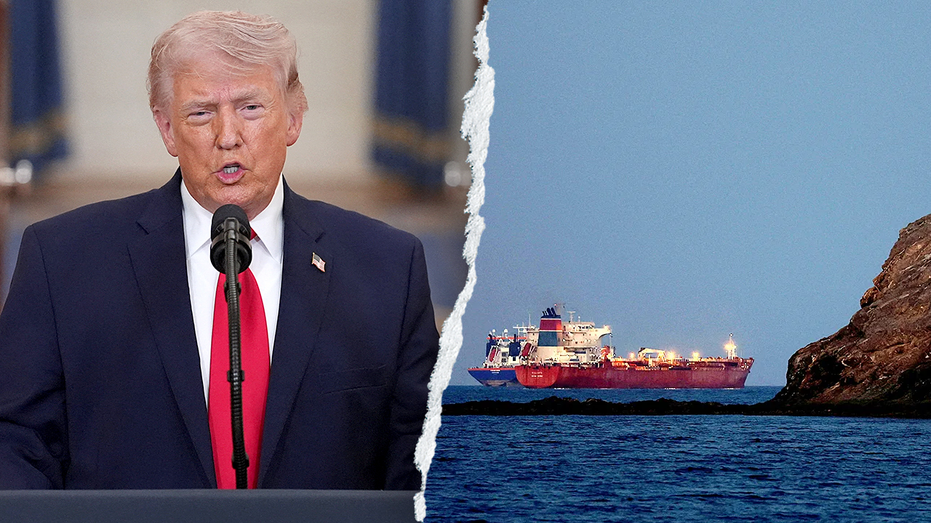
Trump Tightens the Screws: Sanctions Target Cuba's Castro Family and Figurehead 'President'

veröffentlicht.
Vorschau ansehen

The U.S. State Department announced a new round of sanctions Thursday on the crème de la crème of Cuba's communist Castro family dynasty.

The post Trump Tightens the Screws: Sanctions Target Cuba’s Castro Family and Figurehead ‘President’ appeared first on Breitbart.

(Auszug von RSS-Feed)

☐ ☆ ✇ Times of Israel

Celtic soccer fans protest tapping of Robbie Keane as coach over stint in Tel Aviv

veröffentlicht.
Vorschau ansehen

Keane joined Maccabi Tel Aviv as coach in June 2023 and won a title, but left amid the Gaza war; pro-Palestinian fans of Scottish team call decision to hire him 'unconscionable'

The post Celtic soccer fans protest tapping of Robbie Keane as coach over stint in Tel Aviv appeared first on The Times of Israel.

(Auszug von RSS-Feed)

☐ ☆ ✇ Times of Israel

Bamba blankets NYC after Park Slope co-op Israel boycott vote. What’s next?

veröffentlicht.
Vorschau ansehen

UJA-Federation floats Israeli food fairs, sends thousands of bags of peanut snack to pantries in response to prominent shop's divisive decision last week to ban Israeli products

The post Bamba blankets NYC after Park Slope co-op Israel boycott vote. What’s next? appeared first on The Times of Israel.

(Auszug von RSS-Feed)

☐ ☆ ✇ Breitbart

Spanish Tourism Giant Melia Abandons Nearly Half Its Hotels in Cuba

veröffentlicht.
Vorschau ansehen

The international hotel chain Meliá, based in Spain, announced it would stop operating 15 of the 34 hotels it currently administers in Cuba.

The post Spanish Tourism Giant Meliá Abandons Nearly Half Its Hotels in Cuba appeared first on Breitbart.

(Auszug von RSS-Feed)

☐ ☆ ✇ Fox News

Trump expands Cuba sanctions beyond US companies in major crackdown on foreign enablers

veröffentlicht.
Vorschau ansehen

The Trump administration is rolling out what experts describe as the most significant expansion of U.S. sanctions on Cuba in decades.

The administration is attempting what supporters say is the first broad application of Cuba-related secondary sanctions against foreign firms, aiming not only at Havana itself but also at foreign companies and banks that continue doing business with the island’s military-linked economic empire. 

The new framework, established under an executive order signed by President Donald Trump May 1, applies pressure beyond U.S. companies for the first time, threatening foreign firms with sanctions exposure if they continue operating in key sectors of the Cuban economy linked to Grupo de Administración Empresarial S.A., or GAESA.

TRUMP ADMINISTRATION PRESSED TO CLOSE CUBA EMBARGO LOOPHOLE AS OIL SET TO RUN OUT WITHIN DAYS

Supporters say the move closes a loophole that allowed foreign investors to sustain Cuba’s communist regime while the longstanding U.S. embargo largely restricted Americans.

Critics argue the measures risk worsening an already severe humanitarian crisis on the island without meaningfully weakening the government.

"At the top of the month, what the Trump administration did was for the first time extend the application of U.S. sanctions from just prohibiting trade between U.S. firms and U.S. persons and the Cuban island to third-party countries and enablers," Max Meizlish, a former Treasury Department official now serving as a research fellow at the Foundation for Defense of Democracies, told Fox News Digital in an interview.

"For the first time ever in a truly unprecedented fashion, that’s the same logic that the administration is now applying to Cuba," he said.

The sanctions focus heavily on GAESA, a sprawling military-linked conglomerate that analysts estimate controls between 40% and 70% of Cuba’s economy, including tourism, mining, retail, ports and financial services. 

A recent Foundation for Defense of Democracies report authored by Meizlish and Connor Pfeiffer argued that foreign companies doing business in Cuba are effectively helping sustain the regime’s military and political leadership.

TRUMP DECLARES NATIONAL EMERGENCY OVER CUBA, THREATENS TARIFFS ON NATIONS THAT SUPPLY OIL TO COMMUNIST REGIME

The State Department sanctioned GAESA and several affiliated entities in May under the new authorities, opening the door for potential penalties against foreign companies and financial institutions that continue dealings with them after a June 5 wind-down deadline.

Meizlish argued previous sanctions regimes failed because they isolated American companies while allowing foreign actors to continue financing the Cuban state.

"There’s a lot of Spanish firms, for instance, that have invested millions of dollars in luxury hotel properties, villa properties in Cuba that partner with GAESA, all funding this military enterprise at the expense of the Cuban people," he said.

He also pointed to Canadian involvement in Cuba’s nickel and cobalt sectors, saying foreign investment has generated "huge amounts of money for the regime."

"A lot of people think about the U.S. embargo over the years is actually being responsible for a lot of the problems on the Cuban island, but they don't give consideration to the fact that GAESA, this newly sanctioned entity, has been sitting on an estimated $20 billion in assets and cash over the year while depriving the people of Cuba," Meizlish told Fox News Digital.

But critics of the policy warn the economic fallout could land hardest on ordinary Cubans.

William LeoGrande, a longtime Cuba expert at American University, said the May 1 measures represent a major escalation because they specifically target foreign businesses rather than just Americans.

LeoGrande said the new sanctions represent a major escalation because they extend beyond Americans and aim to deter foreign companies from doing business with GAESA by threatening sanctions exposure.

LeoGrande acknowledged the measures could deprive the Cuban government of revenue but argued the broader population is likely to suffer most.

CUBA'S ENTIRE ELECTRICAL GRID COLLAPSES, LEAVING WHOLE ISLAND WITHOUT POWER

"This would potentially deprive the Cuban government of funds, but the impact will fall mainly on ordinary citizens because it means the government has fewer resources to import food, medicine and fuel," he said.

The debate comes as Cuba faces its deepest economic and humanitarian crisis in years. 

The World Food Programme says food insecurity is worsening amid fuel shortages, inflation and declining access to imported goods, while U.N. officials have warned that electricity shortages and blackouts are disrupting hospitals, vaccination programs and food distribution networks across the island.

LeoGrande also warned tougher sanctions could contribute to another migration crisis.

NICARAGUA BLOCKS PATHWAY USED BY CUBAN MIGRANTS TO REACH THE US

"Another unintended effect is that by making living conditions in Cuba even more desperate, tougher sanctions could trigger a mass migration like we saw in 1980 or 1994," LeoGrande said.

On background, a U.S. official rejected arguments that American sanctions are responsible for Cuba’s humanitarian crisis.

"The suffering of the Cuban people is not caused by the U.S. embargo but by the Cuban dictatorship’s failed Communist policies and human rights violations," the official told Fox News Digital. "The embargo does not prohibit Cuba’s access to world markets or trade with third countries."

The official added that U.S. law explicitly permits exports of food, medicine and medical equipment to Cuba and accused the regime of hiding "billions in overseas bank accounts instead of investing in electricity, infrastructure and the daily needs of its people."

The debate mirrors longstanding arguments surrounding U.S. sanctions on countries like Iran and Venezuela, where supporters view economic pressure as a tool to weaken authoritarian governments while critics argue regimes often survive and civilians absorb the economic damage.

Meizlish argued sanctions should not be judged simply by whether they immediately topple governments.

"The problem isn’t that the embargo went too far," he said. "It’s that it didn’t go far enough."

Fox News Digital reached out to the Cuban Embassy in Washington for comment but did not receive a response by the time of publication.

(Auszug von RSS-Feed)

☐ ☆ ✇ Times of Israel

US blacklists Iran’s largest crypto exchange for helping Islamic Republic skirt sanctions

veröffentlicht.
Vorschau ansehen

Three other exchanges sanctioned in addition to Nobitex, which a Reuters report found played a key role in facilitating financial transactions for the IRGC and Iranian central bank

The post US blacklists Iran’s largest crypto exchange for helping Islamic Republic skirt sanctions appeared first on The Times of Israel.

(Auszug von RSS-Feed)

☐ ☆ ✇ Fox News

Iranians speak out over possible Trump-regime deal

veröffentlicht.
Vorschau ansehen

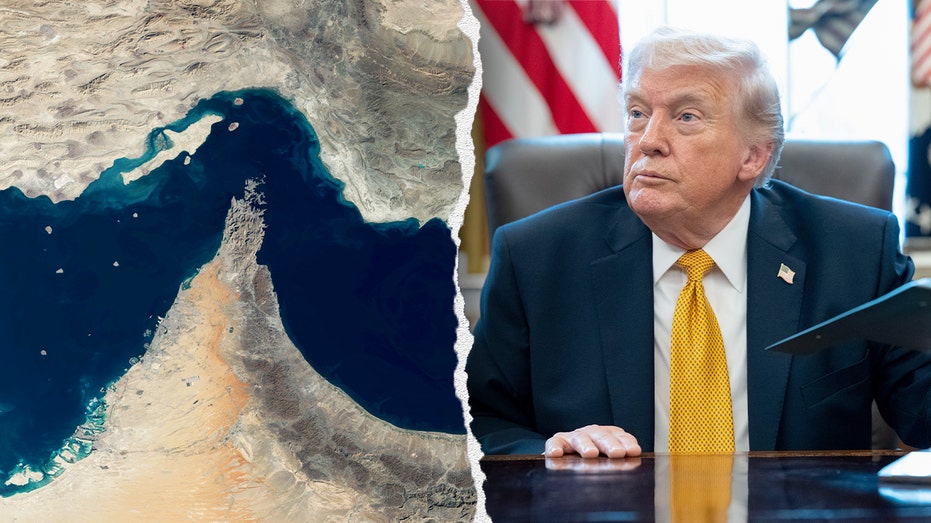
Amid President Donald Trump’s Monday announcement that a deal with Iran’s clerical regime is imminent to re-open the Strait of Hormuz and negotiate an end to Tehran’s illicit nuclear weapons program, Iranians who hoped U.S. pressure would force a decisive outcome now fear it may survive while ordinary people absorb the costs.

"Inside Iran, the mood has shifted from early-war optimism to a kind of exhausted resignation, but there is still some hope that this is the moment President Trump will use his leverage to do the right thing. The Iranian people understand this unusually narrow but strategic window," Lisa Daftari, editor-in-chief of The Foreign Desk who keeps in contact with Iranians on the ground, told Fox News Digital.

She continued that ,"The regime is fiscally strained and politically brittle, while the broader population has been disillusioned by years of repression and economic collapse. Iranians do see this as a one‑time opportunity for Washington — and President Trump in particular — to translate military and economic leverage into the potential collapse of an irrefromable regime. If the outcome is a shallow agreement that props up the system without changing its trajectory, that window will likely close for years."

TRUMP’S LEADERSHIP CREATES 'RARE OPPORTUNITY' FOR CHANGE IN IRAN, FORMER IRANIAN POLITICAL PRISONER SAYS

She continued, "If instead, the U.S. holds firm on sanctions and nuclear red lines, it can weaken the regime’s hand without punishing the Iranian people, who have already paid the highest price."

Daftari, the Iran expert, shared recent correspondence from two Iranians from Tabriz and Tehran.

The resident from Tabriz said, "From my perspective, decades of political tension between Iran and the United States have had their greatest impact on ordinary people rather than those in power. Many families feel their voices are not being heard in international discussions about Iran." Adding, "I respectfully ask whether you might consider sharing or highlighting the human side of this situation, so that the experiences of ordinary Iranian families are not overlooked in political discussions and media coverage."

The Tehran resident said, "Today, the people of Iran believe in the future. On days when economic pressure makes the faces of the Iranian people sad, the word ‘unity’ brings a smile to their lips. Our situation is not good, but we are motivated."

Fox News Digital surveyed a few Iranians and agreed to use only their first names because the clerical regime has declared the use of Starlink to bypass the censor a criminal act. A sophisticated clandestine network has managed to smuggle some satellite internet technology into Iran to allow people to communicate with the world outside the Islamist state.

Hassan, who lives in Tehran, pleaded with President Trump to keep strong in his dealings with the regime, saying that "Things have gotten so bad that even if you wanted to give up and leave Iran and just focus on your own life and work, it feels like there’s nowhere left to turn. Mr. Trump, through these deals and arrangements, has left people feeling trapped, with no road left open."

Mehdi, who resides in Tehran, expressed confusion about the existence of an agreement. He said, "So what exactly are they agreeing on? Are they saying they’re close to a deal or are there other discussions too? Every minute there is a new piece of news, everyone has a new analysis, everything changes every minute. It’s strange. This war achieved nothing. We’re the only ones left paying the price," he complained.

THE WAR HITS HOME: WHY FINANCIAL PAIN AND ECONOMIC UNCERTAINTY THREATEN TRUMP’S DRIVE TO TOPPLE IRAN’S REGIME

Hassan from Tehran said that "Mr. Trump, if until yesterday most Iranians thought they were on the same path as America, you caused them all to become disappointed. "Mr. Trump, if you wanted this government to remain in power, why did you blow up factories? Now workers are being laid off, and inflation is out of control. Even with a salary of 18 million tomans, you cannot feed yourself."

Mahsa, from the Caspian Sea city of Rasht, told Fox News Digital that the system [Islamic Republic of Iran] is still fully intact. They don’t care how many people died. If anything, they seem more emboldened now and even take pride in martyrdom. Yesterday I argued with a regime supporter [who] said: "Our leader didn’t give away a single meter of land, didn’t take a step backward, unlike previous kings who gave away Bahrain, Baku, Nakhchivan, and others."

The concerns among many Iranians revolve around the proposed memorandum of understanding between the U.S. and Iran’s regime. The MOU does not address the overthrow of the clerical regime or human rights violations, according to media reports.  Large numbers of Iranians within Iran and among the Iranian diaspora want the Trump administration to topple the Islamist dictatorship in Tehran.

The MOU reportedly involves a 60-day ceasefire extension. Israel and the U.S. launched a joint attack on Iran on February 28. The MOU would also see the reopening the Strait of Hormuz and new talks over Iran's illicit nuclear weapons program.

The leaked elements of the MOU have not been confirmed by the Trump administration.

When asked about the concern among Iranians about a deal with the Islamic Republic, Anna Kelly, a spokeswoman for the White House, told Fox News Digital that "For 47 years, American Presidents and countless other world leaders talked about the threat posed by Iran, but no one had the courage to address it. President Trump took decisive action to ensure that Iran could never harm our homeland, our troops, or our allies again. Once Iran’s nuclear threat is removed for good, the entire region and its people will be safer and more stable."

IRAN REGIME ESCALATES REPRESSION TOWARD 'NORTH KOREA-STYLE MODEL OF ISOLATION AND CONTROL'

However, Trump said last week during his cabinet meeting, "We didn’t set out for regime change," adding, "But by the fact that we’re dealing with a totally different group of people than we were at the beginning … This is regime change."

Reza Farnood, an Iranian American who supports the Trump administration and is a researcher, writer and activist, urged that President Trump continue with his maximum pressure campaign against Tehran.

Farnood told Fox News Digital, "We welcome the bombing and attacking the regime because we are aiming to overthrow the regime." He urged that Trump continue the blockade of Iran’s vessels and deny money to the regime. He said sanctions relief will be used by Iran "against the U.S. and Israel and their allies and innocent Iranians."

Farnood stressed that the clerical regime is holding the Iranian people "hostage."

Kianoosh, who lives in the northern city of Karaj, the capital of  Alborz province, said about Trump’s proposed deal: "You threw six months of our lives into hell. What answer are "you going to give to the mothers of all those children who were killed? Why did you give people false hope? Why did you hand down a death sentence to everything so many people believed in?"

Leading U.S. Senators well-versed in foreign policy have praised Trump’s approach to the Islamic Republic. Sen. Lindsey Graham, R-SC., recently told Fox News’ Sean Hannity "On Trump’s watch, they’re [Iran’s regime] becoming poorer and weaker. That’s the difference."

TRUMP’S 'ECONOMIC FURY' SQUEEZES IRAN — BUT CAN TEHRAN OUTLAST THE PRESSURE?

Graham juxtaposed Trump’s Iran policy with his predecessors. "Obama and Biden screwed Iran up, and Donald Trump is fixing it. On Obama and Biden’s watch, Iran became rich and lethal," he said. "On Trump’s watch, they’re becoming poorer and weaker. That’s the difference."

Iran is running dangerously low on oil storage capacity and could face a severe economic breaking point if forced to halt production, former U.S. Energy Secretary Dan Brouillette recently told Fox News.

Trump has said that Iran’s regime murdered as many as 45,000 Iranian demonstrators in January 2026. He urged just days after the mass murder that protesters keep going and promised them that "help is on its way."

Lawdan Bazargan, a prominent Iranian-American activist who the regime imprisoned in its infamous Evin Prison in Tehran in the 1980s for political dissent, told Fox News Digital that the Iranians she’s spoken with are discouraged by Trump’s dealings. "He was one of the few world leaders who repeatedly spoke about the thousands of Iranians killed in January 2026 and expressed disgust at the sheer brutality of the Islamic Republic. He had promised support for the Iranian people and raised expectations that meaningful change might finally come."

She continued: "Now, 88 days later, many people feel they are left facing the same regime, one that appears more emboldened, more ideological, and still willing to repress, execute, and arrest people. The economy has been devastated, and many feel trapped between a government with no mercy and a future with no clear path forward.

For years, 90 million Iranians have lived as hostages of the Islamic Republic. Now, many fear that the consequences no longer stop at Iran’s borders, through threats to global energy routes, regional stability, and even digital infrastructure."

According to Bazargan, "The question many ordinary Iranians are asking is simple: How are people expected to fight a system that feels victorious, controls the weapons, controls the narrative through a massive propaganda machine, and possesses countless tools of repression?"

Ali, who is also from the sprawling capital city of Tehran, complained about the spiraling prices and inflation and disappointment that the regime is still in place.

"For a government with state-provided housing and billions in patronage and privileges, what difference did any of this make for its supporters?"

Ali added: "We’re the ones who are paying the price and getting crushed. How are our children ever supposed to afford these housing and car prices, and how are they supposed to get married?"

The U.S. State Department referred Fox News Digital to the White House for a comment.

(Auszug von RSS-Feed)

☐ ☆ ✇ Times of Israel

EU sanctions Hamas politburo members along with four settler groups

veröffentlicht.
Vorschau ansehen

Bloc names Khaled Mashaal, nine other officials in terror group for 'promoting, defending' 'violence'; move comes day after confirmed sanctions on settler groups

The post EU sanctions Hamas politburo members along with four settler groups appeared first on The Times of Israel.

(Auszug von RSS-Feed)

☐ ☆ ✇ Fox News

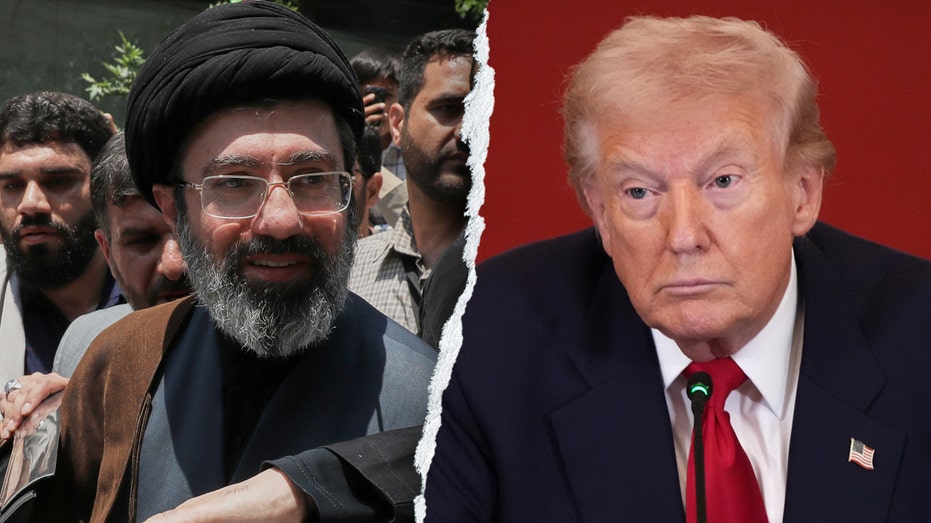
‘Designated target’ Mojtaba Khamenei to sign Trump deal in ‘unprecedented’ courier setup

veröffentlicht.
Vorschau ansehen

Iran’s supreme leader, Mojtaba Khamenei, would have to approve any final deal with the U.S. through secret courier networks while remaining in hiding as a "designated target," counterterrorism experts said Tuesday.

The unprecedented arrangement, they claimed, means Washington is negotiating a high-stakes accord with an entirely invisible counterparty, with a potential memorandum signed by a regime leader and a marked target who can never publicly show his face.

"Khamenei is a designated target, and every confirmed sighting is a coordinate," Dr. Omar Mohammed told Fox News Digital.

"The courier system used for messaging is not transitional. It is the operating system of his rule.

IRAN'S SUPREME LEADER RUNS 'STATE WITHIN A STATE' THROUGH SECRET 4,000-PERSON NETWORK, REPORT SAYS

"Any deal the United States signs will have to be designed for a permanently invisible counterparty whose enforcement depends on his continued survival. That is not arms control as it has been conventionally understood. It is a memorandum signed under American military pressure, with a regime whose leader cannot show his face."

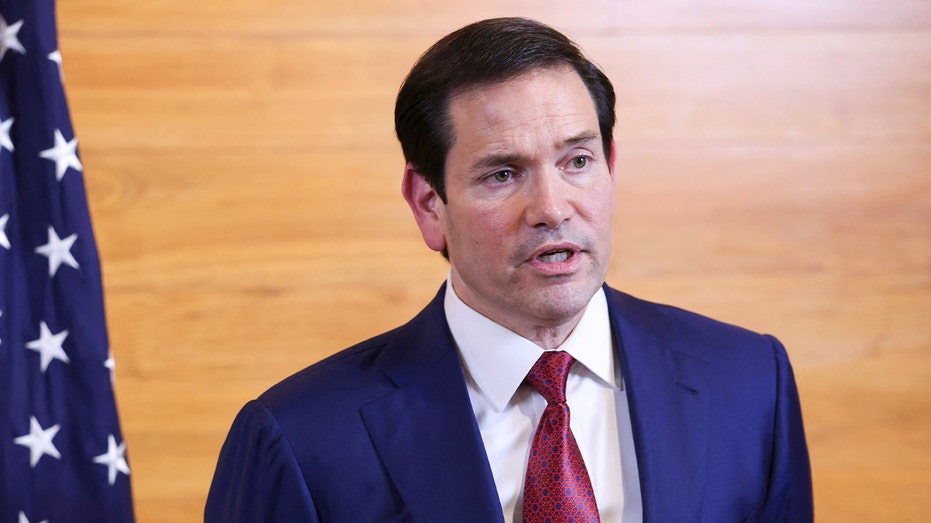
Mohammed’s remarks came after Secretary of State Marco Rubio explained to reporters in India why the deal was suffering delays.

"It’s just the response," Rubio said. "I mean, when you get down on some of these things, you’ve got to hear back, and it takes the Iranians — takes them a little while longer to get back," he explained.

"That is Secretary Rubio confirming the courier latency on the record," said Dr. Omar Mohammed, director of the Antisemitism Research Initiative Program on Extremism at George Washington University. "Rubio is describing a structural feature of negotiating with a supreme leader no one can locate.

IRAN'S KHAMENEI STAYS AWAY FROM TALKS AS JD VANCE SAYS DYNAMIC MAKES DIPLOMACY 'MUCH MORE COMPLICATED'

"Mojtaba is in hiding, messages are moving by courier, and responses are arriving days late.

"Rubio just confirmed the symptom, and the administration is being honest about the problem. The question is whether the framework can be designed to survive it," Mohammed claimed.

Khamenei has spent nearly three months in hiding as tensions with the U.S. escalate.

He went underground as soon as a strike on Feb. 28 killed his father, amid reports that he was gravely injured.

He was struck in Operation Epic Fury — "wounded and likely disfigured," according to Defense Secretary Pete Hegseth. His wife and son were killed in the same strike.

"Officials at the highest levels of the Iranian government do not know where he is," Mohammed said, meaning every piece of information he receives is "dated, and his responses come with significant latency."

The remarks come as Iran and the United States continue talks aimed at reaching a deal to end the war that began Feb. 28.

IRAN'S SUPREME LEADER MOJTABA KHAMENEI 'MISFUNCTIONING,' NOT CONTROLLING REGIME: SOURCES

"If there’s going to be a deal, we’re going to have to work through that. But this is, you know, it’s either going to be a good deal or there isn’t going to be one," Rubio said Tuesday.

A senior administration official said the U.S. is prepared to ease sanctions if Iran makes major concessions on uranium enrichment. Frozen Iranian assets have also emerged as a key hurdle.

Iran said Monday that no agreement with the United States was imminent, despite progress toward a framework in talks.

Iran’s Foreign Ministry spokesman Esmaeil Baghaei said the focus of talks remained ending the war on all fronts, including Lebanon, and that a possible memorandum of understanding did not include specific details on managing the Strait of Hormuz.

"The real question for Washington is not how fast the framework can be signed," Mohammed added.

"It is also what enforcement looks like when the counterparty’s signature comes through a courier."

(Auszug von RSS-Feed)

☐ ☆ ✇ Fox News

US arrests sister of powerful Cuban official over alleged ties to communist regime

veröffentlicht.
Vorschau ansehen

The United States has arrested the sister of the executive president of GAESA, a sprawling conglomerate of military-run businesses in Cuba, due to her alleged ties to the communist regime.

GAESA has been cited for reportedly diverting millions in aid meant for the Cuban people "at the behest of the regime," Secretary of State Marco Rubio said in a post on X Thursday.

Adys Lastres Morera was taken into ICE custody after the State Department revoked her lawful permanent resident (LPR) status, according to Rubio.

Morera, who was managing real estate assets while living in Florida, reportedly aided Havana’s communist government, officials said.

ALLEGED MEMBER OF CUBA'S MINISTRY OF THE INTERIOR ARRESTED BY ICE AGENTS IN MIAMI

Her status termination was carried out at Rubio’s discretion. Morera entered the United States as a lawful permanent resident in 2023, Reuters reported. 

"Today, Adys Lastres Morera, a Cuban national with ties to the communist regime in Havana, was arrested following the Department of State’s termination of her lawful permanent resident (LPR) status, at my direction," Rubio said.

RUBIO SAYS CUBA NEEDS ‘NEW PEOPLE IN CHARGE’ AS BLACKOUTS, UNREST GRIP ISLAND

Morera is the older sister of Ania Guillermina Lastres Morera, who was sanctioned earlier this month for her role as executive president of GAESA.  

GAESA has been described by officials as an exploitative communist entity that siphons resources from the Cuban population.

"While the Cuban people suffer from the collapse of Cuba’s non-functioning communist economy, GAESA functions to allow a small circle of regime elites to plunder all the remaining resources of the island, squirreling away as much as $20 billion in illicit funds away in hidden overseas bank accounts," Rubio said. 

He added that Ania Guillermina Lastres Morera, as a senior executive, is responsible for managing international assets allegedly used to fund the "lavish lifestyles" of the Castro-era elite, as well as supporting efforts tied to broader ideological influence abroad.

Rubio also pointed to worsening conditions inside Cuba, including widespread blackouts and severe shortages of food, fuel, and medicine, arguing that GAESA is diverting resources away from basic needs under the communist system.

"GAESA’s ill-gotten riches are not spent on repairing the collapsing power grid, stocking empty pharmacies, feeding hungry families, or providing for the most basic and essential needs of the Cuban people. Instead, they are used to enrich Havana’s elites and underwrite their ongoing campaign of espionage, subversion, and revolutionary militancy against the free peoples of this hemisphere," he said. 

(Auszug von RSS-Feed)

☐ ☆ ✇ Fox News

Maduro ally deported to US over alleged billion-dollar corruption scheme tied to oil, food program

veröffentlicht.
Vorschau ansehen

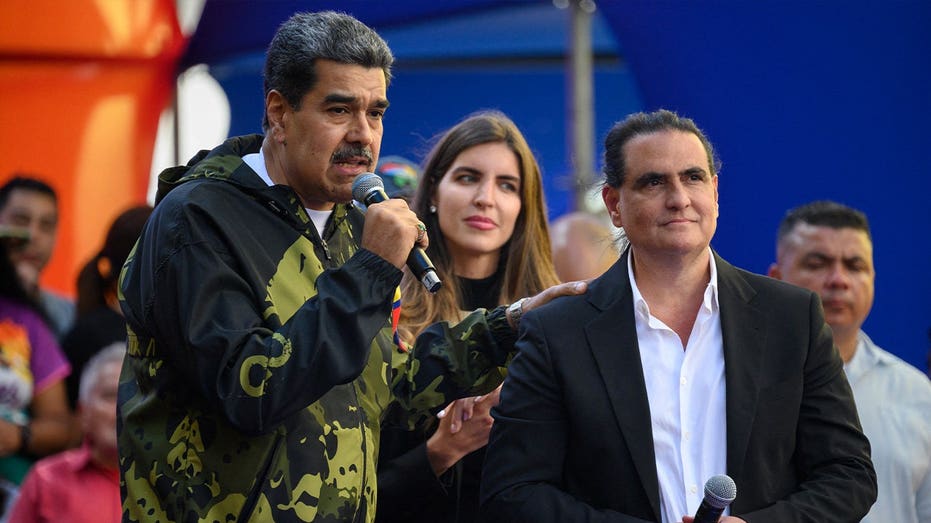
A close ally of ousted Venezuelan President Nicolás Maduro has been deported by Venezuela to the United States, according to Venezuelan officials, to face federal charges accusing him of orchestrating a sweeping money laundering and bribery scheme tied to Venezuela’s state-run food program and oil industry.

Alex Nain Saab Moran, 55, of Colombia, a former minister of industry and national production under the Maduro regime, appeared in federal court in Miami Monday, according to the U.S. Attorney’s Office for the Southern District of Florida. The Justice Department said Saab is presumed innocent unless proven guilty beyond a reasonable doubt.

Prosecutors allege Saab led a yearslong scheme beginning around 2015 to defraud a humanitarian program intended to provide food to impoverished Venezuelans.

He and his co-conspirators later allegedly sold billions of dollars’ worth of Venezuelan state-owned oil while circumventing U.S. sanctions, according to the Justice Department. Authorities say the proceeds were routed through U.S. bank accounts in an effort to conceal the transactions and further advance the scheme.

MADURO ALLY ALEX SAAB ARRESTED IN JOINT US-VENEZUELAN OPERATION, OFFICIAL SAYS

"Alex Saab allegedly used American banks to launder hundreds of millions of dollars stolen from a Venezuelan food program meant for the poor and proceeds from the illegal sale of Venezuelan oil," Assistant Attorney General A. Tysen Duva said in a statement. "This is unacceptable. The Criminal Division will not allow foreign actors to exploit the American financial system and use it as a safe haven for the proceeds of their corruption." 

Beginning around 2015, Saab and his associates allegedly paid bribes to Venezuelan government officials to secure contracts tied to the country’s CLAP welfare program, which was intended to purchase and distribute food to vulnerable and impoverished Venezuelans. 

Instead of delivering the promised food supplies, prosecutors allege the group used shell companies, fraudulent invoices and falsified shipping records to embezzle hundreds of millions of dollars from the program for their own personal gain.

TREASURY TARGETS OIL TRADERS, TANKERS ACCUSED OF HELPING MADURO EVADE U.S. SANCTIONS

Around 2019, as sweeping U.S. sanctions crippled Venezuela’s oil exports and placed severe strain on the country’s finances, including its ability to pay Saab and his associates under the CLAP program, Saab and his partners allegedly exploited their corrupt ties to government officials to gain access to billions of dollars’ worth of oil owned by Venezuela’s state-run oil company. 

Officials allege the group sold the oil under false pretenses and used the profits to sustain and expand the original food fraud scheme.

Saab and his associates reportedly laundered the allegedly stolen funds through U.S. bank accounts in an effort to conceal the money trail, giving American authorities jurisdiction to prosecute the case.

"When illicit proceeds are moved through the United States financial system, our courts have jurisdiction and our prosecutors will act," U.S. Attorney Jason A. Reding Quiñones said in a statement.

Saab was previously indicted in the U.S. in 2019 and extradited from Cabo Verde in 2021. He was pardoned by President Biden in 2023 as part of a prisoner swap, though prosecutors say the new case involves alleged conduct not covered by that pardon.

A Miami-based attorney for Saab declined to comment to The Associated Press.

If convicted, Saab faces up to 20 years in federal prison. The government is also seeking forfeiture of any property or proceeds allegedly obtained through the alleged criminal activity.

The case was investigated by a U.S. Homeland Security Task Force (HSTF), which includes the Drug Enforcement Administration (DEA), the Federal Bureau of Investigation (FBI) and Homeland Security Investigations (HSI).

(Auszug von RSS-Feed)

☐ ☆ ✇ Fox News

Trump blockade squeezing Iran so hard regime may be dumping oil into Gulf, experts say

veröffentlicht.
Vorschau ansehen

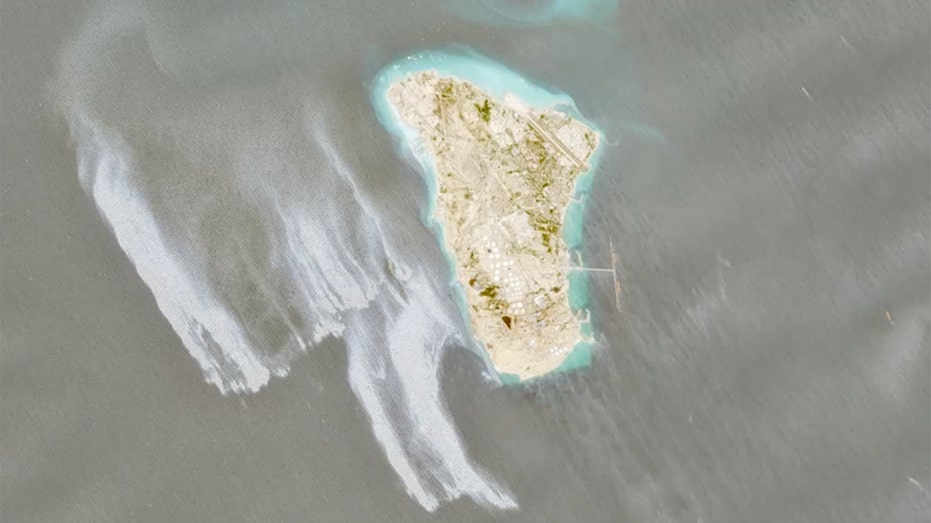
Satellite imagery revealed a massive suspected oil slick spreading near Kharg Island, Iran’s main oil export terminal, in what experts say could be evidence that Tehran’s oil infrastructure is buckling under mounting U.S. pressure.

The slick, seen in Copernicus Sentinel satellite images between Wednesday and Friday, covered roughly 45 square kilometers west of the island, according to analysts cited by Reuters.

The incident is emerging as a potential sign that Trump’s maritime pressure campaign is achieving one of its central objectives of overwhelming Iran’s export system to the point Tehran can no longer move or store crude fast enough to sustain normal production.

US ECONOMIC CHOKEHOLD ON IRAN REACHES PEAK LEVERAGE AS COLLAPSE RISKS EMERGE

The suspected spill near Iran’s main oil hub is raising concerns that mounting U.S. pressure is overwhelming Tehran’s ability to store or export crude, potentially forcing risky workarounds with environmental consequences in the Gulf.

"At this stage, I see two plausible explanations, and they’re not mutually exclusive," Miad Maleki, an Iran sanctions and energy expert at the Foundation for Defense of Democracies, told Fox News Digital.

"One is operational: They simply didn’t ramp down extraction fast enough relative to their true onshore capacity and over counted on empty tankers slipping through the blockade," he said.

"Now they’ve effectively over-delivered crude into the export system, with more oil at or near the terminals than they can actually load, and the ‘solution’ is to push some of that excess into the water."

Maleki said another possible explanation is mechanical failure tied to Iran’s use of aging tankers as floating storage or sanctions-busting carriers.

TRUMP CLAIMS IRAN 'STARVING FOR CASH,' 'COLLAPSING FINANCIALLY' AFTER EXTENDING CEASEFIRE

"They’ve dragged older, marginal tonnage into service as floating storage or sanctions-busting carriers, and some of those retired or poorly maintained hulls are now leaking," he said.

"Either way, the common denominator is the same — storage and evacuation capacity are out of sync with upstream output, and the Gulf is paying the price for that mismatch."

The incident comes as the Trump administration continues pressing its Economic Fury campaign against Iran, combining sanctions enforcement with a growing U.S. naval presence around the Strait of Hormuz aimed at restricting Iran’s oil exports.

Before the conflict, Iran exported roughly 1.5 million barrels of oil per day, much of it to China. Analysts say the blockade and the threat of sanctions on shipping companies and financial institutions have made it increasingly difficult for Tehran to move crude out of Kharg Island.

Reuters reported the slick appeared as a "grey and white" plume west of the 8-kilometer-long island. 

Leon Moreland, a researcher at the Conflict and Environment Observatory, told Reuters the slick was "visually consistent with oil," while Louis Goddard, co-founder of Data Desk, said it could be the largest spill since the start of the U.S.-Israel war against Iran roughly 70 days ago.

Kharg Island handles roughly 90% of Iran’s oil exports and has become a critical choke point in the Trump administration’s effort to cut off the regime’s main source of revenue during the ongoing war.

Energy analysts say Iran is now facing a dangerous dilemma. If Iran cannot export oil or find additional storage capacity, it may be forced either to shut down wells, risking long-term damage to oil fields, or dispose of excess crude in ways that could trigger environmental fallout across the Gulf.

US STRIKE ON KEY IRAN OIL HUB WOULD FIT TRUMP'S 'ENERGY DOMINANCE DOCTRINE,' SAYS EXPERT

"They’ve already reduced extraction. In a true blockade scenario, the constraint isn’t production at the wellhead, it’s the inability to load tankers at export terminals," Maleki said.

"Once onshore storage nears capacity, output has to be cut to match remaining headroom or wells get shut in," he added. "In Iran’s case, that’s roughly 13 days."

The environmental implications are also raising alarm across the Gulf.

Windward, a maritime risk intelligence firm, estimated the slick was moving southeast at roughly 2 kilometers per hour and warned it could reach Qatar’s exclusive economic zone within days and potentially drift toward the United Arab Emirates within two weeks.

The Gulf’s desalination infrastructure, relied upon by millions across the region, remains especially vulnerable to major oil contamination events.

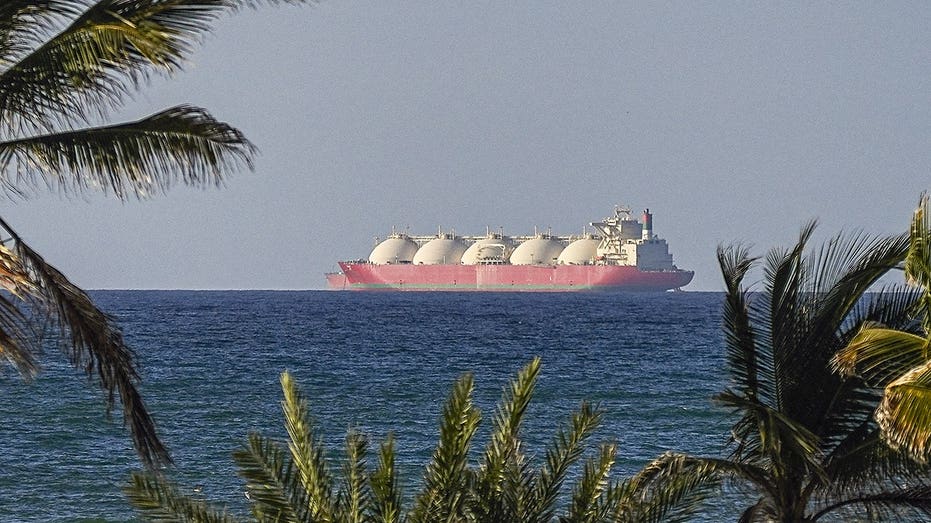
The spill also is unfolding amid heightened military tensions in the Gulf. The war has trapped hundreds of vessels in the region and caused one of the largest disruptions to global crude and liquefied natural gas supplies in recent years.

Iranian authorities have not publicly commented on the suspected spill or its possible causes.

Fox News Digital reached out to the Iran mission to the U.N. for comment. 
Reuters contributed to this report.

(Auszug von RSS-Feed)

☐ ☆ ✇ Fox News

Iranian dissidents seize on Trump remarks about armed resistance, fueling revival of Reagan doctrine

veröffentlicht.
Vorschau ansehen

After President Donald Trump suggested this week that Iranians "would fight back" if they had weapons, Iranian dissidents, military analysts and some Republican lawmakers are openly reviving a once-taboo question: should the West move beyond "maximum pressure" on Tehran and actively support armed resistance inside Iran?

"They have to have guns. And I think they’re getting some guns. As soon as they have guns, they’ll fight like, as good as anybody there is," Trump said in an interview with "The Hugh Hewitt Show," while discussing anti-regime unrest and the Iranian government’s crackdown on protesters.

The comments come as the Iranian regime emerges weakened from weeks of war, while frustration continues to simmer among many Iranians after years of failed protests and violent crackdowns by the Islamic Revolutionary Guard Corps.

LINDSEY GRAHAM URGES US, ISRAEL TO ARM IRANIAN CIVILIANS IN 'SECOND AMENDMENT SOLUTION' TO TOPPLE REGIME

Supporters of a more aggressive approach argue sanctions, diplomacy and unarmed demonstrations have failed to produce meaningful change inside Iran and say the current moment may represent the best opportunity in decades to challenge the regime from within. Critics warn that openly discussing armed resistance could endanger protesters, deepen divisions inside the opposition and risk pushing Iran toward civil war.

The idea of armed resistance echoes aspects of the Reagan Doctrine, the Cold War-era strategy in which the U.S. backed anti-Soviet resistance movements around the world, from Afghanistan to Nicaragua.

"We need to give Iranians the tools now, and they’ll finish the job themselves," Brett Velicovich, founder of Powerus and a former U.S. military and intelligence specialist focused on drone warfare, told Fox News Digital.

"It’s their time to do something. There has never been a better chance."

AS AIRSTRIKES RAIN DOWN ON THE IRANIAN REGIME, CAN A FRACTURED OPPOSITION UNITE TO LEAD IF IT FALLS?

Velicovich described the strategy as "Reagan Doctrine 2.0," updated for the age of drones and decentralized warfare.

"Cheap FPV drones, loitering munitions, and small arms let motivated fighters turn Iran’s streets and mountains into a nightmare for the IRGC," he said. "This isn’t fantasy; it’s asymmetric warfare that works."

He argued that modern drone technology has fundamentally changed the balance between governments and insurgent or resistance movements.

"Drones democratize power," Velicovich said. "The regime’s monopoly on violence ends the day the people get eyes in the sky and precision strike capability."

IRANIAN KURDISH FIGHTERS SAY THEY’RE READY TO STRIKE TEHRAN, WAITING FOR OPENING

Still, even some critics of the Iranian regime caution that the comparison to Cold War proxy movements has limits.

Unlike Soviet-controlled Eastern Europe or Afghanistan in the 1980s, Iran is a highly nationalistic country with a fragmented opposition and deep fears of foreign intervention following decades of conflict across the Middle East.

Still, calls for more direct support for anti-regime forces are increasingly moving into mainstream Republican foreign policy discussions.

Sen. Lindsey Graham, R-S.C., recently called for what he described as a "Second Amendment solution" inside Iran.

"If I were President Trump and I were Israel, I would load the Iranian people up with weapons so they could go to the streets armed and turn the tide of battle inside Iran," Graham said on "Hannity."

The question of who would actually receive support, however, remains deeply controversial.

Some opposition supporters continue to rally around exiled Crown Prince Reza Pahlavi, whose name has surfaced during anti-regime protests inside Iran and who has urged the international community not to give Tehran "another lifeline."

Another group that has acted in various operations against the regime is the controversial People’s Mujahedin Organization of Iran, or MEK, which has long positioned itself as an organized opposition force against the Islamic Republic. The MEK recently posted videos showing its members targeting "regime centers and symbols of crime and repression," in response to the execution of two of its members last month — Hamed Validi and Mohammad (Nima) Massoum-Shahi.

Others point to existing armed or semi-organized anti-regime groups, including Kurdish organizations, Baloch insurgent networks and underground resistance cells operating inside Iran.

Sardar Pashaei, director of the Hiwa Foundation and a former Iranian wrestling champion now living in the United States, warned that publicly discussing arming protesters could itself put lives at risk.

"I think we must be extremely cautious on this issue, especially publicly, because the regime can use it as a pretext to arrest protesters, fabricate cases and even justify executions," Pashaei told Fox News Digital.

IRAN'S INTERNET BLACKOUT HIDING STRIKE DAMAGE AND SUPPRESSING DISSENT, ISRAELI OFFICIALS SAY

"For decades, the Islamic Republic has used accusations of ties to the United States, Israel, or espionage to target dissidents and political prisoners."

Pashaei argued the better approach is supporting Iranian civil society, restoring internet access and backing democratic opposition groups that reflect Iran’s ethnic and political diversity.

The issue became even more sensitive after Trump said during a phone interview with "Fox News Sunday" in early April that his administration had previously attempted to send firearms to Iranian protesters through Kurdish channels, though the effort failed.

IRAN REGIME FACES 'BEGINNING OF THE END' AS EXILED CROWN PRINCE SEES 'GOLDEN OPPORTUNITY'

"We sent guns to the protesters, a lot of them. We sent them through the Kurds. And I think the Kurds took the guns," Trump said.

Several Kurdish groups have denied receiving such shipments.

Pashaei warned that claims of foreign weapons support could deepen divisions inside the opposition while also exposing Kurdish groups to further retaliation from Tehran.

"During the so-called ceasefire period, Kurdish opposition groups were targeted more than 30 times with drone and missile attacks," he said, adding that four young Kurdish Peshmerga fighters were killed, including 19-year-old Ghazal Mowlan.

One source familiar with discussions surrounding Iranian opposition strategy said supporters of a more aggressive approach increasingly believe the current moment presents a rare opportunity to identify, train and support local resistance networks capable of protecting protesters and challenging the regime from within.

The source argued that while Iran spent decades building and cultivating proxy networks across the Middle East, Western governments largely avoided investing in organized anti-regime infrastructure inside Iran itself.

Others warn that empowering armed factions could trigger ethnic fragmentation, civil war or a Syria-style conflict inside Iran.

According to the source, supporters of a more aggressive approach increasingly believe the current moment presents a rare opportunity to identify, train and support local resistance networks capable of protecting protesters and challenging the regime from within.

Whether Washington is willing to move beyond pressure campaigns and sanctions toward something closer to a modernized Reagan Doctrine remains unclear.

For now, Trump’s comments have pushed a once-theoretical conversation into the open, while some argue the current moment may represent the best opportunity in decades to challenge the regime.

(Auszug von RSS-Feed)

☐ ☆ ✇ Fox News

What Israel wants from an Iran peace deal: No enrichment, missile limits and strict enforcement

veröffentlicht.
Vorschau ansehen

As President Donald Trump signals progress toward a possible agreement with Iran, Israeli officials and analysts increasingly are outlining what Jerusalem believes any deal must include to prevent Tehran from rebuilding its military and regional power.

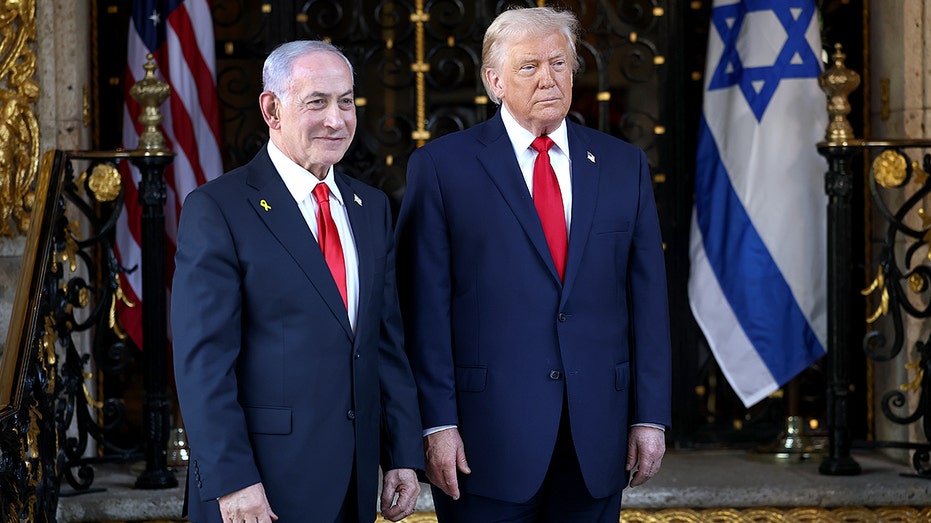
Israeli Prime Minister Benjamin Netanyahu said Wednesday that Israel and the United States remain in "full coordination" as negotiations continue.

"We share common objectives, and the most important objective is the removal of the enriched material from Iran, all the enriched material, and the dismantling of Iran’s enrichment capabilities," Netanyahu said at the opening of a security cabinet meeting.

US AND IRAN CLASH OVER URANIUM ENRICHMENT AS NUCLEAR TALKS RESUME IN ROME

"We’ve had very good talks over the last 24 hours, and it’s very possible that we’ll make a deal," Trump told reporters in the Oval Office Wednesday. 

At the same time, Trump warned that if negotiations fail, "we’ll have to go a big step further."

For Israel, the question is not simply whether the war ends, but whether Iran emerges from negotiations weakened or repositioned to rebuild. Israeli officials fear a weak agreement could allow Tehran to preserve strategic capabilities, regain economic breathing room and eventually restore the regional network of armed groups that threatened Israel before the war. Jerusalem is also seeking guarantees that any future deal preserves military leverage and freedom of action if Iran violates its commitments.

Against that backdrop, Israeli analysts say Jerusalem’s red lines focus on four core areas: dismantling Iran’s enrichment infrastructure, restricting its ballistic missile program, preventing Tehran from rebuilding Hezbollah and Hamas, and ensuring the regime does not gain political legitimacy or strategic relief from the negotiations.

On the nuclear issue, former Israeli National Security Advisor Yaakov Amidror said Israel’s position remains uncompromising.

"Weaponized uranium must leave Iran," Amidror said. "The Iranians must not be allowed to enrich uranium."

Israeli journalist and commentator Nadav Eyal agreed, adding that Israel is seeking a much stricter framework than previous agreements. 

"Israel wants Iran to stop enrichment for as long as possible and for the enriched material to leave Iran," Eyal said, adding that Jerusalem is looking for "an arms control agreement that would be extensive and robust."

Avner Golov, vice president of the Mind Israel think tank, told Fox News Digital that Israel also wants Iran’s underground nuclear infrastructure dismantled entirely. 

"In the nuclear arena, what matters is the removal of the enriched material, the destruction of the underground facilities, including those still being built, and a prohibition on new sites," Golov said.

Golov also warned against "sunset clauses" that would allow restrictions to expire after several years. 

"There must be an agreement without sunsets," he said, calling for "unprecedented monitoring and supervision, anywhere, under any conditions and not dependent on Iranian approval."

Jonathan Ruhe, Jewish Institute for National Security of America (JINSA) fellow for American strategy, told Fox News Digital, "Ultimately the United States and Israel should have strongly similar redlines for an acceptable deal," he said, including "shutting down Iran’s nuclear weapons program completely, permanently and verifiably."

Ruhe said that goes beyond Iran handing over highly enriched uranium and includes shutting down remaining enrichment-related facilities at Pickaxe and Isfahan.

UN'S ATOMIC AGENCY'S IRAN POLICY GETS MIXED REVIEWS FROM EXPERTS AFTER US-ISRAEL 'OBLITERATE' NUCLEAR SITES

Alongside the nuclear issue, Israeli analysts say Iran’s ballistic missile program has become equally central to Israel’s security concerns.

"One of the key questions is whether there will be any sort of limitation on the ballistic missile program of the Iranians," Eyal said. "Israel sees this as no less of an existential threat than the nuclear issue."

Amidror warned that without missile restrictions, the threat could eventually extend beyond Israel and Europe

"If there are no restrictions on the missile program, then missiles that today can reach half of Europe will, within five to 10 years, be able to reach the United States," he warned.

Golov argued that a nuclear-only agreement would leave Iran free to rebuild a missile shield protecting a future nuclear breakout. 

"A deal that focuses only on the nuclear program would allow the Iranians to produce thousands of missiles and create a protective shield around their nuclear program."

Ruhe similarly said limiting Iran’s missile arsenal must include preventing Iran from rebuilding production capabilities damaged during the war.

IRAN DRAWS MISSILE RED LINE AS ANALYSTS WARN TEHRAN IS STALLING US TALKS

Another major Israeli concern is that sanctions relief or renewed trade could funnel money back to Iran’s regional proxies.

"Israel is demanding that the Islamic Republic isolate itself from involvement with Lebanon and Gaza and stop supporting armed groups that operate against Israel," Eyal said.

"For Israel, it is a material issue that the money injected into Iran will not be used to rebuild the proxies in the region," he added.

Amidror said Iran’s ability to support Hezbollah and Hamas has already been weakened by the collapse of regional supply routes. 

"The Iranians cannot effectively support the proxies because there is no longer a land bridge from Iran to Syria," he said, but warned that if negotiations leave the impression that Washington backed down, Iran’s regional proxies could emerge stronger even after the war.

Ruhe similarly argued that Israel wants to avoid any agreement that restores legitimacy to the Iranian regime without fundamentally weakening it.

"Avoiding anything that legitimates Iran’s regime and abandons the Iranian people" is critical, Ruhe said, including "giving guarantees against future attacks or compensating Tehran for wartime damages."

Ruhe warned that for Israel, a "bad deal" is ultimately any agreement that restrains Israel’s future freedom of action against Iran and its proxies.

"This is one big reason Iran wants to ensnare the Trump administration in open-ended negotiations that sideline military options and create daylight between Washington and Jerusalem," Ruhe said.

(Auszug von RSS-Feed)

☐ ☆ ✇ Fox News

Trump’s 'Economic Fury' squeezes Iran — but can Tehran outlast the pressure?

veröffentlicht.
Vorschau ansehen

As the Trump administration escalates its campaign against Iran through sanctions, naval pressure and financial enforcement, a central question is emerging: Can unprecedented economic strain truly weaken the regime, or will Iran’s rulers once again absorb the pain, suppress unrest and survive?

Treasury Secretary Scott Bessent said in a Tuesday post on X that the "Economic Fury" campaign has already disrupted "tens of billions of dollars in revenue" that would otherwise support terrorism, while arguing Iran’s inflation has doubled and its currency has sharply depreciated under the current maximum pressure campaign.

Bessent also warned that Kharg Island, Iran’s primary oil export terminal, is nearing storage capacity and could soon force production cuts, which he said may cost the regime an additional roughly $170 million per day in lost revenue.

LIVE UPDATES: IRAN THREATENS 'LONG AND POWERFUL STRIKES' ON U.S. POSITIONS AS TRUMP FACES WAR POWERS DEADLINE

The escalating pressure campaign marks one of the most aggressive U.S. efforts in years to economically isolate Iran. But the central question is whether this strategy can force meaningful concessions from a regime that has historically absorbed economic pain, or whether it risks triggering broader instability — from energy market shocks to regional escalation — before Iran is pushed to a breaking point.

A senior administration official told Fox News Digital that Treasury is aggressively expanding "Economic Fury" beyond traditional sanctions by targeting Iran’s ability to generate, move and repatriate funds across oil, banking, cryptocurrency and covert trade networks.

The official said Treasury has disrupted billions in projected Iranian oil revenue in recent days alone, including freezing half a billion dollars in regime-linked cryptocurrency, while also escalating pressure on Chinese "teapot" refineries, foreign banks and sanctions-evasion networks facilitating Tehran’s trade.

The Treasury has also warned financial institutions in China, Hong Kong, the United Arab Emirates and Oman that continued facilitation of Iranian illicit commerce could trigger secondary sanctions, while signaling that foreign companies — including airlines — may also face penalties if they support prohibited Iranian activity.

IRAN IS 'TRYING TO GIVE THE GLOBAL ECONOMY A HEART ATTACK' BY CLOSING STRAIT OF HORMUZ, UAE MINISTER SAYS

But Alireza Nader, an Iranian independent analyst based in Washington, is skeptical that economic pressure alone will force a strategic breaking point. 

"It looks like a game of chicken and I think the regime thinks that it can win this game of chicken with President Trump," he told Fox News Digital.

"I don’t see this economic blockade … leading to some sort of breaking point for the regime," Nader added, arguing that Iran’s leadership has repeatedly shown it is willing to let ordinary citizens bear extraordinary suffering to preserve power.

"The regime cares about staying in power," he said, warning that public hardship does not necessarily translate into vulnerability.

"The economic clock is moving much faster on Iran than on its adversaries."

That skepticism stands in stark contrast to Miad Maleki, a former Treasury sanctions analyst, who argues Washington may now hold its greatest leverage over Iran since the 1979 revolution.

"We’ve never had the level of leverage that we have today with Iran in the history of our conflict … since 1979," Maleki said.

NEXT MOVE ON IRAN: SEIZE KHARG ISLAND, SECURE URANIUM OR RISK GROUND WAR ESCALATION

For Maleki, what makes this moment different is not sanctions alone, but the convergence of sanctions, naval blockade and aggressive secondary enforcement.

He said Iran’s already fragile economy — marked by 104% food inflation and a roughly 90% collapse in purchasing power — could face roughly $435 million in daily economic losses if maritime restrictions hold.

"Iran’s economy relies on the Strait of Hormuz more than any other economy," Maleki said, arguing that disruption around the strait may ultimately hurt Iran faster than its adversaries.

If restrictions are fully enforced, Maleki warned, "crude onshore storage shortages in about 7 to 14 days, then they can buy a few weeks with filling up a dozen tankers already in the Persian Gulf, but they have to start dropping oil extraction now in anticipation of running out of storage. They are also facing gasoline shortages in matters of days or a few weeks, forced oil-production cuts, and eventually banking or salary strain."

Independent shipping intelligence from shipping intelligence firm Kpler suggests Iran’s oil bottleneck may already be intensifying, though perhaps on a slightly longer timeline than some sanctions advocates predict.

Before the conflict, Iran exported roughly 2 million barrels of oil per day, Court Smith, Kpler’s head of engagements and partnerships, told Lauren Simonetti at FOX Business, but current exports appear closer to 1 million barrels daily, leaving an estimated 1 million barrels per day accumulating in storage.

Smith estimated Iran may have roughly 30 days before shoreside storage faces severe capacity constraints under current conditions, while warning that older fields or marginal wells could already be facing early shut-in pressures.

To buy time, Iran has reportedly begun pulling decades-old tankers out of storage for temporary floating capacity, a sign of mounting logistical strain. 

Former Israeli national security adviser Yaakov Amidror argues the blockade should not be judged by whether it forces immediate capitulation, but by whether Washington has the patience to let time erode Iran’s strength.

"Blockade is one of the oldest forms of warfare," Amidror said. "Blockade equals time."

In his view, the strategy’s advantage is precisely that it imposes relatively low costs on the United States while gradually exhausting Iran’s economy.

"The siege does its work. It weakens Iran," he said, describing it as one of the cheapest long-term methods of pressure available.

Amidror also pushed back forcefully against claims that modern enforcement is unrealistic.

"I don’t buy the idea that the U.S. Navy in the 21st century can’t monitor the 35 kilometers of blockade," he said, arguing that American surveillance, satellites and naval assets are more than capable of controlling the choke point over time.

Danny Citrinowicz, a nonresident fellow with the Atlantic Council’s Middle East Programs, offers a far more skeptical view.

"The blockade won’t force Iran to capitulate," Citrinowicz said.

BLOCKADE 101: AMERICAN SEA POWER ON DISPLAY AS TRUMP CORNERS IRAN AND WARNS OFF CHINA

"This country is under sanctions since 1979 … they know how to make adjustments," he added.

"The regime isn't just dependent on oil and energy exports to survive, it has other means of income," Nader argued, "Oil and natural gas are its biggest sources of income, but I think this regime has made a calculation that it can withstand even months of economic siege because it may think that the Trump administration is more vulnerable to political pressure."

"Look," he added, "American voters vote in the president and vote out the president. In Iran, nobody's voted in and out. The regime maintains power through brutal force. If there are public disturbances, if there are new uprisings, the regime will try to deal with them as it has in the past to mass violence, killing thousands of people. That's how this regime stays in power."

Citrinowicz warned that Iran may escalate regionally or exploit global energy vulnerabilities long before economic collapse forces surrender, potentially driving oil prices sharply upward and creating international political pressure before Tehran truly breaks.

"In the pain game … the world will feel that before," he said.

That leaves the administration facing a strategic endurance contest: Can economic warfare degrade Iran faster than the regime can adapt, repress and weaponize global pain?

Nader believes Iran’s rulers may still calculate that they can outlast U.S. patience through repression and resource management.

Maleki believes the economic "clock is moving much faster" on Iran than on its adversaries.

Amidror argues time itself may be Washington’s greatest weapon.

And Citrinowicz warns that if the United States expects quick capitulation, it may be underestimating both Iran’s resilience and its willingness to escalate.

Fox News Digital has reached out to the Iranian mission to the U.N., CENTCOM and the Pentagon for comment. 

(Auszug von RSS-Feed)

☐ ☆ ✇ Fox News

Iran’s $800M oil smuggling scheme uses tankers posing as Iraqi ships to dodge blockade

veröffentlicht.
Vorschau ansehen

Sanctioned tankers disguised as Iraqi vessels are moving hundreds of millions of dollars in Iranian crude as President Donald Trump doubled down on the port blockade to squeeze Tehran’s oil lifeline, according to maritime intelligence.

Windward AI claimed Wednesday that a group of U.S.-sanctioned tankers are falsifying their location data to come off as anchored off Iraq while secretly loading Iranian oil at Iranian ports.

"Among the tankers spoofing their location in the area identified by Windward are four VLCCs (very large crude carriers): Alicia (IMO 9281695), RHN (IMO 9208215), Star Forest (9237632) and Aqua (IMO 9248473), using various flags, including fraudulent registries from Curacao and Malawi," the firm told Fox News Digital.

"For the four VLCCs, each VLCC can hold about 2 million barrels, so four of them would hold 8 million barrels worth about $800 million at $100 per barrel," Windward said.

LIVE UPDATES: HEGSETH, CAINE FACE SENATE GRILLING ON IRAN WAR AS HORMUZ BLOCKADE RATTLES OIL MARKETS

This came as Trump said Wednesday he will keep Iran under a naval blockade until it agrees to a deal addressing U.S. concerns about its nuclear program.

The U.S. administration has demanded that Iran dismantle its uranium enrichment program, while Tehran maintains that enrichment is a sovereign right and nonnegotiable, leaving little room for compromise.

Windward AI noted a "cluster" of sanctioned tankers spoofing locations and seen to the West of the Strait of Hormuz.

"A cluster of 10 Iran-trading, U.S.-sanctioned tankers is now spoofing its AIS location to falsely appear at anchorages off Basrah, Iraq, as the blockade continues to constrict Iranian ports," Windward explained.

TRUMP CASTS MADURO’S OUSTER AS ‘SMART’ MOVE AS RUSSIA, CHINA ENTER THE FRAY

"The vessels identified by Windward Multi-Source Intelligence are manipulating their signals to create a digital alibi," the intelligence firm claimed.

"By broadcasting fake destination messages to Iraqi ports, the tankers appear to be in Iraqi waters while covertly sailing to Iran to load sanctioned oil.

US AND UKRAINE TARGET 1,000-VESSEL 'DARK FLEET' SMUGGLING SANCTIONED OIL WORLDWIDE

"Once loaded, the vessels re-emerge on AIS to suggest a legitimate Iraqi origin for the cargo."

The U.S. blockade on Iranian ports began April 13 as part of a broader effort to pressure Iran into renegotiating limits on its nuclear program.

The blockade has unfolded in stages, starting with naval deployments and restricted maritime enforcement to limit Iran’s oil exports and economic activity.

Windward said more than two dozen tankers are confined west of Hormuz as of Wednesday, with the blockade cutting Iranian oil loadings and exports by more than half.

"This deceptive practice is under intensified scrutiny as the vessels are part of a larger group of more than two dozen tankers currently confined west of Hormuz," the firm said.

"The handysize tanker Paola and Long Range One tanker Adena, both signaling ‘Iraqi owner’ but linked to a sanctioned network."

TRUMP DECLARES 'VENEZUELAN REGIME' A FOREIGN TERRORIST ORGANIZATION, ORDERS OIL TANKER BLOCKADE

The firm claimed three medium-range tankers, including Aqualis, Kush and Charminar, and the LPG carrier Royal H (IMO 9155341), which was newly sanctioned in February, are displaying "erratic voyage trails to suggest a loading at the Iraqi port of Khor Al Zubair."

"The tell-tale spoofing signs, including erratic patterns and fake port signals, highlight the shifting tactics used by the dark fleet as the blockade more than halves Iranian oil loadings and exports," the firm said.

Meanwhile. Iran’s Mohammad Ghalibaf slammed U.S. policymakers Wednesday, including Treasury Secretary Scott Bessent, over the impact of the U.S. blockade of Iranian ports.

The parliamentary speaker cited "junk advice" and blamed the Treasury for pushing up oil prices.

"Three days in, no well exploded," Ghalibaf said in a post shared on X.

(Auszug von RSS-Feed)

☐ ☆ ✇ Fox News

Trump admin warns Iraq over Iran terror proxies as US reportedly blocks cash payments

veröffentlicht.
Vorschau ansehen

The Trump administration has reportedly ramped up its punitive measures to compel Iraq to disband Iranian regime-backed militias known as the Popular Mobilization Force (PMF) that form part of its government after sustained attacks on U.S. personnel and facilities.

Amid a tenuous ceasefire between the U.S. and the Islamic Republic of Iran, the administration tightened the screws on Iraq by stopping U.S. dollar shipments to Baghdad. The growing disagreements over policy between the U.S. and Iraq could lead to weakening Iran’s presence in the region and advance U.S. war aims against Tehran.

In a statement against Iraq’s government, a State Department spokesperson told Fox News Digital, "The United States has consistently been clear we will take all measures to counter Iran’s destabilizing activities in Iraq, protect U.S. interests against Iran-aligned terrorist militias in Iraq, and make clear our concerns about the Iraqi government’s failure to prevent this terrorism."

US WARNS IRAQ MUST ACT AGAINST IRAN-BACKED MILITIA ATTACKS ON AMERICAN ASSETS

The spokesperson added, "While we acknowledge the efforts of Iraqi Security Forces to respond to terrorist attacks by Iran-aligned militia groups, we continue to emphasize the Iraqi government’s failure to prevent these attacks while some elements associated with the Iraqi government continue to actively provide political, financial, and operational cover for the militias adversely impacts the U.S.-Iraq relationship. The United States will not tolerate attacks on U.S. interests and expects the Iraqi government to immediately take all measures to dismantle the Iran-aligned militia groups in Iraq."

The Wall Street Journal first reported last week about the security and financial penalties imposed on Iraq. According to the report, the U.S. halted security cooperation programs with Iraq’s military and stopped "a cargo-plane delivery of nearly $500 million in U.S. banknotes, the proceeds from Iraqi oil sales from Federal Reserve Bank of New York accounts."  

The newspaper said it was the second blocked delivery of dollars to the Central Bank of Iraq since the start of the U.S.-Israel war on Feb. 28 against Iran. 

The Treasury Department declined to comment on the blocked payments.

An Iraqi official told Fox News Digital, "With regard to relations with the United States, Iraq views them as an important partnership based on shared interests and cooperation. The two sides have fought together in a decisive battle against ISIS, reflecting the depth and significance of this relationship."

In reference to the pro-Iran militias, the Iraqi official said, "As for the issue of armed factions, it is important to note that the Iraqi reality is highly complex, with overlapping political, security and social dimensions. Some of these factions also possess political and popular influence. Accordingly, addressing this issue requires careful and gradual approaches grounded in a deep understanding of the domestic context, in a way that strengthens state authority and ensures that weapons are confined to the hands of the state while maintaining internal stability."

TRUMP THREATENS TO END IRAQ SUPPORT OVER AL-MALIKI COMEBACK BID TIED TO IRAN INFLUENCE

The official added, "External measures that fail to take into account the particularities of this reality may lead to counterproductive outcomes and negatively affect internal balances, which would not serve the stability efforts undertaken by Iraq and its partners, foremost among them Washington."

The PMF is an umbrella organization of militias largely loyal to the Islamic Republic of Iran — the world’s worst state-sponsor of terrorism, according to the State Department. Members of the PMF have launched attacks on U.S. assets in Iraqi Kurdistan and against Iraqi Kurds — a valuable U.S. ally in the Mideast.

A senior Kurdish official told Fox News Digital, "The dollar pause is part of the nuclear option in the Treasury Department, and the Americans have always been reluctant to leverage it. The Iraqis, meanwhile, have been cruel to their partners — Americans and the KRG [Kurdish Regional Government], as this war has shown — and now Washington is drawing a red line."

The Kurdish official said, "They’ve made it clear things will only get worse for Iraq if militias resume attacks against U.S. interests, including in the Kurdistan Region. It’s high time the Americans pulled this lever; for too long, it has allowed Iran to pick a premier and dictate the rules, despite repeated encouragement to veto Iran’s cut-outs in Iraq."

Both Iraqi and Kurdish officials said the government is in flux as the different sides position themselves to select a new Iraqi prime minister.

IRAQI STATE BANK ACCUSED OF PROCESSING PAYMENTS FOR HOUTHI TERRORISTS WHO DISRUPT RED SEA COMMERCE

The Trump administration opposes the return of former Iraqi Prime Minister Nouri al-Maliki because of his close ties to Iran. 

The Kurdish official stressed the role of the majority Shiite population in Iran: "In the end, though, it’s still the Shia house that chooses the premiership. They have some latitude, but ultimately, they will select a candidate acceptable to both Iran and the United States. That’s the game — and America has always reacted to Iran’s game. This time, however, Washington appears intent on influencing the outcome rather than just observing it."

The official added, "This matters especially because Iraq depends on oil, and its proceeds are deposited in the U.S. Federal Reserve and American banks. How Washington behaves vis-à-vis those deposits influences the process and reconfigures the balance within the Shia house. It matters enormously."

Entifadh Qanbar, a former spokesman for the deputy prime minister of Iraq, warned that there is a pressing need for Iraqi Prime Minister Mohammed Shia' al-Sudan to swiftly dismantle the PMF because they represent a clear and present danger to the U.S. Embassy in Baghdad.

He told Fox News Digital, "The Iraqi government also provides these groups with state identification cards, vehicles, and official government license plates under the cover of the PMF structure. This allows them to enter Baghdad’s high-security Green Zone at will and threaten the U.S. Embassy or any Iraqi state institution."

To underscore the dangers of the PMF, the U.S. Department of Justice announced on Monday a $10 million bounty on the terrorist leader of the pro-Iranian militia Harakat Ansar Allah al-Awfiya (HAAA).
 

The U.S. embassy on Monday wrote on X that the pro-Iran militia "Harakat Ansar Allah al-Awfiya (HAAA) terrorists have launched attacks across Iraq and the region, including the April 8 ambush of U.S. diplomats near the Baghdad International Airport.  HAAA terrorists continue to undermine Iraqi sovereignty while threatening the safety and security of both Iraqi and U.S. civilians. We will not tolerate attacks on U.S. interests and expect all measures will be taken to dismantle Iran-aligned terrorist militia groups in Iraq."

(Auszug von RSS-Feed)

☐ ☆ ✇ Fox News

US targets Chinese refinery in sweeping Iran oil crackdown, sanctions ‘shadow fleet’ tankers

veröffentlicht.
Vorschau ansehen

The U.S. Treasury's Office of Foreign Assets Control (OFAC) on Friday sanctioned a major Chinese oil refinery and dozens of ships tied to Iran's "shadow fleet," escalating efforts to choke off Tehran's main source of revenue.

Officials said in a press release the move targets Hengli Petrochemical, one of Iran’s largest oil buyers, along with a network of shipping companies and tankers responsible for transporting billions of dollars worth of petroleum products to foreign markets. 

The Treasury Department identified these "shadow fleet" vessels as the financial lifeline for Iran's "unstable regime."

SECOND TANKER SEIZED NEAR VENEZUELA AS US ENFORCES OIL BLOCKADE

The crackdown is part of Economic Fury, a broader campaign to squeeze Iran’s economy by limiting its ability to sell oil abroad, revenue the U.S. says funds the regime’s military and destabilizing activities across the Middle East.

"Economic Fury is imposing a financial stranglehold on the Iranian regime, hampering its aggression in the Middle East and helping to curtail its nuclear ambitions," Treasury Secretary Scott Bessent said.

Hengli Petrochemical (Dalian) Refinery Co. is a China-based "teapot" refinery, a term used for independent facilities known for purchasing discounted crude, including from sanctioned countries.

The refinery, one of China’s largest independent facilities, has received Iranian oil cargoes from sanctioned shadow fleet vessels since at least 2023. Hengli has also purchased oil tied to Iran’s armed forces, generating hundreds of millions of dollars for the Iranian military.

Hengli has also received shipments tied to Sepehr Energy Jahan Nama Pars Company, a firm identified by U.S. officials as a front for Iran’s armed forces that helps facilitate oil sales abroad. 

The company operates on behalf of Iran’s Armed Forces General Staff, using a network of intermediaries and vessels to move sanctioned crude, with proceeds helping fund the country’s military programs and regional proxy groups.

IRAN’S REMAINING WEAPONS: HOW TEHRAN CAN STILL DISRUPT THE STRAIT OF HORMUZ

The new sanctions also target the network that makes these oil sales possible, a "shadow fleet" of aging tankers and shell companies that move petroleum across global markets while evading sanctions and obscuring the origin of shipments.

These ships avoid detection by transferring cargo from one tanker to another in the open ocean. Treasury officials said 19 vessels were targeted in the action.

The move is part of the Trump administration’s renewed "maximum pressure" campaign against Iran, aimed at cutting off the regime’s primary source of revenue through oil exports and sanctions enforcement.

U.S. officials say oil exports remain the backbone of Iran’s economy, and efforts to restrict those flows are designed to limit the government’s ability to fund its military, support proxy groups and advance its nuclear program.

Treasury officials warned that additional sanctions are likely as the U.S. continues targeting the networks, intermediaries and buyers that enable Iran to move oil on the global market.

(Auszug von RSS-Feed)

☐ ☆ ✇ Fox News

US economic chokehold on Iran reaches peak leverage as collapse risks emerge

veröffentlicht.
Vorschau ansehen

U.S. economic pressure on Iran has reached one of its most powerful points in decades, but inconsistent enforcement has prevented sanctions from achieving their full impact, according to a former Treasury sanctions expert.

Miad Maleki, who played a central role in Treasury Department sanctions campaigns against Iran and its network of proxy groups, said in an on-camera interview the current moment reflects a rare convergence of economic, political and diplomatic leverage against Tehran.

"We’ve never had the level of leverage that we have today with Iran in the history of our conflict … since 1979," Maleki said. 

His assessment comes as President Donald Trump signaled escalating pressure Thursday, writing on Truth Social that the United States has "total control over the Strait of Hormuz" and that it is effectively "sealed up tight" until Iran agrees to a deal.

IRAN PRESIDENT VOWS DEFIANCE AS PROTESTS BUILD AGAINST REGIME AMID US MILITARY BUILD UP

Maleki argues the current moment marks a turning point because multiple pressure tools — sanctions, a U.S. naval blockade, and tighter enforcement — are being applied simultaneously for the first time in years. Unlike previous cycles, he said, the strategy is now directly targeting Iran’s oil exports and the networks that help move them, raising the risk of a rapid economic squeeze.

He said Iran may run out of oil storage in as little as two to three weeks, forcing production cuts, while gasoline shortages could hit on a similar timeline due to heavy reliance on imports. Combined with an estimated $435 million in daily economic losses, the pressure could spill into the financial system, leaving the regime struggling to pay salaries and raising the risk of renewed unrest.

Maleki said the real leverage lies in sustained economic pressure and enforcement.

At the core of that pressure is an Iranian economy he describes as "on the verge of collapse," driven by years of sanctions and compounded by recent disruptions.

He pointed to triple-digit food inflation, a sharply devalued currency and a roughly 90% collapse in purchasing power, along with potential long-term oil revenue losses of up to $14 billion annually.

Maleki, who is currently a senior fellow at the Foundation for Defense of Democracies, estimated that current conditions are costing Iran "about $435 million a day in combined economic damage … with the blockade and closure of the Strait of Hormuz."

A key driver of that pressure is the Strait of Hormuz, long viewed as one of Iran’s primary tools of leverage in global energy markets. Maleki said the dynamic has shifted.

IRAN IS 'TRYING TO GIVE THE GLOBAL ECONOMY A HEART ATTACK' BY CLOSING STRAIT OF HORMUZ, UAE MINISTER SAYS

"Iran’s economy relies on the Strait of Hormuz more than any other economy," he said, calling its closure a form of "economic self-sabotage."

While countries in Asia — including Japan, South Korea, India and China — are most exposed to disruptions, many have built up reserves. "Japan’s oil reserve is pretty significant. Same with China," Maleki said.

Still, the region remains heavily dependent on the waterway, with roughly 75% of liquefied natural gas supplies for countries including India, China and South Korea flowing through the strait.

Inside Iran, however, vulnerabilities are more immediate. Despite vast oil reserves, the country imports between 30 million to 60 million liters of gasoline per day to cover a domestic shortfall of up to 35 million liters.

"If they run out of gasoline… they’re going to have a major crisis domestically," Maleki said, noting that past shortages and price hikes have triggered widespread protests.

NUCLEAR EXPERTS WARN IRAN’S URANIUM ‘RIGHT’ IS A MYTH, SAY TRUMP IS RIGHT TO HOLD FIRM

The economic pressure is being reinforced by a U.S. naval blockade targeting Iran’s oil exports, the regime’s primary source of revenue.

A senior administration official said the Treasury Department is intensifying enforcement under what it describes as an "Economic Fury" campaign, using financial and maritime tools in tandem to squeeze Iran’s revenue streams.

The official said the strategy focuses on "systematically degrading Iran’s ability to generate, move, and repatriate funds," including by constraining maritime trade through the naval blockade, which targets Iran’s primary source of revenue from oil exports.

Financial pressure is also expanding globally. The official said Treasury has warned banks in China, Hong Kong, the United Arab Emirates and Oman that facilitating Iranian trade could expose them to secondary sanctions, signaling a more aggressive approach to enforcement beyond Iran’s borders.

Treasury has issued sanctions on more than 1,000 targets since 2025 under the current maximum pressure campaign, the official said, aimed at disrupting Iran’s oil trade and financial networks.

The official added that Iran is facing immediate logistical constraints, warning that storage capacity at Kharg Island — the country’s main oil export terminal — could be filled within days if exports remain blocked, potentially forcing production shut-ins.

"Treasury will continue to freeze the funds stolen by the corrupt leadership on behalf of the people of Iran," the official warned.

A new analysis from United Against Nuclear Iran said the blockade is already deterring high-value shipments, even as some Iran-linked vessels continue to transit the region.

TRUMP CLAIMS IRAN 'STARVING FOR CASH,' 'COLLAPSING FINANCIALLY' AFTER EXTENDING CEASEFIRE

"Effectiveness should not be measured by the total number of Iran-linked vessels at sea," the group said in an April 22 statement. "But by whether the U.S. is disrupting high-value Iranian oil exports… and deterring large-scale illicit shipments."

At least 29 vessels have been turned around or forced back to port, including several very large crude carriers, according to the report.

The blockade, announced April 12 and enforced by U.S. Central Command, is designed to cut off Iranian crude exports, particularly shipments to China, while prioritizing high-impact targets.

While sanctions are clearly biting, Maleki said their impact has been limited by inconsistent enforcement across successive U.S. administrations.

U.S. sanctions on Iran have been in place in various forms for years, targeting the country’s oil exports, banking sector and access to global financial systems.

Under the Obama administration, sanctions pressure was partially lifted under the nuclear deal. The first Trump administration reimposed "maximum pressure," but enforcement ramped up gradually and lasted only a limited period. The Biden administration later eased enforcement in pursuit of diplomacy.

He argued that cycles of tightening and relief — including sanctions rollback under the Iran nuclear deal and pauses in enforcement — have allowed Tehran to adapt.

"What’s different now," Maleki said, is the combination of sustained sanctions with real-time enforcement measures that directly restrict Iran’s ability to export oil — a step that was largely absent in earlier phases.

To maximize pressure, Maleki said Washington must sustain enforcement, particularly through secondary sanctions targeting foreign banks and companies facilitating Iranian trade.

Crucially, he downplayed the likelihood that outside powers could offset the pressure.

"I can’t really point to any other nation… that is going to jump in and give the Iranian regime a lifeline," he said.

"At some point in the next few weeks to a few months, they’re going to face not just gasoline shortages and oil production disruptions, but also a major banking problem to pay salaries of government employees and IRGC personnel," he said. "Iranians run out of patience again, as they did before, and they’re back on the street. I’m not quite sure if you’re going to have unpaid IRGC forces willing to go back on the street and kill their fellow Iranians who have the same grievances that they have now, which is a collapsed economy."

(Auszug von RSS-Feed)

☐ ☆ ✇ Fox News

Iran escalates Hormuz 'tit-for-tat,' seizes ship tied to billionaire close to Trump, Macron

veröffentlicht.
Vorschau ansehen

Tensions escalated in the Strait of Hormuz April 22 after Iran’s IRGC seized two vessels in what analysts describe as "tit-for-tat" retaliation against the U.S. And one ship is linked to a billionaire shipping family tied to Presidents Donald Trump and Emmanuel Macron.

Video aired on Iranian state TV purportedly shows IRGC soldiers seizing the container ships in the Strait, Reuters said Thursday.

One vessel, the MSC Francesca, is owned by MSC Mediterranean Shipping Company, which was founded by Italian billionaire Gianluigi Aponte and is now controlled by his two children, Fox News Digital has learned.

"Some 20 Iranians armed to the teeth stormed the ship. Sailors are under Iranian control, their movements on the ship are limited but the Iranians are treating them well," a relative of one of the MSC Francesca seafarers told Reuters.

TRUMP'S SPECIAL ENVOY WITKOFF AND KUSHNER VISIT US AIRCRAFT CARRIER AMID IRAN TENSIONS, TALKS

"The ship is anchored 9 nautical miles from the Iranian coast. Negotiations between MSC and Iran are ongoing, our sailors are fine," Montenegro's minister of maritime affairs, Filip Radulovic, told state broadcaster RTCG.

Maritime intelligence firm Windward AI pointed to IRGC "tit-for-tat" tactics given the recent MSC vessel seizure.

This followed a U.S. naval blockade imposed on April 13, with Tehran warning of retaliation after U.S. forces also seized an Iranian vessel.

"The IRGC attacked three ships. It also captured and took in two of them — the MSC Francesca and the Epaminondas — while the Euphoria managed to get away," Windward AI co-founder Ami Daniel told Fox News Digital.

IRAN FIRES LIVE MISSILES INTO STRAIT OF HORMUZ AS TRUMP ENVOYS ARRIVE FOR NUCLEAR TALKS

"This is a ‘tit-for-tat’ exercise by the IRGC, which, along with the Houthis, has long claimed MSC is connected to Israel. MSC calls in Israel; however, so do all major liners."

Diego Aponte, Gianluigi’s son, had been making "inroads with Trump’s circle," Bloomberg reported April 13.

He also helped arrange a November 2025 White House meeting with Swiss business leaders that led to a preliminary deal to reduce the 39% tariffs imposed on Switzerland over the summer.

BLOCKADE 101: AMERICAN SEA POWER ON DISPLAY AS TRUMP CORNERS IRAN AND WARNS OFF CHINA

Over the last year, MSC’s relationship with the White House also positioned father Gianluigi Aponte as a key player in a $19 billion deal with Li Ka-shing, as MSC and BlackRock moved to acquire two Panama Canal ports under pressure from Trump to place them in "friendly" hands, according to the outlet.

With a net worth of at least $37 billion, according to the Bloomberg Billionaires Index, it is Gianluigi Aponte and his wife, Rafaela Aponte-Diamant, who appear to mingle with world leaders.

The MSC executive chairman and Rafaela have been photographed with French President Emmanuel Macron.

GULF SHIPPING OPERATIONS GRIND TO HALT NEAR IRAN; US QUIETLY PREPARES FOR POSSIBLE STRIKE: 'HEIGHTENED RISK'

Rafaela is also reportedly related to Alexis Kohler (his mother is said to be her cousin), who served as Macron’s secretary-general from May 2017 to April 14, 2025, and was described as "Macron’s second brain."

The Aponte family’s vessel, carrying about 40 crew members, was taken toward Iran’s port of Bandar Abbas by the Iranian navy, sources told Reuters Thursday.

Four crew members, including the captain, are from Montenegro, officials said, while Croatia’s foreign ministry confirmed two Croatian nationals are also aboard.

MSC declined to comment, Reuters confirmed.

The IRGC Navy claimed both vessels captured "were operating without the necessary permits."

According to Lloyd’s List, the 2008-built MSC Francesca "normally operates in service between the U.S. West Coast, Asia and the Middle East Gulf."

(Auszug von RSS-Feed)

☐ ☆ ✇ Fox News

Trump criticizes Spain amid Iran, NATO rift as PM Sanchez faces questions over political motives

veröffentlicht.
Vorschau ansehen

Prime Minister Pedro Sanchez of Spain has tried to position himself as the European counterweight to President Donald Trump, but his motives are being questioned by critics.

Sanchez, who is hosting a conference of leftist leaders from around the world in Barcelona this weekend, has rejected increasing Madrid’s NATO spending while positioning Spain against the Trump administration on several key policy issues.

More recently, the Spanish politician has taken a belligerent stand against the U.S. and Israeli military campaign against the Iranian regime, forbidding the U.S. from using its military bases in Spain to refuel aircraft or prepare for military action, decrying the campaign as illegal while staying quiet on the regime’s murder of thousands of protesters and its increased drive to produce ballistic missiles and acquire nuclear weapons-grade enriched uranium.

NATO CHIEF SIGNALS ALLIES MAY ACT ON HORMUZ, WARNS OF ‘UNHEALTHY CODEPENDENCE’ ON US

A few days after the war began with Iran, Sanchez said, "We are not going to be complicit in something that is bad for the world and is also contrary to our values and interests, just out of fear of reprisals from someone," Sánchez said, using the slogan "No to the war," the Associated Press reported.

On Saturday, Trump took aim at Sanchez’s policies in a Truth Social post, asking: "Has anybody looked at how badly the country of Spain is doing. Their financial numbers, despite contributing almost nothing to NATO and their military defense, are absolutely horrendous. Sad to watch!!!"

In March, Trump said he had asked Treasury Secretary Scott Bessent "to cut off all dealings with Spain."

WALZ RIPS TRUMP AND VANCE IN EUROPE, SAYS 'FEEBLE-MINDED, TRIGGER-HAPPY PRESIDENT' HAS NO EXIT PLAN FOR IRAN

Critics charge that Sanchez, already well known for his fervently anti-Israel views, has increased his public pronouncements to take pressure off him due to a series of corruption scandals involving family members, something he and his supporters have denied.

Javier Negre, a conservative Spanish journalist and owner of La Derecha Diario and UHN Plus told Fox News Digital. "The stance of President Pedro Sánchez against President Donald Trump is neither improvised nor based on convictions. It is purely electoral marketing. He has realized that by confronting the most powerful president in the world and getting Trump to speak about him, he achieves two things: first, he positions himself in the media as the leading figure of the global left and globalism against the new right."

Negre said Sánchez’s position also "diverts attention from the corruption scandals that have led to investigations involving his wife and his brother and to the imprisonment of people close to him

A Madrid judge formally charged Sanchez’s wife, Begona Gomez, with corruption Monday, creating a political storm for the PM, who’s already embattled in another corruption case involving his brother.

TRUMP SAYS HE MIGHT HAVE 'FORCED ISRAEL'S HAND' IN IRAN STRIKE DECISION AS CRITICS QUESTION WAR POWERS

Gómez’s 39-page indictment follows a two-year investigation charging her with embezzlement, influence peddling in her position at Madrid’s Complutense University, corruption in business dealings and misappropriation of funds to advance her personal interests. She has denied all charges while her husband says the allegations are an attempt by right-wing parties to undermine his coalition.

The charges came as the couple was on a state visit to China last week, during which Sanchez said, "I find it very difficult to find other interlocutors, beyond China, who can resolve this situation in Iran and the Strait of Hormuz," the Associated Press reported.

The complaint against Gomez was brought forward by anti-corruption group Manos Limpias.

The prime minister's family scandals also encompass his brother, David Sanchez, who was implicated in a separate influence-peddling scandal for accepting a bespoke job with a regional government in 2017, right after the Spanish leader became the secretary-general of Spain’s Socialist Workers Party (PSOE).

From 2018 to 2024, Sanchez's government reportedly authorized exports of over €6 million ($7.2 million) in dual technology equipment to Iran. While not a significant sum, the move, critics say, would contravene U.N.-approved sanctions and embargoes against Iran. Leading opposition Spanish politician Santiago Abascal denounced Sanchez in Spain’s Congress, accusing him of selling detonators and explosives to Iran.

Following the accusations, Shurat Hadin Israel Law Center filed a complaint with the International Criminal Court in the Hague against the Spanish PM on Friday, claiming Spain assisted the Ayatollah’s regime by transferring tech related to explosives at the tune of around $1.5 million in 2024 and 2025 despite international sanctions against the regime for the support of terrorism.

NATO HEAVYWEIGHTS BALK AT HORMUZ MISSION AS TRUMP WARNS ALLIANCE AT RISK

In March, Iran’s regime reportedly plastered a thank-you note with a picture of Spain’s Sanchez to a missile fired against Israel, according to footage from Iran-controlled Press TV obtained by the Middle East Media and Research Institute (MEMRI.)

The Spanish leader has also faced criticism for his anti-Israel views and its war in Gaza after the Palestinian terrorist group Hamas carried out the worst attack in the history of the Jewish state, killing 1,195 people and kidnapping 251 nationals and foreigners in 2023.

Sanchez has repeatedly called Israel a genocidal state, downgraded Spain’s diplomatic relations with Jerusalem, imposed a total arms embargo and sanctions on the Jewish state, recognized a Palestinian state, despite wide opposition, and along with Belgium, has received praise from Hamas due to his "clear and bold stance regarding the Gaza war" since the onset of the conflict.

While still popular among the left, the Spanish politician has seen a steady decline in his popularity over the past few months, with 61% of Spaniards holding an unfavorable view of their prime minister, according to a YouGov poll from March — his lowest approval ratings since assuming office in 2018.

Fox News Digital reached out to La Moncloa (the Spanish Prime Minister’s office) and to Spain’s foreign minister with a request for an interview or official comment regarding Sanchez’s diplomatic positions relating to the wars in the Middle East, the alleged sales of technology to Iran, the use by American forces of bases built under NATO in Spanish territory, and relations with the White House.

Spanish authorities told Fox News Digital, "the prime minister was not giving new interviews due to conflicts in his schedule" and that information regarding the prime minister’s positions "could be found in his many public declarations over the past few days."

(Auszug von RSS-Feed)

☐ ☆ ✇ Fox News

Iran shifts 20M barrels through ‘dark’ offshore oil network bypassing US port blockade, firm says

veröffentlicht.
Vorschau ansehen

Iran is moving tens of millions of barrels of oil through covert offshore networks to bypass the new U.S. blockade on its ports, maritime intelligence firm Windward AI says.

The blockade, which took effect April 13, came amid a two-week ceasefire and failed peace talks between the U.S. and Iran, and as President Donald Trump insisted the waterway must remain open. Roughly 20% of the world’s oil passes through it.

"Iranian oil distribution continues through indirect routing and offshore transfer networks," Windward told Fox News Digital.

"As of April 13, at least 11 tankers carrying approximately 20 million barrels of Iranian oil are positioned offshore Malaysia within a ship-to-ship transfer hub," the firm determined.

TRUMP DETAILS SWEEPING 'ALL OR NOTHING' BLOCKADE OF STRAIT OF HORMUZ AFTER FAILED IRAN TALKS

"These vessels are likely awaiting counterpart vessels for offloading or preparing for onward movement."

Windward also clarified that the concentration highlights Iran’s "continued use of offshore storage and transfer mechanisms."

This allows Iranian oil flows to "persist outside direct transit through the Strait."

"Dark activity remains a central enabler of ongoing operations, supporting both post-transit port calls and broader evasion strategies," Windward added.

"At the same time, Iranian oil flows are increasingly routed through offshore hubs, reducing reliance on direct Hormuz transit."

U.S. forces began implementing the blockade at 10 a.m. ET April 13 after Trump vowed to block "any and all ships from trying to enter or leave" the strait, following weeks of pressure on Tehran.

IRAN THREATENS TO HALT RED SEA TRAFFIC IN RESPONSE TO US MILITARY BLOCKADE OF PORTS

As previously reported by Fox News Digital, the U.S. military confirmed Wednesday it stopped nine oil tankers from attempting to breach the blockade.

"During the first 48 hours of the U.S. blockade on ships entering and exiting Iranian ports, no vessels have made it past U.S. forces," U.S. Central Command (CENTCOM) said.

"Additionally, nine vessels have complied with direction from U.S. forces to turn around and return toward an Iranian port or coastal area," CENTCOM wrote on X.

Fox News was also told all nine vessels were oil tankers. None of the vessels ordered to turn around needed to be boarded by U.S. forces, a senior U.S. defense official said.

On the first "full day" of the blockade, April 14, however, under active U.S. enforcement, Windward noted vessel behavior indicating "a fragmented and uneven response to the blockade."

"Initial movements show a combination of continued transit, route deviation and potential evasion," the firm said.

MORNING GLORY: THE US-IRAN NEGOTIATIONS IN ISLAMABAD BECAME REYKJAVÍK 2.0

"Sanctioned and falsely flagged vessels remain active, with some proceeding through the Strait while others delay, reverse course or adjust routing patterns.

"Iranian oil flows continue through indirect distribution networks, with significant volumes accumulating offshore rather than transiting directly through Hormuz."

CENTCOM said the blockade would apply only to maritime traffic entering and exiting Iranian ports.

It stressed that U.S. forces would not "impede freedom of navigation" for vessels transiting the strait to and from other destinations.

The blockade on the key trade route would be enforced "impartially" against any vessels entering or departing Iranian ports, including those in the Persian Gulf and the Gulf of Oman.

So far, sanctioned and falsely flagged vessels continue to operate under evolving enforcement conditions.

Rich Starry, a U.S.-sanctioned handy-size tanker signaling laden status, resumed outbound transit after previously turning around.

Windward said its routing did not follow the Larak Island corridor and instead aligned with the alternative outbound path proposed by Iran.

At the same time, Murlikishan, a U.S.-sanctioned chemical tanker, was also observed journeying inbound, Windward clarified.

(Auszug von RSS-Feed)

☐ ☆ ✇ Fox News

Iran threatens to halt Red Sea traffic in response to US military blockade of ports

veröffentlicht.
Vorschau ansehen

An Iranian general warned Wednesday that Tehran could shut down traffic in the Red Sea and other regional shipping lanes if the U.S. military’s blockade of Iranian ports continues. 

The remarks from Maj. Gen. Ali Abdollahi Aliabadi of the Khatam-al Anbiya Central Headquarters, which is Iran’s top military command, were aired by Iranian state television, according to the Middle East Eye. 

Aliabadi said if the U.S. blockade continues, it "creates insecurity for Iran's commercial vessels and oil tankers" and constitutes "a prelude" to violating the ongoing U.S.-Iran ceasefire, the news outlet reported. 

"The powerful armed forces of the Islamic Republic will not allow any exports or imports to continue in the Persian Gulf, the Sea of Oman, and the Red Sea," Aliabadi reportedly added.

LIVE UPDATES: US MILITARY MAINTAINING BLOCKADE ON IRANIAN PORTS AS PEACE TALKS ARE SET TO BEGIN

The White House, when asked by Fox News Digital for comment, provided a statement from press secretary Karoline Leavitt that said, "President Trump, Vice President Vance and the negotiating team have made the U.S. redlines very clear."

"The Iranians’ desperation for a deal will only increase with President Trump’s highly effective Naval blockade now in effect, which is sending oil tankers towards the big, beautiful Gulf of America," Leavitt said.

U.S. Central Command released a statement Wednesday saying the U.S. stopped nine vessels attempting to break the blockade on Iranian ports. Fox News is told all nine were oil tankers.

A senior U.S. defense official also confirmed to Fox News on Wednesday a report from Reuters that a U.S. destroyer interdicted two oil tankers that were trying to leave Iran on Tuesday. 

TRUMP SAYS US COULD 'TAKE' IRAN'S URANIUM AFTER STRIKES: HOW IT WOULD WORK

A U.S. official told Reuters that the ships left Chabahar port in the Gulf of Oman before being contacted by the U.S. warship through radio communication.  

"During the first 48 hours of the U.S. blockade on ships entering and exiting Iranian ports, no vessels have made it past U.S. forces," U.S. Central Command said Wednesday.

"Additionally, 9 vessels have complied with direction from U.S. forces to turn around and return toward an Iranian port or coastal area," it added. 

Fox News’ Liz Friden contributed to this report. 

(Auszug von RSS-Feed)
❌