NEWS 23

🔒
❌
Stats
Es gibt neue verfügbare Artikel. Klicken Sie, um die Seite zu aktualisieren.

☐ ☆ ✇ Fox News

Iran regime power players may eye Russia in Assad-style escape as US talks falter: expert

veröffentlicht.
Vorschau ansehen

The apparent collapse of high-stakes U.S.-Iran negotiations has intensified fears that senior figures inside Tehran’s leadership could flee to Russia, seeking refuge to "continue their insurgency and undermine any new regime," an analyst warns.

The breakdown in talks comes as Israeli Prime Minister Benjamin Netanyahu also told CBS’ "60 Minutes" that toppling Iran’s regime could now even be a realistic outcome.

Netanyahu noted that any collapse would dismantle the "scaffolding" of Tehran's global terror proxy network, also potentially ending Hezbollah's influence in the region.

"The whole scaffolding of the terrorist proxy network that Iran built collapses if the regime in Iran collapses," Netanyahu said.

HERE’S WHAT A POST-AYATOLLAH IRAN COULD LOOK LIKE IF WAR WITH ISRAEL LEADS TO REGIME’S FALL

"I think you can’t predict when that will happen. Is it possible? Yes. Is it guaranteed? No," he warned.

With diplomatic options perhaps exhausted and the regime's stability in question, an expert suggests the exit strategy any leadership may be eyeing might be similar to that of Syrian President Bashar al-Assad, who fled Syria in 2024.

"If the situation deteriorates further, some senior figures could potentially follow a path like Bashar al-Assad’s inner circle and seek refuge in Russia," Middle East expert Saeid Golkar told Fox News Digital.

IRANIAN REGIME ELITES ALLEGEDLY MOVE MILLIONS OF DOLLARS OUT OF COUNTRY AMID SANCTIONS

Golkar, a senior adviser at United Against Nuclear Iran, noted that flight destinations would likely depend on rank.

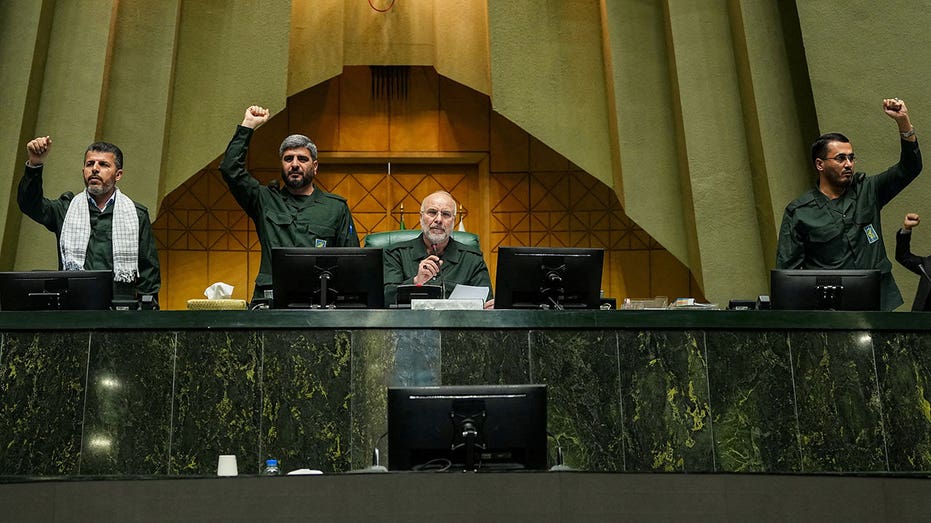
While top commanders like Parliament Speaker Mohammad-Bagher Ghalibaf might head to Moscow, lower-ranking figures would more likely seek shelter in Iraq or Afghanistan, where the IRGC maintains operational connections, he clarified.

"For the most senior figures, Russia would probably be the most likely destination, again as we saw with Bashar al-Assad," Golkar said, noting many officials have already moved wealth into "financial networks outside Iran."

The current crisis started following the death of Ayatollah Ali Khamenei earlier in 2026 during the onset of Operation Epic Fury.

While his son, Mojtaba Khamenei, was named successor, reports continue to indicate he was severely injured in the strikes and has been absent from recent negotiations.

INSIDE IRAN’S RULING IDEOLOGY: HOW A ‘HOLY MISSION’ AND MESSIANIC DOCTRINE FUEL REGIME EXTREMISM

Golkar explained that the "invisible state," or Bayt-e Rahbari, was designed to survive decapitation, while the ideological cost of fleeing for leaders would be high.

"Inside the regime’s ideological culture, leaving the country during the collapse would look like desertion," Golkar noted.

However, as military fractures deepen and succession remains uncertain, the "Assad model" of seeking Russian protection appears increasingly attractive to those at the top.

Mojtaba, however, is "either dead or in bad condition that he cannot send any video or voice message," Golkar added.

"If he had died from his injuries, there was no clear natural successor. He was the continuation of the regime."

"Still, the system was designed for continuity during a crisis," Golkar said, adding that the goal is to "make sure the regime could survive even if formal institutions were damaged, leaders were killed, or civilian government stopped functioning."

"I would describe it as a regime designed not just to govern, but always to try and survive decapitation," Golkar added.

(Auszug von RSS-Feed)

☐ ☆ ✇ Fox News

North Korea updates constitution to require automatic nuclear strike if Kim Jong Un is assassinated: report

veröffentlicht.
Vorschau ansehen

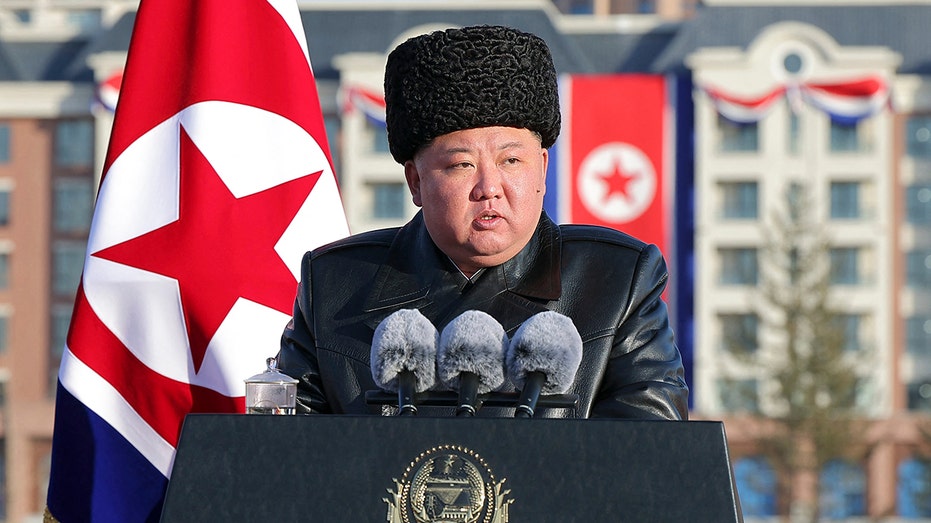
North Korea has updated its constitution to require a retaliatory nuclear strike if leader Kim Jong Un is assassinated, according to a report.

The Telegraph reported the change comes amid heightened global tensions following the killing of Iran’s Supreme Leader Ali Khamenei and other officials during a recent conflict.

Khamenei was killed in an Israeli strike in Tehran as part of a coordinated U.S.-Israeli military operation earlier this year, Fox News Digital previously reported.

The constitutional revision was approved during a session of North Korea’s Supreme People’s Assembly, which opened March 22 in Pyongyang, the outlet said.

ISRAEL TARGETS IRAN’S SUPREME LEADER IN SWEEPING STRIKES AS US JOINS ‘OPERATION EPIC FURY’

South Korea’s National Intelligence Service (NIS) briefed senior government officials this week on the update, according to the report.

The revised policy outlines procedures for retaliatory action if North Korea’s leadership is incapacitated or killed.

"If the command-and-control system over the state’s nuclear forces is placed in danger by hostile forces’ attacks … a nuclear strike shall be launched automatically and immediately," the updated provision states.

KIM JONG UN CALLS SOUTH KOREA ‘MOST HOSTILE ENEMY,’ SAYS NORTH COULD ‘COMPLETELY DESTROY’ IT

Reuters previously reported that North Korea revised its constitution to define its territory as bordering South Korea and remove references to reunification, reflecting Kim’s push to formally treat the two Koreas as separate states.

That marked the first time North Korea included a territorial clause in its constitution.

Last month, Kim pledged to further strengthen the country’s nuclear capabilities while maintaining a hard-line stance toward South Korea, which he has called the "most hostile" state.

Kim has also accused the United States of "state terrorism and aggression," and signaled North Korea could take a more active role in opposition to Washington amid rising global tensions.

Fox News Digital's Alex Nitzberg and The Associated Press contributed to this report.

(Auszug von RSS-Feed)

☐ ☆ ✇ Fox News

Could Narges Mohammadi unite Iran’s opposition? Husband says imprisoned Nobel laureate still fighting

veröffentlicht.
Vorschau ansehen

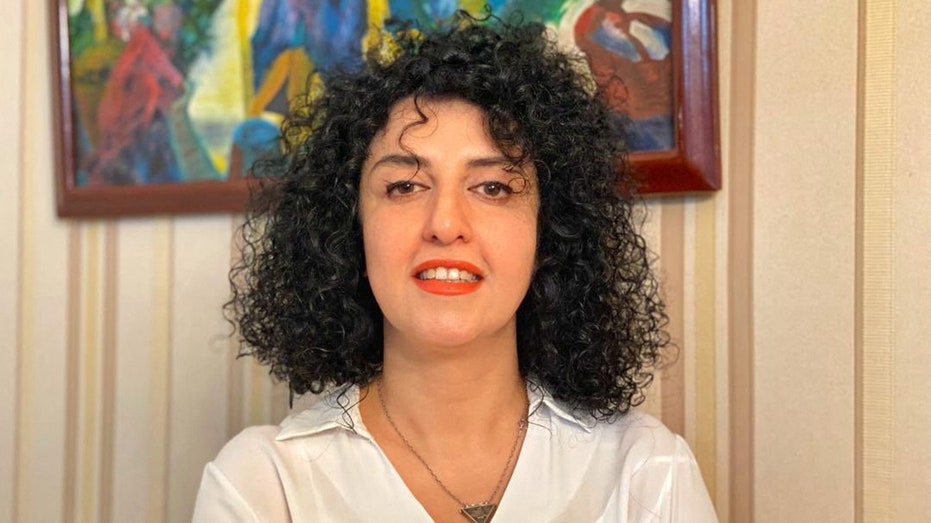
EXCLUSIVE: As Iran’s opposition struggles to find a unifying figure amid war, repression and near-total internet blackouts, the husband of jailed Nobel Peace Prize laureate and Iranian human rights activist Narges Mohammadi says his wife remains physically battered but politically unbroken, even as she sits in prison after what he describes as a brutal arrest and beating.

"Narges is a human rights activist and an advocate for civil society," her husband, Taghi Rahmani, told Fox News Digital in an exclusive interview from Europe in exile. "In mobilizing society, and in organizing and shaping civil institutions, she is an active and courageous woman."

At a moment when Iran’s ruling establishment is reeling from the aftermath of U.S. and Israeli strikes, a fragile ceasefire, economic collapse and intensified crackdowns, Mohammadi’s name is emerging in a new light: Not only as a global symbol of resistance, but potentially as one of the few opposition figures whose legitimacy comes from suffering inside the system rather than exile, dynasty or factional politics.

INSIDE TEHRAN AFTER STRIKES: IRANIAN WOMAN DESCRIBES FEAR, CHECKPOINTS AND PEOPLE USED AS ‘HUMAN SHIELDS’

Mohammadi, awarded the 2023 Nobel Peace Prize while imprisoned, has spent decades as one of Iran’s most prominent women’s rights and human rights activists. 

Trained as an engineer and later a journalist, she served as vice president of the Defenders of Human Rights Center, founded by fellow Nobel laureate Shirin Ebadi and became internationally known for campaigning against compulsory hijab laws, solitary confinement, prisoner abuse and the death penalty.

Now, according to her husband, her condition has worsened dramatically.

"Narges is currently detained in Zanjan prison," he said. "She was arrested in Mashhad during the month of Dey (around January) and was severely beaten. During her arrest, she received numerous blows, resulting in severe injuries to her chest, head, body and lungs."

Rahmani said prison medical authorities determined she should be transferred for treatment under her own physician’s supervision in Iran, but that Iran’s Ministry of Intelligence is refusing the transfer and insisting she remain in Zanjan.

"Spiritually and mentally, Narges remains steadfast," he said. "She believes the Islamic Republic is not desirable for the Iranian people, and advocates for a system based on freedom, human rights and open relations with the world. Physically, however, she has sustained severe trauma and urgently requires medical attention."

Rahmani said the last time he spoke with his wife was the night before she left for Mashhad, Iran, where she was later arrested.

His account offers a rare inside look into the life of one of Iran’s most internationally recognized dissidents at a moment when questions over who could realistically lead opposition to the regime are intensifying.

"We hear a great deal about the Iranian opposition, yet media in the free world often lack a precise definition and a full understanding of what the Iranian opposition actually is," Iranian anti-regime activist Maryam Shariatmadari told Fox News Digital.

Shariatmadari, one of the most recognizable faces of Iran’s "Girls of Revolution Street" movement, a wave of anti-regime protests that began in 2017 when Iranian women publicly removed their hijabs and stood in defiance of the country’s mandatory veiling laws, was sentenced to prison in 2018 after publicly removing her hijab in protest.

WHAT'S NEXT FOR IRAN'S TERROR ARMY, THE IRGC, AFTER DEVASTATING MILITARY SETBACKS?

According to Shariatmadari, one camp consists of Iranians who view the 1979 Islamic Revolution itself as the foundational national disaster, believing Iran’s trajectory was derailed when the Shah fell. The second includes former revolutionaries, reformists, communist factions and groups such as the Mujahedin-e Khalq (MEK), many of whom emerged from or once supported the revolutionary system before later opposing it. 

"The first group considers the 1979 revolution a disaster and seeks a return to Iran’s previous path," she said, while the second includes "those who participated in the revolution but later became opposition figures after being excluded from power."

That distinction, she argues, helps explain why Reza Pahlavi, the exiled son of Iran’s last shah, remains uniquely recognizable among many anti-regime Iranians despite spending decades outside the country.

Lisa Daftari, foreign policy analyst and editor-in-chief of The Foreign Desk news platform, told Fox News Digital, "Inside Iran, Pahlavi remains one of the only opposition figures with broad name recognition, and his message clearly resonated during the January protests, which is why his name still carries weight for many Iranians both inside the country and in the diaspora."

Pahlavi himself sharpened that message Friday after a series of European appearances, accusing both European politicians and journalists of ignoring the scale of Iranian suffering.

"I spent the past several weeks traveling across Europe, speaking to members of parliaments, governments, and the press," Pahlavi said in a video statement on his official X account. "My visit had one objective: to give a voice to the millions of Iranians held hostage by the Islamic Republic ... But I can now say with confidence that silencing, that censorship is not just happening at the hands of the regime in Iran, but by the international and particularly the European media."

EXILED IRANIAN CROWN PRINCE REVEALS 6-STEP PLAN TO EXERT PRESSURE ON TEHRAN'S REGIME

He went on to condemn what he described as European indifference to the mass killing of protesters and political executions, saying that across two press conferences in Stockholm and Berlin attended by more than 150 journalists, "not a single one" asked about the tens of thousands he says were killed during January’s crackdown or the political prisoners facing execution.

"Whether or not Europe stands with us ... I will fight for my people and my country," Pahlavi said. "We will fight until Iran is free."

Still, even some supporters acknowledge why the administration has hesitated to openly embrace him as a transitional figure.

Daftari warned that overt Western backing could backfire by making him appear externally imposed rather than domestically legitimized.

"The Trump administration’s decision not to more openly embrace him as a transitional figure likely reflects several factors: a deep wariness of making regime change the explicit end goal or appearing to engineer it after Iraq and Afghanistan, concern that overt U.S. backing could put an even bigger target on his back and a strategy that is currently focused less on anointing a successor and more on degrading the regime’s capacity to threaten its own people, the region and the United States," she said.

If Pahlavi represents dynastic memory and explicit regime-change politics, Mohammadi represents something profoundly different.

AS AIRSTRIKES RAIN DOWN ON THE IRANIAN REGIME, CAN A FRACTURED OPPOSITION UNITE TO LEAD IF IT FALLS?

Mohammadi’s place within that landscape is distinct due to her unique kind of legitimacy at a time when many Iranians are searching not only for opposition to the regime, but for a figure who embodies endurance under it.

For now, however, Rahmani warns that Iran’s domestic conditions may make any mass uprising extraordinarily difficult

"As you know, war serves as an excuse to suppress domestic forces within a country," he said. "This war has now increased the intensity of the regime’s actions against the opposition."

He argued that despite internal divisions, the Islamic Revolutionary Guard Corps has effectively consolidated power, militarized the streets and severely weakened civil society.

"The Islamic Republic has practically taken control of the streets during wartime and has severely weakened Iran’s civil society, which is the guarantor of democracy. In our opinion, this war, under these conditions, is not to the benefit of Iran, nor to the benefit of the Iranian people."

That may be the defining challenge for Iran’s opposition today: not simply finding a leader, but surviving long enough under extraordinary repression for one to emerge.

Whether Mohammadi can become that figure remains uncertain. But from prison, her husband says, she has not stopped believing Iran’s future can be different.

The Iranian mission to the United Nations did not respond to a request for comment in time for publication.

(Auszug von RSS-Feed)

☐ ☆ ✇ Fox News

Iran turmoil erupts: Ultra-hardliner who mocked Trump poised to take over nuclear talks

veröffentlicht.
Vorschau ansehen

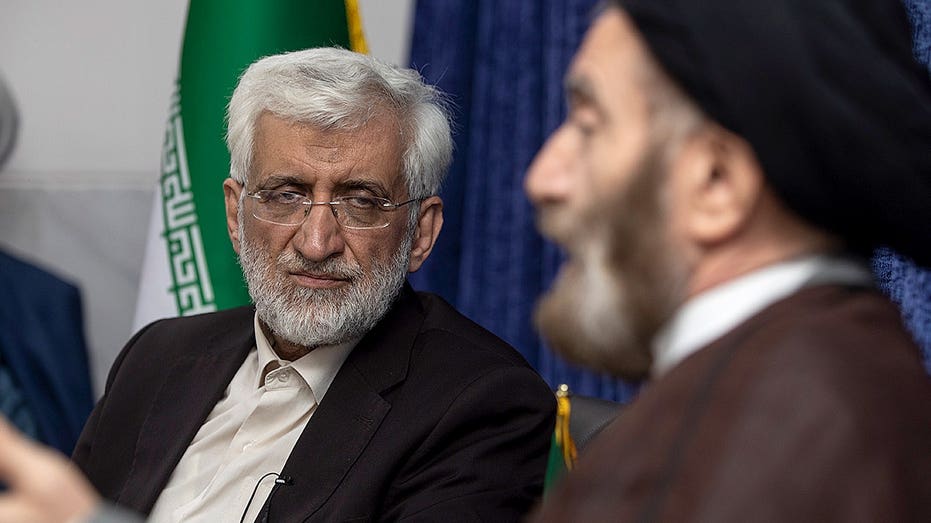
Further signs of turmoil are emerging in Iran’s U.S. negotiating team as hardliner Mohammad Bagher Ghalibaf looks set to be replaced by a veteran conservative known for rejecting nuclear concessions, according to reports.

Iran International reported April 24 that Saeed Jalili, 60 — who already leads what has been described as a "shadow government" — is expected to succeed Ghalibaf following his sudden departure amid internal disputes.

Jalili also heads Iran’s ultra-hardline faction known as the Stability Front (Paydari), which is known to be a "bastion of ultraconservatism in Iran," according to reports.

Ali Safavi, an official with the Iranian opposition coalition, the National Council of Resistance of Iran (NCRI), told Fox News Digital that Jalili "has evolved from a nuclear negotiator to an influential actor within the regime."

TRUMP'S LATEST HIRES AND FIRES RANKLE IRAN HAWKS AS NEW PRESIDENT SUGGESTS NUCLEAR DEAL

Ghalibaf was reportedly forced to step down after attempting to bring the nuclear issue into talks with Washington, a move that triggered backlash within Iran’s political establishment.

President Donald Trump had called off plans for U.S. envoys to travel to Pakistan for peace talks with Iran on April 25.

The rivalry between Jalili and Ghalibaf is said to span more than a decade and intensified during the 2024 elections, when Jalili refused to step aside, contributing to the victory of President Masoud Pezeshkian.

Safavi said, "The increased visibility of latent divisions stems from recurring nationwide uprisings, deep economic crises and the pressures of war, all of which have intensified internal feuding.

"Far from signaling transformation, these developments reflect accelerating erosion and mounting pressure, deepening fractures and leaving the regime ever weaker and more vulnerable," he added.

EXILED PRINCE LOOKS TO LEAD IRANIAN PEOPLE IN ENDING ISLAMIC REPUBLIC: 'OUR BERLIN WALL MOMENT'

Foreign Minister Abbas Araghchi is also seeking a continued leading role in negotiations, highlighting competing centers of influence over Iran’s diplomatic strategy, sources said.

Araghchi is in Islamabad, Pakistan, after returning from a short trip to Muscat, Oman, where he is holding high-level diplomatic talks on the conflict. Reports indicate Araghchi will travel to Moscow.

Jalili’s potential appointment, however, signals a hardening of Iran’s stance, with more emphasis on resistance over compromise.

"Within this regime, there are a number of constants espoused by all factions," Safavi said before highlighting that these were "repression, the export of terrorism and the pursuit of nuclear weapons."

"The factions all ultimately move along a common path: the preservation of power. They differ in methods, not in objectives," Safavi cautioned.

IRANIAN-AMERICANS AND DISSIDENTS RALLIED AGAINST 'MURDEROUS REGIME AGENTS' AS IRAN'S PRESIDENT ADDRESSED UNGA

Jalili, meanwhile, served as Iran’s top nuclear negotiator from 2007 to 2013 under President Mahmoud Ahmadinejad and later ran for president three times. He also served as secretary of the Supreme National Security Council.

A former member of the Islamic Revolutionary Guard Corps (IRGC), Jalili lost his right leg at 21 during the Iran-Iraq War, earning him the title of "Living Martyr".

The Paydari Front, which he is associated with, opposes engagement with the West — particularly the 2015 nuclear deal — and advocates a doctrine of "active resistance."

During Hassan Rouhani’s presidency, Jalili also established a "shadow government" to counter the administration’s policies, especially the nuclear deal.

On April 7, he wrote on X: "Yes — ‘infrastructure’ is on the verge of collapse; the infrastructure of domination and the American order. And after that, a better foundation will be built."

A day earlier, he posted: "‘Shut up’ is not the appropriate response to Trump’s ramblings; let him speak more. Nothing is more effective in laying bare the true nature of the United States than Trump’s outbursts."

"In dealing with this regime," Safavi said, "we must bear in mind that in the 45 years since the mullahs consolidated their rule in 1981 by crushing all peaceful political life, so-called reformists have governed for nearly half that time — presiding over some of its darkest crimes."

"These include the 1988 massacre of 30,000 political prisoners, the assassination of dissidents abroad, the chain murders of intellectuals inside Iran and the relentless pursuit of nuclear weapons."

(Auszug von RSS-Feed)

☐ ☆ ✇ Fox News

Who is Ahmad Vahidi? Iran’s new IRGC chief tied to global attacks and ‘Death to America’ ideology

veröffentlicht.
Vorschau ansehen

As President Donald Trump’s deadline for Iran to decide whether to extend a two-week ceasefire between the countries approaches, attention is increasingly turning not to Iran’s president, Masoud Pezeshkian, but to a shadowy Revolutionary Guard commander with a long record of terror, repression and hardline ideology.

Ahmad Vahidi, recently elevated to the top of the Islamic Revolutionary Guard Corps, the elite paramilitary force within Iran’s military, is emerging as one of the most powerful men in Iran and, according to analysts, one of the key figures likely deciding whether Tehran resumes fighting or continues talks.

"By any standard, Vahidi is considered a radical even within the regime’s hardline elite, and his rise is a warning that Tehran’s war machine now calls the shots," Lisa Daftari, foreign policy analyst and journalist, told Fox News Digital.

"Putting someone with such a bloody and murderous record at the top of the Revolutionary Guard Corps confirms that the regime is not moderating under pressure. On the contrary," Daftari added, "it is doubling down on men whose careers are built on hostage‑taking, assassinations, and domestic repression. By any standard, Vahidi is considered a radical even within the regime’s hardline elite, and his rise is a warning that Tehran’s war machine now calls the shots."

TRUMP’S APOCALYPTIC IRAN WARNING RAISES STAKES FOR SWEEPING US STRIKE THREAT

Why it matters: Analysts say Vahidi’s rise could shape whether Iran moves toward peace or deeper conflict. For the U.S., that means heightened risks to troops, allies and global stability if a hardline figure with a history tied to terror networks is now helping call the shots in Iran.

Vahidi’s rise comes at a moment when Iran’s formal political institutions appear weaker than ever.

Experts describe the Islamic Republic today as a system in which informal networks and personal relationships matter more than official titles.

Behnam Ben Taleblu, senior fellow at the Foundation for Defense of Democracies, described Iran as "a system of men, not laws, but one whose success rested on institutionalizing their power," where decisions increasingly flow through Revolutionary Guard figures rather than the civilian government.

Beni Sabti, an Iran expert at Israel’s Institute for National Security Studies, said Vahidi may now be even more influential than parliamentary speaker Mohammad Bagher Ghalibaf or even Supreme Leader Ali Khamenei’s son, Mojtaba Khamenei.

"In my view, he is more dominant right now, even if they are coordinated. This is not a time for internal competition," Sabti said, adding that Vahidi is the only one who meets the new supreme leader face-to-face.

VANCE EN ROUTE TO PAKISTAN FOR HIGH-STAKES IRAN TALKS AS ‘FRAGILE’ CEASEFIRE TEETERS

Long before the world knew the name Qassem Soleimani, the longtime commander of Iran’s elite Quds Force who was killed in a 2020 U.S. drone strike, Vahidi was one of the men who helped build the infrastructure of Iran’s overseas terror operations.

He served as commander of the Quds Force in the 1990s, before Soleimani took over the elite unit responsible for foreign operations, covert action and support for proxy groups. 

Analysts say Vahidi played a central role in building Iran’s network of terrorist allies across the Middle East, particularly in Lebanon.

"Ahmad Vahidi is the embodiment of the Islamic Republic’s most militant wing," Daftari told Fox News Digital. "As Qassem Soleimani’s predecessor at the Quds Force, he helped build Tehran’s terror infrastructure abroad."

Sabti said Vahidi was part of the original generation of Iranian operatives who forged ties with militant groups in Lebanon before and after the 1979 Islamic Revolution.

Some accounts suggest he trained in camps linked to Palestinian and Lebanese factions in southern Lebanon, helping lay the foundation for Iran’s alliance with Hezbollah, an Iran-backed terror group, in Lebanon. 

Vahidi has been linked by analysts and Western governments to some of the deadliest attacks carried out by Iranian-backed networks over the past four decades.

As the commander of the Quds Force from 1988 to 1998, he has been connected to the 1983 Beirut barracks bombing that killed 241 U.S. service members, the 1996 Khobar Towers attack in Saudi Arabia, and a 2008 attack on the U.S. Embassy in Yemen.

VANCE WARNS IRAN WILL 'FIND OUT' TRUMP IS 'NOT ONE TO MESS AROUND' IF CEASEFIRE DEAL FALLS APART

Daftari noted that Vahidi "has been implicated by Argentine prosecutors in the 1994 bombing of the AMIA (Asociación Mutual Israelita Argentina) Jewish community center in Buenos Aires." Eighty-five people were killed in the bombing. 

Argentine investigators and courts have also linked Vahidi to the 1992 bombing of the Israeli Embassy in Buenos Aires, although the Interpol red notice against him is specifically for his alleged role in the 1994 AMIA bombing.

In April, Argentina renewed attention on him after its President Javier Milei’s government designated the entire Islamic Revolutionary Guard Corps a terrorist organization and singled out Vahidi by name.

In announcing the move, the Argentine government said that red notices remained in place for several Iranian officials, "among them former Defense Minister Ahmad Vahidi, who was recently appointed to lead the IRGC."

Vahidi is under multiple layers of sanctions by both the United States and the European Union. The sanctions significantly restrict his ability to travel, move money or do business internationally.

Washington first sanctioned him in 2010 for links to Iran’s nuclear and missile programs. Vahidi was redesignated in 2022 for "being an official of the Government of Iran and being responsible for or complicit in, or responsible for ordering, controlling, or otherwise directing, the commission of serious human rights abuses against persons in Iran or Iranian citizens or residents, or the family members of the foregoing, on or after June 12, 2009, regardless of whether such abuses occurred in Iran."

He was redesignated by the United States in 2022 under Executive Order 13553 after Mahsa Amini’s death, when he served as interior minister and oversaw the regime’s response to nationwide protests.

Vahidi was sanctioned for orchestrating internet blackouts and directing Iran’s Law Enforcement Command, known as NAJA, during the crackdown, according to the U.S. Treasury. 

The European Union first sanctioned him in 2008, and imposed parallel sanctions in 2022 over the use of live ammunition, arbitrary detention of protesters and journalists, and the violent suppression of demonstrations.

Human rights groups accused Iranian authorities of using live fire, mass arrests and torture against protesters, which resulted in more than 30,000 deaths.

Yigal Carmon, founder and president of the Middle East Media Research Institute (MEMRI) warned, "Under his leadership, more such crimes are to be expected in the West against both Jews and non-Jews."

PAKISTANI GENERAL SAYS IRAN DIPLOMACY STILL 'ALIVE, DESPITE US BLOCKADE, FAILED TALKS

Experts say Vahidi is not merely another hardliner, but one of the most extreme figures even within Iran’s already radical ruling elite.

Sabti is warning that Vahidi’s growing influence could make Tehran less likely to agree to a genuine ceasefire.

"He brings even more radicalization into the system and may not want to stop the war, because it serves the interests of the Revolutionary Guards to continue," Sabti said.

One of the biggest concerns surrounding Vahidi is that even if Iran agrees to a ceasefire, he may see it only as an opportunity to regroup.

That concern has taken on new urgency as Trump’s deadline approaches.

If Vahidi is indeed the man increasingly calling the shots in Iran, analysts say the key question is not whether Iran wants a ceasefire, but whether the Revolutionary Guard commander believes continued confrontation better serves his interests.

Carmon said, "Trusting him is a grave mistake. He belongs to the hard 'DEATH TO AMERICA' corps."

Iran’s mission to the United Nations declined to comment.

(Auszug von RSS-Feed)

☐ ☆ ✇ Fox News

Israel's spy chief says Iran mission will only end when 'extremist regime' is replaced

veröffentlicht.
Vorschau ansehen

Mossad Director Dadi Barnea declared Tuesday that Israel’s operations against Iran will end "only once the extremist regime in Iran is replaced." 

Barnea made the remark during a Holocaust commemoration event, according to The Wall Street Journal. 

"We meticulously planned so that our operations would continue and manifest themselves even in the period following the strikes in Tehran," Barnea reportedly said. "Our commitment will be fulfilled only once the extremist regime in Iran is replaced." 

"Forty days of intense combat have led to highly significant achievements, foremost among them a blow to the enemy's central objective -- the destruction of the State of Israel," Barnea added, according to Ynetnews. "However, our mission has not yet been completed."

LIVE UPDATES: FRESH IRAN TALKS COULD BEGIN THIS WEEK AS US CONTINUES BLOCKADE ON PORTS

Israel began its Operation Roaring Lion against Iran on Feb. 28, the same day the U.S. military launched Operation Epic Fury. 

The joint U.S.-Israel effort has decimated Iran’s military and missile infrastructure and resulted in the death of former Iranian Supreme Leader Ayatollah Ali Hosseini Khamenei

CHINA SLAMS US MILITARY BLOCKADE OF STRAIT OF HORMUZ AS A 'DANGEROUS AND IRRESPONSIBLE MOVE'

Iran's new Supreme Leader Mojtaba Khamenei is severely disfigured after sustaining leg and face injuries during initial airstrikes on Tehran in February, Reuters reported earlier this week.

Khamenei is recovering after incurring the injuries in the Feb. 28 airstrikes that killed his father. 

Fox News Digital’s Robert McGreevy contributed to this report.  

(Auszug von RSS-Feed)
❌