NEWS 23

🔒
❌
Stats
Es gibt neue verfügbare Artikel. Klicken Sie, um die Seite zu aktualisieren.

☐ ☆ ✇ Fox News

As Hezbollah rejects truce, families on Israel's northern border describe life under fire

veröffentlicht.
Vorschau ansehen

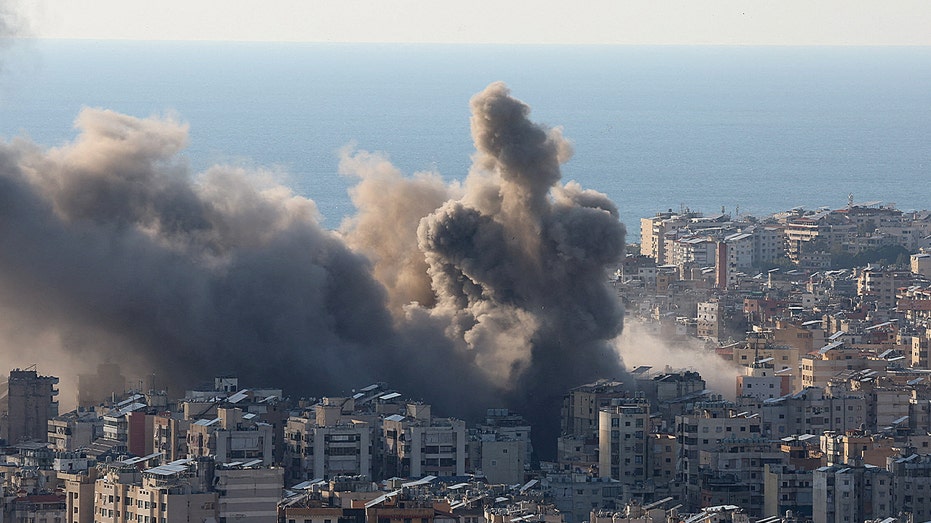
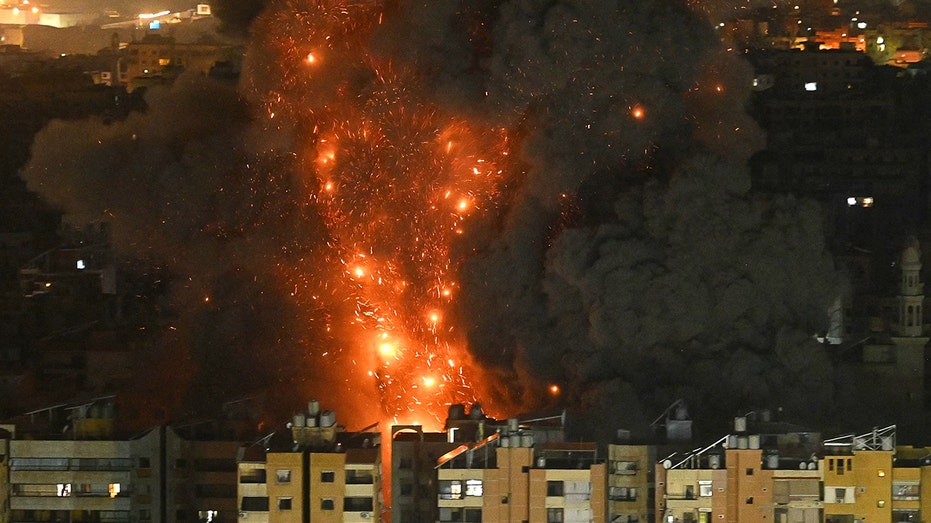
Two days after another ceasefire was announced between Israel and U.S. terrorist designated group Hezbollah, Yulia Bar-Dan was standing outside her temporary home in Kibbutz Manara in northern Israel when the familiar sound of an interceptor echoed overhead. 

"There will probably be another siren soon," she told Fox News Digital.

Minutes later, an alert appeared on her phone warning residents in northern Israel to take shelter.

For Bar-Dan, the scene captured the reality of life on Israel's northern border nearly two years after Hezbollah joined the war against Israel on Oct. 8, 2023. 

After Hezbollah entered the recent war in support of Iran, Washington launched a diplomatic effort aimed at turning the ceasefire into a broader arrangement for Lebanon. 

ISRAEL OPENS FIRE IN LEBANON AT ‘SUSPECTS’ ALLEGEDLY VIOLATING TRUCE, WHICH HAS ENTERED ITS SECOND DAY

Multiple rounds of talks between Israeli and Lebanese officials have taken place in Washington, and President Donald Trum repeatedly has announced ceasefire understandings aimed at restoring calm along the border. Residents of communities like Manara, Israel, say the rockets, drones and uncertainty never really stopped.

"A ceasefire is supposed to be on both sides," she said. "Not that Hezbollah keeps shooting at us and we just keep absorbing it."

When Fox News Digital first spoke to Bar-Dan in December 2024 during the war, she and her husband had fled Manara, Israel, with their three children and were living out of a single hotel room, unsure whether they would ever return home.

Today, roughly 200 of the kibbutz's 280 residents have returned, Bar-Dan said. But many, including Bar-Dan's family, still cannot live in their original homes because of war damage. 

Despite repeated ceasefire announcements, residents say normal life remains elusive.

"There hasn't really been a routine or a quiet day since February," she said.

Schools officially reopened in early June, but Bar-Dan decided not to send her children.

"They take the bus to school," she said. "What if there's a siren on the way? I can't take that chance."

ISRAEL DESTROYS HEZBOLLAH'S 'LARGEST PRECISION-GUIDED MISSILES MANUFACTURING SITE' AS GROUP VOWS TO 'FIGHT'

Her frustration is not directed at Hezbollah alone.

Like many residents interviewed by Fox News Digital, Bar-Dan says there is a growing disconnect between the reality experienced on the border and the reality described by politicians.

"It doesn't really matter where the decisions are being made," she said. "The decisions just need to match reality. Right now there is a decision, but the reality is completely different."

A year and a half after most of Manara's residents were evacuated amid fears of a Hezbollah invasion, community leader Yochai Wolfin says residents have developed their own name for the current situation. 

"We call it 'the ceasefire war,'" he said. 

The phrase has become common in the community.

First came a year and a half of evacuation. Then came the return home. Then came what Wolfin describes as three months of "fire within a ceasefire."

The uncertainty has become part of daily life.

Children study inside shelters. Parts of the kibbutz still lack protected rooms. Construction projects remain unfinished because contractors are reluctant to work so close to the border. 

He said many residents increasingly feel that the decisions determining their future are being made far from the communities that bear the consequences.

ISRAEL WARNS IT WILL GO AFTER LEBANON DIRECTLY IF CEASE-FIRE WITH HEZBOLLAH COLLAPSES

"Who knows what tomorrow will bring?" Wolfin said. "We know who is calling the shots. We saw it a few days ago when Trump announced another ceasefire. But for us, the reality on the ground hasn't changed."

The comments come as Hezbollah Secretary-General Naim Qassem warned Thursday that northern Israel would remain unsafe as long as Israeli strikes continue in Lebanon, according to Reuters.

In a written statement broadcast on June 4, 2026, Qassem condemned the Washington-mediated framework as "absurd, humiliating, and insulting," calling it a roadmap for surrender.

For residents of Israel's northern border communities, the statements reinforced what many say they have been experiencing for months: a ceasefire that exists on paper but not in daily life.

Naor Shamia, who heads Manara's emergency response team, says residents increasingly worry that temporary emergency measures are becoming permanent.

"The fear isn't today," he said. "The fear is that this becomes years. We are in a deadlock."

Across the border region, similar concerns are heard.

In the community of Adamit, resident Yael Cohen-Arazi described the contrast between the beauty surrounding her and the reality of living under constant threat.

"Every morning I wake up and think I'm living in paradise," she said in footage provided to Fox News Digital by the Israeli news agency TPS-IL. "Then there are the explosions that shake my soul."

Her children, she said, have spent so much of their lives under fire that they no longer know what normal looks like.

"I tell them there are children who don't live like this," she said.

Back in Manara, Israel, another alert interrupted the afternoon.

Bar-Dan says she is not angry anymore. Mostly, she is tired and sad.

"I feel bad for the soldiers," she said. "Every day there is another casualty, and there is still no solution."

Yet she insists she is staying.

"This is our home," she said. "Someone has to live on the borders of this country."

Then another explosion sounded in the distance.
(Auszug von RSS-Feed)

☐ ☆ ✇ Fox News

US ally Kuwait condemns 'brutal and ongoing Iranian attacks' after airport was hit

veröffentlicht.
Vorschau ansehen

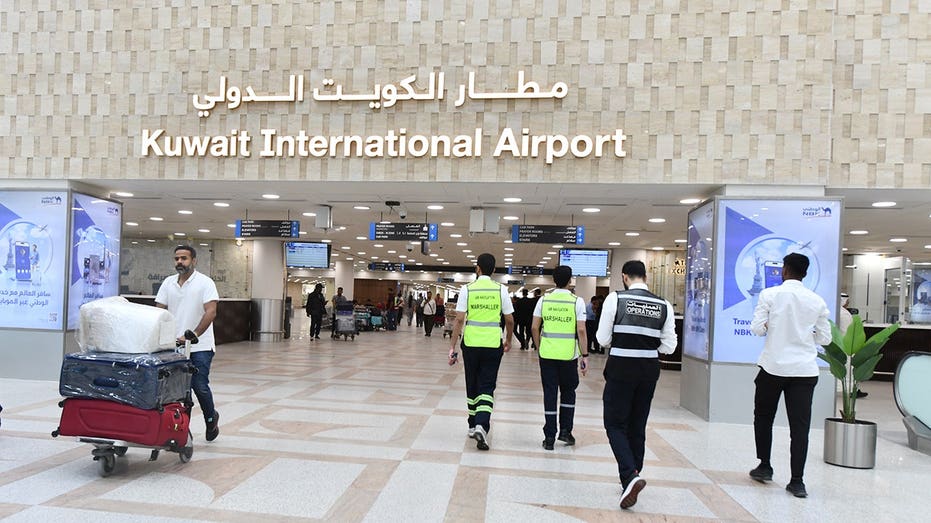
Kuwait decried Iranian attacks in a statement issued by its foreign affairs ministry, saying that the Kuwait International Airport had been targeted.

"The Ministry of Foreign Affairs expresses the State of Kuwait's condemnation and denunciation, in the strongest terms, of the brutal and ongoing Iranian attacks using ballistic missiles and drones, the latest of which occurred at dawn today, targeting once again civilian and vital facilities, including Kuwait International Airport, resulting in the death of one individual, injuries to others, and damage to vital facilities, including diplomatic missions," part of the statement declared, according to a translation of the Arabic-language post on X.

Kuwait's Ministry of Defense spokesperson had indicated that a building at Kuwait International Airport was damaged and people were injured, according to a post on X by the official account of Kuwait Army general staff headquarters.

IRANIANS SPEAK OUT OVER POSSIBLE TRUMP-REGIME DEAL

"The Official Spokesman for the Ministry of Defense, Brigadier General Saud Abdulaziz Al-Otaibi, stated that a number of hostile drones targeted today the passenger building (T1) at Kuwait International Airport as a result of the criminal Iranian aggression, which resulted in significant material damage to the building and injuries to a number of individuals, who received the necessary medical care," according to a translation of the Arabic-language post.

"He affirmed that the armed forces are monitoring the situation in coordination with the relevant authorities, and they are in a state of complete readiness to deal with any developments, and to take all necessary measures to preserve the security of the country and its stability," the post added.

The Iranian hostilities come more than three months since the start of the U.S. war against the Islamic Republic.

In a Tuesday statement, U.S. Central Command (CENTCOM) indicated that America had engaged in "self-defense strikes" against Iran.

US MILITARY ATTACKS IRAN IN 'SELF-DEFENSE STRIKES' OVER WEEKEND

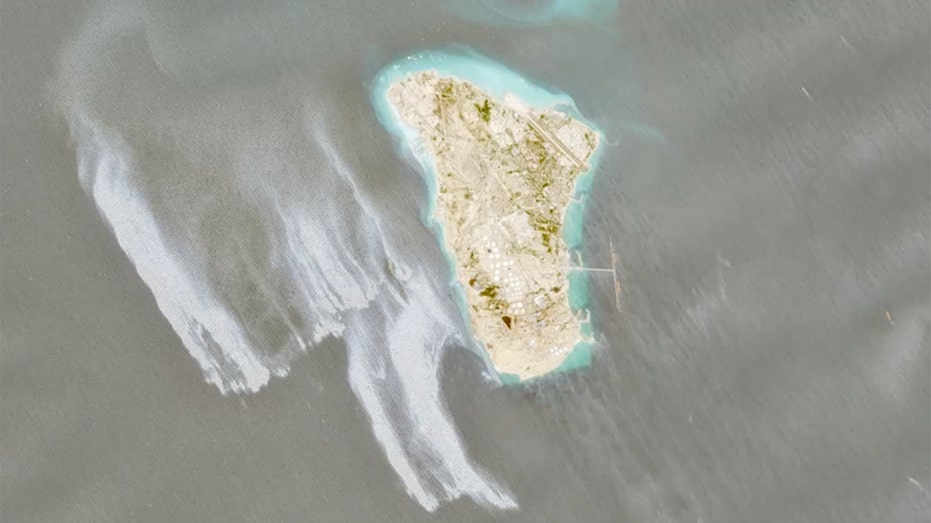
"U.S. forces successfully defeated multiple Iranian ballistic missiles and drones, and conducted self-defense strikes on Qeshm Island in response to attempted attacks by Iran across the Middle East, June 2. Iran launched several ballistic missiles toward regional neighbors; however, all failed to hit their intended targets. Two Iranian missiles fired at Kuwait fell short or broke apart enroute, and three missiles launched at Bahrain were immediately intercepted by U.S. and Bahrain air defense forces," the release noted.

"Moments earlier, U.S. Central Command (CENTCOM) forces shot down three one-way attack drones launched by Iran toward civilian mariners that were rightfully transiting regional waters. American forces also conducted self-defense strikes on an Iranian military ground control station on Qeshm Island. No U.S. personnel were harmed. CENTCOM forces remain vigilant and ready to defend against unwarranted Iranian aggression during the ongoing ceasefire," the statement added.

TRUMP INSISTS IRAN TALKS ARE ON, SAYING DEAL IS 'NOT A SIMPLE THING'

CENTCOM noted in a post on X that, "An additional wave of Iranian drones attempting to attack U.S. forces in Kuwait failed to impact intended targets tonight. U.S. Central Command air defenses successfully downed multiple drones and ensured no American personnel or assets were harmed."

(Auszug von RSS-Feed)

☐ ☆ ✇ Fox News

Iranians speak out over possible Trump-regime deal

veröffentlicht.
Vorschau ansehen

Amid President Donald Trump’s Monday announcement that a deal with Iran’s clerical regime is imminent to re-open the Strait of Hormuz and negotiate an end to Tehran’s illicit nuclear weapons program, Iranians who hoped U.S. pressure would force a decisive outcome now fear it may survive while ordinary people absorb the costs.

"Inside Iran, the mood has shifted from early-war optimism to a kind of exhausted resignation, but there is still some hope that this is the moment President Trump will use his leverage to do the right thing. The Iranian people understand this unusually narrow but strategic window," Lisa Daftari, editor-in-chief of The Foreign Desk who keeps in contact with Iranians on the ground, told Fox News Digital.

She continued that ,"The regime is fiscally strained and politically brittle, while the broader population has been disillusioned by years of repression and economic collapse. Iranians do see this as a one‑time opportunity for Washington — and President Trump in particular — to translate military and economic leverage into the potential collapse of an irrefromable regime. If the outcome is a shallow agreement that props up the system without changing its trajectory, that window will likely close for years."

TRUMP’S LEADERSHIP CREATES 'RARE OPPORTUNITY' FOR CHANGE IN IRAN, FORMER IRANIAN POLITICAL PRISONER SAYS

She continued, "If instead, the U.S. holds firm on sanctions and nuclear red lines, it can weaken the regime’s hand without punishing the Iranian people, who have already paid the highest price."

Daftari, the Iran expert, shared recent correspondence from two Iranians from Tabriz and Tehran.

The resident from Tabriz said, "From my perspective, decades of political tension between Iran and the United States have had their greatest impact on ordinary people rather than those in power. Many families feel their voices are not being heard in international discussions about Iran." Adding, "I respectfully ask whether you might consider sharing or highlighting the human side of this situation, so that the experiences of ordinary Iranian families are not overlooked in political discussions and media coverage."

The Tehran resident said, "Today, the people of Iran believe in the future. On days when economic pressure makes the faces of the Iranian people sad, the word ‘unity’ brings a smile to their lips. Our situation is not good, but we are motivated."

Fox News Digital surveyed a few Iranians and agreed to use only their first names because the clerical regime has declared the use of Starlink to bypass the censor a criminal act. A sophisticated clandestine network has managed to smuggle some satellite internet technology into Iran to allow people to communicate with the world outside the Islamist state.

Hassan, who lives in Tehran, pleaded with President Trump to keep strong in his dealings with the regime, saying that "Things have gotten so bad that even if you wanted to give up and leave Iran and just focus on your own life and work, it feels like there’s nowhere left to turn. Mr. Trump, through these deals and arrangements, has left people feeling trapped, with no road left open."

Mehdi, who resides in Tehran, expressed confusion about the existence of an agreement. He said, "So what exactly are they agreeing on? Are they saying they’re close to a deal or are there other discussions too? Every minute there is a new piece of news, everyone has a new analysis, everything changes every minute. It’s strange. This war achieved nothing. We’re the only ones left paying the price," he complained.

THE WAR HITS HOME: WHY FINANCIAL PAIN AND ECONOMIC UNCERTAINTY THREATEN TRUMP’S DRIVE TO TOPPLE IRAN’S REGIME

Hassan from Tehran said that "Mr. Trump, if until yesterday most Iranians thought they were on the same path as America, you caused them all to become disappointed. "Mr. Trump, if you wanted this government to remain in power, why did you blow up factories? Now workers are being laid off, and inflation is out of control. Even with a salary of 18 million tomans, you cannot feed yourself."

Mahsa, from the Caspian Sea city of Rasht, told Fox News Digital that the system [Islamic Republic of Iran] is still fully intact. They don’t care how many people died. If anything, they seem more emboldened now and even take pride in martyrdom. Yesterday I argued with a regime supporter [who] said: "Our leader didn’t give away a single meter of land, didn’t take a step backward, unlike previous kings who gave away Bahrain, Baku, Nakhchivan, and others."

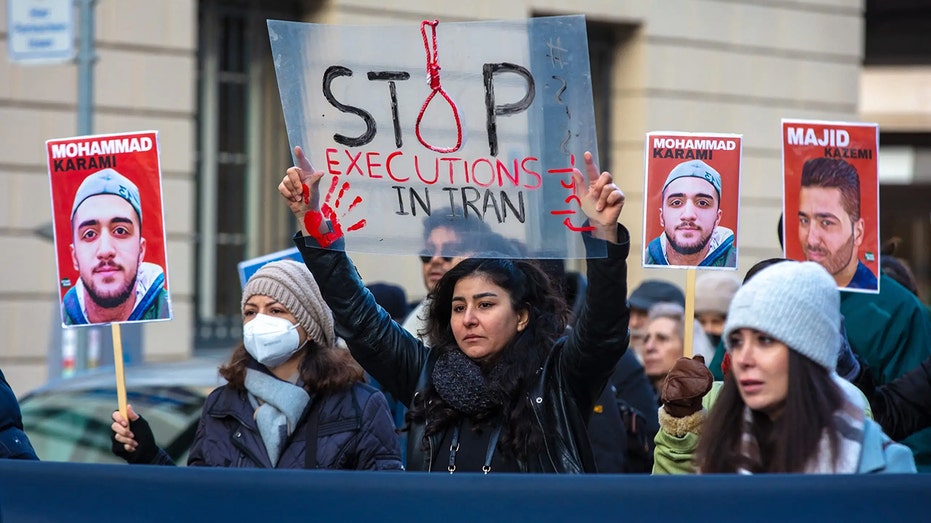
The concerns among many Iranians revolve around the proposed memorandum of understanding between the U.S. and Iran’s regime. The MOU does not address the overthrow of the clerical regime or human rights violations, according to media reports.  Large numbers of Iranians within Iran and among the Iranian diaspora want the Trump administration to topple the Islamist dictatorship in Tehran.

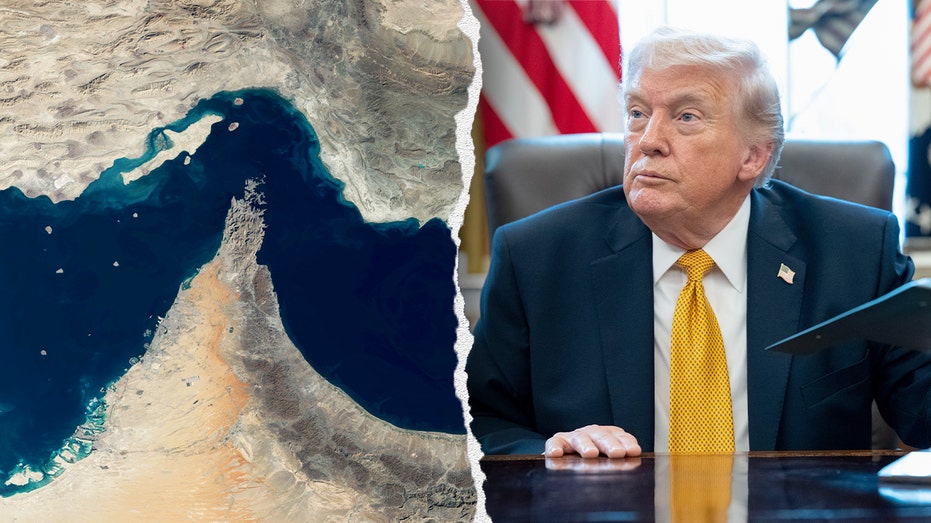
The MOU reportedly involves a 60-day ceasefire extension. Israel and the U.S. launched a joint attack on Iran on February 28. The MOU would also see the reopening the Strait of Hormuz and new talks over Iran's illicit nuclear weapons program.

The leaked elements of the MOU have not been confirmed by the Trump administration.

When asked about the concern among Iranians about a deal with the Islamic Republic, Anna Kelly, a spokeswoman for the White House, told Fox News Digital that "For 47 years, American Presidents and countless other world leaders talked about the threat posed by Iran, but no one had the courage to address it. President Trump took decisive action to ensure that Iran could never harm our homeland, our troops, or our allies again. Once Iran’s nuclear threat is removed for good, the entire region and its people will be safer and more stable."

IRAN REGIME ESCALATES REPRESSION TOWARD 'NORTH KOREA-STYLE MODEL OF ISOLATION AND CONTROL'

However, Trump said last week during his cabinet meeting, "We didn’t set out for regime change," adding, "But by the fact that we’re dealing with a totally different group of people than we were at the beginning … This is regime change."

Reza Farnood, an Iranian American who supports the Trump administration and is a researcher, writer and activist, urged that President Trump continue with his maximum pressure campaign against Tehran.

Farnood told Fox News Digital, "We welcome the bombing and attacking the regime because we are aiming to overthrow the regime." He urged that Trump continue the blockade of Iran’s vessels and deny money to the regime. He said sanctions relief will be used by Iran "against the U.S. and Israel and their allies and innocent Iranians."

Farnood stressed that the clerical regime is holding the Iranian people "hostage."

Kianoosh, who lives in the northern city of Karaj, the capital of  Alborz province, said about Trump’s proposed deal: "You threw six months of our lives into hell. What answer are "you going to give to the mothers of all those children who were killed? Why did you give people false hope? Why did you hand down a death sentence to everything so many people believed in?"

Leading U.S. Senators well-versed in foreign policy have praised Trump’s approach to the Islamic Republic. Sen. Lindsey Graham, R-SC., recently told Fox News’ Sean Hannity "On Trump’s watch, they’re [Iran’s regime] becoming poorer and weaker. That’s the difference."

TRUMP’S 'ECONOMIC FURY' SQUEEZES IRAN — BUT CAN TEHRAN OUTLAST THE PRESSURE?

Graham juxtaposed Trump’s Iran policy with his predecessors. "Obama and Biden screwed Iran up, and Donald Trump is fixing it. On Obama and Biden’s watch, Iran became rich and lethal," he said. "On Trump’s watch, they’re becoming poorer and weaker. That’s the difference."

Iran is running dangerously low on oil storage capacity and could face a severe economic breaking point if forced to halt production, former U.S. Energy Secretary Dan Brouillette recently told Fox News.

Trump has said that Iran’s regime murdered as many as 45,000 Iranian demonstrators in January 2026. He urged just days after the mass murder that protesters keep going and promised them that "help is on its way."

Lawdan Bazargan, a prominent Iranian-American activist who the regime imprisoned in its infamous Evin Prison in Tehran in the 1980s for political dissent, told Fox News Digital that the Iranians she’s spoken with are discouraged by Trump’s dealings. "He was one of the few world leaders who repeatedly spoke about the thousands of Iranians killed in January 2026 and expressed disgust at the sheer brutality of the Islamic Republic. He had promised support for the Iranian people and raised expectations that meaningful change might finally come."

She continued: "Now, 88 days later, many people feel they are left facing the same regime, one that appears more emboldened, more ideological, and still willing to repress, execute, and arrest people. The economy has been devastated, and many feel trapped between a government with no mercy and a future with no clear path forward.

For years, 90 million Iranians have lived as hostages of the Islamic Republic. Now, many fear that the consequences no longer stop at Iran’s borders, through threats to global energy routes, regional stability, and even digital infrastructure."

According to Bazargan, "The question many ordinary Iranians are asking is simple: How are people expected to fight a system that feels victorious, controls the weapons, controls the narrative through a massive propaganda machine, and possesses countless tools of repression?"

Ali, who is also from the sprawling capital city of Tehran, complained about the spiraling prices and inflation and disappointment that the regime is still in place.

"For a government with state-provided housing and billions in patronage and privileges, what difference did any of this make for its supporters?"

Ali added: "We’re the ones who are paying the price and getting crushed. How are our children ever supposed to afford these housing and car prices, and how are they supposed to get married?"

The U.S. State Department referred Fox News Digital to the White House for a comment.

(Auszug von RSS-Feed)

☐ ☆ ✇ Fox News

US ally answers Trump's call on Strait of Hormuz: 'Part of a diplomatic effort'

veröffentlicht.
Vorschau ansehen

UNITED NATIONS: Romania’s foreign minister told Fox News Digital that Bucharest answered the Trump administration’s call for allied support in the Middle East by allowing the use of Romanian military bases for "defensive activities" related to tensions with Iran and efforts to reopen the Strait of Hormuz.

"We have allowed for access to defensive activities, such as air refueling, for example, because we do believe allies need to rely on each other," Romania’s interim Foreign Affairs Minister Oana-Silvia Ţoiu said in an exclusive interview at the United Nations.

"We’re not part of the war, nor do we intend to become part of war, but we are part of an effort to ensure common defense, and we are a part of a diplomatic effort to ensure the reopening of the Strait of Hormuz," she said.

Ţoiu’s comments come as President Donald Trump has repeatedly pressed European allies to increase defense spending and take a larger role in global security efforts, including maritime security in the Middle East.

NATO LEADERS PREDICT ERA OF 2% DEFENSE SPENDING 'PROBABLY HISTORY' AS TRUMP REPORTEDLY FLOATS HIGHER TARGET

Ţoiu acknowledged growing tensions between Washington and some European allies over support related to the conflict with Iran, but said both sides recognize the need for closer coordination.

"I’m pretty sure that both on the U.S. side and the European side, we do understand that we need to enhance our dialog in order to prevent moments when we create tension in the transatlantic partnership," she told Fox News Digital. "And I do believe a better dialog ahead of time on all sides leads to better results, specifically on the request of help in terms of the conflict in the Middle East."

The Romanian foreign minister said Bucharest approved the use of its military bases and infrastructure for defensive operations linked to regional security efforts.

"Romania has approved through Parliament the proposal of the President, the ministry of foreign affairs and the ministry for defense and the prime minister, the use of our military bases and infrastructure for defensive activities, for activities such as air-fuelling, for example, because we are aware of the fact that it is needed that we trust each other," she said.

"I think we share clear objectives here in Europe, between the U.S. and countries around the world, such as lowering energy prices, such as allowing for fertilizers not to be blocked anymore there."

MIKE WALTZ PUSHES UN RESOLUTION TO STOP IRAN MINING KEY GLOBAL SHIPPING ROUTE

Romania, a NATO member bordering Ukraine, has emerged as one of the alliance’s key eastern flank states amid growing concerns over both Russia’s war in Ukraine and instability in the Middle East.

"We do agree with President Trump on the need to increase budgets," Ţoiu said.

She noted that Romania raised defense spending to 2% of GDP during Trump’s previous term and plans to allocate an average of 3.4% next year through a combination of military procurement and strategic infrastructure investments.

Her remarks came just hours after Romania requested an emergency meeting of the United Nations Security Council on Tuesday following a Russian drone strike that hit a residential building in the Romanian city of Galați on May 29.

The emergency briefing marked the first time in Romania’s roughly 70-year history at the United Nations that it requested a Security Council session over a direct threat to its national security, according to Romanian officials.

MULTIPLE ALLIES DECLINE US CALLS FOR STRAIT OF HORMUZ SUPPORT AMID RISING MIDDLE EAST TENSIONS

Speaking at the Security Council, Ţoiu said a drone carrying explosives violated Romanian airspace for approximately four minutes before crashing into the 10th floor of a residential building, injuring a mother and child.

"We do have the military analysis that shows clearly that it is a Russian-made drone in type of design, type of pieces of equipment, and also the chemical analysis that they have done," she told Fox News Digital.

Ţoiu said the drone was believed to be part of a larger Russian attack targeting Ukrainian civilian infrastructure near the Danube River.

"We wanted to call on the international community to make sure we collectively state that this is a blatant violation of international law," she said.

"And irrespective of whether that was the intention or not, the responsibility is very clear. And these reckless escalations need to stop."

BALTIC LEADERS RIP UN SECURITY COUNCIL AS POWERLESS WHILE RUSSIA HOLDS VETO SEAT

Russia’s U.N. Ambassador Vasily Nebenzya rejected the accusations during the session, calling them "unfounded and biased."

Nebenzya argued that if a Geran-2 drone had directly hit the building, the damage would have been far more severe, claiming Romanian media footage showed only fire damage rather than complete destruction.

He also called for a "thorough, objective, and depoliticized investigation" involving Russia and suggested the incident could have been a Ukrainian provocation intended to drag NATO deeper into the war.

Ţoiu pushed back against Moscow’s position and questioned how a permanent member of the Security Council can simultaneously act as an aggressor state.

"We do now have a question that's not just a question on Romania's side, but the question of the international community of how can a member of the Security Council contribute to its mission there, which is peace and security, while also being an aggressor state," she said.

"And of course, its veto [ is not currently] used towards peace and security."

The United States joined more than 50 countries backing Romania in a joint statement condemning the strike.

U.S. Ambassador to the United Nations Mike Waltz later wrote on X that he met with Ţoiu following "the reckless Russian drone strike on a Romanian apartment building.

"The violence must end before more innocent people suffer," Waltz wrote.

Ţoiu told Fox News Digital she also held meetings with the U.S. delegation at the United Nations following the emergency session.

"The United States has joined our common statement alongside more than 50 countries in making a clear public message on the attack," she said.

"We are working with the United States not just through our partnership in NATO, but also strategic partners."

(Auszug von RSS-Feed)

☐ ☆ ✇ Fox News

US military attacks Iran in 'self-defense strikes' over weekend

veröffentlicht.
Vorschau ansehen

U.S. Central Command (CENTCOM) announced that it carried out "self-defense strikes" against Iran over the weekend.

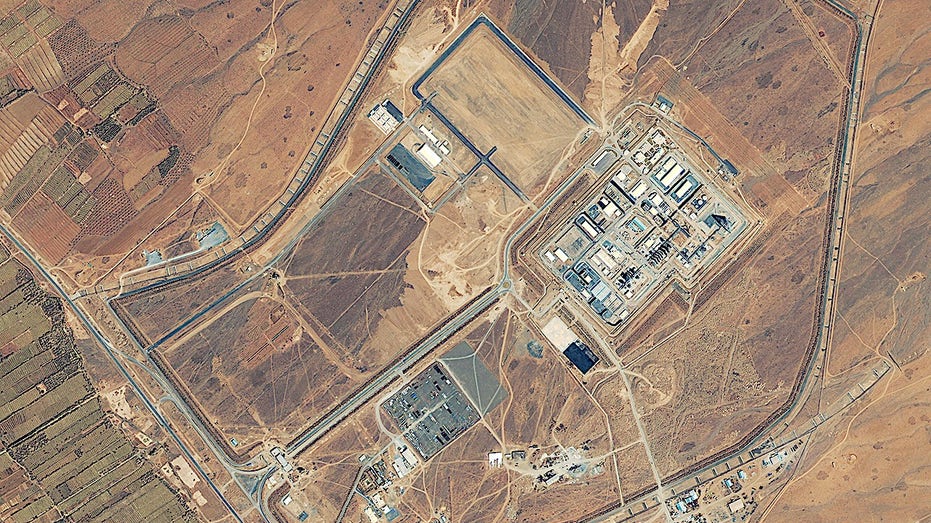
"U.S. Central Command (CENTCOM) conducted self-defense strikes on Iranian radar and command and control sites for drones in Goruk, Iran and Qeshm Island this weekend," a press release noted.

"The measured and deliberate strikes occurred on Saturday and Sunday in response to aggressive Iranian actions that included the shootdown of a U.S. MQ-1 drone that was operating over international waters. U.S. fighter aircraft swiftly responded by eliminating Iranian air defenses, a ground control station, and two one-way attack drones that posed clear threats to ships transiting regional waters," CENTCOM continued.

TRUMP WARNS IRAN US WILL 'FINISH THE JOB' IF DEAL COLLAPSES AS ISRAEL EXPANDS LEBANON OFFENSIVE

"No American service members were harmed. CENTCOM will continue to protect U.S. assets and interests in response to unwarranted Iranian aggression during the ongoing ceasefire," the release added.

The Associated Press reported that Kuwait noted its air defenses opened fire on Monday to intercept drone and missile attacks. Around the same time, Iran’s paramilitary Revolutionary Guard said it responded to an American attack without saying where, likely referring to the attack on Kuwait. The Guard, via a statement reported by the state-run IRNA news agency, indicated that America targeted a telecommunications tower, according to the AP.

U.S. Central Command (CENTCOM) said in a Monday post on X, "Last night at 11 p.m. ET, U.S. forces successfully intercepted two Iranian ballistic missiles targeting American forces based in Kuwait. These missiles were immediately defeated and no American personnel were harmed. U.S. Central Command remains vigilant and will continue to protect our forces from Iranian aggression while supporting the ongoing ceasefire."

Asserting that Iran "really wants" to strike an agreement, President Donald Trump declared in a Monday morning Truth Social post that chattering critics are making it more difficult for him to negotiate. 

MOJTABA KHAMENEI TOUTS NEW ANTI-US ALLIANCE AS GULF BACKCHANNELS SEEP INTO TEHRAN: ANALYST

He urged people to "sit back and relax," claiming that the issue will ultimately turn out "well."

"Iran really wants to make a deal, and it will be a good one for the U.S.A. and those that are with us. But don’t the Dumocrats, and various seemingly unpatriotic Republicans, understand that it is MUCH tougher for me to properly do my job and negotiate, when political hacks keep negatively ‘chirping,’ at levels never seen before, over and over again, that I should move faster, or move slower, or go to war, or not go to war, or whatever," he declared in a Truth Social post early on Monday.

"Just sit back and relax, it will all work out well in the end - It always does!" he declared.

TRUMP REVEALS KEY IRAN CONCESSION, WARNS US WILL 'FINISH IT OFF MILITARILY' IF DEAL FAILS

The U.S. is continuing to conduct a blockade against Iran.

"U.S. forces operating in the Gulf of Oman enforced blockade measures by disabling a Gambia-flagged maritime vessel attempting to sail toward an Iranian port, May 29," CENTCOM announced in a Saturday press release.

The Associated Press contributed to this report

(Auszug von RSS-Feed)

☐ ☆ ✇ Fox News

Pentagon hosts first-ever Israeli–Lebanese military talks aimed at curbing Hezbollah

veröffentlicht.
Vorschau ansehen

Israeli and Lebanese military delegations opened Pentagon-mediated talks Friday morning in Washington, launching a new U.S.-brokered security coordination track aimed at preventing renewed escalation along the Israel–Lebanon border and shoring up a fragile ceasefire reached in mid-April.

A State Department official told Fox News Digital, "As we have continuously stated, the only path to lasting peace is through direct negotiations between the two sovereign governments."

The discussions mark a shift from diplomatic negotiations into direct military coordination, with talks expected to focus on ceasefire enforcement, border stability, Israeli withdrawal from parts of southern Lebanon and the role of the Lebanese Armed Forces in containing Hezbollah.

ISRAEL MOVES TOWARD CEASEFIRE DEAL WITH HEZBOLLAH: REPORTS

The talks come weeks after a U.S.-brokered ceasefire first reached during the broader regional conflict tied to the U.S.–Iran war. While large-scale fighting has eased, Israeli forces continue operating inside parts of southern Lebanon, and Hezbollah maintains drone and rocket capabilities, keeping tensions high along the border.

The ceasefire was extended on May 15 for another 45 days, creating pressure on both sides to show progress before the current arrangement expires.

But analysts say the central question overshadowing the talks is whether Lebanon can realistically curb Hezbollah’s military power without risking internal collapse.

"This will be the first meeting between representatives of the militaries since the start of the negotiation process between Lebanon and Israel," Ahmad Sharawi, a research analyst at the Foundation for Defense of Democracies think tank, told Fox News Digital.

Representing Lebanon in the talks is Lebanese Armed Forces (LAF) commander Gen. Rodolphe Haykal, who previously served as commander of the Lebanese Armed Forces in southern Lebanon, an area where Hezbollah maintains a strong presence. Hezbollah is the Iran-backed Lebanese terrorist organization designated by the United States as a foreign terrorist organization. 

"What we should expect is talks regarding de-confliction and what the expectations are for the LAF in terms of the broader disarmament plan against Hezbollah’s weapons," he said.

Sharawi said the chances of a broader breakthrough remain limited so long as Hezbollah remains heavily armed and politically entrenched inside Lebanon.

"The biggest obstacle here is that the Lebanese state is yet to present a feasible plan to disarm Hezbollah," he said.

LAWMAKERS QUESTION WHETHER US MOVING FAST ENOUGH TO CAPITALIZE ON HEZBOLLAH'S WEAKENED STATE

He pointed to the terms of the November 2024 ceasefire agreements, which placed responsibility for disarming Hezbollah on the Lebanese state.

"We are yet to see the confiscation of one single bullet from Hezbollah," Sharawi said.

He also warned that Hezbollah’s deep support among Lebanon’s Shiite population complicates any attempt to move toward normalization with Israel.

"There’s a fear of a civil war," he said. "That also accounts for the Lebanese state’s unwillingness to disarm Hezbollah."

The talks opened as Prime Minister Benjamin Netanyahu signaled Israel intends to maintain military pressure on Hezbollah despite the negotiations.

Sharawi argued the Trump administration nevertheless appears determined to push the process forward as part of a broader effort to weaken Iranian influence in the region.

"The reason behind these meetings is that President Trump is really trying to push for a peace agreement between Israel and Lebanon," he said. "Peace between these two countries could really undermine Hezbollah and its influence in Lebanon."

WALTZ SAYS TRUMP HAS CREATED 'BEST CHANCE IN OUR LIFETIME' TO BREAK HEZBOLLAH’S GRIP ON LEBANON

Israeli analysts similarly described the talks less as a breakthrough and more as a strategic signal aimed at Hezbollah.

"The war between us and Hezbollah is continuing," Yossi Kuperwasser, head of the Jerusalem Institute for Strategy and Security and former head of the Research Division of Israeli Military Intelligence, told Fox News Digital.

"There is no doubt the Lebanese government does not have a monopoly on the use of force in Lebanon."

‘OVERBLOWN’ REPORTS ON ISRAEL–LEBANON NORMALIZATION RISK HINDERING BORDER TALKS BEFORE THEY BEGIN: OFFICIAL

Kuperwasser said expectations for an immediate diplomatic breakthrough should remain low but argued the talks themselves send an important political message.

"The purpose of these talks is first and foremost to send a message to Hezbollah and also to the Americans," he said. "Both sides are prepared to sit together against Hezbollah and signal that they are moving, even if slowly, toward normalization between Israel and Lebanon."

He argued Hezbollah has been weakened politically and militarily by the ongoing conflict and by growing frustration among Lebanese civilians displaced by the fighting.

"For years, Hezbollah portrayed itself as the defender of Lebanon," Kuperwasser said. "Now many Lebanese see Hezbollah as responsible for the suffering Lebanon is experiencing."

Kuperwasser added that while Israel supports strengthening the Lebanese army, Beirut fears direct confrontation with Hezbollah could ignite another civil war.

"The Lebanese government fears military action against Hezbollah would lead to civil war," he said. "That fear shapes everything."

The talks also come amid mounting domestic pressure inside Israel, where critics of Netanyahu have accused the government of pursuing containment rather than decisive military victory against Hezbollah.

Speaking Friday during a visit to Israel’s northern front, Netanyahu said Israeli forces had crossed the Litani River and were operating across multiple parts of Lebanon. 

"We are operating in Beirut, in the Bekaa Valley, across the entire front and striking Hezbollah hard," Netanyahu said.

Meanwhile, Lebanon’s leadership is attempting to balance growing American pressure with fears of internal instability and renewed sectarian conflict.

Following Friday's meeting, the Pentagon issued a statement, saying, "Under Secretary of War for Policy Elbridge Colby hosted military delegations from the State of Israel and the Republic of Lebanon to launch the security track supporting the ongoing talks between the two nations.

"The delegations engaged in productive, military-to-military talks focused on building practical frameworks for regional security and stability. The progress and tangible outcomes from these discussions will directly inform the Department of State-led political track, which is scheduled to reconvene next week.

"The Department of War deeply values its strategic partnerships with both the Israel Defense Forces (IDF) and the Lebanese Armed Forces (LAF). The Department supports Lebanon's sovereignty and territorial integrity, free of armed non-state actors, and welcomes the commitment of both militaries to these historic efforts. These are essential steps toward realizing President Trump's vision for a lasting peace in the Middle East.

"The United States anticipates reconvening soon to continue the security track."

Neither the Israeli Embassy in Washington nor the Lebanese Embassy in Washington immediately responded to requests for comment. 

(Auszug von RSS-Feed)

☐ ☆ ✇ Fox News

US ally pledges support for Trump's push to break Iran's grip on Hormuz: 'We are ready to contribute'

veröffentlicht.
Vorschau ansehen

UNITED NATIONS — The Czech Republic is prepared to help protect freedom of navigation in the Strait of Hormuz and is aligning closely with the Trump administration on security, NATO and Israel, Czech Foreign Minister Petr Macinka told Fox News Digital during an exclusive interview at the United Nations in New York.

Prague already had begun discussions about contributing specialized capabilities to help secure the strategically vital waterway amid growing tensions with Iran, Macinka said while speaking at Security Council-related meetings at the U.N. 

"We are ready to contribute to freedom of passage and the Hormuz trade," Macinka said. 

"We were among the first countries that were ready to contribute … We have no navy, as we are in the middle of Europe," he explained, "But we have some unique passive surveillance capabilities."

TRUMP SEEKS WARSHIPS FROM OTHER COUNTRIES TO HELP SECURE STRAIT OF HORMUZ

Macinka warned that Iran posed a global threat through what he described as four main "war tools": nuclear proliferation, drones and ballistic missiles, international terrorism and threats to the Strait of Hormuz. 

"Their nuclear military program must be stopped," he said. "It’s a global risk and global threat."

The comments come as the Trump administration has increased pressure on European allies to take a larger role in protecting international shipping routes amid Iranian threats tied to the Strait of Hormuz, one of the world’s most critical oil transit choke points. Roughly one-fifth of global oil consumption passes through the narrow waterway connecting the Persian Gulf to the Arabian Sea.

Speaking after a meeting with foreign ministers in Sweden Friday, Secretary of State Marco Rubio questioned the value of hosting U.S. military bases in allied countries that later restrict American military operations during wartime.

"One of the arguments I always made was that these bases in the region provided us with logistical options that we wouldn’t otherwise have," Rubio told reporters. "And when some of those bases are denied to you during a conflict that we’re involved in, then you question whether that value is still there."

President Donald Trump also has sharply criticized NATO allies over a reluctance to participate in military operations tied to the Iran conflict and securing the Strait of Hormuz. 

Trump said he was "strongly considering" pulling the United States out of NATO after allies failed to join the U.S. campaign against Iran, according to an April 1 interview with Britain’s Daily Telegraph, calling the alliance a "paper tiger."

The Czech Republic, a NATO member since 1999, reached NATO’s benchmark of spending 2% of GDP on defense and has supported calls for Europe to increase military readiness amid Russia’s war in Ukraine.

Macinka strongly defended the administration’s calls for Europe to increase defense spending and reduce dependence on Washington for long-term security guarantees. 

"We should do our homework and build our defense to become stronger," he said, arguing that Europe had delayed necessary military investments for too long.

He also tied Europe’s defense spending challenges to the European Union’s Green Deal policies, the bloc’s sweeping climate agenda aimed at reducing carbon emissions, calling them ideological and financially destructive. 

"If we get rid of this green, crazy alarmism, then we have enough money to build our defense," he said.

The Czech foreign minister also voiced unusually direct support for Trump and his administration, praising what he described as a global "common sense" shift following Trump’s election victory.

"We are friends of Israel, and we are friends of America," Macinka said. "Especially me as a politician, I'm a friend of the ideology of the current American administration."

Macinka also referenced a clash earlier in 2026 with former Secretary of State Hillary Clinton at the Munich Security Conference, where he criticized Europe’s liberal political establishment and defended the populist wave reshaping parts of Europe and the United States.

EUROPE MUST LEAD ON UKRAINIAN SECURITY GUARANTEES, GREEK FOREIGN MINISTER SAYS: 'WE ARE THE NEIGHBORS'

Macinka linked Prague’s strong support for Ukraine to the Soviet-led invasion of Czechoslovakia in 1968, when hundreds of thousands of Warsaw Pact troops occupied the country for more than two decades.

He said that historical experience continues to shape Czech public opinion and support for Kyiv.

"The Czech society feels a big solidarity with Ukraine," Macinka said, describing the war as a "symmetric war" between a powerful Russian military and a Ukrainian army backed by the West.

Macinka highlighted Prague’s leading role in a Czech-backed ammunition initiative supplying Ukraine with artillery rounds collected through international donor efforts. 

Recalling a visit to Kyiv earlier in 2026, he said he received intelligence briefings on battlefield ammunition consumption from Ukrainian military officials.

TRUMP, ZELENSKYY TO MEET FOR KEY DEAL AS NATO ALLIES, RUSSIA WAIT, WATCH

The Czech initiative delivered more than half a million rounds of ammunition in 2026 alone, according to Macinka, helping stabilize the battlefield ahead of possible peace negotiations.

Macinka argued that maintaining a stable front is essential for meaningful negotiations, warning that shifting battle lines will only harden demands on both sides.

With Washington increasingly focused on the Middle East, Macinka also said Europe must begin taking a larger diplomatic role in future negotiations over Ukraine.

"America is quite busy with the Middle East," he said. "Europe should wake up and ask for a place at the table."

(Auszug von RSS-Feed)

☐ ☆ ✇ Fox News

Iran and Houthi terror proxy facing Red Sea threat from pro-US African nation

veröffentlicht.
Vorschau ansehen

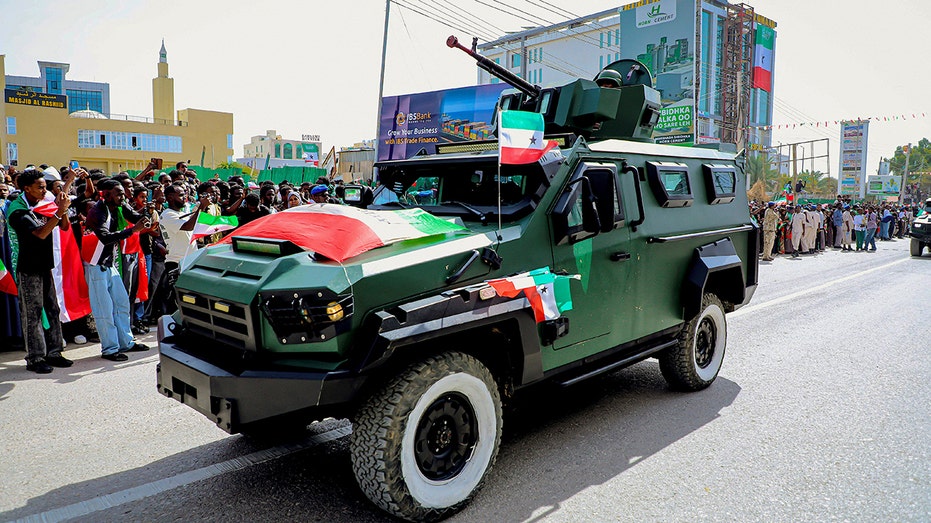
Iran is said to be ‘deeply threatened’ by the small African breakaway state, Somaliland, because of the potential for U.S., Israeli and Western powers to use its deep water port and airbase.

Such moves would severely disrupt Iran’s plan to use their proxy, Yemen’s Houthi terror group, to attack Red Sea shipping.

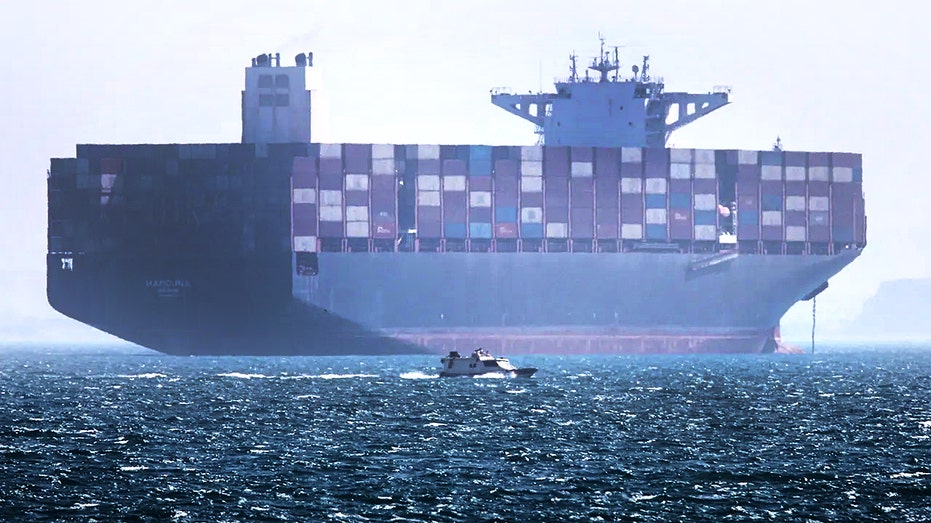
Iran has been accused of pressuring the Houthis to renew their strikes on shipping, particularly in the Red Sea’s Bab-el-Mandeb Strait. The waterway has become the main route for oil to ship out of the Middle East to Asia since the Strait of Hormuz was effectively closed.

COULD SOMALILAND BASE EMERGE AS US FOOTHOLD AGAINST IRAN, HOUTHIS IN KEY SEA LANES?

Lisa Daftari, a Middle East and foreign policy expert, told Fox News Digital, "Iran’s regime is deeply threatened by what Somaliland represents in an emerging pro‑Western, potentially pro‑Israel foothold overlooking the Bab el‑Mandeb, that could blunt Tehran’s leverage via the Houthis over Red Sea shipping and Israel."

Daftari, the editor‑in‑chief of The Foreign Desk, said, "that’s why Iran‑backed Houthis are already explicitly threatening to strike any Israeli or Western military presence in Somaliland and warning they could move to choke the Bab el‑Mandeb if the conflict with the U.S. and Israel escalates." 

The White House has said that Iran’s proxies, such as the Houthis, have been weakened. "The United States Military achieved all of the goals laid out for Operation Epic Fury – including weakening Iran’s proxies. Now, Iran is being strangled economically – giving President Trump all the cards as negotiations continue," Anna Kelly, special assistant to the President and White House principal deputy press secretary told Fox News Digital when asked if the U.S. was considering a full-time-basing relationship with Somaliland.

Edmund Fitton-Brown, a senior fellow at The Foundation for Defense of Democracies (FDD) told Fox News Digital that Somaliland’s recognition of Israel and Israel’s recognition of it last December has clearly irked Iran.

Fitton-Brown, who is a former U.K. ambassador to Yemen — the Houthis home country, said Iran "opposes any recognition of it (Somaliland) primarily because Israel is the first state to recognize it, and Iran will oppose anything that Israel does. Iran is also viscerally opposed to the U.S. and UAE, both of which have pragmatic engagement with Somaliland, short of recognition. Somaliland is a potential base for anti-Houthi enforcement, i.e. a threat to the Iranian Axis of Resistance."

IS TRUMP CONSIDERING BOLD AFRICA PLAY TO PUSH BACK ON CHINA, RUSSIA AND ISLAMIC TERRORISTS?

The U.S. already has a large base on the Red Sea in Djibouti, but Fitton-Brown says this is increasingly problematical "China is significantly expanding its military and commercial presence in Djibouti. There is a sense that Djibouti is not a reliable ally for the U.S. So Somaliland’s time has probably come."

And Somaliland hopes so. Its Foreign Minister, Abdirahman Dahir Adam, told Fox News Digital "At a time when the Strait of Hormuz is under pressure and threats to the Red Sea are escalating, Somaliland has reiterated its longstanding offer to provide the United States with access along our coast. We have been clear about this in times of peace, and we are equally clear today."

The Somaliland government is also offering storage space for tomahawk missiles, with a government source saying it’s "a unique way to advance security interests."

Adam added, "U.S. destroyers that expend their missile batteries in the Red Sea require (currently) up to two weeks of travel to be resupplied. Somaliland is ready to play a practical role in helping the U.S. to secure global trade routes."

But Somaliland’s offer of allowing use of its airbase and seaport is not all plain sailing.  Maj. Gen. (Ret.) Kenneth P. Ekman, former AFRICOM/J5 and West Africa coordination element lead, told Fox News Digital "a policy dilemma presents when conducting diplomatic and military relations with Somaliland directly, rather than through the Federal Government of Somalia and the SNA (Somali National Army)."

IRAN'S AFRICA ACTIVITIES POSE 'SIGNIFICANT THREATS TO US NATIONAL SECURITY'

"This same dilemma presents," Ekman continued. "While we (the U.S.) enjoy good access in Djibouti, this access is singular and competes with the Chinese presence.  Additional access to the port of Berbera, located in Somaliland, provides redundancy (backup) and a relationally different partner. Frankly, the U.S. military, along with some of our allies and partners, need port access in Berbera."

Sen. Ted Cruz, R-Texas., chairman of the Senate Subcommittee on Africa and Global Health, is strongly advocating for the U.S. to go all the diplomatic way and recognize Somaliland.

He told Fox News Digital in a statement that "Somaliland promises to be a critical counterterrorism ally for the United States, both because of its strong willingness to partner with us and because of its unique location. We should recognize the Republic of Somaliland as an independent state and, in the meantime, significantly boost our counterterrorism cooperation." 

The U.S. though, appears to be making below-the-radar moves. The Commander of U.S. Africa Command (AFRICOM), Gen. Dagvin Anderson, was recently in the country visiting port facilities, with a delegation, in November. This week, a Somaliland government source told Fox News Digital that U.S. military delegations come to the state every two months, with the last visit in the second half of April. 

Fitton-Brown told Fox News Digital that, "The U.S. is already using it (Somaliland) for counterterrorism operations. My understanding is that the U.S. doesn’t have a permanent military presence in Somaliland, but actively cooperates with Somaliland's security forces on regional counterterrorism and maritime security issues."

A former senior U.S. defense official agreed that American military specialists have been co-ordinating with Somaliland forces since 2023, when they came together to kill Bilal al-Sudani, reportedly a key facilitator and financier of the ISIS global network.

However, the U.S. aligns publicly with Somalia, from which Somaliland broke away in 1991. 

When asked this week about the U.S. military relationship with Somaliland when it comes to counter-terrorism operations in the country, a Pentagon official told Fox News Digital: "The United States maintains its strategic partnership with the Federal Government of Somalia.

"In northern Somalia, AFRICOM, alongside the Federal Government of Somalia and Somali Armed Forces, has conducted airstrikes to degrade ISIS—Somalia's ability to threaten the U.S. Homeland, our forces, and our citizens abroad. In southern Somalia, AFRICOM, also in close coordination with the Federal Government of Somalia, has conducted airstrikes to enable partner forces’ ability to degrade al Shabaab. Our strategic approach to countering terrorism in Africa relies on trusted partnerships and collaboration grounded in and through shared security interests."

Daftari added, "Somaliland is offering the United States what the mullahs fear most in this theater, namely an alternative, resilient platform on the African shore that includes an airfield, port, and over‑the‑horizon access that would dilute Houthi leverage and give Washington options that don’t depend on Djibouti or Persian Gulf partners alone."

(Auszug von RSS-Feed)

☐ ☆ ✇ Fox News

‘Designated target’ Mojtaba Khamenei to sign Trump deal in ‘unprecedented’ courier setup

veröffentlicht.
Vorschau ansehen

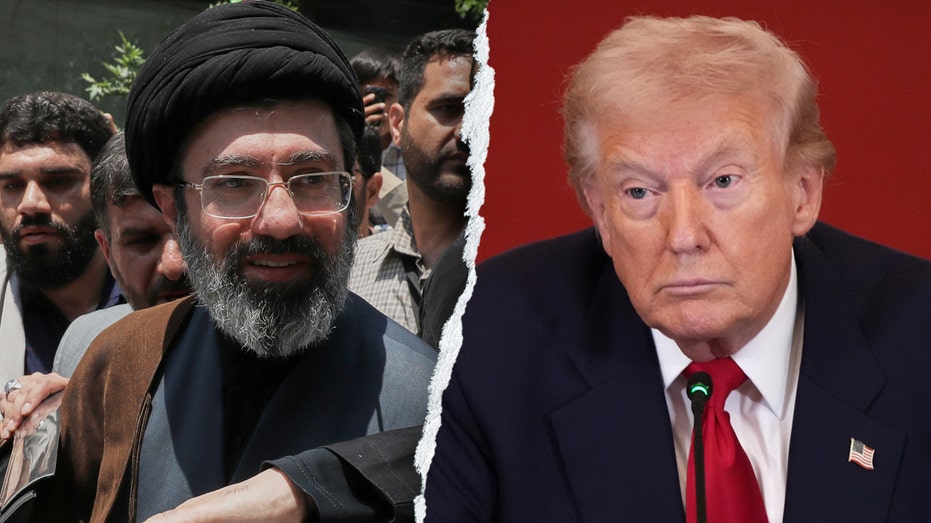
Iran’s supreme leader, Mojtaba Khamenei, would have to approve any final deal with the U.S. through secret courier networks while remaining in hiding as a "designated target," counterterrorism experts said Tuesday.

The unprecedented arrangement, they claimed, means Washington is negotiating a high-stakes accord with an entirely invisible counterparty, with a potential memorandum signed by a regime leader and a marked target who can never publicly show his face.

"Khamenei is a designated target, and every confirmed sighting is a coordinate," Dr. Omar Mohammed told Fox News Digital.

"The courier system used for messaging is not transitional. It is the operating system of his rule.

IRAN'S SUPREME LEADER RUNS 'STATE WITHIN A STATE' THROUGH SECRET 4,000-PERSON NETWORK, REPORT SAYS

"Any deal the United States signs will have to be designed for a permanently invisible counterparty whose enforcement depends on his continued survival. That is not arms control as it has been conventionally understood. It is a memorandum signed under American military pressure, with a regime whose leader cannot show his face."

Mohammed’s remarks came after Secretary of State Marco Rubio explained to reporters in India why the deal was suffering delays.

"It’s just the response," Rubio said. "I mean, when you get down on some of these things, you’ve got to hear back, and it takes the Iranians — takes them a little while longer to get back," he explained.

"That is Secretary Rubio confirming the courier latency on the record," said Dr. Omar Mohammed, director of the Antisemitism Research Initiative Program on Extremism at George Washington University. "Rubio is describing a structural feature of negotiating with a supreme leader no one can locate.

IRAN'S KHAMENEI STAYS AWAY FROM TALKS AS JD VANCE SAYS DYNAMIC MAKES DIPLOMACY 'MUCH MORE COMPLICATED'

"Mojtaba is in hiding, messages are moving by courier, and responses are arriving days late.

"Rubio just confirmed the symptom, and the administration is being honest about the problem. The question is whether the framework can be designed to survive it," Mohammed claimed.

Khamenei has spent nearly three months in hiding as tensions with the U.S. escalate.

He went underground as soon as a strike on Feb. 28 killed his father, amid reports that he was gravely injured.

He was struck in Operation Epic Fury — "wounded and likely disfigured," according to Defense Secretary Pete Hegseth. His wife and son were killed in the same strike.

"Officials at the highest levels of the Iranian government do not know where he is," Mohammed said, meaning every piece of information he receives is "dated, and his responses come with significant latency."

The remarks come as Iran and the United States continue talks aimed at reaching a deal to end the war that began Feb. 28.

IRAN'S SUPREME LEADER MOJTABA KHAMENEI 'MISFUNCTIONING,' NOT CONTROLLING REGIME: SOURCES

"If there’s going to be a deal, we’re going to have to work through that. But this is, you know, it’s either going to be a good deal or there isn’t going to be one," Rubio said Tuesday.

A senior administration official said the U.S. is prepared to ease sanctions if Iran makes major concessions on uranium enrichment. Frozen Iranian assets have also emerged as a key hurdle.

Iran said Monday that no agreement with the United States was imminent, despite progress toward a framework in talks.

Iran’s Foreign Ministry spokesman Esmaeil Baghaei said the focus of talks remained ending the war on all fronts, including Lebanon, and that a possible memorandum of understanding did not include specific details on managing the Strait of Hormuz.

"The real question for Washington is not how fast the framework can be signed," Mohammed added.

"It is also what enforcement looks like when the counterparty’s signature comes through a courier."

(Auszug von RSS-Feed)

☐ ☆ ✇ Fox News

Iran signals ‘mass sacrifice’ in 'high stakes' Saddam-era warning amid Trump deal talks

veröffentlicht.
Vorschau ansehen

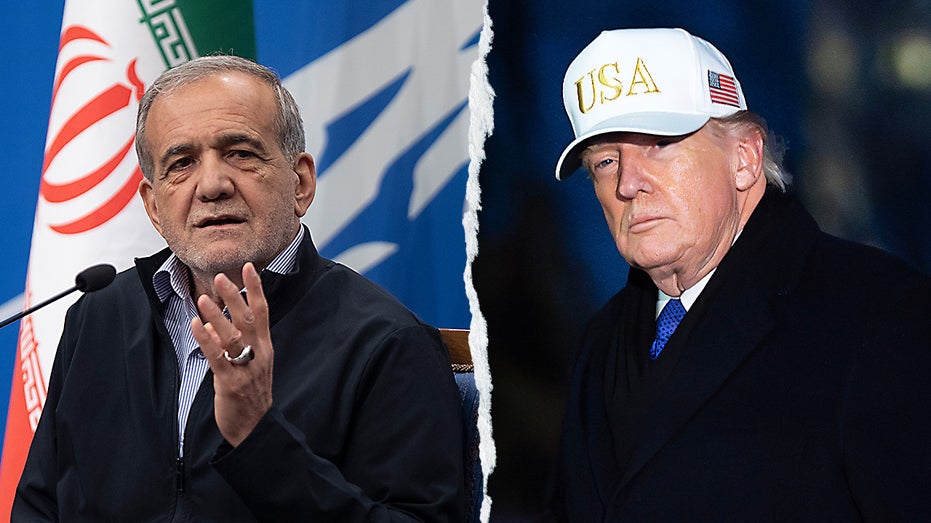
President Masoud Pezeshkian invoked one of Iran’s strongest wartime symbols on May 24, signaling Tehran’s resolve to hold its ground against the U.S. and Israel across the region, a counterterrorism expert said.

The Iranian leader's remarks came at a key moment in diplomacy, as President Donald Trump said a deal with Tehran to end the war is "largely negotiated" and warned the U.S. would either sign "a great and meaningful" agreement or walk away entirely.

While Iran signaled broad agreement with Washington on some points, it said a final deal is not imminent and that negotiations over the remaining details are still underway.

IRAN’S TOP DIPLOMAT SAYS NATION’S POWER LIES IN DEFYING PRESSURE: ‘NO TO THE GREAT POWERS’

In an X post marking the anniversary of the 1982 recapture of Khorramshahr from Iraqi forces during the Iran-Iraq War, Pezeshkian said, "Khorramshahr today is Iran, the Persian Gulf, and the Strait of Hormuz," adding that "resistance, self-sacrifice, and repelling aggression are rooted in the culture of this land."

Analysts claimed Pezeshkian was deliberately invoking one of the deepest ideological touchstones of the Islamic Republic — the battle that came to symbolize national resistance, civilian sacrifice and defiance against invasion.

"This is the Iran-Iraq War reference, and the timing is the point," said Dr. Omar Mohammed, director of the Antisemitism Research Initiative Program on Extremism at George Washington University.

May 24 marks the anniversary of the 1982 liberation of Khorramshahr, the southwestern city Saddam Hussein captured early in the war and Iranian forces retook after months of brutal urban combat.

FROM HOSTAGE CRISIS TO ASSASSINATION PLOTS: IRAN’S NEAR HALF-CENTURY WAR ON AMERICANS

"This is one of the Islamic Republic’s foundational mythological moments — civilian resistance, mass sacrifice, repelling an ‘aggressor army.’ Roughly what the Great Patriotic War is to Russia. The rhetorical move is the extension," Mohammed told Fox News Digital.

"He’s mapping the 1980-82 defensive-war frame onto the current confrontation: Iran attacked by an aggressor, ordinary citizens (‘battle-untested but brave’) expected to stand and fight, with ‘resistance, sacrifice, repelling aggression’ cast as the cultural default mode."

Some of the phrasing, Mohammed said, also evokes volunteer and Basij fighters versus a professional invading army. The analyst noted that Pezeshkian’s "Hormuz line" comment reflects a standard Iranian escalation tactic.

IRAN TO HOLD LIVE-FIRE DRILLS IN STRAIT OF HORMUZ WITH US ARMADA IN MIDDLE EAST

"Invoking the strait inside a wartime-mobilization frame — even rhetorically — is a deliberate signal, not throat-clearing," he added.

"The Khorramshahr frame is the deepest register the regime has. It’s what they reach for to signal existential war, not a managed crisis."

Mohammed explained that Pezeshkian’s X post is framing the current confrontation from the presidential account to send a "high-stakes message."

"It’s also a tell on internal posture: Khorramshahr, in short, means ‘we are being invaded and we will not negotiate,’" he added.

(Auszug von RSS-Feed)

☐ ☆ ✇ Fox News

'Bibi's hair on fire': Trump-Netanyahu public 'rift' masked unified front against Iran, analyst says

veröffentlicht.
Vorschau ansehen

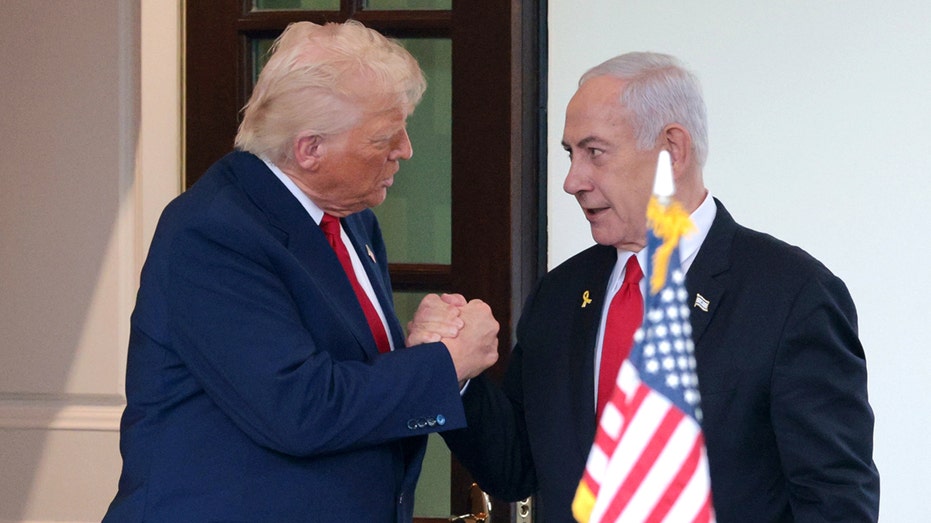
Intensifying leaks and tense phone calls between President Donald Trump and Israeli Prime Minister Benjamin Netanyahu suggesting a relationship breakdown over Iran were part of a calculated strategic effort to keep Tehran guessing, a leading defense analyst told Fox News Digital on Sunday.

The public display, which projected American diplomatic patience while shutting out Jerusalem, covertly laid the groundwork for a unified front, he said.

The strategy culminated in a weekend synchronization phase, with Trump and Netanyahu showcasing total alignment by Sunday, suggested Kobi Michael, a senior researcher at the Institute for National Security Studies (INSS) and the Misgav Institute.

TRUMP, NETANYAHU TO MEET AT WHITE HOUSE IN HIGH-STAKES TALKS ON IRAN, GAZA PLAN

Axios had reported Thursday that a difficult call between the leaders focused on a revised U.S. proposal sent to Iran via Pakistan, which Netanyahu reportedly rejected in favor of renewed military action to degrade Tehran’s infrastructure.

One U.S. source told the outlet that "Netanyahu’s hair was on fire" after the exchange.

Separately, weekend reports suggested Israeli leaders were being marginalized from U.S.-Iran negotiations after Netanyahu’s prewar push for a joint campaign to topple the Iranian regime failed to materialize.

Netanyahu broke his silence Sunday, posting on X to declare absolute solidarity with the White House and project a unified stance.

IRAN’S NEW SUPREME LEADER IS ‘HIS FATHER ON STEROIDS,’ EXPERTS WARN OF HARDLINE RULE

"The partnership between us and our two countries has been proven on the battlefield and has never been stronger," Netanyahu shared on X. "My policy, like President Trump’s, remains unchanged: Iran will not have nuclear weapons."

Michael viewed the public friction and targeted leaks as a calculated tactical feint designed to keep Tehran blindsided.

"Neither President Trump nor Prime Minister Netanyahu has any interest in any crisis, but by leaking the story of a crisis between Trump and Netanyahu, the Iranians might find themselves surprised by the timing of the next military attack," Michael said.

"The leak created a sense of disagreement between the two leaders and positions Trump as the leader who gives another chance to the diplomatic path despite the pressures of Prime Minister Netanyahu," he said. 

"Trump understands who the Iranians are."

The final synchronization followed a weekend phone call in which Trump reassured Netanyahu that any final agreement with Iran would fully dismantle Tehran’s nuclear program.

UN'S NUCLEAR WATCHDOG WARNS ITS UNABLE TO CONFIRM IRAN'S PROGRAM IS 'ENTIRELY PEACEFUL'

Netanyahu also said Trump also "reaffirmed Israel’s right to defend itself against threats on every front, including Lebanon."

Washington has been keeping Jerusalem updated on the negotiations "over a memorandum of understanding to reopen the Strait of Hormuz and enter negotiations toward a final agreement on the points that remain in dispute," an official statement read.

Following the Sunday call, Netanyahu also thanked Trump for his "exceptional commitment to Israel’s security."

"Netanyahu’s last post about his last conversation with Trump can be understood as the ultimate closure to this deception and any accusations," Michael added.

"This is trying to prepare the Israeli public for the idea that everything was fully coordinated with the U.S., and the diplomatic developments will serve the Israeli interest."

Michael added, however, that skepticism remained in Jerusalem over whether the gaps between the U.S. and Iran will be bridged, or whether "Trump will accept the Iranian position."

(Auszug von RSS-Feed)

☐ ☆ ✇ Fox News

'A new kind of war': Inside Ukraine's hidden factories mass-producing combat drones

veröffentlicht.
Vorschau ansehen

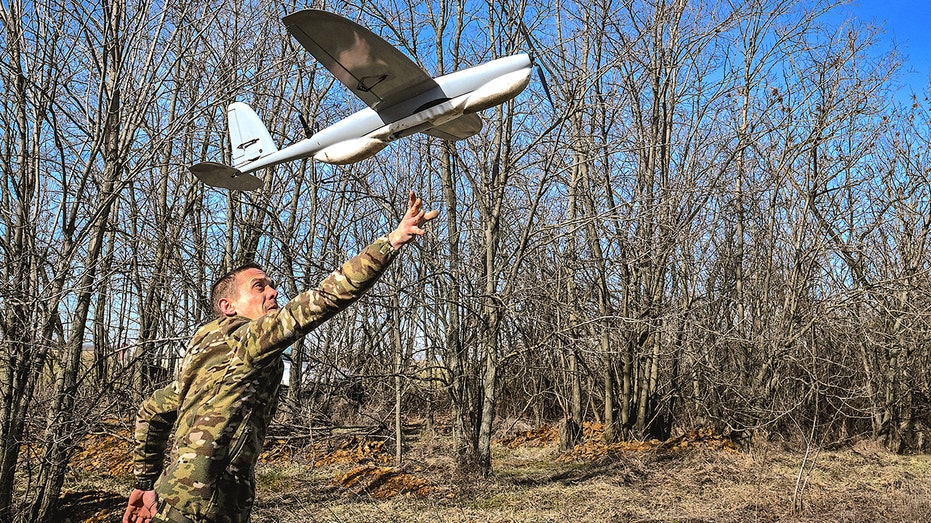
LVIV, Ukraine: Exclusive — The same Iranian-designed Shahed drones that rain down in Lviv, Ukraine, nearly every night are now being hunted by weapons built just miles away inside hidden factories where former students and office workers assemble kamikaze drones and interceptor systems around the clock.

What began as an improvised wartime effort has evolved into one of the world's fastest-growing military drone industries. One Ukrainian official says Kyiv now leads NATO in battlefield innovation and can offer hard-won lessons for the U.S. and Israel as they confront the same Iranian drone technology across the Gulf.

"Drone technology completely changed the situation in the frontline," Lviv Mayor Andriy Sadovyi told Fox News Digital in an exclusive interview. "Maybe in six months, maybe in one year, we will have technology to land 1,000 drones in one moment.

POLAND SEEKS ANSWERS AFTER PENTAGON SCRAPS PLANNED US ARMORED BRIGADE ROTATION

"If we will have more deep collaboration between Ukraine, the United States, Israel and Europe, we will prepare special equipment for our victory," he said.

Dmytro, CEO of a Ukrainian drone manufacturer producing roughly 1,000 drones a week, told Fox News Digital, "We are three or four steps ahead of other countries. … This is a new kind of war. It is a war of IT technology."

Cheap drones now allow small battlefield units to identify and destroy tanks, armored vehicles and even sophisticated air defense systems that once required expensive missiles or fighter aircraft.

That transformation is visible throughout western Ukraine, where defense technology hubs, secret workshops and testing sites now operate, while in the cities air raid sirens regularly interrupt daily life.

Inside a workshop Fox News Digital visited, workers moved rapidly between tables stacked with propellers, fiber optic cable and other classified drone components. The workers say they no longer see themselves as civilians temporarily helping the war effort. Many now view drone production as essential to Ukraine’s survival.

Vitaliy, one of the technicians assembling kamikaze drones destined for the front line, said he now builds hundreds of drone components a day. 

"Targets will be vehicles, tanks, troopers, positions," he told Fox News Digital.

NATO ALLY POLAND WARNS RUSSIA, BELARUS PUSHING ILLEGAL MIGRANTS TOWARD ALLIANCE — AND THE US

Referring to President Donald Trump's statement that he will end the war, Vitaliy said, "I feel honored because I’m helping my country to get peace much faster," Vitaliy added. "Peace through strength — this is our motivation. But it is mostly on us, for sure."

Ukraine’s domestic drone production has expanded at a staggering pace. Ukrainian Deputy Defense Minister Serhiy Boyev said earlier this year the country aims to produce more than seven million drones in 2026, up from roughly four million in 2025.

From AI-assisted battlefield systems to drones resistant to Russian electronic warfare, Ukraine’s wartime innovations are exposing vulnerabilities in traditional Western military doctrine.

At another defense technology hub in Lviv, rows of interceptor drones, unmanned ground vehicles and remotely operated weapons systems fill a showroom demonstrating Ukraine’s rapidly evolving battlefield ecosystem.

"We have around 250 tech companies in the system," said Volodymyr Cherniuk, co-founder of Iron, a Ukrainian defense technology cluster.

Some drones are designed for reconnaissance, others for evacuation, logistics or direct strike missions. One heavy-lift drone used for nighttime attacks has earned the nickname "Baba Yaga" from Russian troops, which Cherniuk translated as "boogeyman."

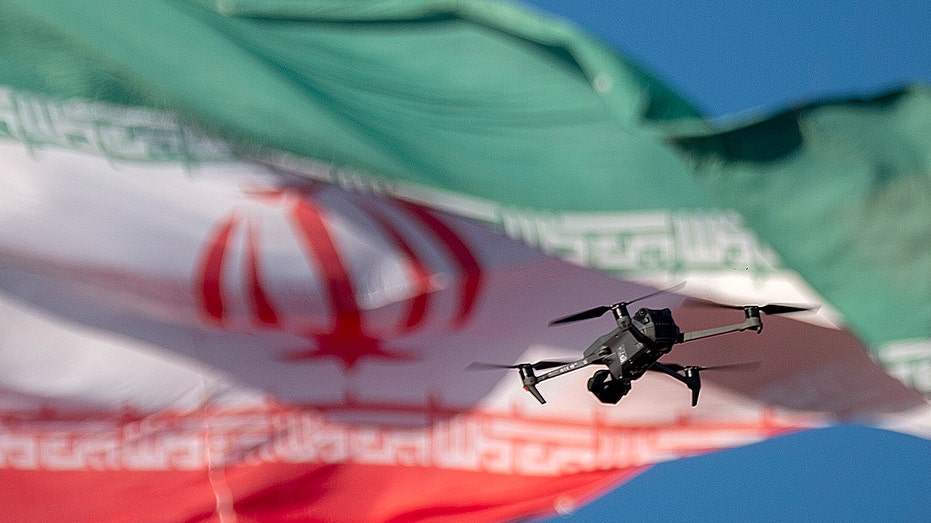
Another interceptor drone is designed specifically to hunt Iranian-made Shahed drones that Russia uses in nightly attacks on Ukrainian cities.

UKRAINE’S 'SPIDER’S WEB' DRONE STRIKE BURNS OVER 40 RUSSIAN WARPLANES, MOSCOW CALLS IT 'TERRORIST ATTACK'

"They can go 300 kilometers per hour," Cherniuk said. "One hundred grams is enough to shut down a Shahed."

"We have a lot of Americans, Canadians, Europeans who come here and want our data, feedback from the front line," Dmytro said. 

As Fox News Digital reported from Lviv, air raid sirens repeatedly echoed across the city, a reminder that western Ukraine remains within reach of Russia’s expanding drone campaign.

Russia has dramatically escalated its aerial assaults in the recent week after the end of the short ceasefire, launching massive drone barrages targeting cities and logistical hubs across Ukraine, including areas near NATO territory close to the Polish border.

Ukraine has also increasingly demonstrated its ability to strike deep inside Russian territory with long-range drone attacks targeting areas around Moscow and Russian energy infrastructure.

But the evolving drone war has also increasingly spilled beyond Ukraine and Russia’s borders into NATO territory.

In recent weeks, drones linked to Ukrainian long-range strike operations entered the airspace of Baltic alliance members including Latvia, Lithuania and Estonia, triggering political fallout and renewed concerns about regional air defenses. Latvian Defense Minister Andris Sprūds resigned after drones crashed near fuel storage facilities close to the Russian border.

Ukrainian and Baltic officials blamed Russian electronic warfare and GPS spoofing for redirecting the drones off course, arguing Moscow is increasingly using electronic warfare not only defensively, but also to create instability and political pressure inside NATO countries.

The incidents underscore how the same Iranian-designed Shahed drones Russia uses nightly against Ukrainian cities — and similar long-range drone technologies increasingly used by both sides — are reshaping modern warfare far beyond the battlefield itself.

(Auszug von RSS-Feed)

☐ ☆ ✇ Fox News

Mojtaba Khamenei using ‘bin Laden template’ to survive, learned from Abbottabad: analyst

veröffentlicht.
Vorschau ansehen

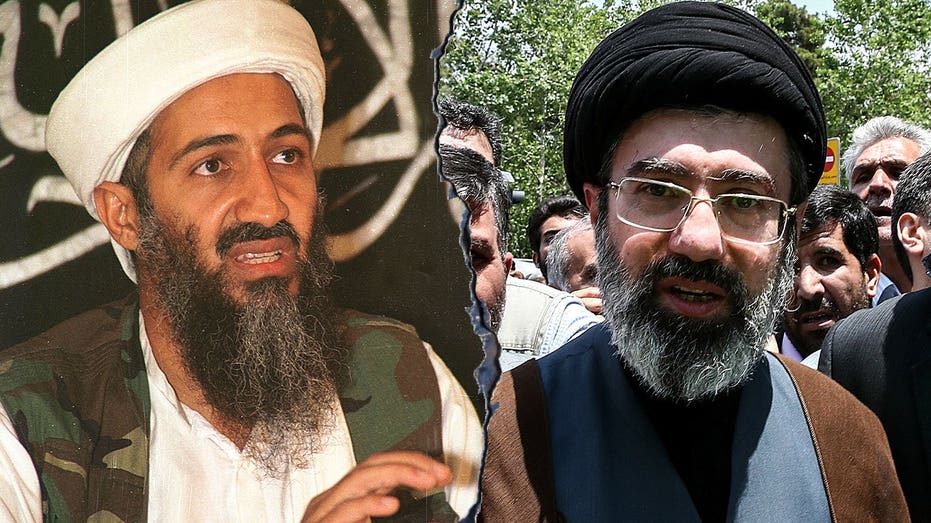
Iran’s Supreme Leader Mojtaba Khamenei has spent nearly three months in hiding as tensions with the U.S. escalate — a disappearance that counterterrorism analysts say mirrors the final years of al Qaeda mastermind Osama bin Laden.

The comparison comes amid a critical standoff between Washington and Tehran that prompted President Donald Trump to pause a planned strike on May 19. On Wednesday, Trump told reporters he was in "no hurry."

Khamenei, meanwhile, appeared to share three posts on his official X account on May 18 but remains out of public view.

"For the first time in the history of the Islamic Republic, the United States has done to Tehran what it spent two decades doing to al-Qaeda and ISIS," counterterrorism expert Dr. Omar Mohammed told Fox News Digital.

THE MISSING MULLAH: IRAN'S 'SUPREME LEADER' A NO-SHOW FOR NEGOTIATIONS, THEN HID AS US POUNDED NUKE SITES

"The U.S. has driven its leader into the same kind of operational invisibility that bin Laden lived in for 10 years in Abbottabad," he added.

"Both Mojtaba Khamenei and bin Laden inherited their status on the back of an American operation, and both responded the same way: by ceasing to exist publicly," Mohammed said before adding that bin Laden "stopped releasing dated videos around 2007 and confined himself to audio messages carried by hand."

Bin Laden founded al-Qaeda in the late 1980s and masterminded the Sept. 11, 2001, terrorist attacks against the United States.

After the U.S. invasion of Afghanistan, bin Laden evaded capture for a decade by hiding inside a fortified compound in Abbottabad, Pakistan.

To avoid Western electronic surveillance, he severed his digital footprint and relied exclusively on a network of physical couriers, said Mohammed, an expert with the Antisemitism Research Initiative at George Washington University’s Program on Extremism.

U.S. intelligence eventually tracked one of those couriers to the compound, culminating in the 2011 Navy SEAL raid that killed the al Qaeda leader.

OPERATION EPIC FURY: HOW AMERICA'S AIR POWER IS CRUSHING IRAN’S TERROR REGIME

"Bin Laden survived with no cables out of the Abbottabad compound. Communications were carried by hand by two trusted couriers, the Kuwaiti brothers," Mohammed said.

"Bin Laden stayed hidden for the rest of his life because the moment he surfaced was the moment he died. Mojtaba’s incentives point the same way. Mojtaba Khamenei won’t emerge," he said.

"The Abbottabad lesson, which Tehran will have studied closely, is that the safest hiding place is not a cave in Tora Bora but a walled compound in a garrison town," Mohammed added, recalling how U.S. forces targeted bin Laden in the cave complex before he escaped.

Bin Laden also lived roughly a mile from Pakistan’s top military academy, hiding in plain sight behind high concrete walls and barbed wire, Mohammed noted.

"The logical Iranian equivalents are hardened sites under or alongside IRGC facilities," Mohammed added, referring to the Islamic Revolutionary Guard Corps and possible locations where Khamenei could be.

As previously reported by Fox News Digital, one of Khamenei’s few recent communications was an X post declaring a "holy war," framing the geopolitical clash as a mandatory religious obligation.

INSIDE IRAN’S RULING IDEOLOGY: HOW A ‘HOLY MISSION’ AND MESSIANIC DOCTRINE FUEL REGIME EXTREMISM

"This is a religious leader calling for sacred war against America and the Jews from an undisclosed location because his enemies have publicly vowed to kill him on sight," Mohammed said, describing the narrative as "the bin Laden template, almost line for line."

Mohammed also suggested Khamenei’s retreat into the shadows marks a watershed moment for Washington and the future of the Iranian regime.

His predecessor and father, Supreme Leader, Ayatollah Ali Khamenei, was killed Feb. 28 in a targeted U.S.-Israeli airstrike in Tehran during Operation Epic Fury.

"This regime that for 47 years projected its power through a single visible Supreme Leader at the Friday prayer pulpit can no longer produce that figure on demand," he said, calling it a "strategic milestone."

"Predecessors killed by U.S. strikes and successors who cannot show their faces. Real power exercised by a security apparatus rather than by the nominal figurehead."

"Now one side is announcing operations on three continents through its president; the other is governed on paper by a man whose own population is uncertain where he is or what state he is in," Mohammed said.

"The contrast is also about the optics of leadership during this war," he added.

(Auszug von RSS-Feed)

☐ ☆ ✇ Fox News

UK defense shortfalls highlighted as Britain avoids Iran offensive role amid Trump criticism

veröffentlicht.
Vorschau ansehen

LONDON: The United Kingdom announced Tuesday it will be deploying military assets "as part of a future defensive mission to secure freedom of navigation in the Strait of Hormuz."

While the move can be seen as a positive step in repairing relations with the U.S., Prime Minister Keir Starmer’s reluctance to join the U.S. in "Operation Epic Fury" against Iran has still ruffled feathers in Washington — most notably those of President Donald Trump.

Trump has dismissed Starmer as "no Churchill." In a recent interview with Sky News, the president further complained about the lack of British alignment: "When we asked them for help, they were not there. When we needed them, they were not there... And they still aren't there."

TRUMP SLAMS STARMER AS ‘NOT WINSTON CHURCHILL’ FOR REFUSAL TO BACK IRAN STRIKES

Trump also took aim at the British Navy’s readiness in March, ridiculing the fleet during a White House meeting. 

"We had the U.K. say that, 'We'll send'— this is three weeks ago — 'we'll send our aircraft carriers,' which aren't the best aircraft carriers, by the way," Trump said, according to Sky News. "They're toys compared to what we have."

Two recent reports by a leading military expert and a parliamentary committee may, in part, explain why the U.K. didn’t join the war in an offensive measure.

In a report titled, "Iran War Delivers a Tough Lesson in Hard Power to the U.K.," Matthew Savill, director of military sciences at the Royal United Services Institute (RUSI), wrote, "The outbreak of a new war in the Middle East has led to questions about the U.K.'s relevance in international affairs. Alongside debates about legality and politics, there are some hard truths about military power and the reality of the readiness of the U.K.'s armed forces."

While the report was written with the war still raging on, Savill stated, "Pressure is growing for the deployment of more U.K. forces to the region and direct involvement in strikes, but the government will need to answer difficult questions about prioritization and the effect that it might be trying to achieve. The consequence is that as much as intent and policy drive U.K. involvement, the practical realities will constrain what the U.K. can do."

Savill added, "On the defensive side, the U.K. has not been idle... [U.K. assets] which also appear to have included some counter-drone units – have been involved in downing Iranian drones while defending Jordan and Iraq."

UK DEPLOYING WARSHIP, HELICOPTERS TO CYPRUS AFTER DRONE STRIKE

Savill wrote that "The challenge for the U.K. is that in the past few years, the commitments and visible presence of U.K. Armed Forces in the region have been shrinking, as a result of the pressure on the military, and a conscious decision to prioritize elsewhere, most recently in the ‘NATO First’ approach of the Strategic Defense Review of 2025."

While the Starmer government has committed to increasing defense spending to 2.5% of GDP by 2027, experts warn that this investment may be too late to restore the U.K.’s ability to project power globally in the near term.

John Hemmings, director of the National Security Center at Henry Jackson, told Fox News, "The U.K.’s military capabilities have been systematically underfunded over the past 15 years, with the Spending Review and cuts starting in 2009 and 2010 under Prime Minister David Cameron. The Strategic Defense and Security Review (SDSR) at the time stated that the world was headed in a much more dangerous state, but the fiscal devastation of the 2008 Financial Crisis pushed the Government into a series of cuts that were intended to be short-term. Instead, the Cameron Government sent the U.K.’s armed services into a spiral of terminal decline that has lasted until this day," he said.

TRUMP PRAISED FOR GETTING NATO ALLIES TO BOLSTER DEFENSE SPENDING: 'REALLY STAGGERING'

Hemmings added, "Consider the Royal Navy, the U.K.’s premier service and source of great power reach; only 25 out of 63 commissioned vessels are actual fighting ships. This force size is impossible to service Britain’s overseas responsibilities and has seen cuts of 50% in only 30 years. In 1996, there were 22 frigates, 17 submarines, 15 destroyers, and 3 aircraft carriers. Today’s First Sea Lord must attempt to carry out the same duties with seven frigates, 10 submarines, six destroyers, two aircraft carriers. In addition, the U.K. underfunded new capabilities like domestic air and missile defenses and advanced command and control systems."

A second report released last month, by the House of Lords International Relations and Defense Committee titled: ‘Adjusting to new realities: rebalancing the U.K.-U.S. partnership,' presents several key recommendations where it warned of the over-dependence on the U.S. "Although the U.K. has benefited from closely collaborating with the U.S. on defense, this has fostered a dependency culture leading to a decline in U.K. capabilities and loss of U.K. credibility in Washington. The Government should provide a clear and costed pathway to achieving the commitment to increase defense spending to 5% of GDP."

While the Ministry of Defense did not respond to several requests for comment over the state of forces, Fox News Digital recently reported that the U.K. government said it is reversing an attrition rate in the military, stating that total armed forces strength stood at 182,050 personnel as of Jan. 1, 2026, including 136,960 regular troops, an increase from the previous year.

The government has also pledged what it calls the largest sustained rise in defense spending since the Cold War, with military spending set to reach 2.6% of GDP by 2027, backed by an additional £5 billion (approximately $6.6 billion) this financial year and £270 billion (nearly $360 billion) in defense investment over the course of the current parliament. Britain has also said it aims to raise defense spending to 3% of GDP by the end of the next parliament.

Analysts say while some in the Trump administration see the U.K.’s absence as a betrayal of the special relationship, others may say it is a tough lesson in the limitations of a mid-sized power that has tried to maintain a global footprint on a shrinking budget.

(Auszug von RSS-Feed)

☐ ☆ ✇ Fox News

Lebanon accuses Iran of inserting IRGC terrorists into country 'under guise of diplomatic activity'

veröffentlicht.
Vorschau ansehen

The Lebanese government filed a sharply worded complaint with the United Nations arguing that the Islamic Republic of Iran has abused diplomatic immunity by refusing to recall its ambassador after Beirut demanded his expulsion and to stop alleged terrorist activities on its soil, according to a recently surfaced letter from late April.

The disclosure of the letter, which is reportedly a precedent-setting move by Lebanon, comes amid a second day of talks in Washington between Israel and Lebanon to normalize relations (the countries are in a state of war) and dismantle the Iranian-regime-backed Hezbollah terrorist movement in Lebanon.

A U.S. State Department spokesperson told Fox News Digital on Friday that "The United States facilitated talks between Israel and Lebanon have resumed today and are ongoing. The atmosphere of talks has been very positive, even exceeding expectations."

FAMILY OF AMERICAN HOSTAGE TORTURED IN LEBANON WINS LANDMARK CASE AGAINST IRAN

State Department spokesman Tommy Pigott wrote on X on Friday that "On May 14 and 15, the United States hosted two days of highly-productive talks between Israel and Lebanon. The April 16 cessation of hostilities will be extended by 45 days to enable further progress. The State Department will reconvene the political track of negotiations on June 2 and June 3."

He added that, "In addition, a security track will be launched at the Pentagon on May 29 with military delegations from both countries. We hope these discussions will advance lasting peace between the two countries, full recognition of each other’s sovereignty and territorial integrity, and establishing genuine security along their shared border."

As the sides report back to their capitals, the potentially game-changing letter in which Lebanese ambassador to the U.N. Ahmad Arafa, slammed Iran for inserting alleged terrorists from Iran’s Islamic Revolutionary Guard Corps (IRGC) into Lebanon "under the guise of diplomatic activity," has given hope to critics of Iran and Hezbollah.

Arafa said, according to the letter, that Iran committed "unlawful acts in blatant defiance of the decisions of the Government of Lebanon." He continued, "This Iranian conduct constitutes direct and blatant interference in the internal affairs of Lebanon and drags the country into a war it did not choose to become involved in."

The U.S. and the European Union have classified the IRGC as a terrorist entity.

The letter took the Iranian Ambassador to Beirut, Mohammad Reza Sheibani, to task for "blatant interference" in Lebanon.

According to Lebanon’s U.N. letter, Beirut argued that Iran is violating the 1961 Vienna Convention on Diplomatic Relations and interfering in Lebanon’s state of affairs.

IDF SOLDIERS ACCUSE UN PEACEKEEPERS OF ENABLING HEZBOLLAH TERRORISTS AMID INCREASING CEASE-FIRE VIOLATIONS

When asked about the details of the letter, a spokesperson for Lebanon’s ambassador to the U.S. declined to comment. The spokesperson also declined to weigh in on the current talks with Israel in Washington.

Walid Phares, a leading U.S. expert on Lebanon and the Mideast, told Fox News Digital that "Many have considered the Lebanese memo to the U.N. as the start of the Lebanese government change of attitude towards Iran and a sign of escalation by Beirut. While the tone of the letter and its narrative make people feel that there is a government resistance to Iran and Hezbollah reality is still lesser."

He added that "The subject of the last quarrel is a legal change of status regarding the presence of Iranians on Lebanese soil. The Lebanese government has decided not to grant Iranians, government, and private citizens an automatic visa waiver, which upset Iran and Hezbollah. Besides, Tehran is furious at the fact that the Lebanese government has not been helpful in dealing with the elimination of a number of IRGC members killed in Lebanon by Israel. Tehran blames the foreign ministry of Lebanon, particularly foreign minister Youssef Raggi, for the ‘lessening of solidarity with Iran."'

According to Phares, "Raggi represents a Lebanese Christian bloc in the parliament, who is not sympathetic to the regime. However, the actual talks in D.C. are designed by the Lebanese government to show the Trump administration that the ‘state wants to talk’ but not to reach an agreement that would trigger Hezbollah's wrath. The leaders of the Lebanese state are not yet where the U.S. and Israel expect them to be."

A regional official well-versed in the U.N. dispute told Fox News Digital that Lebanon "argued that Iran had not given the Lebanese foreign ministry the list of all Iranians and the details about their place of stay. And that’s why Israel targeted that hotel in Lebanon in which six were killed, which is true."

The official said that "Iran had not told the foreign ministry of Lebanon about those six people."

(Auszug von RSS-Feed)

☐ ☆ ✇ Fox News

Iran says its small subs deployed to Strait of Hormuz as expert explains threat: ‘Vulnerable to detection’

veröffentlicht.
Vorschau ansehen

Iran says it has deployed small submarines to act as an "invisible guardian" of the Strait of Hormuz amid a series of rejected peace deals between Tehran and the U.S., according to reports.

The deployment claim came as analysts said that although the Iranian Ghadir-class mini-subs could threaten U.S. naval forces, the vessels’ limited range, firepower and endurance would blunt any real strategic impact.

The submarine deployment was highlighted by Bloomberg and first reported by the semi-official Tasnim News Agency.

Rear Admiral Shahram Irani, commander of Iran’s navy, said that his forces deployed its light submarine, referred to as the "dolphins of the Persian Gulf," according to the Iranian state media outlet.

IRAN TURNS TO PUTIN AS US TALKS COLLAPSE, HORMUZ STANDOFF THREATENS GLOBAL OIL FLOW

It also comes as Tehran seeks to reinforce its control over the strait, now defining it as a far larger zone, Reuters reported.

"Time would be limited, probably a couple of days at the most," defense analyst Tom Shugart told Fox News Digital about the Iranian vessel deployment.

The retired U.S. Navy submarine warfare officer also said the small diesel-electric submarines face fundamental operational constraints.

IRAN HOLDS WORLD ENERGY HOSTAGE WITH 'NIGHTMARE' STRAIT OF HORMUZ SEA MINES, FORMER CENTCOM OFFICIAL WARNS

"If they run their diesel engines to snorkel and recharge batteries, that could generate sound that could be detected," Shugart said.

"Their snorkel mast projecting from the water could be detected by radars on patrol aircraft or helicopters," Shugart added.

The submarines are said to be designed for shallow waters like the Strait of Hormuz and can operate quietly for limited periods on battery power.

"While they may be able to sit on the bottom for a while and operate somewhat quietly on their batteries for a while, they have no air-independent propulsion system (AIP) like more modern diesel-electric submarines," Shugart said before adding that they’ll, "eventually have to come up and snorkel. This will make them more vulnerable to detection and destruction."

INSIDE IRAN’S MILITARY: MISSILES, MILITIAS AND A FORCE BUILT FOR SURVIVAL

The IRGC Navy is said to be the sole operator of this class of submarine, all of which serve in the Southern Fleet.

"Any remaining Ghadirs, if they exist and are actually deployed, may be able to lay mines and may be able to threaten merchant ships," Shugart warned.

"But I don’t see them as a serious threat to U.S. Navy warships — and certainly not to U.S. submarines," he said.

"But I can say for sure that I wouldn’t want to go out on one in the current environment."

HORMUZ CHOKE POINT PERSISTS AS IRAN HALTS OIL TRAFFIC DESPITE TRUMP CEASEFIRE

The U.S. Navy confirmed May 10 that a U.S. Navy Ohio-class nuclear-armed submarine had arrived in Gibraltar.

"The port visit demonstrates U.S. capability, flexibility and continuing commitment to its NATO allies," U.S. Sixth Fleet Public Affairs said in a statement.

"Ohio-class ballistic missile submarines are undetectable launch platforms for submarine-launched ballistic missiles, providing the U.S. with its most survivable leg of the nuclear triad," it added.

Meanwhile, Shugart’s remarks came as the Strait of Hormuz remains effectively closed, with commercial tanker traffic largely choked off amid ongoing military activity and the continued U.S. blockade of Iranian ports.

The United Arab Emirates and South Korea reported new strikes on stranded vessels Wednesday, while the IRGC increased its fast-attack craft activity, according to reports.

President Donald Trump has maintained Iran’s navy is "completely obliterated."

The Pentagon did not immediately respond to Fox News Digital’s request for comment.

(Auszug von RSS-Feed)

☐ ☆ ✇ Fox News

Trump faces split among retired US commanders over whether to resume Iran strikes

veröffentlicht.
Vorschau ansehen

President Donald Trump said the ceasefire with Iran is on "massive life support," as retired U.S. commanders and national security experts are increasingly split whether Washington should resume military operations against Tehran or avoid what critics warn could become another prolonged Middle East conflict.

"I would say the ceasefire is on massive life support," Trump told reporters Monday. "Where the doctor walks in and says, ‘Sir, your loved one has approximately a 1% chance of living.’"

Trump also dismissed Iran’s latest response to a proposed agreement as "a piece of garbage," amid reports the White House is reviewing military options should negotiations collapse.

Retired Lt. Gen. H.R. McMaster, former national security adviser under Trump, said he believes Iran’s leadership is unlikely to make the concessions Trump considers necessary for a deal.

WHITE HOUSE WARNS IRAN AGAINST BALKING AT DEAL: TRUMP READY TO 'UNLEASH HELL'

"I think the Iranian leadership and IRGC are unwilling to make the kind of concessions that President Trump thinks are at the minimum," McMaster told Fox News Digital, referring to Iran's hardline Islamic Revolutionary Guard Corps. 

"President Trump always wants a deal," he added. "But he's not going to sign up for a bad deal."

The emerging debate now centers on a core question facing Washington: whether additional military pressure could force Iran to abandon its nuclear and missile ambitions, or whether renewed strikes would deepen a regional conflict without producing decisive results.

Retired Vice Adm. Mark Fox, former deputy commander of U.S. Central Command (CENTCOM), said he believes the current ceasefire and diplomatic track are unlikely to force Iran to back down.

"I really cannot envision anything other than a full return to combat operations," Fox told Fox News Digital. "The only thing that they will respond to, I think ultimately, is force."

Fox argued the U.S. military remains capable of reopening and securing commercial shipping through the Strait of Hormuz despite ongoing Iranian threats against vessels transiting the waterway.

HORMUZ CHOKE POINT PERSISTS AS IRAN HALTS OIL TRAFFIC DESPITE TRUMP CEASEFIRE

"This is a militarily obtainable objective," he said, outlining a strategy involving guided missile destroyers, attack helicopters, drones and expanded aerial surveillance to create a protected maritime corridor through the Strait.

Fox acknowledged the U.S. Navy is smaller than it was during the 1980s tanker wars, but argued American forces still possess the capability to secure the chokepoint if Washington commits enough naval assets and persistent monitoring operations.

"It’s not easy," Fox said. "But the geography is fixed."

He described a possible strategy that would rely on destroyers, drones and attack aircraft to create what he called an "unblinking eye" over the strait, allowing U.S. forces to identify and neutralize Iranian speedboats, drones and anti-shipping threats before they can strike commercial vessels.

Fox also warned against allowing Iran to preserve leverage over Hormuz while continuing to advance its missile and nuclear programs.

"If not now, when?" he said. "If they had a nuclear weapon, they would use it."

EXPERTS WARN IRAN’S NUCLEAR DOUBLE-TALK DESIGNED TO BUY TIME, UNDERMINE US PRESSURE

Fox, who also signed onto a recent policy paper by the Jewish Institute for National Security of America, echoed the report’s argument that Iran is using negotiations to buy time while preserving its military capabilities.

The paper was authored by several retired senior U.S. military officials and national security experts, including retired Gen. Chuck Wald, former deputy commander of U.S. European Command and retired Vice Adm. Robert Harward, former deputy commander of CENTCOM, argued the current ceasefire and diplomatic track "cannot reliably compel Iran" to meet U.S. demands and warned Tehran was seeking to "drag out talks, erode U.S. resolve, and use the time to strengthen itself."

The report called for expanded military operations targeting Iran’s maritime capabilities, missile infrastructure and internal coercive apparatus while avoiding broad attacks on civilian infrastructure that could trigger wider regional escalation.

But not everyone agrees that renewed military action would produce a better outcome.

Retired Lt. Col. Daniel Davis, a senior fellow at Defense Priorities and longtime critic of expanded U.S. military interventions, warned that calls to "finish the job" ignore the realities exposed during the recent fighting.

"To ‘finish the job,’ as they say, is irrational," Davis told Fox News Digital. "It’s illogical, and it violates any kind of military principle."

KEITH KELLOGG URGES US TO 'FINISH THE JOB' AGAINST IRAN BY SEIZING ISLANDS, STRANGLING ECONOMY

Davis argued that despite thousands of strikes and weeks of fighting, Iran retained significant missile and maritime capabilities.

"We couldn't knock them out with 14,000 targets hit," he said. "Why does anybody think that going back another time is going to have a different result?"

He described Iran’s geography, dispersed missile infrastructure and asymmetric naval tactics as creating what he called "a militarily unsolvable problem."

"The only thing left is a diplomatic outcome," Davis said.

The disagreement reflects a broader divide emerging in Washington as officials weigh what comes next if negotiations fail.

Supporters of renewed military action argue Iran is weaker than it has been in decades and that stopping now risks allowing Tehran to regroup, rebuild its missile arsenal and preserve leverage over one of the world’s most important energy choke points.

Critics counter that even extensive U.S. and Israeli strikes failed to fundamentally break the regime’s control or eliminate its military capabilities, raising the risk that further escalation could drag the United States into another drawn-out regional conflict with uncertain results.

(Auszug von RSS-Feed)

☐ ☆ ✇ Fox News

Taiwan watches Trump-Xi meeting for signs China will test US resolve

veröffentlicht.
Vorschau ansehen

KAOHSIUNG, Taiwan: President Donald Trump’s meetings with communist China’s supreme leader Xi Jinping in Beijing will be keenly watched here in Taiwan, from the presidential office to military command centers and semiconductor company boardrooms. The key question many are asking is whether Trump negotiates with China from a position of strength, or leaves Taiwan exposed?

The de facto independent nation of 23 million people has spent decades living under threat from the Chinese Communist Party, which claims Taiwan as its territory despite never having ruled it for even a day.

Observers here warn that Xi may try to offer Trump a deal: cooperation on tariffs, fentanyl, U.S. business access, or global flashpoints like Iran and Ukraine in exchange for Trump accepting a larger Chinese role in Taiwan’s future.

CHINA ORDERS FIRMS TO IGNORE US IRAN SANCTIONS, DARING US TO ENFORCE CRACKDOWN

Taiwan’s Deputy Minister of Foreign Affairs Francois Wu recently told Bloomberg News, "What we are the most afraid is to put Taiwan on the menu of the talk between Xi Jinping and President Trump."

Huang Kwei-bo, a professor in National Chengchi University’s Department of Diplomacy, told Fox News Digital that Taiwan shouldn't assume nothing will change. "Taiwan shouldn't rule out the possibility that the United States and mainland China could reach an understanding behind the scenes, agreeing to reduce arms sales to Taiwan, or become less active in helping us meaningfully participate in international space," he said.

In comments on Monday, President Trump acknowledged China’s dislike of U.S. arms sales to Taiwan, and said the topic would be "one of the many things I'll be talking about." 

CHINA LAUNCHES LARGEST MILITARY DRILLS OFF TAIWAN IN 8 MONTHS WITH LIVE-FIRE EXERCISES CAUGHT ON CAMERA

Over the past week, more than 50 communist Chinese aircraft crossed the Taiwan Strait median line or entered Taiwan’s air defense identification zone. 

Those numbers are not a dramatic new escalation. In Taiwan, they are increasingly seen as part of a new normal: a sustained pressure campaign that falls short of war but keeps Taiwan’s military on alert. China also intentionally damages the undersea cables that connect Taiwan to the internet, hacks into Taiwan’s computer systems daily, and floods social media with content that praises the communist party.

Taiwan’s semiconductor industry is a major concern for Washington. The island is home to Taiwan Semiconductor Manufacturing Co., or TSMC, the dominant producer of the world’s most advanced semiconductors. Those chips are used in smartphones, cars, artificial intelligence systems and U.S. defense technology. Any conflict or blockade that cuts Taiwan off from global markets would ripple through American factories, consumers, technology companies and military planning.

However, as the leaders of the two nations most closely intertwined with Taiwan's future meet, there is no outward sense of panic here.

"Most people here are not obsessed with China every day," Audrey Chiang, who runs a tourist souvenir shop in Kaohsiung, told Fox News Digital. Chiang has a son who is just a few years away from serving one year as a military conscript, a 2024 response to China’s invasion threats. "We go to work. We worry about the next big test at our kids’ school. We complain about traffic. But everyone knows things can change very quickly."

Taiwan’s legislature on May 8 passed a near US$25 billion supplemental defense spending bill, meant in part to signal to Washington that Taipei isn’t simply depending on America to protect itself. But the package was smaller than the almost US$40 billion requested by Taiwan President Lai Ching-te’s administration. 

Taipei-based American political analyst, Ross Darrell Feingold, told Fox News Digital that many in Taiwan assume that the U.S., and possibly Japan, will come to the island’s defense in the event of a war. "Going back to the Cold War when the U.S. had a treaty obligation to defend Taiwan, and even after the treaty was abrogated, the consistent assumption is that the U.S. president will send in the military to save Taiwan. More recently, there is a growing assumption Japan will do so as well. But Taiwan still must do what is necessary to prove to its partners that Taiwan’s own people will be on the front line," he said.

CHINA PROMISES 'COUNTERMEASURES' TO US ARMS SALE TO TAIWAN

Taiwan’s main political parties have major differences in their approaches to China, but broadly support U.S. arms purchases and agree that Beijing is a threat to democratic Taiwan.

Chinese officials insist Taiwan’s status is an "internal affair." Taiwan’s elected government rejects that, and so do most Taiwanese, who see Taiwan’s future as something only they should decide.

National Pingtung University Associate Professor Paul Lee is among those who think Xi Jinping is going to push the U.S. president hard on Taiwan. Speaking by phone, he told Fox News Digital that "Xi Jinping almost certainly wants one clear change from the U.S., he’ll want Trump to say the United States ‘opposes Taiwan independence’ rather than the language it uses now that is closer to ‘does not support Taiwan independence.’ To be frank, I don’t think President Trump sees Taiwan as that important – except as the producer of the world’s most advanced semiconductors, and as a source of some revenue from weapons sales." Lee notes that the difference between "doesn’t support" and "opposes" may not seem like much for Trump, but for Xi, it would be viewed as a major victory."

For Taiwan’s ruling party, and anyone in Taiwan who supports moves by Lai and his predecessor to establish at home and abroad that Taiwan is not part of China, such a change in language would come as a blow as it implies that the U.S. does not agree with the people of Taiwan having the right to self-determination on their future, Lee explained, and he said Xi Jinping wouldn’t be satisfied with Trump simply saying a few sentences. 

"Trump has roughly three years left on his second term, and Xi will want to ensure the ‘oppose independence’ language translates into a new framework with new rules such as not letting Taiwan President Lai transit through the U.S., as one example. Xi knows U.S. presidents come and go, so the goal is to create a tacit agreement that Taiwan is in the Chinese sphere of influence, he said.

Lee said China has been patiently waiting for an opportune moment, and the war in Iran, tariffs and other issues facing President Trump is presenting exactly that.

Lee said Taiwan’s government and academic community will closely scrutinize the official translations of what the two sides "agree" on. "Put simply," Lee said, "if Xi Jinping agrees to help make things easier for Trump, Xi will not be satisfied with cryptically worded official press releases. He will want to see the beginning of a new U.S.-China framework for dealing with Taiwan."

(Auszug von RSS-Feed)

☐ ☆ ✇ Fox News

Experts warn Trump administration any Iran deal must close plutonium pathway to nuclear bombs

veröffentlicht.
Vorschau ansehen

Nuclear weapons experts are raising the alarm bells over the pressing need for the Trump administration to codify in any new deal a ban on Iran’s attempts to use plutonium from its facilities to build an atomic bomb.

The administration and non-proliferation experts have largely focused on the Islamic Republic’s atomic weapons facilities that use uranium as the material for building nuclear bombs. Tehran could take advantage of this blind spot and covertly build a plutonium-based nuclear weapon.

Jason Brodsky, policy director at United Against Nuclear Iran (UANI), told Fox News Digital: "I do believe any proposed deal with Iran needs to address the plutonium pathway to nuclear weapons. Israel struck the Arak heavy water reactor twice over the last year — in June 2025 and in March 2026. Intelligence suggested Iran had repeatedly attempted to reconstruct the facility even after the bombing, so any deal with Iran should cover the plutonium pathway."

TRUMP BLOCKADE SQUEEZING IRAN SO HARD REGIME MAY BE DUMPING OIL INTO GULF, EXPERTS SAY

Iran’s regime could use plutonium from spent fuel at its nuclear reactor at Bushehr to build an atomic weapons device, according to Henry Sokolski, the executive director of the Nonproliferation Policy Education Center and former deputy for nonproliferation policy in the Department of Defense (1989–1993).

Writing last month on the website of Real Clear Defense, he noted "Washington should make sure that Iran doesn’t remove Bushehr’s spent fuel and strip out the plutonium. This can and should be done without bombing the plant."

Sokolski wrote the "Pentagon should watch to make sure Iran does not remove any of the spent fuel at Bushehr. It could do this with space surveillance assets or, as it did in 2012, with drones. Second, any ‘peace’ deal President Trump cuts with Tehran should include a requirement that there be near-real-time monitoring of the Bushehr reactor and spent fuel pond, much as the IAEA had in place with Iran’s fuel enrichment activities."

In another article in the Bulletin of the Atomic Scientists in April, Sokolski argued that Iran has enough plutonium for more than 200 nuclear bombs. He said, "The last time IAEA inspectors visited Bushehr was August 27, 2025. Even when agency inspectors had routine access to the plant, they only visited every 90 days —  more than enough time to divert the spent fuel and possibly fashion it into nuclear weapons."

He added that "President Obama did not insist on such surveillance even though the IAEA asked Iran to permit it. Tehran said no."

Recent IAEA reports have not addressed the plutonium path to a bomb with any specificity.

TRUMP CLAIMS IRAN 'STARVING FOR CASH,' 'COLLAPSING FINANCIALLY' AFTER EXTENDING CEASEFIRE

A State Department spokesperson told Fox News Digital that, "Iran’s nuclear program poses a threat to the United States and the entire world."

The spokesperson continued, "Iran today stands in breach of its Nuclear Non-Proliferation Treaty obligations by failing to provide full cooperation with the IAEA. Iran’s leadership must engage in serious diplomatic negotiations with the United States to resolve the nuclear issue once and for all."

David Albright, a physicist and president of the Institute for Science and International Security, told Fox News Digital that he is "Highly skeptical that Iran would use plutonium from Bushehr’s spent fuel to make nuclear weapons."

The former weapons inspector, Albright, argued that, "One, Iran would need a design it has not developed. There is nothing in the Nuclear Archive on a plutonium-based nuclear weapon. Two, a diversion from Bushehr would be detected and undoubtedly lead Russia to suspend enriched uranium supplies, leading to a shutdown of a multibillion-dollar investment that supplies the area with electricity. Third, almost all the plutonium in the spent fuel is reactor-grade, and it is feasible that none is weapon-grade."

Albright added that "Reactor-grade plutonium can be used to make a nuclear weapon, but it is tricky to do so if a significant explosive yield is wanted." He added that Trump’s former National Security Adviser John Bolton "has been raising this issue for decades, and it is a remote possibility. It was rejected first in the Bush administration."

Concerns persist about Iran’s devious behavior and its aim to build a nuclear weapon at all costs. As a result, there are calls to outlaw Iran’s plutonium reprocessing and impose rigorous surveillance on Iran’s plutonium infrastructure in a future deal with the U.S.

Andrea Stricker, the deputy director of The Foundation for Defense of Democracies (FDD) Nonproliferation and Biodefense Program, told Fox News Digital. "The United States must insist on a permanent and verified ban on plutonium reprocessing in Iran under any deal."

Stricker noted that Moscow had realized the danger too. "To Russia’s rare credit, it insisted Iran let inspectors back in to safeguard the Bushehr reactor after the June 2025 strikes. Those inspections resumed last August. Plutonium produced at the reactor is not of desirable quality for nuclear weapons, and Iran has not focused on the plutonium route to nuclear weapons since the early 2000s, so it could be difficult for Tehran to work with. They would also need to illicitly acquire and outfit a plutonium reprocessing plant as well as sophisticated equipment to handle and chemically convert the fuel. All of this creates significant obstacles to its use as fuel for nuclear weapons."

She continued that "The IAEA (International Atomic Energy Agency) could mitigate any proliferation risk at Bushehr by increasing the frequency of inspections to monthly. Russia could also remove the spent fuel that has accumulated at the site."

(Auszug von RSS-Feed)

☐ ☆ ✇ Fox News

Trump blockade squeezing Iran so hard regime may be dumping oil into Gulf, experts say

veröffentlicht.
Vorschau ansehen

Satellite imagery revealed a massive suspected oil slick spreading near Kharg Island, Iran’s main oil export terminal, in what experts say could be evidence that Tehran’s oil infrastructure is buckling under mounting U.S. pressure.

The slick, seen in Copernicus Sentinel satellite images between Wednesday and Friday, covered roughly 45 square kilometers west of the island, according to analysts cited by Reuters.

The incident is emerging as a potential sign that Trump’s maritime pressure campaign is achieving one of its central objectives of overwhelming Iran’s export system to the point Tehran can no longer move or store crude fast enough to sustain normal production.

US ECONOMIC CHOKEHOLD ON IRAN REACHES PEAK LEVERAGE AS COLLAPSE RISKS EMERGE

The suspected spill near Iran’s main oil hub is raising concerns that mounting U.S. pressure is overwhelming Tehran’s ability to store or export crude, potentially forcing risky workarounds with environmental consequences in the Gulf.

"At this stage, I see two plausible explanations, and they’re not mutually exclusive," Miad Maleki, an Iran sanctions and energy expert at the Foundation for Defense of Democracies, told Fox News Digital.

"One is operational: They simply didn’t ramp down extraction fast enough relative to their true onshore capacity and over counted on empty tankers slipping through the blockade," he said.

"Now they’ve effectively over-delivered crude into the export system, with more oil at or near the terminals than they can actually load, and the ‘solution’ is to push some of that excess into the water."

Maleki said another possible explanation is mechanical failure tied to Iran’s use of aging tankers as floating storage or sanctions-busting carriers.

TRUMP CLAIMS IRAN 'STARVING FOR CASH,' 'COLLAPSING FINANCIALLY' AFTER EXTENDING CEASEFIRE

"They’ve dragged older, marginal tonnage into service as floating storage or sanctions-busting carriers, and some of those retired or poorly maintained hulls are now leaking," he said.

"Either way, the common denominator is the same — storage and evacuation capacity are out of sync with upstream output, and the Gulf is paying the price for that mismatch."

The incident comes as the Trump administration continues pressing its Economic Fury campaign against Iran, combining sanctions enforcement with a growing U.S. naval presence around the Strait of Hormuz aimed at restricting Iran’s oil exports.

Before the conflict, Iran exported roughly 1.5 million barrels of oil per day, much of it to China. Analysts say the blockade and the threat of sanctions on shipping companies and financial institutions have made it increasingly difficult for Tehran to move crude out of Kharg Island.

Reuters reported the slick appeared as a "grey and white" plume west of the 8-kilometer-long island. 

Leon Moreland, a researcher at the Conflict and Environment Observatory, told Reuters the slick was "visually consistent with oil," while Louis Goddard, co-founder of Data Desk, said it could be the largest spill since the start of the U.S.-Israel war against Iran roughly 70 days ago.

Kharg Island handles roughly 90% of Iran’s oil exports and has become a critical choke point in the Trump administration’s effort to cut off the regime’s main source of revenue during the ongoing war.

Energy analysts say Iran is now facing a dangerous dilemma. If Iran cannot export oil or find additional storage capacity, it may be forced either to shut down wells, risking long-term damage to oil fields, or dispose of excess crude in ways that could trigger environmental fallout across the Gulf.

US STRIKE ON KEY IRAN OIL HUB WOULD FIT TRUMP'S 'ENERGY DOMINANCE DOCTRINE,' SAYS EXPERT

"They’ve already reduced extraction. In a true blockade scenario, the constraint isn’t production at the wellhead, it’s the inability to load tankers at export terminals," Maleki said.

"Once onshore storage nears capacity, output has to be cut to match remaining headroom or wells get shut in," he added. "In Iran’s case, that’s roughly 13 days."

The environmental implications are also raising alarm across the Gulf.

Windward, a maritime risk intelligence firm, estimated the slick was moving southeast at roughly 2 kilometers per hour and warned it could reach Qatar’s exclusive economic zone within days and potentially drift toward the United Arab Emirates within two weeks.

The Gulf’s desalination infrastructure, relied upon by millions across the region, remains especially vulnerable to major oil contamination events.

The spill also is unfolding amid heightened military tensions in the Gulf. The war has trapped hundreds of vessels in the region and caused one of the largest disruptions to global crude and liquefied natural gas supplies in recent years.

Iranian authorities have not publicly commented on the suspected spill or its possible causes.

Fox News Digital reached out to the Iran mission to the U.N. for comment. 

Reuters contributed to this report.

(Auszug von RSS-Feed)

☐ ☆ ✇ Fox News

Israeli police say Iran using WhatsApp, Facebook, blackmail to recruit spies as latest attempt foiled

veröffentlicht.
Vorschau ansehen

The arrest of two Israeli air force personnel on allegations of espionage has underscored Iran’s expanding efforts to penetrate Israel’s military by recruiting operatives from within.

Over the past year and a half, Israeli police, working alongside the Shin Bet (Israel Security Agency), have investigated more than 20 cases involving an estimated 40 to 50 suspects. Most remain in custody, though investigators believe additional suspects are still at large.

Capt. Sefi Berger of the Israel Police’s Lahav International and Major Crimes Unit, which investigates Iranian espionage cases, told Fox News Digital that Tehran primarily seeks intelligence that could aid attack planning, along with information on high-profile individuals and other sensitive targets.

IRAN ARRESTS DOZENS ACCUSED OF SPYING FOR ISRAEL IN NEW INTERNAL CRACKDOWN

Payments vary widely. One network of seven suspects reportedly received about $300,000, while an Iron Dome reservist was allegedly paid $1,000 — and in some cases, even less.

"People may think they will get rich, but the money is not life-changing," Berger said. "In one case last year involving two soldiers, one received just $21 and has been in prison for a year and a half."

Iranian recruitment tactics include infiltrating WhatsApp and Facebook groups used by Israelis seeking freelance work, as well as pornography websites, where agents allegedly use compromising material to blackmail individuals into cooperating. Recruitment also relies on emotional manipulation of individuals whose moral judgment may be compromised.

"When recruiting a person, a relationship can develop between the handler and the spy. Sometimes the asset is looking for a father figure or a friend — someone who listens without judgment," Berger said.

Former Shin Bet handler Gonen Ben Itzhak, who spent years recruiting sources within Palestinian society, told Fox News Digital that the issue is particularly serious, saying he has not previously seen so many attempts — and some successful cases — of spying against Israel.

IRANIAN REGIME SPREADING ANTI-ISRAEL PROPAGANDA ACROSS DOZENS OF SOCIAL MEDIA ACCOUNTS: REPORT

"The million-dollar question is who makes a good recruit. We don’t have a clear answer. There are certain indicators that someone may be more susceptible. The Iranians use social media — something we didn’t have in the same way — and it’s a powerful tool to identify potential motives," he said.

As a handler, Ben Itzhak said he sought to recruit as many viable candidates as possible while avoiding individuals likely to attract suspicion, such as known criminals. He described the process as gradual and often uncertain.

"At first, they need to agree to meet in secret. Sometimes they come but won’t share information. I would start with simple questions — who leads Hamas in their village," he said.

"Sometimes it takes time. Some refuse to cooperate, some may even act as double agents. In many cases, they are trained to collect information without being exposed. It’s a process," Ben Itzhak added.

On Friday, indictments were filed against an Israeli civilian and three soldiers arrested in March on suspicion of working for Iranian intelligence and carrying out security-related missions under its direction before enlisting in the IDF.

As part of the alleged operations, the defendants documented and sent their handlers photos and videos of locations including train stations, shopping centers and security cameras, and were at one point instructed to purchase weapons. They also allegedly transferred documents from the Air Force Technical School, where some of the suspects had studied.

In March, 22-year-old Haifa resident Ami Gaydarov was arrested on suspicion of manufacturing explosives intended to target a senior Israeli figure at the direction of an Iranian agent.

Last month, a man from the Israeli-Arab city of Qalansawe was detained on suspicion of allegedly spying for "a hostile actor, mediated through the Al Jazeera channel." According to the investigation, Miqdad Moder Hosni Natur made contact with his handler after being introduced while searching for job opportunities through the Qatari-owned news organization.

Under Israeli law, contact with a foreign agent carries a sentence of up to 15 years in prison. Providing intelligence can result in more than 10 years’ imprisonment, while aiding the enemy during wartime carries a minimum sentence of life imprisonment and, in extreme cases, the death penalty.

Berger also warned against attempts by Israelis to deceive foreign agents, stressing that any contact is a serious offense.

DANISH NATIONAL WANTED IN GERMANY ARRESTED AFTER ALLEGEDLY SPYING ON JEWISH TARGETS FOR IRAN

"We had a hotel worker near the Dead Sea who falsely told Iranians that a group of Israelis would arrive. He said it was a lie, but I explained he had effectively put a target on that hotel, its staff and guests, and encouraged an attack," Berger said.

"People unfamiliar with this world should not engage in it. Contact is an offense, providing information is an offense, and aiding the enemy is the most severe," he added.

While most suspects remain in custody awaiting trial, some cases are advancing through the courts.

One concluded case involved 70-year-old Moti Maman, who was convicted and sentenced to 10 years in prison after twice entering Iran, where he met with intelligence agents to discuss carrying out terrorist activity in Israel. He also discussed the possibility of assassinating Prime Minister Benjamin Netanyahu.

Former Mossad operative Gad Shimron told Fox News Digital that while the espionage efforts have caused damage, their impact appears tactical rather than strategic. However, he cautioned against complacency.

"The electronic Iron Dome is trying to catch Israelis willing to work for the Iranians, and I believe it is quite efficient," he said. "But one should never underestimate the enemy. I am sure they are investing a lot of effort and that they have some successes we don’t yet know of."

(Auszug von RSS-Feed)

☐ ☆ ✇ Fox News

Iranian dissidents seize on Trump remarks about armed resistance, fueling revival of Reagan doctrine

veröffentlicht.
Vorschau ansehen

After President Donald Trump suggested this week that Iranians "would fight back" if they had weapons, Iranian dissidents, military analysts and some Republican lawmakers are openly reviving a once-taboo question: should the West move beyond "maximum pressure" on Tehran and actively support armed resistance inside Iran?

"They have to have guns. And I think they’re getting some guns. As soon as they have guns, they’ll fight like, as good as anybody there is," Trump said in an interview with "The Hugh Hewitt Show," while discussing anti-regime unrest and the Iranian government’s crackdown on protesters.

The comments come as the Iranian regime emerges weakened from weeks of war, while frustration continues to simmer among many Iranians after years of failed protests and violent crackdowns by the Islamic Revolutionary Guard Corps.

LINDSEY GRAHAM URGES US, ISRAEL TO ARM IRANIAN CIVILIANS IN 'SECOND AMENDMENT SOLUTION' TO TOPPLE REGIME

Supporters of a more aggressive approach argue sanctions, diplomacy and unarmed demonstrations have failed to produce meaningful change inside Iran and say the current moment may represent the best opportunity in decades to challenge the regime from within. Critics warn that openly discussing armed resistance could endanger protesters, deepen divisions inside the opposition and risk pushing Iran toward civil war.

The idea of armed resistance echoes aspects of the Reagan Doctrine, the Cold War-era strategy in which the U.S. backed anti-Soviet resistance movements around the world, from Afghanistan to Nicaragua.

"We need to give Iranians the tools now, and they’ll finish the job themselves," Brett Velicovich, founder of Powerus and a former U.S. military and intelligence specialist focused on drone warfare, told Fox News Digital.

"It’s their time to do something. There has never been a better chance."

AS AIRSTRIKES RAIN DOWN ON THE IRANIAN REGIME, CAN A FRACTURED OPPOSITION UNITE TO LEAD IF IT FALLS?

Velicovich described the strategy as "Reagan Doctrine 2.0," updated for the age of drones and decentralized warfare.

"Cheap FPV drones, loitering munitions, and small arms let motivated fighters turn Iran’s streets and mountains into a nightmare for the IRGC," he said. "This isn’t fantasy; it’s asymmetric warfare that works."

He argued that modern drone technology has fundamentally changed the balance between governments and insurgent or resistance movements.

"Drones democratize power," Velicovich said. "The regime’s monopoly on violence ends the day the people get eyes in the sky and precision strike capability."

IRANIAN KURDISH FIGHTERS SAY THEY’RE READY TO STRIKE TEHRAN, WAITING FOR OPENING

Still, even some critics of the Iranian regime caution that the comparison to Cold War proxy movements has limits.

Unlike Soviet-controlled Eastern Europe or Afghanistan in the 1980s, Iran is a highly nationalistic country with a fragmented opposition and deep fears of foreign intervention following decades of conflict across the Middle East.

Still, calls for more direct support for anti-regime forces are increasingly moving into mainstream Republican foreign policy discussions.

Sen. Lindsey Graham, R-S.C., recently called for what he described as a "Second Amendment solution" inside Iran.

"If I were President Trump and I were Israel, I would load the Iranian people up with weapons so they could go to the streets armed and turn the tide of battle inside Iran," Graham said on "Hannity."

The question of who would actually receive support, however, remains deeply controversial.

Some opposition supporters continue to rally around exiled Crown Prince Reza Pahlavi, whose name has surfaced during anti-regime protests inside Iran and who has urged the international community not to give Tehran "another lifeline."

Another group that has acted in various operations against the regime is the controversial People’s Mujahedin Organization of Iran, or MEK, which has long positioned itself as an organized opposition force against the Islamic Republic. The MEK recently posted videos showing its members targeting "regime centers and symbols of crime and repression," in response to the execution of two of its members last month — Hamed Validi and Mohammad (Nima) Massoum-Shahi.

Others point to existing armed or semi-organized anti-regime groups, including Kurdish organizations, Baloch insurgent networks and underground resistance cells operating inside Iran.

Sardar Pashaei, director of the Hiwa Foundation and a former Iranian wrestling champion now living in the United States, warned that publicly discussing arming protesters could itself put lives at risk.

"I think we must be extremely cautious on this issue, especially publicly, because the regime can use it as a pretext to arrest protesters, fabricate cases and even justify executions," Pashaei told Fox News Digital.

IRAN'S INTERNET BLACKOUT HIDING STRIKE DAMAGE AND SUPPRESSING DISSENT, ISRAELI OFFICIALS SAY

"For decades, the Islamic Republic has used accusations of ties to the United States, Israel, or espionage to target dissidents and political prisoners."

Pashaei argued the better approach is supporting Iranian civil society, restoring internet access and backing democratic opposition groups that reflect Iran’s ethnic and political diversity.

The issue became even more sensitive after Trump said during a phone interview with "Fox News Sunday" in early April that his administration had previously attempted to send firearms to Iranian protesters through Kurdish channels, though the effort failed.

IRAN REGIME FACES 'BEGINNING OF THE END' AS EXILED CROWN PRINCE SEES 'GOLDEN OPPORTUNITY'

"We sent guns to the protesters, a lot of them. We sent them through the Kurds. And I think the Kurds took the guns," Trump said.

Several Kurdish groups have denied receiving such shipments.

Pashaei warned that claims of foreign weapons support could deepen divisions inside the opposition while also exposing Kurdish groups to further retaliation from Tehran.

"During the so-called ceasefire period, Kurdish opposition groups were targeted more than 30 times with drone and missile attacks," he said, adding that four young Kurdish Peshmerga fighters were killed, including 19-year-old Ghazal Mowlan.

One source familiar with discussions surrounding Iranian opposition strategy said supporters of a more aggressive approach increasingly believe the current moment presents a rare opportunity to identify, train and support local resistance networks capable of protecting protesters and challenging the regime from within.

The source argued that while Iran spent decades building and cultivating proxy networks across the Middle East, Western governments largely avoided investing in organized anti-regime infrastructure inside Iran itself.

Others warn that empowering armed factions could trigger ethnic fragmentation, civil war or a Syria-style conflict inside Iran.

According to the source, supporters of a more aggressive approach increasingly believe the current moment presents a rare opportunity to identify, train and support local resistance networks capable of protecting protesters and challenging the regime from within.

Whether Washington is willing to move beyond pressure campaigns and sanctions toward something closer to a modernized Reagan Doctrine remains unclear.

For now, Trump’s comments have pushed a once-theoretical conversation into the open, while some argue the current moment may represent the best opportunity in decades to challenge the regime.

(Auszug von RSS-Feed)

☐ ☆ ✇ Fox News

What Israel wants from an Iran peace deal: No enrichment, missile limits and strict enforcement

veröffentlicht.
Vorschau ansehen

As President Donald Trump signals progress toward a possible agreement with Iran, Israeli officials and analysts increasingly are outlining what Jerusalem believes any deal must include to prevent Tehran from rebuilding its military and regional power.

Israeli Prime Minister Benjamin Netanyahu said Wednesday that Israel and the United States remain in "full coordination" as negotiations continue.

"We share common objectives, and the most important objective is the removal of the enriched material from Iran, all the enriched material, and the dismantling of Iran’s enrichment capabilities," Netanyahu said at the opening of a security cabinet meeting.

US AND IRAN CLASH OVER URANIUM ENRICHMENT AS NUCLEAR TALKS RESUME IN ROME

"We’ve had very good talks over the last 24 hours, and it’s very possible that we’ll make a deal," Trump told reporters in the Oval Office Wednesday. 

At the same time, Trump warned that if negotiations fail, "we’ll have to go a big step further."

For Israel, the question is not simply whether the war ends, but whether Iran emerges from negotiations weakened or repositioned to rebuild. Israeli officials fear a weak agreement could allow Tehran to preserve strategic capabilities, regain economic breathing room and eventually restore the regional network of armed groups that threatened Israel before the war. Jerusalem is also seeking guarantees that any future deal preserves military leverage and freedom of action if Iran violates its commitments.

Against that backdrop, Israeli analysts say Jerusalem’s red lines focus on four core areas: dismantling Iran’s enrichment infrastructure, restricting its ballistic missile program, preventing Tehran from rebuilding Hezbollah and Hamas, and ensuring the regime does not gain political legitimacy or strategic relief from the negotiations.

On the nuclear issue, former Israeli National Security Advisor Yaakov Amidror said Israel’s position remains uncompromising.

"Weaponized uranium must leave Iran," Amidror said. "The Iranians must not be allowed to enrich uranium."

Israeli journalist and commentator Nadav Eyal agreed, adding that Israel is seeking a much stricter framework than previous agreements. 

"Israel wants Iran to stop enrichment for as long as possible and for the enriched material to leave Iran," Eyal said, adding that Jerusalem is looking for "an arms control agreement that would be extensive and robust."

Avner Golov, vice president of the Mind Israel think tank, told Fox News Digital that Israel also wants Iran’s underground nuclear infrastructure dismantled entirely. 

"In the nuclear arena, what matters is the removal of the enriched material, the destruction of the underground facilities, including those still being built, and a prohibition on new sites," Golov said.

Golov also warned against "sunset clauses" that would allow restrictions to expire after several years. 

"There must be an agreement without sunsets," he said, calling for "unprecedented monitoring and supervision, anywhere, under any conditions and not dependent on Iranian approval."

Jonathan Ruhe, Jewish Institute for National Security of America (JINSA) fellow for American strategy, told Fox News Digital, "Ultimately the United States and Israel should have strongly similar redlines for an acceptable deal," he said, including "shutting down Iran’s nuclear weapons program completely, permanently and verifiably."

Ruhe said that goes beyond Iran handing over highly enriched uranium and includes shutting down remaining enrichment-related facilities at Pickaxe and Isfahan.

UN'S ATOMIC AGENCY'S IRAN POLICY GETS MIXED REVIEWS FROM EXPERTS AFTER US-ISRAEL 'OBLITERATE' NUCLEAR SITES

Alongside the nuclear issue, Israeli analysts say Iran’s ballistic missile program has become equally central to Israel’s security concerns.

"One of the key questions is whether there will be any sort of limitation on the ballistic missile program of the Iranians," Eyal said. "Israel sees this as no less of an existential threat than the nuclear issue."

Amidror warned that without missile restrictions, the threat could eventually extend beyond Israel and Europe

"If there are no restrictions on the missile program, then missiles that today can reach half of Europe will, within five to 10 years, be able to reach the United States," he warned.

Golov argued that a nuclear-only agreement would leave Iran free to rebuild a missile shield protecting a future nuclear breakout. 

"A deal that focuses only on the nuclear program would allow the Iranians to produce thousands of missiles and create a protective shield around their nuclear program."

Ruhe similarly said limiting Iran’s missile arsenal must include preventing Iran from rebuilding production capabilities damaged during the war.

IRAN DRAWS MISSILE RED LINE AS ANALYSTS WARN TEHRAN IS STALLING US TALKS

Another major Israeli concern is that sanctions relief or renewed trade could funnel money back to Iran’s regional proxies.

"Israel is demanding that the Islamic Republic isolate itself from involvement with Lebanon and Gaza and stop supporting armed groups that operate against Israel," Eyal said.

"For Israel, it is a material issue that the money injected into Iran will not be used to rebuild the proxies in the region," he added.

Amidror said Iran’s ability to support Hezbollah and Hamas has already been weakened by the collapse of regional supply routes. 

"The Iranians cannot effectively support the proxies because there is no longer a land bridge from Iran to Syria," he said, but warned that if negotiations leave the impression that Washington backed down, Iran’s regional proxies could emerge stronger even after the war.

Ruhe similarly argued that Israel wants to avoid any agreement that restores legitimacy to the Iranian regime without fundamentally weakening it.

"Avoiding anything that legitimates Iran’s regime and abandons the Iranian people" is critical, Ruhe said, including "giving guarantees against future attacks or compensating Tehran for wartime damages."

Ruhe warned that for Israel, a "bad deal" is ultimately any agreement that restrains Israel’s future freedom of action against Iran and its proxies.

"This is one big reason Iran wants to ensnare the Trump administration in open-ended negotiations that sideline military options and create daylight between Washington and Jerusalem," Ruhe said.

(Auszug von RSS-Feed)

☐ ☆ ✇ Fox News

Trump ‘right to be outraged’ by Europe’s betrayal on Iran, says former Thatcher advisor

veröffentlicht.
Vorschau ansehen

As President Donald Trump continues to express anger at NATO European allies for their lack of help in the war with Iran, he’s making clear their behavior comes at a cost.

In the weeks during the war and since the ceasefire, the president has hit back not just with words but with definitive actions against several of those countries.

On Saturday, Trump said that he would withdraw more than the initial 5,000 U.S. troops from Germany as stated by the Pentagon, after Berlin’s leader denigrated the American effort to stop Iran’s regime from building a nuclear weapon.

TRUMP WEIGHS PULLING US TROOPS FROM GERMANY AMID CLASH WITH CHANCELLOR OVER IRAN WAR

A day earlier he said about Germany that "We're gonna cut way down. We're cutting a lot further than 5,000." The Trump administration previously announced a contraction of 5,000 troops in Germany after the country’s Chancellor Friedrich Merz said Iran’s regime "humiliated" Trump.

In an apparent state of panic, Merz walked back his attack on Trump and his Iran strategy on Sunday. The chancellor wrote on X: "The United States is and will remain Germany‘s most important partner in the North Atlantic Alliance. We share a common goal: Iran must not be allowed to acquire nuclear weapons."

Trump ratcheted up his troop reduction number against Germany amid his comments about downsizing U.S. boots on the ground in Spain and Italy because they failed to aid America in the war against Iran. The president’s anger at Western European countries has been simmering for weeks and could lead to profound changes in the North Atlantic Treaty Organization (NATO).

TRUMP CRITICIZES SPAIN AMID IRAN, NATO RIFT AS PM SANCHEZ FACES QUESTIONS OVER POLITICAL MOTIVES

Nile Gardiner, the director of the Margaret Thatcher Center for Freedom at The Heritage Foundation, told Fox News Digital, "The lack of support for the United States has been nothing less than treacherous. I think the president has the right to be outraged by the lack of support from key European allies."

He said, "There is a very deep-seated cultural appeasement in Europe toward the Iranian regime that goes back many decades, and a flat-out refusal to accept the reality of the immense dangers of a nuclear-armed Iran. European leaders are sleepwalking toward destruction with this perilous path they have taken.

TRUMP IS RIGHT ABOUT NATO’S WEAKNESS — THE REAL QUESTION IS HOW DOES AMERICA FIX IT

"The lack of support for the United States is how far Europe has gone toward losing its moral compass. Iran is a genocidal regime that threatens to wipe Israel off the map." He noted that the Islamic Republic has killed huge numbers of its population.

Gardiner, a former advisor to Lady Margaret Thatcher said, "If you listen to European leaders, it's as if the U.S. is the villain here."

Merz, speaking last week in Marsberg, criticized the U.S. approach to Iran, saying Washington was being "humiliated by the Iranian leadership" and expressing hope the conflict would end "as quickly as possible."

Gardiner said of Merz’s remarks, "Comments like these actually help the propaganda of the Iranian dictatorship. It is astonishing that a German chancellor would make these kinds of remarks at a time of war… and the German chancellor is giving comfort to the Iranian regime. It is disgusting."

Numerous Fox News Digital press queries sent to Merz’s spokesman Stefan Kornelius were not returned.

Before his announcement on the troop withdrawal from Germany, and in response to a question about reducing U.S. troops in Spain and Italy, Trump responded, "I mean, they haven't been exactly on board. Yeah, probably. Yeah, I probably will… Italy has not been of any help to us. And Spain has been horrible. Absolutely horrible."

Spain’s socialist prime minister, Pedro Sánchez, has taken a belligerent stand toward the U.S. and Israeli military campaign against the Iranian regime, forbidding the U.S. from using its military bases in Spain to refuel aircraft or prepare for military action. He has decried the campaign as illegal while staying quiet on the regime’s murder of thousands of protesters and its increased drive to produce ballistic missiles and acquire nuclear weapons-grade enriched uranium.

Gardiner said, "The Spanish have been the worst by a long way. At least the Germans and Italy have allowed the use of its own bases. The Spanish have refused to cooperate in any way with the war."

Trump told the Italian daily Corriere della Sera last month about the country's Prime Minister Giorgia Meloni,  "I'm shocked at her. I thought she had courage, but I was wrong."

The Europe expert, Gardiner, sees a wide gulf between how mainly Western European countries and the United States view the preservation of Western civilization, freedom, democracy and liberty.

"Europe has lost both its ability and its will to fight. The United States is clearly willing to fight to defend Western civilization and the free world. Much of Europe has given up on this, especially Western Europe. It is an appeasement mindset cojoined with weakness and pacifism and also a growing acceptance by European leaders of mass migration and Islamification."

He added, "Europe has fundamentally changed over the last 20 years beyond recognition, and yet Europe’s ruling elites accept it seemingly as a fact, with some notable exceptions."

Trump took the United Kingdom and France in March to task for their postion on the war against Iran.

"The Country of France wouldn’t let planes headed to Israel, loaded up with military supplies, fly over French territory," Trump wrote on Truth Social.

"France has been VERY UNHELPFUL with respect to the ‘Butcher of Iran,’ who has been successfully eliminated! The U.S.A. will REMEMBER!!!," he wrote.

Trump also wrote, "All of those countries that can’t get jet fuel because of the Strait of Hormuz, like the United Kingdom, which refused to get involved in the decapitation of Iran, I have a suggestion for you."

"Number 1, buy from the U.S., we have plenty, and Number 2, build up some delayed courage, go to the Strait, and just TAKE IT."

"You’ll have to start learning how to fight for yourself, the U.S.A. won’t be there to help you anymore, just like you weren’t there for us. Iran has been, essentially, decimated. The hard part is done. Go get your own oil!"

Gardiner said the crisis over the Iran war shows that Europe has surrendered. The big Western Europeans have embraced "defeatism," and "they do not care. It is as simple as that. And future generations will have to pay the price for the course Europe is taking now," he said.

Fox News' Brittany Miller and Solly Boussidan contributed to this report.

(Auszug von RSS-Feed)

☐ ☆ ✇ Fox News

US-backed pipeline proposal targets global reliance on Strait of Hormuz amid Iran threats

veröffentlicht.
Vorschau ansehen

A new U.S.-backed proposal to build a network of overland energy pipelines bypassing the Strait of Hormuz is gaining attention as tensions in the region expose a critical vulnerability in the global energy system.

A policy memo reviewed by Fox News Digital outlines the concept, known as "ARAM Express," a proposed consortium between the United States and Gulf partners to develop a multidirectional overland network for oil, gas and petrochemicals, originating with Richard Goldberg of the Foundation for Defense of Democracies.

The plan envisions pipelines extending westward to the Red Sea and Mediterranean, as well as southern routes toward the Arabian Sea, creating multiple export pathways that would reduce reliance on the strait, through which roughly one-third of the world’s seaborne oil currently flows.

TRUMP OPENS HORMUZ UNDER FIRE WITH ‘PROJECT FREEDOM’ AS IRAN WARNS OF ATTACKS

The proposal would rely on broad international participation, with European and Asian buyers investing in infrastructure and securing long-term supply agreements.

"European buyers are desperate for long-term supply resilience, and Asian customers are equally exposed," Goldberg said. "Even China cannot tolerate the risk of a sustained disruption."

The push comes as Iran’s threats to commercial shipping and ongoing U.S. efforts to secure the waterway under President Donald Trump’s "Project Freedom" highlight the risks posed by a single chokepoint to global energy flows.

Roughly one-third of the world’s seaborne oil passes through the narrow waterway, making it a critical artery for global markets. With Iran threatening shipping and U.S. forces now guiding vessels through the strait under President Donald Trump’s "Project Freedom," the White House is framing the crisis in global terms. 

"The President will not allow Iran to hold the global economy hostage and undermine the free flow of energy," said White House spokeswoman Taylor Rogers, describing the launch of "Project Freedom" as a humanitarian effort to restore navigation through the strait.

That framing aligns with a growing view among U.S. officials and analysts that the risk is not only immediate but also structural.

U.S. Ambassador to the United Nations Mike Waltz signaled that Washington’s partners are already looking beyond the strait itself.

"I know our Gulf partners and allies are seriously thinking through that," Waltz told Fox News Digital when asked about long-term alternatives during a conference call with reporters Monday.

"I know they’re looking at additional alternatives to frankly diversify their pathways and diversify their economies," he added.

MIKE WALTZ PUSHES UN RESOLUTION TO STOP IRAN MINING KEY GLOBAL SHIPPING ROUTE

The idea that Hormuz represents a structural weakness is not new. But until now, it has largely been tolerated, with global markets relying on stability in the Gulf to keep energy flowing.

That assumption is now under strain.

Even with U.S. naval power deployed to secure the waterway, the current crisis has highlighted how quickly disruption, or even the threat of it, can ripple through global supply chains.

"This isn’t just a long-term idea anymore," said Rich Goldberg of the Foundation for Defense of Democracies think tank. "There is a real threat to the Strait of Hormuz that isn’t going away so long as the regime in Tehran remains."

AS IRAN WEAKENS, QUESTIONS GROW OVER MOHAMMED BIN SALMAN’S REGIONAL AMBITIONS

Saudi Arabia stands out as the country among Gulf states that has invested most heavily in reducing reliance on Hormuz.

Its East-West pipeline allows crude oil to travel from eastern fields on the Gulf to the Red Sea port of Yanbu, bypassing the strait entirely. From there, shipments can move toward Europe, Africa and Asia without entering the chokepoint.

"Saudi Arabia has treated the Strait of Hormuz risk with planning, not panic," said Salman Al-Ansari, a Saudi geopolitical analyst.

"The East-West pipeline is strategic insurance," he told Fox News Digital, "A Hormuz closure would be disruptive, but not paralyzing. Saudi Arabia has spent years reducing that vulnerability, and today it is uniquely positioned to absorb shocks and keep global flows moving."

Al-Ansari argued that the kingdom’s strategy goes beyond energy exports, positioning the country as a broader logistics hub.

"Ports, pipelines, land bridges, storage and Red Sea access are all part of one Saudi contingency architecture," he said.

HORMUZ CHOKE POINT PERSISTS AS IRAN HALTS OIL TRAFFIC DESPITE TRUMP CEASEFIRE

Saudi Arabia is not the only player adapting. 

The United Arab Emirates also has developed alternative export capacity through its pipeline to Fujairah, outside the Strait of Hormuz.

At the same time, some analysts argue that recent regional dynamics point to a deeper shift, one that goes beyond infrastructure and into the political structure of the Gulf itself.

Yonatan Adiri, an Israeli entrepreneur and former adviser to former Israeli President Shimon Peres, said the traditional model of a unified Gulf energy system centered on Hormuz is beginning to break down.

"The whole arrangement … it’s starting to expire," Adiri said, referring to the long-standing reliance on the strait as a central artery for Gulf exports. 

He pointed to emerging economic and geopolitical realignments, including new corridors and shifting alliances, that are fragmenting the region’s traditional energy architecture.

"The UAE stepping away from OPEC is not just about production policy," Adiri said, referring to the country’s decision to leave the Organization of the Petroleum Exporting Countries effective May 1, 2026. "It reflects a broader shift toward an independent strategy — building its own routes, partnerships and leverage rather than relying on a collective system."

These changes are driven in part by broader global competition, according to Adiri, particularly efforts by the United States and its partners to counter China’s Belt and Road Initiative.

"The entire system is being rethought," he said, describing a shift toward diversified routes that reduce reliance on single choke points.

WHY GULF STATES AREN’T JOINING THE WAR AGAINST IRAN — DESPITE ATTACKS ON THEIR SOIL

Despite these developments, not all Gulf states are equally prepared.

"If you’re Kuwait, you’re in a world of hurt," Goldberg said, pointing to countries that lack meaningful alternatives to maritime exports.

Qatar, one of the world’s largest exporters of liquefied natural gas, remains heavily dependent on the strait, with limited options to reroute supply if shipping is disrupted.

This uneven exposure could reshape regional dynamics, giving countries with alternative routes greater resilience and leverage in future crises.

While the technical case for alternative routes is growing stronger, political constraints remain.

One of the most sensitive issues is whether future corridors could involve Israel, even indirectly.

"As for routes involving Israel, even indirectly, the politics are extremely difficult under current circumstances," Al-Ansari said. "I genuinely do not see it happening now."

At the same time, he suggested that such cooperation could become more realistic in the future under different political conditions.

For now, the U.S. and its allies remain focused on stabilizing the immediate situation in the Strait of Hormuz, ensuring that ships can pass safely and global markets continue to function.

But as tensions persist, the current crisis is forcing a broader reassessment.

The question is no longer just how to secure the strait, but whether the global energy system can afford to depend on it to the extent it has for decades.

If the current trajectory continues, Hormuz may remain critical, but no longer dominant, experts argue, as countries invest in new routes, new partnerships and a more diversified energy map.

Fox News Digital reached out to Saudi Arabia and the UAE for comment but did not receive a response in time for publication.

(Auszug von RSS-Feed)

☐ ☆ ✇ Fox News

Mike Waltz pushes UN resolution to stop Iran mining key global shipping route

veröffentlicht.
Vorschau ansehen

The United States is advancing a new United Nations Security Council resolution targeting Iran’s actions in the Strait of Hormuz as the administration seeks to reinforce its ongoing maritime operation with international backing.

U.S. Ambassador to the United Nations Mike Waltz said Monday the effort is designed to hold Iran accountable for mining international waters, threatening global shipping and attempting to disrupt one of the world’s most critical trade routes.

"The president and Secretary Rubio have instructed us to come to the Security Council in full cooperation and craft a resolution with Bahrain and the GCC countries," Waltz said during a press briefing. "We’re working on a parallel effort at the Security Council that is separate and distinct from Project Freedom, but obviously related."

"The resolution will involve holding Iran to account for its blatant violations of international law," he added, including requiring Tehran to stop laying sea mines, disclose their locations and work with the United Nations to establish humanitarian corridors used by dozens of U.N. agencies to deliver aid globally.

RUSSIA, CHINA VETO UN RESOLUTION AIMED AT REOPENING STRAIT OF HORMUZ, HOURS BEFORE TRUMP DEADLINE

The diplomatic push comes as U.S. forces moved Monday to secure commercial shipping through the strait under President Donald Trump’s Project Freedom. U.S. Central Command confirmed American forces sank six Iranian small boats threatening vessels, underscoring the fragility of the ceasefire and the ongoing risks to global energy flows.

Waltz framed the effort as part of a broader push to set a global precedent.

"We can’t set a standard that if two countries have a conflict … you can then embark on collective punishment for the economies of the rest of the world," he said.

When asked by Fox News Digital about the broader implications of Iran’s actions, Waltz said the U.S. is working to ensure that international waterways cannot be weaponized.

IRAN SEIZES SHIPS IN HORMUZ AS US TALKS FALTER AFTER CEASEFIRE EXTENSION

"You can’t start indiscriminately just throwing sea mines out into the ocean to sow doubt and fear into the international maritime community," he said. "And you certainly can’t see it as a revenue source … no country has a right to punish the rest of the world as part of a conflict."

He also pointed to the human toll of the crisis, noting that thousands of civilian mariners have been caught in the escalating tensions.

"These are captains, engineers, cooks, deckhands … they had no part in this conflict. They shouldn’t be forced to suffer," Waltz said, adding that the administration is emphasizing the humanitarian aspect of ensuring safe passage and aid delivery.

Fox News Digital also asked whether the U.S. and its partners should look beyond securing the strait and consider long-term structural solutions to bypass it altogether.

"I know our Gulf partners and allies are seriously thinking through that," Waltz said, referencing existing infrastructure such as Saudi Arabia’s East-West pipeline and export routes through the Gulf of Oman.

"I know they’re looking at additional alternatives to frankly diversify their pathways and diversify their economies," he added.

While the U.S. military effort is focused on immediate stabilization, including guiding vessels and deterring Iranian harassment, Waltz stressed that the U.N. resolution is intended to address the broader international implications and prevent similar crises in the future.

Despite the push, questions remain about whether Russia and China will support the measure after a previous attempt in April failed to pass. 

Waltz said the current proposal is narrower in scope and focused specifically on clear violations of international law, which he argued should make opposition less likely.

Fox News Digital reached out to the Iranian mission to the U.N. fo comment. 

(Auszug von RSS-Feed)

☐ ☆ ✇ Fox News

'Killing off the country': Iran executes dozens, arrests 4,000-plus in war crackdown

veröffentlicht.
Vorschau ansehen

U.N. High Commissioner for Human Rights Volker Türk on Tuesday accused Iran’s regime of dramatically intensifying its crackdown on dissent in the wake of the February conflict, warning that Tehran has carried out executions, mass arrests, torture and one of the world’s longest internet shutdowns while invoking national security.

In a sharply worded statement from Geneva, Türk said at least 21 people have been executed and more than 4,000 arrested on national security-related charges since Feb. 28 as the regime faces mounting scrutiny over what he described as a sweeping assault on fundamental rights. 

"I am appalled that, on top of the already severe impacts of the conflict, the rights of the Iranian people continue to be stripped from them by the authorities in harsh and brutal ways," Türk said.

COULD NARGES MOHAMMADI UNITE IRAN’S OPPOSITION? HUSBAND SAYS IMPRISONED NOBEL LAUREATE STILL FIGHTING

Since the start of the conflict two months ago, the U.N. said nine people have been executed over the January 2026 protests, 10 for alleged membership in opposition groups and two on espionage charges. It's estimated some 40,000 people were killed by regime forces during January's uprising.

Türk warned that Iran’s broad use of vaguely defined national security laws has enabled authorities to fast-track prosecutions, deny legal counsel and rely on coerced confessions.

"Even where national security is invoked, human rights can only be limited where strictly necessary and proportionate," he said, calling on Tehran to halt executions, impose a moratorium on capital punishment and immediately release those arbitrarily detained.

For many Iranian dissidents, the findings reflect an already dire reality.

"It is bad," Banafsheh Zand, an Iranian-American journalist and editor of the Iran So Far Away Substack, told Fox News Digital. "They’re completely killing off the country."

On Saturday, it was reported that Iran had executed another athlete, a 21-year-old karate champion. Sassan Azadvar Joonqani was detained in January during the anti-regime protests and was executed by the regime on Thursday, according to a Euronews report. 

In March, Iran executed another athlete, 19-year-old wrestling champion Saleh Mohammadi, for protesting against the regime, Fox News Digital reported. 

Türk’s office said detainees have reportedly faced enforced disappearances, torture, mock executions and televised confessions, with ethnic and religious minorities, including Bahá’ís, Zoroastrians, Kurds and Baluch Iranians facing particular risk.

RUBIO REVOKES IRANIAN OFFICIALS' US TRAVEL PRIVILEGES OVER DEADLY PROTEST CRACKDOWN KILLING THOUSANDS

Among those cited by the U.N. was imprisoned Nobel Peace Prize laureate Narges Mohammadi, whose condition sharply worsened Friday after what her family described as a catastrophic health crisis after months of being denied specialized care.

According to a statement from the Narges Foundation published Friday, Mohammadi was urgently transferred by ambulance from Zanjan Prison to a hospital after suffering two episodes of complete loss of consciousness in a single day, accompanied by severe cardiac distress. 

The foundation said prison doctors determined her condition could no longer be managed on site after what her family called a "last-minute" transfer that may have come dangerously late.

Her husband, Taghi Rahmani, told Fox News Digital earlier this week that her physical condition had already become increasingly dire after what he described as a violent arrest and deteriorating prison treatment. 

"She has sustained severe trauma and urgently requires medical attention," he said.

Rahmani previously said Mohammadi’s medical team and outside specialists had pushed for treatment in Tehran due to her history of multiple heart procedures, while authorities allegedly blocked those recommendations until her condition became life-threatening. Despite her physical decline, Rahmani said, "Spiritually and mentally, Narges remains steadfast."

IRAN’S KHAMENEI LASHES OUT AT PROTESTERS AS NATIONWIDE ANTI-REGIME UNREST GROWS

The U.N. statement, combined with Mohammadi’s emergency hospitalization, has intensified scrutiny of Iran’s prison conditions, which Türk described as marked by overcrowding, medical neglect and severe human rights abuses.

Türk also cited dire prison conditions, including overcrowding, shortages of food, water and medicine and denial of medical care.

The U.N. further highlighted reports of lethal violence in detention centers, including claims that security forces killed at least five detainees in Chabahar Prison after protests over suspended food distribution.

But while dissidents welcomed the U.N.’s unusually forceful language, some also questioned whether condemnation without action can meaningfully alter conditions, especially as Iran this week was elevated to a vice chair role on a U.N. nuclear nonproliferation committee.

"The reason why Iranians just don't trust, don't like and don't want to know from the U.N.," Zand said, is what she described as its repeated failure "to rise to the occasion of responding to the regime and holding their feet to the fire at the right time ... with the right amount of pressure."

While she said the latest statement itself was important, Zand argued many view such condemnations as hollow when paired with what they see as institutional legitimacy granted to Tehran.

"They're making a statement. … Fine," she said. "But what are they gonna do about it?"

(Auszug von RSS-Feed)

☐ ☆ ✇ Fox News

Iran’s killer drones increase slaughter in Sudan amid world’s forgotten war

veröffentlicht.
Vorschau ansehen

Iran is once again accused of playing a deadly role in yet another conflict, this time by supplying attack drones to one of the sides in the predominantly Muslim nation of Sudan’s deadly civil war. 

And those drones are indiscriminately killing women and children.

The war, now in its fourth year, has, according to some accounts, resulted in as many as 400,000 deaths since the conflict began on April 15, 2023. More than 11 million have been displaced, giving rise to the worst displacement crisis in the world.

Mariam Wahba, research analyst at the Foundation for Defense of Democracies (FDD) told Fox News Digital, "Iran has supplied the Sudanese Armed Forces (SAF) with drones, specifically the Mohajer-6, manufactured by Qods Aviation Industries, a U.S.-sanctioned entity, since 2013."

‘PEACEMAKER’ TRUMP CAN END AFRICA’S BIGGEST WAR, FORMER WHITE HOUSE ADVISOR SAYS

The State Department has responded against the use of drones against civilians in the ongoing war in Sudan, with the SAF alleged to use Iranian drones widely against the population. An Iranian woman is also in federal custody in California after being arrested earlier this month for an alleged plot to supply Sudan with more Iranian drones.

Documented cases show both the SAF and the rebel militia they are fighting, the Rapid Support Forces, (RSF), are increasingly using drones against civilians.

Wahba said that "between December 2023 and July 2024, at least seven cargo flights traveled between Iran and Sudan, likely transporting drones and component parts. On April 19, an Iranian-born U.S. resident was arrested at Los Angeles International airport for allegedly brokering a $70 million deal to supply Mohajer-6 systems and other hardware to Sudan’s Ministry of Defense, indicating the transfers are likely ongoing."

A State Department spokesperson told Fox News Digital, "We are greatly concerned about the proliferation of drone warfare by the parties (in Sudan) and the impact this has on civilians and civilian infrastructure. Recently, we have seen RSF and SAF drones destroy hospitals and schools, killing civilians."

FEDS ARREST IRANIAN WOMAN AT LAX FOR ALLEGEDLY BROKERING WEAPONS SALES FOR ISLAMIC REGIME

News of the Iran drone plot in the U.S. was first announced by Bill Essayli, first assistant U.S. attorney for the Central District of California, in a post on X, April 19, saying, "Shamim Mafi, 44, of Woodland Hills, was arrested at Los Angeles International Airport for trafficking arms on behalf of the government of Iran. She is charged with a violation of 50 U.S.C. § 1705 for brokering the sale of drones, bombs, bomb fuses, and millions of rounds of ammunition manufactured by Iran and sold to Sudan."

The post was accompanied by photos of Iranian drones and an image of what looked like a suitcase stuffed with dollar bills.

Ciaran McEvoy from the U.S. Attorney’s Office for the Central District of California told Fox News Digital that Mafi "remains in federal custody and her arraignment is scheduled for Friday, May 8 in U.S. District Court in Los Angeles."

ANOTHER CHRISTIAN COMMUNITY AT RISK IN AFRICA AS EXTREMISTS AND WAR TAKE THEIR TOLL

Wahba told Fox News Digital that the Mohajer-6 drone Iran is supplying to Sudan is "Iran’s workhorse drone," adding it’s the system used in attacks on Israel and the Red Sea by Hezbollah and the Houthis.

"The Mohajer-6 is a reusable platform used for surveillance and precision strikes," Wahba added. "It can loiter, collect intelligence and return."

The State Department told Fox News Digital of wider concerns.

"Islamist groups aligned with the SAF have formed relationships with the Iranian regime and have received assistance from Iran," it said. "We’ve sanctioned a number of these groups, including the Sudanese Muslim Brotherhood, who used unrestrained violence against civilians and undermined efforts to resolve the conflict in Sudan. 

"Many of the group’s fighters have received training and other support from Iran’s Islamic Revolutionary Guard Corps (IRGC) and have committed atrocities against civilians."

United Nations spokesperson Stéphane Dujarric condemned the recent drone attacks in Sudan, telling reporters, "An aid truck from the U.N. refugee agency (UNHCR) that was carrying emergency shelter kits came under attack by a drone on Friday (April 24) while transiting through the town of Umm Drisaya in North Darfur state. All supplies were destroyed in the fire.

"The second incident occurred on Saturday (April 25) when a drone reportedly caused casualties in residential neighborhoods of El Obeid city, North Kordofan state. Seven people were killed and over 20 injured, according to a local medical group.

"These are ordinary families in their homes caught in violence that continues to reach civilian neighborhoods," said Dujarric. "We condemn all of these attacks."

Ricardo Pires, communication manager for the children’s agency UNICEF, told Fox News Digital, "For children in Sudan, the sound of a drone is yet another dreadful signal to hide and hope they are not harmed next. Across Darfur and Kordofan, drones and other explosive weapons are turning streets, hospitals and schools into places of danger and death. This is not just a protection threat for children. It is childhood being attacked by new forms of warfare."

The State Department spokesperson added, "In order to safeguard U.S. interests, to include the protection of religious freedom in Sudan, U.S. efforts seek to limit malign Islamist influence in Sudan’s government and curtail Iran’s regional activities, which have contributed to regional destabilization, conflict and civilian suffering."

(Auszug von RSS-Feed)

☐ ☆ ✇ Fox News

Trump’s 'Economic Fury' squeezes Iran — but can Tehran outlast the pressure?

veröffentlicht.
Vorschau ansehen

As the Trump administration escalates its campaign against Iran through sanctions, naval pressure and financial enforcement, a central question is emerging: Can unprecedented economic strain truly weaken the regime, or will Iran’s rulers once again absorb the pain, suppress unrest and survive?

Treasury Secretary Scott Bessent said in a Tuesday post on X that the "Economic Fury" campaign has already disrupted "tens of billions of dollars in revenue" that would otherwise support terrorism, while arguing Iran’s inflation has doubled and its currency has sharply depreciated under the current maximum pressure campaign.

Bessent also warned that Kharg Island, Iran’s primary oil export terminal, is nearing storage capacity and could soon force production cuts, which he said may cost the regime an additional roughly $170 million per day in lost revenue.

LIVE UPDATES: IRAN THREATENS 'LONG AND POWERFUL STRIKES' ON U.S. POSITIONS AS TRUMP FACES WAR POWERS DEADLINE

The escalating pressure campaign marks one of the most aggressive U.S. efforts in years to economically isolate Iran. But the central question is whether this strategy can force meaningful concessions from a regime that has historically absorbed economic pain, or whether it risks triggering broader instability — from energy market shocks to regional escalation — before Iran is pushed to a breaking point.

A senior administration official told Fox News Digital that Treasury is aggressively expanding "Economic Fury" beyond traditional sanctions by targeting Iran’s ability to generate, move and repatriate funds across oil, banking, cryptocurrency and covert trade networks.

The official said Treasury has disrupted billions in projected Iranian oil revenue in recent days alone, including freezing half a billion dollars in regime-linked cryptocurrency, while also escalating pressure on Chinese "teapot" refineries, foreign banks and sanctions-evasion networks facilitating Tehran’s trade.

The Treasury has also warned financial institutions in China, Hong Kong, the United Arab Emirates and Oman that continued facilitation of Iranian illicit commerce could trigger secondary sanctions, while signaling that foreign companies — including airlines — may also face penalties if they support prohibited Iranian activity.

IRAN IS 'TRYING TO GIVE THE GLOBAL ECONOMY A HEART ATTACK' BY CLOSING STRAIT OF HORMUZ, UAE MINISTER SAYS

But Alireza Nader, an Iranian independent analyst based in Washington, is skeptical that economic pressure alone will force a strategic breaking point. 

"It looks like a game of chicken and I think the regime thinks that it can win this game of chicken with President Trump," he told Fox News Digital.

"I don’t see this economic blockade … leading to some sort of breaking point for the regime," Nader added, arguing that Iran’s leadership has repeatedly shown it is willing to let ordinary citizens bear extraordinary suffering to preserve power.

"The regime cares about staying in power," he said, warning that public hardship does not necessarily translate into vulnerability.

"The economic clock is moving much faster on Iran than on its adversaries."

That skepticism stands in stark contrast to Miad Maleki, a former Treasury sanctions analyst, who argues Washington may now hold its greatest leverage over Iran since the 1979 revolution.

"We’ve never had the level of leverage that we have today with Iran in the history of our conflict … since 1979," Maleki said.

NEXT MOVE ON IRAN: SEIZE KHARG ISLAND, SECURE URANIUM OR RISK GROUND WAR ESCALATION

For Maleki, what makes this moment different is not sanctions alone, but the convergence of sanctions, naval blockade and aggressive secondary enforcement.

He said Iran’s already fragile economy — marked by 104% food inflation and a roughly 90% collapse in purchasing power — could face roughly $435 million in daily economic losses if maritime restrictions hold.

"Iran’s economy relies on the Strait of Hormuz more than any other economy," Maleki said, arguing that disruption around the strait may ultimately hurt Iran faster than its adversaries.

If restrictions are fully enforced, Maleki warned, "crude onshore storage shortages in about 7 to 14 days, then they can buy a few weeks with filling up a dozen tankers already in the Persian Gulf, but they have to start dropping oil extraction now in anticipation of running out of storage. They are also facing gasoline shortages in matters of days or a few weeks, forced oil-production cuts, and eventually banking or salary strain."

Independent shipping intelligence from shipping intelligence firm Kpler suggests Iran’s oil bottleneck may already be intensifying, though perhaps on a slightly longer timeline than some sanctions advocates predict.

Before the conflict, Iran exported roughly 2 million barrels of oil per day, Court Smith, Kpler’s head of engagements and partnerships, told Lauren Simonetti at FOX Business, but current exports appear closer to 1 million barrels daily, leaving an estimated 1 million barrels per day accumulating in storage.

Smith estimated Iran may have roughly 30 days before shoreside storage faces severe capacity constraints under current conditions, while warning that older fields or marginal wells could already be facing early shut-in pressures.

To buy time, Iran has reportedly begun pulling decades-old tankers out of storage for temporary floating capacity, a sign of mounting logistical strain. 

Former Israeli national security adviser Yaakov Amidror argues the blockade should not be judged by whether it forces immediate capitulation, but by whether Washington has the patience to let time erode Iran’s strength.

"Blockade is one of the oldest forms of warfare," Amidror said. "Blockade equals time."

In his view, the strategy’s advantage is precisely that it imposes relatively low costs on the United States while gradually exhausting Iran’s economy.

"The siege does its work. It weakens Iran," he said, describing it as one of the cheapest long-term methods of pressure available.

Amidror also pushed back forcefully against claims that modern enforcement is unrealistic.

"I don’t buy the idea that the U.S. Navy in the 21st century can’t monitor the 35 kilometers of blockade," he said, arguing that American surveillance, satellites and naval assets are more than capable of controlling the choke point over time.

Danny Citrinowicz, a nonresident fellow with the Atlantic Council’s Middle East Programs, offers a far more skeptical view.

"The blockade won’t force Iran to capitulate," Citrinowicz said.

BLOCKADE 101: AMERICAN SEA POWER ON DISPLAY AS TRUMP CORNERS IRAN AND WARNS OFF CHINA

"This country is under sanctions since 1979 … they know how to make adjustments," he added.

"The regime isn't just dependent on oil and energy exports to survive, it has other means of income," Nader argued, "Oil and natural gas are its biggest sources of income, but I think this regime has made a calculation that it can withstand even months of economic siege because it may think that the Trump administration is more vulnerable to political pressure."

"Look," he added, "American voters vote in the president and vote out the president. In Iran, nobody's voted in and out. The regime maintains power through brutal force. If there are public disturbances, if there are new uprisings, the regime will try to deal with them as it has in the past to mass violence, killing thousands of people. That's how this regime stays in power."

Citrinowicz warned that Iran may escalate regionally or exploit global energy vulnerabilities long before economic collapse forces surrender, potentially driving oil prices sharply upward and creating international political pressure before Tehran truly breaks.

"In the pain game … the world will feel that before," he said.

That leaves the administration facing a strategic endurance contest: Can economic warfare degrade Iran faster than the regime can adapt, repress and weaponize global pain?

Nader believes Iran’s rulers may still calculate that they can outlast U.S. patience through repression and resource management.

Maleki believes the economic "clock is moving much faster" on Iran than on its adversaries.

Amidror argues time itself may be Washington’s greatest weapon.

And Citrinowicz warns that if the United States expects quick capitulation, it may be underestimating both Iran’s resilience and its willingness to escalate.

Fox News Digital has reached out to the Iranian mission to the U.N., CENTCOM and the Pentagon for comment. 

(Auszug von RSS-Feed)
❌