NEWS 23

🔒
❌
Stats
Es gibt neue verfügbare Artikel. Klicken Sie, um die Seite zu aktualisieren.

☐ ☆ ✇ Fox News

Trump expands Cuba sanctions beyond US companies in major crackdown on foreign enablers

veröffentlicht.
Vorschau ansehen

The Trump administration is rolling out what experts describe as the most significant expansion of U.S. sanctions on Cuba in decades.

The administration is attempting what supporters say is the first broad application of Cuba-related secondary sanctions against foreign firms, aiming not only at Havana itself but also at foreign companies and banks that continue doing business with the island’s military-linked economic empire. 

The new framework, established under an executive order signed by President Donald Trump May 1, applies pressure beyond U.S. companies for the first time, threatening foreign firms with sanctions exposure if they continue operating in key sectors of the Cuban economy linked to Grupo de Administración Empresarial S.A., or GAESA.

TRUMP ADMINISTRATION PRESSED TO CLOSE CUBA EMBARGO LOOPHOLE AS OIL SET TO RUN OUT WITHIN DAYS

Supporters say the move closes a loophole that allowed foreign investors to sustain Cuba’s communist regime while the longstanding U.S. embargo largely restricted Americans.

Critics argue the measures risk worsening an already severe humanitarian crisis on the island without meaningfully weakening the government.

"At the top of the month, what the Trump administration did was for the first time extend the application of U.S. sanctions from just prohibiting trade between U.S. firms and U.S. persons and the Cuban island to third-party countries and enablers," Max Meizlish, a former Treasury Department official now serving as a research fellow at the Foundation for Defense of Democracies, told Fox News Digital in an interview.

"For the first time ever in a truly unprecedented fashion, that’s the same logic that the administration is now applying to Cuba," he said.

The sanctions focus heavily on GAESA, a sprawling military-linked conglomerate that analysts estimate controls between 40% and 70% of Cuba’s economy, including tourism, mining, retail, ports and financial services. 

A recent Foundation for Defense of Democracies report authored by Meizlish and Connor Pfeiffer argued that foreign companies doing business in Cuba are effectively helping sustain the regime’s military and political leadership.

TRUMP DECLARES NATIONAL EMERGENCY OVER CUBA, THREATENS TARIFFS ON NATIONS THAT SUPPLY OIL TO COMMUNIST REGIME

The State Department sanctioned GAESA and several affiliated entities in May under the new authorities, opening the door for potential penalties against foreign companies and financial institutions that continue dealings with them after a June 5 wind-down deadline.

Meizlish argued previous sanctions regimes failed because they isolated American companies while allowing foreign actors to continue financing the Cuban state.

"There’s a lot of Spanish firms, for instance, that have invested millions of dollars in luxury hotel properties, villa properties in Cuba that partner with GAESA, all funding this military enterprise at the expense of the Cuban people," he said.

He also pointed to Canadian involvement in Cuba’s nickel and cobalt sectors, saying foreign investment has generated "huge amounts of money for the regime."

"A lot of people think about the U.S. embargo over the years is actually being responsible for a lot of the problems on the Cuban island, but they don't give consideration to the fact that GAESA, this newly sanctioned entity, has been sitting on an estimated $20 billion in assets and cash over the year while depriving the people of Cuba," Meizlish told Fox News Digital.

But critics of the policy warn the economic fallout could land hardest on ordinary Cubans.

William LeoGrande, a longtime Cuba expert at American University, said the May 1 measures represent a major escalation because they specifically target foreign businesses rather than just Americans.

LeoGrande said the new sanctions represent a major escalation because they extend beyond Americans and aim to deter foreign companies from doing business with GAESA by threatening sanctions exposure.

LeoGrande acknowledged the measures could deprive the Cuban government of revenue but argued the broader population is likely to suffer most.

CUBA'S ENTIRE ELECTRICAL GRID COLLAPSES, LEAVING WHOLE ISLAND WITHOUT POWER

"This would potentially deprive the Cuban government of funds, but the impact will fall mainly on ordinary citizens because it means the government has fewer resources to import food, medicine and fuel," he said.

The debate comes as Cuba faces its deepest economic and humanitarian crisis in years. 

The World Food Programme says food insecurity is worsening amid fuel shortages, inflation and declining access to imported goods, while U.N. officials have warned that electricity shortages and blackouts are disrupting hospitals, vaccination programs and food distribution networks across the island.

LeoGrande also warned tougher sanctions could contribute to another migration crisis.

NICARAGUA BLOCKS PATHWAY USED BY CUBAN MIGRANTS TO REACH THE US

"Another unintended effect is that by making living conditions in Cuba even more desperate, tougher sanctions could trigger a mass migration like we saw in 1980 or 1994," LeoGrande said.

On background, a U.S. official rejected arguments that American sanctions are responsible for Cuba’s humanitarian crisis.

"The suffering of the Cuban people is not caused by the U.S. embargo but by the Cuban dictatorship’s failed Communist policies and human rights violations," the official told Fox News Digital. "The embargo does not prohibit Cuba’s access to world markets or trade with third countries."

The official added that U.S. law explicitly permits exports of food, medicine and medical equipment to Cuba and accused the regime of hiding "billions in overseas bank accounts instead of investing in electricity, infrastructure and the daily needs of its people."

The debate mirrors longstanding arguments surrounding U.S. sanctions on countries like Iran and Venezuela, where supporters view economic pressure as a tool to weaken authoritarian governments while critics argue regimes often survive and civilians absorb the economic damage.

Meizlish argued sanctions should not be judged simply by whether they immediately topple governments.

"The problem isn’t that the embargo went too far," he said. "It’s that it didn’t go far enough."

Fox News Digital reached out to the Cuban Embassy in Washington for comment but did not receive a response by the time of publication.

(Auszug von RSS-Feed)

☐ ☆ ✇ Fox News

China’s undersea cable threat raises $10T fears as Trump-Xi talks loom

veröffentlicht.
Vorschau ansehen

The U.S. economy is under threat from adversaries like China targeting undersea cables with the ability to "inflict devastating economic chaos almost at will," a former U.S. intelligence official warned Sunday.

These cables carry 99% of global data and support up to $10 trillion in daily financial transactions, according to reports.

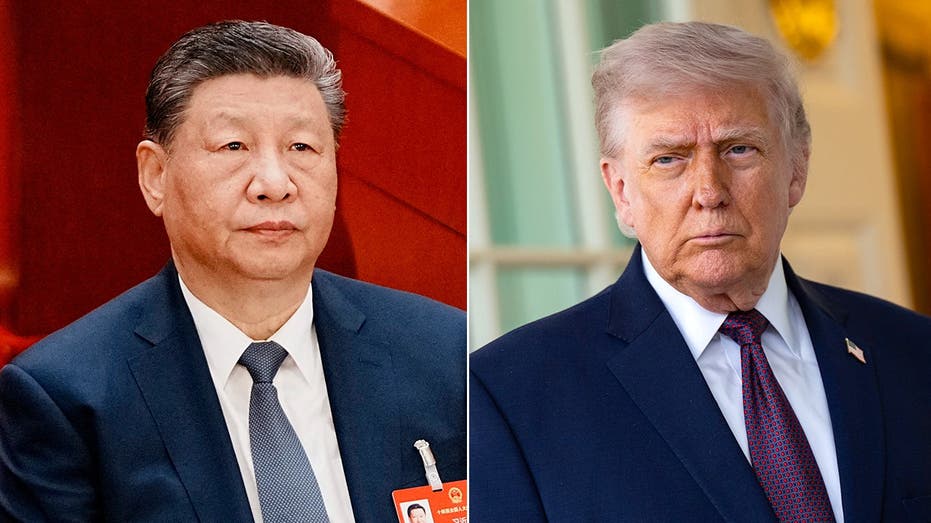
Andrew Badger, chief strategy officer at Coalition Systems, a defense tech startup, spoke as President Donald Trump is set to meet with Chinese President Xi Jinping in Beijing for talks expected to focus on trade, artificial intelligence and Taiwan.

Taiwan, a flashpoint in U.S.-China tensions, has reported about 30 subsea cable incidents in recent years, including one in which Chinese vessels allegedly severed cables and cut communications for months.

INTERNATIONAL UNDERWATER CABLE ATTACKS BY RUSSIA, CHINA ARE NO ‘MERE COINCIDENCE’ WARNS EU’S TOP DIPLOMAT

"America depends on the fragile nervous system of subsea cables for modern life," Badger, a former Pentagon official and author, told Fox News Digital before warning that U.S. adversaries "seek to turn the bottom of the ocean into a battlefield."

"The asymmetric threat — China and Russia are devoting far more resources to attacking undersea infrastructure than the U.S. or its allies are to defending it," Badger said.

"They've identified one of our greatest vulnerabilities, and we haven't caught up. A coordinated strike on American undersea infrastructure could fundamentally disrupt our way of life — the internet, banking, energy markets and military communications all run through these cables. The dollar cost is almost incalculable, and the real damage would be the chaos and political instability that would follow," he said.

Badger’s remarks came after Senate Republican Whip John Barrasso, R-Wyo., alongside Sen. Jeanne Shaheen, D-N.H., introduced the bipartisan Strategic Subsea Cables Act of 2026 in April.

The legislation is aimed at strengthening the security and resilience of critical undersea infrastructure.

TAIWAN COAST GUARD DETAINS CHINESE-CREWED VESSEL SUSPECTED OF CUTTING UNDERSEA CABLE

"Undersea cables are important for a variety of reasons. They carry 99% of the world’s internet traffic. They also support $10 trillion in financial transactions each and every day," Barrasso said in a statement.

In April, China’s Ministry of Natural Resources confirmed a successful deep-sea mission testing an advanced "electro-hydrostatic actuator," a device capable of slicing through armored submarine cables at depths of 3,500 meters, according to reports.

Similar suspicious disruptions have been reported in Europe and elsewhere, raising concerns about coordinated "gray-zone" operations designed to probe Western responses while remaining below the threshold of open conflict.

"This is hybrid warfare in its purest form, designed to weaken the adversary below the threshold of declared war," Badger said, noting that incidents such as anchors dragging across the seabed can provide plausible deniability.

HORMUZ CHAOS SPARKS WARNING: CHINA COULD STRANGLE TAIWAN WITHOUT FIRING A SHOT

"Cables give Beijing and Moscow the ability to inflict devastating economic chaos almost at will," Badger warned. "This gives both nations tremendous strategic leverage over the U.S."

China could also potentially target American undersea cables as a deterrent to U.S. engagement in Taiwan, according to Badger.

"Beijing could simultaneously target cables landing in the U.S., not to win militarily, but with the goal of breaking the American public's will to intervene in Taiwan," he said.

China claims Taiwan as its own territory, while the U.S. — Taiwan’s largest unofficial ally — supplies weapons under a law requiring it to help the island defend itself.

The Taiwan Strait is also a critical artery for the artificial intelligence revolution’s most essential resources.

Anniki Mikelsaar of the Oxford Internet Institute said growth in AI’s use means "rising capacity requirements on submarine cables. Not all recent cable damage incidents can be attributed to foreign adversaries: the ICPC estimates 150 to 200 cable breaks occur per year around the globe, most of them accidents," she said.

(Auszug von RSS-Feed)

☐ ☆ ✇ Fox News

May Day protests across Europe and Asia turn into anti-American, anti-Israel political battlegrounds

veröffentlicht.
Vorschau ansehen

May Day demonstrations across Europe and Asia on Friday revealed how International Workers’ Day is increasingly transforming from a traditional labor rights event into a broader political battleground, where demands over wages, inflation and worker protections are now frequently intertwined with anti-war activism, anti-Israel rhetoric and wider ideological struggles over global power.

From Paris to Istanbul, Madrid, Manila and Seoul, protests often expanded far beyond workplace grievances, with demonstrators linking rising living costs and social inequality to war in the Middle East, U.S. foreign policy and broader anti-capitalist narratives.

Nile Gardiner, senior fellow at the Heritage Foundation, told Fox News Digital that the demonstrations reflected what he described as a ‘troubling moral inversion’.

600 GROUPS WITH $2B IN REVENUE MOBILIZE 3,000 MAY DAY PROTESTS IN ‘RED-BLUE’ ALLIANCE, PROBE FINDS

"These May Day protesters should be demonstrating against the brutal tyranny in Tehran instead of protesting against U.S. military action, and this is an illustration of the complete moral vacuum that exists in Europe today," Gardiner said.

In Paris, May Day protests reportedly escalated into clashes as police used tear gas grenades and forceful arrests after projectiles were thrown during demonstrations, according to publicly circulated social media footage.

Earlier, French labor leaders had focused on inflation, wages and social protections, but parts of the protests also featured anti-war slogans, Palestinian symbolism and criticism of military spending.

MAY DAY PROTESTS TO TAKE PLACE FRIDAY AS AGITATORS ACROSS THE US PUSH 'WORKERS OVER BILLIONAIRES' MOTTO

In Madrid, thousands marched under banners reading "Capitalism should pay the cost of their war," while demonstrators protested stagnant wages, housing shortages and militarism. Placards targeting President Donald Trump and Israeli Prime Minister Benjamin Netanyahu highlighted how international conflict featured prominently alongside domestic labor concerns.

Germany also saw unrest in Munich, where publicly circulated reporter footage showed riot police using batons to disperse radical leftist protesters after pyrotechnics were repeatedly ignited during a revolutionary May Day demonstration. 

Emma Schubart, Research Fellow at the Henry Jackson Society, a London-based think tank, warned that May Day demonstrations increasingly serve as platforms for ideological movements extending beyond labor activism.

"The May Day demonstrations across Europe increasingly feature Islamist elements. Militant anti-war, anti-capitalist rhetoric is now routinely accompanied by Palestinian flags and explicit anti-Israel slogans," Schubart said, adding that far-left activism and Islamist-linked networks are increasingly converging under broader anti-Western narratives.

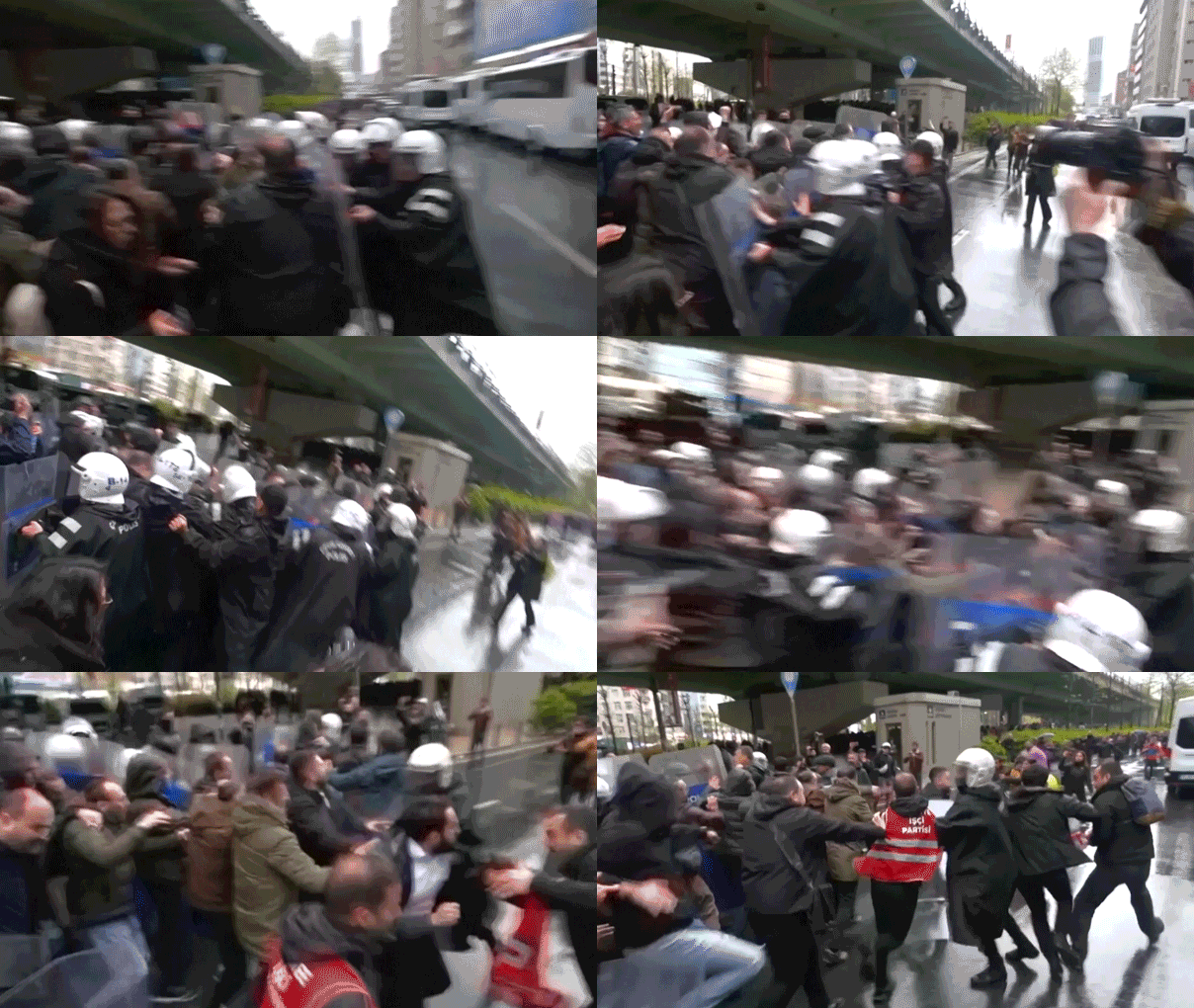
In Istanbul, police blocked leftist groups from marching to the banned Taksim Square, the historic center of Turkey’s labor movement, where demonstrations have long carried symbolic political weight. Protesters attempted to break through barricades and clashed with police as authorities detained some of the protesters.

MORE KEY US ALLIES BLOCK MILITARY FLIGHTS AS IRAN WAR RIFT WIDENS WITH TRUMP

Outside Europe, similar themes emerged across Asia.

In Manila, workers clashed with police near the U.S. Embassy while protesting higher fuel and commodity prices, demanding wage increases and calling for an end to war in the Middle East.

A left-wing labor group paraded a giant effigy depicting Trump, Netanyahu and Philippine President Ferdinand Marcos Jr. as a three-headed monster, symbolically tying domestic hardship to both local and international political leadership.

In South Korea, thousands gathered near Seoul’s Gwanghwamun Square for major labor rallies centered on collective bargaining and worker rights, but speeches also incorporated broader geopolitical messaging. 

Korea Confederation of Trade Unions Chairman Yang Kyung-soo called on demonstrators to "unite with the Iranian and Palestinian workers and people suffering from American imperialist aggression," explicitly connecting labor solidarity to anti-American and Middle East political narratives.

While local priorities varied, from wages in France to labor rights in Seoul, May Day 2026 demonstrated a growing global pattern: labor demonstrations are increasingly becoming arenas for broader ideological and geopolitical confrontation.

"The United States is fighting to defend the free world against tyranny, and yet across Europe and beyond we are seeing protesters direct their outrage at America and its allies instead of the brutal regimes driving so much of this global instability," Gardiner said. "That should deeply concern anyone who cares about the future of Western civilization."

Reuters and the Associated Press contributed to this report.

(Auszug von RSS-Feed)

☐ ☆ ✇ Fox News

Trump’s 'Economic Fury' squeezes Iran — but can Tehran outlast the pressure?

veröffentlicht.
Vorschau ansehen

As the Trump administration escalates its campaign against Iran through sanctions, naval pressure and financial enforcement, a central question is emerging: Can unprecedented economic strain truly weaken the regime, or will Iran’s rulers once again absorb the pain, suppress unrest and survive?

Treasury Secretary Scott Bessent said in a Tuesday post on X that the "Economic Fury" campaign has already disrupted "tens of billions of dollars in revenue" that would otherwise support terrorism, while arguing Iran’s inflation has doubled and its currency has sharply depreciated under the current maximum pressure campaign.

Bessent also warned that Kharg Island, Iran’s primary oil export terminal, is nearing storage capacity and could soon force production cuts, which he said may cost the regime an additional roughly $170 million per day in lost revenue.

LIVE UPDATES: IRAN THREATENS 'LONG AND POWERFUL STRIKES' ON U.S. POSITIONS AS TRUMP FACES WAR POWERS DEADLINE

The escalating pressure campaign marks one of the most aggressive U.S. efforts in years to economically isolate Iran. But the central question is whether this strategy can force meaningful concessions from a regime that has historically absorbed economic pain, or whether it risks triggering broader instability — from energy market shocks to regional escalation — before Iran is pushed to a breaking point.

A senior administration official told Fox News Digital that Treasury is aggressively expanding "Economic Fury" beyond traditional sanctions by targeting Iran’s ability to generate, move and repatriate funds across oil, banking, cryptocurrency and covert trade networks.

The official said Treasury has disrupted billions in projected Iranian oil revenue in recent days alone, including freezing half a billion dollars in regime-linked cryptocurrency, while also escalating pressure on Chinese "teapot" refineries, foreign banks and sanctions-evasion networks facilitating Tehran’s trade.

The Treasury has also warned financial institutions in China, Hong Kong, the United Arab Emirates and Oman that continued facilitation of Iranian illicit commerce could trigger secondary sanctions, while signaling that foreign companies — including airlines — may also face penalties if they support prohibited Iranian activity.

IRAN IS 'TRYING TO GIVE THE GLOBAL ECONOMY A HEART ATTACK' BY CLOSING STRAIT OF HORMUZ, UAE MINISTER SAYS

But Alireza Nader, an Iranian independent analyst based in Washington, is skeptical that economic pressure alone will force a strategic breaking point. 

"It looks like a game of chicken and I think the regime thinks that it can win this game of chicken with President Trump," he told Fox News Digital.

"I don’t see this economic blockade … leading to some sort of breaking point for the regime," Nader added, arguing that Iran’s leadership has repeatedly shown it is willing to let ordinary citizens bear extraordinary suffering to preserve power.

"The regime cares about staying in power," he said, warning that public hardship does not necessarily translate into vulnerability.

"The economic clock is moving much faster on Iran than on its adversaries."

That skepticism stands in stark contrast to Miad Maleki, a former Treasury sanctions analyst, who argues Washington may now hold its greatest leverage over Iran since the 1979 revolution.

"We’ve never had the level of leverage that we have today with Iran in the history of our conflict … since 1979," Maleki said.

NEXT MOVE ON IRAN: SEIZE KHARG ISLAND, SECURE URANIUM OR RISK GROUND WAR ESCALATION

For Maleki, what makes this moment different is not sanctions alone, but the convergence of sanctions, naval blockade and aggressive secondary enforcement.

He said Iran’s already fragile economy — marked by 104% food inflation and a roughly 90% collapse in purchasing power — could face roughly $435 million in daily economic losses if maritime restrictions hold.

"Iran’s economy relies on the Strait of Hormuz more than any other economy," Maleki said, arguing that disruption around the strait may ultimately hurt Iran faster than its adversaries.

If restrictions are fully enforced, Maleki warned, "crude onshore storage shortages in about 7 to 14 days, then they can buy a few weeks with filling up a dozen tankers already in the Persian Gulf, but they have to start dropping oil extraction now in anticipation of running out of storage. They are also facing gasoline shortages in matters of days or a few weeks, forced oil-production cuts, and eventually banking or salary strain."

Independent shipping intelligence from shipping intelligence firm Kpler suggests Iran’s oil bottleneck may already be intensifying, though perhaps on a slightly longer timeline than some sanctions advocates predict.

Before the conflict, Iran exported roughly 2 million barrels of oil per day, Court Smith, Kpler’s head of engagements and partnerships, told Lauren Simonetti at FOX Business, but current exports appear closer to 1 million barrels daily, leaving an estimated 1 million barrels per day accumulating in storage.

Smith estimated Iran may have roughly 30 days before shoreside storage faces severe capacity constraints under current conditions, while warning that older fields or marginal wells could already be facing early shut-in pressures.

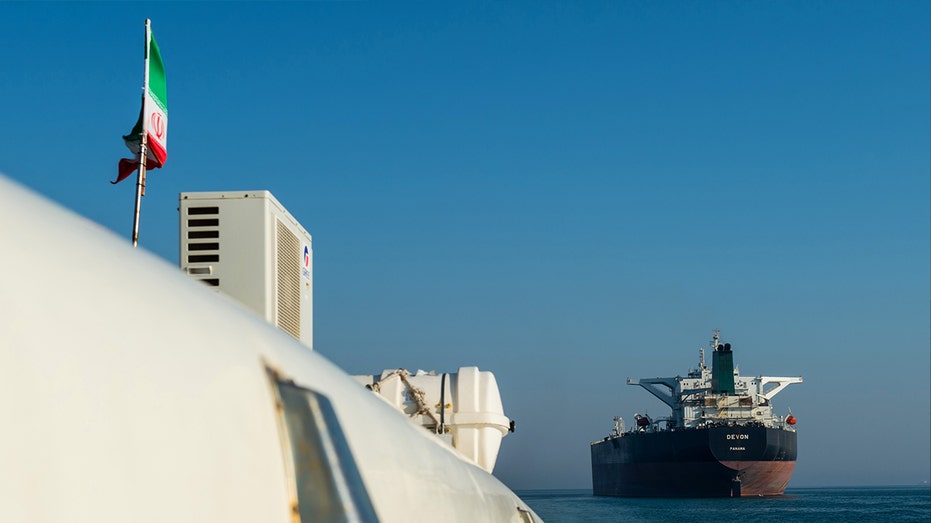
To buy time, Iran has reportedly begun pulling decades-old tankers out of storage for temporary floating capacity, a sign of mounting logistical strain. 

Former Israeli national security adviser Yaakov Amidror argues the blockade should not be judged by whether it forces immediate capitulation, but by whether Washington has the patience to let time erode Iran’s strength.

"Blockade is one of the oldest forms of warfare," Amidror said. "Blockade equals time."

In his view, the strategy’s advantage is precisely that it imposes relatively low costs on the United States while gradually exhausting Iran’s economy.

"The siege does its work. It weakens Iran," he said, describing it as one of the cheapest long-term methods of pressure available.

Amidror also pushed back forcefully against claims that modern enforcement is unrealistic.

"I don’t buy the idea that the U.S. Navy in the 21st century can’t monitor the 35 kilometers of blockade," he said, arguing that American surveillance, satellites and naval assets are more than capable of controlling the choke point over time.

Danny Citrinowicz, a nonresident fellow with the Atlantic Council’s Middle East Programs, offers a far more skeptical view.

"The blockade won’t force Iran to capitulate," Citrinowicz said.

BLOCKADE 101: AMERICAN SEA POWER ON DISPLAY AS TRUMP CORNERS IRAN AND WARNS OFF CHINA

"This country is under sanctions since 1979 … they know how to make adjustments," he added.

"The regime isn't just dependent on oil and energy exports to survive, it has other means of income," Nader argued, "Oil and natural gas are its biggest sources of income, but I think this regime has made a calculation that it can withstand even months of economic siege because it may think that the Trump administration is more vulnerable to political pressure."

"Look," he added, "American voters vote in the president and vote out the president. In Iran, nobody's voted in and out. The regime maintains power through brutal force. If there are public disturbances, if there are new uprisings, the regime will try to deal with them as it has in the past to mass violence, killing thousands of people. That's how this regime stays in power."

Citrinowicz warned that Iran may escalate regionally or exploit global energy vulnerabilities long before economic collapse forces surrender, potentially driving oil prices sharply upward and creating international political pressure before Tehran truly breaks.

"In the pain game … the world will feel that before," he said.

That leaves the administration facing a strategic endurance contest: Can economic warfare degrade Iran faster than the regime can adapt, repress and weaponize global pain?

Nader believes Iran’s rulers may still calculate that they can outlast U.S. patience through repression and resource management.

Maleki believes the economic "clock is moving much faster" on Iran than on its adversaries.

Amidror argues time itself may be Washington’s greatest weapon.

And Citrinowicz warns that if the United States expects quick capitulation, it may be underestimating both Iran’s resilience and its willingness to escalate.

Fox News Digital has reached out to the Iranian mission to the U.N., CENTCOM and the Pentagon for comment. 

(Auszug von RSS-Feed)

☐ ☆ ✇ Fox News

US targets Chinese refinery in sweeping Iran oil crackdown, sanctions ‘shadow fleet’ tankers

veröffentlicht.
Vorschau ansehen

The U.S. Treasury's Office of Foreign Assets Control (OFAC) on Friday sanctioned a major Chinese oil refinery and dozens of ships tied to Iran's "shadow fleet," escalating efforts to choke off Tehran's main source of revenue.

Officials said in a press release the move targets Hengli Petrochemical, one of Iran’s largest oil buyers, along with a network of shipping companies and tankers responsible for transporting billions of dollars worth of petroleum products to foreign markets. 

The Treasury Department identified these "shadow fleet" vessels as the financial lifeline for Iran's "unstable regime."

SECOND TANKER SEIZED NEAR VENEZUELA AS US ENFORCES OIL BLOCKADE

The crackdown is part of Economic Fury, a broader campaign to squeeze Iran’s economy by limiting its ability to sell oil abroad, revenue the U.S. says funds the regime’s military and destabilizing activities across the Middle East.

"Economic Fury is imposing a financial stranglehold on the Iranian regime, hampering its aggression in the Middle East and helping to curtail its nuclear ambitions," Treasury Secretary Scott Bessent said.

Hengli Petrochemical (Dalian) Refinery Co. is a China-based "teapot" refinery, a term used for independent facilities known for purchasing discounted crude, including from sanctioned countries.

The refinery, one of China’s largest independent facilities, has received Iranian oil cargoes from sanctioned shadow fleet vessels since at least 2023. Hengli has also purchased oil tied to Iran’s armed forces, generating hundreds of millions of dollars for the Iranian military.

Hengli has also received shipments tied to Sepehr Energy Jahan Nama Pars Company, a firm identified by U.S. officials as a front for Iran’s armed forces that helps facilitate oil sales abroad. 

The company operates on behalf of Iran’s Armed Forces General Staff, using a network of intermediaries and vessels to move sanctioned crude, with proceeds helping fund the country’s military programs and regional proxy groups.

IRAN’S REMAINING WEAPONS: HOW TEHRAN CAN STILL DISRUPT THE STRAIT OF HORMUZ

The new sanctions also target the network that makes these oil sales possible, a "shadow fleet" of aging tankers and shell companies that move petroleum across global markets while evading sanctions and obscuring the origin of shipments.

These ships avoid detection by transferring cargo from one tanker to another in the open ocean. Treasury officials said 19 vessels were targeted in the action.

The move is part of the Trump administration’s renewed "maximum pressure" campaign against Iran, aimed at cutting off the regime’s primary source of revenue through oil exports and sanctions enforcement.

U.S. officials say oil exports remain the backbone of Iran’s economy, and efforts to restrict those flows are designed to limit the government’s ability to fund its military, support proxy groups and advance its nuclear program.

Treasury officials warned that additional sanctions are likely as the U.S. continues targeting the networks, intermediaries and buyers that enable Iran to move oil on the global market.

(Auszug von RSS-Feed)

☐ ☆ ✇ Fox News

US economic chokehold on Iran reaches peak leverage as collapse risks emerge

veröffentlicht.
Vorschau ansehen

U.S. economic pressure on Iran has reached one of its most powerful points in decades, but inconsistent enforcement has prevented sanctions from achieving their full impact, according to a former Treasury sanctions expert.

Miad Maleki, who played a central role in Treasury Department sanctions campaigns against Iran and its network of proxy groups, said in an on-camera interview the current moment reflects a rare convergence of economic, political and diplomatic leverage against Tehran.

"We’ve never had the level of leverage that we have today with Iran in the history of our conflict … since 1979," Maleki said. 

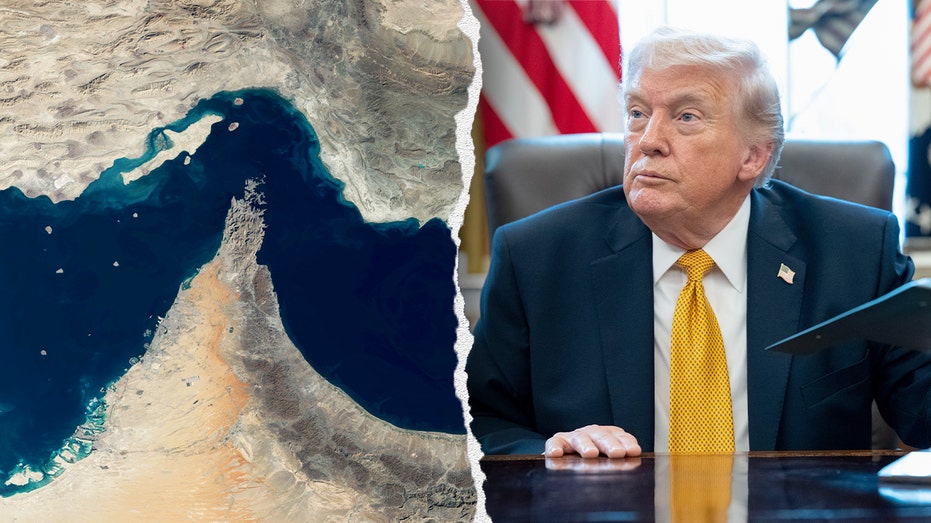
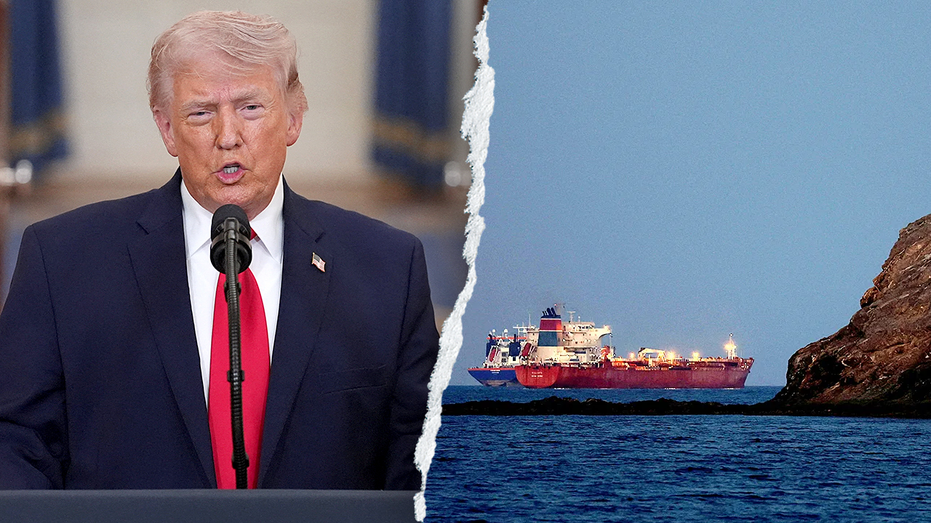
His assessment comes as President Donald Trump signaled escalating pressure Thursday, writing on Truth Social that the United States has "total control over the Strait of Hormuz" and that it is effectively "sealed up tight" until Iran agrees to a deal.

IRAN PRESIDENT VOWS DEFIANCE AS PROTESTS BUILD AGAINST REGIME AMID US MILITARY BUILD UP

Maleki argues the current moment marks a turning point because multiple pressure tools — sanctions, a U.S. naval blockade, and tighter enforcement — are being applied simultaneously for the first time in years. Unlike previous cycles, he said, the strategy is now directly targeting Iran’s oil exports and the networks that help move them, raising the risk of a rapid economic squeeze.

He said Iran may run out of oil storage in as little as two to three weeks, forcing production cuts, while gasoline shortages could hit on a similar timeline due to heavy reliance on imports. Combined with an estimated $435 million in daily economic losses, the pressure could spill into the financial system, leaving the regime struggling to pay salaries and raising the risk of renewed unrest.

Maleki said the real leverage lies in sustained economic pressure and enforcement.

At the core of that pressure is an Iranian economy he describes as "on the verge of collapse," driven by years of sanctions and compounded by recent disruptions.

He pointed to triple-digit food inflation, a sharply devalued currency and a roughly 90% collapse in purchasing power, along with potential long-term oil revenue losses of up to $14 billion annually.

Maleki, who is currently a senior fellow at the Foundation for Defense of Democracies, estimated that current conditions are costing Iran "about $435 million a day in combined economic damage … with the blockade and closure of the Strait of Hormuz."

A key driver of that pressure is the Strait of Hormuz, long viewed as one of Iran’s primary tools of leverage in global energy markets. Maleki said the dynamic has shifted.

IRAN IS 'TRYING TO GIVE THE GLOBAL ECONOMY A HEART ATTACK' BY CLOSING STRAIT OF HORMUZ, UAE MINISTER SAYS

"Iran’s economy relies on the Strait of Hormuz more than any other economy," he said, calling its closure a form of "economic self-sabotage."

While countries in Asia — including Japan, South Korea, India and China — are most exposed to disruptions, many have built up reserves. "Japan’s oil reserve is pretty significant. Same with China," Maleki said.

Still, the region remains heavily dependent on the waterway, with roughly 75% of liquefied natural gas supplies for countries including India, China and South Korea flowing through the strait.

Inside Iran, however, vulnerabilities are more immediate. Despite vast oil reserves, the country imports between 30 million to 60 million liters of gasoline per day to cover a domestic shortfall of up to 35 million liters.

"If they run out of gasoline… they’re going to have a major crisis domestically," Maleki said, noting that past shortages and price hikes have triggered widespread protests.

NUCLEAR EXPERTS WARN IRAN’S URANIUM ‘RIGHT’ IS A MYTH, SAY TRUMP IS RIGHT TO HOLD FIRM

The economic pressure is being reinforced by a U.S. naval blockade targeting Iran’s oil exports, the regime’s primary source of revenue.

A senior administration official said the Treasury Department is intensifying enforcement under what it describes as an "Economic Fury" campaign, using financial and maritime tools in tandem to squeeze Iran’s revenue streams.

The official said the strategy focuses on "systematically degrading Iran’s ability to generate, move, and repatriate funds," including by constraining maritime trade through the naval blockade, which targets Iran’s primary source of revenue from oil exports.

Financial pressure is also expanding globally. The official said Treasury has warned banks in China, Hong Kong, the United Arab Emirates and Oman that facilitating Iranian trade could expose them to secondary sanctions, signaling a more aggressive approach to enforcement beyond Iran’s borders.

Treasury has issued sanctions on more than 1,000 targets since 2025 under the current maximum pressure campaign, the official said, aimed at disrupting Iran’s oil trade and financial networks.

The official added that Iran is facing immediate logistical constraints, warning that storage capacity at Kharg Island — the country’s main oil export terminal — could be filled within days if exports remain blocked, potentially forcing production shut-ins.

"Treasury will continue to freeze the funds stolen by the corrupt leadership on behalf of the people of Iran," the official warned.

A new analysis from United Against Nuclear Iran said the blockade is already deterring high-value shipments, even as some Iran-linked vessels continue to transit the region.

TRUMP CLAIMS IRAN 'STARVING FOR CASH,' 'COLLAPSING FINANCIALLY' AFTER EXTENDING CEASEFIRE

"Effectiveness should not be measured by the total number of Iran-linked vessels at sea," the group said in an April 22 statement. "But by whether the U.S. is disrupting high-value Iranian oil exports… and deterring large-scale illicit shipments."

At least 29 vessels have been turned around or forced back to port, including several very large crude carriers, according to the report.

The blockade, announced April 12 and enforced by U.S. Central Command, is designed to cut off Iranian crude exports, particularly shipments to China, while prioritizing high-impact targets.

While sanctions are clearly biting, Maleki said their impact has been limited by inconsistent enforcement across successive U.S. administrations.

U.S. sanctions on Iran have been in place in various forms for years, targeting the country’s oil exports, banking sector and access to global financial systems.

Under the Obama administration, sanctions pressure was partially lifted under the nuclear deal. The first Trump administration reimposed "maximum pressure," but enforcement ramped up gradually and lasted only a limited period. The Biden administration later eased enforcement in pursuit of diplomacy.

He argued that cycles of tightening and relief — including sanctions rollback under the Iran nuclear deal and pauses in enforcement — have allowed Tehran to adapt.

"What’s different now," Maleki said, is the combination of sustained sanctions with real-time enforcement measures that directly restrict Iran’s ability to export oil — a step that was largely absent in earlier phases.

To maximize pressure, Maleki said Washington must sustain enforcement, particularly through secondary sanctions targeting foreign banks and companies facilitating Iranian trade.

Crucially, he downplayed the likelihood that outside powers could offset the pressure.

"I can’t really point to any other nation… that is going to jump in and give the Iranian regime a lifeline," he said.

"At some point in the next few weeks to a few months, they’re going to face not just gasoline shortages and oil production disruptions, but also a major banking problem to pay salaries of government employees and IRGC personnel," he said. "Iranians run out of patience again, as they did before, and they’re back on the street. I’m not quite sure if you’re going to have unpaid IRGC forces willing to go back on the street and kill their fellow Iranians who have the same grievances that they have now, which is a collapsed economy."

(Auszug von RSS-Feed)
❌