NEWS 23

🔒
❌
Stats
Es gibt neue verfügbare Artikel. Klicken Sie, um die Seite zu aktualisieren.

☐ ☆ ✇ Fox News

ISIS terror leader at large after US strike kills top commander amid rising Africa threat: analyst

veröffentlicht.
Vorschau ansehen

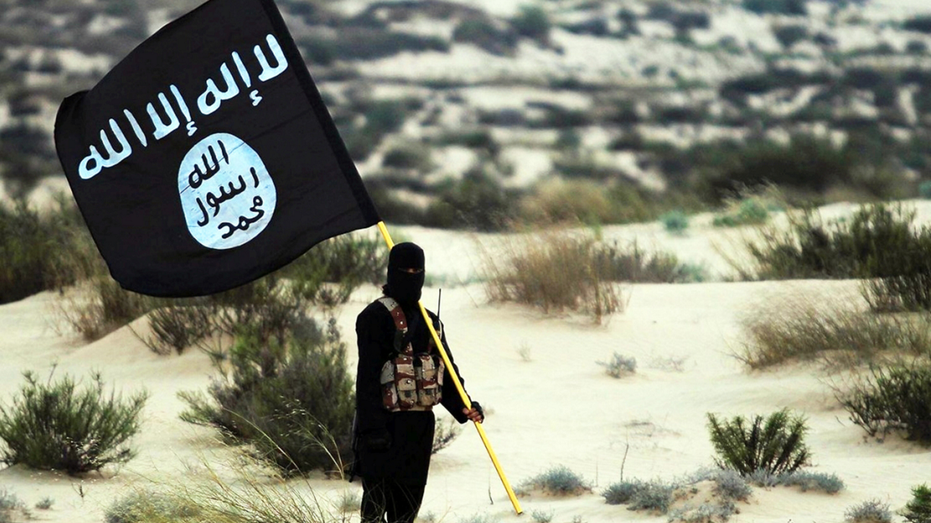
Abu-Bilal al-Minuki, ISIS’s shadow commander in West Africa, was killed May 16 using what an extremism analyst describes as one of the hardest forms of intelligence to detect, after decades being shielded by "deep local networks" across the region.

While the killing dealt one of the biggest blows to ISIS’s global network in years, disrupting operations in northeastern Nigeria, the terror group's top leader, Abu Hafs al-Hashimi al-Qurashi, remains at large as Africa becomes the movement's global epicenter.

"There is no single ISIS ‘headquarters’ in Nigeria; ISWAP (Islamic State West Africa Province) operates dozens of small, shifting camps scattered across the Lake Chad islands and the Borno bush," Dr. Omar Mohammed, Senior Research Fellow at the GW Program on Extremism, told Fox News Digital.

"Al-Minuki would have had no smartphones, relying instead on courier-based communications and constant movement between these small camps," he said.

TRUMP TARGETS ISIS IN NIGERIA AMID WARNINGS SAHEL REGION IS BECOMING ‘EPICENTER OF TERRORISM’

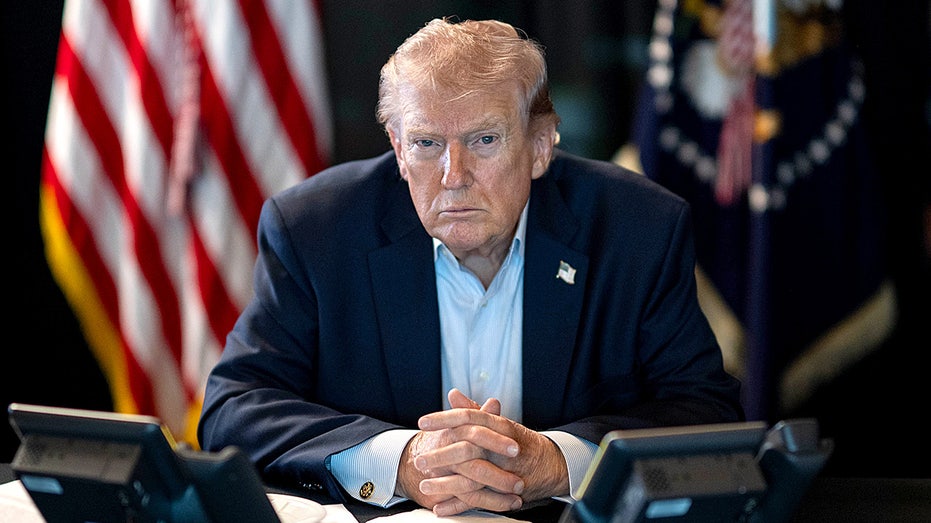
President Donald Trump’s explicit reference to "sources who kept us informed" points directly to human intelligence, or HUMINT — the hardest form of intelligence for a target to detect or counter, Mohammed explained.

The precision strike successfully penetrated defenses that had been held for years.

"He would have utilized deep local networks the Nigerian military has struggled to penetrate for over a decade," Mohammed added.

MS NOW GUEST SUGGESTS TRUMP STRIKE IN NIGERIA WAS RACIALLY MOTIVATED VIOLENCE

"His operational security would have been severe," Mohammed said. "But two things eventually undo even careful targets: time generates patterns, and human sources are extremely difficult to defeat."

"Despite severe operational security, al-Minuki was ultimately compromised through persistent human intelligence," he noted. "Al-Minuki knew he was marked."

ISIS FIGHTERS STILL AT LARGE AFTER SYRIAN PRISON BREAK, CONTRIBUTING TO VOLATILE SECURITY SITUATION

The Nigerian army described the strike as "a meticulously planned and highly complex precision air-land operation" carried out Saturday between midnight and 4 a.m. in Metele, located in Borno State in northeast Nigeria.

U.S. Africa Command, or AFRICOM, placed the strike in northeastern Nigeria, with Nigerian army communications pointing specifically to the Metele region.

Despite the tactical success, the current ISIS "caliph," or overall leader, remains on the run, according to reports.

Al-Qurashi was "named following his predecessor’s death in Syria," Mohammed claimed.

"He is deliberately faceless, with analysts describing this line of leaders as the ‘caliphs of the shadows,’" Mohammed said, noting al-Qurashi assumed leadership after Turkish authorities killed his predecessor in 2023.

While al-Qurashi’s exact location is unknown, reports indicate he traveled from Syria or Iraq through Yemen to Somalia’s semi-autonomous Puntland region.

"This is where the financial hub also sits, meaning the entire center of gravity of the organization — leadership, finance, operational direction — has been quietly relocating to Africa for years," Mohammed said.

RUSSIAN MERCENARIES REPLACE WESTERN FORCES AS ISIS SURGES ACROSS AFRICA'S SAHEL REGION

Data from the Armed Conflict Location & Event Data Project confirms this regional shift, showing more than two-thirds of all Islamic State global activity now takes place in Africa.

"Africa has transitioned from a peripheral theater to the operational and financial center of global ISIS activity," Mohammed explained. "Africa is no longer a peripheral theater. It is the main one. Funding is overwhelmingly local and extractive — taxation, ransom, smuggling — which is precisely why these networks are so resilient."

"Al-Minuki, for example, rose through ISWAP and operated across the Lake Chad Basin and into the wider Sahel," he noted.

"Still, staking out al-Minuki is the most significant blow to ISIS’ global leadership architecture since the al-Baghdadi raid in 2019, executed in the theater that has quietly become the group’s beating heart," Mohammed said before adding the strike was "not a one-off kinetic moment."
(Auszug von RSS-Feed)

☐ ☆ ✇ Fox News

Trump says Abu-Bilal al-Minuki, second in command of ISIS globally, killed in US-Nigerian operation

veröffentlicht.
Vorschau ansehen

President Donald Trump announced late Friday that U.S. and Nigerian forces carried out an operation that killed a global ISIS leader.

Trump identified the terrorist as Abu-Bilal al-Minuki, whom he described as ISIS’s second-in-command globally.

"Tonight, at my direction, brave American forces and the Armed Forces of Nigeria flawlessly executed a meticulously planned and very complex mission to eliminate the most active terrorist in the world from the battlefield," Trump wrote in a post on Truth Social.

"Abu-Bilal al-Minuki, second in command of ISIS globally, thought he could hide in Africa, but little did he know we had sources who kept us informed on what he was doing," Trump continued. "He will no longer terrorize the people of Africa, or help plan operations to target Americans."

100 US TROOPS LAND IN NIGERIA AS ISLAMIC MILITANTS THREATEN WEST AFRICA REGIONAL SECURITY

Trump also thanked the Nigerian government for its cooperation in the mission.

"With his removal, ISIS’s global operation is greatly diminished," he added.

In a Saturday morning X post, Secretary of War Pete Hegseth confirmed U.S. forces, in coordination with the Armed Forces of Nigeria, killed al-Minuki and other ISIS leaders and provided more details about al-Minuki's role within ISIS.

"Abu-Bilal al-Minuki was the senior ISIS General Directorate of Provinces Emir — the number two for ISIS globally — responsible for overseeing the planning of attacks, directing hostage-taking and managing financial operations," Hegseth wrote. "The removal of him and other ISIS personnel makes Americans safer by further degrading ISIS’s ability to plan and carry out attacks that threaten the U.S. homeland, American citizens, and innocent civilians. "

"Operations like last night’s demonstrate the exceptional lethality, patience and skill of U.S. forces, amplified alongside willing and capable partners, to address shared threats," Hegseth wrote. "This should serve as a reminder that we will hunt down those who wish to harm Americans or innocent Christians, wherever they are."

Hegseth said U.S. Africa Command carried out the "precise operation to remove this terrorist" at Trump's direction and in conjunction with Nigeria's president. 

The secretary reiterated how Trump in November "declared to the world that we will help protect Christians in Nigeria and instructed the Department of War to prepare for action."

"So, for months, we hunted this top ISIS leader in Nigeria who was killing Christians, and we killed him — and his entire posse," Hegseth wrote.

Fox News Digital has reached out to the White House for comment.

United States Africa Command (AFRICOM) confirmed the ISIS strikes in a Saturday statement

US MILITARY IN SYRIA CARRIES OUT 10 STRIKES ON MORE THAN 30 ISIS TARGETS: PHOTOS

"At the direction of the President of the United States and the Secretary of War, and in coordination with the Government of Nigeria, U.S. Africa Command conducted an operation against ISIS in Northeastern Nigeria on May 16, 2026," the statement read. "The command’s initial assessment is that multiple terrorists, to include Abu-Bilal al-Minuki, the director of global operations for ISIS, as well as other senior ISIS leaders, were killed during this operation. No U.S. service members were harmed."

"As President Trump shared last night, AFRICOM in coordination with the Armed Forces of Nigeria, bravely and valiantly conducted a successful mission that resulted in the elimination of Abu-Bilal al-Minuki, and multiple other ISIS leaders," AFRICOM commander U.S. Air Force Gen. Dagvin Anderson said in a statement.

"This operation underscores the exceptional value of the U.S.-Nigeria partnership and was made possible through the cooperation and coordination of our forces in recent months. Make no mistake, our two nations will relentlessly pursue and neutralize terrorist threats and are committed to protecting our people and interests," Anderson said.

Al-Minuki, the statement added, provided "strategic guidance to the ISIS global network on media and financial operations as well as the development and manufacturing of weapons, explosives, and drones." 

Al-Minuki was "the most active terrorist in the world and has a significant history of involvement in planning attacks and directing hostage taking," AFRICOM wrote.

The announcement comes after U.S. Central Command (CENTCOM) said it carried out multiple strikes against more than 30 ISIS targets in Syria in February as part of a joint military effort to "sustain relentless military pressure on remnants from the terrorist network."

CENTCOM said U.S. forces struck ISIS infrastructure and weapons-storage targets using fixed-wing, rotary-wing and unmanned aircraft.

DEADLY STRIKE ON US TROOPS TESTS TRUMP’S COUNTER-ISIS PLAN — AND HIS TRUST IN SYRIA’S NEW LEADER

Trump told reporters on Jan. 27 that he had a "great conversation" with Syrian President Ahmed al-Sharaa.

"All of the things having to do with Syria in that area are working out very, very well," he said at the time. "So, we are very happy about it."

CENTCOM announced in February that more than 50 ISIS terrorists had been killed or captured and more than 100 ISIS infrastructure targets struck during two months of targeted operations in Syria.

The U.S. launched Operation Hawkeye Strike in response to an ISIS ambush that killed two U.S. service members and an American interpreter Dec. 13, 2025, in Palmyra, Syria.

Fox News Digital's Ashley J. DiMella contributed to this report.

(Auszug von RSS-Feed)

☐ ☆ ✇ Fox News

Iran regime power players may eye Russia in Assad-style escape as US talks falter: expert

veröffentlicht.
Vorschau ansehen

The apparent collapse of high-stakes U.S.-Iran negotiations has intensified fears that senior figures inside Tehran’s leadership could flee to Russia, seeking refuge to "continue their insurgency and undermine any new regime," an analyst warns.

The breakdown in talks comes as Israeli Prime Minister Benjamin Netanyahu also told CBS’ "60 Minutes" that toppling Iran’s regime could now even be a realistic outcome.

Netanyahu noted that any collapse would dismantle the "scaffolding" of Tehran's global terror proxy network, also potentially ending Hezbollah's influence in the region.

"The whole scaffolding of the terrorist proxy network that Iran built collapses if the regime in Iran collapses," Netanyahu said.

HERE’S WHAT A POST-AYATOLLAH IRAN COULD LOOK LIKE IF WAR WITH ISRAEL LEADS TO REGIME’S FALL

"I think you can’t predict when that will happen. Is it possible? Yes. Is it guaranteed? No," he warned.

With diplomatic options perhaps exhausted and the regime's stability in question, an expert suggests the exit strategy any leadership may be eyeing might be similar to that of Syrian President Bashar al-Assad, who fled Syria in 2024.

"If the situation deteriorates further, some senior figures could potentially follow a path like Bashar al-Assad’s inner circle and seek refuge in Russia," Middle East expert Saeid Golkar told Fox News Digital.

IRANIAN REGIME ELITES ALLEGEDLY MOVE MILLIONS OF DOLLARS OUT OF COUNTRY AMID SANCTIONS

Golkar, a senior adviser at United Against Nuclear Iran, noted that flight destinations would likely depend on rank.

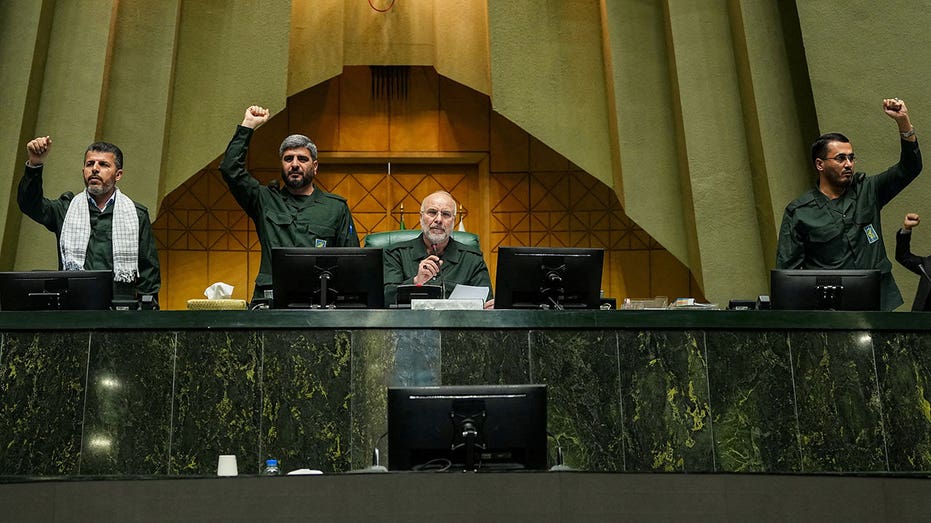
While top commanders like Parliament Speaker Mohammad-Bagher Ghalibaf might head to Moscow, lower-ranking figures would more likely seek shelter in Iraq or Afghanistan, where the IRGC maintains operational connections, he clarified.

"For the most senior figures, Russia would probably be the most likely destination, again as we saw with Bashar al-Assad," Golkar said, noting many officials have already moved wealth into "financial networks outside Iran."

The current crisis started following the death of Ayatollah Ali Khamenei earlier in 2026 during the onset of Operation Epic Fury.

While his son, Mojtaba Khamenei, was named successor, reports continue to indicate he was severely injured in the strikes and has been absent from recent negotiations.

INSIDE IRAN’S RULING IDEOLOGY: HOW A ‘HOLY MISSION’ AND MESSIANIC DOCTRINE FUEL REGIME EXTREMISM

Golkar explained that the "invisible state," or Bayt-e Rahbari, was designed to survive decapitation, while the ideological cost of fleeing for leaders would be high.

"Inside the regime’s ideological culture, leaving the country during the collapse would look like desertion," Golkar noted.

However, as military fractures deepen and succession remains uncertain, the "Assad model" of seeking Russian protection appears increasingly attractive to those at the top.

Mojtaba, however, is "either dead or in bad condition that he cannot send any video or voice message," Golkar added.

"If he had died from his injuries, there was no clear natural successor. He was the continuation of the regime."

"Still, the system was designed for continuity during a crisis," Golkar said, adding that the goal is to "make sure the regime could survive even if formal institutions were damaged, leaders were killed, or civilian government stopped functioning."

"I would describe it as a regime designed not just to govern, but always to try and survive decapitation," Golkar added.

(Auszug von RSS-Feed)

☐ ☆ ✇ Fox News

Brief alcohol ban in Damascus sparks concerns about President al-Sharaa's vision for Syria

veröffentlicht.
Vorschau ansehen

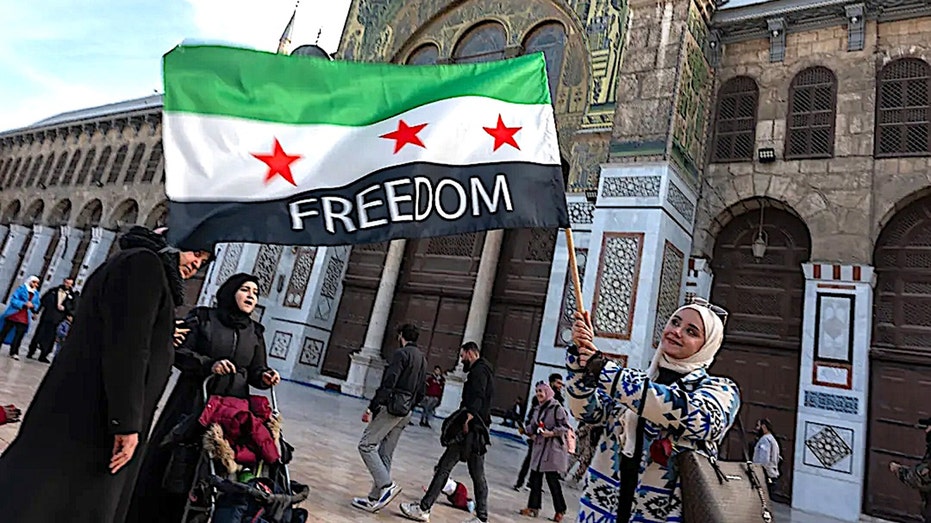
There are growing fears among some in Syria that the government of President Ahmed al-Sharaa has the aim of clamping down on the rights and freedoms of its civilians by promoting a more conservative interpretation of Islam.

Local authorities in Syria’s capital, Damascus, recently banned restaurants and bars from selling alcohol in most parts of the city. Only venues in the majority-Christian neighborhoods of Damascus would be allowed to continue to sell alcohol, but only for takeaway. The move sparked minor protests throughout the capital, with security forces sent in to maintain order. 

"What you're seeing is pressure from one part of Syrian society, the clerics and sort of harder-line Islamists who have a vision, an Islamist vision of how Syrian society should be," Robert Ford, former ambassador to Syria, told Fox News Digital. Syria's temporary constitution is guided by Islamic law.

EVANGELICAL LEADER SAYS US MUST PROTECT SYRIAN CHRISTIANS FROM ATTACKS BY JIHADI TERRORISTS

Syria’s social affairs minister, Hind Kabawat, a Christian and the only woman in al-Sharaa’s cabinet, pushed back on the idea that alcohol can only be consumed in Christian neighborhoods.

"Our neighborhoods are not places for alcohol, but the heart of Damascus," she said in a Facebook post.  

"The strength of our nation is in its diversity, and any radical, extremist voice will cause our nation's weakness," she added.

In response to the outcry, Damascus authorities walked back the ban, saying that alcohol purchases could remain in places important for tourism, such as hotels and certain restaurants.

The move is a significant departure for everyday Syrians living in Damascus, where alcohol was readily available in bars and restaurants for decades, even under the authoritarian and oppressive rule of former dictator Bashar al-Assad.

SYRIA GRANTED SANCTIONS WAIVER BY TRUMP ADMINISTRATION TO ENCOURAGE REBUILDING

"Steps like these, which restrict freedoms in Syria, are worrying. When they have occurred far from Damascus, the central government can argue that it lacks sufficient control. But it is particularly meaningful to see such steps in Damascus since President al-Sharaa dominates there," Mara Karlin, a former Department of Defense official and professor at Johns Hopkins School of Advanced International Studies (SAIS), told Fox News Digital.

"If he is pushing an Islamist Syria, then it calls into question how much he is moving beyond his history," Karlin added.

Al-Sharaa, who led the Islamist rebel group Hay’at Tahrir al-Sham (HTS) to victory over Assad, has been on an international charm offensive since taking power, visiting foreign capitals and reintegrating Syria into the global community.

President Trump even endorsed al-Sharaa, who first met with him in Riyadh, Saudi Arabia, in May 2025 and again in November 2025 when Trump hosted him at the White House, the first time a Syrian leader had visited the White House since the country gained independence in 1946.

Karlin, who testified before the House Foreign Affairs Committee in February on the challenges facing Syria after the fall of Assad, said that, while the Syrian government does include former jihadists, they have been mostly pragmatic and non-ideological in their governance.

She noted, however, that their reach beyond Damascus is weak and limited.

"There have been some troubling instances of restrictions on women’s freedom, for example, and indicators such as these merit close scrutiny for evidence of the Syrian government’s influence and ideology."

TRUMP ORDERS COMPLETE WITHDRAWAL OF ALL TROOPS FROM SYRIA WITHIN TWO MONTHS: REPORT

Ford, who was the last U.S. ambassador in Damascus in 2011, stressed that al-Sharaa is not a democrat and probably would like to impose parts of an Islamist vision on Syria, but has so far held back since overthrowing the Assad regime in 2024.

The ordinances in Damascus and elsewhere are imposed by local officials, but these officials are directly tied to the government and are loyal to al-Sharaa and likely support an Islamist vision for Syria.

Some worry the ban on alcohol could harm Syria’s fragile post-conflict reconstruction, particularly at a time when al-Sharaa is trying to reintegrate Syria into the world economy and rebuild the country’s tourism sector.

The World Bank estimated Syria’s reconstruction costs are about $216 billion after nearly 14 years of civil war. Syria’s minister of tourism previously said the country will need at least $100 million over the next seven years to rebuild the tourism industry.

Alcohol isn’t the only target of some local authorities in Syria. Officials in the port city of Latakia in February banned women from wearing makeup at work. Another town outside Damascus prohibited men from working in female clothing stores to uphold public decency.

Ford said although some of the local ordinances are a cause for concern, it is a domestic issue, and Syrians will have to determine the role of religion in post-Assad Syria.

THE Associated Press contributed to this article. 

(Auszug von RSS-Feed)
❌