NEWS 23

🔒
❌
Stats
Es gibt neue verfügbare Artikel. Klicken Sie, um die Seite zu aktualisieren.

☐ ☆ ✇ Fox News

China’s undersea cable threat raises $10T fears as Trump-Xi talks loom

veröffentlicht.
Vorschau ansehen

The U.S. economy is under threat from adversaries like China targeting undersea cables with the ability to "inflict devastating economic chaos almost at will," a former U.S. intelligence official warned Sunday.

These cables carry 99% of global data and support up to $10 trillion in daily financial transactions, according to reports.

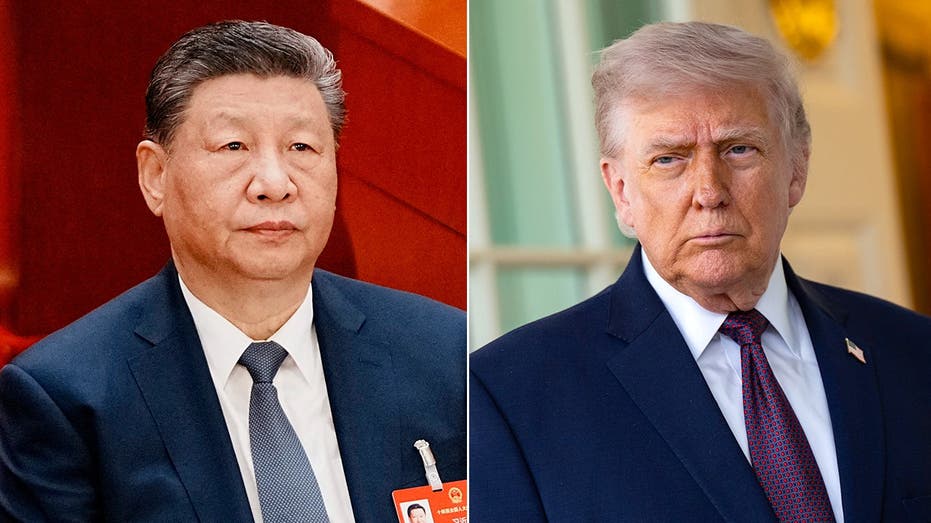
Andrew Badger, chief strategy officer at Coalition Systems, a defense tech startup, spoke as President Donald Trump is set to meet with Chinese President Xi Jinping in Beijing for talks expected to focus on trade, artificial intelligence and Taiwan.

Taiwan, a flashpoint in U.S.-China tensions, has reported about 30 subsea cable incidents in recent years, including one in which Chinese vessels allegedly severed cables and cut communications for months.

INTERNATIONAL UNDERWATER CABLE ATTACKS BY RUSSIA, CHINA ARE NO ‘MERE COINCIDENCE’ WARNS EU’S TOP DIPLOMAT

"America depends on the fragile nervous system of subsea cables for modern life," Badger, a former Pentagon official and author, told Fox News Digital before warning that U.S. adversaries "seek to turn the bottom of the ocean into a battlefield."

"The asymmetric threat — China and Russia are devoting far more resources to attacking undersea infrastructure than the U.S. or its allies are to defending it," Badger said.

"They've identified one of our greatest vulnerabilities, and we haven't caught up. A coordinated strike on American undersea infrastructure could fundamentally disrupt our way of life — the internet, banking, energy markets and military communications all run through these cables. The dollar cost is almost incalculable, and the real damage would be the chaos and political instability that would follow," he said.

Badger’s remarks came after Senate Republican Whip John Barrasso, R-Wyo., alongside Sen. Jeanne Shaheen, D-N.H., introduced the bipartisan Strategic Subsea Cables Act of 2026 in April.

The legislation is aimed at strengthening the security and resilience of critical undersea infrastructure.

TAIWAN COAST GUARD DETAINS CHINESE-CREWED VESSEL SUSPECTED OF CUTTING UNDERSEA CABLE

"Undersea cables are important for a variety of reasons. They carry 99% of the world’s internet traffic. They also support $10 trillion in financial transactions each and every day," Barrasso said in a statement.

In April, China’s Ministry of Natural Resources confirmed a successful deep-sea mission testing an advanced "electro-hydrostatic actuator," a device capable of slicing through armored submarine cables at depths of 3,500 meters, according to reports.

Similar suspicious disruptions have been reported in Europe and elsewhere, raising concerns about coordinated "gray-zone" operations designed to probe Western responses while remaining below the threshold of open conflict.

"This is hybrid warfare in its purest form, designed to weaken the adversary below the threshold of declared war," Badger said, noting that incidents such as anchors dragging across the seabed can provide plausible deniability.

HORMUZ CHAOS SPARKS WARNING: CHINA COULD STRANGLE TAIWAN WITHOUT FIRING A SHOT

"Cables give Beijing and Moscow the ability to inflict devastating economic chaos almost at will," Badger warned. "This gives both nations tremendous strategic leverage over the U.S."

China could also potentially target American undersea cables as a deterrent to U.S. engagement in Taiwan, according to Badger.

"Beijing could simultaneously target cables landing in the U.S., not to win militarily, but with the goal of breaking the American public's will to intervene in Taiwan," he said.

China claims Taiwan as its own territory, while the U.S. — Taiwan’s largest unofficial ally — supplies weapons under a law requiring it to help the island defend itself.

The Taiwan Strait is also a critical artery for the artificial intelligence revolution’s most essential resources.

Anniki Mikelsaar of the Oxford Internet Institute said growth in AI’s use means "rising capacity requirements on submarine cables. Not all recent cable damage incidents can be attributed to foreign adversaries: the ICPC estimates 150 to 200 cable breaks occur per year around the globe, most of them accidents," she said.
(Auszug von RSS-Feed)

☐ ☆ ✇ Fox News

US-backed pipeline proposal targets global reliance on Strait of Hormuz amid Iran threats

veröffentlicht.
Vorschau ansehen

A new U.S.-backed proposal to build a network of overland energy pipelines bypassing the Strait of Hormuz is gaining attention as tensions in the region expose a critical vulnerability in the global energy system.

A policy memo reviewed by Fox News Digital outlines the concept, known as "ARAM Express," a proposed consortium between the United States and Gulf partners to develop a multidirectional overland network for oil, gas and petrochemicals, originating with Richard Goldberg of the Foundation for Defense of Democracies.

The plan envisions pipelines extending westward to the Red Sea and Mediterranean, as well as southern routes toward the Arabian Sea, creating multiple export pathways that would reduce reliance on the strait, through which roughly one-third of the world’s seaborne oil currently flows.

TRUMP OPENS HORMUZ UNDER FIRE WITH ‘PROJECT FREEDOM’ AS IRAN WARNS OF ATTACKS

The proposal would rely on broad international participation, with European and Asian buyers investing in infrastructure and securing long-term supply agreements.

"European buyers are desperate for long-term supply resilience, and Asian customers are equally exposed," Goldberg said. "Even China cannot tolerate the risk of a sustained disruption."

The push comes as Iran’s threats to commercial shipping and ongoing U.S. efforts to secure the waterway under President Donald Trump’s "Project Freedom" highlight the risks posed by a single chokepoint to global energy flows.

Roughly one-third of the world’s seaborne oil passes through the narrow waterway, making it a critical artery for global markets. With Iran threatening shipping and U.S. forces now guiding vessels through the strait under President Donald Trump’s "Project Freedom," the White House is framing the crisis in global terms. 

"The President will not allow Iran to hold the global economy hostage and undermine the free flow of energy," said White House spokeswoman Taylor Rogers, describing the launch of "Project Freedom" as a humanitarian effort to restore navigation through the strait.

That framing aligns with a growing view among U.S. officials and analysts that the risk is not only immediate but also structural.

U.S. Ambassador to the United Nations Mike Waltz signaled that Washington’s partners are already looking beyond the strait itself.

"I know our Gulf partners and allies are seriously thinking through that," Waltz told Fox News Digital when asked about long-term alternatives during a conference call with reporters Monday.

"I know they’re looking at additional alternatives to frankly diversify their pathways and diversify their economies," he added.

MIKE WALTZ PUSHES UN RESOLUTION TO STOP IRAN MINING KEY GLOBAL SHIPPING ROUTE

The idea that Hormuz represents a structural weakness is not new. But until now, it has largely been tolerated, with global markets relying on stability in the Gulf to keep energy flowing.

That assumption is now under strain.

Even with U.S. naval power deployed to secure the waterway, the current crisis has highlighted how quickly disruption, or even the threat of it, can ripple through global supply chains.

"This isn’t just a long-term idea anymore," said Rich Goldberg of the Foundation for Defense of Democracies think tank. "There is a real threat to the Strait of Hormuz that isn’t going away so long as the regime in Tehran remains."

AS IRAN WEAKENS, QUESTIONS GROW OVER MOHAMMED BIN SALMAN’S REGIONAL AMBITIONS

Saudi Arabia stands out as the country among Gulf states that has invested most heavily in reducing reliance on Hormuz.

Its East-West pipeline allows crude oil to travel from eastern fields on the Gulf to the Red Sea port of Yanbu, bypassing the strait entirely. From there, shipments can move toward Europe, Africa and Asia without entering the chokepoint.

"Saudi Arabia has treated the Strait of Hormuz risk with planning, not panic," said Salman Al-Ansari, a Saudi geopolitical analyst.

"The East-West pipeline is strategic insurance," he told Fox News Digital, "A Hormuz closure would be disruptive, but not paralyzing. Saudi Arabia has spent years reducing that vulnerability, and today it is uniquely positioned to absorb shocks and keep global flows moving."

Al-Ansari argued that the kingdom’s strategy goes beyond energy exports, positioning the country as a broader logistics hub.

"Ports, pipelines, land bridges, storage and Red Sea access are all part of one Saudi contingency architecture," he said.

HORMUZ CHOKE POINT PERSISTS AS IRAN HALTS OIL TRAFFIC DESPITE TRUMP CEASEFIRE

Saudi Arabia is not the only player adapting. 

The United Arab Emirates also has developed alternative export capacity through its pipeline to Fujairah, outside the Strait of Hormuz.

At the same time, some analysts argue that recent regional dynamics point to a deeper shift, one that goes beyond infrastructure and into the political structure of the Gulf itself.

Yonatan Adiri, an Israeli entrepreneur and former adviser to former Israeli President Shimon Peres, said the traditional model of a unified Gulf energy system centered on Hormuz is beginning to break down.

"The whole arrangement … it’s starting to expire," Adiri said, referring to the long-standing reliance on the strait as a central artery for Gulf exports. 

He pointed to emerging economic and geopolitical realignments, including new corridors and shifting alliances, that are fragmenting the region’s traditional energy architecture.

"The UAE stepping away from OPEC is not just about production policy," Adiri said, referring to the country’s decision to leave the Organization of the Petroleum Exporting Countries effective May 1, 2026. "It reflects a broader shift toward an independent strategy — building its own routes, partnerships and leverage rather than relying on a collective system."

These changes are driven in part by broader global competition, according to Adiri, particularly efforts by the United States and its partners to counter China’s Belt and Road Initiative.

"The entire system is being rethought," he said, describing a shift toward diversified routes that reduce reliance on single choke points.

WHY GULF STATES AREN’T JOINING THE WAR AGAINST IRAN — DESPITE ATTACKS ON THEIR SOIL

Despite these developments, not all Gulf states are equally prepared.

"If you’re Kuwait, you’re in a world of hurt," Goldberg said, pointing to countries that lack meaningful alternatives to maritime exports.

Qatar, one of the world’s largest exporters of liquefied natural gas, remains heavily dependent on the strait, with limited options to reroute supply if shipping is disrupted.

This uneven exposure could reshape regional dynamics, giving countries with alternative routes greater resilience and leverage in future crises.

While the technical case for alternative routes is growing stronger, political constraints remain.

One of the most sensitive issues is whether future corridors could involve Israel, even indirectly.

"As for routes involving Israel, even indirectly, the politics are extremely difficult under current circumstances," Al-Ansari said. "I genuinely do not see it happening now."

At the same time, he suggested that such cooperation could become more realistic in the future under different political conditions.

For now, the U.S. and its allies remain focused on stabilizing the immediate situation in the Strait of Hormuz, ensuring that ships can pass safely and global markets continue to function.

But as tensions persist, the current crisis is forcing a broader reassessment.

The question is no longer just how to secure the strait, but whether the global energy system can afford to depend on it to the extent it has for decades.

If the current trajectory continues, Hormuz may remain critical, but no longer dominant, experts argue, as countries invest in new routes, new partnerships and a more diversified energy map.

Fox News Digital reached out to Saudi Arabia and the UAE for comment but did not receive a response in time for publication.

(Auszug von RSS-Feed)

☐ ☆ ✇ Fox News

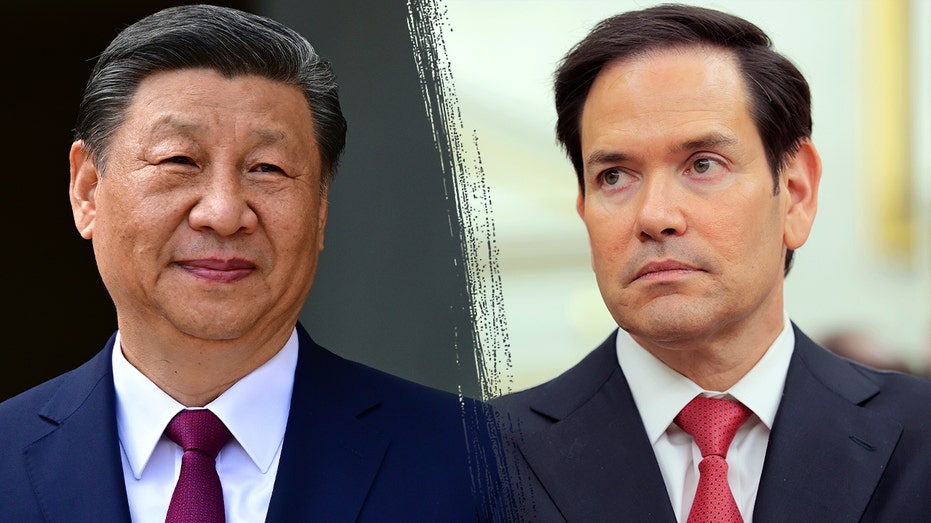
Rubio warns China after Panama ship detentions, calls hemisphere sovereignty 'non-negotiable'

veröffentlicht.
Vorschau ansehen

Secretary of State Marco Rubio warned China that "the sovereignty of our hemisphere is non-negotiable" after the U.S. and regional allies accused Beijing of detaining Panama-flagged ships in a dispute tied to canal port control.

In a joint statement with Bolivia, Costa Rica, Guyana, Paraguay and Trinidad and Tobago, the U.S. said China’s actions targeting Panama-flagged vessels were a "blatant attempt to politicize maritime trade" and infringe on regional sovereignty, framing the dispute as a broader strategic test over control of one of the world’s most critical commercial arteries.

While the Panama dispute centers on shipping detentions rather than a physical blockade, critics increasingly view it alongside battles over other strategic choke points, such as the Strait of Hormuz, as part of a widening contest over whether Beijing or Washington will shape the rules governing global trade and energy corridors.

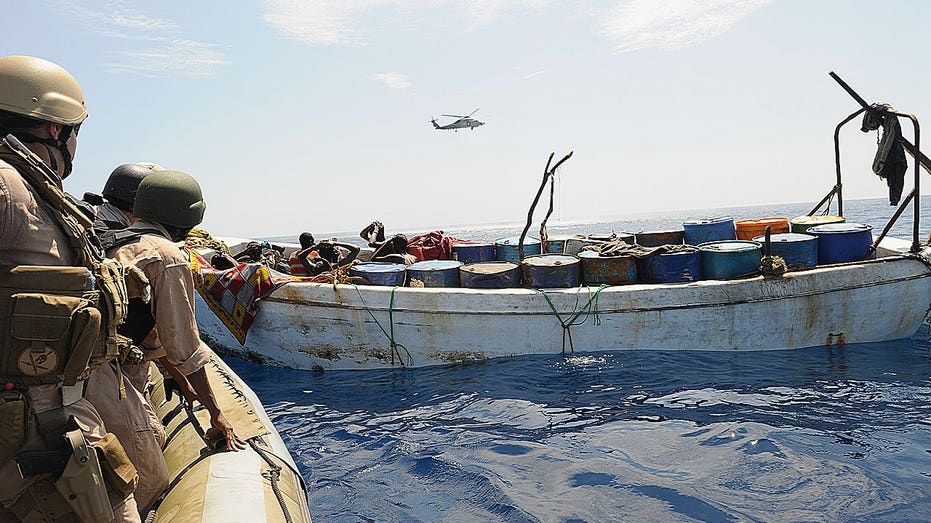
IRAN’S $800M OIL SMUGGLING SCHEME USES TANKERS POSING AS IRAQI SHIPS TO DODGE BLOCKADE

The confrontation follows Panama’s Supreme Court decision earlier in 2026 to invalidate the legal framework behind Hong Kong-based CK Hutchison’s long-held control of the Balboa and Cristobal terminals flanking the Panama Canal, a choke point that handles roughly 5% of global maritime trade. 

U.S. regulators have monitored nearly 70 Panama-flagged vessels detained by Chinese authorities since March 8, according to Reuters — a surge American officials say appears designed to retaliate against Panama and pressure global shipping.

"China has used Iran to destabilize the Middle East. In effect, Iran has been China’s proxy," China expert Gordon Chang told Fox News Digital, arguing Beijing’s actions in Panama fit a broader global pattern in which China uses economic leverage, trade pressure and regional partners to expand influence while condemning similar tactics from Washington.

Chang said Beijing is now facing growing resistance as the U.S. increasingly moves not only against China directly, but also against governments and geopolitical flash points he argues have strengthened Beijing’s hand.

"Trump apparently decided that he would counter this sly tactic by taking China’s proxies — Venezuela, Cuba and Iran — off the board," Chang said.

HOUSE REPUBLICANS INTRODUCE BILL TO REPURCHASE PANAMA CANAL AFTER TRUMP RAISES CONCERNS OF CHINESE CONTROL

He also framed pressure on Iran and threats to the Strait of Hormuz as part of a larger strategic effort aimed at both Tehran and Beijing.

"Closing the Strait of Hormuz is a two-fer, starving Iran’s regime and shaking China’s already fragile economy," Chang said. "Trump is using energy to reorder the world."

Chang also accused Beijing of hypocrisy over trade.

"China’s Communists invented hypocrisy. Nobody does hypocrisy better than the Chinese Communists," he said, arguing that China long benefited from a global trading system it increasingly weaponized for geopolitical purposes.

"The elemental truth is that China started this cycle of action and retaliation," Chang said. "If China had not threatened America, America would not have leaned on Panama. If America had not leaned on Panama, China would not have detained Panamanian vessels."

China has rejected accusations that it is politicizing trade, with its foreign ministry arguing U.S. criticism reflects Washington’s own strategic ambitions around the canal.

China's Foreign Ministry called the statement on Wednesday "entirely baseless and misleading", said it would take steps to safeguard China's interests in Panama, and accused the United States of politicizing ports, according to Reuters.

The Chinese Embassy in Washington, D.C., spokesperson Liu Pengyu told Fox News Digital that, "Chinese competent authorities conducted routine inspections of vessels in accordance with laws and regulations. The allegations are completely unfounded and merely a distortion of facts. It is the United States that has framed normal affairs concerning relevant terminals as issues about politics and security, making pretenses and slandering others with rumors. China’s position on the Panamanian ports issue is clear and will firmly defend its legitimate rights and interests. We urge relevant countries not to be blinded and utilized by those with ill intentions."

Reuters contributed to this article.

(Auszug von RSS-Feed)

☐ ☆ ✇ Fox News

Hormuz crisis spurs $24B Iraq trade corridor as Gulf routes shift

veröffentlicht.
Vorschau ansehen

The Strait of Hormuz crisis is driving nations’ efforts to develop alternative Gulf-to-Europe trade routes, with Iraq’s $24 billion "Development Road" project at the forefront, analyst says.

The route from Iraq’s Grand Faw Port to Turkey and on to Europe, is advancing "with discipline," Middle East Council on Global Affairs analyst Muhanad Seloom told Fox News Digital, calling it a "permanent" and "transformative" wartime shift.

Seloom’s comments came as President Donald Trump warned Tehran against further escalation in the Gulf and signaled the U.S. is prepared to act to keep the strait open.

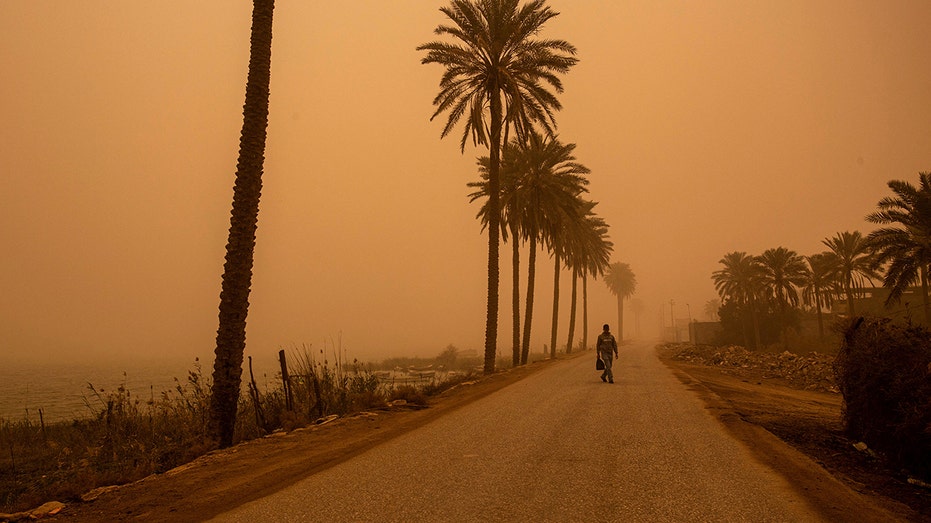
Iranian forces have laid mines and threatened commercial traffic in the narrow waterway. As of Sunday, the shipping route remains effectively closed.

IRAN IS 'TRYING TO GIVE THE GLOBAL ECONOMY A HEART ATTACK' BY CLOSING STRAIT OF HORMUZ, UAE MINISTER SAYS

"Iraq’s Development Road means every container moving through Basra instead of Iranian-controlled waters is a reduction in Tehran’s leverage over Iraq," said Seloom.

"The real scale, independent estimates put the Development Road closer to $24 billion, and the project is now moving with discipline," he said.

Iraq’s Prime Minister Mohammed Shia al-Sudani inaugurated the first 63-kilometer stretch of the Development Road in 2025. Phase 1 is due for completion by 2028.

"What was described by the Iraqi government as a flagship of Iraqi statecraft now has a regional rationale that governments and financiers treat as essential rather than aspirational," Seloom, an assistant professor at the Doha Institute for Graduate Studies, explained.

"Sudani seems to be positioning Iraq exactly where he thinks its geography always suggested, as a connecting state between the Gulf, Turkey and Europe," he said.

WATCH SHIPPING THROUGH THE STRAIT OF HORMUZ GRIND TO A HALT AMID IRAN CONFLICT

But other regional infrastructure, Seloom says, is also being pushed forward in parallel.

Saudi Arabia’s East-West Petroline pipeline is operating near its 7 million-barrel-per-day capacity, with expansion plans under review.

The UAE’s ADCOP pipeline to Fujairah is also at maximum use, with a second line under discussion, he said. "Turkey’s Zangezur and Middle Corridors bypass Iran via the Caucasus and are four to five years out."

He added: "Six Gulf-backed overland fiber projects are also underway through Syria, Iraq and the Horn of Africa."

Iran reimposed closure measures on the Strait of Hormuz on April 18, reducing traffic to just a handful of vessels per day compared with a pre-war average of roughly 130 to 140.

The restrictions, including on ships, have come under fire in recent days, and interceptions trace back to the start of the war on Feb. 28, when Tehran first moved to block transit following U.S.-Israeli strikes.

IRAN WAR, 11 DAYS IN: US CONTROLS SKIES, OIL SURGES AND THE REGION BRACES FOR WHAT’S NEXT

"Hormuz remains indispensable for energy, but it is no longer treated as a default. That shift is permanent given the war," Seloom said.

For Iraq’s corridor, it is "potentially transformative," Seloom said, with $4 billion per year in projected transit revenue and a repositioning from an oil rentier state to a logistics state.

"Turkey will be the single largest beneficiary. Combined with the Zangezur and Middle Corridors, Ankara becomes the overland bridge between Asia and Europe," he said. "Europe will have an additional overland option on a 2028-plus timeline, but nothing for the current crisis. It marginally reduces structural dependence on the unreliable Suez–Red Sea axis."

(Auszug von RSS-Feed)
❌