NEWS 23

🔒
❌
Stats
Es gibt neue verfügbare Artikel. Klicken Sie, um die Seite zu aktualisieren.

☐ ☆ ✇ Fox News

Mass tanker blackout rattles Gulf ahead of 1.35M-barrel oil transfer amid US-Iran talks: firm

veröffentlicht.
Vorschau ansehen

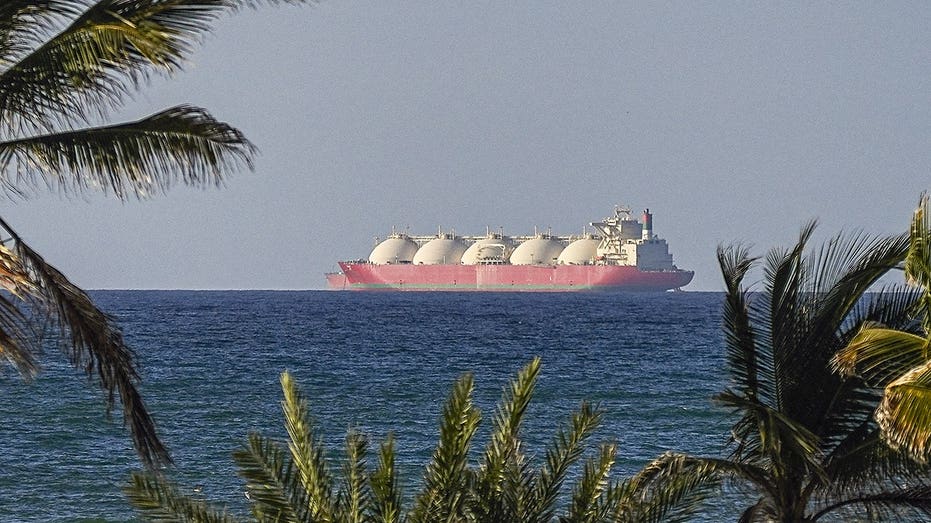
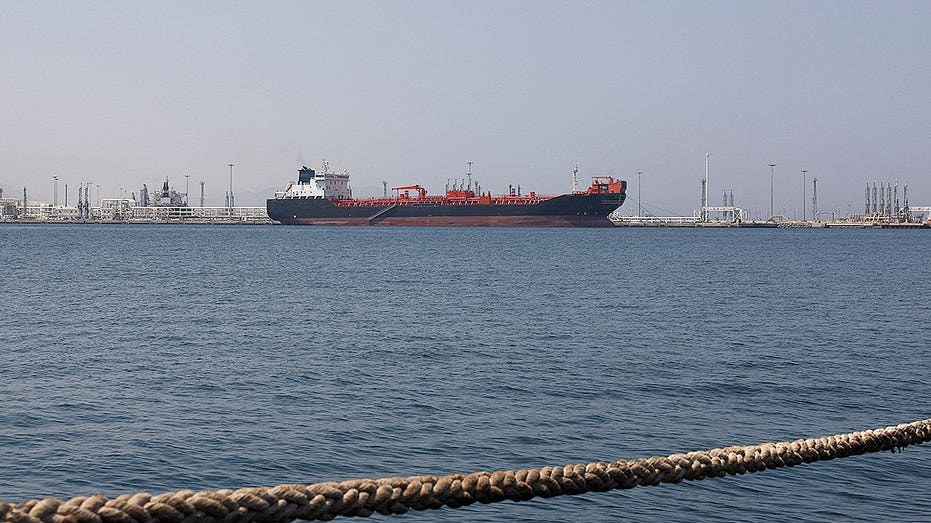
Maritime tracking transmissions collapsed near the UAE’s main oil hub, rattling Persian Gulf shipping hours before President Donald Trump announced progress was made on a bilateral peace deal with Iran, according to an AI maritime firm. 

Maritime intelligence firm Windward AI first detected the blackout in Automatic Identification System (AIS) transmissions near Fujairah, suggesting heightened electronic warfare, jamming, deliberate AIS shutdowns and intense cyber interference near the key UAE oil port.

"Fujairah goes dark: AIS transmissions collapse after Iran’s PGSA announcement," Windward warned in a post shared on X.

"Vessels are still in the area. They are loading less, and a meaningful number have gone dark," the firm said.

GULF SHIPPING OPERATIONS GRIND TO HALT NEAR IRAN, US QUIETLY PREPARES FOR POSSIBLE STRIKE: 'HEIGHTENED RISK'

As Trump announced that an Iran deal was "largely negotiated" and would see a reopening of the Strait of Hormuz, Fujairah went on to move 1.35 million barrels of crude Sunday aboard a single tanker bound for South Korea.

"Today, May 24, the port moved 1.35 million barrels, a single VLCC, destined for South Korea," Windward said before reporting a tense, ongoing "ceasefire posture" and blockade footprint quickly being set into place.

"One cargo doesn't mark a return to baseline, but it's the first signal of flow resuming out of Fujairah since the announcement," Windward said.

Ahead of the barrel transfer, Trump had stated that Washington and Tehran had "largely finalized" a memorandum of understanding for a peace agreement. He posted an AI-generated image depicting exploding IRGC fast boats in the strait.

TRUMP SAYS IRAN DEAL ‘LARGELY NEGOTIATED’ AS 84-DAY WAR NEARS POSSIBLE END

Iran responded directly by continuing to declare the strategic maritime choke point stays under Tehran’s absolute control.

"We reaffirm that the Strait of Hormuz will remain under full Iranian administration and sovereignty, even in the event of reaching any future agreement," Iran’s official military spokesperson, Ibrahim Al-Fiqar, said in a statement shared on X.

"The Islamic Republic emphasizes that the authorities to determine transit routes, timing, and issuance of maritime licenses are an absolute sovereign right exclusively in the hands of Tehran."

The tanker blackout, crude transfer activity and movement toward a U.S.-Iran deal accelerated following the launch of Iran’s Persian Gulf Strait Authority on May 20.

Overseen by the Islamic Revolutionary Guard Corps (IRGC) Navy, the PGSA functions as a sovereign regulator by requiring ships to submit vessel, cargo, insurance and crew details — along with mandatory payments — for "safe passage" through the strait.

Regional analysts told Fox News Digital that, ahead of deal progression, Iran’s territorial claims had even been stretching beyond its own waters into areas tied to Oman and the UAE.

US EYES IRAN FAST BOATS WITH ‘KILL’ TACTICS TESTED IN VENEZUELA DRUG-BOAT STRIKES

Alex Vatanka, director of the Iran Program at the Middle East Institute, told Fox News Digital that enforcement "relies on the IRGC Navy’s asymmetric playbook."

"This includes fast boats, drones, radar tracking, coastal missiles and selective intimidation rather than constant physical interdiction," Vatanka said.

"Tehran wants Gulf states and major importers to gradually accept Iranian oversight of Hormuz as a new geopolitical reality," he added.

While nuclear issues are dominating the current negotiations amid reports of a 60-day ceasefire, the PGSA has quickly emerged as an economic leverage tool threatening global oil and shipping markets.

"Now Hormuz is Iran’s main non-nuclear leverage tool," Vatanka said as the PGSA he claimed gives Tehran a "mechanism to pressure rivals, favor allies and normalize IRGC oversight of one of the world’s most critical energy routes."

According to Vatanka, the system was functioning as a wartime extortion mechanism.

"Ships submit cargo and crew data for approval, while reports point to quiet ‘facilitation payments,’ preferential treatment for friendly states and uncertainty for everyone else," Vatanka warned.

"Iran keeps the penalties deliberately vague. Noncompliant ships risk delays, harassment, drone surveillance, IRGC interception or denial of safe passage — enough pressure to encourage compliance without outright closing the strait."
(Auszug von RSS-Feed)

☐ ☆ ✇ Fox News

What Xi wants from Trump as Beijing seeks leverage in high-stakes summit

veröffentlicht.
Vorschau ansehen

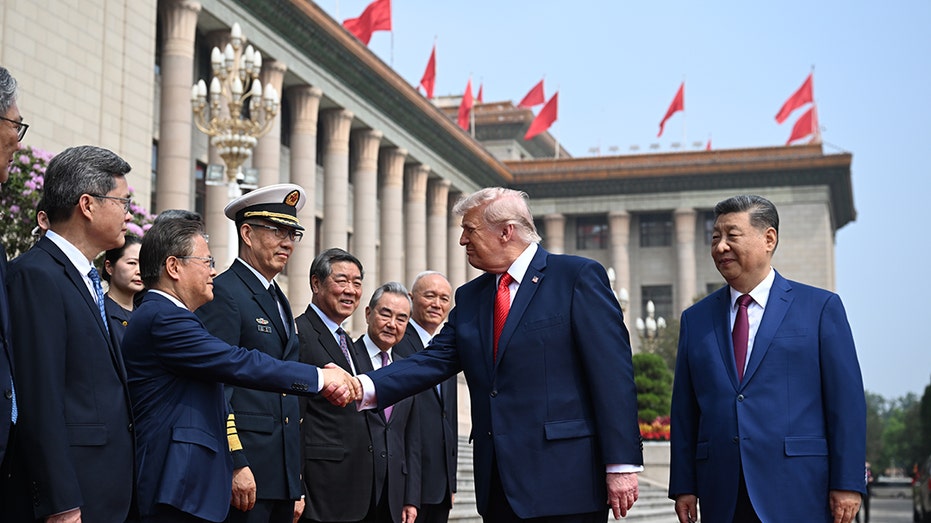
President Donald Trump arrived in Beijing for a high-stakes summit with Chinese President Xi Jinping at a moment when both Washington and Beijing are trying to stabilize one of the world’s most consequential rivalries without giving ground on deeper strategic disputes.

The two-day visit marks Trump’s first trip to China since 2017 and comes amid mounting tensions over trade, artificial intelligence, Taiwan and the fallout from the war with Iran. While the White House is framing the summit as an opportunity for new economic agreements and "rebalancing" the U.S.–China relationship, analysts say Beijing’s priorities are far broader and more long-term.

"Trump arrives seeking headline deals and visible momentum ahead of the midterms," wrote Zongyuan Zoe Liu, senior fellow for China studies at the Council on Foreign Relations. "Xi is playing a longer game, focused on strategic patience rather than substantive compromise."

TRUMP HEADS TO BEIJING FOR HIGH-STAKES XI TALKS AS TAIWAN TENSIONS, TRADE DISPUTES TEST US STRENGTH

Topics expected to be discussed during the summit include trade, aerospace, agriculture and energy agreements, and the creation of a U.S.–China Board of Trade and Board of Investment, according to the White House. 

White House spokeswoman Anna Kelly said Trump’s goal is to "deliver more good deals on behalf of our country" while safeguarding U.S. national security.

Trump participated in a welcome ceremony and bilateral meeting with Xi Thursday morning local time in Beijing, followed by a tour of the Temple of Heaven alongside the Chinese leader and a state banquet later. 

Chinese Embassy spokesperson Liu Pengyu said Beijing views the summit as an opportunity to stabilize ties between the world’s two largest economies. 

"Heads-of-state diplomacy plays an irreplaceable role in providing strategic guidance for China–U.S. relations," Liu said in a statement to Fox News Digital. "We welcome President Trump’s state visit to China. China stands ready to work with the U.S. to expand cooperation and manage differences in the spirit of equality, respect and mutual benefit, and provide more stability and certainty for a transforming and volatile world."

For Xi, analysts say, the top priority likely is avoiding further escalation with Washington while buying time for China’s slowing economy, as it continues to struggle with weak domestic demand, deflationary pressure and industrial overcapacity. 

A recent report by the U.S.–China Economic and Security Review Commission warned that Beijing is doubling down on state-led industrial policy despite mounting structural weaknesses in the Chinese economy.

The commission said China is increasingly operating a "two-speed" economy, where much of the broader economy stagnates while sectors prioritized by the Chinese Communist Party receive massive state support and continue expanding beyond market demand.

The report also warned of a new "China Shock 2.0," arguing Beijing’s excess industrial capacity and record trade surplus are disrupting global markets while increasing foreign dependence on Chinese-controlled supply chains in sectors ranging from batteries and pharmaceuticals to semiconductors and artificial intelligence.

"Chinese policy seeks simultaneously to reduce China’s reliance on foreign technology while increasing the world’s dependence on China," the commission noted in its findings.

TRUMP TO CONFRONT XI AT HIGH-STAKES SUMMIT OVER CHINA BACKING FOR IRAN, RUSSIA

At the same time, Xi is entering the talks with leverage stemming from the ongoing Iran crisis and global energy disruptions.

Trump has faced growing domestic pressure over rising energy prices tied to instability in the Middle East and shipping threats near the Strait of Hormuz. Beijing, meanwhile, remains one of Iran’s largest oil customers and maintains political ties with Tehran.

Susan Thornton, former acting assistant secretary of state for East Asian and Pacific affairs during Trump’s first term, said during a recent Stanford University Asia-Pacific Research Center interview that expectations for major breakthroughs should remain low despite the summit’s symbolism.

"The primary value lies in the act of meeting itself," Thornton said.

She suggested Beijing may see a strategic advantage in America’s renewed focus on the Middle East. While China has made nominal peace proposals, it has not stepped up as a mediator.

"It seems like they are kind of hanging back and waiting to see what will happen," Thornton said, arguing that from Beijing’s perspective, a U.S. entanglement in the Middle East may serve as a useful distraction, diverting Washington’s attention and pressure away from China.

One area where the two sides could announce tangible progress is agriculture. 

The White House is pushing Beijing for expanded purchases of U.S. farm products ahead of the summit, according to a Reuters report published Tuesday, particularly soybeans and grains. 

But traders and analysts told Reuters that China’s appetite for major new soybean commitments may be limited due to weak domestic demand and cheaper alternatives from Brazil. Instead, markets are watching for potential agreements involving corn, sorghum, wheat, beef and poultry, sectors viewed as less politically contentious in the broader U.S.–China relationship. 

More than a dozen U.S. business executives, including leaders from agricultural giant Cargill, are accompanying Trump during the visit.

PRESIDENT TRUMP MUST PUT AMERICAN HOSTAGES FIRST IN HIGH-STAKES BEIJING SUMMIT

Despite the focus on trade and geopolitical tensions, survivors of China’s religious persecution are urging the administration not to sideline Beijing’s crackdown on religious groups and dissidents.

Ahead of the summit, Trump publicly pledged to raise the case of imprisoned Chinese pastor Ezra Jin following advocacy efforts by his daughter, Grace Jin Drexel, who has accused Beijing of persecuting Christians.

Former U.S. officials told Fox News Digital they are skeptical human rights concerns will play a central role during a summit primarily focused on lowering tensions and stabilizing economic ties between the two powers.

Taiwan and technology restrictions are also expected to loom over the talks. Beijing continues to oppose U.S. arms sales and support for Taiwan, while Washington has tightened export controls targeting China’s advanced semiconductor and AI sectors.

Still, despite the escalating rivalry, neither Washington nor Beijing appears eager for a direct confrontation.

For Trump, the summit offers an opportunity to showcase economic wins and diplomatic engagement ahead of the 2026 midterms. 

For Xi, analysts say, the goal is far more measured: preserve stability, avoid confrontation and continue positioning China for a prolonged strategic competition with the United States.

(Auszug von RSS-Feed)

☐ ☆ ✇ Fox News

Global famine fears rise as Hormuz crisis threatens ‘eight-year,' Suez-scale disruption

veröffentlicht.
Vorschau ansehen

Analysts warn global famine fears are rising as food prices climb and fragile supply chains are strained during the Strait of Hormuz crisis, raising the risk of a prolonged, Suez-scale, eight-year disruption.

As the conflict entered Day 62, the U.S. maintained its naval blockade of traffic entering and exiting Iranian ports, while Iran continued to effectively close the Strait.

"Best case, there is an agreement between the U.S. and Iran within the next few weeks, and the Strait reopens," Lars Jensen, CEO and partner at Vespucci Maritime, told Fox News Digital.

"And it has to be a deal where there is trust that Iran is sufficiently satisfied with the deal such that they do not suddenly close the strait again.

LIVE UPDATES: IRAN THREATENS 'LONG AND POWERFUL STRIKES' ON U.S. POSITIONS AS TRUMP FACES WAR POWERS DEADLINE

"Even in that case, it will still take months for the supply chains to revert back to normality."

President Donald Trump announced April 21 he would delay renewed strikes on Iran until it presents a proposal for long-term peace, effectively extending a 14-day ceasefire indefinitely

AIRLINES MAY CUT FLIGHT SCHEDULES AS IRAN TENSIONS DRIVE UP FUEL COSTS, EXPERTS WARN

Trump said Washington’s blockade of Iranian ports has been effective, urging Tehran to "just give up" as tensions escalate over the waterway.

"Worst case, we can look at the eight-year closure of the Suez Canal from 1967 to 1975," Jensen said.

ISRAELI OFFICIALS REPORTEDLY WARN IRAN'S BALLISTIC MISSILES COULD TRIGGER SOLO MILITARY ACTION AGAINST TEHRAN

"Despite its importance to the global economy, it proved impossible to reopen the canal for those eight years," he said.

The Suez Canal, shut from 1967 to 1975 after the Arab-Israeli conflict, has faced recurring disruption, including Red Sea attacks since 2023, driving up insurance costs, creating a "shadow blockade" and curbing traffic.

For Hormuz, Jensen says fertilizer, which is central to agricultural production, is the most critical factor, and any sustained disruption could quickly ripple through global food systems.

"Fertilizer is the most important element. Thirty percent of the world’s seaborne fertilizer comes from the Persian Gulf," Jensen said. "Fertilizer prices are already rising fast," he warned.

IRAN FIRES LIVE MISSILES INTO STRAIT OF HORMUZ AS TRUMP ENVOYS ARRIVE FOR NUCLEAR TALKS

"In wealthy countries, it means more expensive food come harvest season, and, in poor countries, it means that farmers right now cannot afford fertilizer," Jensen added.

"This will lead to the harvest being lower later in the season, leading to rapid increases in food prices in very poor countries. And such a situation increases the risk of famine and conflict."

Diplomatic efforts remained fragile between the U.S. and Iran as of Thursday, with limited signs of progress.

According to reports, a giant banner hangs on a building in Tehran’s central Enqelab Square declaring, "The Strait of Hormuz will remain closed; the entire Persian Gulf is our hunting ground."

"Cargo vessels are not going through for the simple reason that commercial companies do not want to see their seafarers potentially killed," Jensen added.

(Auszug von RSS-Feed)

☐ ☆ ✇ Fox News

Iran shifts 20M barrels through ‘dark’ offshore oil network bypassing US port blockade, firm says

veröffentlicht.
Vorschau ansehen

Iran is moving tens of millions of barrels of oil through covert offshore networks to bypass the new U.S. blockade on its ports, maritime intelligence firm Windward AI says.

The blockade, which took effect April 13, came amid a two-week ceasefire and failed peace talks between the U.S. and Iran, and as President Donald Trump insisted the waterway must remain open. Roughly 20% of the world’s oil passes through it.

"Iranian oil distribution continues through indirect routing and offshore transfer networks," Windward told Fox News Digital.

"As of April 13, at least 11 tankers carrying approximately 20 million barrels of Iranian oil are positioned offshore Malaysia within a ship-to-ship transfer hub," the firm determined.

TRUMP DETAILS SWEEPING 'ALL OR NOTHING' BLOCKADE OF STRAIT OF HORMUZ AFTER FAILED IRAN TALKS

"These vessels are likely awaiting counterpart vessels for offloading or preparing for onward movement."

Windward also clarified that the concentration highlights Iran’s "continued use of offshore storage and transfer mechanisms."

This allows Iranian oil flows to "persist outside direct transit through the Strait."

"Dark activity remains a central enabler of ongoing operations, supporting both post-transit port calls and broader evasion strategies," Windward added.

"At the same time, Iranian oil flows are increasingly routed through offshore hubs, reducing reliance on direct Hormuz transit."

U.S. forces began implementing the blockade at 10 a.m. ET April 13 after Trump vowed to block "any and all ships from trying to enter or leave" the strait, following weeks of pressure on Tehran.

IRAN THREATENS TO HALT RED SEA TRAFFIC IN RESPONSE TO US MILITARY BLOCKADE OF PORTS

As previously reported by Fox News Digital, the U.S. military confirmed Wednesday it stopped nine oil tankers from attempting to breach the blockade.

"During the first 48 hours of the U.S. blockade on ships entering and exiting Iranian ports, no vessels have made it past U.S. forces," U.S. Central Command (CENTCOM) said.

"Additionally, nine vessels have complied with direction from U.S. forces to turn around and return toward an Iranian port or coastal area," CENTCOM wrote on X.

Fox News was also told all nine vessels were oil tankers. None of the vessels ordered to turn around needed to be boarded by U.S. forces, a senior U.S. defense official said.

On the first "full day" of the blockade, April 14, however, under active U.S. enforcement, Windward noted vessel behavior indicating "a fragmented and uneven response to the blockade."

"Initial movements show a combination of continued transit, route deviation and potential evasion," the firm said.

MORNING GLORY: THE US-IRAN NEGOTIATIONS IN ISLAMABAD BECAME REYKJAVÍK 2.0

"Sanctioned and falsely flagged vessels remain active, with some proceeding through the Strait while others delay, reverse course or adjust routing patterns.

"Iranian oil flows continue through indirect distribution networks, with significant volumes accumulating offshore rather than transiting directly through Hormuz."

CENTCOM said the blockade would apply only to maritime traffic entering and exiting Iranian ports.

It stressed that U.S. forces would not "impede freedom of navigation" for vessels transiting the strait to and from other destinations.

The blockade on the key trade route would be enforced "impartially" against any vessels entering or departing Iranian ports, including those in the Persian Gulf and the Gulf of Oman.

So far, sanctioned and falsely flagged vessels continue to operate under evolving enforcement conditions.

Rich Starry, a U.S.-sanctioned handy-size tanker signaling laden status, resumed outbound transit after previously turning around.

Windward said its routing did not follow the Larak Island corridor and instead aligned with the alternative outbound path proposed by Iran.

At the same time, Murlikishan, a U.S.-sanctioned chemical tanker, was also observed journeying inbound, Windward clarified.

(Auszug von RSS-Feed)
❌