NEWS 23

🔒
❌
Stats
Es gibt neue verfügbare Artikel. Klicken Sie, um die Seite zu aktualisieren.

☐ ☆ ✇ Fox News

US, Shield of the Americas condemn 'ongoing efforts' to overthrow Bolivia's elected president amid unrest

veröffentlicht.
Vorschau ansehen

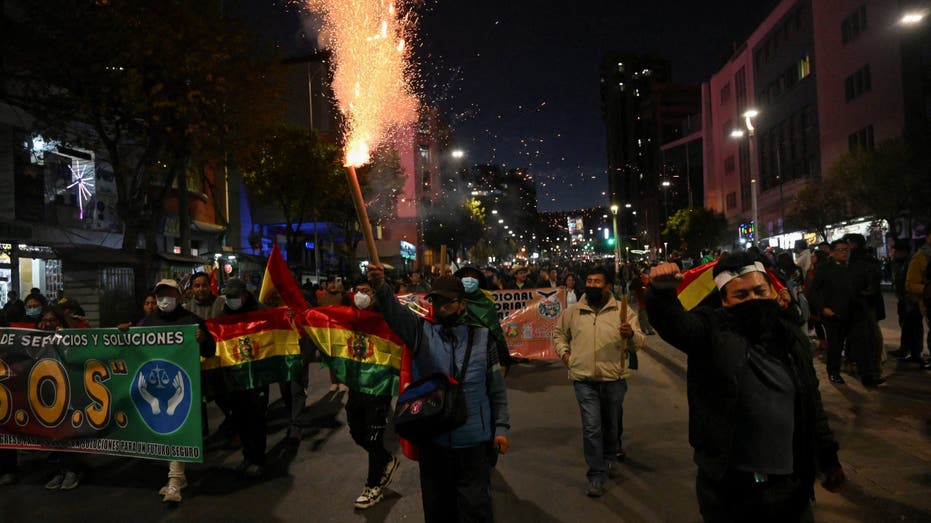
The United States, along with the other countries that make up the Shield of the Americas, condemned the "ongoing efforts" in Bolivia to "overthrow the legitimately and overwhelmingly elected" government of President Rodrigo Paz on Friday.

"The member countries of Shield of the Americas denounce ongoing efforts to overthrow the legitimately and overwhelmingly elected government of President Rodrigo Paz in Bolivia," the statement read. "We stand with Paz’s democratic government as it fights back against attempts to drag Bolivia backwards through cynical efforts to prevent the delivery of food, medicine and other vital supplies to the Bolivian people through fake road blockades."

The statement added that "Mob rule cannot replace the decision that a majority of Bolivians made at the ballot box to turn the page on two decades of corrupt governments."

It also said that anyone who is funding protests with "dirty money" from drug trafficking and transnational crime "should be held accountable. Those who have legitimate grievances should take advantage of the government’s willingness to dialogue, and denounce those who would abuse their causes to regain power."

PETE HEGSETH WARNS NARCO-TERRORISTS AS U.S. BACKS BOLIVIA'S GOVERNMENT AMID COUP WARNINGS

The State Department made the joint statement along with Argentina, Bolivia, Chile, Costa Rica, Dominican Republic, Ecuador, El Salvador, Guyana, Honduras, Panama, Paraguay, and Trinidad and Tobago.

The statement comes as Bolivia's capital, La Paz, has been rocked by weeks of social unrest as mass protests have blocked streets in major cities amid economic inflation and rising fuel prices.

Bolivian Defense Minister Marcelo Salinas resigned Tuesday.

Upon taking office, Paz supported a land reform bill to boost agribusiness that Indigenous farmers said put them at risk of eviction. He further scrapped fuel subsidies, sending prices surging by nearly 90%. Motorists complained that the gasoline was contaminated and ruined their cars.

PETE HEGSETH MAKES HOMELAND SECURITY TOP MISSION IN FIRST INTERVIEW AS SECRETARY OF WAR

The Trump administration has said drug traffickers are responsible for inciting the mass unrest.

Meanwhile, former President Evo Morales of the Movement for Socialism (MAS) party, the country's first Indigenous president who ruled for an unprecedented 14 years, is calling for early elections. "Paz only has two paths left: a suicidal decision like militarization or ... an election in the next 90 days," he wrote on X.

For almost two years now, Morales has been hiding out in Bolivia's central coca-growing Chapare region, evading an arrest warrant on human trafficking charges relating to allegedly having sex with a 15-year-old girl. He rejects the allegations as politically motivated.

On Thursday, War Secretary Pete Hegseth said in a post on X, that the War Department and the Americas Counter Cartel Coalition (A3C), a recently established multinational military and political alliance, reject all attempts to overthrow the government of Rodrigo Paz Pereira six months into his term.

"The United States is watching. Bolivia must not allow itself to fall prey to the old status quo of narco-terrorist dominance in the region," Hegseth wrote. "We will continue to support our A3C partners like Bolivia to ensure that narco-terrorists are deterred from profiting on death and destruction in our hemisphere."

Fox News' Louis Casiano contributed to this report.

(Auszug von RSS-Feed)

☐ ☆ ✇ Fox News

Anti-cartel hardliner channels Trump in bid to end Colombia's leftist era in pivotal election

veröffentlicht.
Vorschau ansehen

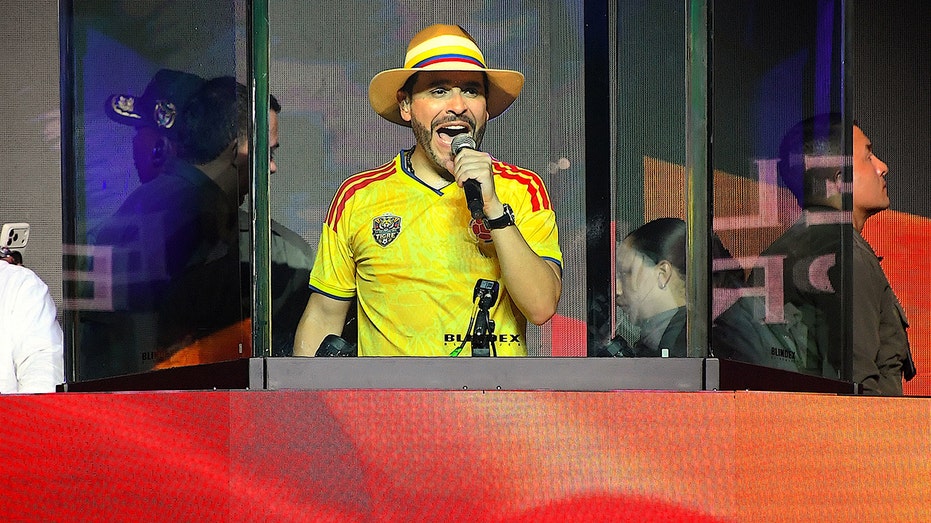
A hardline, law-and-order candidate who promises to dismantle drug cartels and reset Colombia’s security doctrine is gaining traction with voters as Colombians vote in Sunday's presidential election.

As the world’s largest cocaine producer and a long-standing U.S. security partner, Colombia’s internal policies directly affect narcotics flows, migration dynamics and regional stability.

Analysts believe a shift in Bogotá’s leadership could reshape cooperation with Washington on drug interdiction, intelligence sharing and counter-cartel operations — issues that remain central to U.S. domestic and foreign policy.

Abelardo De La Espriella, a businessman and successful defense attorney, has emerged as a leading candidate on the right with a platform focused on aggressive counternarcotics enforcement, institutional reform and a decisive break from current leftist President Gustavo Petro’s negotiation-based approach with armed rebel groups. 

TRUMP’S WAR ON DRUGS STOPS AT MEXICAN BORDER — FOR NOW

The 47-year-old, nicknamed ‘The Tiger,' recently told the Associated Press, "The only peace process I believe in is one imposed by the force of arms and the laws of the republic. Under my government, any bandit who resists will be eliminated as appropriate, and if he submits, we will imprison him in a mega prison so he can pay his debt to justice as they should."

His rise mirrors a regional pattern seen with leaders like Javier Milei, Nayib Bukele and José Antonio Kast figures who have built political momentum around security-first agendas and voter frustration with crime and economic instability.

According to an Associated Press report, polls say De La Espriella is likely to fight it out with leftist candidate Iván Cepeda, who is from the same party as President Gustavo Petro, and center-right candidate Paloma Valencia. There are 14 candidates on the ballot.

Valencia’s campaign is backed by most of the nation’s traditional parties and by economists who are concerned about the growing levels of debt under the Petro administration and want Colombia to return to more orthodox policies, the Associated Press reported.

US PARTNERS WITH COLOMBIA TO TAKE ON IMMIGRATION USING BIOMETRIC TECHNOLOGIES

Valencia told Fox News Digital, "As president of Colombia, we will restore a strategic, close, and trustworthy relationship with the United States, based on mutual respect and the defense of our national interests. We will strengthen cooperation in security, intelligence, military training, and the fight against transnational crime; areas in which the alliance between our two countries has been essential to Colombia’s stability. We will also work to ensure that Colombia plays an active role in the Shield of the Americas and contributes to regional leadership in defense and security. "

She added, "The United States will continue to be a key partner for economic growth, investment, and job creation, as well as a vital ally for the millions of Colombians who live there. Colombia will also stand alongside the United States in defending freedom and democracy across the hemisphere, supporting efforts to restore liberty in Cuba and to help Venezuela return to a democratic path. Our relationship will be defined by trust, cooperation, and the pursuit of tangible benefits for Colombia and its citizens."

Critics say leftist candidate Iván Cepeda, represents a continuation and potential expansion of the leftist policies associated with Petro. Cepeda supports dialogue with armed groups, rural reform and a reform of Colombia’s traditional security framework, placing greater emphasis on social investment.

COLOMBIA PRESIDENT DECREES EMERGENCY POWERS TO RESTORE ORDER IN COCA REGION WRACKED BY REBEL COMBAT

Camilo Guzmán, executive director of Libertank, told Fox News Digital that Sunday’s election will likely result in a runoff between Cepeda and De La Espriella. "Abelardo earned that ticket by reading the room better than anyone else in the opposition. He offered catharsis, speaking directly to Colombian voters' indignation toward the traditional political class and the establishment. 

"Where center-right Senator Paloma Valencia offered competence and continuity with the Uribe tradition, he said, De La Espriella’s message "is built on a hard line on security," Guzman added. "Ending Petro's failed ‘total peace’ policy that emboldened guerrillas and cartels, going after narco-trafficking with full force, and rebuilding the counter-narcotics alliance with Washington that Petro spent four years dismantling."

Analysts say the outcome for the U.S. carries significant strategic weight. A De La Espriella administration could align more closely with Washington’s traditional counternarcotics priorities, potentially strengthening bilateral cooperation at a time when synthetic drug flows and organized crime networks are expanding across the hemisphere.

TRUMP-STYLE LAW-AND-ORDER CONSERVATIVE CLINCHES CHILE’S PRESIDENCY AS VIOLENT CRIME CRISIS RESHAPES NATION

Beyond bilateral relations, the election is being closely watched as a potential inflection point for Latin America. A De La Espriella or Valencia win would reinforce the momentum of security-focused leadership seen in parts of the region, while a Cepeda presidency would signal continuity for Petro’s policies.

José Manuel Restrepo, candidate for vice president on the ticket with De La Espriella talked exclusively to Fox News Digital. "The relationship between Colombia and the United States needs to be recovered and rebuilt, and this starts with a sound security policy to combat drug trafficking. It will be crucial to move beyond the current deteriorated relationship, in which we lost the historic bilateral, bicameral, bipartisan, and multisectoral relationship with our primary trading and investment partner."

He continued, "To strengthen it, we must seize the opportunity for Colombia to become the United States' best possible ally in the restoration of democracy in Venezuela. Leveraging this relationship with the United States, we can play a major role in investing in food, hygiene products and basic needs from Colombia to Venezuela. This would, among other things, give a new direction to the relationship with the United States, creating new opportunities that benefit Colombia…Under our administration, the relationship with the United States would be strengthened and revitalized.

Guzman noted that "De La Espriella's anti-establishment posture is not a libertarian agenda. His economic program leans on price controls, interest-rate subsidies, and import substitution, closer to old-school Latin American populism than to Bukele's pro-investment turn, and a world away from Milei's free-market project. Whether the economic program that comes with it creates new instability south of the border is the open question."

Analyst, entrepreneur and son of a former president Jerónimo Uribe said the stakes could not be clearer in Sunday's presidential race. "The elections in Colombia are not between the left and the right. They are between a communist model propped up by drug traffickers and a model that defends democracy and freedom," he told Fox News Digital.

Representatives for Cepeda did not immediately respond to a request for comment from Fox News Digital.

The Associated Press contributed to this report.

(Auszug von RSS-Feed)

☐ ☆ ✇ Fox News

Latin American leftists met in Spain, signaling push against US influence on continent

veröffentlicht.
Vorschau ansehen

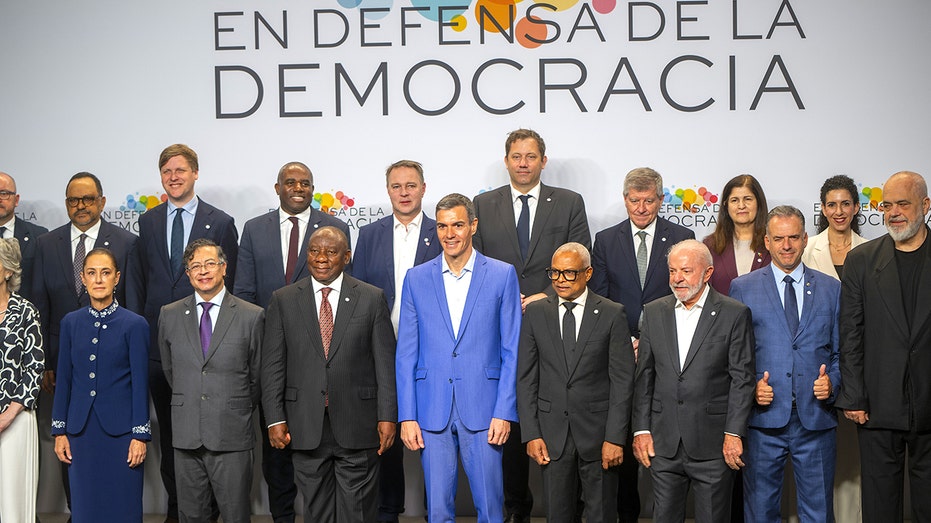
MEXICO CITY: The recent high-profile gathering of leftist leaders in Barcelona, convened by Spain’s socialist Prime Minister Pedro Sánchez, is drawing increasing attention for what analysts describe as a broader geopolitical positioning that could challenge U.S. influence across Latin America and beyond.

The summit brought together Brazil President Lula da Silva, Colombia’s Gustavo Petro and Mexico’s Claudia Sheinbaum. Framed as a platform for addressing inequality, climate change and the rise of right-wing political movements, yet the rhetoric coming from it has raised questions in Washington and across the region about whether a more coordinated political counterweight to the United States is taking shape.

Without naming the Trump administration, Sánchez warned of the "normalization of the use of force" and "attempts to undermine international law", as criticism of U.S. foreign policy. He also pushed for reforms to global institutions, arguing that the current system no longer reflects today’s geopolitical realities, a position that implicitly challenges long-standing U.S. leadership in those bodies.

WALZ RIPS TRUMP AND VANCE IN EUROPE, SAYS 'FEEBLE-MINDED, TRIGGER-HAPPY PRESIDENT' HAS NO EXIT PLAN FOR IRAN

"The Barcelona summit reflects a deliberate effort by Pedro Sánchez to position himself as a leading figure within an emerging progressive bloc that is increasingly critical of U.S. foreign policy under President Trump," Juan Angel Soto, founder and CEO of Fortius Consulting told Fox News Digital.

"This positioning is particularly complex given Spain’s structural anchoring in both the European Union and NATO, which traditionally align it closely with Washington. However, Sánchez has simultaneously deepened ties with the Global South, evident in his growing proximity to China, as well as to leaders such as Lula, Sheinbaum and Petro, suggesting a dual-track foreign policy that seeks greater autonomy from U.S. influence," Soto said.

The Colombian leader tied global tensions directly to economic and energy systems, arguing that fossil fuel dependence has fueled conflict and inequality, an argument that aligns with broader criticism of Western-led economic models.

Roberto Salinas León, director of International Affairs at Universidad de la Libertad in Mexico City, told Fox News Digital, "The ill-named summit ‘In Defense of Democracy’ held in Barcelona brought together notable ‘progressives’ with an aim to bring together a global contingent opposed to, well, Trump 2.0. How convenient."

TRUMP CRITICIZES SPAIN AMID IRAN, NATO RIFT AS PM SANCHEZ FACES QUESTIONS OVER POLITICAL MOTIVES

"Petro stated that ‘Latin American progressivism is a ray of hope for a humanity in crisis.’ Yet these would-be spokespersons for democracy have supported such inhumane brutal dictatorships like Cuba, Nicaragua, Maduro’s Venezuela, Iran, and others. This gathering is more aptly characterized as a political mascara of electoral autocracies, each leader undermining the institutional checks and balances of open liberal democracies," he said.

Brazil’s Lula criticized what he described as interventionist policies by major powers and called for a rebalancing of global governance, including changes to the U.N. Security Council. At one point, he characterized recent U.S. leadership as contributing to global instability, reinforcing a central theme of the summit: that the current international order needs to be redefined.

"The new Cold War is being waged between China and the United States; it is this very rivalry that is at stake in every country participating in the summit. Lula’s concern regarding the resurgence of the right has become patently obvious, particularly when observing Argentina and Chile, where the victories of Milei and Kast have ushered in ‘winds of change.’ We are, quite literally, living through times reminiscent of the fall of the Berlin Wall, specifically, the collapse of ‘21st-century socialism’ across Hispanic America, and this is precisely what has them so worried," Brazilian political analyst Sandra Bronzina told Fox News Digital

"When the global progressive left rails against the United States, talking about sovereignty and peace, or speaking out against war, they are not doing so out of mere altruism or good intentions. Rather, they are driven by a shadowy self-interest: ensuring that China continues to colonize our nations, a process that is, evidently, already well underway."

'AMERICAS COUNTER CARTEL COALITION': INSIDE THE US STRATEGY TO COMBAT NARCO TERROR, CONFRONT CHINA, OTHER FOES

Mexico’s Sheinbaum underscored the principle of national sovereignty, reiterating Latin America’s longstanding emphasis on non-intervention. She joined other leaders in opposing sanctions on countries such as Cuba, signaling a willingness to coordinate positions that diverge sharply from U.S. policy in the region.

Taken together, analysts say the messaging out of Barcelona suggests the early stages of a loosely aligned bloc, one that is increasingly willing to challenge U.S. positions on global governance, regional policy and economic strategy.

Yet even as leaders in Barcelona warn of a rising right-wing threat, political realities across the Americas tell a different story, one that may resonate more directly with U.S. audiences.

In Argentina, sweeping economic reforms focused on deregulation and fiscal discipline have captured global attention as an alternative to state-led models. In El Salvador, aggressive security policies have dramatically reduced violence. And in Ecuador, a renewed focus on law-and-order and institutional control is emerging as a response to escalating cartel violence.

Analysts say these examples highlight a counter to the Barcelona narrative in that a significant portion of the region is moving toward policies centered on security, market reforms and stronger state authority — priorities that often align more closely with U.S. strategic interests.

Experts say the contrast is striking. On one side, a group of leaders in Barcelona is calling for a rethinking of global systems long associated with U.S. leadership. On the other, governments across the hemisphere are experimenting with approaches that emphasize economic liberalization and strong security measures.

(Auszug von RSS-Feed)
❌